
The Ukraine Daily Briefing · Monday, October 26, 2026
Prepared by Diana Bozhyk
Russian ballistic missiles struck a university campus and dormitories in Kyiv on Monday evening, wounding students, medics and residents and killing one person, while a strike on Kharkiv killed two more. Zelensky said Ukraine has waited nearly a month for U.S. Defense Secretary Pete Hegseth to approve Patriot and NASAMS missiles its allies already paid for. Parliament extended martial law and mobilization for another 90 days, Moldova’s prime minister came to Kyiv to sign a military pact, and a 12-year-old boy wounded in the Nova Vodolaha park strike died after a week-long fight for his life.
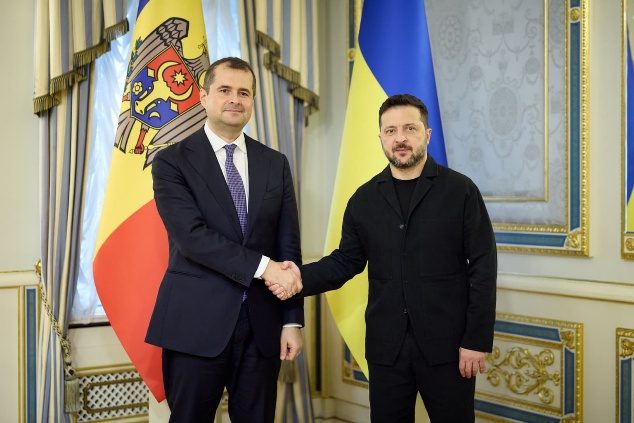
President Volodymyr Zelensky meets Moldovan Prime Minister Vasile Tofan in Kyiv as the two countries sign a military-technical cooperation agreement. (Presidential Office)
The Day’s Reckoning
At about 9:45 p.m., the Air Force warned that ballistic missiles were heading for Kyiv. Minutes later, explosions shook the capital. One of the missiles landed on the grounds of the State University of Trade and Economics, beside Kyoto Park and the Lisova metro station, where many students live in dormitories. Windows shattered. A 20-year-old woman was among the first taken to hospital.
That is the plot of this Monday: a day of waiting. Ukraine waited for a signature in Washington on missiles meant to stop warheads like those. Europe waited to learn whether Zelensky was coming to Brussels. And Oleshky waited for 3 a.m., when a ceasefire was due to begin. “Under such circumstances,” Zelensky said, “artificial delays in providing air defense to Ukraine help terror.”
In a Kyiv hospital, the waiting ended for one family. Artem Koval, 12, died a week after a Russian drone hit the park in Nova Vodolaha where families had gathered. His eight-year-old sister died there that day.
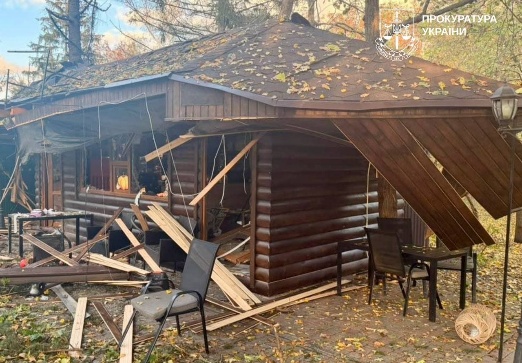
Central Park in Nova Vodolaha, Kharkiv Oblast, following a Russian drone attack on Oct. 19, 2026. (Kharkiv Oblast Prosecutor’s Office/Telegram)
Kyoto Park
You are a student living in a dormitory at the State University of Trade and Economics on Kyoto Street, in Kyiv’s Desnianskyi district. The university, founded in 1946, has more than 15,000 students. On Monday night, the window of your room explodes.
“Russian ballistic missiles struck the grounds of a university in Kyiv and the area around it — effectively the campus, Kyoto Park, the area near a metro station, and residential buildings,” Zelensky wrote. “There is extensive damage, and there are also reports that people may be trapped under the rubble.” He said there were no military facilities nearby.
Mayor Vitali Klitschko said 10 people were wounded, most of them students living in university housing, and nine were hospitalized, three in serious condition. A paramedic and an emergency medical technician were hurt when their ambulance came under fire near the campus. A missile near the Lisova metro station set a car on fire. The State Emergency Service reported damage to university buildings, dormitories and nearby homes, and the city administration said a school building was also damaged.
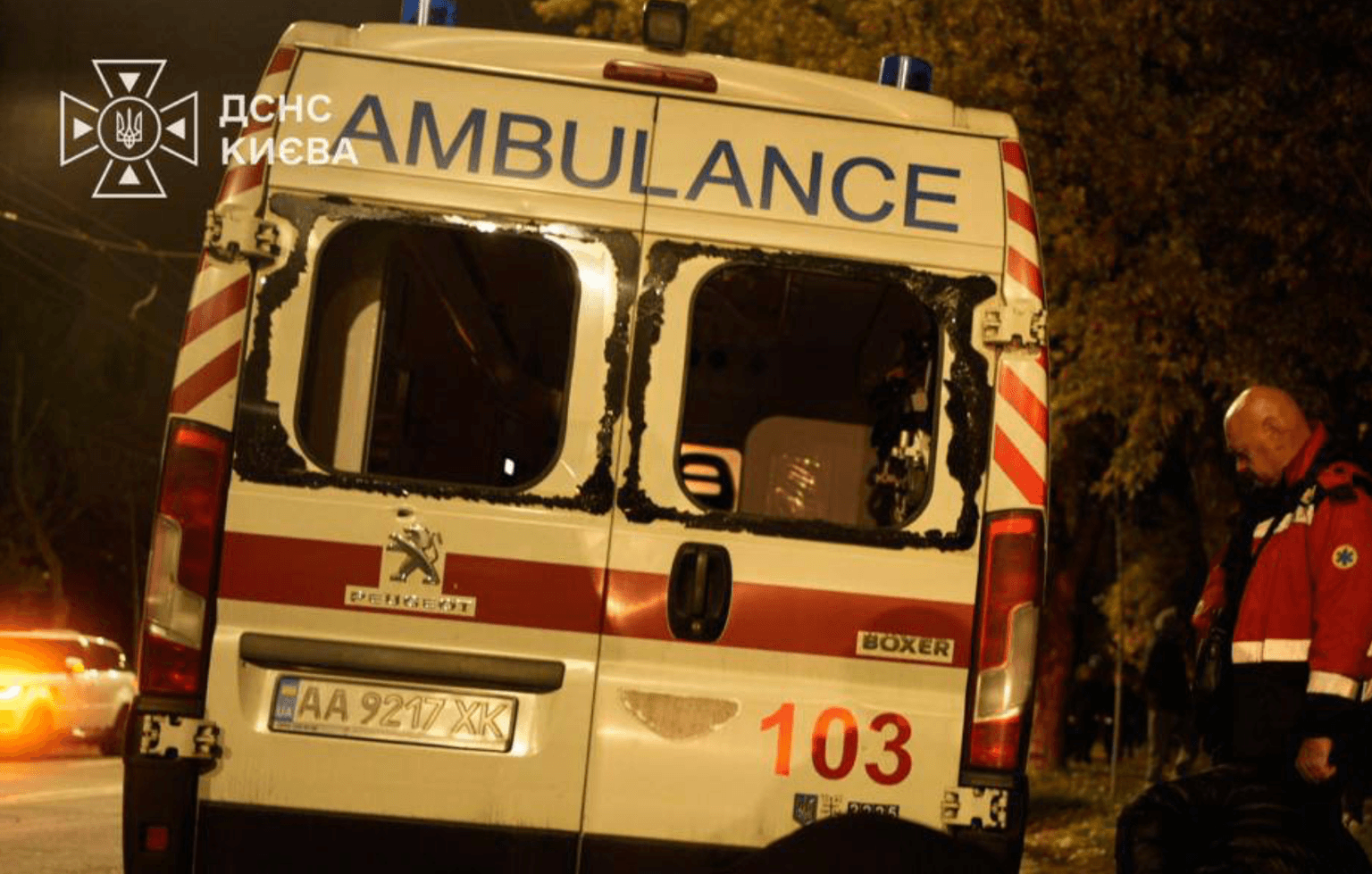
An ambulance damaged in a Russian ballistic missile attack against Kyiv on the night. (State Emergency Service/Telegram)
Across the river, in the Dniprovskyi district, two medical facilities were hit; at one, the blast shattered the windows of the intensive care unit. A three-story commercial building was partially destroyed, and rescuers found the body of one person in its basement.
“Unfortunately, there may be more strikes coming,” Zelensky warned. They came. Another wave of ballistic missiles struck Kyiv in the early hours of Tuesday, and by 8:30 a.m. the city counted 15 people wounded in the night’s attacks, 12 of them hospitalized.
Zelensky used the strike to press his allies. “It is precisely under such circumstances, when the threat is constant, when strikes can come at any moment and target cities and villages directly, that artificial delays in providing air defense to Ukraine help terror,” he said. He called for political agreements on defense aid to be carried out quickly, so Ukraine could both intercept missiles and destroy Russian launchers.
Kharkiv’s Week
You live in Kharkiv’s Novobavarskyi district. On Monday evening, at about 6 p.m., a strike lands near your building, then a second one minutes later. Cars nearby burn.
Two people were killed and four wounded, among them a 17-year-old girl, two men aged 61 and 77 and a 60-year-old woman. Governor Oleh Syniehubov spoke of missiles; the State Emergency Service said multiple-launch rockets hit the district. Four apartment buildings, four houses, 10 garages and a kindergarten were damaged. Earlier that evening, Russian drones had hit the Kholodnohirskyi district twice.
Hours before, Syniehubov released the toll of the previous week across the Kharkiv region: 113 settlements struck, 12 people killed, two of them children, and 148 wounded, 11 of them children. Russia used 27 missiles, eight guided bombs, three rocket-launcher strikes and nearly 880 drones. In Kharkiv alone, the attacks damaged seven apartment buildings, 16 homes, seven businesses, power lines, two gas stations, a hypermarket, the city circus, railway infrastructure and about 50 private cars.
On Monday, the Nova Vodolaha village council announced that Artem Koval, 12, had died in a Kyiv hospital. He had been critically wounded on October 19, when a jet-powered Russian drone hit the town’s central park while families sat near the fountain. His eight-year-old sister was killed at the scene; the council named her Arina. “In a single terrible moment, the parents lost everything most precious to them — both their son and their daughter,” it wrote. “Russia robbed these children of their future.” Accounts of the attack’s total death toll differ between officials and outlets.
Elsewhere, Russian attacks over the past day killed at least two people and wounded 35. In the Kharkiv region, four people aged 51 to 72 were wounded. In the Chernihiv region, a man of 33 and a woman of 54 were hurt, and in the Sumy region three people aged 56 to 76. The home-goods chain Epicentr said further strikes over the past 48 hours had hit its sites in Uman, Pervomaisk and Dubno, where three people were injured, and warehouses in Kovel.
A Month Waiting for a Signature
“We have been waiting for nearly a month for Mr. Hegseth to sign off on missiles for Patriots and NASAMS,” Zelensky wrote on X after a call on arms supplies and the energy system. “I instructed our team to raise this with the American side once again.” The missiles have already been paid for by Ukraine’s allies through PURL, NATO’s mechanism for buying American weapons for Ukraine; a senior Ukrainian official has called the batch “significant.” Zelensky said Ukraine is also negotiating with European countries and others that hold PAC-2 and PAC-3 interceptors. “Conversations with other countries are also ongoing,” he said. He has said the United States delivers only 12 Patriot interceptors a month, and has asked European partners for 300 for the winter, with resistance from some, including Greece.
Air Force spokesperson Yurii Ihnat said Ukraine could have had enough Patriot missiles for several years if so many had not been spent in the Middle East. Ukrainian crews, he said on an RBC-Ukraine podcast, set ambushes with the systems, fire and move quickly to avoid detection, and usually use one missile per target. Air defenders in the Middle East, by contrast, have reportedly fired as many as eight at a single target, including cheap Shahed drones.
During the call, Denys Shmyhal briefed Zelensky on the energy situation in the regions. “The work is continuing virtually nonstop, and we are using the equipment reserves we have built up,” Zelensky said, asking the Foreign and Energy ministries to make clear to partners that those reserves must be replenished. Officials also prepared for the next Ramstein-format meeting of Ukraine’s donors in November.
In Moscow, Kremlin spokesman Dmitry Peskov said the planned talks would not slow Russia’s offensive. “The decision to resume trilateral talks does not imply any restrictions on combat operations,” he said. “Our armed forces continue to carry out massive strikes on Ukraine’s military-industrial complex.” Asked about temporary truces, he said: “For humanitarian purposes, absolutely.”
Talks, Rumors and a Trip That Wasn’t
Ukraine and the United States are trying to move the planned talks with Russia forward by at least a week, to around November 10 in Abu Dhabi, after the U.S. midterm elections, Ukrainska Pravda reported, citing sources close to the negotiators. “When you have no electricity, water or heating, every day matters,” one source said. Russia opposes European officials at the first meeting, the outlet reported; Kyiv plans to bring them to Abu Dhabi anyway and brief them as talks unfold.
In Oleshky, the ceasefire was set to begin at 3 a.m. on Tuesday. Evacuation volunteer Kseniia Arkhipova told the Kyiv Independent she feared what would come after. “When television channels around the world show that dozens of buses full of people have left Oleshky… we are very much afraid that, after that, Oleshky will simply be wiped off the face of the earth,” she said. “The worst thing would be if the whole world came to believe that everyone had been evacuated from Oleshky, whilst (people) were still there.”
On Sunday, The Telegraph, citing diplomatic sources, reported that Moscow might use the talks to demand that NATO return to its 1997 configuration, which could mean withdrawing allied forces from Poland, the Baltic states and Finland. The paper cited no official Russian proposal. Putin said last week that negotiations should cover “the architecture of European security as a whole.”
Meanwhile, Zelensky’s expected trip to Brussels dissolved into confusion. On Sunday he had said the Americans wanted “a broad discussion about security, guarantees, the EU, and participation” in Brussels “this week.” On Monday, reports said he was going; European officials said they knew nothing. “We are traveling to Canada and not expecting visitors,” a senior EU official told the Kyiv Independent, as Ursula von der Leyen and António Costa left for an EU-Canada summit in Montreal. Kyiv learned that Trump wanted envoys Steve Witkoff and Jared Kushner in Washington around Israel’s October 27 elections. “Donald wants those two to be in Washington with him,” a senior Ukrainian official said. Presidential adviser Dmytro Lytvyn said the meeting could not be confirmed “due to a change in plans on the part of the U.S.” An EU official said Europeans still expect a round of talks in Europe before Abu Dhabi, but “that may or may not happen given the temperaments of all involved.”
Ninety More Days
Parliament voted to extend martial law and general mobilization for another 90 days, to January 29, 2027, by 293 and 281 votes, and Zelensky signed both laws the same day. They take effect on October 31. “Adequate measures to counter armed aggression” required it, said Ihor Klymenko, secretary of the National Security and Defense Council.
At the Kyiv International Economic Forum, Prime Minister Serhii Koretskyi said the government wants a new mobilization arrangement with businesses by December 1, under which companies keep full deferments for their workers if they help some employees volunteer for service, with a known place and term of service and a guaranteed job. “If such a solution could be found, there would be no need to look for people on the streets,” he said. He warned that Russia could mobilize another 300,000 to 500,000 people. Lawmakers also restored open competitions for civil service jobs, giving veterans priority and unlocking €137 million in EU funding. “Veterans must be among those shaping Ukraine’s future,” said Kyrylo Budanov, head of the Presidential Office.
Moldovan Prime Minister Vasile Tofan came to Kyiv with his defense, energy and infrastructure ministers. The two governments signed a military-technical cooperation agreement, agreed to revive the “Odesa Triangle” with Romania and to add two jointly controlled border crossings, and Kyiv proposed restoring the EU’s Solidarity Lanes for exports. “Moldova and Ukraine are certainly stronger when we move forward on this track together,” Zelensky said of their EU bids. Zelensky thanked Chisinau for supporting the Vertical Gas Corridor and discounting gas transit on the Trans-Balkan route, Koretskyi thanked it for cheaper rail freight, and Kyiv proposed bringing Moldova into the demining coalition. Tofan said Russian drones have violated Moldova’s airspace more than 100 times since 2022. “We can’t ignore these risks,” he said.
Carried Out by Air
You are Yevhen, 25, call sign “Izium,” lying with a severe wound to a limb about five kilometers from the Russian border. Water and Russian FPV drones block every road out.
Ukraine’s 475th Separate Assault Regiment said it evacuated Yevhen and a second soldier, Artem, 24, call sign “Kolobok,” with StarGate, an aerial evacuation drone made by Ukrainian company SkyFall. Heavy Vampire drones suppressed Russian positions while it flew. On one mission, StarGate flew nearly 30 kilometers to reach a wounded man and the same distance back with him aboard, navigating with artificial intelligence when Russian jamming blocked satellite signals. The regiment’s commander, Oleksandr Nastenko, said the unit will train more crews to make aerial evacuations routine. It came a week after another brigade carried out what it called the first drone evacuation of a wounded soldier.
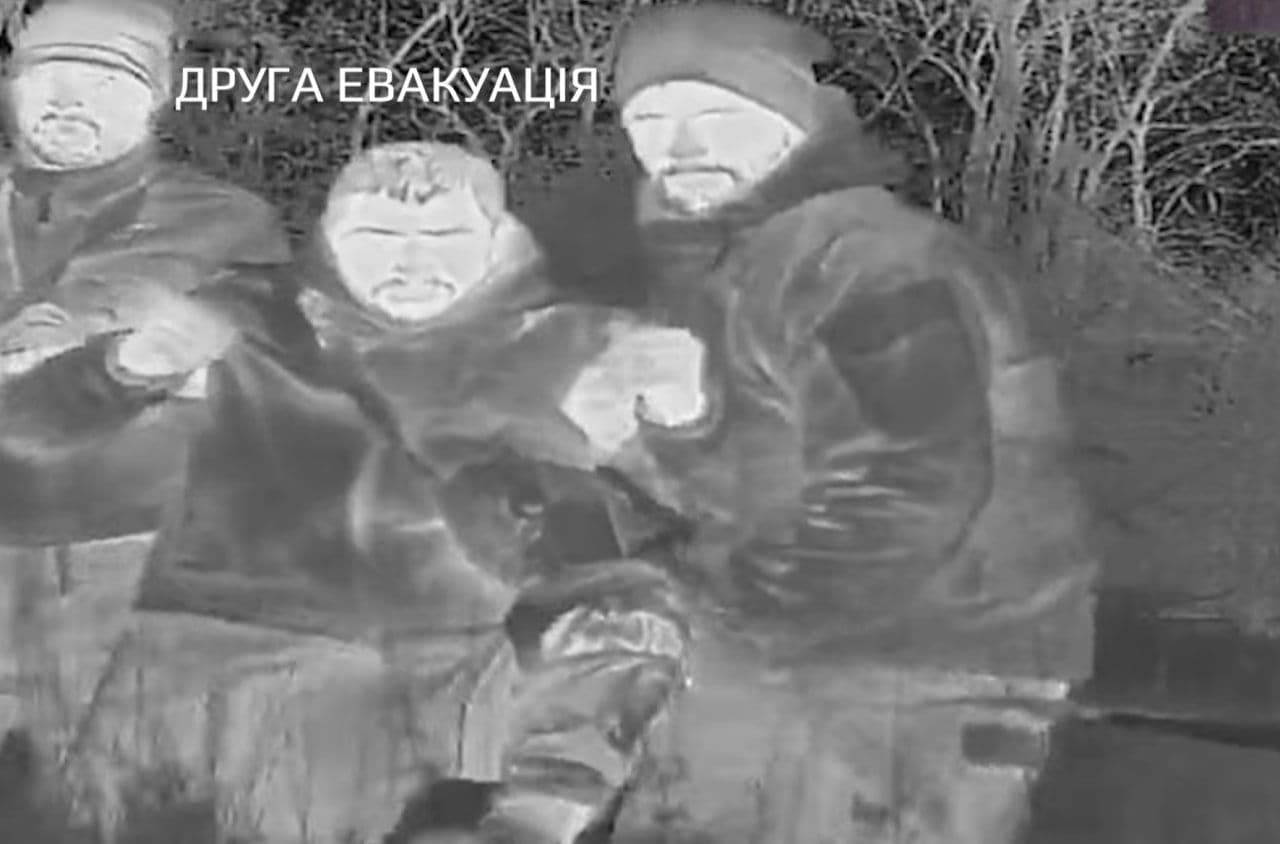
Aerial evacuation of a severely wounded soldier from a contested area using a drone, in footage published by Ukraine’s 475th Separate Assault Regiment Code 9.2. (Ukraine’s 475th Separate Assault Regiment/Facebook)
The front’s heaviest weapon keeps multiplying. A report by the Kyiv-based Center for Defense Reforms, shared with the Kyiv Independent, found that a Russian state procurement firm bought nearly 278,000 servo drives in 2025, enough to build about 139,000 guided bombs. Only eight of 20 companies building them face any Western sanctions, it said, and four Chinese suppliers are critical to the chain. The kits turn old unguided bombs into precision weapons that Russian jets can release from inside Russia, beyond the reach of Ukrainian air defenses; the report named a key unsanctioned supplier of their servo drives, CED Sail LLC. “Russia is building the military-industrial capacity to continue waging wars even after the war in Ukraine ends,” said Oleksandr Danylyuk, the center’s chairman. Ukraine fights back with electronic warfare and by hitting the Su-34 bombers that carry them; earlier this month, a Neptune missile strike on the Borisoglebsk airfield destroyed at least four. Earlier this month, five such bombs killed 20 people in Zaporizhzhia.
They are still falling there. Russia launched 857 strikes on 52 settlements in the Zaporizhzhia region over the past day, including two missiles at the city, where eight people were wounded, said Ivan Fedorov of the regional defense council. On Monday morning, a missile hit a shopping mall no longer in use. In the Donetsk region, one person was killed and 10 wounded over the past day, and in the Kherson region, where Russian troops fire across the Dnipro, one was killed and eight wounded. Overnight, Russia also fired a Kh-31P anti-radar missile, three Kh-59/69 guided missiles and 140 drones at Ukraine; the Air Force said it shot down the three Kh-59/69s and 112 drones.
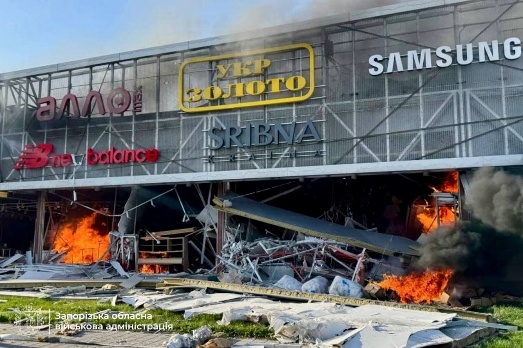
The aftermath of a shopping mall in the southeastern city of Zaporizhzhia, which had been struck by a morning Russian attack. (Acting Zaporizhzhia Oblast Governor Mykhailo Semikin / Telegram)
Also Today
Inside Russia. Ukraine’s General Staff said the Energiya plant in Yelets, struck on Sunday, is Russia’s only maker of batteries for glide-bomb guidance modules, and that Ukraine destroyed the main microchip workshop of Proton-Electrotex in Oryol. In Voronezh, drones reportedly hit Sibur’s Voronezhsintezkauchuk plant, which makes over 385,000 tons of synthetic rubber a year, including for military aircraft tires; drone maker Fire Point said its FP-1s were used. The regional governor said 113 drones were downed and two people were killed and 17 wounded, including a child.
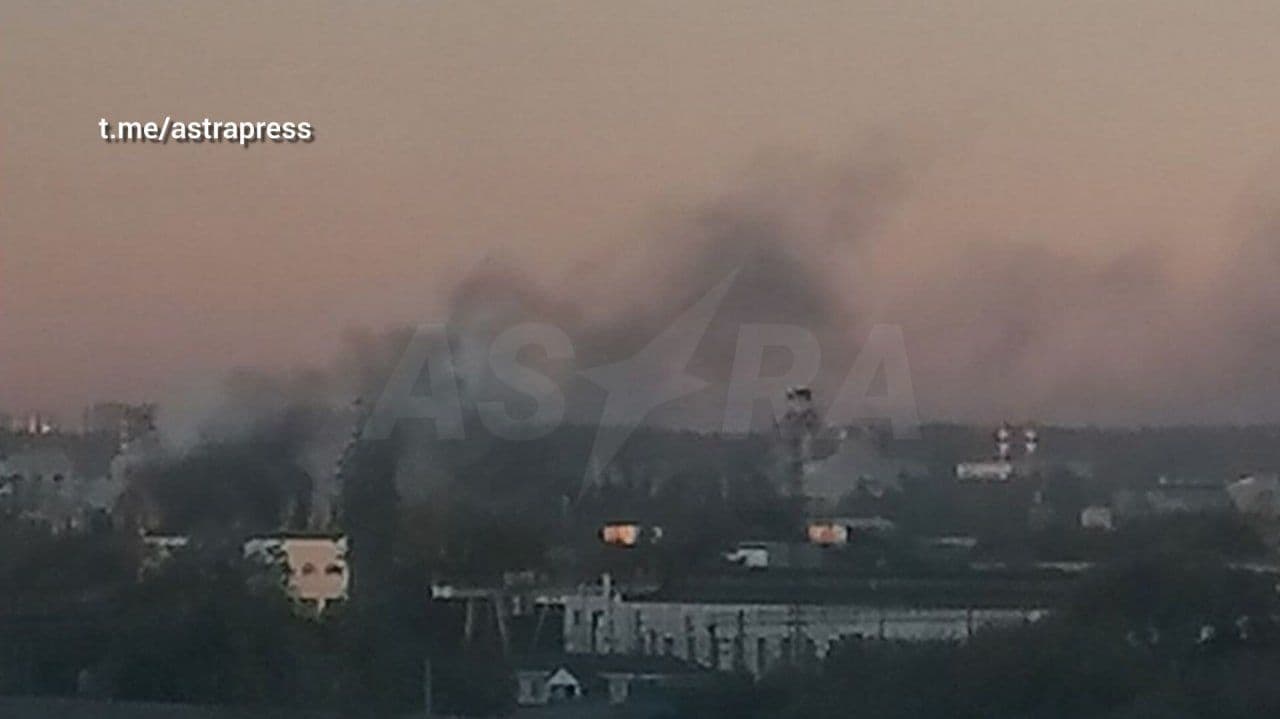
A photo published by Russian independent media outlet Astra, supposedly depicting black smoke over the territory of Voronezhsintezkauchuk, a Russian chemical plant in the southwestern city of Voronezh, Russia. (Astra / Telegram)
Data centers go underground. Russia’s Digital Development Ministry proposed building data centers underground and camouflaged, with drone defenses, after Ukraine hit three Yandex sites, a Sberbank facility and VK’s center, Kommersant reported on Sunday.
Russia and China, closer still. A C4ADS report found that Russia’s rocket maker SPLAV sent designs to China’s Norinco, that Russia’s TsAGI institute tested Chinese aircraft models in its wind tunnels at least nine times from 2022 to 2024, that Russian and Chinese scientists are jointly researching drone swarms, and that Russia’s chipmaker Element has opened subsidiaries in China.
A rift with Poland. The council of Przemysl voted unanimously to suspend cooperation with Lviv after Lviv named 2027 the Year of the UPA and of Roman Shukhevych, and the Lublin regional assembly backed cutting ties too. Prime Minister Donald Tusk called Lviv’s move “suicidal tactics.”
NATO in Latvia. The NATO brigade in Latvia began its largest deployment exercise, Resolute Reforger, with about 3,000 soldiers.
Bulgaria votes. Acting President Iliana Iotova, who opposes military aid to Ukraine, led Sunday’s first round with 35 to 36.5 percent, on turnout of about 20 percent, and faces pro-Western banker Andrey Gyurov in a November 1 runoff.
Serbia’s new majority. The Students’ List, which won Serbia’s election, said it will not sanction Russia, and the Kremlin urged it to keep close ties. Outgoing leader Aleksandar Vučić blamed foreign “dirty work” for his defeat. Zelensky called the vote “a new chapter.”
The Closing
Tonight, a Kyiv university is counting its damaged dormitories, and two parents in Nova Vodolaha are mourning both of their children. In Washington, the interceptors Ukraine’s allies paid for still wait for a signature. And on the riverbank across from Kherson, Oleshky is counting the last hours before a ceasefire. Ukraine has done everything it can on its side of the line. It asks its friends to sign theirs.
A Prayer for Ukraine
1. For Those Who Defend
Lord of hosts, protect the air defenders who face ballistic missiles with too few interceptors, and the crews who move their Patriot launchers through the night. Guard the soldiers of the 475th Regiment and every unit that refuses to leave a wounded comrade behind. Bless Yevhen and Artem, carried home through the sky, heal their wounds, and give rest to every soldier holding the line tonight.
2. For the Wounded and the Grieving
God of all comfort, receive Artem Koval, twelve years old, and his sister Arina, and hold their parents in their unbearable grief. Receive the man found in the basement in Dniprovskyi district and the two killed in Kharkiv’s Novobavarskyi district. Heal the students, the paramedic and the medical technician, the seventeen-year-old girl of Kharkiv, and every family hurt today in body or in spirit.
3. For Those Who Lead
King of kings, give President Zelensky and his team clear minds and patient hearts as talks draw near. Move Secretary Hegseth and every leader who holds the means of protection to release it without delay. Bless Prime Minister Tofan and the people of Moldova for standing beside Ukraine, and let no peace be made that rewards the one who strikes the innocent.
4. For Kyiv and the Towns
Faithful God, watch over the students of Kyiv who live far from home, the teachers who will gather them again, and the doctors whose windows shattered in the night. Strengthen the energy crews who work without rest, and the families in Zaporizhzhia, Kherson, Donetsk, Sumy and Chernihiv regions who live under constant fire. Bring warmth to every home before the winter comes.
5. For Oleshky and a People Who Keep Standing
Father, at 3 a.m. the guns are meant to fall silent around Oleshky. Let that silence hold, let the roads be cleared, and let every person who wishes to leave walk out alive. Sustain a nation that has extended its war for another ninety days, yet never stopped hoping for peace. In Your mercy, in Your justice, in Your time — bring this war to its end, and let the ending be worthy of what Ukraine has endured.