
The Ukraine Daily Briefing · Wednesday, November 4, 2026
Prepared by Diana Bozhyk
Russia sent 310 more drones at Ukraine’s power grid overnight, a day after its largest energy strike of the year left Kyiv in its worst water outage of the war, with taps dry for more than 24 hours. In Komyshuvakha, the death toll from Monday’s bombing of an aid site rose to 40, with more than 30 people still under the rubble. As Democrats were projected to win both houses of the U.S. Congress, Zelensky spent 90 minutes on the phone with Trump’s envoys, flew to Madrid and awarded Melania Trump Ukraine’s Order of Princess Olga.
The Day’s Reckoning
On Wednesday afternoon, the water came back to Kyiv. It had been gone for more than a day, in most districts, including the center, where restaurants closed their bathrooms. “This is the most serious water outage in Kyiv since the war began,” said Mykhailo Yatsuk, director of the Institute of Water Problems and Land Reclamation. “It is also expected that the situation will worsen in the winter.”
That is the plot of this Wednesday: a country counting what it has lost and what it still needs. In Komyshuvakha, police took DNA from relatives to name the dead. In Kyiv, the government promised repair crews extra pay for every month they work under fire. Overnight, Russia sent 310 more drones.
And across the Atlantic, Americans had voted. Democrats were projected to win both the House and the Senate. In Moscow, the Kremlin said it hoped Trump would keep trying for peace. In Kyiv, Zelensky told Trump’s envoys the talks should go “as intense as possible.”
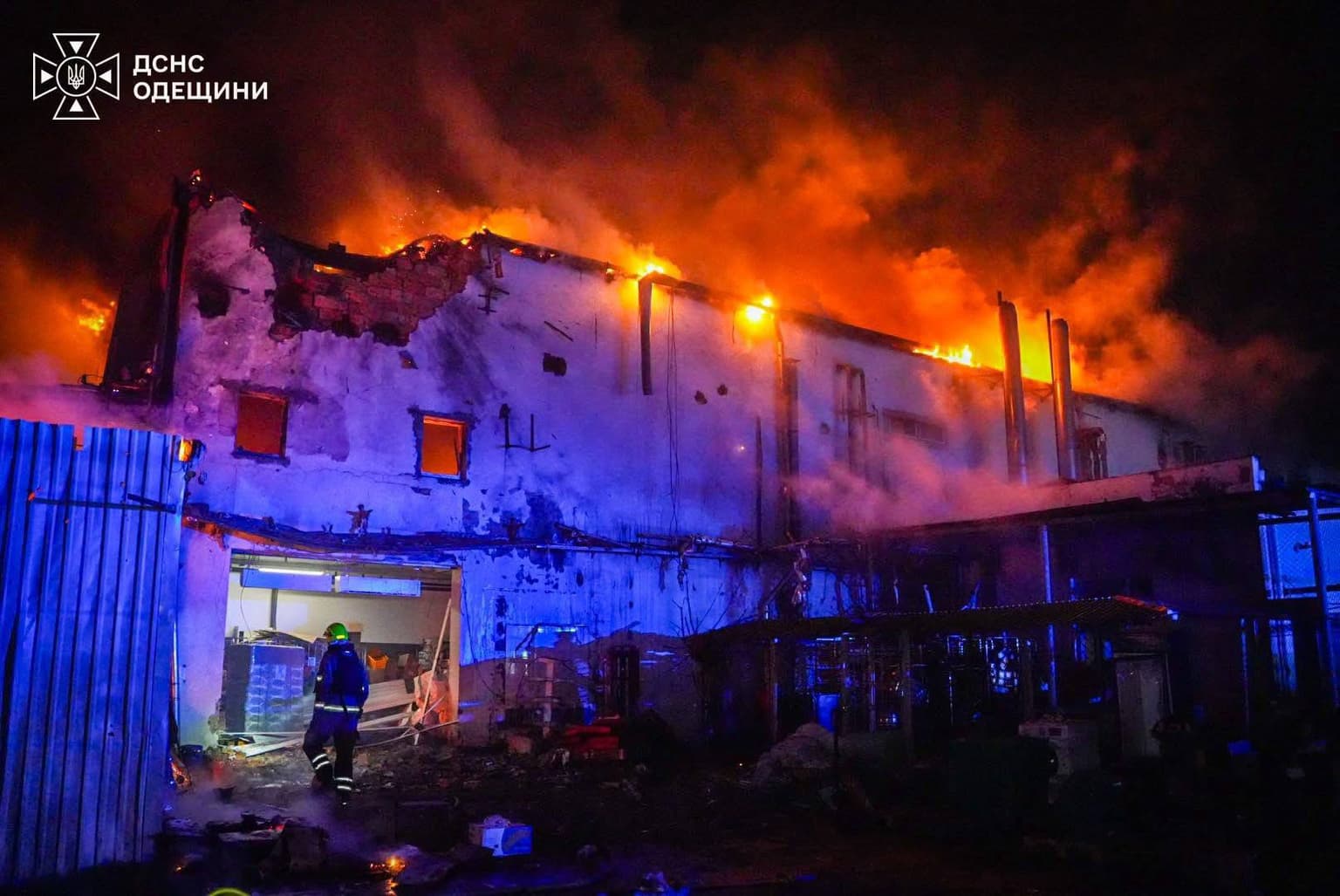
Rescuers extinguish a fire at an site in Odesa Oblast, Ukraine, following a Russian overnight attack. (Ukraine’s Emergency Service / Telegram)
The Day the Taps Ran Dry
You live in central Kyiv. On Tuesday, the power went out, and so did the water. On Wednesday morning, it still hasn’t come back.
Kyiv’s water system is huge and centralized, and without electricity it cannot pump. Tuesday’s attack, Russia’s largest on Ukraine’s energy system this year, cut power across the city, and Kyivvodokanal said water supply was effectively cut off everywhere. Before, outages had lasted a few hours after a strike. This one lasted more than a day. Oleksandr Kharchenko, director of the Energy Industry Research Center, said it was worse because Russian strikes in January crippled three of Kyiv’s combined heat and power plants. “We used to always have the option to power water supply from one of the CHPs, but as of now, we have lost this opportunity,” he said. By Wednesday afternoon, the utility had stabilized the system, though it took hours more for water to reach homes. The city published a map of public pumps that generators will keep running. “Previously, we didn’t think that we needed water reserves. But now we do. The situation is getting worse after every attack,” a water-pump company manager said.
Overnight into Wednesday, Russia launched 310 drones, 81 of them jet-powered; Ukraine downed 272, and strikes hit 19 locations. They targeted energy in Kyiv and the Khmelnytskyi, Kirovohrad, Odesa, Volyn, Ternopil and Zhytomyr regions, concentrating on central and western Ukraine. Russia’s Defense Ministry claimed hits on substations at Nalyvaikivka near Kyiv and Chyzhivka in the Zhytomyr region, and a Russian blogger said a new Filin cruise missile struck a facility near Dubrovytsia in the Rivne region. First Deputy Energy Minister Artem Nekrasov said the strikes are forcing Ukraine’s nuclear plants to cut output. A Kremlin-affiliated blogger said Russia has switched to “more systematic and rational” strikes on key substations; ISW said the campaign mirrors last winter’s, which reportedly damaged or destroyed 80 percent of Ukraine’s power generation.
“Unfortunately, due to repeated strikes and constant air raid alerts, repairs are taking significantly longer,” Zelensky wrote after a coordination meeting, naming Kyiv and nine regions with severe outages. He said reserves of equipment had been built up, that new energy aid packages had been agreed with partners, and that commanders had reported on electronic warfare plans. He ordered officials to present measures by the end of the day to force lagging companies to cooperate. “Restoration must follow every strike,” he said. The government approved monthly bonuses of 30,000 hryvnias, about $670, for energy, water, heating, gas, municipal and railway workers repairing strike damage through the heating season. “This is the least that the state can do for these specialists right now,” Prime Minister Serhii Koretskyi said, adding that Russia launches 300 to 400 drones a day at critical infrastructure and has struck it more than 2,000 times since August.
Across the past day, Russian attacks killed six people and wounded 50. In Dnipro, a strike set an enterprise on fire, wounding two men aged 38 and 57. Two people were killed and five wounded in the Donetsk region, Governor Vadym Filashkin said, and two were killed and three wounded in the Zaporizhzhia region. Russia attacked 40 settlements in the Kherson region, wounding three, and a drone wounded a 69-year-old woman in the Sumy region.
Komyshuvakha: Forty
On the third day, rescuers with dogs and specialists from the State Mining Rescue Service were still digging through the shelter in Komyshuvakha. By Wednesday evening, Zelensky said, 40 people were known to be dead, some not yet identified, and more than 30 might still be under the rubble. The FAB-3000 that collapsed the shelter carries more than a ton of explosives and has a blast radius of up to 250 meters.
“Unfortunately, there has been very little reaction from the world to this insane attack,” Zelensky said. “Evil always goes further if it remains unanswered. We are counting on a response: support for Ukraine with air defense is needed now.”
Police took DNA samples from relatives to identify bodies that could not be recognized. Regional head Mykhailo Semikin said the region would pay for every funeral and give 20,000 hryvnias to the moderately wounded and up to 50,000 to the severely wounded. “We will provide assistance with all necessary paperwork. People should not have to deal with bureaucratic difficulties during this difficult time,” he said. About 200 people still live in the village. Police evacuated all 11 remaining children in June and 166 people this year, among them 77 elderly residents. “I urge residents of frontline communities not to delay their evacuation,” Semikin said. Since 2022, Russian forces have struck Ukrainian emergency crews at least 401 times, killing at least 43, by a May count that has since risen. In June, five rescuers were killed in a double-tap strike while fighting a fire, and on October 24 three were wounded in Kharkiv. Zelensky called the search in Komyshuvakha “very difficult” under the constant threat of new strikes.
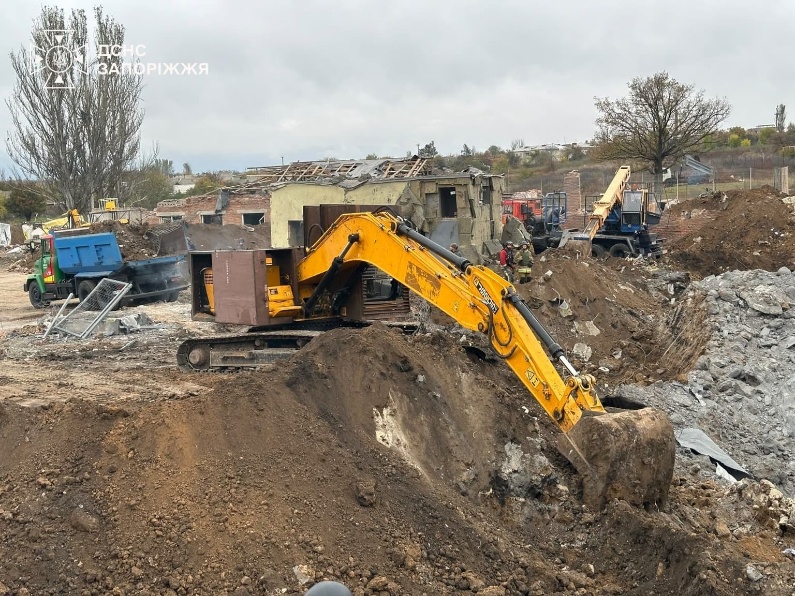
Rescue operation in Komyshuvakha, Zaporizhzhia Oblast, on Nov. 4, 2026, after it was attacked by a Russian aerial bomb attack. (Ukraine’s State Emergency Service / Telegram)
Envoys, Madrid and a Medal
Zelensky spent an hour and a half on the phone with U.S. envoys Steve Witkoff and Jared Kushner, preparing for team-level talks with Russia in Abu Dhabi on November 10 and 11. He said Ukraine presented its negotiating proposals and raised its need for Patriot interceptors, as well as the U.S.-Ukraine “Drone Deal.” “The pace of negotiations needs to be as intense as possible to end this war as quickly as possible. Ukraine is ready to take the necessary steps, our proposals are clear,” he said. “There is no alternative to peace, and post-war security guarantees must be truly ironclad.”
In Brussels, the European Commission hosted Ukrainian, American, French, German, British, NATO and World Bank officials on Ukraine’s postwar reconstruction. “The work today and going forward is focused on refining the scenarios for Ukraine’s post-war economic development and prosperity,” the Commission said. Zelensky called the meeting “productive.” “Security, recovery and development must be parts of a single plan for Ukraine after the war,” said Rustem Umerov, who said the Ukrainian delegation would discuss security guarantees separately with the U.S., the U.K., France, Germany and NATO on Thursday.
Then Zelensky flew to Madrid, his fifth trip to Spain since 2022, as a guest of the Ibero-American summit, invited personally by Prime Minister Pedro Sanchez and kept secret for security. He attended the opening at the Teatro Real, presided over by King Felipe VI, as police closed streets along his route through central Madrid. “We need protection from Russian strikes and the restoration of peace,” he said. Western officials have been pressing Spain and Greece to give Ukraine Patriot PAC-2 interceptors near the end of their shelf life; Spain earlier pledged five. On his last visit, in March, Madrid announced €1 billion in military aid, bringing its total to €4 billion, and Ukraine’s railways signed a €5.5 million pilot with Spanish firm TRIA on gauge-changing technology for freight trains. He is due to meet Sanchez on Thursday.

President Volodymyr Zelensky (right) after arriving in Spain. (Volodymyr Zelensky/X)
Zelensky also awarded Melania Trump the Order of Princess Olga, 1st Class, for her humanitarian work, including helping return abducted children since writing to Putin in August 2025 and brokering the Oleshky truce. Past recipients include Nancy Pelosi and Kaja Kallas; Zelensky gave Elon Musk the Order of Liberty in August, months before Musk restricted Ukraine’s Starlink access. Newsmax, the only American outlet allowed into Oleshky, reported that 15 evacuation buses left the town, 11 for Ukraine and four for Russia; a Kherson city councilor said only two of the four ended their route in Russia. The Kyiv Independent reported that about 10 people went to Russia. Between 1,000 and 2,000 people may have stayed, some fearing Russian filtration, others unwilling to leave their homes or pets, and many too old or ill for the long journey. The last food delivery before the truce came on May 26, and ISW said Russian Black Sea Fleet and airborne troops in the area have been reported to commit killings and sexual violence, so the aid delivered will not last long. ISW noted that Russia rejected at least three official humanitarian ceasefire proposals between May and September before accepting the one mediated by Melania Trump.
America Votes
Democrats were projected to take both chambers of Congress when it convenes in January, winning even in Texas, Kansas and South Carolina; House Democratic leader Hakeem Jeffries is positioned to become the first Black speaker and has pledged investigations of the administration. Nearly nine in 10 voters called living costs a major factor, Reuters reported. Congress shapes military aid and sanctions, and Democratic control is likely to bring more scrutiny of Washington’s dealings with Moscow and could complicate any agreement that needs congressional approval, such as the security guarantees Zelensky wants backed by a vote. Trump congratulated the Democrats. “I don’t view it as a hit on me,” he told Fox News, blaming weak candidates and acknowledging that the war with Iran played a part. “I wasn’t on the Ballot and if I was, we would have won IN A LANDSLIDE!” he wrote, while warning he would veto bills he opposes.
In Moscow, Kremlin spokesman Dmitry Peskov called the result “America’s internal affair.” “Trump remains in office, and we sincerely hope that he will continue his peace efforts,” he said. “There is some groundwork in place, and another round of trilateral talks will take place very soon.”
The Wall Street Journal reported that NATO, under its supreme commander, U.S. Gen. Alexus Grynkewich, is building defense plans that would strike bases, supply networks and factories deep inside Russia if Moscow attacked the alliance, drawing on Ukraine’s experience. The plans envision precision missiles and cheaper drones striking from about 150 kilometers to thousands of kilometers behind the front. Polish Maj. Gen. Ireneusz Nowak argued that if Ukraine had had such capability at the start, the war would not have become positional fighting. Analyst Fabian Hoffmann said 20 European manufacturers are pursuing at least 48 cheap cruise-missile projects, and former German official Nico Lange warned of a gap between military plans and politicians who equate defense with a “drone wall.”
Russia’s Missile Ledger
Ukraine’s military intelligence published its estimate of what Russia holds. As of October, it said, Russia had up to 700 ballistic missiles and several thousand cruise missiles, and can build more than 200 a month, up to 110 of them ballistic. It makes about 65 Iskander-M missiles a month, more than 80 Kh-101 cruise missiles despite defects that send some back to factories, and about 29 Kalibrs. It holds more than 600 Oniks and more than 120 Zircon missiles, increasingly fired at Kyiv, and about 400 RM-48U missiles for its S-400 systems, with about 40 more each month. It has halted production of Kinzhal missiles over accuracy problems, and is developing an upgraded system with a range of 550 to 700 kilometers. A large share of new missiles goes into reserve.
On the ground, the Institute for the Study of War said Russian forces likely consolidated positions in northwestern Kostiantynivka, where Ukraine has struck them at least eight times within one kilometer since mid-September, and conducted another infiltration there. Russia attacked 24 times toward Kostiantynivka on Tuesday and Wednesday, the most of any sector, while assaults toward Dobropillia kept falling. A source close to Russia’s Western Group of Forces admitted that Zarichne, northeast of Lyman, is a contested “gray zone” despite Russian claims to hold it. Ukrainian forces counterattacked northwest of Sumy, northeast of Borova, along the Siverskyi Donets and south of Orikhiv; Russian attacks near Kupyansk, Velykyi Burluk, Dobropillia and Hulyaipole failed, and a Russian source said Russia had stepped up assaults toward Myropillia. Ukrainian forces struck Russian infiltrators in Pokaliane, northeast of Kharkiv, and neither side reported ground fighting toward Novopavlivka, Oleksandrivka or Kherson.
Ukraine hit back behind the lines. The General Staff said its forces destroyed two Pantsir air-defense systems and a mobile fire group in occupied Crimea. Sevastopol’s occupation governor said Ukrainian strikes damaged the city’s energy system, and Crimea reported blackouts and disruptions to water and mobile service; occupation authorities in the Kherson region blamed a region-wide power cut on a “technical issue.” A Ukrainian drone set fire to an Ozon warehouse in Adygeysk, about 394 kilometers from the front, the company and local authorities confirmed. Overnight, drone forces commander Robert “Magyar” Brovdi said, Ukrainian troops shot down a Shahed carrying propaganda leaflets for Kyiv, one asking readers to vote on a name for a “Ukrainian volunteer brigade” in Russia’s army and another attacking mobilization, both with phishing QR codes. “It is highly likely that this is an enemy trap designed to steal your data,” he warned.
Also Today
Two held in Borshchahivka case. A court ordered Valentyna Moloda, who posed as a paramedic at the National Guard site near Kyiv, held for two months, and police also detained Tetiana Kiriieva, accused of spreading false claims of torture and murder online. Prosecutors charged them with obstructing the armed forces and disclosing troop locations.
Moldova moves ahead. EU accession roadmaps said Moldova could close 24 negotiating chapters in 2027 and Ukraine seven, and urged Kyiv to speed up rule-of-law reforms if it wants to finish talks by the end of 2028; Moldova aims for early 2028. The Commission said enlargement is advancing faster than at any time in 15 years, and Ukraine has overtaken longtime candidates Serbia and North Macedonia.
Robots for rescuers. The State Emergency Service received a Termit 2.0 ground robot, “Marsupilami,” donated with help from the Serhii Prytula Charity Foundation and the NGO INSCIENCE and able to carry 500 kilograms into danger zones, as Russia keeps targeting rescuers with double-tap strikes. The Defense Ministry said the 93rd Brigade’s “Alter Ego” unit carried out the first combat mission with an amphibious ground robot, covering more than 40 kilometers over land and water. Ukrainian ground robots have flown more than 100,000 missions this year, three times as many as in 2025.
The Closing
Tonight, the water is flowing again in Kyiv, but residents are being told to store some anyway. In Komyshuvakha, families are giving DNA so their loved ones can be named. In Washington, a new Congress is coming. Ukraine heads to Abu Dhabi with its proposals clear, and it asks for one thing before then: the interceptors to stop the missiles Russia is stockpiling for winter.
A Prayer for Ukraine
1. For Those Who Defend
Lord of hosts, cover the soldiers in Kostiantynivka who hold ground street by street, and the defenders of Lyman, Kupyansk, Sumy and Orikhiv. Steady the air defenders who face hundreds of drones each night, and the crews who destroyed the enemy’s guns in Crimea. Give them rest in the long nights, courage in the hard days, and bring them home to their families.
2. For the Wounded and the Grieving
God of all comfort, receive the forty dead of Komyshuvakha, and those still under the rubble. Comfort the families who gave their blood so their loved ones could be named, and those who still wait. Receive the dead of Donetsk and Zaporizhzhia regions, and heal the wounded of Dnipro, Kherson and Sumy regions. Strengthen the rescuers who search the ruins with their dogs.
3. For Those Who Lead
King of kings, give President Zelensky wisdom in Madrid and in every call that shapes his nation’s future. Guide the envoys preparing for Abu Dhabi, and the new Congress soon to take its seats, toward justice. Let leaders keep their promises, let the world answer the cry of Komyshuvakha, and let no peace be built on the suffering of the innocent.
4. For the Workers Who Restore
Faithful God, bless the repair crews of the grid, the water system and the railways who go out after every strike knowing another may come. Protect the rescuers who dig while drones circle overhead, and the miners who search beside them. Bring water and light back to every home in Kyiv and every village before the frost, and give the workers strength and safety.
5. For a People Who Keep Standing
Father, Ukraine fills its bottles and carries on. Sustain the families who stayed in front-line villages, the elderly who cannot leave, the people of Oleshky who remain, and the children who have never known peace. In Your mercy, in Your justice, in Your time — bring this war to its end, and let the ending be worthy of what Ukraine has endured.