
The Ukraine Daily Briefing · Wednesday, November 25, 2026 · Day 1,736 of the Full-Scale War
The Day’s Reckoning
On the day Ukraine brought down a Russian jet drone with a beam of light, the missiles that stop Russia’s ballistic attacks were still waiting for a signature in Washington. A Ukrainian combat laser shot down a jet-powered Russian attack drone for the first time, a small but real answer to the fastest drones Russia now sends. Poland moved to set up a no-fly zone along its border with Ukraine and said shooting down Russian missiles over Ukraine could count as self-defense, though NATO has not agreed. In Washington, 48 Patriot interceptors already paid for by Ukraine’s allies stayed unapproved, and that night a ballistic missile hit a shopping mall in Kyiv. Ukraine kept striking the sources of Russian firepower, setting two refineries ablaze some 800 kilometers inside Russia and damaging five warplanes at an air base. Along the front, Russian troops tried to use wind and fog to blind Ukraine’s drones, and Russia gained no ground anywhere else.
The Light That Waited for Clear Skies
For most of November, fog and low cloud over Kyiv reportedly kept Ukraine’s newest weapon from doing its job. A laser beam scatters in bad weather, sometimes before it ever reaches a drone.
On Nov. 25, presidential adviser Serhii “Flash” Beskrestnov released video of what the weapon can do when it works. A Ukrainian laser called Blysk, guarding a critical infrastructure site, had shot down a Russian jet-powered Geran drone. The Geran is Russia’s own version of Iran’s Shahed attack drone. Beskrestnov said it was the first time anywhere in the world that a combat laser had downed one.
A laser does not explode. Its operators hold the beam on one particular spot of an incoming drone until the parts inside overheat and fail, Beskrestnov said. A small first-person-view drone, the kind flown by a pilot watching through its camera, can be disabled almost instantly. A Shahed has to stay in the beam for several seconds.
That matters because Russia has turned to jet-powered drones that fly at 400 to 600 kilometers per hour, far faster than the old propeller models. Russia launched more than 3,000 of them in September alone, against about 350 in June, according to Ukraine’s Air Force. By September, Ukraine was stopping only about 60% of the jets, compared with 90 to 95% of the slower drones.
The night before, Russia sent 112 drones at Ukraine, 66 of them jet powered. Air defenses downed or suppressed 47 of the jets.
A laser offers something no missile can: it runs on electricity, not on costly interceptor drones or missiles. Blysk is modest, with a reported output of four kilowatts and a range of about one kilometer, and tracking a fast, twisting drone with a beam is hard.
Blysk was built by the Ukrainian company Carmine Sky under the state’s Private Air Defense program, with support from Brave1, the government’s defense technology cluster. The program lets companies form their own air defense teams under the Air Force’s command. About 100 companies have joined, and half have formed active combat units.
Beskrestnov was careful not to promise too much. “It is still too early to talk about serial production of the laser,” he said. For now, the lasers are being tested while they defend critical sites.
But he allowed himself one line of relief. “Laser technologies are very complex and costly, so it is nice when someone has good news.”
A Neighbor Offers to Reach Across the Border
Poland’s foreign minister, Radosław Sikorski, said on Nov. 25 that shooting down Russian missiles over Ukraine, if Kyiv asked, could count as an act of self-defense.
He spoke after Russian missiles and drones crossed into Polish airspace during attacks on Ukraine on Nov. 23 and 24.
Poland is now moving to protect its own edge. Deputy Defense Minister Cezary Tomczyk said the government plans a no-fly zone reaching more than 10 kilometers in from the eastern border with Ukraine. In a no-fly zone, unauthorized aircraft are banned and can be engaged. Warsaw wants the rule in force by late December or early January.
The zone would back a new procedure for Polish pilots. They may now identify and engage a target using radar data, intelligence from allies, altitude and speed, instead of having to see it with their own eyes first. Poland has fired before: on Sept. 10, 2025, it shot down Russian drones that strayed into its airspace, the first time a NATO member had engaged Russian aerial targets in this war.
Warsaw has also asked for something bigger. At a meeting of NATO ambassadors in Brussels on Nov. 23, Poland raised the idea of the alliance shooting down Russian missiles over Ukraine itself, according to people familiar with the discussions. Some allies supported it. No decision has been made, and the talks remain preliminary.
Tomczyk was blunt: NATO is not supportive, he said, citing the complications, and earlier talks had ruled the idea out.
The alliance has not said yes. Poland’s own zone is due within weeks.
Forty-Eight Missiles and One Signature
Late on Wednesday night, Ukraine’s Air Force warned of a ballistic missile threat. Then the explosions came. “Explosions in the capital. The city is under ballistic missile attack. Stay in shelters!” Kyiv Mayor Vitali Klitschko wrote.
The missiles hit a shopping mall, a building in an industrial area and another non-residential building in the Desnianskyi district. Two people were taken to hospital in serious condition. By 6:28 the next morning, the count of injured had risen to seven.
A ballistic missile climbs high and falls at enormous speed, and only one interceptor in Ukraine’s hands can reliably stop it: the American-made Patriot.
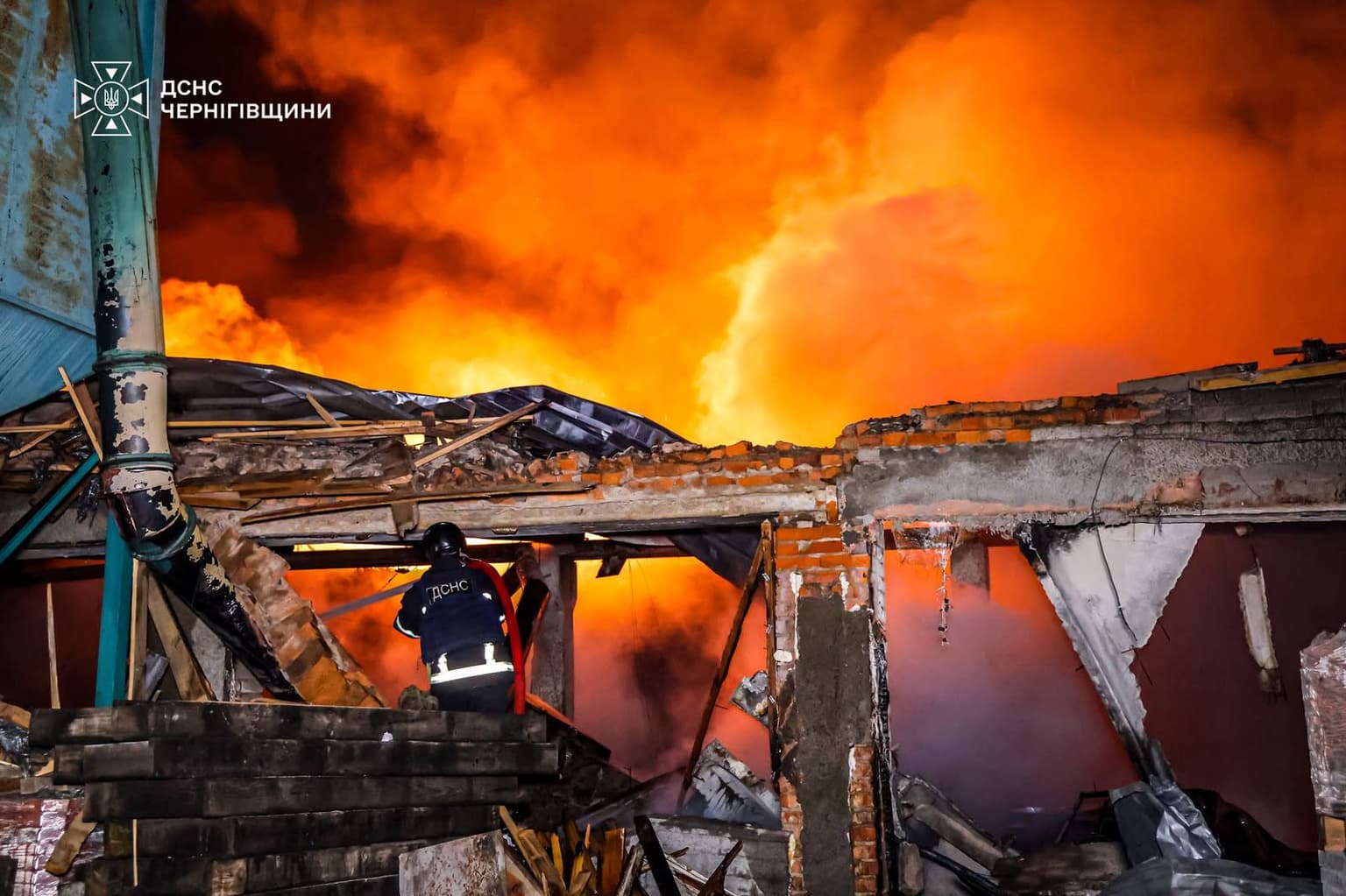
An emergency worker fights a fire in the aftermath of Russian strikes on Chernihiv, Ukraine, overnight. (Ukraine’s Emergency Service/Telegram)
A day earlier, President Volodymyr Zelensky said a shipment of at least 48 Patriot interceptors was sitting unsigned on the desk of US Defense Secretary Pete Hegseth. Allies have already paid for them through PURL, a NATO program in which members buy American weapons for Ukraine. “Unfortunately, Hegseth has not signed it yet, so it depends solely on him,” Zelensky said.
On Nov. 25, he had nothing better to report. “Unfortunately, we don’t have any good news from the United States yet on accelerating deliveries. Deliveries are still delayed,” he said in his evening address. The Pentagon offered no answers, pointing instead to plans to expand Patriot production.
The holdup is not new. The United States has reportedly delayed four shipments of Patriot interceptors since September.
The cost can be counted. In September and October, after the last Patriot delivery, Russian long-range strikes killed at least 700 Ukrainian civilians and injured more than 3,000, according to United Nations monitors.
Ukraine is trying to build its own answer. Nine European countries joined Ukraine’s Freya project in July, an anti-ballistic missile system being developed by the Ukrainian company Fire Point. “The process of integrating the components has already begun,” Zelensky said.
Freya is still being assembled. The 48 Patriots are already paid for.
Fire 800 Kilometers Deep
In Russia’s Samara region, residents reported loud explosions overnight on Nov. 25. They complained that the air raid alert came an hour after the attack began.
Ukrainian drones had reached the Kuibyshev and Syzran oil refineries, about 100 kilometers apart and some 800 kilometers from Ukraine’s border. Both caught fire. The strikes damaged the units where crude oil is first broken down, Ukraine’s General Staff said, in an operation carried out with Black Spark, a resistance movement operating inside Russia. Together the two plants handle nearly 6% of Russia’s crude refining.
Samara Governor Vyacheslav Fedorishchev said 145 drones were shot down over his region. He confirmed one death and power outages.
The same night, Ukraine reached Savasleyka Air Base, about 680 kilometers away in Nizhny Novgorod Oblast. Three MiG-31 jets and two Su-34 fighter-bombers were hit, the General Staff said and will be “unable to fly for some time.” The MiG-31 carries Kinzhal missiles; the Su-34 fires missiles and drops glide bombs on Ukraine. With interceptors scarce, destroying the aircraft that launch the missiles is one way to stop them.
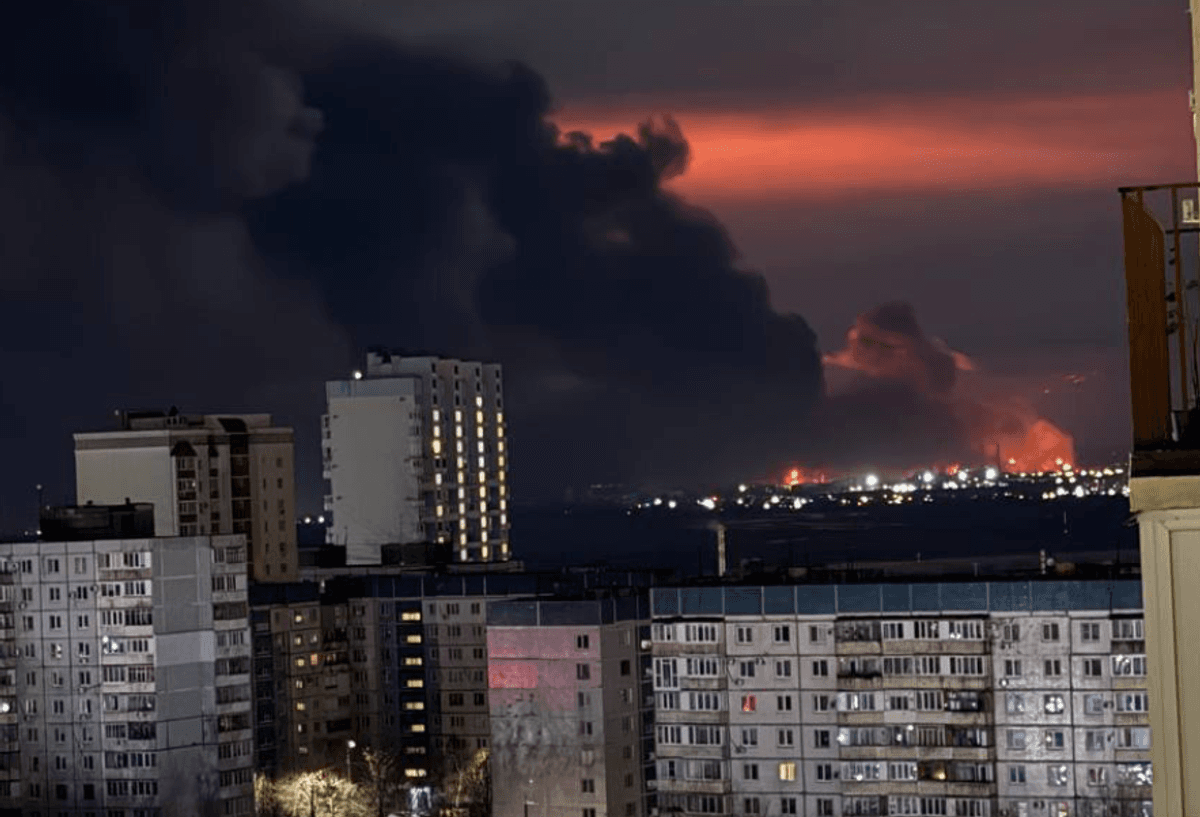
A fire burning at Russia’s Kuibyshev Oil Refinery in Samara Oblast overnight. (Exilenova Plus/Telegram)
Ukraine also hit a radar station and supply depots in occupied Luhansk and Donetsk oblasts, and military intelligence said it destroyed a complex in Russia’s Smolensk region that watches the sky for Russian air defenses.
Inside Russia, the strain is now admitted openly. Deputy Prime Minister Alexander Novak said on Nov. 25 that the fuel market is under intense strain with so many refineries under repair, forcing imports. Russian refining fell by 45% in the first three weeks of November, according to industry sources.
On Nov. 24, Vladimir Putin told his oil executives to build refining capacity in Siberia and the Far East, where only a handful of plants remain untouched. He blamed Kyiv for ignoring what he called a direct request from President Trump to stop.
“The Kyiv authorities do not listen to such advice,” Putin complained. “Everything continues as if nothing had happened.”
Mud, Wind and a Line That Did Not Move
South of Dobropillya in Donetsk Oblast, Russian troops waited for bad weather. Strong winds and poor visibility ground down Ukraine’s drones, and on Nov. 25 a Russian assault group rolled forward in two armored vehicles carrying 11 soldiers.
The Ukrainian brigade holding the sector saw them anyway. Footage it published shows its drones striking an infantry fighting vehicle and an armored personnel carrier, a sign that Russian troops had recently pushed forward there.
The tactic is deliberate. Fog, wind and rain slow Ukrainian drone pilots in spotting armor, so Russian crews use the weather to race deeper into the “kill zone,” the strip of ground in front of Ukrainian positions watched by drones, and drop off infantry. The armor also draws Ukraine’s scarce reconnaissance drones while small Russian infantry groups try to slip through elsewhere.
It was a busy day. Ukraine’s General Staff counted 151 clashes. Russia carried out 47 airstrikes, dropped 156 guided bombs and launched 3,870 kamikaze drones at Ukrainian positions and towns.
Everywhere else on Nov. 24 and 25, Russian forces failed to advance, according to the Institute for the Study of War. Attacks north of Sumy, around Kharkiv, toward Lyman, Slovyansk and Kostyantynivka, and in the Hulyaipole and western Zaporizhzhia directions all stalled. East of Slovyansk, Ukrainian troops counterattacked, and north of Sumy they kept counterattacking near Oleksiivka, Varachyne, Yunakivka and Yablunivka, Russian milbloggers said.
In northeastern Kharkiv Oblast, Russia has posted footage every day since Nov. 22 of soldiers raising flags in villages near Velykyi Burluk. Ukraine liberated at least 14 settlements there in Operation Bear Trap. Analysts at the institute believe the Russian footage is old.
At Kupyansk-Vuzlovyi, southeast of Kupyansk, each side published video claiming the town. A Ukrainian battalion commander filmed himself walking its streets on Nov. 24 and said Ukrainian forces fully control it. Farther south, a Russian milblogger admitted that Ukraine had retaken the village of Zahryzove, northeast of Borova, by early November.
In occupied Zaporizhzhia Oblast, a Ukrainian drone unit released footage of strikes on 14 Russian tanks, along with command vehicles, engineering equipment and trucks deep behind Russian lines.
And Ukraine has a new machine at the front. Germany’s most advanced infantry fighting vehicle, the KF41 Lynx, has already seen combat with the 21st Separate Mechanized Brigade. Its 30mm cannon has been used against Shahed drones. A vehicle commander known by the callsign Bankir said his unit received them “directly from the assembly line,” with less than 25 kilometers on the odometer.
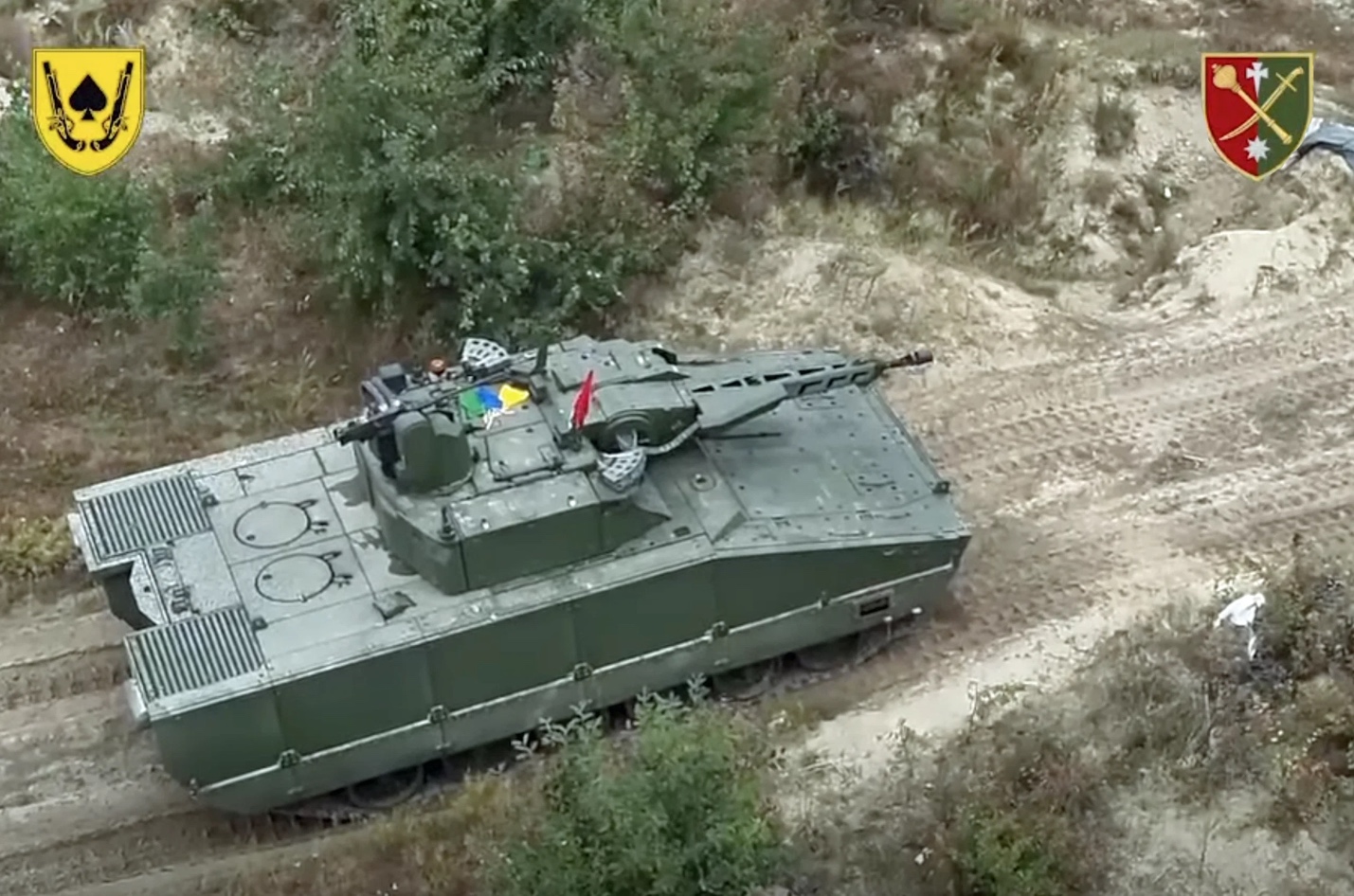
A KF41 Lynx infantry fighting vehicle in service with Ukraine’s 21st Separate Mechanized Brigade. (Photo: Screenshot from 18th Army Corps video)
Also Today
- The day’s toll. Russian attacks killed nine people and injured 59, including a 12-year-old, across Ukraine over the past day. The dead included a man born in 1974 in Kyiv Oblast’s Bila Tserkva district and a teenager in Odesa Oblast; in Zaporizhzhia Oblast, five children were among 31 injured.
- Darkness and long alerts. Strikes on energy facilities cut power in five oblasts, and the energy company DTEK said one of its thermal plants stopped generating after the third large-scale attack on its plants this month. In Sumy Oblast, air raid alerts lasted more than 19 hours.
- A bomb, a balcony camera and an arrest. The SBU, Ukraine’s security service, caught a former soldier from Kharkiv just meters from the planned blast site in Khmelnytskyi as he prepared to detonate a car bomb meant for a Special Operations Forces commander. The agency says Russian military intelligence recruited him on Telegram, where he was looking for quick money, and promised him Russian citizenship; he faces life in prison for high treason.
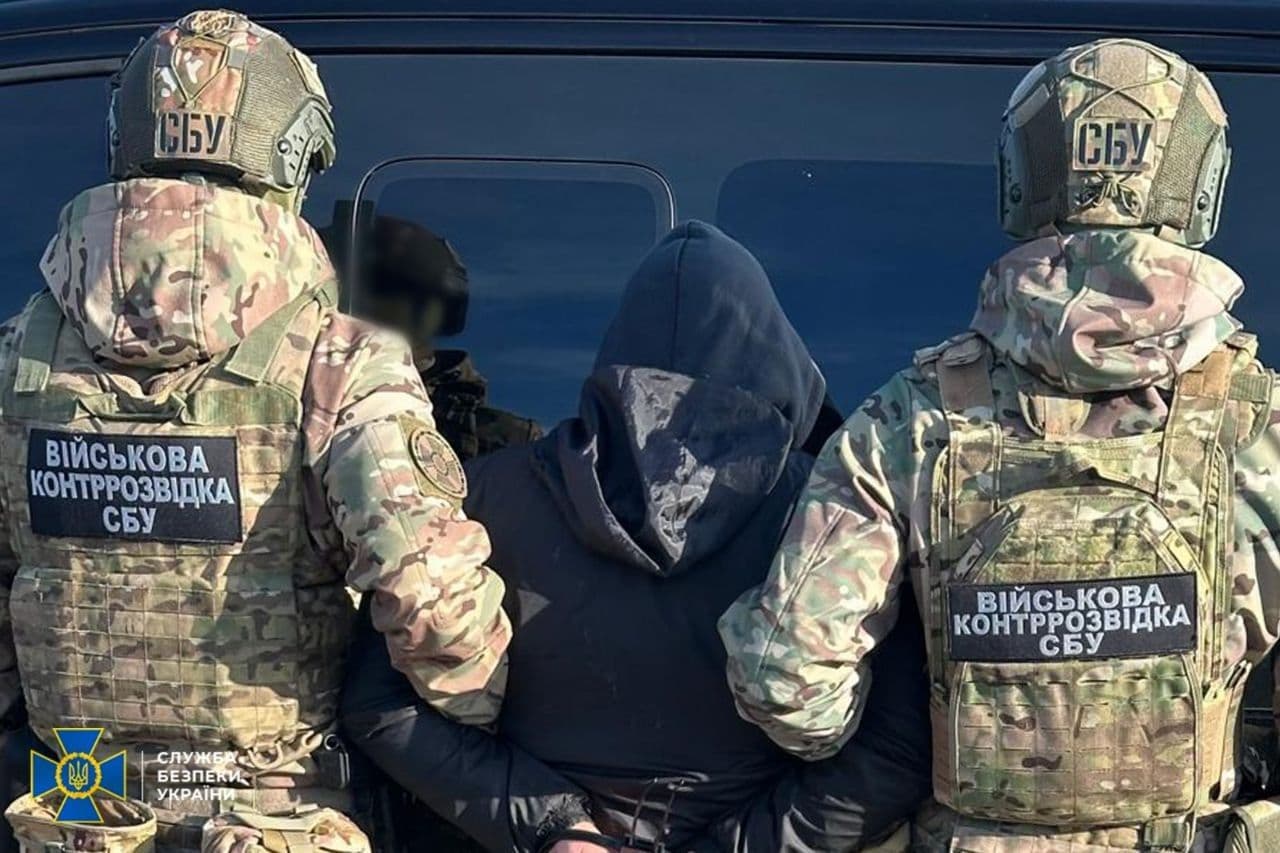
Ukraine’s Security Service (SBU) detains a suspect in Khmelnytskyi, Ukraine, who was allegedly tasked by Russian intelligence services with assassinating a Ukrainian military commander. (SBU / Telegram)
- A nuclear plant on diesel. The Russian-occupied Zaporizhzhia Nuclear Power Plant lost its outside power at 4:28 a.m. after a Russian attack cut its last transmission line, and now runs on diesel generators, the 28th such blackout since the full-scale invasion, according to the International Atomic Energy Agency.
- Outnumbered 30 to 1. Ukrainian TV reporter Yehor Romakhlo told lawmakers that during the October evacuation of occupied Oleshky, about 30 Russian media workers outnumbered his crew, which had four hours’ notice and a Starlink terminal that worked for only half an hour. “We were traveling on the same bus, and they were putting out material constantly, straight away. We didn’t have that opportunity,” he said.
- Prisoners coming home. Kyrylo Budanov, head of the Presidential Office, said a prisoner exchange of about 1,000 people will likely happen in stages, with the first prisoners of war returning in late November or early December. He said civilians from Zaporizhzhia and Kherson regions may also come home by year’s end.
- A guarantee with conditions. US envoy Jared Kushner said President Trump would approve NATO-style security guarantees for Ukraine only through Congress and only if he believed they would almost certainly never be invoked, a process the Institute for the Study of War says could delay or block them. Russia still demands that Ukraine give up the rest of Donbas before any ceasefire.
- Europe wants a chair. France said it would send a representative to Moscow only if the Kremlin guarantees Europe a full seat at peace talks, after Europeans were kept out of the main room in Abu Dhabi on Nov. 10-11. European Commission President Ursula von der Leyen said Europe would join the next round and judge Russia by its deeds.
- Sanctions keep coming. The EU placed 15 Russian companies tied to the defense sector under tighter export controls on goods with both civilian and military uses, and the European Commission proposed a 22nd sanctions package.
- Switzerland’s growing freeze. Russian assets frozen in Switzerland have risen to 8.5 billion Swiss francs ($10.2 billion), the country’s sanctions chief said.
- A deal for Lukoil. US billionaire Todd Boehly said his US government-backed consortium signed a deal to take over the foreign assets of sanctioned Russian oil giant Lukoil in exchange for $10 billion in frozen Lukoil shares, pending a US Treasury license.
- Kremlin waves off its dead. Kremlin spokesman Dmitry Peskov told reporters to disregard independent counts of Russia’s war dead, after Russian journalists estimated about 720,000 military deaths from leaked state records. The median age of Russian soldiers killed rose from 33 in 2022 to 40 this year.
- Toward a tribunal. The Verkhovna Rada, Ukraine’s parliament, voted to join the management committee of the Special Tribunal for the Crime of Aggression, with 293 lawmakers in favor; the tribunal is expected to start work in The Hague in 2027. “International justice takes time, but its strength lies in its inevitability,” Foreign Minister Andrii Sybiha said.
- Gas in the trenches. Thirty-four countries and the EU called on Russia to stop using toxic chemicals and riot-control agents on the battlefield, after a Ukrainian report documented 14,000 cases against Ukrainian soldiers. Moscow denies using them.
- Estonia’s foreign minister in Kyiv. Margus Tsahkna arrived in Kyiv as Moscow warns of “open war” with Estonia, which on Nov. 24 deported Russian citizen Anton Zuyev over contacts with Russian intelligence. “Now you can communicate with Russian intelligence services as much as you want. In Russia,” Tsahkna wrote. The same day, British officials warned companies supplying Ukraine that Russia has stepped up sabotage against European defense sites.
- Russia’s balloon army. Russia has imported at least $120 million in goods from China under a customs code used for inflatable military decoys, according to trade data reported in Britain. The code also covers pools and sports gear, but the cheap fakes of jets and tanks can drain Ukraine’s precision weapons.
- Shelters and shop doors. Ukraine’s government will let businesses without shelters stay open during yellow, drone-level air alerts until June 4, 2027, with staff consent.
- AI and the alliance. NATO’s transformation commander, French Admiral Pierre Vandier, said super intelligence can help allied weapons share data, noting that it already helps Ukrainian forces spot movement on the battlefield.
- A warning for Americans. The US State Department renewed its warning against travel to Ukraine a day after an American was injured by falling drone debris near a restaurant in central Kyiv.
Somewhere in Ukraine, a four-kilowatt laser stands guard over a site that cannot be named. In Kyiv’s Desnianskyi district, seven people are hurt and a shopping mall is damaged after a ballistic missile struck in the night. In Washington, 48 Patriot interceptors, the weapon built to stop that kind of missile, wait for one signature.
A Prayer for Ukraine
1. For Those Who Defend
Lord, guard the soldiers who held every sector of the front today. Be with the brigade south of Dobropillya, who watched for Russian armor through wind and poor sky, and with the crews of the 21st Brigade learning a new machine in combat. Thank You for sparing the commander in Khmelnytskyi whom a hidden bomb was waiting for, and for the officers who stopped it. Steady the hands of the laser crews and every private air defense team standing watch through the night.
2. For the Wounded and the Grieving
Comfort the family of the man from the Bila Tserkva district, born in 1974, who did not survive the night. Hold the parents of the teenager killed in Odesa Oblast and heal the 12-year-old and the five children hurt in Zaporizhzhia Oblast. Be near the seven wounded in Kyiv’s Desnianskyi district, especially the two in serious condition. Let none of these names be forgotten and bring justice to those who sent the missiles and drones.
3. For Those Who Decide
Give wisdom to those who hold the power to sign. Move the heart of Defense Secretary Pete Hegseth to release the interceptors already paid for, before more lives are lost. Strengthen Poland’s leaders as they weigh how far to reach to protect their neighbor and give NATO’s ambassadors courage. Guide Kyrylo Budanov and every negotiator working to bring prisoners home and keep the talks honest.
4. For Power Lines and Homes
Restore the power plant DTEK lost to today’s attack and the lines that went dark across Odesa, Kharkiv, Donetsk, Dnipropetrovsk and Zaporizhzhia oblasts. Keep the generators running at the Zaporizhzhia Nuclear Power Plant and protect everyone who lives in its shadow. Give rest to the people of Sumy Oblast after 19 hours of alerts and protect the repair crews who go out while the drones still fly.
5. For Strength to Endure
Lord, Ukraine enters a fifth winter of full-scale war, and its people keep finding ways to stand. They build lasers that fight drones, guard warehouses with their own air defense and report the truth from places where they are outnumbered 30 to one. Remember the families waiting for prisoners to come home before Christmas. Give them patience that does not turn to despair, and hope that does not depend on the next signature.
In Your mercy, in Your justice, in Your time — bring this war to its end and let the ending be worthy of what Ukraine has endured.