
As Russian missiles and drones plunge thousands of Kyiv apartments into freezing darkness, diplomacy grinds on in parallel—revealing a widening gap between peace talk theater and the brutal reality of winter warfare.
The Day’s Reckoning
The thermometer inside a Kyiv apartment stalled at 6.9 degrees Celsius. Not outside. Inside. Families layered coats over pajamas, breath visible in rooms meant to be warm, waiting for heat that might not return. Hours earlier, Russia had launched 396 aerial weapons at Ukraine while diplomats spoke of peace in Abu Dhabi.
The night began at 1:20 a.m. Ballistic missiles cut across Kyiv’s sky. Air defenses thundered back. By morning, one person was dead in the capital. Four were wounded. And 1,676 residential buildings—about fifteen percent of the city—were still without heat. Some had been cold since January 9, briefly reconnected, then plunged back into darkness by new strikes. Repair. Strike. Repair again. A cycle designed not to destroy once, but to exhaust.
Eight hundred kilometers north, Belgorod burned. At least fifty explosions tore through the night. The thermal power plant caught fire in what residents called the heaviest strike the city had seen since the war began. Ukraine was answering energy warfare with energy warfare, exporting the cold across the border.
In Vilnius, Volodymyr Zelensky stood before cameras and announced U.S. security guarantees were “100% ready,” awaiting signatures. The same day, diplomatic restraint collapsed elsewhere. Ukraine’s foreign minister likened Hungary’s Viktor Orban to a Nazi collaborator after threats to block Ukraine’s EU path for a century.
From Moscow came no ambiguity. Russia reiterated its original demands—neutrality, regime change, no security guarantees. Translation: talks would continue, but the war would not stop.
Winter had become a weapon. Diplomacy, a performance. And between frozen apartments and burning power plants, the distance between words and reality had rarely been so stark.
A Sky So Full of Fire: The Night 396 Weapons Came at Once
The first alerts arrived before dawn, lighting up Ukrainian Air Force screens in quick succession.
Twenty-one missiles inbound.
Tsirkons—hypersonic, once paraded as symbols of Russian invincibility. Iskanders. Kh-22s and Kh-32s built to tear into hardened targets. The operators barely had time to register the types before the picture changed.
Then came the swarm.
Three hundred seventy-five drones lifted from four directions at once—Kursk, Oryol, Dnipro, Zaporizhzhia—spreading across the map until the sky itself seemed crowded. This was not precision. This was arithmetic. Flood the airspace. Force impossible choices. Accept that some would get through.
They did.
By morning, Kyiv counted one dead and four wounded. Across the country, forty injured. Energy facilities hit again. Sixty residential buildings damaged. Eighty civilian vehicles shredded or burned. The exact interception numbers stayed classified. The consequences did not.
In Kharkiv, fires crawled through multiple districts. Twenty-seven people were hurt. One hundred thirty-four rescuers and dozens of emergency vehicles moved from site to site, not “repairing damage,” but, as officials put it, “eliminating consequences.” As if the night could be surgically removed.
Kyiv absorbed quieter losses. A section of the metro crossing the Dnipro shut down, forcing commuters into longer, colder routes. And in Holosiivskyi district, a Shahed drone slammed into a Roshen chocolate factory. One worker was killed. By 11 a.m., the doors reopened anyway. Coffee still mattered. Routine still mattered.
Hennadiy, fifty, wandered into the aftermath on his usual morning walk. Coffee in hand, he stopped at a fresh crater. “It was mighty loud,” he said calmly. “I only saw where it landed when I walked by.” This is how Kyiv survives—by refusing to stop.
It was the third massive assault in sixteen days. January 9. January 20. January 24. Zelensky tallied the week: 1,700 drones, 1,380 guided bombs, 69 missiles. Sanctions hadn’t emptied Russian stockpiles. Moscow was spending millions to freeze civilians.
The timing said everything. The attack followed peace talks. The diplomacy was noise.
The real message arrived at 1:20 a.m., riding hypersonic speed toward the grid.
Cold as a Weapon: When a City Counts Survival in Buildings, Not Lives
The number landed with quiet force in Kyiv’s morning briefing: 1,676.
That many residential buildings still without heat. Fifteen percent of the capital. Hundreds of thousands of people waking up cold.
For Ukraine’s energy workers, it was another impossible reset. The night before, Russian missiles had erased weeks of progress. Nearly 6,000 buildings lost heating in a single strike—after crews had finally pushed outages below 2,000 for the first time since early January. One night undid everything.
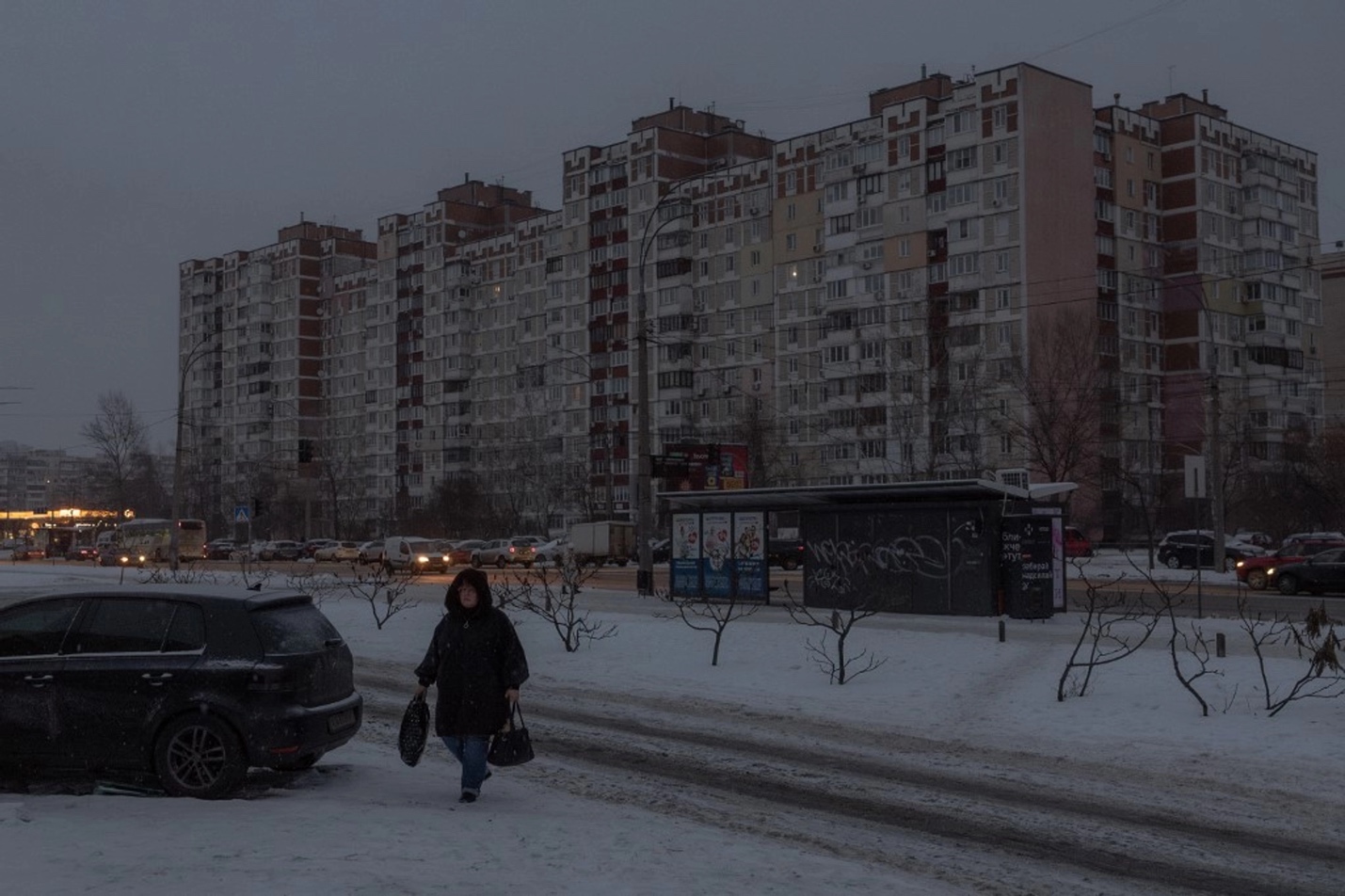
They worked anyway. Through the dark hours and into daylight, crews reconnected pipes and substations. Sixteen hundred buildings came back online overnight. Thousands more during the day. By evening, heat had returned to over 4,000 homes. But 1,676 remained frozen—knowing the number would rise again when the next attack came.
This was the design. Restore. Hope. Freeze again.
People felt it immediately. Apartments warmed just enough to dry clothes, cook meals, feel normal—then the heat vanished. Those without warmth since January 9 endured the worst cycle of all: brief relief followed by deeper cold. On Kyiv’s left bank, Ukrenergo’s chief warned the heating crisis was spreading westward, the geography of freezing expanding with each cascading failure.
The city opened 1,300 heating tents. Another ninety-one sat between apartment blocks. They offered warmth, phone chargers, hot drinks. Survival. Not life. Children still needed homes. The elderly needed stable temperatures. The sick needed refrigeration for medicine.
Officials urged residents with options to leave. Hennadiy laughed bitterly at the idea. Two million people, he said. Where would they go?
Denys Shmyhal admitted the truth: the grid could not recover fast enough. Infrastructure was being destroyed faster than it could be repaired. Some apartments hovered at 6.9 degrees Celsius. Pipes burst. Families layered winter clothes indoors. Hypothermia became a real threat.
This winter was different. Not hardship—but endurance.
The 1,676 buildings were not statistics. They were a strategy. Winter, turned deliberate.
Fire Comes Home: When Belgorod Learned the Price of Energy War
The night over Belgorod did not fade quietly.
It erupted.
At least fifty explosions tore through the darkness—some residents counted more—as flames climbed from the thermal power plant on Severo-Donetskaya Street. Power failed. Water pressure dropped. The city watched its skyline flicker as if the war had crossed the border in a single breath.
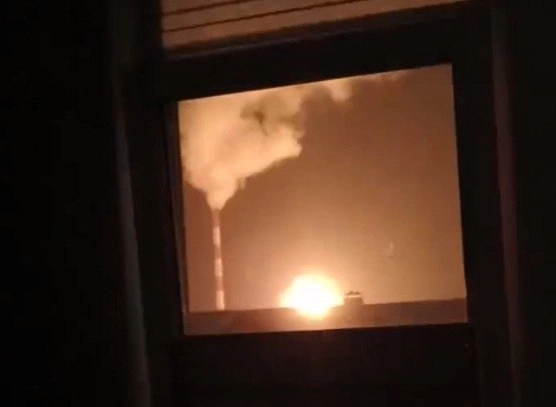
Officials moved quickly to soften the picture. By evening, Governor Vyacheslav Gladkov confirmed strikes on “energy facilities,” attributing them to U.S.-made HIMARS. By morning, the count became precise: twenty-four munitions, damaged homes, nine vehicles, a burning outbuilding. The language stayed careful. Not power plants. Not missiles.
Videos told the rest of the story. Two direct hits on the thermal plant. Sustained detonations through the night. Shards of metal scattered in the streets—fragments residents said did not belong there. The fires could not be explained away.
And it wasn’t only Belgorod city. Damage rippled outward—to Borisov, Valuysky, Volokonovsky, Graivoron, Krasnoyarsk. Gas cut in some areas. Electricity lost in others. This wasn’t a single warning shot. It was an oblast feeling its systems fail.
The timing answered every question. The strike came the same night Russia launched 396 weapons at Ukraine’s energy grid. While 1,676 buildings in Kyiv stayed dark and families huddled in 6.9-degree apartments, Belgorod residents learned what energy war felt like.
Kyiv
said nothing publicly. It didn’t need to. The pattern was already clear. Freeze civilians. Pay the cost.
For years, Ukrainians had lived with this rhythm—sirens, explosions, outages, the knowledge that normal life could vanish in seconds. Belgorod entered that reality in one night. The fear. The waiting. The understanding that infrastructure was no longer neutral.
Russian media would call it aggression. Ukrainian analysts would call it response. Both were right. The deeper truth was simpler: once Russia made winter and power plants weapons, the fire would eventually come home.
Peace, on Moscow’s Terms: A Table Set for Capitulation
The language sounded diplomatic. The meaning was not.
On January 24, Russia’s deputy foreign minister Sergei Ryabkov stripped away any remaining ambiguity about what Moscow meant by “negotiations.” The war’s “root causes,” officials said, still had to be resolved. They listed them calmly: Ukrainian neutrality. No nuclear status. Removal of the current government. No foreign security guarantees. Protection for Russian speakers.
Nothing had changed.
This was not an opening position. It was a restatement of the invasion’s original purpose—regime change, demilitarization, and a Russian veto over Ukraine’s future—delivered as if it were a reasonable starting point. Abu Dhabi was not a place for compromise. It was a stage.
Then came the trap. Moscow rejected postwar security guarantees outright, insisting peace must come first and protection later. Translation: Ukraine should disarm, concede, and trust Russia not to return. Any insistence on guarantees, Russia warned, would be proof that Ukraine was “undermining” negotiations.
Kremlin spokesman Dmitry Peskov revealed the anxiety beneath the bravado. He railed against Washington’s pressure, warned against “bending” to Trump, and mocked American unpredictability. The message between the lines was clear: Moscow was at the table not because it wanted peace, but because it feared what more U.S. pressure might bring—more weapons, harsher sanctions, frozen assets turned against the war effort.
Ryabkov invoked vague “understandings” from a past Alaska summit—understandings no one could define, no document could confirm. The ambiguity was the point. It allowed Moscow to claim agreements existed, then blame Ukraine for violating them.
Meanwhile, the missiles kept flying.
Russia talked while launching 396 weapons. Ukraine talked while 1,676 buildings stayed frozen. Only one side openly demanded surrender and called it peace.
A Century of Vetoes: When Budapest Chose Moscow Over Europe
Viktor Orban did not hedge on January 24. He accused Ukraine of election interference and warned he would block Kyiv’s path into the European Union for a hundred years. Not months. Not years. A century.
He framed it as defense. Hungary, he said, was under threat—its households, its sovereignty, its democracy. Ukraine had “gone on the offensive.” Budapest would not send taxpayer money east. It would not be “dragged into your war.” The phrasing mattered. Your war, as if Russian tanks crossing borders were a Ukrainian invention.
Foreign Minister Peter Szijjarto echoed the line, accusing Kyiv of meddling and warning Hungary would never accept a government that said “yes to Brussels.” The enemy, in Budapest’s telling, was no longer Moscow. It was Kyiv.
Ukraine’s response detonated what remained of diplomatic restraint.
Foreign Minister Andriy Sybiha accused Orban of trading the safety of ethnic Hungarians in Ukraine’s Transcarpathia for political loyalty to the Kremlin. Then he reached for history’s sharpest blade, comparing Orban to Ferenc Szalasi—Hungary’s Nazi collaborator who aligned the country with Hitler’s machinery of destruction.
Hungary, Sybiha wrote, was being led once again toward “the wrong side of history.” Not as victim. As accomplice.
The words were deliberate. They bypassed Orban and spoke directly to Hungarians, accusing their leadership of lies, kleptocracy, and hatred. This was not diplomacy. It was confrontation.
The rupture did not come from nowhere. Orban had spent years blocking aid to Ukraine, shielding Moscow inside EU institutions, and deepening Hungary’s dependence on Russian oil—86 percent of supply, even as Europe cut ties. He had sued Brussels for banning Russian gas while Russian missiles fell on Ukrainian cities.
By invoking a hundred-year veto, Orban clarified the choice. Ukraine’s survival or Hungary’s alignment with Moscow. European unity or permanent obstruction.
Kyiv answered with history because history was the point.
Keeping the Lights On: Vilnius Shows What Real Allies Do
Vilnius did not offer condolences. It offered power.
On January 25, as Russian missiles chewed through Ukraine’s energy grid, Volodymyr Zelensky stood beside Lithuanian President Gitanas Nauseda and heard a concrete number: nearly 100 generators, headed for Ukrainian cities where heat and electricity had vanished overnight. Hospitals. Heating centers. Water pumps. The places that could not wait for the next repair cycle.
This was not symbolism. With 1,676 Kyiv buildings still cold, generators meant survival.
The room widened. Poland’s president joined the meeting under the Lublin Triangle—three countries bound not by theory but memory. They spoke of joint defense projects, a Lithuanian weapons-export platform, and mechanisms designed to move faster than bureaucracy. PURL would let NATO states buy U.S. weapons directly for Ukraine. SAFE would finance European arms production. The aim was simple: stop improvising, start sustaining.
Zelensky shifted to the sky. Ukraine was building interceptor drones—cheap, fast answers to Russia’s swarms. Footage from Wild Hornets showed STING drones knocking Shahed-107s out of the air. One unit downed twenty-two targets in six hours. This was adaptation under fire.
The date mattered. It was the anniversary of the January Uprising, when Poles, Lithuanians, Ukrainians, and Belarusians rose against the Russian Empire. Zelensky spoke plainly about Belarus today—its people denied freedom, its territory used to launch drones and missiles. Europe, he warned, must not lose time. Or nations.
Lithuania’s commitment carried weight. By GDP share, it ranks among Ukraine’s strongest backers. Poland’s record was similar—arms, refuge, political resolve. Smaller states, shaped by occupation, understood what hesitation costs.
Sviatlana Tsikhanouskaya’s presence underscored the point: this war spills beyond borders.
The generators would keep the lights on. The message from Vilnius was larger—this was not charity. It was self-defense, practiced by those who remember.
A Promise on Paper: Ukraine’s Security Waits for a Signature
The words landed softly in Vilnius, almost easy to miss amid the noise of war: the document was “100% ready.”
Standing at the podium, Volodymyr Zelensky said the security guarantees Ukraine had sought for years—guarantees from the United States—were complete. All that remained were dates, places, signatures. Then ratification in Washington and Kyiv. On paper, it sounded close.
The timing mattered. The announcement came one day after talks in Abu Dhabi where Russia repeated its old demands and offered nothing new. No breakthrough there. But beneath the public theater, something else appeared to be moving.
What the document contains remains classified. Zelensky’s emphasis, however, was unmistakable: Europe matters, but survival hinges on America. Without binding U.S. military and political guarantees, no postwar architecture could deter Russia from returning once it rebuilt its forces.
Ukraine paired that message with another timeline. EU membership by 2027. Economic security to complement military security. Lock Ukraine into Europe’s markets and laws while anchoring its defense to Washington’s power. Two shields. One future.
But paper is not protection. A document awaiting signatures is not a guarantee. Congress must ratify. Future administrations must honor it. Commitments must turn into weapons deliveries, deployments, and automatic responses—not speeches.
Moscow understands this perfectly. Russian officials have already rejected any security guarantees, insisting peace must come first and protection later. Translation: disarm now, trust later. Zelensky answered with clarity—territorial integrity is non-negotiable. Ukraine will not surrender through diplomacy what Russia failed to seize by force.
The document could be historic. Or hollow. If it binds America in ways that raise the cost of renewed aggression, it could finally make peace durable. If it relies on goodwill and shifting politics, it will collapse the moment Russia tests it.
For now, Ukraine has a promise. Not yet a shield.
Sign Here for Drones, Report to the Trenches: Russia’s Recruitment Shell Game
The pitch sounded modern. Almost humane.
Join the Unmanned Systems Forces. One year only. No infantry transfers. No extensions without consent. Work with drones, computers, screens—not mud and trenches. Then go home.
That was the promise Russia’s Defense Ministry carried into universities this January, according to Kommersant. The target audience was clear: students, engineers, young professionals who understood exactly what infantry service in Ukraine meant. Coffins. Casualty lists. Assaults measured in minutes of survival. The USF offer looked like an escape hatch.
The fine print told a different story.
By January 24, opposition outlet Astra had begun talking to students who attended the recruitment sessions. They were told they were signing for USF service. In reality, the contracts were standard Defense Ministry agreements—the kind that allowed commanders to assign soldiers wherever bodies were needed. Infantry included. Extensions included.
The Higher School of Economics confirmed it quietly. No special USF contracts. Just regular ones.
The gap wasn’t accidental. It was strategy.
Russia needs skilled drone operators to sustain nights like January 24, when 375 drones crossed Ukrainian airspace at once. But it also needs infantry—endless infantry—to feed assaults that grind forward meter by meter. The USF campaign did both. It recruited technicians. And it harvested signatures from people who never would have volunteered for the front.
The mechanics were cruelly efficient. Students sign believing they’ll work behind screens. They deploy. Assignments change. Refusal becomes a crime. By then, they belong to the system.
A Ukrainian NCO in northern Kharkiv described what these pipelines produce: poorly trained infantry—ex-prisoners, migrants, mercenaries—thrown forward in attritional waves while drones and artillery stay protected. Disposable manpower out front. Skill preserved in the rear.
If Russia’s casualties were manageable, none of this would be necessary. There would be no need for tailored promises, one-year limits, or legal sleight of hand. The recruitment shell game exists because honest recruitment would fail.
No one volunteers for a job where survival is counted in weeks.
So, Moscow offers drones—and delivers trenches.
Fighting the Swarm: Ukraine Brings in “Flash” to Stop the Night Skies
The problem arrives at night, in numbers too large to count one by one.
On January 25, Ukraine’s defense minister announced a quiet but telling decision: Serhiy “Flash” Beskrestnov was appointed advisor on defense technology. His assignment was specific. Stop Russian strike and reconnaissance drones.
The timing explained itself. One night earlier, Russia launched 375 drones—mostly Shaheds, but also newer Gerbera variants and the Shahed-107. The goal was no longer precision. It was saturation. Force Ukrainian air defenses to choose. Let some through. Accept damage.
Even when hundreds are intercepted, dozens still hit.
Ukraine has been adapting in real time. Footage released days earlier showed Wild Hornets’ STING interceptor drone slamming into a Shahed-107 mid-air. One unit reportedly destroyed 22 aerial targets in six hours using interceptor drones—cheap, fast, and reusable. Drone versus drone. Cost-effective survival.
But Beskrestnov’s role goes far beyond hardware. Interceptors alone won’t win a swarm war.
Russian drones change navigation modes. Electronic warfare must evolve with them. Early-warning networks must stretch farther. Operators must be trained at scale. Factories must produce interceptors and jammers fast enough to match Iran-supplied volumes.
And then there’s the mind behind the swarm.
Beskrestnov is known not just for technical expertise, but for understanding how Russian commanders think—how drones cue artillery, how reconnaissance becomes strike, how tactics shift when defenses adapt. The goal is not only to shoot drones down, but to break the decision cycle that sends them.
Early in the war, drone defense was improvised—soldiers hacking solutions in the field. Now it’s being institutionalized: doctrine, production, training, coordination.
The stakes are unforgiving. Russia can lose hundreds of drones and still win the night if a few get through. Ukraine must stop almost all of them, every night, without going broke firing million-dollar missiles at cheap airframes.
Beskrestnov’s task is simple to state and brutal to execute: make defense sustainable.
Because the swarm is coming again.
Pressure Everywhere, Breakthrough Nowhere: The Front Holds
Along the frontline, the war did not lurch forward. It leaned—hard.
Russian forces pressed across multiple axes on January 24 and 25, attacking in waves meant to exhaust rather than rupture. The pattern was familiar by now: constant pressure, few gains, heavy losses.
Near Kharkiv, assaults probed toward the city’s northern approaches and around Vovchansk, but Ukrainian defenses held. Attacks came and stalled. Counterstrikes followed. The line shifted by yards, then snapped back.
Around Kupyansk, Russian units pushed again toward the city’s outskirts, hoping to turn pressure into momentum. It didn’t happen. Ukrainian positions absorbed the blows, and the front remained contested, not cracked.
Farther south, near Borova and Lyman, Russian forces managed small advances measured in fields and tree lines, not towns. The fighting was relentless but incremental—movement without breakthrough.
The heaviest focus settled near Kostyantynivka and Pokrovsk, where Moscow had once hinted at encirclement. Attacks came from multiple directions. Drones buzzed constantly overhead. Elite units appeared, but even there, progress stalled. The hoped-for collapse never arrived.
In the south, along the Zaporizhzhia front, Ukraine reclaimed ground near Mala Tokmachka, quietly undoing earlier Russian claims. Elsewhere in the region, Russian attacks continued without result.
And near Kherson, pressure persisted east of the city—artillery, probing assaults—but Ukrainian lines did not give way.
Across the map, the same logic repeated. Russia traded lives for meters, throwing poorly trained infantry forward while drones and artillery stayed protected behind. Ukraine bent, countered, and made each advance costly.
The front did not move much. But it did not rest.
And that, for now, was the story.
The Toll That Never Pauses: Civilians Pay Again
The numbers arrived quietly, as they always do, stripped of the sounds that produced them.
One person killed. Nine injured. Overnight, Russia launched 102 drones and two Iskander ballistic missiles. Ukrainian air defenses intercepted most—87 drones destroyed—but 15 still made it through, striking ten locations. Officials were still sorting out where the ballistic missiles landed.
In Kherson, the violence was relentless. Thirty-five settlements came under fire, including the city itself. One civilian was killed. Four more were wounded. Russia could not retake Kherson on the ground, so it shelled it instead—day after day, drone after drone, turning liberation into a constant test of endurance.
In Kharkiv, strikes hit the city and eleven surrounding communities. Two people were injured. Residential neighborhoods took damage again. A shopping center. Places meant for daily life, not war.
Donetsk Oblast reported two civilians injured. In Zaporizhzhia, a drone struck Tavriiske, wounding a woman who had done nothing more than live where she lived.
The numbers were lower than the day before. That did not make the day easier.
Drones tore into apartment buildings in Kharkiv and slammed into civilian infrastructure in Poltava Oblast, hitting an industrial facility tied to everyday livelihoods. Russia spoke of military objectives. The impacts landed where civilians worked, shopped, and slept.
Casualty reports count bodies and wounds. They do not measure nights spent listening for engines overhead. They do not count children who stop sleeping through sirens or families calculating which room is safest when glass starts to shatter.
Each injured civilian became a permanent marker of the war’s reach. Each death was a life erased not by chance, but by weapons sent deliberately into populated places.
This was the day’s accounting.
Tomorrow’s would follow.
Shoulder to Shoulder, Recognized at Last
The recognition came quietly, without ceremony or slogans—but it carried weight.
On January 25, Ukraine’s Ministry of Defense confirmed that foreign fighters who served under contract in Ukrainian military units would receive combatant status—the same legal standing as Ukrainian soldiers. Not honorary. Not symbolic. Equal.
For those who fought, it meant something concrete. Priority medical care. Housing and utility discounts. Travel benefits. Access to land and housing programs. The practical scaffolding of a life after war, not just a thank-you note at the end of it.
The process was deliberately ordinary. Units logged combat missions. Names entered the state register. Documents submitted. Foreign fighters followed the same rules as Ukrainians—proof of service, clean records, paperwork aligned down to matching transliterations of names. Bureaucracy, yes. But bureaucracy that said: you belong here.
For many volunteers, this mattered deeply. They had crossed borders to fight in Ukrainian uniforms, slept in the same trenches, taken the same risks. Until now, recognition often depended on goodwill or informal assurances. This made it law.
The ministry’s language was plain: those who stood “shoulder to shoulder with Ukrainians” would be treated the same, regardless of citizenship. The timing mattered. Ukraine had recently expanded dual citizenship options, and combatant status would now factor into future citizenship decisions. Service was not forgotten once the fighting stopped.
The message also traveled outward—to those still considering the journey. Ukraine was not offering glory. It was offering responsibility in both directions. Fight for the country, and the country would stand by you afterward.
In a war where so much is improvised, this was one thing made solid. A recognition that shared danger creates shared claim.
For those who bled in foreign accents, it said what mattered most:
You fought as one of us.
Factories for the Front: How Belarus Became Part of the War
The numbers stripped away any remaining illusion of distance.
On January 24, Ukraine’s foreign intelligence service laid it out plainly: more than 80 percent of Belarus’s industrial enterprises are now working for Russia’s war. Not adjacent to it. Not indirectly touched by it. Integrated into it.
Belarus is no longer just the place Russian troops launched from in 2022. Its factories now produce the ammunition fired into Ukrainian cities. Its plants repair Russian armor damaged at the front. Its workshops assemble drones that cross the border nightly, hunting power stations and apartment blocks.
According to intelligence chief Oleh Luhovskyi, Belarus’s defense industry is fully fused with Russia’s—locked into Moscow’s long-term State Defense Order stretching through 2037. This is not temporary cooperation. It is economic conversion.
The implications ripple outward. Any sanctions relief for Minsk flows straight to Moscow. The two economies share a border, a market, and now a supply chain for war. Treating Belarus as a separate case, the assessment warned, is fiction.
The timing matters. Iran supplies the designs and components for thousands of drones. Russia provides targeting and operational doctrine. Belarus provides the factory floors and repair depots. A three-country assembly line feeding the swarm attacks that darken Ukrainian cities.
This is why Zelensky’s warning in Vilnius carried weight. Belarus hosts Russian missile platforms aimed at Europe. Drones launch from its soil. Logistics move through its territory. Lukashenko’s regime is not coerced—it is invested.
For Ukraine, the conclusion is unavoidable. Belarusian industrial sites supporting the war are no longer civilian bystanders. They are part of the machinery that kills.
And for Europe, the question grows sharper. If Russia is eventually forced back, what happens to a neighbor whose economy has been rebuilt around feeding Russian aggression?
Eighty percent is not cooperation.
It is commitment.
Killing Over Night Vision: A War Reduced to Loot
The argument started over a piece of gear meant to keep soldiers alive at night.
According to Ukraine’s Atesh partisan network, three Russian soldiers from the 33rd Separate Motorized Rifle Regiment were drinking in a bar in occupied Donetsk when the fight broke out. The object on the table wasn’t ideology or orders. It was a captured Ukrainian thermal imager—a device worth thousands of dollars on the black market, and priceless on a battlefield where darkness kills.
They argued about the price.
The dispute followed them outside. Shots were fired. One soldier collapsed and died there in the street. Atesh says Russian command quickly moved to contain the damage, labeling the killing “careless handling of a weapon” and keeping details inside the unit.
The date of the incident remains unclear, and independent verification is impossible. But the story rings true because the conditions are familiar.
Thermal imagers are survival tools. They reveal movement in darkness, turn hiding places into silhouettes, and often decide who walks away from a night engagement. Ukrainian versions sell for anywhere from $1,000 to several thousand dollars. In a force where pay is low, corruption is normal, and survival is uncertain, captured equipment becomes currency.
The fact that Russian soldiers were negotiating a resale instead of turning the device over says everything about discipline. The fact that the argument ended in murder says even more.
Alcohol likely played a role. So did desperation. But the deeper failure was command. A military that treats fratricide as a public-relations problem instead of a warning sign is no longer managing cohesion—it’s managing appearances.
The episode also highlighted Atesh’s reach. If Russian officers wanted the incident buried, someone inside the unit still talked. That means mistrust runs both directions.
Whether every detail is exact matters less than what the story exposes. Soldiers fighting over loot. Leadership focused on cover stories. Gear worth more than loyalty.
This is what happens when a war drags on long enough to strip away purpose. When survival becomes transactional. When night-vision turns into blood money.
The thermal imager was meant to save lives.
Instead, it ended one.
The Day’s Meaning: When Winter, War, and Words Collided
January 25 revealed the war’s central contradiction with brutal clarity. Russia talked peace while waging a campaign designed to make civilian life unlivable. Ukraine talked diplomacy while fighting for heat, light, and survival. Both realities moved forward at the same time, but only one shaped daily life.
The pattern was unmistakable. Moscow’s negotiating position hardened even as missiles fell, drones swarmed, and energy infrastructure burned. The message was not subtle: negotiations would not slow the war, and any pause would come only on Russia’s terms. Winter was no backdrop. It was the weapon.
Ukraine’s response showed adaptation rather than collapse. The frontline held without dramatic breakthroughs, absorbing pressure and imposing costs. Drone-on-drone defenses advanced. Industrial coordination with allies deepened. Security guarantees moved from abstraction toward paper, if not yet into force. This was resilience under strain, not victory—but it was survival.
The day also exposed widening fault lines inside Europe. Hungary’s open obstruction crossed from diplomatic friction into ideological confrontation, while smaller states with living memory of Russian domination stepped forward with practical aid. The divide was no longer east versus west, but experience versus illusion.
At the same time, Russia’s internal stresses leaked into view. Recruitment schemes built on deception, soldiers killing over captured equipment, and the need to disguise fratricide as accidents all pointed to a force held together by coercion rather than cohesion. Belarus’s deep industrial integration confirmed that Russia’s war effort now depended on a wider authoritarian network, not national strength alone.
What January 25 ultimately showed was a war no longer defined by single battles or announcements. It is defined by systems: energy systems targeted, defense systems improvised, political systems tested, and human systems strained by cold and fear.
Peace was discussed. War advanced. And the space between those two realities continued to widen—measured not in kilometers, but in frozen apartments, burned power plants, and promises still waiting to become protection.
Prayer For Ukraine
• Pray for civilians enduring winter without heat, especially families in Kyiv, Kherson, and Kharkiv, that warmth, power, and protection would be restored quickly and that the elderly, children, and medically vulnerable would be preserved through the cold.
• Pray for Ukrainian defenders on the frontlines, that God would strengthen their endurance, sharpen their judgment, and protect them as they hold ground under constant pressure without relief or rest.
• Pray for those wounded and grieving, for healing of bodies, comfort for families who lost loved ones, and peace for civilians living under daily fear of drones, shelling, and sudden explosions.
• Pray for leaders and decision-makers, that wisdom, courage, and moral clarity would prevail over fear, fatigue, and political calculation—especially regarding security guarantees, unity among allies, and protection of innocent life.
• Pray for an end to the misuse of winter as a weapon, asking God to frustrate plans that target civilians and infrastructure, to expose deception, and to hasten a just peace that restores dignity, safety, and freedom to Ukraine.