
As Ukrainian drones devastate Crimean airfield and Russian arsenals, Moscow deploys experimental weapons while Pope calls Ukraine “martyred” by senseless war
Summary of the Day – June 28, 2025
Ukrainian forces demonstrated unprecedented deep-strike capabilities on June 28, conducting simultaneous operations that destroyed helicopters and air defense systems in occupied Crimea while obliterating ammunition depots in Russia’s Bryansk Oblast. The coordinated attacks, spanning from the Black Sea to central Russia, showcased Ukraine’s expanding ability to strike critical military infrastructure far behind enemy lines. Meanwhile, Russia deployed its experimental Grom-1 missile-bomb for the first time, though Ukrainian defenses successfully intercepted the hybrid weapon outside Dnipro. As military technology continued evolving on both sides, international support manifested through Pope Leo XIV’s description of Ukraine as “martyred” by Russia’s “senseless war,” while Ukraine’s parliament prepared legislation for post-war elections and approved new ground robotics systems for battlefield deployment.
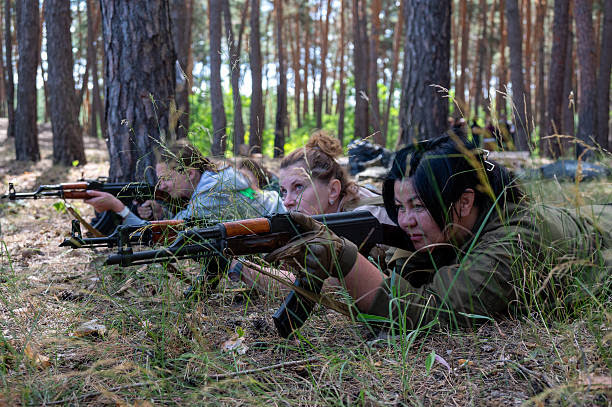
Civilians undergo state program training aimed at preparing the population for national resistance in Kharkiv, Ukraine. Participants practiced practical exercises in firearms, tactics, and engineering training monitored by military instructors. (Serhii Masin/Anadolu via Getty Images)
Crimean Devastation: Ukrainian Drones Obliterate Russian Air Assets
Ukrainian Security Service drones struck the Kirovske military airfield in occupied Crimea overnight June 28, destroying Mi-8, Mi-26, and Mi-28 helicopters along with a Pantsir-S1 air defense system. The precision attack targeted Russian aviation assets, air defense systems, and ammunition storage facilities, causing secondary explosions that illuminated the night sky across the occupied peninsula.
Local sources reported five to six explosions that likely damaged ammunition depots, warehouses, and additional air defense facilities, with at least one combat helicopter set ablaze. The strike represents a significant expansion of Ukrainian capabilities to penetrate heavily defended Russian positions and eliminate high-value targets essential for Moscow’s air operations over southern Ukraine.
Arsenal Destruction: Intelligence Services Strike Deep into Russian Territory
Ukraine’s Main Military Intelligence Directorate conducted multiple drone strikes targeting facilities linked to the 120th arsenal of the Russian General Staff’s Main Directorate in Bryansk Oblast. The primary target, the 1060th Material-Technical Support Center in Bryansk city, serves as a critical storage facility for Russian missile and drone arsenals supporting operations against Ukraine.
Local residents reported heavy gunfire and explosions throughout the morning, with smoke billowing from the industrial complex that formerly housed the 120th arsenal of the Main Missile and Artillery Directorate. The coordinated strikes demonstrate Ukrainian intelligence services’ growing ability to identify and eliminate strategic logistics nodes supporting Russian military operations.
Experimental Warfare: Russia Deploys Grom-1 Hybrid Missile-Bomb
Russia launched its experimental Grom-1 missile-bomb against Dnipropetrovsk Oblast for the first time on June 28, marking a significant escalation in weapons technology. Ukrainian air defenses successfully intercepted the hybrid weapon outside Dnipro city, preventing what could have been a devastating strike on civilian infrastructure.
The Grom-1 represents a technological fusion of guided glide bomb and Kh-38 missile systems, providing a range of 100-150 kilometers and enabling Russian aircraft to strike targets while remaining further from Ukrainian air defenses. Ukrainian experts revealed that Russia developed the weapon using a lighter warhead to increase range, with the missile likely launched from the closest possible position to the target area.
Industrial Expansion: Satellite Analysis Reveals Massive Shahed Factory Growth
Satellite imagery analysis revealed significant expansion of Russia’s Shahed drone production facility in the Alabuga Special Economic Zone near Yelabuga, Tatarstan. Between October 2024 and June 2025, Russia constructed four new sites spanning 163 hectares, with an additional 30-hectare facility currently under construction.
The expansion includes extensive dormitory construction for factory workers, potentially preparing for an influx of 25,000 North Korean laborers reportedly being considered for deployment to drone production facilities. Intelligence assessments indicate Russia currently produces up to 170 Shahed and decoy drones daily, with production rates potentially increasing to 190 drones per day by the end of 2025.
Overnight Terror: Massive Russian Bombardment Targets Multiple Regions
Russian forces conducted a large-scale missile and drone attack overnight June 28-29, deploying Tu-95 bombers from Murmansk Oblast and MiG-31K aircraft capable of carrying Kinzhal ballistic missiles. The complex attack targeted regions across Ukraine, including western oblasts far from front lines, forcing neighboring Poland to scramble fighter jets and activate ground-based air defenses.
Ukrainian air defenses downed 21 of 23 drones launched by Russia, including Shahed-type attack drones and decoys. Despite the high interception rate, Russian attacks killed 10 people and injured at least 50 others across multiple oblasts, with significant damage reported to civilian infrastructure in Cherkasy, Kremenchuk, Zaporizhzhia, and other regions.
Odesa Tragedy: Residential Building Strike Kills Couple, Injures Children
A Russian drone strike on a 21-story residential building in Odesa killed two people and injured 14 others, including three children, during the overnight bombardment. The attack caused fires on the 7th, 8th, and 9th floors, trapping residents in their apartments before rescue workers could extract five people, including a small child.
Emergency responders recovered the bodies of a married couple from the damaged building while treating 14 injured civilians in medical facilities. Ongoing air raid alarms throughout the night complicated rescue efforts, highlighting the challenge of conducting emergency operations under continued bombardment.
Vatican Support: Pope Describes Ukraine as “Martyred” Nation
Pope Leo XIV welcomed Ukrainian Greek Catholic pilgrims to the Vatican on June 28, describing Ukraine as “martyred” by Russia’s “senseless war” and expressing solidarity with families mourning lost loved ones. The pontiff addressed Ukrainian faith being “sorely tested” by the invasion and offered special blessings to mothers of soldiers killed on front lines.

Pope Leo XVI greets Ukrainian Greek Catholics at St. Peter’s Basilica in the Vatican. (The Holy See)
President Zelensky thanked the pope for continued prayers and compassion while requesting assistance in returning Ukrainian children held in Russian captivity. The papal support represents continued high-level Catholic Church backing for Ukraine’s resistance, with Pope Leo offering to host peace talks at the Vatican despite Russian dismissal of the proposal.
Constitutional Preparation: Parliament Develops Post-War Election Framework
Verkhovna Rada Chairman Ruslan Stefanchuk announced that Ukraine’s parliament is preparing draft legislation to regulate “post-war elections” following the end of martial law. The separate legislation addresses constitutional gaps regarding election procedures after martial law periods, with various scenarios being developed to ensure citizens can exercise voting rights on Ukrainian territory.
The legislative preparation occurs amid international pressure for elections and Russian propaganda attempts to discredit Ukrainian leadership legitimacy. Constitutional lawyers support the current framework extending presidential and parliamentary terms during martial law, though post-conflict electoral procedures require specific legal frameworks.
Military Technology: Ukraine Approves Advanced Ground Robotics System
The Defense Ministry approved the Ukrainian-made “Murakha” (Ant) ground-based robotics complex for combat operations, representing significant advancement in unmanned ground vehicle capabilities. The tracked robotic platform can carry over half a ton of weight across dozens of kilometers, cross difficult terrain and shallow water, and function effectively despite Russian electronic warfare systems.
The Murakha’s multiple control channels enable operation in areas where Russian EW systems typically disrupt communications, while its load capacity makes it among Ukraine’s leading unmanned ground vehicles. The system can perform offensive and defensive activities, evacuate wounded personnel, provide logistical support, and conduct mining and demining operations.
Diplomatic Relations: Polish President’s Farewell Visit to Kyiv
Outgoing Polish President Andrzej Duda arrived in Kyiv for a farewell meeting with President Zelensky ahead of his August departure from office. Duda joined Zelensky in a wreath-laying ceremony honoring fallen soldiers on Ukraine’s Constitution Day, discussing further development of bilateral relations at EU and NATO levels.
Zelensky awarded Duda the Order of Freedom, describing him as a “reliable ally and true friend” despite ongoing bilateral tensions over grain imports and historical grievances. The ceremonial visit highlighted Poland’s critical support role since February 2022, providing weapons, sheltering refugees, and rallying international assistance for Ukraine’s defense.

President Volodymyr Zelensky and Polish President Andrzej Duda shake hands as they arrive for their meeting outside Mariinskyi Palace in Kyiv, Ukraine. (Sergei Supinsky/AFP via Getty Images)
Ground Combat: Russian Advances Near Novopavlivka, Ukrainian Gains Near Lyman
Russian forces achieved confirmed advances in the Novopavlivka direction on June 28, with geolocated footage showing the 36th Separate Motorized Rifle Brigade advancing into northern Zirka and likely seizing the settlement. Russian sources claimed additional advances across administrative boundaries into Dnipropetrovsk Oblast near Biliakivka and Dachne, though these remain unconfirmed.
Ukrainian forces achieved marginal counteradvances in northern Torske near Lyman, demonstrating continued tactical mobility despite overall Russian offensive pressure. Combat continued across multiple fronts including Kursk Oblast, where Ukrainian attacks targeted Glushkovo and Tetkino directions, while Russian forces unsuccessfully attempted advances in Sumy Oblast despite personnel refusing assault orders.
Energy Infrastructure Warfare: Systematic Targeting of Civilian Facilities
Russian forces continued systematic targeting of Ukrainian energy infrastructure, striking civilian facilities across multiple oblasts including regions previously considered relatively secure from direct attack. The coordinated strikes against power generation and distribution systems aimed to degrade Ukrainian civilian morale and complicate military operations through widespread blackouts.
The attacks demonstrated Russia’s continued prioritization of civilian infrastructure targets despite international condemnation and potential war crimes implications. Ukrainian energy engineers worked to restore power amid ongoing bombardment, highlighting the persistent vulnerability of critical infrastructure to long-range Russian weapons systems.
International Tensions: German Jets Intercept Russian Reconnaissance Aircraft
German fighter jets scrambled to intercept a Russian Il-20 reconnaissance aircraft over the Baltic Sea near NATO airspace on June 27, marking the ninth such interception mission conducted by German forces in 2025. The Russian aircraft, operating with transponders switched off, approached within 40 kilometers of German territory before turning north.
The incident reflects escalating aerial provocations as Russia uses reconnaissance flights to gather intelligence on NATO positions while testing alliance response times. German Chancellor Friedrich Merz stated he would refrain from phone calls with Putin given intensified Russian attacks on Ukraine, marking a shift from predecessor Olaf Scholz’s direct diplomatic engagement.
Corruption Investigations: Former Kharkiv Deputy Mayor Charged in Fortification Scheme
Law enforcement agencies announced charges against a former Kharkiv deputy mayor and four associates for allegedly embezzling 5.4 million hryvnias ($130,000) of budget funds allocated for fortifications. The scheme involved shell companies procuring materials at prices over 30% above market value, with suspects facing charges under 17 articles of Ukraine’s Criminal Code.

An unnamed suspect is detained following an investigation into an embezzelment scheme allegedly created and led by Kharkiv’s former deputy mayor. (Ukraine’s National Police/Telegram)
The arrests highlight ongoing corruption challenges during wartime, with officials targeting critical defense infrastructure funds. Prosecutor General Ruslan Kravchenko emphasized that stolen budget funds must be fully returned to the state, while authorities filed motions for pre-trial detention without bail for all five suspects.
Energy Security Concerns: Slovakia Blocks EU Sanctions Over Gas Dependence
Slovak Prime Minister Robert Fico announced he does not intend to meet directly with President Zelensky, claiming the Ukrainian president “hates” him, as Slovakia joined Hungary in blocking the 18th package of EU sanctions against Russia. Unlike Hungary’s consistent opposition, Slovakia’s obstruction represents a new challenge to European unity on sanctions policy.
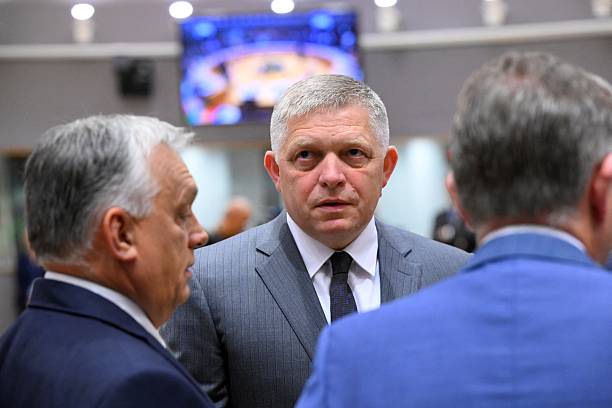
Hungary’s Prime Minister Viktor Orban (L) talks with Slovakia’s Prime Minister Robert Fico (C) during the European Council in Brussels. EU leaders meet from June 26 to 27 to discuss geoeconomic challenges and the ongoing developments in Ukraine and the Middle East. (JOHN THYS/AFP via Getty Images)
Fico emphasized protecting Slovak gas price stability over Ukraine-related concerns, requesting postponement of sanctions adoption until decisions on RePowerEU consequences for member states. The Slovak position threatens EU unanimity requirements for sanctions packages and could force concessions or delays in future restriction rounds.
Russian Equipment Crisis: T-62 Tanks Return to Service Due to Modern Vehicle Shortage
Ukraine’s military intelligence reported on June 28 that Russia is returning outdated T-62 tanks to service due to mounting equipment losses and shortage of modern military equipment. The restoration occurs primarily at a facility in Atamanovka village in Russia’s far-eastern Zabaykalsky Krai, with 21 T-62 tanks transferred from eastern military districts to European operations.
Russian stockpiles of Soviet-era tanks from the 1970s are being depleted, with most T-62s in worse condition after decades of open-air storage without maintenance. The deployment represents a temporary but necessary measure due to severe shortages of modern main battle tanks like T-90M and T-72B3M variants.
Partisan Operations: Railway Sabotage Disrupts Russian Military Logistics
The Atesh partisan group set fire to a signal cabinet controlling railway traffic near occupied Yasynuvata in Donetsk Oblast on June 28, targeting a route used for Russian military logistics. The sabotaged section near Russian military units, warehouses, and industrial facilities disrupted delivery of a fuel train for Russian forces.
Yasynuvata, located 22 kilometers from occupied Donetsk, serves as a major railway junction in the region. The attack on Ukraine’s Constitution Day demonstrated continued partisan resistance in occupied territories, with Atesh emphasizing that “Donetsk will always be Ukrainian.”
Russian LNG Expansion: Arctic Project Attempts Export Restart Despite Sanctions
Russia made another attempt to expand liquefied natural gas exports after U.S. sanctions disrupted production at the flagship Arctic LNG 2 plant. An LNG vessel docked at the Arctic LNG 2 facility for the first time since October, with at least 13 vessels of Russia’s “shadow fleet” assembled to potentially serve the sanctioned project.
The Arctic LNG 2 project, owned by Novatek and originally designed to produce 20 million metric tons annually, had cut production to almost zero in November 2024 due to Western sanctions. Representatives continue searching for buyers in China and India but have not yet made sales due to sanctions concerns.
Frontline Combat Dynamics: Detailed Tactical Developments Across Multiple Sectors
Fighting continued in Kursk Oblast on June 28, with Ukrainian forces attacking near Novyi Put, Tetkino, and Glushkovo directions while Russian forces conducted defensive operations. In Sumy Oblast, Russian forces attempted advances near Yunakivka but faced personnel refusing to conduct assaults according to Ukrainian counter-disinformation officials.
Combat operations expanded across eastern fronts including Kharkiv direction near Vovchansk, Kupyansk sector with attacks toward multiple settlements, and continued pressure in Pokrovsk direction where Russian forces concentrated 111,000 personnel. Ukrainian commanders reported Russian forces using weather conditions to optimize motorcycle assaults while conserving ammunition through selective engagement policies.
Civilian Casualty Details: Comprehensive Regional Attack Summary
Russian attacks across Ukraine on June 28 caused extensive civilian casualties and infrastructure damage. In Dnipropetrovsk Oblast, a missile strike on Samar city killed five people and injured 25 others, adding to earlier attacks in the region. Kharkiv Oblast saw three men aged 30, 36, and 53 injured in Chuhuiv attacks.
Zaporizhzhia Oblast reported injuries to a man and woman near Polohy and Vasylivka, while Sumy Oblast saw one man injured by explosive device dropped on Bilopillia community. Donetsk Oblast recorded two deaths in Kostiantynivka and Ivanopillia with additional injuries, and Kherson Oblast suffered one death and three injuries from attacks on 42 settlements including the regional center.
Technological Development: Grom-1 Weapon System Technical Analysis
Ukrainian experts provided detailed analysis of Russia’s experimental Grom-1 hybrid missile-bomb following its first operational deployment. The weapon combines guided glide bomb technology with Kh-38 missile engines, achieving 100-150 kilometer range while using lighter warheads to increase distance capabilities.
Russian forces potentially launched the Grom-1 from aircraft positioned as close to target areas as possible, with the weapon first tested in August 2024 during strikes against Kostiantynivka, Donetsk Oblast. Despite technological advancement, successful Ukrainian interception demonstrates effective defensive adaptation to evolving Russian weapons systems.
Pokrovsk Under Pressure: 111,000 Russian Personnel Concentrated in Single Direction
Commander-in-Chief Oleksandr Syrskyi reported on June 27 that Pokrovsk remains the “hottest spot” along Ukraine’s 1,200-kilometer front line, with Russia concentrating 111,000 personnel in that direction. Nearly 50 combat clashes occur daily in the sector as Russian forces attempt to break through to the administrative border of Donetsk Oblast.
Syrskyi revealed that Russian sabotage and assault groups were particularly active two weeks prior but were destroyed or neutralized, with remnants pushed back from the administrative border. Russia seeks not only operational gains but psychological effects by planting flags and claiming “pseudo-victories” in new territory.
Combat Journalism Under Fire: Detailed Battlefield Reporting from Pokrovsk
Ukrainian outlets provided extensive coverage of current combat conditions around Pokrovsk, revealing how defensive preparations differ from earlier battles like Bakhmut. First Separate Assault Regiment Commander Dmytro Filatov described improved fortifications, high ground advantages, and methodical defensive layering that contrasts with earlier Ukrainian positions.
Regiment medic Kostiantynina oversees 26 front-line medics supporting nearly 2,000 soldiers, reporting that blast trauma from drones has replaced bullet wounds as the primary injury type. The regiment faces ammunition shortages requiring conservation of every round, with commanders prioritizing air defense for civilians and additional Bradley fighting vehicles for battlefield effectiveness.
German Military Response: Fighter Jets Intercept Russian Baltic Reconnaissance
German fighter jets scrambled on June 27 to intercept a Russian Il-20 reconnaissance aircraft over the Baltic Sea near NATO airspace, marking the ninth such interception mission in 2025. The Russian aircraft operated with transponders switched off while approaching within 40 kilometers of the Baltic Sea island of Usedom before turning north.
The incident reflects escalating Russian aerial provocations as Moscow uses reconnaissance flights to gather intelligence on NATO positions. German Chancellor Friedrich Merz announced he would refrain from phone calls with Putin given intensified Russian attacks on Ukraine, contrasting with predecessor Olaf Scholz’s direct diplomatic engagement approach.
Additional Ground Combat Operations: Comprehensive Battlefield Updates
Ukrainian forces continued offensive operations in Kursk Oblast on June 28, with Russian sources claiming Ukrainian attacks near Novyi Put, Tetkino, and Glushkovo directions. In northern Sumy Oblast, Russian forces attacked near Oleksiivka, Andriivka, Yunakiva, and Sadky, while Ukrainian forces counterattacked near Yablunivka, Khrapivshchyna, Pysarivka, and Khotin.
Russian forces conducted operations across multiple fronts including Kharkiv direction near Vovchansk and Vochanski Khutory; Kupyansk direction targeting Kindrashivka, Petro-Ivanivka, Putnykove, Holubivka, Petropavlivka, Stepova Novoselivka, and Pischane; and Borova direction attacking Novoplatonivka, Bohuslavka, Zelenyi Hai, Nadiya, Tverdokhlibove, Hrekivka, Shyikivka, Novoserhiivka, and Olhivka.
Eastern Front Tactical Developments: Detailed Sectoral Combat Reports
In the Lyman direction, Russian forces attacked near Ridkodub, Lypove, Zelena Dolyna, Hlushchenkove, Shandryholove, Yampolivka, Novyi Myr, and Torske. Siversk direction saw Russian operations near Hryhorivka, Serebryanka, Verkhnokamyanske, and Ivano-Darivka.
Chasiv Yar direction combat included attacks near the city itself, Maiske, Markove, Novomarkove, Kalinina, Kurdyumivka, Predtechyne, and toward Bila Hora. Toretsk direction operations targeted the city, Dyliivka, Dachne, Pleshchiivka, Yablunivka, Oleksandro-Kalynove, Rusyn Yar, Popiv Yar, Poltavka, Shcherbynivka, Novospaske, and Leonidivka.
Pokrovsk and Southern Fronts: Continued Russian Offensive Pressure
Russian forces in Pokrovsk direction attacked near Myrne, Malynivka, Koptieve, Novotoretske, Volodymyrivka, Yelyzavetivka, Myrolyubivka, Promin, Myrnohrad, Lysivka, Udachne, Novopidhorodne, Molodetske, and Serhiivka. Intelligence officers reported Russian forces attacking during rainy weather for drone operation difficulties and using foliage for concealment.
Novopavlivka direction saw attacks near the settlement itself, Novoserhiivka, Novomykolaivka, Kotlyarivka, Troitske, Horikhove, Oleksiivka, Dachne, Zaporizhzhia, Yalta, Fedorivka, Perebudova, Komar, Myrne, and Voskresenka. Velyka Novosilka direction included operations near Dniproenerhiya, Shevchenko, Vilne Pole, and toward Maliivka.
Southern Axis Operations: Zaporizhzhia and Kherson Fronts
Russian forces continued assaults in Hulyaipole direction near Malynivka and Vysoke, while western Zaporizhzhia Oblast saw attacks near Kamyanske along the E-105 Vasylivka-Kamyanske highway. Limited ground attacks occurred in Kherson direction without confirmed advances.
Ukrainian Mariupol Mayoral Advisor reported Russia transferring troops from training camps near occupied Mariupol and Berdyansk to the Pokrovsk direction, indicating strategic redeployment of forces for sustained offensive operations.
Air Defense and Missile Campaign: Detailed Attack Patterns
Russian forces launched 23 Shahed and decoy drones from Primorsko-Akhtarsk, Krasnodar Krai and occupied Cape Chauda, Crimea during the night of June 27-28. Ukrainian forces downed 21 drones with one suppressed by electronic warfare systems, while attacks primarily targeted Odesa Oblast.
The large-scale overnight attack of June 28-29 involved Tu-95 bombers from Olenya military airfield in Murmansk Oblast and MiG-31K aircraft from Savasleyka airfield in Nizhny Novgorod Oblast. Multiple cruise missile groups targeted western regions including Ternopil, Lviv, and Ivano-Frankivsk oblasts.
Russian Military Personnel Issues: Refusal to Conduct Assaults
Ukrainian Center for Countering Disinformation Head Lieutenant Andriy Kovalenko reported that Russian forces attempting to send reinforcements to Sumy Oblast face personnel refusing to conduct assault operations. This represents continued morale and discipline problems within Russian military units despite ongoing mobilization efforts.
Comprehensive Casualty Reports: Regional Attack Details
Russian attacks on June 28 resulted in 10 deaths and at least 50 injuries across Ukraine. Specific incidents included the Odesa residential building strike killing a married couple and injuring 14 including three children; Samar missile strike in Dnipropetrovsk Oblast killing five and injuring 25; Chuhuiv attack in Kharkiv Oblast injuring three men; and various attacks across Zaporizhzhia, Sumy, Donetsk, and Kherson oblasts.
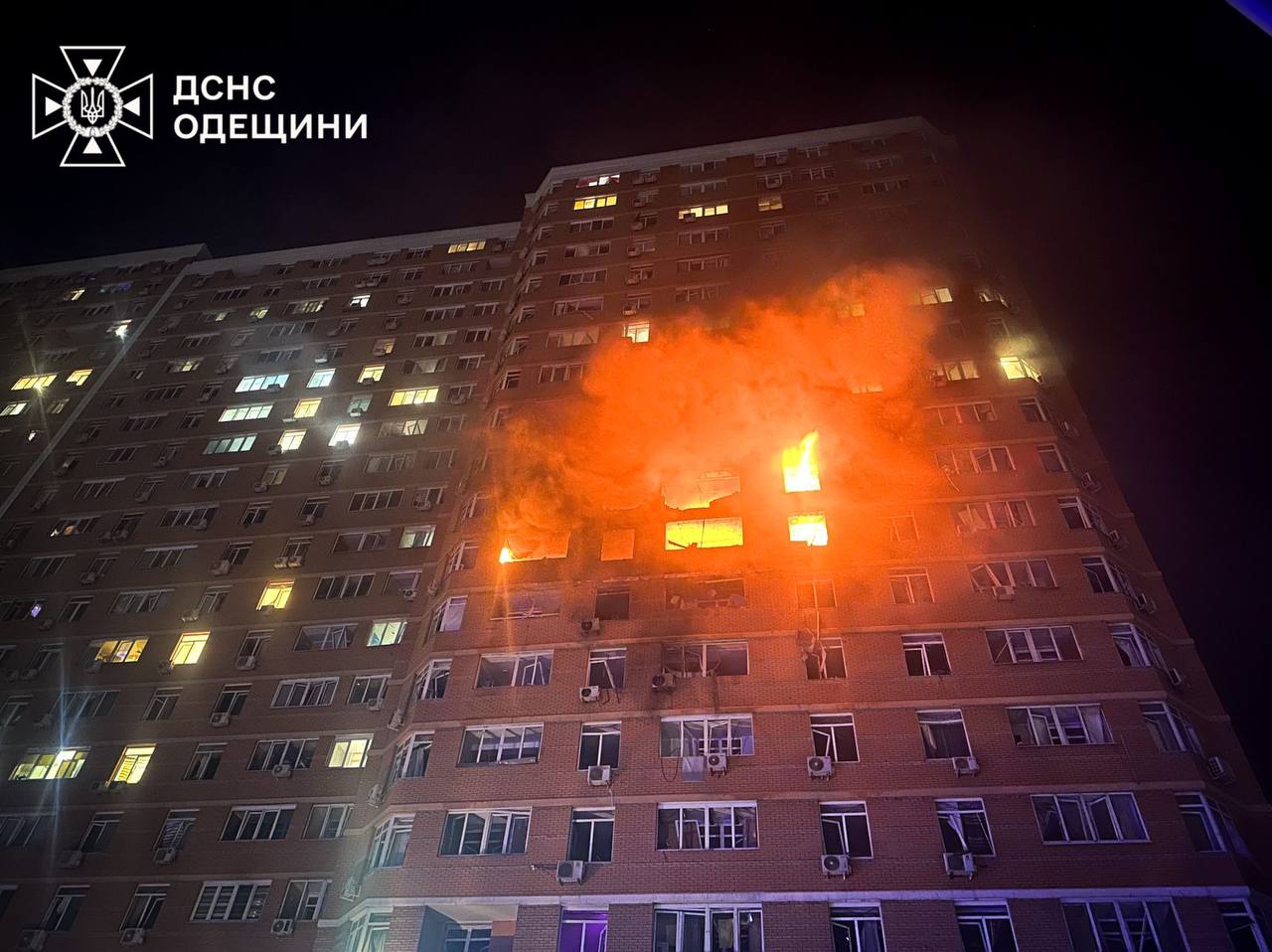
Fire engulfs apartments in a high-rise residential building in Odesa after a Russian drone attack. (Ukraine’s State Emergency Service / Telegram)
Military Unit Identifications: Order of Battle Updates
Russian forces deployed various specialized units across fronts including 177th Naval Infantry Regiment near Pysarivka and Khotin; 83rd Separate Airborne Brigade near Yablunivka and Khrapivshchyna; “Anvar” Spetsnaz Detachment in Kharkiv direction; 752nd Motorized Rifle Regiment in Svatove direction; 144th Motorized Rifle Division near Ridkodub; 98th Airborne Division including 215th Reconnaissance Battalion and 299th VDV Regiment in Chasiv Yar direction.
Additional units included 68th Tank Regiment attacking toward Katerynivka; FSB Donetsk Directorate drone operators in Toretsk direction; “Typhoon” Detachment and 255th Motorized Rifle Regiment in Pokrovsk direction; 14th Spetsnaz Brigade, 30th Spetsnaz Company, and 336th Naval Infantry Brigade near Myrne; and Separate 38th Motorized Rifle Brigade near Vysoke.
Looking Forward: Deep Strike Capabilities Reshape Conflict Dynamics
The events of June 28 demonstrated Ukraine’s rapidly expanding deep-strike capabilities, with simultaneous operations against targets in occupied Crimea and Russian territory proper. These coordinated attacks, spanning hundreds of kilometers, suggest Ukrainian forces have overcome significant technical and intelligence challenges to threaten previously secure Russian military assets.
Russia’s deployment of experimental weapons like the Grom-1 missile-bomb reflects Moscow’s efforts to maintain technological advantage through extended-range systems, though successful Ukrainian interception demonstrates effective defensive adaptation. As both sides continue technological innovation, the conflict’s parameters expand geographically while international diplomatic and military support mechanisms face new challenges from shifting alliance dynamics and resource constraints.