
As Ukrainian Forces Strike 3,000 Kilometers Into Russia While Moscow’s Drone Terror Continues, Washington Prepares New Aid and London Commits Billions to Air Defense
Summary of the Day – July 11, 2025
Ukraine struck deep into Siberia, sabotaging a gas pipeline 3,000 kilometers from the border while devastating Russian MiG production facilities near Moscow. The Langepas explosion will cost Moscow $76 million and take a month to repair, cutting supplies to defense plants. As Ukraine’s reach expanded, Russia’s terror campaign continued with 79 drones killing nine civilians and injuring 42 across eight oblasts. Diplomatically, Ukraine confirmed resumed U.S. aid shipments, Germany and Norway pledged three Patriot systems, and the EU launched a €100 million defense innovation program. Intelligence chief Budanov revealed Russia’s plans for a 10-kilometer buffer zone in Dnipropetrovsk Oblast as Moscow’s offensive stalled.
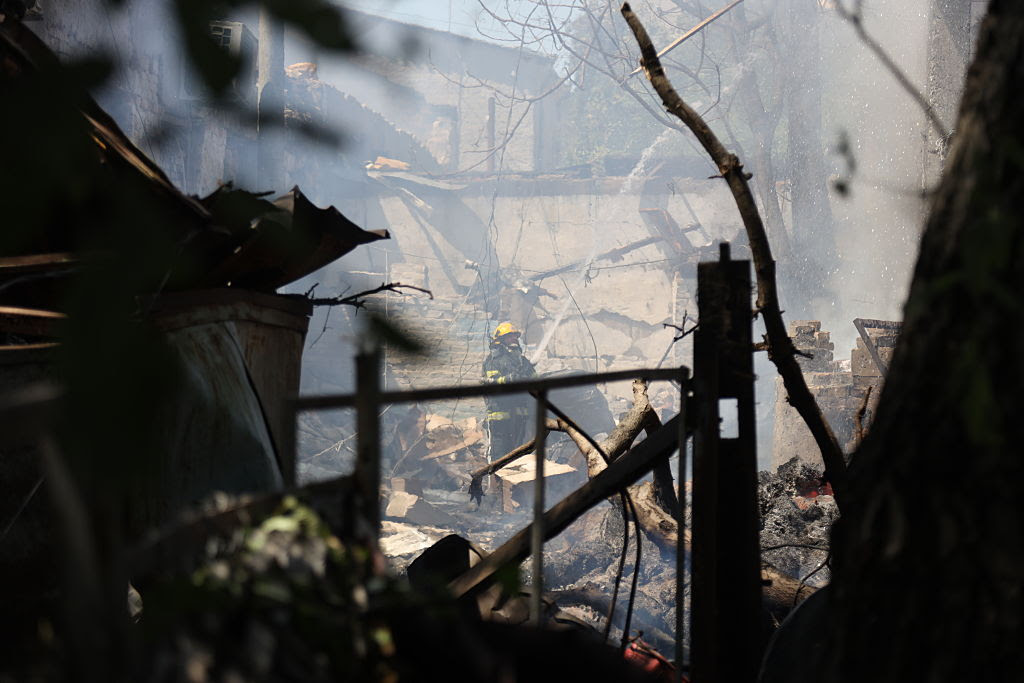
A firefighter extinguishes fire after a Russian drone attack in the Moldovanka district of Odesa. Nine people were injured as a result of the attack, and seven were hospitalized, Odesa Oblast Governor Oleh Kiper said. Windows of homes were damaged and service station, cars damaged by debris. (Viacheslav Onyshchenko/LightRocket via Getty Images)
Siberian Strike: Ukraine’s Longest-Range Sabotage Operation
In a demonstration of Ukraine’s expanding clandestine capabilities, intelligence sources confirmed that Ukrainian forces caused a major explosion at a gas pipeline in Langepas, Russia’s Tyumen Oblast—a target located 3,000 kilometers from the Ukrainian border deep in western Siberia. The operation represents the furthest documented Ukrainian sabotage action of the war, showcasing the sophistication and reach of Kyiv’s covert networks.
The explosion destroyed a critical section of pipeline supplying Russian military-industrial facilities in Chelyabinsk, Orenburg, and Sverdlovsk oblasts, causing immediate damages of $1.3 million and a fire that burned for hours. More strategically damaging, the attack will reduce gas supply by 25 million cubic meters and cause indirect losses approaching $76 million, according to a source in Ukraine’s Main Military Intelligence Directorate (HUR).
“Repairing and testing the pipeline could take about a month,” the HUR source explained, noting that damage in the swampy terrain will significantly complicate restoration efforts. The targeted infrastructure serves as a lifeline for Russia’s defense industry, providing energy to facilities producing equipment for the war in Ukraine.
The Langepas operation follows a similar strike on July 5 near Vladivostok, where Ukrainian forces damaged gas and water pipelines supplying Russian military facilities including the 155th Marine Brigade of the Pacific Fleet. The pattern suggests Ukraine has developed a comprehensive strategy for targeting Russia’s energy infrastructure supporting its military-industrial complex across the country’s vast territory.
Moscow Under Siege: Drone Swarms Target Defense Industry Heart
While Ukrainian saboteurs struck in Siberia, drone swarms launched devastating attacks on Russian defense industry facilities near Moscow and in Tula Oblast, hitting targets responsible for producing the very weapons being used against Ukraine. The synchronized assault demonstrated Ukraine’s ability to conduct complex, multi-vector operations across Russia’s strategic depth.
The crown jewel of the attack was the Lukhovitsy Aviation Plant, located 110 kilometers southeast of Moscow, which produces MiG-29 fighter jets and MiG-31 Kinzhal missile carriers used by Russian forces in Ukraine. The facility also develops new fighter jet models and participates in upgrading Shahed-type attack drones, making it a high-value target for Ukrainian forces.
“The Lukhovitsy Aviation Plant was under attack. It specializes in the production and modernization of the MiG-29 and MiG-31 fighters and their modifications,” confirmed Andrii Kovalenko, an official at Ukraine’s National Security and Defense Council.
In Tula Oblast, explosions rocked the industrial Proletarsky district, home to three major defense plants previously targeted in Ukrainian strikes. The JSC Instrument Design Bureau, which develops precision munitions, the NPO Splav rocket systems manufacturer, and Shcheglovsky Val JSC—one of Russia’s largest defense companies producing guided weapons and air defenses—all lie within the targeted area.
Additional strikes hit the Kronstadt drone factory in Dubna, roughly 100 kilometers north of Moscow, continuing Ukraine’s systematic campaign against Russian unmanned systems production. The facility had previously been targeted in May, indicating Ukraine’s determination to degrade Russia’s drone manufacturing capabilities.
Russia’s Defense Ministry claimed to have downed 155 Ukrainian drones overnight, including 53 over Kursk Oblast and 13 over Tula Oblast, but the successful strikes demonstrated that Ukrainian forces continue to penetrate Russian air defenses with sophisticated planning and execution.
Buffer Zone Strategy: Russia’s Plans for Dnipropetrovsk Oblast
Ukraine’s military intelligence chief Kyrylo Budanov revealed that Russian forces have been tasked with establishing a buffer zone up to 10 kilometers deep into Dnipropetrovsk Oblast, marking a significant escalation in Moscow’s territorial ambitions. The disclosure comes as Russian troops continue their offensive in neighboring Donetsk Oblast, pushing closer to the major industrial region of central Ukraine.
“It’s not realistic for Russia to seize all of Donetsk Oblast by the end of the year,” Budanov stated in a Bloomberg interview, while confirming that Russia’s announcement of entering Dnipropetrovsk Oblast serves primarily political goals rather than reflecting genuine military capability.
The Russian Defense Ministry had claimed on July 7 to have seized Dachne, which would mark the first village under Russian control in Dnipropetrovsk Oblast. However, Ukrainian military officials denied the claimed capture, calling it “disinformation” and evidence of Russia’s desperation to show progress in its stalled offensive.
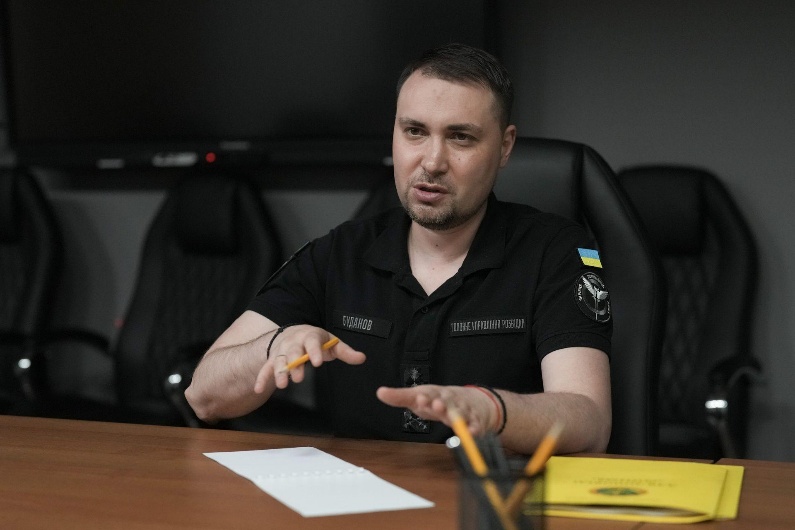
Kyrylo Budanov, Ukraine’s military intelligence chief, during an interview at an undisclosed location in Ukraine. (Andrew Kravchenko/Bloomberg via Getty Images)
According to Budanov’s assessment in a Bloomberg interview, 40% of Russian ammunition now consists of North Korean supplies, highlighting Moscow’s growing dependence on partners for basic military materials. The intelligence chief stressed that Russia’s goals of seizing all of Donetsk Oblast by year’s end remain “not realistic” given current capabilities and battlefield dynamics. The attempt to establish a buffer zone in Dnipropetrovsk Oblast would further stretch Russian resources and extend already degraded force groupings that have been engaged in near-constant combat since October 2023.
Civilian Terror Continues: 42 Injured in Overnight Attacks
As Ukraine struck deep into Russian territory, Moscow continued its deliberate campaign of terror against Ukrainian civilians, launching 79 Shahed drones and decoys that killed at least nine people and injured 42 others across eight oblasts. The attacks underscored Russia’s strategy of targeting civilian infrastructure while Ukrainian forces focused on legitimate military targets.
The most shocking incident occurred in Kharkiv, where Russian drones struck a maternity hospital, injuring nine people including women in labor and those recovering from surgery. “Women in labor with children, women after surgery. Fortunately, there were no children among the victims. Russia targets life. Even where it is just beginning,” President Zelensky said, emphasizing the barbaric nature of Russia’s targeting choices.
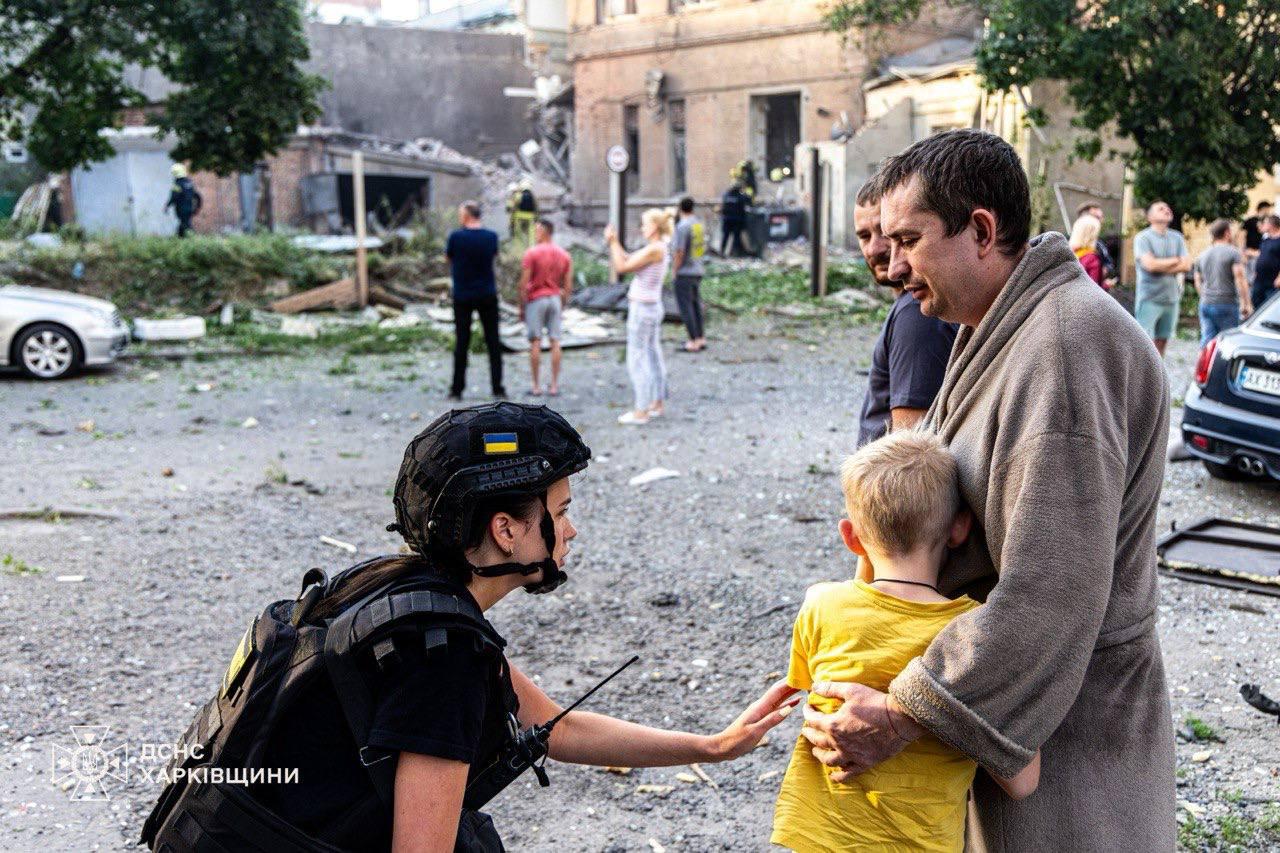
A State Emergency Service worker assists a family affected by Russian attacsk in Kharkiv, Ukraine. (Ukraine’s Emergency Service)
In Odesa, Russian drone attacks killed one horse and injured 11 people while damaging residential buildings and a stable. Photos showed bloodied and injured horses, highlighting the indiscriminate nature of Russian strikes against civilian areas.
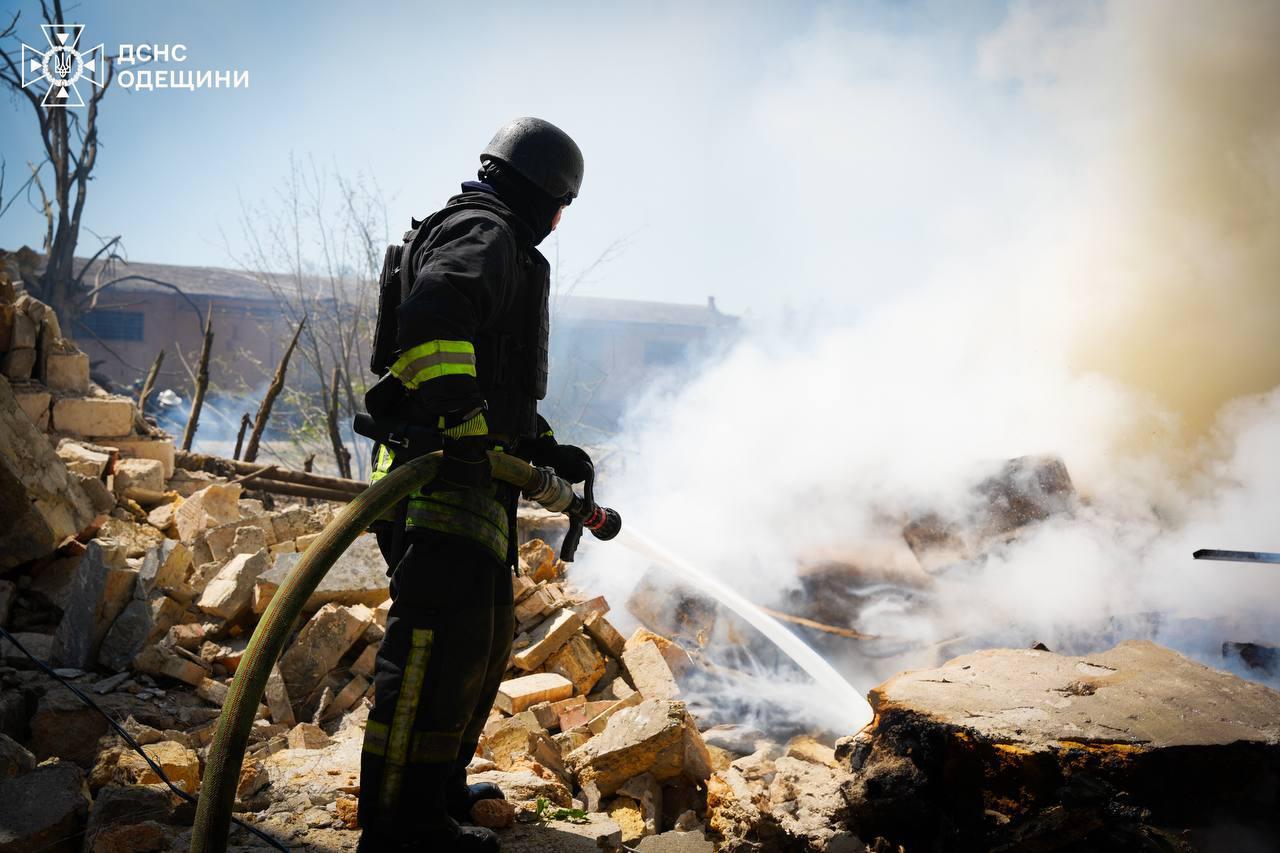
The aftermath of a Russian drone attack against Odesa, Ukraine. (State Emergency Service/Telegram)
Ukrainian air defenses shot down 44 drones while electronic warfare systems intercepted 16 others, but 19 drones still struck targets across the country. The pattern of attacks reinforced Russia’s strategy of overwhelming air defense systems through sheer volume while attempting to terrorize the Ukrainian population.
Aid Restoration: Washington Resumes Weapons Shipments
President Zelensky confirmed that U.S. military aid shipments to Ukraine have been restored following the Pentagon’s controversial pause earlier in the week. “We have received political signals at the highest level—good signals—including from the United States and from our European friends. According to all reports, aid shipments have been restored,” Zelensky announced in his evening address.
The confirmation followed days of uncertainty after Defense Secretary Pete Hegseth unilaterally ordered a halt to some weapons deliveries, including Patriot missiles and precision munitions, apparently without consulting the White House. The decision sparked alarm among Ukrainian officials and European allies amid Russia’s intensified aerial assault campaign.
Trump, who initially denied knowledge of the pause, subsequently ordered the resumption of deliveries and pledged additional defensive weapons for Ukraine. Sources indicated that Trump plans to authorize his first weapons shipment using Presidential Drawdown Authority, potentially worth around $300 million, marking a significant shift in his administration’s approach to Ukrainian defense.
The restored aid comes as Ukraine faces unprecedented pressure from Russian aerial attacks, with Moscow launching over 740 drones and missiles on July 9 in the largest assault of the war. Ukrainian officials stressed the critical importance of continued Western support, particularly air defense systems, to protect civilian populations and critical infrastructure.
Patriot Diplomacy: European Partners Step Forward
In a significant development for Ukraine’s air defense capabilities, President Zelensky announced that Germany and Norway are prepared to purchase three Patriot air defense systems for Ukraine from U.S. manufacturers. “Germany is ready to pay—I have agreements with them—for two systems. Norway is ready to pay—I have bilateral agreements with Prime Minister Jonas Gahr Stoere—one system,” Zelensky confirmed during a press conference in Rome.
The announcement represents a creative financing solution to Ukraine’s desperate need for additional air defense coverage. Ukrainian officials have requested a total of 10 Patriot systems to adequately protect the country’s airspace against Russian missile and drone attacks.
German Chancellor Friedrich Merz had earlier confirmed Berlin’s willingness to purchase Patriots for Ukraine, though he noted that a final decision awaited U.S. manufacturer approval. The proposal follows reporting that Trump had appealed to Merz to enhance Kyiv’s air defense capabilities amid the escalating Russian aerial campaign.
The Patriots represent some of the most sophisticated air defense technology available, capable of intercepting Russian ballistic missiles including the hypersonic Kinzhal systems. Ukraine currently operates at least six Patriot systems provided by the U.S., Germany, the Netherlands, and Romania, though not all are fully operational due to maintenance rotations.
BraveTech Initiative: €100 Million for Defense Innovation
Ukraine and the European Union launched the BraveTech EU initiative with €100 million in funding aimed at accelerating battlefield-driven defense solutions. The program represents the first major technological alliance between Ukraine and Europe on equal terms, with each side contributing €50 million to support innovation and rapid procurement of new defense technologies.
Ukrainian Digital Transformation Minister Mykhailo Fedorov and European Commissioner for Defense and Space Andrius Kubilius announced the initiative at the Ukraine Recovery Conference in Rome, emphasizing its focus on small and medium-sized enterprises and startups across Ukraine and Europe.
“European colleagues will receive results from the battlefield,” Fedorov explained, highlighting how Ukraine’s combat experience can drive innovation for European defense manufacturers. The program will facilitate regulatory experience exchange, technology development, scaling, and rapid procurement of new systems.
The initiative will unfold in two phases, beginning with hackathons for Ukrainian and European defense companies in autumn 2025, followed by expanded programs in 2026 including larger grants, startup scaling support, and investments in promising projects. The BraveTech EU initiative will integrate Ukraine’s BRAVE1 defense technology platform with EU instruments including the European Defense Fund and EU Defense Innovation Scheme.
British Commitment: £1.7 Billion for Ukrainian Air Defense
The United Kingdom announced a massive £1.7 billion ($2.3 billion) loan to finance improvements to Ukraine’s air defense capabilities, representing one of the largest single commitments to Ukrainian defense infrastructure. The loan, approved by the UK Ministry of Finance, will specifically target the enhancement of systems needed to counter Russia’s escalating aerial assault campaign.
The announcement came as part of Britain’s broader commitment to Ukrainian defense, building on the previously announced deal to supply 5,000 Thales air defense missiles over 19 years in a £2.5 billion project. The loan arrangement allows Ukraine to access critical funding immediately while structuring repayment over an extended period.
British officials emphasized that the loan represents both humanitarian support and strategic investment in European security. The funding will enable Ukraine to purchase advanced air defense systems, expand interceptor production, and develop indigenous capabilities to counter the Russian aerial threat.
The commitment demonstrates Britain’s long-term dedication to Ukrainian victory, providing both immediate defensive capabilities and laying groundwork for Ukraine’s post-war security architecture. British officials have consistently argued that Ukrainian success is essential for broader European stability and deterring future Russian aggression.
Clean Sky Project: Kyiv’s Indigenous Drone Defense
Kyiv City announced a major expansion of its Clean Sky interceptor drone program with Hr 260 million ($6.2 million) in funding aimed at protecting the capital from Russian aerial attacks. The initiative represents Ukraine’s growing reliance on domestic innovation to supplement Western air defense systems amid ongoing supply challenges.
Tymur Tkachenko, head of the Kyiv City Military Administration, revealed that the system had already intercepted nearly 550 Russian drones over Kyiv Oblast during several months of testing. “Those 550 intercepted (Shahed-type drones) are not just numbers—they represent lives saved, infrastructure protected, and hospitals, schools, and energy facilities preserved,” Tkachenko emphasized.
The program includes establishing a training center for drone operators and forming additional mobile units to patrol Kyiv and surrounding areas. The expansion comes as Russia threatens to increase its drone attacks to 1,000 per day, according to warnings from Ukrainian officials based on intelligence assessments.
Ukrainian officials have stressed that interceptor drones provide a cost-effective solution to counter Russian Shahed drones, which cost significantly less than traditional air defense missiles. The technology offers Ukraine the potential to scale defensive capabilities rapidly using domestic production rather than relying solely on Western supplies.
Kellogg Returns: Week-Long Visit Planned
U.S. Special Envoy for Ukraine Keith Kellogg announced plans to arrive in Kyiv on July 14 for a week-long visit, signaling continued American engagement despite recent confusion over aid shipments. The visit comes as Trump prepares to make his promised “major statement” on Russia, potentially reshaping the diplomatic landscape.
Kellogg’s return to Ukraine follows his February visit shortly after Trump’s inauguration and recent meetings with President Zelensky at the Ukraine Recovery Conference in Rome. The timing suggests coordination between diplomatic engagement and military aid decisions, particularly as Washington considers authorizing new weapons packages.
Defense Minister Rustem Umerov and Kellogg are expected to meet in Kyiv, with discussions likely focusing on resumed military aid deliveries and Ukraine’s evolving defense needs. Kellogg’s spokesperson indicated the meeting was arranged before news of the Pentagon’s aid pause emerged, suggesting ongoing military-to-military coordination despite political turbulence.
The visit also coincides with Trump’s NATO weapons arrangement, under which alliance members would purchase U.S. systems for transfer to Ukraine. The mechanism could provide sustainable funding for Ukrainian defense while addressing Trump’s concerns about burden-sharing among allies.
Industrial War: Ukraine Targets Defense Production Networks
Ukraine’s strikes on Russian defense facilities revealed the systematic nature of its campaign against Moscow’s military-industrial complex. The Voronin Aviation Plant in Lukhovitsy represents a critical node in Russia’s aircraft production network, responsible for manufacturing and modernizing the MiG fighters conducting daily attacks against Ukrainian targets.
The facility’s role in Shahed drone modernization makes it particularly valuable for Ukrainian targeting, as these weapons represent the primary threat to Ukrainian civilians and infrastructure. By degrading Russia’s ability to improve and maintain these systems, Ukraine undermines Moscow’s capacity for sustained aerial terror campaigns.
Similarly, the Tula Oblast strikes targeted the entire spectrum of Russian weapons production, from precision munitions to rocket systems to small arms. The systematic approach suggests Ukraine has developed comprehensive intelligence on Russia’s defense industrial networks and possesses the operational capability to execute coordinated strikes across vast distances.
The success of these operations demonstrates Ukraine’s evolution from a defensive posture to an offensive capability that can threaten Russia’s war-making capacity at its source. Rather than simply intercepting weapons after production, Ukraine now targets the facilities where these systems are manufactured, potentially offering more sustainable long-term advantages.
Battlefield Updates: Advances and Counteradvances
Despite Ukraine’s successful deep strikes, fighting continued along multiple front line sectors with mixed results for both sides. Geolocated footage confirmed Ukrainian advances east of Kindrashivka in the Kupyansk direction and within Ridkodub north of Lyman, while Russian forces made progress near Petropavlivka east of Kupyansk and seized Zelena Dolyna north of Lyman.
In the Toretsk direction, Russian forces advanced northeast of Koptieve, while Ukrainian forces achieved marginal gains in western Novoserhiivka in the Novopavlivka direction. The pattern reflected the war’s current dynamic of local tactical exchanges rather than major operational breakthroughs by either side.
Ukrainian forces also destroyed a Russian command post in occupied Melitopol through a joint HUR-partisan operation, killing five Russian National Guard soldiers and destroying satellite communications equipment. The action demonstrated the continued effectiveness of resistance networks in occupied territories and Ukraine’s ability to strike high-value targets behind enemy lines.
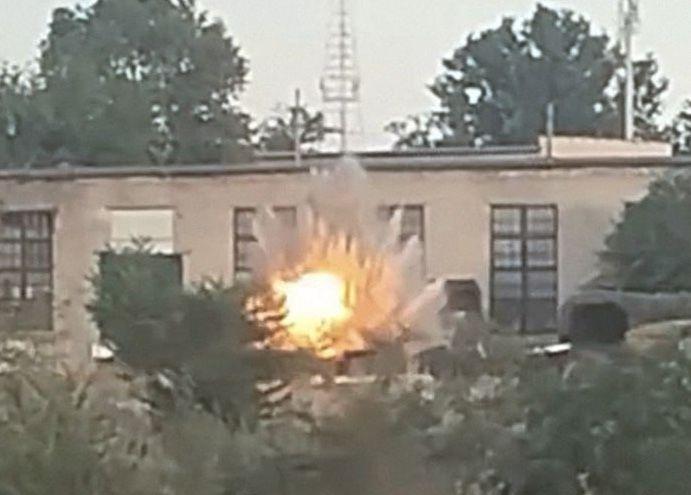
Footage allegedly shows the explosion from Ukraine’s military intelligence agency (HUR) operation in Russian-occupied Melitopol in Zaporizhzhia Oblast. (Ukraine’s military intelligence agency/Telegram)
In western Zaporizhia Oblast, Russian forces advanced into southern Plavni near Orikhiv, while Ukrainian forces struck a train carrying 20 Russian tanks between Tokmak and Chernihivka, destroying five of the armored vehicles. The exchanges highlighted the ongoing struggle for control of strategic transportation networks supporting military operations.
Command Changes: Russian Colonel Confirmed Dead
Russian authorities confirmed the burial of Colonel Sergei Ilyin, commander of Russia’s 155th Marine Brigade, without disclosing the cause of death. The confirmation followed speculation that Ilyin was among Russian personnel killed when Ukrainian forces attacked the brigade’s command post in Korenevo, Kursk Oblast, on July 2.
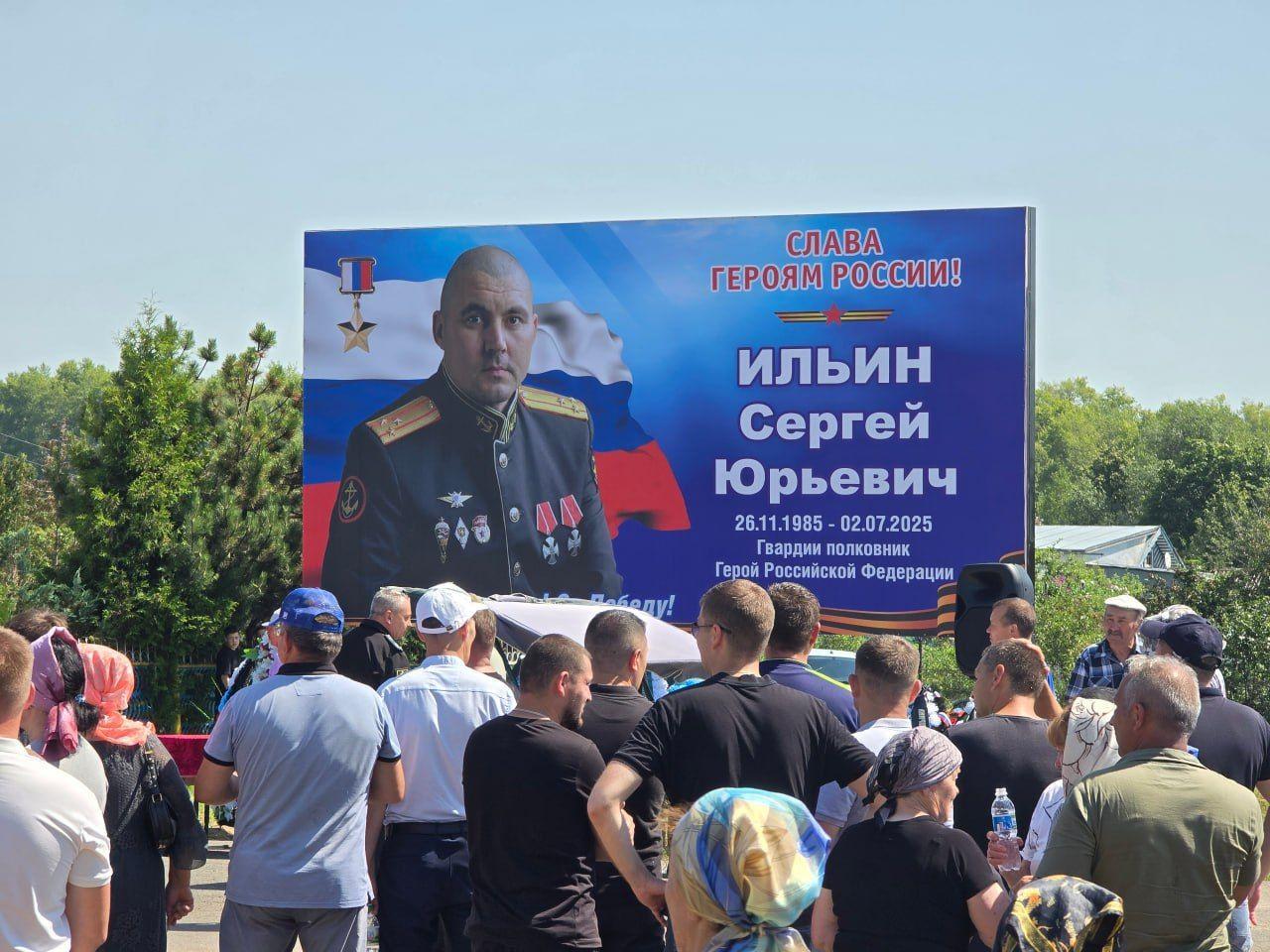
Russian Colonel Sergei Ilyin was buried in the village of Musirmy in the Chuvash Republic of Russia. (Astra/Telegram)
The attack had also reportedly killed Russian Major General Mikhail Gudkov, deputy head of the Russian Navy, according to Ukrainian assessments. Russian milbloggers suggested that 22 people total died in the Ukrainian HIMARS strike, representing a significant decapitation of Russian military leadership in the Kursk sector.
The 155th Marine Brigade has been accused by Ukrainian forces of committing numerous war crimes, including executing prisoners of war and humiliating captured Ukrainian soldiers. Brigade members have also been linked to atrocities in Bucha, Irpin, and Hostomel during the early months of the invasion.
The elimination of senior Russian commanders demonstrates Ukraine’s improved intelligence capabilities and precision strike capacity against high-value targets. Such leadership losses significantly impact Russian unit effectiveness and force Moscow to continuously rotate experienced officers to replace casualties.
Operation Spiderweb Aftermath: Russian Driver Arrested
Russian authorities arrested Mikhail Ryumin, a 55-year-old truck driver from Chelyabinsk, for allegedly transporting Ukrainian drones during Operation Spiderweb, the unprecedented mass drone strike that targeted four Russian air bases on June 1. The operation damaged 41 aircraft using drones concealed in trucks across multiple Russian locations.
Ryumin was charged with committing a terrorist act and arrested on June 2, with the Ivanovo Regional Court upholding his detention on June 26. According to sources familiar with the case, Ryumin was unaware that his vehicle carried drones hidden beneath frame house structures, having recently accepted a delivery job transporting construction components.
The arrest highlights the sophistication of Ukraine’s Operation Spiderweb, which NATO Admiral Pierre Vandier praised as a modern “Trojan Horse” demonstrating Ukraine’s growing technical capabilities and deep-strike capacity.
Massive Casualty Assessment: BBC Documents 118,139 Russian Deaths
Russian independent media outlet Mediazona, collaborating with BBC Russian service, confirmed the identities of 118,139 Russian military personnel killed in Ukraine since February 24, 2022. The latest data shows 2,282 additional deaths confirmed since the end of June, highlighting the continued heavy toll on Russian forces.
The investigation identified 523 foreign nationals from 28 countries killed while serving in the Russian army, including 54 Ukrainians, mostly prisoners from occupied territories. The largest foreign contingents came from Tajikistan (72) and Uzbekistan (66), with many recruited from Russian prisons for Wagner mercenary operations.
Among the identified dead is American Michael Gloss, son of a CIA deputy director, who signed a military contract in September 2023 and was killed in April 2024. The documentation underscores the international scope of Russia’s recruitment efforts and the high casualty rates across all forces.
Norwegian Energy Investment: $200 Million for Green Transition
The United Nations Development Programme and Norway announced a $200 million initiative to restore and transform Ukraine’s energy sector, targeting both immediate needs and long-term modernization goals. The funding, unveiled at the Ukraine Recovery Conference, will restore heating and water services to millions of Ukrainians, particularly in front-line communities.
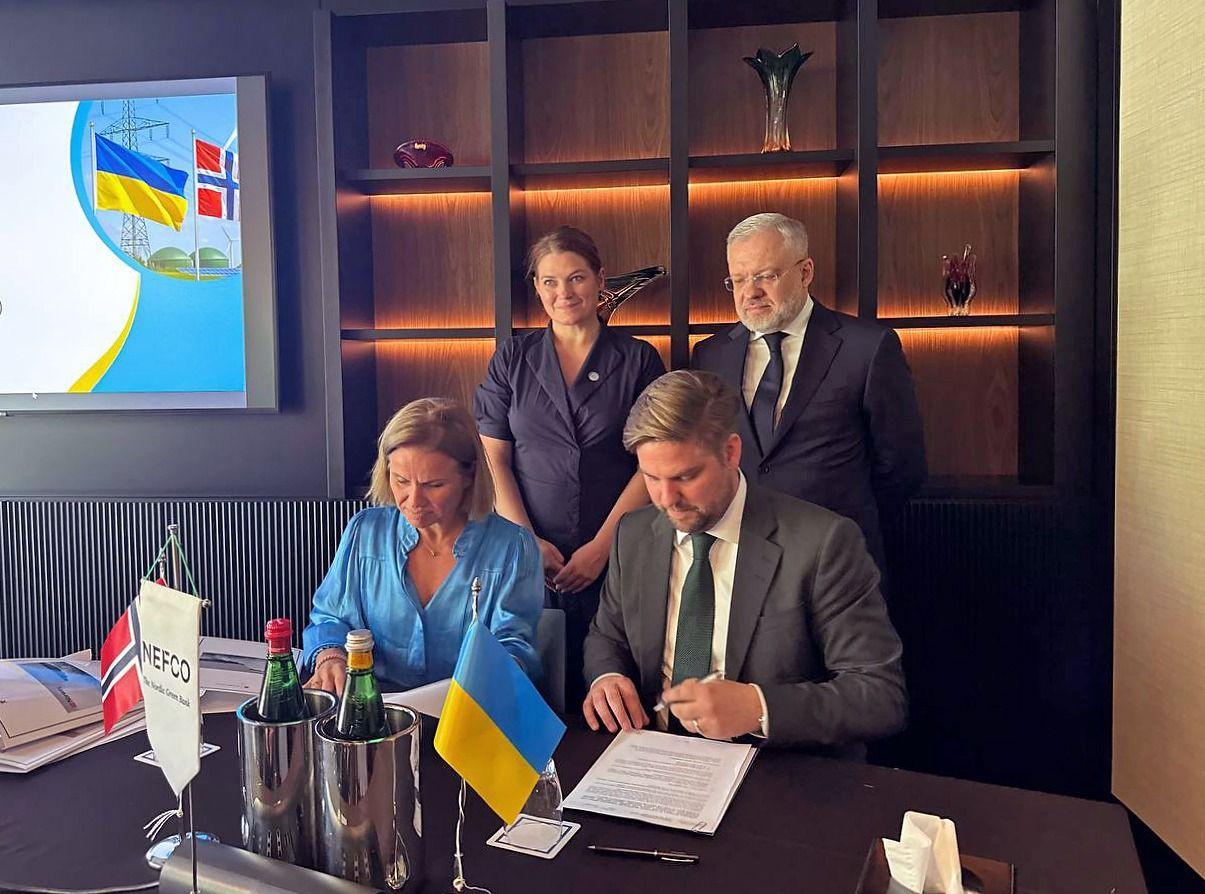
Norwegian and Ukrainian officials sign the $200 million green energy recovery agreement at the Ukraine Recovery Conference 2025 in Rome. (Ukraine’s Ministry of Energy)
The initiative includes equipping hospitals and water facilities with solar panels and backup battery systems to ensure medical care during power outages. Norway separately committed €42 million to the Ukraine Energy Support Fund and €300,000 for energy efficiency projects through the Nordic Environment Finance Corporation.
“This contribution from Norway, provided through UNDP, is critically important for our ability to restore vital services and accelerate the strategic transition to a decentralized and clean energy system,” said Ukrainian Energy Minister Herman Halushchenko.
World Bank Reconstruction Support: $200 Million Over Five Years
The World Bank announced $200 million over five years to prepare Ukrainian projects for large-scale reconstruction through the PREPARE program. The funding will bring reconstruction projects up to international investor standards, creating a systematic “preparation factory” that minimizes delays and increases transparency.
The first grant of $44.3 million, available starting in August, will focus on collecting and preparing state assets for investment while financing the development of the Public-Private Partnership Agency implementing the program. The initiative addresses Ukraine’s $524 billion reconstruction needs identified in a February U.N. report.
“Together with the World Bank, we are creating a systematic ‘preparation factory’ that minimizes delays, increases transparency, and opens the path to multi-billion investments in the coming years,” Economy Minister Yuliia Svyrydenko explained.
U.S.-Ukrainian investment group MITS Capital announced a $3.74 million investment in Tencore, a Ukrainian military robotics manufacturer, representing one of the largest publicly disclosed investments in Ukrainian defense technology since the full-scale invasion began. The deal was announced at the Ukraine Recovery Conference in Rome, highlighting growing international confidence in Ukraine’s defense innovation sector.
Tencore produces the TerMIT unmanned ground vehicle, which meets NATO standards and has already been deployed against Russian forces. The robots transport supplies, evacuate wounded soldiers, clear mines, and provide fire support, demonstrating Ukraine’s rapid advancement in battlefield robotics technology.
“Our goal is to get Russia out of Ukraine and Ukraine into NATO’s defense supply chain,” explained Perry Boyle, CEO and Founding Partner at MITS Capital. The investment utilized Ukraine’s Diia.City legal framework, creating a clear path for international investors to deploy capital directly into Ukrainian defense entities.
The deal marks the first time a U.S. investor has used Ukraine’s new legal framework to back a defense company, potentially opening floodgates for additional international investment. MITS Capital has invested in 11 Ukrainian defense companies through its accelerator program, focusing exclusively on Ukrainian defense startups.
Humanitarian Impact: Record Civilian Casualties Continue
The human toll of Russia’s aerial terror campaign reached new heights, with at least nine civilians killed and 42 injured across eight oblasts in a single day. The casualties included a 43-year-old man killed in Kupiansk and multiple injuries in hospitals, highlighting Russia’s deliberate targeting of medical facilities and civilian infrastructure.
In Donetsk Oblast, Russian strikes killed seven people across multiple settlements including Pokrovsk, Zapovidne, Rodynske, Zatyshok, and Viroliubivka, while injuring nine others. The attacks demonstrated Russia’s continued focus on terrorizing civilian populations rather than achieving meaningful military objectives.
Kherson Oblast reported 14 injuries from Russian attacks on 37 settlements, while Dnipropetrovsk Oblast saw one death and multiple injuries from artillery and drone strikes. The pattern of attacks across Ukraine’s rear areas reinforced Russia’s strategy of maintaining pressure on civilian morale through sustained terror.
The targeting of maternity hospitals and civilian infrastructure represents clear violations of international humanitarian law, yet continues without meaningful international intervention. Ukrainian officials stressed that only enhanced air defense capabilities can protect vulnerable civilian populations from Russia’s systematic terror campaign.
Looking Ahead: Acceleration of Ukrainian Operations
The day’s events marked a significant escalation in Ukraine’s operational tempo and geographical reach, with successful strikes spanning from Siberia to the outskirts of Moscow while diplomatic progress accelerated Western support. The combination of indigenous innovation, international assistance, and expanded strike capabilities suggests Ukraine is entering a new phase of the conflict.
Russia’s response—continued terror attacks against civilians—demonstrates Moscow’s inability to meaningfully counter Ukraine’s operational advances. As Ukrainian capabilities expand and Western support stabilizes, the strategic initiative appears to be shifting decisively in Kyiv’s favor, setting the stage for potentially dramatic developments in the coming weeks.