
As Russian forces probe Dnipropetrovsk Oblast with small-scale infiltration tactics, Moscow launches massive energy strikes ahead of Winter 2025 while diplomatic pressure mounts over security guarantees
Summary of the Day – August 27, 2025
Russian forces employed new infiltration tactics to penetrate Ukrainian defenses in two border settlements of Dnipropetrovsk Oblast, marking a strategic shift from large-scale mechanized assaults to small-group operations. The tactical evolution coincided with Moscow’s renewed assault on Ukraine’s energy infrastructure through a massive drone campaign that left over 100,000 households without power across multiple regions. Meanwhile, diplomatic tensions escalated as the Kremlin demanded private discussions on security guarantees while Ukrainian officials prepared for critical talks in New York. The day underscored Russia’s dual approach of adapting battlefield tactics while maintaining pressure through infrastructure attacks as winter approaches.

Police evacuation team White Angels and Plain Compassion Crisis Response evacuate global residents from the city of Dobropillia, Donetsk region. (Diego Herrera Carcedo/Anadolu via Getty Images)
Small Groups, Big Ambitions: Russian Forces Test New Infiltration Strategy in Dnipropetrovsk Oblast
Russian tactical forces successfully infiltrated Ukrainian defenses in Zaporizske and Novoheorhiivka, two settlements straddling the Donetsk-Dnipropetrovsk Oblast administrative border, employing tactics reminiscent of their operations near Dobropillya in early August. Ukrainian Dnipro Group of Forces Spokesperson Colonel Viktor Trehubov reported that Russian forces are operating within both settlements but have not established enduring positions, with Ukrainian counterattacks underway.
The infiltration represents a marked tactical evolution. Rather than the grinding mechanized assaults that characterized earlier phases of the conflict, Russian forces are now deploying small groups of five servicemembers who “infiltrate behind Ukrainian lines, wait and accumulate, and then attack in different directions simultaneously,” Trehubov explained.
This mirrors the infiltration tactics Russian forces attempted near Dobropillya, where they briefly penetrated Ukrainian lines but failed to exploit the breach with larger force groupings. The approach appears designed to overcome Ukrainian defensive advantages while minimizing exposure to drone and artillery strikes that have devastated larger Russian formations.
Despite Russian Ministry of Defense claims of seizing both settlements, the Institute for the Study of War assessed this as “premature,” noting that such infiltrations do not automatically constitute territorial gains. The activity represents at most a “small-scale infiltration” rather than a breakthrough into Dnipropetrovsk Oblast—a region Russian forces had already entered in previous months near Dachne, Maliivka, and Vorone.
The Energy War Returns: Russia Launches Massive Infrastructure Campaign as Winter Approaches
The Kremlin resumed its systematic campaign against Ukraine’s energy infrastructure with a devastating overnight assault that demonstrated Moscow’s intent to weaponize winter against Ukrainian civilian resilience. Russian forces launched 95 Shahed-type and decoy drones from multiple directions, with 74 intercepted by Ukrainian air defenses but 21 striking critical infrastructure across nine locations.
The attacks targeted energy and gas transportation facilities in six regions—Sumy, Poltava, Donetsk, Chernihiv, Kharkiv, and Zaporizhzhia—leaving more than 100,000 households without electricity. In Sumy City, a critical electrical substation sustained damage, while gas transportation infrastructure in Poltava Oblast was struck, forcing authorities to implement emergency backup systems for water utilities and healthcare facilities.
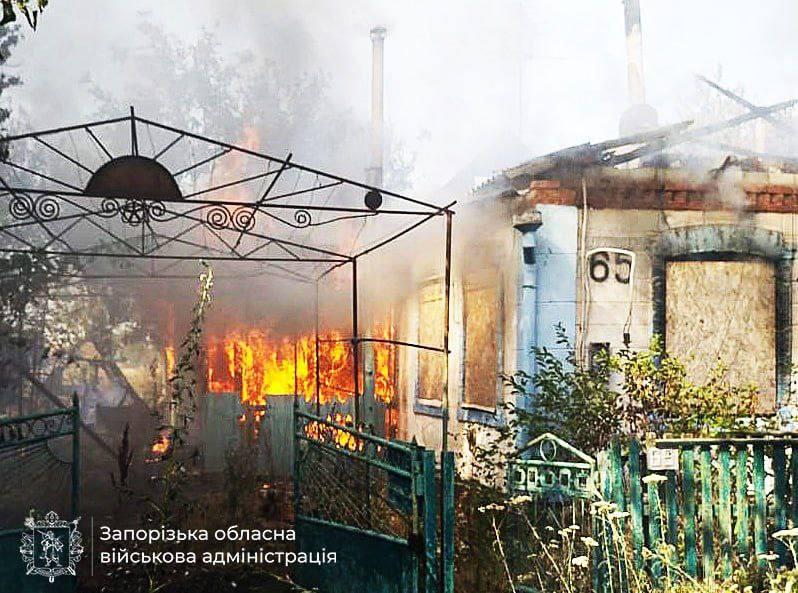
The aftermath of a Russian attack on Zaporizhzhia Oblast. (Zaporizhzhia Oblast Military Administration/Telegram)
President Volodymyr Zelensky characterized the strikes as a continuation of Russia’s campaign to “destroy Ukrainian energy infrastructure on the eve of the heating season.” The timing appears deliberate, with Moscow seeking to recreate the energy crisis that plagued Ukraine during previous winter months when Russian strikes systematically targeted power generation and distribution networks.
Ukraine’s largest private energy company, DTEK, reported the complete destruction of its coal enrichment plant in Donetsk Oblast—a facility crucial for preparing heating fuel. The Ministry of Energy explicitly framed the attacks as preparation for “undermining Ukrainian will to resist Russian aggression” through winter hardship.
Pipeline Inferno: Mystery Explosion Halts Moscow’s Fuel Supply
A powerful explosion rocked the Ryazan-Moscow oil pipeline near the village of Bozhatkovo on August 26, indefinitely suspending petroleum product transportation to the Russian capital, sources in Ukrainian military intelligence told local media. The blast, which ignited a massive fire visible from kilometers away, struck a section of the pipeline repurposed by state-controlled Transneft to supply automobile gasoline to Moscow since 2018.
The pipeline serves as a critical petroleum supply route for the Russian capital, located roughly 180 kilometers from Moscow. Local Russian media reported a powerful fire that prompted deployment of emergency services and repair crews, with Russian Telegram channels claiming a loud blast could be heard at the pipeline section.
Ukrainian intelligence sources noted that Transneft, which operates the pipeline, also supplies fuel to the Russian military, making it a strategically significant target. The company is currently assessing damage while transportation of petroleum products to Moscow remains suspended indefinitely.
The incident follows a pattern of attacks on Russian energy infrastructure throughout the full-scale war, as Ukrainian forces target Moscow’s oil and gas revenues through sabotage operations and drone strikes. The explosion’s cause remained unspecified, though it occurred amid intensified Ukrainian operations targeting Russian logistical networks.
Diplomatic Chess: Kremlin Demands Private Security Guarantee Discussions
The Kremlin signaled its intent to control the narrative around Western security guarantees for Ukraine, with spokesperson Dmitry Peskov rejecting public discussions as “unhelpful” while demanding private US-Russia negotiations. The statement appeared designed to undermine joint US-European efforts to develop robust security frameworks for postwar Ukraine.
Peskov declared that Russia takes a “negative view” of European security guarantee proposals and would perceive any European force deployments to postwar Ukraine as NATO expansion. His comments directly responded to Financial Times reporting that the United States was willing to provide supporting assets to European-led security arrangements.
The Kremlin’s rejection of public discussions represents an attempt to secure Russian veto power over Western security guarantees while sidelining Ukraine’s European partners from meaningful participation in conflict termination agreements. By insisting on bilateral US-Russia discussions, Moscow seeks to recreate Cold War-era spheres of influence negotiations conducted over the heads of affected nations.
Peskov simultaneously maintained the Kremlin’s pattern of diplomatic obstruction, reiterating that any high-level Russia-Ukraine contacts require “extensive preparations” while claiming Ukraine lacks sufficient “reciprocity” for meaningful negotiations. The head of Russian and Ukrainian negotiating groups remain in contact, though no timeline exists for resuming talks.
Atlantic Tensions: Azerbaijan’s President Condemns Soviet “Invasion and Occupation”
Azerbaijani President Ilham Aliyev delivered a scathing condemnation of Russian imperial history while reaffirming support for Ukraine’s territorial sovereignty, further aggravating already deteriorating Russian-Azerbaijani relations. In an interview with Saudi state outlet Al Arabiya, Aliyev characterized the 1920 Soviet takeover as an invasion, stating “the Russian army invaded Azerbaijan and occupied the country.”
Aliyev’s comments represent a remarkable escalation in anti-Russian rhetoric from the leader of a nation traditionally within Moscow’s sphere of influence. He explicitly characterized Russia’s war against Ukraine as an “invasion” while reiterating Azerbaijan’s consistent support for Ukrainian territorial integrity since the full-scale invasion began.
The Azerbaijani president connected historical grievances to contemporary tensions, stating that Azerbaijan will “never tolerate” any “aggression or disrespect” against the country. He specifically referenced Russia’s downing of Azerbaijan Airlines flight 8243 in December 2024, which crashed in Kazakhstan after being struck by Russian air defense systems over Chechnya.
Aliyev publicly rejected Kremlin attempts to cover up Russia’s role in the aviation disaster, seizing upon subsequent incidents to demand Moscow take responsibility. The deteriorating relationship gained additional complexity when Russian forces struck Azerbaijani energy infrastructure in Ukraine, including attacks on the State Oil Company of Azerbaijan Republic depot in Odesa City.
Battlefield Evolution: Russian Forces Adapt Tactics Across Multiple Fronts
Russian forces demonstrated tactical adaptation across the frontline, abandoning large mechanized assaults in favor of small infantry infiltrations designed to bypass Ukrainian strongpoints and accumulate forces in rear areas. The shift reflects lessons learned from devastating losses suffered during earlier phases of the conflict when Ukrainian drones and artillery decimated larger Russian formations.
In the Lyman direction, Ukrainian brigade representatives reported Russian forces now outnumber Ukrainian defenders six-to-one in some areas while employing new tactics focused on bypassing forward positions to enter the Ukrainian rear. Russian forces are leveraging fiber-optic first-person-view drones to interdict Ukrainian ground lines of communication while using Shahed drones against frontline cities.
The tactical evolution extends beyond Dnipropetrovsk Oblast, with similar infiltration patterns observed near Dobropillya and other sectors. A Ukrainian drone platoon commander in the Novopavlivka direction reported Russian forces changing tactics due to improved weather conditions and increased visibility, abandoning large mechanized assaults for smaller infantry groups.
Russian forces achieved confirmed advances in the Borova and Toretsk directions while continuing offensive operations across multiple axes without significant territorial gains. Geolocated footage confirmed Russian seizure of Katerynivka northwest of Toretsk, with elements of the 68th Tank Regiment conducting clearing operations in the settlement.
Diplomatic Preparations: Ukrainian Officials Head to New York for Critical Talks
Presidential Office Chief of Staff Andriy Yermak and Defense Council Secretary Rustem Umerov departed for New York to conduct discussions with US officials on security guarantees and potential peace negotiations, Bloomberg reported. The high-level delegation signals Ukraine’s commitment to diplomatic engagement while maintaining strong defensive positions on the battlefield.
US President Donald Trump’s Russia envoy Steve Witkoff confirmed meetings with Ukrainian officials following his previous engagements with both Ukrainian and Russian leadership. The discussions will focus on establishing security guarantee frameworks and potentially organizing bilateral talks between Presidents Zelensky and Putin.
The timing of the talks coincides with intensified US diplomatic efforts to broker a conflict termination agreement. Trump met Putin in Alaska on August 15 and subsequently hosted Zelensky alongside European leaders at the White House, expressing hope for bilateral summit arrangements within two weeks.
President Zelensky confirmed the officials’ participation while emphasizing his readiness for direct negotiations with Putin, including discussions of territorial issues. The Ukrainian leader has repeatedly expressed openness to unconditional peace talks while maintaining firm positions on sovereignty and territorial integrity.
Personnel Changes: Ukraine Appoints New US Ambassador
President Zelensky announced the appointment of former Deputy Prime Minister Olha Stefanishyna as Ukraine’s new ambassador to the United States, replacing Oksana Markarova after her decade of public service. The appointment comes at a critical juncture in US-Ukraine relations as Trump intensifies efforts to broker a peace deal.
Stefanishyna brings extensive experience in European and Euro-Atlantic integration, having served as deputy prime minister for European integration and briefly as justice minister in 2024. Zelensky emphasized the ambassador’s mandate to advance US-Ukraine defense agreements, including drone procurement and other cooperation areas.
The appointment reflects Ukraine’s priority on maintaining strong bilateral relations with Washington amid shifting US policy priorities. Zelensky thanked Markarova for her service, crediting her with securing over $100 billion in US support and establishing bipartisan congressional backing for Ukraine.
Markarova highlighted her achievements in advancing weapons deliveries, sanctions packages, and regional partnerships while establishing Ukraine House in Washington. She pledged active support for her successor, emphasizing that the ambassador’s success represents “the success of Ukraine.”
European Pressure: Italy Proposes Article 5-Style Guarantees
Italian Prime Minister Giorgia Meloni confirmed that a security mechanism inspired by NATO Article 5 remains the primary guarantee proposal under consideration for Ukraine. The mechanism would require Ukraine’s allies to decide within 24 hours whether to commit troops following any renewed Russian invasion.
Meloni characterized the Italian proposal as “currently the main one on the table,” representing a “potential contribution to peace” that Italy has provided to international discussions. The proposal would extend NATO’s collective defense principle to Ukraine without full alliance membership.
The Prime Minister acknowledged emerging “glimmers of hope for a negotiated path” following years of Russian demands for Ukrainian capitulation. She attributed diplomatic possibilities to Ukrainian resistance and Western unity, despite public opinion that was “not always convinced” of supporting Kyiv.
Extending Article 5 protections to Ukraine would represent the “simplest and most effective proposal” while testing Russian peace intentions, Meloni suggested. The mechanism would provide concrete security guarantees while maintaining flexibility for allies to determine appropriate responses to aggression.
Energy Infrastructure Under Siege: DTEK Facility Destroyed
Ukraine’s largest private energy company, DTEK, confirmed the complete destruction of its coal enrichment plant in Donetsk Oblast following Russian strikes on August 26. The facility, crucial for preparing coal for heating purposes, represents the latest target in Moscow’s systematic campaign against Ukrainian energy infrastructure.
The attack coincided with broader Russian strikes against energy and gas transportation facilities across six Ukrainian regions. The Ministry of Energy characterized the coordinated assault as preparation for undermining Ukrainian civilian resilience during the approaching heating season.
DTEK’s coal enrichment plant destruction eliminates critical capacity for preparing heating fuel during winter months when energy demands peak. The facility’s loss compounds challenges facing Ukraine’s energy sector as Russian forces systematically target power generation, transmission, and fuel preparation infrastructure.
The timing of the attack, occurring as temperatures begin declining toward winter, demonstrates Moscow’s strategic intent to weaponize seasonal vulnerabilities. Ukrainian authorities consider the strikes continuation of Russia’s campaign to destroy energy infrastructure “on the eve of the heating season.”
Casualties and Humanitarian Impact: Two Killed, 29 Wounded Across Ukraine
Russian attacks across Ukraine killed at least two civilians and wounded 29 others during the 24-hour period, regional authorities reported. The casualties occurred amid widespread drone attacks targeting both military and civilian infrastructure across multiple oblasts.
In Donetsk Oblast, two people died in Kostiantynivka and Bokove while twelve others sustained injuries. A 68-year-old woman was wounded in Kozacha Lopan village in Kharkiv Oblast, with two additional women, aged 70 and 73, injured in Izium.
Zaporizhzhia Oblast saw injuries to three people—two women aged 25 and 52, and an 87-year-old man—in Uspenivka village. Kherson Oblast recorded eleven injuries as Russian forces targeted 36 settlements including the regional center.
The casualty figures reflect the civilian cost of Russia’s intensified infrastructure campaign, with attacks affecting not only energy facilities but residential areas and civilian infrastructure. Ukrainian air defenses successfully intercepted 74 of 95 launched drones, preventing potentially higher civilian casualties.
International Isolation: Russia Withdraws from European Torture Convention
Ukraine’s Foreign Ministry condemned Russia’s decision to withdraw from the European Convention for the Prevention of Torture as “an admission of guilt” and an attempt to evade accountability. The move represents another step in Moscow’s systematic rejection of international oversight mechanisms as evidence mounts of widespread torture and war crimes.
“Modern Russia is a land of lawlessness and the degradation of human dignity,” the Ukrainian Foreign Ministry declared. “The decision to withdraw from the Convention for the Prevention of Torture only reinforces this reality and firmly places Russia among the countries where human life and dignity are worth nothing.”
Russian Prime Minister Mikhail Mishustin signed a resolution calling for Moscow’s withdrawal from the treaty, which establishes preventive mechanisms allowing European experts to conduct regular visits to detention facilities. Russia has consistently undermined this system by refusing cooperation and barring international inspectors from entering the country.
The withdrawal coincides with documented evidence of systematic torture of Ukrainian prisoners of war, with more than 200 Ukrainian soldiers having died in Russian captivity since the full-scale invasion began. Ukraine’s Ombudsman previously reported that most released Ukrainian POWs had never been visited by Red Cross representatives while in Russian detention.
Judicial Warfare: 300+ Ukrainian Soldiers Convicted on Terrorism Charges
Russian courts have convicted more than 300 Ukrainian soldiers who participated in the Kursk Oblast incursion on terrorism charges this year, according to the Kirill Parubets Analytical Center and the Insider. The mass prosecutions represent a systematic violation of international humanitarian law governing prisoners of war.
Among the 525 publicly known Ukrainian POWs captured in Kursk Oblast, over 50% have already been convicted by Russian authorities. One soldier received a life sentence, while most POWs face 13-28 years in prison. The Russian 2nd Western District Military Court has processed the majority of these politically motivated sentences.
“The charge of terrorism is, in principle, inapplicable to a situation of international armed conflict,” explained Sergei Davidis, head of the Support for Political Prisoners Project. The convictions violate Geneva Convention protections for prisoners of war by prosecuting soldiers “for the very fact of participation in military actions.”
The systematic nature of these prosecutions—290 convicted POWs and 15 sentenced in absentia—demonstrates Russia’s deliberate strategy to criminalize legitimate military operations while denying captured Ukrainian soldiers their rights under international law.
European Solidarity: France, Germany, and Poland Rally Behind Moldova
The leaders of France, Germany, and Poland visited Moldova on its 34th independence anniversary to demonstrate support ahead of upcoming parliamentary elections amid increased Russian interference activities. French President Emmanuel Macron, German Chancellor Friedrich Merz, and Polish Prime Minister Donald Tusk met with President Maia Sandu as concerns mount over Moscow’s destabilization efforts.
“Moldova is threatened by Russia,” a French presidential adviser told journalists, referencing Moscow’s “playbook” of “intimidation,” “sovereignty obstructions,” and “exploitation of separatism.” The visit comes as Moldova’s presidency describes Russia ramping up interference activities ahead of September’s high-stakes elections.
President Sandu’s pro-EU Party of Action and Solidarity faces challenges from the pro-Russian Socialist Party and allies in the upcoming vote. Exiled pro-Kremlin oligarch Ilan Shor announced in July that his Victory Bloc would participate in Moldova’s parliamentary elections.
The high-level European visit underscores Western commitment to defending Moldova’s democratic institutions and European integration path, with EU candidate status granted in 2022 and formal accession talks beginning in 2024.
Nordic Tensions: Denmark Confronts U.S. Over Greenland Influence Campaign
Denmark summoned the United States charge d’affaires in Copenhagen over reports of American citizens conducting covert influence operations in Greenland. The diplomatic protest reflects escalating tensions over President Trump’s repeated threats to annex the self-governing Danish territory.
Danish public broadcaster DR reported that Copenhagen believes at least three U.S. citizens with ties to the Trump administration have attempted to influence opinion through covert operations promoting Greenland’s secession from Denmark. The territory houses 57,000 Danish citizens, a U.S. military base, and vast mineral reserves.
Foreign Minister Lars Lokke Rasmussen acknowledged “foreign actors continue to show interest in Greenland,” warning that “any attempt to interfere in the internal affairs of the Kingdom will of course be unacceptable.” Danish intelligence agencies identified “various kinds of influence campaigns” attempting to “create discord in the relationship between Denmark and Greenland.”
Trump previously declared “We’ll get Greenland. Yeah, 100%,” while not ruling out military force, prompting Danish Prime Minister Mette Frederiksen to declare that “you cannot annex another country” even with security arguments.
Energy Economics: Russia Increases Oil Exports After Ukrainian Strikes
Russia revised its August crude oil export plans from western ports, increasing them by 200,000 barrels per day compared to initial schedules, Reuters reported citing industry sources. The adjustment follows Ukrainian attacks on 10 Russian refineries throughout August, shutting down facilities representing 17% of national processing capacity.
The paralyzed refineries freed up additional crude oil volumes for export, with total loadings from Primorsk, Novorossiysk, and Ust-Luga expected to reach 2 million barrels per day, up from the planned 1.8 million. Ukrainian strikes particularly damaged the Druzhba pipeline, one of the world’s largest oil pipelines.
Industry sources told Reuters that damage to key routes could cost Russia up to 500,000 barrels per day in exports, creating serious budget revenue challenges amid Western sanctions. Ukrainian drone strikes on August 13 targeted the major Unecha oil pumping station in Bryansk region, continuing throughout the week with attacks on the Nikolskoye station in Tambov region.
The export adjustments demonstrate both the immediate economic impact of Ukrainian infrastructure targeting and Russia’s ability to redirect energy flows to maintain revenue streams crucial for financing military operations.
Property Theft: Russian Authorities to Resell Seized Ukrainian Homes
Russian-installed authorities in occupied Donetsk Oblast announced plans to resell homes illegally seized from Ukrainian owners, the Center of National Resistance reported. The property theft represents systematic violation of international law governing occupied territories.
“All these ‘deals’ are legally null and void. Everyone involved in the sale of Ukrainian property will be held accountable,” the CNR declared. Russian occupation authorities previously announced plans to turn stolen housing into “big business” by year’s end under the guise of “creating jobs.”
The scheme involves properties seized from Ukrainians after the invasion being reclassified as “state property” and prepared for resale. Such actions underscore Russia’s systematic disregard for international protections governing occupied territories and civilian property rights.
The property seizures represent part of broader Russian efforts to permanently alter the demographic and economic landscape of occupied Ukrainian territories while enriching occupation authorities through legalized theft of Ukrainian assets.
Strategic Leverage: Ukraine Positions Battlefield Data as Diplomatic Asset
Digital Transformation Minister Mykhailo Fedorov characterized Ukraine’s wartime data collection as “priceless” for any country, positioning battlefield information as potential leverage in international relationships. The minister told Reuters that Ukraine is developing policies for sharing combat data while remaining “very careful” about information distribution.
“I think this is one of the ‘cards,’ as our colleagues and partners say, to build win-win relations,” Fedorov explained. Ukraine has accumulated millions of hours of combat footage recorded from the sky, crucial for training artificial intelligence models and advancing autonomous weapon systems.
The data’s strategic value reflects the unprecedented scale and technological sophistication of the Russia-Ukraine conflict, generating information invaluable for military development worldwide. Fedorov reported “incredibly high” demand for the data while Ukraine formulates policies for organized sharing processes.
Ukraine is simultaneously developing systems allowing drones to operate fully autonomously in swarms without pilots, with Ukrainian startup Fourth Law projecting singular autonomous demonstrations by year’s end. The battlefield data positioning occurs as Ukrainian officials prepare for critical talks in New York on security guarantees.
German Public Opinion: Majority Support Ukrainian Territorial Concessions
A slight majority of Germans believe Ukraine should be prepared to cede Russian-occupied territories for peace, according to a Forsa Institute survey published in Die Welt. When asked whether “Ukraine should be prepared to cede occupied territories to Russia if necessary to facilitate a peace agreement,” 52% responded positively.
Support was highest among far-right Alternative for Germany voters at 72%, while lower among governing coalition supporters—43% of CDU/CSU and 48% of SPD voters favored the position. The August 18-19 survey of 1,002 respondents reflects growing war fatigue despite Germany’s role as Ukraine’s leading European military backer.
The polling occurs as Russia demands full control over eastern Donbas region as a peace condition while potentially seeking additional territorial concessions. German Chancellor Friedrich Merz, who participated in recent Washington summit discussions, has stated Ukraine should not be forced to cede territory.
The survey results suggest potential challenges for maintaining German public support for Ukraine’s territorial integrity as conflict duration extends and economic pressures mount, despite Berlin’s substantial military and financial commitments.
EU Pressure: Lithuania Pushes to Bypass Hungarian Obstruction
Lithuania urged the European Union to find mechanisms bypassing Hungary’s veto of Ukraine’s EU accession talks, calling for “decisive steps” in a letter to EU capitals ahead of informal foreign minister meetings. The appeal reflects mounting frustration with Hungarian Prime Minister Viktor Orban’s systematic obstruction of Ukrainian integration.
Vilnius reportedly proposes launching technical-level accession talks with Ukraine and Moldova without Hungary, provided the other 26 member states agree. Formal approval could follow later should Budapest change its stance or leadership, Lithuanian officials suggested.
The letter argues that inaction could weaken Ukrainian public support and erode institutional reform momentum, while starting talks would boost morale and reinforce change processes. President Zelensky reportedly asked Trump during his Washington visit to help prevent Hungarian obstruction, with Trump promising his team would examine the matter.
Political sources suggest Trump has appealed to Orban to lift the veto, potentially changing diplomatic dynamics. Nearly all EU member states agreed in June that Ukraine is ready to open the Fundamentals cluster, but formal negotiations require unanimous consent from all 27 members.
Polish Tensions: Ukrainian Journalist Dismissed After Presidential Insult
Ukrainian journalist Vitalii Mazurenko was dismissed from Polish outlet Obserwator Miedzynarodowy after calling Polish President Karol Nawrocki “pachan”—criminal slang for gang leader—during a live television broadcast. The incident reflects rising tensions between Ukraine and Poland despite Warsaw’s crucial alliance role.
The media outlet rejected Mazurenko’s comment as not representing their position, stating: “As a Polish portal, we strongly reject and do not tolerate any undermining of the authority of the President of the Republic of Poland.” Under Polish law, publicly insulting the president constitutes a criminal offense punishable by up to three years imprisonment.
Zbigniew Bogucki, head of the Polish President’s Office, called for legal action and suggested the case might justify introducing laws allowing revocation of naturalized citizenship. “Polish citizenship should be a unique honor and an obligation to put Poland and its interests first,” Bogucki declared.
The controversy follows Nawrocki’s veto of legislation extending financial support for Ukrainian refugees and his proposals for harsher citizenship requirements and equating “Bandera symbols” with Nazi and Communist symbols in Poland’s criminal code.
UN Diplomacy: France Accuses Russia of Pressuring Nord Stream Investigation
A French representative at the United Nations accused Russia of pressuring Germany’s Nord Stream pipeline explosion investigation by calling numerous Security Council meetings. The criticism emerged during a Moscow-requested meeting regarding the 2022 pipeline sabotage under the Baltic Sea.
“By making the Council meet many times, the Russian Federation is putting pressure on Germany’s investigation, which is unacceptable,” the French delegate declared. The repetitive meetings were characterized as unnecessary attempts to politicize ongoing criminal proceedings.
British and American delegates urged the Security Council to focus on “ending the war in Ukraine” rather than “an incident that took place nearly three years ago,” while respecting the integrity of national investigations. Russian representatives demanded meticulous investigation of what they termed “deliberate destruction of civilian infrastructure.”
German authorities issued arrest warrants for Ukrainian suspects in the sabotage, though investigators have not alleged official Kyiv authorization. Ukraine has denied involvement in the pipeline explosions that occurred in September 2022.
Looking Ahead: Winter’s Approaching Shadow
As August concludes, the convergence of tactical adaptation, diplomatic maneuvering, and infrastructure targeting suggests Russia’s preparation for a comprehensive winter campaign designed to test Ukrainian resilience across multiple domains. The shift toward infiltration tactics reflects Moscow’s recognition that large-scale mechanized warfare has proven costly and ineffective against Ukrainian defenses.
The resumption of systematic energy infrastructure attacks signals Russian intent to recreate previous winter crises that stressed Ukrainian civilian populations and tested Western resolve. Moscow’s diplomatic obstruction combined with systematic violations of international law—from torture convention withdrawal to mass POW prosecutions—reveals a strategy of comprehensive norm rejection.
Ukrainian preparations for high-level talks in New York occur against this backdrop of intensified Russian pressure, with Kyiv positioning strategic assets like battlefield data as diplomatic leverage while maintaining defensive resilience. The appointment of experienced diplomatic leadership and continued international support—from European solidarity visits to American public opinion shifts—suggests Ukraine’s recognition that the coming months will test both battlefield endurance and diplomatic skill in equal measure.