
A day when Putin brandished nuclear threats while Russia’s election interference machine worked overtime in Moldova, and Copenhagen’s skies fell silent under mysterious drone surveillance
The Story of a Single Day
On the 1,307th day of Russia’s full-scale war against Ukraine, September 22, 2025, Vladimir Putin chose nuclear blackmail as his diplomatic weapon, announcing Russia would honor arms control limits for exactly one year—provided America did the same. Meanwhile, 1,500 kilometers west in Moldova, 74 people sat in detention cells, accused of training with Russian intelligence to destabilize a democracy on election’s eve. And across Northern Europe, mysterious drones forced Copenhagen’s airport into darkness for four hours, while Oslo arrested foreign nationals for flying prohibited zones. The convergence of nuclear threats, election subversion, and aerial provocations painted a portrait of a Kremlin playing every card in its destabilization playbook simultaneously.
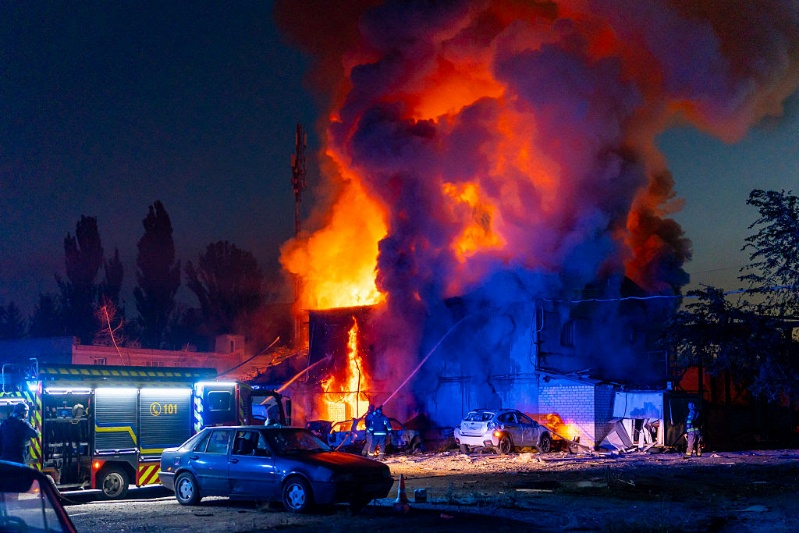
Ukrainian firefighters work on the scene following the Russian attack on Zaporizhzhia, Ukraine. Russia hit civilian infrastructure in three districts, resulting in three casualties. Non-residential premises, a parking lot, and other civilian infrastructure were also affected. ( Zaporizhzhia Military Administration / Anadolu via Getty Images)
The Nuclear Gambit: Putin’s Treaty Ultimatum
Vladimir Putin chose the stage of a Russian Security Council meeting to deliver what sounded like statesmanship but functioned as extortion. Russia would adhere to New START nuclear arms limits for one year after the treaty’s February 2026 expiration, he announced—but only if America reciprocated. It was deterrence wrapped in conditional promises, a master class in appearing reasonable while delivering ultimatums.
The New START Treaty, signed in 2010, caps deployed strategic nuclear warheads at 1,550 for each nation and limits delivery systems to 700. Russia had suspended participation in February 2023, claiming American violations, though Moscow insisted it still respected numerical limits. Now Putin offered a one-year extension as bait, dangling arms control prospects to extract concessions on Ukraine.
“We believe this step will be only possible if the U.S. does the same,” Putin declared, framing Russia as the responsible nuclear power while Washington supposedly rushed toward confrontation. The statement aimed to position Putin as Trump’s equal—two nuclear-armed leaders negotiating the planet’s survival while lesser nations watched anxiously.
But Putin’s nuclear theater served tactical purposes beyond diplomatic posturing. Russia had systematically violated arms control agreements for two decades: exploiting the Open Skies Treaty for intelligence gathering, withdrawing from the Conventional Forces in Europe Treaty, deploying intermediate-range missiles banned under the now-defunct INF Treaty. The Kremlin’s track record transformed Putin’s latest promise into just another bargaining chip to be discarded when convenient.
“Russia is ready to respond to any existing or emerging threats,” Putin warned, “not with words but through military-technical means.” It was nuclear saber-rattling dressed as strategic patience, reflexive control aimed at convincing the West that concessions on Ukraine might prevent nuclear escalation. The calculation was transparent: frighten allies into pressuring Kyiv toward territorial compromise rather than risk atomic confrontation.
The Defense Industrial Squeeze: When Ambition Meets Economic Reality
Behind Russia’s military facade, economic constraints were strangling the defense industrial base that Putin’s war machine depended upon. Russian opposition outlet Novaya Gazeta reported that wages within defense enterprises were declining for the first time since invasion began—a stunning reversal after two years of military-driven economic boom.
The problem wasn’t lack of demand but capacity saturation. Russian defense factories had reached maximum production with existing facilities and couldn’t afford expansion. Building new production lines, purchasing machine tools, and constructing additional factories required capital that inflation and financial constraints had made scarce. The Kremlin was prioritizing drone and missile manufacturers, leaving other sectors—armored vehicle production, aircraft manufacturing—with declining investment despite battlefield needs.
The Conflict Intelligence Team told Novaya Gazeta that the defense industrial base hit “saturation” in 2024, when labor demand began declining. Factories already operated at capacity but couldn’t expand without subsidized loans that the Kremlin couldn’t afford to distribute universally. The result was a defense economy approaching its operational ceiling, unable to scale production despite Putin’s insatiable appetite for weapons.
The prioritization revealed strategic calculations shaped by battlefield reality. Russia was reducing armored vehicle deployments after catastrophic losses to Ukrainian drones and anti-tank weapons, shifting toward smaller infantry infiltrations supported by massive artillery and drone strikes. The defense budget reflected this tactical evolution: more money for unmanned systems and missiles, less for tanks and fighting vehicles that couldn’t survive modern battlefields.
It was a defense industrial base adapting to survive rather than thrive, maximizing output from existing capacity while recognizing that expansion had become economically impossible. The constraints suggested Russia’s military production had reached a plateau, unable to dramatically increase weapon flows regardless of Kremlin demands.
The Civilian Toll: UN Documents Systematic Terror
The United Nations Independent International Commission of Inquiry on Ukraine delivered findings that transformed anecdotal horror into documented war crimes. Russian drone strikes against Ukrainian civilians had increased casualties by 40 percent in 2025 compared to 2024, with systematic targeting of non-combatants representing deliberate state policy rather than battlefield accidents.
Commission Head Erik Møse detailed Russian strikes against civilians walking streets, using transportation, residing in homes, and working at critical infrastructure across Kherson, Dnipropetrovsk, and Mykolaiv oblasts. The pattern extended to “double tap” strikes—attacking first responders arriving at initial strike sites, a tactic specifically designed to maximize casualties among emergency workers.
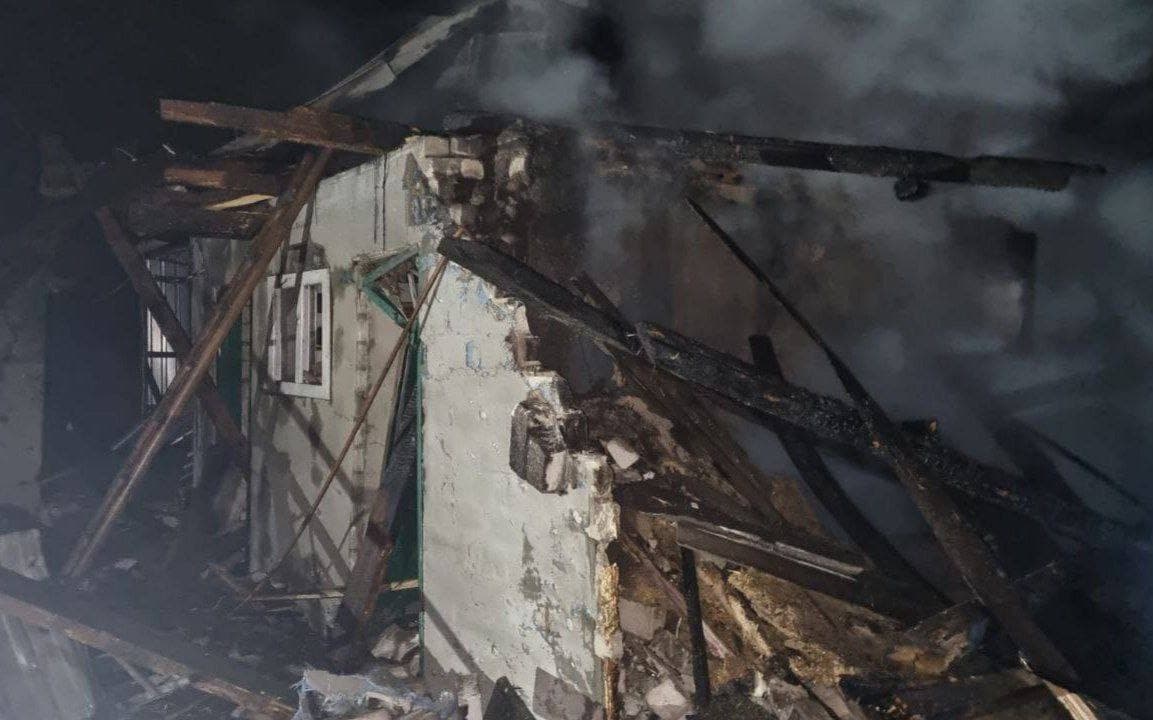
The aftermath of a Russian attack on Dnipropetrovsk Oblast, Ukraine. (Serhii Lysak/Telegram)
The Commission’s conclusion was unequivocal: Russia’s deliberate drone strikes against civilians violated international law, constituted crimes against humanity including murder and forcible population displacement, and reflected “a concerted state policy that aims to sow terror among the Ukrainian population.”
The night of September 21-22 provided fresh evidence. Russian forces launched 141 drones across Ukraine, with 80 confirmed as Shaheds. Ukrainian air defenses intercepted 132, but strikes still killed eight civilians and injured 21 others. In Zaporizhzhia, missiles sparked fires destroying apartment buildings and vehicles, killing three and injuring two. Kostiantynivka saw four dead and four wounded from artillery bombardment. The statistics accumulated like compound interest on horror—each attack adding to an ever-growing ledger of civilian suffering.
Kharkiv Oblast Prosecutor’s Office documented Russian forces shooting an elderly civilian on a bicycle in Kupyansk and wounding another in an FPV drone strike against a civilian car in Borova. Ukrainian broadcaster Suspilne published footage of a Russian drone dropping what appeared to be a PFM-1 Lepestok anti-personnel mine on a street in central Nizhyn as civilian vehicles passed. The mines, designed to maim rather than kill, represented weaponized cruelty deployed against non-combatants.
Crimean Strikes: Historic Firsts and Luxury Targets
Ukrainian forces achieved a historic first on the night of September 21-22, destroying two Soviet-designed Be-12 Chayka amphibious aircraft in occupied Crimea—the first-ever combat loss of this aircraft type. The Main Intelligence Directorate’s special unit Prymary conducted the strike, eliminating anti-submarine platforms equipped with sophisticated detection systems designed to hunt submarines across vast ocean expanses.
The Be-12, NATO reporting name “Mail,” had served Soviet and Russian forces since the 1960s as a maritime patrol workhorse. Its destruction demonstrated Ukrainian precision strike capabilities reaching deep into occupied territory to eliminate high-value naval aviation assets. The simultaneous destruction of another Mi-8 helicopter—adding to three eliminated the previous night—illustrated systematic degradation of Russian aviation capabilities on the peninsula.
But the night’s most intriguing strike targeted the Foros resort, a luxury sanatorium near four Russian state dachas where political elites maintained country homes. Russian sources reported a closed-door private party with high-ranking officials, possibly including military leadership, present when Ukrainian drones found their mark. The strike killed two and injured fifteen, according to Russian Ministry of Defense claims.
The targeting raised tantalizing questions about Ukrainian intelligence capabilities and target selection. If high-ranking Russian officials were indeed present, the strike represented assassination attempt against military leadership. The Foros resort’s proximity to state dachas and its purchase by Tatarstan’s Federation of Trade Unions with Tatneft backing—likely intermediaries protecting real owners from sanctions—suggested Ukrainian intelligence had penetrated Russian elite networks to identify when and where valuable targets gathered.
Ammunition Depots in Flames: Ukraine’s Deep Strike Campaign
Ukrainian forces demonstrated expanding reach with confirmed strikes against Russian military infrastructure spanning occupied territories and deep into Russia proper. The General Staff reported destroying ammunition stockpiles and drone distribution hubs in occupied Donetsk and Luhansk oblasts, while Special Operations Forces eliminated an S-400 air defense system in Kaluga Oblast—roughly 200 kilometers from Moscow.
The Kaluga strike exemplified Ukraine’s systematic approach to degrading Russian air defenses. Special forces detected the S-400 battery overnight on September 5, then coordinated drone strikes against the launcher and radar system. The operation required intelligence gathering, surveillance, and precision execution—capabilities Ukraine had refined through three years of constant adaptation.
Ukrainian forces also struck the Kanevskaya traction substation in Staroderevyankovskaya, Krasnodar Krai, overnight September 21-22. Geolocated footage published September 22 confirmed the attack against infrastructure providing electricity to railway transport and receiving high-voltage power at 220 kV. Ukrainian military observer Tatarigami noted the substation’s proximity to Primorsko-Akhtarsk—a location from which Russian forces launch significant numbers of Shahed-type drones, suggesting the strike aimed to disrupt drone operations.
In Donetsk Oblast, Ukrainian forces struck a distribution hub for over 19,000 Russian drones, destroying massive stockpiles of Molniya, Boomerang, Vandal Novgorodsky, and Gorynych unmanned systems. The strike disrupted supply chains feeding frontline operations, forcing Russia to rebuild inventories and establish new distribution networks. Each successful interdiction compounded delays and complications in Russian logistics, degrading overall combat effectiveness.
The Luhansk Oblast ammunition depot strike targeted the 17th Tank Regiment of Russia’s 70th Motorized Rifle Division, destroying vehicles and munitions following delivery of thousands of mines, grenades, tank rounds, and artillery shells. The General Staff noted Russian trucks had delivered the ammunition shortly before Ukrainian forces incinerated it, suggesting real-time intelligence allowed precise timing of maximum-impact strikes.
Separately, geolocated footage published September 22 showed significant damage after a Ukrainian strike against a Russian military site along the T-0505 Donetsk City-Orlivka highway in occupied Avdiivka, roughly 37 kilometers southeast of Pokrovsk in the Russian rear. The strike demonstrated Ukrainian capability to reach deep behind front lines and target logistics hubs supporting Russian operations.
Belarus Withdrawal: The Zapad Exercises Conclude
Russia withdrew its troops from Belarus following the Zapad-2025 military exercises, State Border Guard Service spokesperson Andrii Demchenko announced—news that eased Ukrainian concerns about potential threats from the north. The exercises, conducted between September 12 and 16 across 41 training grounds, had deployed roughly 100,000 personnel in maneuvers that NATO’s eastern flank watched nervously.
Ukrainian border forces, intelligence units, and Defense Ministry elements had maintained intense surveillance throughout the exercises, monitoring for any signs of hostile preparation near Ukrainian borders. All training sites remained deep within Belarusian territory, with no provocations attempted near Ukraine’s frontier.
The Zapad drills, conducted every four years, officially focused on defensive operations but carried historical weight that made Ukrainian vigilance essential. After Zapad-2021, Russia and Belarus conducted “Union Resolve-2022” exercises that immediately preceded the full-scale invasion. Russian forces stationed in Belarus after those maneuvers participated in the February 24, 2022 assault, making any Russian military presence in Belarus a potential invasion threat.
This time, withdrawal occurred without incident—though Putin had visited the Mulino training ground to inspect exercises and review over 400 samples of military equipment. The presidential tour suggested continuing Russian focus on Belarus as a strategic staging area, even if immediate threats didn’t materialize.
UN Diplomacy: Zelensky Arrives as Trump Meeting Looms
White House Press Secretary Karoline Leavitt confirmed what diplomatic channels had anticipated: Donald Trump and Volodymyr Zelensky would meet face-to-face on September 23 during the UN General Assembly in New York. The announcement carried weight beyond typical bilateral scheduling, coming as Trump’s patience with the stalemated war appeared increasingly strained.
Zelensky arrived in New York on September 22 with First Lady Olena Zelenska, writing on Telegram: “Together with the First Lady of Ukraine and the team, we arrived in New York to participate in the UN General Assembly. We need the support of our partners. And such new support will definitely be the result of this diplomatic week.” The phrasing suggested Ukrainian awareness that Trump’s commitment remained conditional, requiring constant diplomatic cultivation to maintain American assistance.
Trump’s meeting schedule revealed his broader strategic priorities. Beyond Zelensky, he would meet UN Secretary-General Antonio Guterres, Argentine President Javier Milei, and senior EU officials. More significantly, Trump planned a multilateral summit with leaders from Qatar, Saudi Arabia, Indonesia, Turkey, Pakistan, Egypt, UAE, and Jordan—Muslim-majority nations whose cooperation Trump sought on various regional issues.
The last in-person Trump-Zelensky meeting had occurred August 17, just two days after Trump’s Alaska summit with Putin. That proximity had sparked Ukrainian concerns about deals being negotiated without Kyiv’s participation. Trump’s subsequent comments that “the hatred between Zelensky and Putin is unfathomable” suggested the American president viewed personal animosity as the primary obstacle to peace—a fundamental misunderstanding of the existential stakes Ukraine faced.
Aviation Warfare: Russia’s Sanctions Offensive
Russia launched a different kind of attack at the International Civil Aviation Organization assembly in Montreal, pressuring the UN body to lift sanctions restricting aircraft parts shipments and overflights. The campaign represented Moscow’s attempt to weaponize international institutions, arguing that aviation safety concerns should override Ukraine-related restrictions.
Since 2022, international sanctions had severely restricted Russian airlines’ access to Western-made spare parts, crippling Moscow’s ability to maintain commercial aircraft fleets. Russia’s Boeing and Airbus aircraft were aging rapidly, with replacement parts available only through unofficial “gray market” channels of questionable reliability.
Russian representatives submitted working papers claiming sanctions violated international aviation rules and demanding restoration of maintenance services, insurance, and airworthiness certificates. Moscow sought a seat on ICAO’s 36-member governing council, having failed to secure membership in 2022 after the invasion began. The aviation agency had previously condemned Russia for violating Ukrainian airspace and dual-registering aircraft—practices that breached international norms.
The Russian argument contained implicit threat: if a Russian Boeing or Airbus crashed due to maintenance failures caused by sanctions, Moscow would blame the West for civilian deaths. It was moral blackmail wrapped in safety concerns, attempting to guilt international institutions into easing restrictions regardless of Russia’s ongoing aggression.
Mysterious Drones Over Europe: Copenhagen and Oslo Incidents
Copenhagen’s airport ground to a halt on September 22 as police reported multiple large drones flying in prohibited airspace. All flights ceased for nearly four hours starting at 8:46 p.m. local time, with at least 15 aircraft diverted to alternative airports. The incident paralyzed Scandinavia’s largest aviation hub without warning or explanation.
Nearly simultaneously, Oslo police arrested two foreign nationals for flying drones near a military site, reporting the incident at 9:10 p.m. local time. The proximity of Copenhagen and Oslo incidents raised immediate questions about coordination, though investigators had not yet established definitive connections.
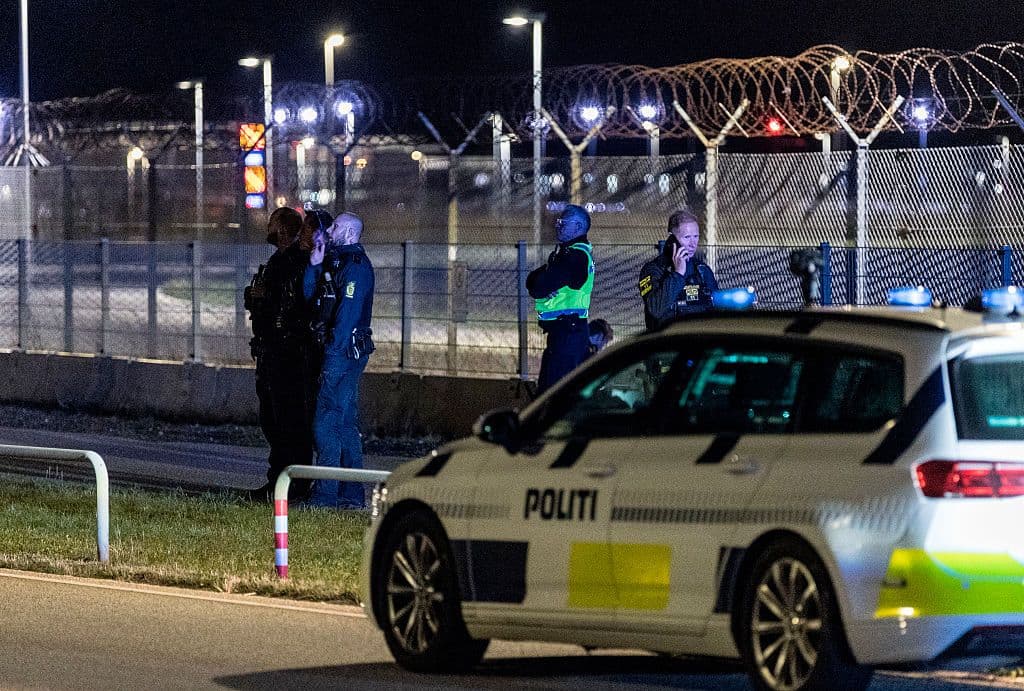
The Danish police are seen at Copenhagen Airport, in Kastrup near Copenhagen, on September 22, 2025. Planes cannot land or take off due to drones, according to Danish press agency Ritzau. (Photo by Steven Knap/Ritzau Scanpix/AFP via Getty Images)
Copenhagen’s deputy police inspector announced Danish and Norwegian authorities would investigate whether the incidents were related. Swedish outlet Sydsvenskeren reported several flights diverted to Malmö, transforming the disruption into a regional aviation crisis affecting multiple countries simultaneously.
The timing was particularly sensitive given recent Russian drone incursions into Poland and fighter jet violations of Estonian airspace. NATO members across Northern Europe had elevated alert status, implementing enhanced air defense measures and restricting airspace near sensitive facilities. Denmark, Norway, and Sweden—all NATO members and staunch Ukraine supporters—found themselves facing aerial provocations that blurred lines between criminal mischief and strategic intimidation.
The incidents occurred as EU members prepared for September 26 talks about establishing a “drone wall” along the eastern border—an anti-drone defense system designed to intercept aerial threats. Hungary and Slovakia, notably absent from invitation lists due to their pro-Russian positions, were excluded from discussions about collective air defense.
Polish Revelations: The Unarmed Drone Mystery
Polish Prime Minister Donald Tusk delivered surprising news about the September 10 Russian drone incursions that had prompted NATO Article 4 consultations: none of the drones carried warheads. The revelation transformed understanding of the incident from immediate military threat to psychological operation and intelligence gathering.
“There is currently no evidence that any of these drones posed a direct threat,” Tusk told Polish Press Agency. “So far, none have been identified as combat drones capable of detonating or causing harm.” Polish forces had shot down multiple Russian drones that night, with authorities eventually reporting at least 21 airspace violations.
The absence of explosives suggested the drones served reconnaissance and provocation purposes rather than kinetic attack. Russia was mapping NATO response times, testing air defense procedures, and collecting intelligence on alliance coordination—all while creating political pressure that forced NATO consultations and elevated regional tensions.
The tactic was sophisticated psychological warfare: launch enough drones to trigger defensive responses and diplomatic escalation, but equip them with cameras rather than explosives. NATO faced a dilemma: ignore the incursions and appear weak, or respond forcefully to unarmed reconnaissance platforms and risk appearing paranoid. Either way, Russia gathered valuable intelligence while imposing costs on alliance resources and political cohesion.
The Foreign Fighter: A Polish National’s Death in Russian Service
Polish national Jerzy Tyc, who fought for Russia in Kursk Oblast under the call-sign “Zygmunt,” was killed in action, regional authorities reported on September 22. The former Polish military officer who served until 1989 had become head of the Kursk Association, restoring Soviet war memorials in Poland, before joining Russian forces against Ukraine.
Tyc’s transformation from Polish serviceman to Russian combatant illustrated how ideological commitment could transcend national loyalty. Russian media frequently featured him criticizing Polish government policies, while Moscow awarded him medals for memorial restoration. His relationship with Foreign Ministry spokesperson Maria Zakharova and former Defense Minister Sergei Shoigu demonstrated official Russian cultivation of foreign sympathizers willing to provide propaganda value and eventually military service.
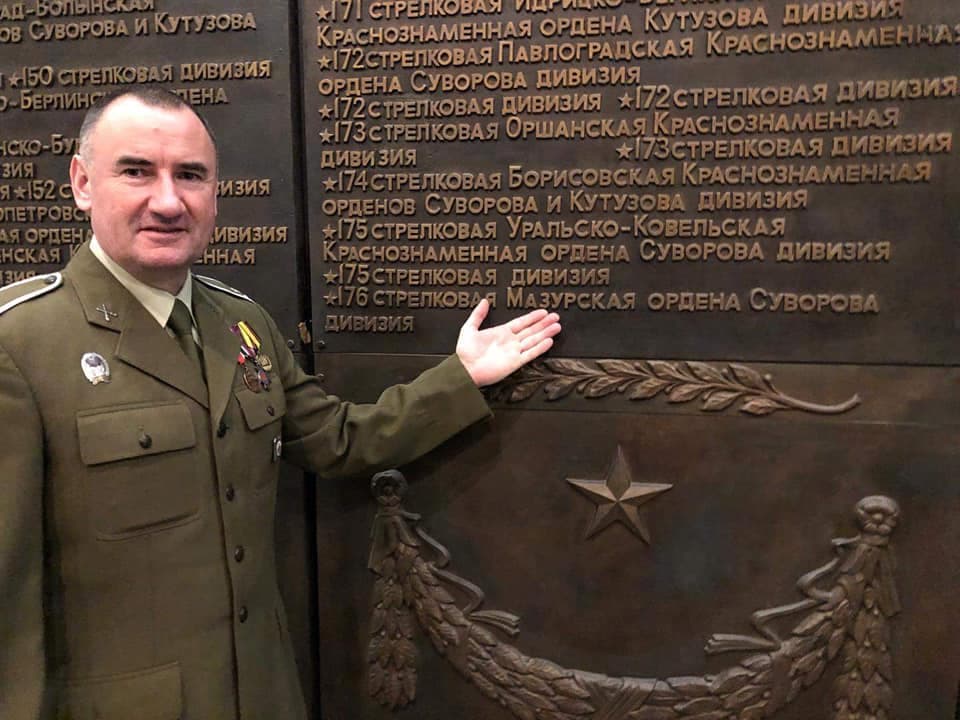
Polish national Jerzy Tyc who supported Russia in its full-scale war against Ukraine. (Jerzy Tyc/Facebook)
Moldovan Democracy Under Assault: Mass Arrests and Election Interference
Moldova’s September 22 witnessed the largest single-day action against Russian interference networks as authorities detained 74 people accused of training with Russian intelligence to destabilize the country during parliamentary elections. The mass arrests came just six days before September 28 voting that would determine Moldova’s European trajectory.
Police statements described suspects who traveled regularly to Serbia, where Russian intelligence services—including GRU—trained them in firearms use, special equipment operation, and tactics for provoking violence during protests. Participants received approximately 400 euros for their services, with operations coordinated by Andrei Pavlov, a Russian intelligence agent working with exiled pro-Kremlin oligarch Ilan Shor.
Security and Intelligence Service Director Alexandru Musteata revealed that Pavlov had overseen similar destabilization campaigns across Europe, Asia, and Africa—suggesting Moldova faced a proven template for electoral subversion rather than improvised interference. The 200-plus searches conducted September 22 seized weapons, ammunition, tents, passports, and other evidence documenting the conspiracy.
President Maia Sandu issued stark warnings about threats to Moldovan sovereignty, independence, and European future. “The Kremlin is spending hundreds of millions of euros to buy hundreds of thousands of votes on both banks of the Nistru, as well as abroad,” she declared, describing coordinated campaigns flooding public discourse with lies while paying provocateurs to incite disorder.
Bloomberg obtained documents outlining Russia’s multi-layered strategy published September 22: recruiting Moldovan citizens living abroad to vote at EU polling stations, organizing disruptive protests, and running widespread disinformation campaigns on social media. The documents revealed the Kremlin’s goal to undermine President Sandu’s Party of Action and Solidarity and ultimately remove her from power.
Sandu’s language reflected existential stakes: “If Russia succeeds in exerting control over Moldova, the consequences will be direct and dangerous for our country and for the entire region.” She warned that Europe would end at Moldova’s border, EU funds would stop at the Prut River, and the country could become a launchpad for infiltration toward Odesa Oblast.
Macron’s Legal Caution: The Russian Assets Debate
French President Emmanuel Macron injected legal complexity into discussions about confiscating frozen Russian assets, telling CBS News that outright seizure would violate international law. The statement reflected European hesitation about aggressive financial warfare despite Ukraine’s urgent funding needs.
“You cannot seize these assets from the Central Bank even in such a situation,” Macron declared. “And I think it’s a matter of credibility, and it’s very important that our countries remain and do respect the international laws.” The position prioritized legal niceties over wartime necessity, frustrating advocates for maximizing pressure on Russia’s financial resources.
The G7 had frozen approximately $300 billion in Russian central bank assets since invasion began, with roughly two-thirds held by Belgian clearinghouse Euroclear. Brussels had developed mechanisms using interest generated by frozen assets to fund Ukraine defense and reconstruction—a compromise avoiding outright confiscation while still weaponizing Russian money against Moscow’s war effort.
Macron’s caution revealed fundamental European ambivalence about escalation. French leadership acknowledged Russia’s aggression but remained unwilling to cross legal thresholds that might establish precedents for future asset seizures. The stance preserved international law principles while potentially leaving billions in Russian resources untouchable despite their potential utility for Ukrainian defense.
The Frontlines Grind On: Lyman, Dobropillya, and Tactical Evolution
Russian forces achieved modest territorial gains September 22, with geolocated footage confirming advances north of Derylove and east of Shandryholove near Lyman. Additional progress appeared in the Kostyantynivka-Druzhkivka tactical area, where Russian troops pushed marginally forward southeast of Predtechyne. The advances measured in hundreds of meters reflected grinding attritional warfare where victory meant controlling the next tree line rather than liberating cities.
Ukrainian forces achieved their own success in the Dobropillya tactical area, with Russian milbloggers acknowledging Ukrainian advances into northeastern Nove Shakhove. Commander-in-Chief Oleksandr Syrskyi reported Ukrainian forces had liberated 1.3 square kilometers and cleared additional 2.1 square kilometers, advancing up to 2.5 kilometers in unspecified directions. The gains demonstrated Ukrainian capacity for limited counteroffensives when Russian positions became overextended.
The tactical picture revealed evolving approaches to mechanized warfare in drone-dominated battlefields. Ukrainian brigades reported Russian forces had abandoned large mechanized assaults near Lyman, not conducting such operations for an entire month as drone strikes made massed armor suicidal. Instead, Russian troops employed tanks as artillery from closed positions, while infantry advanced in groups of two to four wearing anti-thermal imaging cloaks—often misusing the equipment due to poor training.
Russian forces continued offensive operations across multiple directions including Pokrovsk, where Ukrainian formations reported Russian deployment of up to 600 FPV drones daily, maintaining constant reconnaissance while conducting infiltration operations with small groups penetrating Ukrainian rear areas. The intensity reflected Russian adaptation to Ukrainian defensive advantages: rather than breakthrough operations, Moscow pursued cumulative pressure through countless small actions that gradually degraded defensive cohesion.
In the Velykomykhailivka direction, Russian sources claimed seizure of Kalynivske, but Ukrainian Dnipro Group spokesperson Lieutenant Colonel Oleksiy Belskyi denied the claims, stating Russian forces send small groups of two to five soldiers to infiltrate settlements and film footage of alleged seizures. Geolocated footage showed three Russian servicemembers raising flags in northwestern Kalynivske, but ISW assessed Russian forces likely conducted infiltration missions without actually seizing the settlement.
Looking Forward: Convergent Pressures and Democratic Resilience
September 22, 2025, demonstrated Russia’s multi-domain approach to achieving strategic objectives when military victory remained elusive. Putin brandished nuclear threats while defense industry constraints limited actual military expansion. Moldova faced coordinated destabilization as elections approached. European skies saw mysterious drones testing air defenses and political resolve. Each pressure point reflected Kremlin calculation that cumulative stress might fracture Western unity and force concessions Russia couldn’t achieve through battlefield victory.
The convergence of nuclear diplomacy, election interference, aerial provocation, and grinding frontline combat illustrated modern warfare’s complexity. Russia deployed every available tool—from arms control negotiations to coup attempts, from drone reconnaissance to systematic civilian terror—seeking vulnerabilities in democratic systems and alliance structures.
Yet resistance persisted across multiple fronts. Ukrainian forces continued striking deep into Russian territory and occupied areas. Moldovan authorities arrested dozens of Russian agents before election day. European air defenses scrambled to intercept provocative drones. NATO coordinated responses to airspace violations. Democratic institutions proved more resilient than authoritarian calculations anticipated.
The question was no longer whether Russia could achieve military victory—battlefield stalemate had settled that issue. Instead, September 22 revealed the real contest: could democratic societies withstand coordinated pressure across political, military, economic, and informational domains long enough for Russia’s own constraints to force Moscow toward genuine compromise? The answer would determine not just Ukraine’s fate but the viability of democratic governance against sustained authoritarian assault.