
Hours before flying to Delhi, Putin told Indian media he’ll only end the war when Ukraine accepts the same capitulation terms he demanded in February 2022—complete disarmament, no NATO, Russian territorial annexations, and Moscow’s veto over Kyiv’s sovereignty—exposing negotiations as theater while Russian forces throw 150,000 troops at Pokrovsk without achieving breakthrough.
The Day’s Reckoning
Vladimir Putin boarded his flight to Delhi carrying the same ultimatum he issued 1,380 days ago.
In an interview published hours before touchdown, the Russian president demanded Ukraine’s complete capitulation—disarmament, no NATO, accept all territorial losses, surrender sovereignty to Moscow’s veto. The terms were identical to February 2022. Three years, nine months, and hundreds of thousands of casualties later, Putin still spoke as though Russian tanks sat outside Kyiv and Ukraine had no choice but submission.
While Putin performed diplomatic engagement for Indian audiences, Ukrainian negotiators landed in Miami for talks with Trump administration envoys. Two negotiating tracks. One demanded surrender. The other sought compromise. Moscow’s approach exposed: use negotiations not to find common ground but to pressure Ukraine into accepting what Russia cannot win militarily.
At Pokrovsk, 150,000 Russian troops pressed against Ukrainian positions. Commander-in-Chief Oleksandr Syrskyi reported Ukrainian units holding despite concentrated enemy infiltration attempts. The battle ground on—meters traded for lives, no breakthrough achieved.
Over occupied Crimea, Ukrainian intelligence drones found their targets. A MiG-29 fighter jet. An Irtysh radar system. Both destroyed. Deep inside Russia, strikes hit the Nevinnomyssk Azot Chemical Plant in Stavropol Krai. Ukraine’s message: Russian rear areas aren’t safe either.
Day 1,380. Putin traveled with ultimatums while battlefields told different stories. Russia’s fourth winter of war. Victory neither imminent nor inevitable, despite all the Kremlin’s claims otherwise.
The Ultimatum That Time Forgot
The India Today interviewer asked Putin what would end the war.
Putin’s answer: the same terms he demanded in February 2022.
Ukraine must disarm completely. Renounce NATO membership forever. Accept Russian annexation of Ukrainian territory. Surrender sovereignty to Moscow’s veto over internal affairs.
Translation: complete capitulation.
Three years, nine months, hundreds of thousands dead, and Putin spoke as though Russian columns hadn’t been destroyed outside Kyiv. As though Ukraine hadn’t proven it could defend itself. As though everyone would forget Russia’s initial invasion aimed to capture Kyiv and install a puppet government.
The interviewer pressed: what constitutes victory?
Putin deployed standard constructs—protecting ethnic Russians, the Russian language, the Orthodox Church. Everyone in Moscow understands the code. Remove Ukraine’s elected government. Install pro-Russian administration. Subordinate Ukrainian statehood to Kremlin interests.
He wanted more than Ukraine. NATO must return to 1997 borders—rollback of post-Cold War expansion. Translation: Russia gets veto power over sovereign nations’ security choices.
Putin also claimed Russia “had no choice” but to recognize Donetsk and Luhansk, conveniently forgetting his forces tried seizing Kyiv first. Only after that catastrophic failure did Moscow repackage defeat as deliberate strategy.
The interviewer asked about the December 2 meeting with Trump envoys.
Putin turned vague. American proposals had points “to which Russia could not agree.” He wouldn’t elaborate—didn’t want to “disrupt” Trump’s peace process. Calculated ambiguity. Appear engaged while rejecting anything short of maximalist demands.
While Putin performed for Indian audiences, Russian information operations flooded channels with claims about preparations for an offensive on Chernihiv. Andriy Kovalenko, Ukraine’s counter-disinformation chief, called it cognitive warfare. Russia lacks the manpower for Chernihiv. Ukrainian forces have been repelling provocations there for months.
Same pattern as Kharkiv. Same pattern as Sumy. Fabricate threats to cities beyond Russian reach.
Perception management compensating for battlefield failure.
Two Tables, One War
In Miami, Ukrainian negotiators sat across from Trump envoys Steve Witkoff and Jared Kushner. Late evening meetings extending talks that began November 30.
The question: what did Putin actually say in Moscow?
President Zelensky explained the Miami meeting’s purpose in his evening address—obtaining “full information about what was said in Russia, what other pretexts Putin has found to prolong the war and to pressure Ukraine.” Reading between the lines: Ukraine wanted to know if Moscow was negotiating or performing.
Vice President JD Vance told reporters “a lot of progress” had been made. “Should hopefully be some good news the next few weeks,” he said. Optimism from Washington. Caution from Kyiv.
The peace plan had evolved—20 points now instead of the original 28. Key issues still unresolved: territorial control, frozen Russian assets for Ukrainian reconstruction, security guarantees that would actually prevent Russia from attacking again.
Zelensky’s phrase mattered: “worthy peace.” Not just any peace. Not temporary cessation enabling Russia to rebuild and resume. Sustainable peace requiring credible deterrence.
In Kyiv, Cyprus President Nikos Christodoulides arrived with timing that wasn’t coincidental. Cyprus takes the EU Council presidency in January—six months to advance Ukraine’s accession clusters. “Europe stands firmly with Ukraine,” Christodoulides stated. Hungary’s Viktor Orbán had blocked progress under Denmark’s chairmanship. Cyprus might navigate differently.
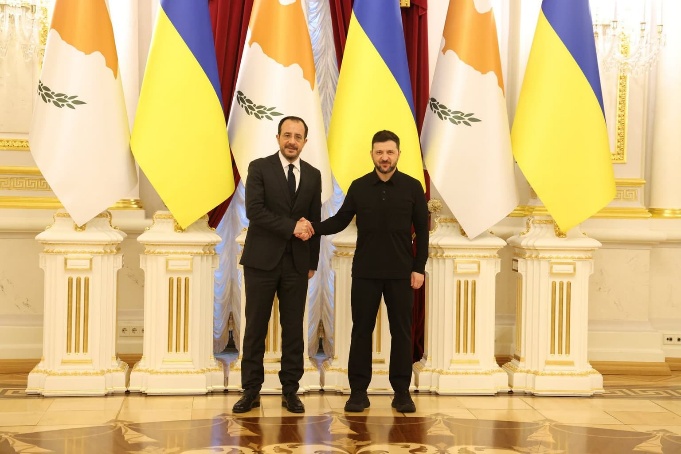
Cyprus takes the EU helm in January: Christodoulides met with Zelensky in Kyiv to coordinate support as Nicosia prepares to chair the Council of the European Union for six months starting New Year’s Day. Small island nation, strategic moment. (Spokesperson Konstantinos Letymbiotis/X)
Meanwhile, seven Ukrainian children came home.
Six boys. One girl. Melania Trump backed the initiative, praising “bridge-building” between Moscow and Kyiv. Seven children returned from more than 19,500 abducted since February 2022. The International Criminal Court issued arrest warrants for Putin and Russian Children’s Rights Commissioner Maria Lvova-Belova in March 2023—unlawful deportation, crimes against humanity.
Yale researchers found Russia conducting “systematic, intentional, and widespread” forced adoption and Russification. Children enrolled in Yunarmiya (“Young Army”), trained in military skills, indoctrinated with Kremlin loyalty. Ukrainian identities erased; Russian ones installed.
Seven children home. Over 17,500 still missing.
Progress measured in single digits against five-figure crimes.
150,000 Men, No Breakthrough
At Pokrovsk, Russian commanders committed 150,000 troops to break Ukrainian lines.
They haven’t.
Commander-in-Chief Oleksandr Syrskyi reported Ukrainian units holding the northern part of the city. “Within the cities themselves, our troops continue to hold designated positions,” he stated after meetings with brigade and battalion commanders. Translation: the line holds.
Russian tactics evolved with desperation. Small fireteams—two or three soldiers—infiltrate during fog and overcast conditions when drones can’t see. Of the 150,000 concentrated in the Pokrovsk-Myrnohrad area, roughly 11,000 to 12,000 conduct actual assault operations at any given time. The rest—logistics, reserves, rotations, replacements for the dead.
A Ukrainian brigade spokesperson explained the challenge: Russian drones constantly surveil supply routes into Pokrovsk. Every delivery requires deception measures. Timing matters—move when conditions mask movement. Despite the pressure, Ukrainian forces have conducted multiple rotations and delivered ammunition, equipment, supplies.
The mathematics of attrition. Russia throws bodies and materiel at Ukrainian positions. Ukraine trades space for Russian casualties, holds key terrain as long as tactically viable, withdraws when staying would mean encirclement or unacceptable losses.
Syrskyi called this phase “extremely difficult.” The euphemism commanders use when the situation is worse than they can publicly state. Ukrainian forces must balance contradictory imperatives: hold ground but avoid encirclement, maintain supply lines under constant surveillance, rotate exhausted units without creating defensive gaps.
Russia’s strategy depends on numerical superiority. Persistent small-unit infiltration. Gradual gains through attrition.
Pokrovsk reveals the cost: 150,000 troops committed, thousands conducting assaults daily, and Ukrainian lines still hold.
No collapse. No breakthrough. No encirclement.
Just grinding, bloody stalemate where Russia pays in bodies for meters.
Fire for Fire
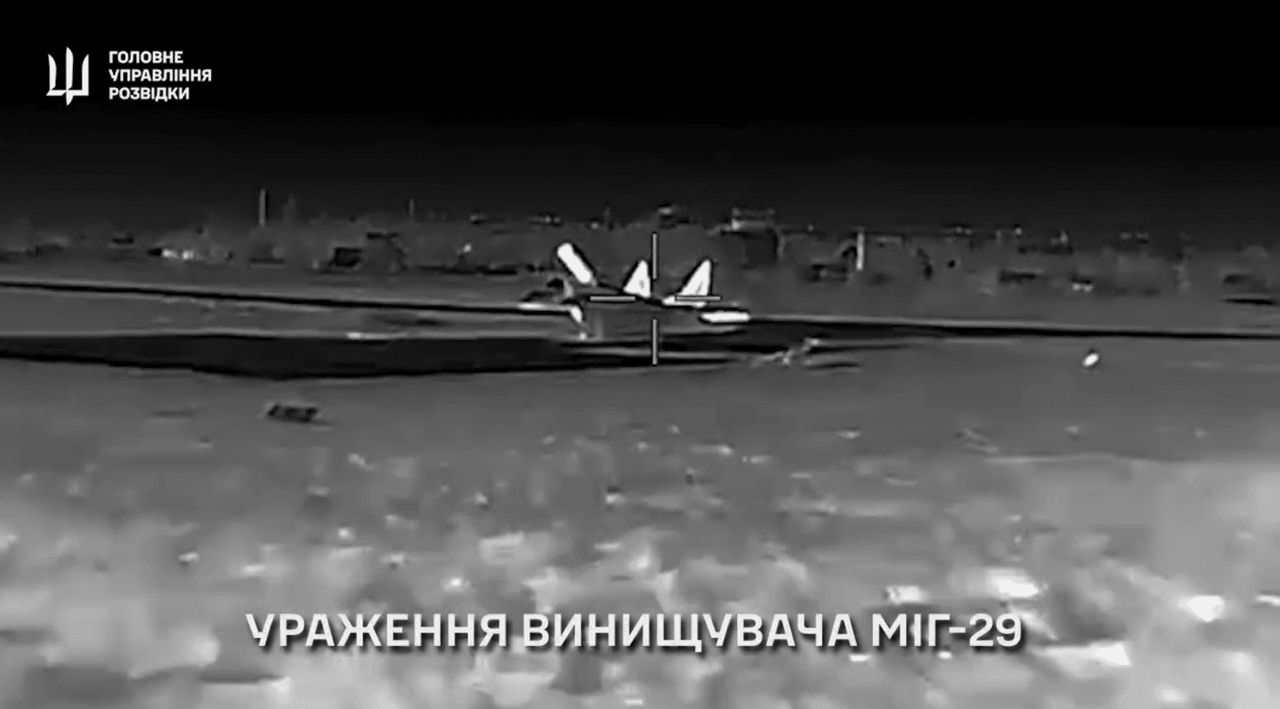
Seconds before impact at Kacha air base: A Ukrainian intelligence drone’s targeting system locks onto a Russian MiG-29 fighter jet in occupied Crimea. The jet was destroyed moments after this frame, along with an Irtysh radar system in the same strike. (HUR / Telegram)
Over occupied Crimea, Ukrainian intelligence drones found their targets in darkness.
First: a Russian MiG-29 fighter jet at Kacha Air Base north of Sevastopol. The drone’s camera locked on. Impact. Fireball.
Second: an Irtysh radar system near Simferopol. Critical node in Russia’s layered air defense network. The Prymary (“Ghosts”) unit executed both strikes with precision. Video showed flames where sophisticated military hardware had been moments before.
“HUR special forces continue to systematically destroy Moscow’s air defense system,” the intelligence directorate announced. Not random strikes. Systematic degradation. Each radar destroyed, each fighter jet burning, each anti-aircraft system wrecked—Russia’s capacity to launch attacks from Crimea diminishes.
Deep inside Russia, fires erupted at the Nevinnomyssk Azot Chemical Plant in Stavropol Krai. Local residents counted at least eight drones. Governor Vladimir Vladimirov claimed Russian forces downed them. The fires said otherwise.
Voronezh Oblast the night prior: Ukrainian drones hit the Lukoil Bobrovskaya oil depot at Khrenovoye. Two fuel tanks damaged. Governor Alexander Gusev minimized it—”minor damage.” Standard Russian response playbook. Claim victory, hide losses.
Russia answered with volume.
Overnight December 3-4: two Iskander-M ballistic missiles, 138 drones. Massive strike package launched from Rostov Oblast, occupied Crimea, Oryol, Bryansk, Kursk, Millerovo, Primorsko-Akhtarsk, Cape Chauda. Multi-axis attack forcing Ukrainian air defenses to engage threats from every direction simultaneously.
Ukrainian systems downed 114 drones. Twenty-four got through, along with both Iskander missiles. Strikes hit 14 locations—energy infrastructure, residential areas, civilian targets across Dnipropetrovsk, Kharkiv, Mykolaiv, Odesa oblasts.
Power cut for 60,000 consumers in Donetsk Oblast. Another 51,000 in Odesa. Emergency repair crews working through darkness.
Russia’s winter strategy unchanged: freeze Ukraine’s civilians, break their will.
Ukraine’s response: strike the infrastructure that enables Russian attacks. Chemical plants. Oil depots. Air bases. Radar systems. Fighter jets.
Fire for fire. Strike for strike.
Neither side backing down.
When Cold Becomes a Weapon
Russian forces spent days targeting Kherson’s central heating plant. Artillery. Drones. Methodical strikes against halls and equipment.
On December 4, the plant shut down.
Forty thousand, five hundred residents lost heat. Four hundred seventy buildings went cold. Winter temperatures had already descended.
Governor Oleksandr Prokudin called it what it was: “Terrorists are once again waging war against the civilian population.” Kherson sits directly across the Dnipro from Russian-occupied territory. Russian gunners can see the city. They know exactly what they’re hitting—tubed artillery, rocket artillery, glide bombs, first-person-view drones striking individual buildings.
They chose the heating plant deliberately. Create life-threatening conditions for elderly residents, families with young children, anyone with chronic health conditions. Freeze them.
In Lviv, 500 miles from the nearest Russian position, the war created another casualty.
Yurii Bondarenko, a draft officer, asked a man on the street for his documents. Routine enforcement of mobilization registration. The man refused. Acted aggressively. Then pulled a knife.
The blade severed Bondarenko’s femoral artery. Critical bleeding. The attacker struck another officer with a blunt object, pepper-sprayed two more, fled.
Surgeons tried. Emergency transfusions. Hours of work.
Bondarenko died anyway. He’d served on the front line until combat injuries forced reassignment to recruitment duties. Survived Russian bullets. Killed by a Ukrainian knife.
Police detained the suspect—a 37-year-old Lviv resident facing life imprisonment for murdering a law enforcement officer.
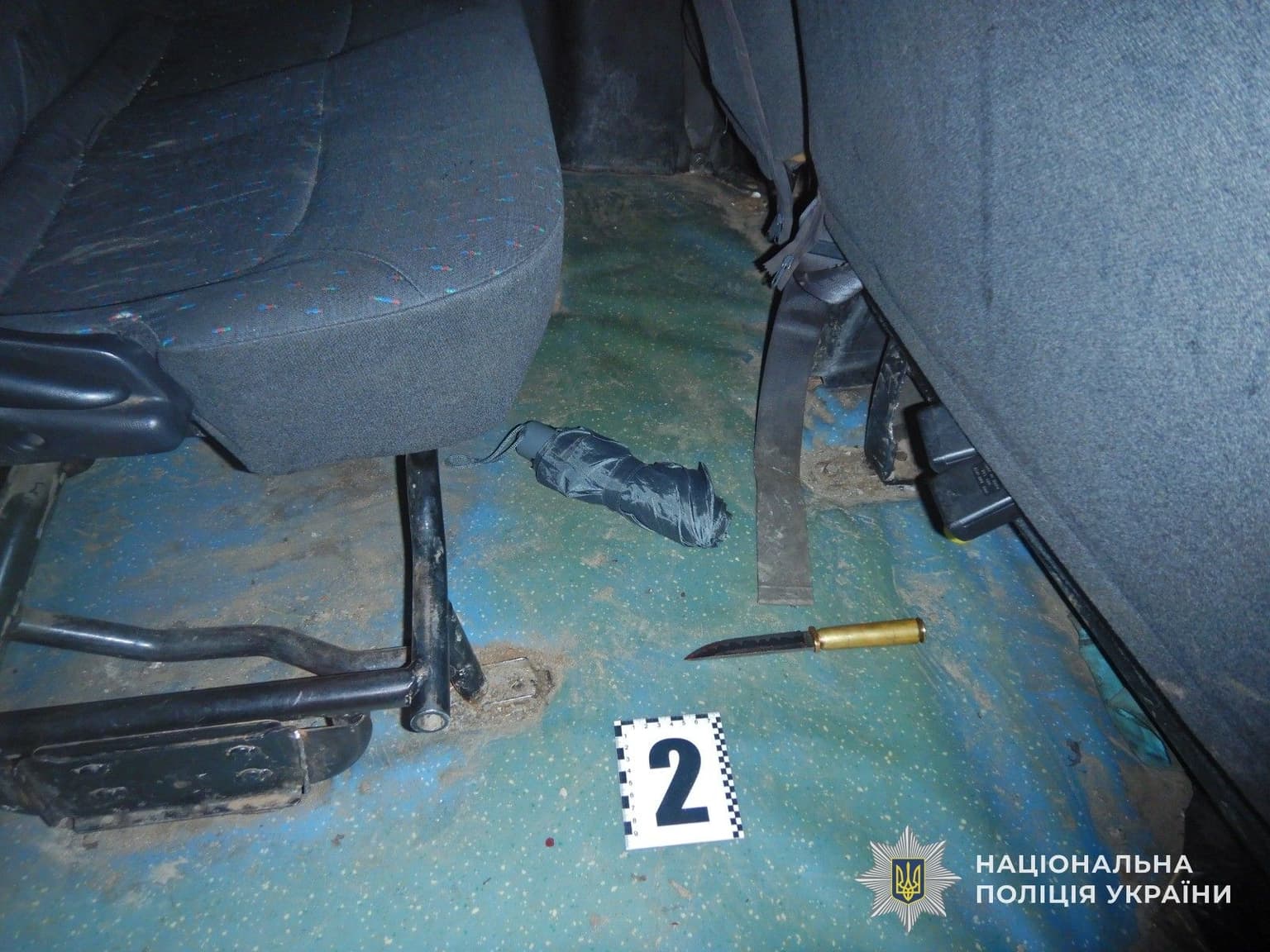
The weapon that killed Yurii Bondarenko: A kitchen knife carried by a conscript who snapped under mobilization pressure, pulled a draft officer into a stairwell, and stabbed him to death. Ukraine’s war creates casualties the Russians never fire at. (National Police of Ukraine)
The Western Operational Command issued a stark statement: “This is not a misunderstanding, not a ‘bad dialogue’ or a ‘conflict with the draft office,’ but actual armed resistance to representatives of the defense forces who were acting in accordance with the law.”
Mobilization tensions escalating from verbal confrontations to lethal violence. The war’s fourth year straining more than just frontline units.
Two casualties December 4. One from Russian strikes on civilian heating infrastructure. One from Ukrainian society fracturing under the weight of thirty-four months of total war.
Russia didn’t fire the shot that killed Bondarenko.
But the war’s pressure created the conditions for his death.
The Flag That Wasn’t There
Russian information channels announced the capture of Dobropillya in Zaporizhia Oblast. Posted footage of a Russian flag.
Then Ukrainian forces raised their own flag in central Dobropillya.
The General Staff explained what actually happened: a Russian sabotage and reconnaissance group infiltrated the settlement’s outskirts during poor weather. Ukrainian counter-sabotage operations killed three approaching soldiers. Two more—”likely those suicide operatives tasked with displaying Russian flags”—eliminated shortly after.
“These claims are false and do not reflect the actual situation on the ground,” the General Staff stated.
Same pattern at Solodke and Zatyshshya near Hulyaipole. Russian sources claimed capture. The Ukrainian 17th Army Corps reported fighting continues, logistics routes remain open, Ukrainian forces maintain positions.
Russian information operations claiming victories where battles still rage. Premature declarations designed to create impressions of momentum that don’t exist on actual ground.
At Vovchansk, Russian forces threw everything available—artillery bombardments, airstrikes, TOS-1A thermobaric fire, Iskander ballistic missiles. The town remains contested. A Ukrainian brigade spokesperson noted Russian tactics: fiber-optic drones that can’t be jammed, combined with conventional drones, small infiltration groups led by Storm-Z prisoners earning sentence reductions through frontline service.
Russian forces conduct flag-raising missions in contested areas. Film the flags. Claim territorial control. The footage becomes “evidence” even when Ukrainian forces still hold the terrain.
At Kupyansk-Vuzlovyi, a Russian milblogger refuted other Russian sources claiming forces had entered the railway hub. The correction revealed the problem: premature claims later proven false when Ukrainian defenders maintain control.
Geolocated footage showed limited Russian gains—southeastern Kostyantynivka, marginal advance measured in hundreds of meters. Costly assault operations for minimal territorial change.
Across the front, the pattern persisted. Massive Russian resource commitments. Extremely high casualty rates. No operationally significant breakthroughs achieved.
Ukrainian forces trading space for time and Russian losses where necessary. Holding key positions. Conducting limited counterattacks where opportunities emerge.
The mathematics unchanged: Russia pays in bodies for meters, claims victories that exist primarily in information space, and calls it progress.
Seven Million Dollars for Looking the Other Way
The U.S. Treasury Department hit Gracetown Inc. with a $7,139,305 penalty—near the statutory maximum for violations of this type.
The New York property management company’s crime: accepting payments tied to sanctioned Russian oligarch Oleg Deripaska. Gracetown managed three luxury properties in New York and Washington, D.C. that Deripaska purchased in 2006. The company relied heavily on individuals connected to Deripaska to finance and direct operations—even after U.S. sanctions designated him in 2018.
“Treasury will act firmly against those who ignore our sanctions and aid our adversaries,” Under Secretary John K. Hurley stated.
Translation: Enable sanctioned Russian oligarchs, pay seven figures.
Deripaska built his fortune during the 1990s privatization chaos—acquiring state assets at bargain prices through Kremlin connections. He founded Basic Element (one of Russia’s largest industrial conglomerates) and Rusal (world’s second-largest aluminum producer). Once Russia’s richest man. Longtime Putin associate. Sanctioned by the U.S. in 2018, by the U.K. in 2022.
His property managers just learned sanctions enforcement has teeth.
In Kyiv, Prosecutor General Ruslan Kravchenko defended releasing NABU detective Ruslan Mahamedrasulov from custody. Mahamedrasulov had been investigating Ukraine’s largest corruption case—state-run nuclear monopoly Energoatom. His arrest triggered accusations of political interference with anti-corruption institutions.
Kravchenko called public reactions “emotional” and “manipulative.” Claimed the release decision followed proper criminal process as obstruction risk decreased. “This is not a justification for the suspects,” he emphasized.
Critics remained unconvinced. The timing—releasing an anti-corruption investigator while his investigation implicates President’s Office-connected figures—raised questions prosecution couldn’t answer with legal procedure explanations.
Over Ireland, four “military-style” drones breached the no-fly zone around Zelensky’s flight path as his aircraft approached Dublin Airport. Separately, an Irish Navy ship observed five drones near the president’s route off Howth coast. “Major security alert” among Irish defense and law enforcement.
Irish authorities established temporary no-drone zones but haven’t confirmed the incident or disclosed investigation details.
Since February 2022, Ukrainian officials have reported multiple assassination attempts—FSB-linked networks, surveillance at airports where Zelensky’s aircraft operate. The drones over Dublin fit the pattern.
Nobody claimed responsibility. Irish investigators haven’t identified operators or intentions.
But Zelensky’s security team knows: every international trip carries risks the average head of state never faces.
The Day’s Meaning
Putin flew to India carrying the same ultimatum he issued 1,380 days ago. Ukraine’s complete capitulation. Disarmament. No NATO. Russian veto over Ukrainian governance and foreign policy.
Three years, nine months, hundreds of thousands of Russian casualties, and Putin’s demands hadn’t evolved at all.
The interview with India Today exposed Moscow’s approach: negotiations aren’t mechanisms for compromise. They’re platforms for pressuring Ukraine to accept through diplomacy what Russia cannot win militarily.
At Pokrovsk, 150,000 Russian troops pressed Ukrainian lines. No encirclement achieved. No breakthrough. Ukrainian forces held northern positions despite persistent infiltration operations. Meanwhile, Ukrainian intelligence drones destroyed a MiG-29 and critical radar in Crimea while other strikes hit industrial facilities deep inside Russia. Every successful Ukrainian strike forces Moscow to divert scarce air defense assets and manpower to protecting vast rear areas rather than concentrating combat power at the front.
The Kremlin simultaneously launched cognitive warfare claiming preparations for an offensive on Chernihiv—a city Russian forces demonstrably lack capacity to reach. Perception management compensating for operational failure. Create impressions of inevitable victory to pressure Ukraine toward accepting Moscow’s terms, even as battlefield realities tell different stories.
Two diplomatic tracks ran parallel. U.S.-facilitated negotiations in Miami. Putin’s maximalist demands in Delhi. The gap revealed the fundamental challenge: Moscow seeks capitulation dressed as compromise. Ukraine and its partners pursue sustainable peace that would actually prevent future Russian aggression rather than temporary pauses enabling Russia to rebuild and attack again.
Seven Ukrainian children came home. Seven out of 19,500 abducted. The International Criminal Court issued arrest warrants for Putin himself for these crimes. Limited progress against systematic war crimes.
Western agency in determining this conflict’s outcome remains substantial despite Russian efforts to portray battlefield momentum as decisive. Continued Western security assistance, Ukrainian military resilience at places like Pokrovsk, Ukrainian strikes degrading Russian strategic depth—these create conditions where Russian victory is neither imminent nor inevitable.
Putin’s diplomatic theater in Delhi cannot obscure fundamental failures. Russia has not subjugated Ukraine. Has not destroyed NATO. Has not established hegemony over Eastern Europe. Nearly four years of warfare. Losses unthinkable to Russian military planners in February 2022.
Day 1,380. Putin traveled with the same demands he carried at the start.
The battlefield tells him those demands remain beyond Russia’s military capacity to enforce.