
Two hours of closed-door talks in Geneva produced vague claims of “progress” while Russia moved to criminalize draft evasion and quietly prepare new reserve call-ups to sustain its war effort.
The Day’s Reckoning
The doors closed in Geneva after two hours.
US Special Envoy Steve Witkoff stepped forward first, calling the talks “meaningful progress.” Russian negotiator Vladimir Medinsky described them as “difficult but businesslike.” Ukrainian negotiator Rustem Umerov said they were “intensive and substantive” — progress made, details withheld. All three promised another meeting in Switzerland. Soon.
Two days. Multiple formats. Military and technical teams discussing ceasefire monitoring, prisoner exchanges, civilian releases. Political delegations circling the same obstacle: territory.
President Volodymyr Zelensky, speaking separately, drew a line. Ukraine would not withdraw from land it currently holds. “It’s not about the land,” he said. “It’s about people.” Thousands — tens of thousands — killed defending Donbas.
While diplomats spoke of momentum, Moscow restated its December 2021 ultimatums through its embassy in Belgium: NATO must legally enshrine non-expansion. Those demands would halt deployments to post-1997 member states, reverse the alliance’s open-door policy, and abandon partnerships on NATO’s eastern flank, including Ukraine.
Two hours in Switzerland. Decades of demands intact.
In Moscow, the State Duma advanced legislation targeting “distortion of historical truth” and “evasion of the duty to defend the Fatherland.” Deputy Chairperson Anatoly Vyborny said the goal was to make draft evasion “socially unacceptable.” Translation: prepare the public for limited, rolling reserve call-ups.
Not another mass mobilization. Not general war footing. Just enough men to replace losses and sustain the current offensive tempo.
Bloomberg reported Russia has suffered roughly 9,000 more battlefield casualties than it replaced. Signing bonuses are no longer filling the ranks. Regional budgets strain under recruitment costs.
As negotiations ended, five people lay dead across Ukraine after overnight strikes — one Iskander-M missile, 126 drones, 100 intercepted. Over 99,000 consumers in Odesa Oblast remained without electricity.
Ukrainian forces struck six Russian targets in return, including an S-300VM launcher near Mariupol valued at $120 million.
And in sport, Ukraine’s officials announced they would boycott the Paralympics opening ceremony after the IPC confirmed six Russians and four Belarusians would compete under national flags.
Two hours of talks. Mobilization preparations. Missile strikes. Boycotts.
Diplomatic theater and war proceeding in parallel.
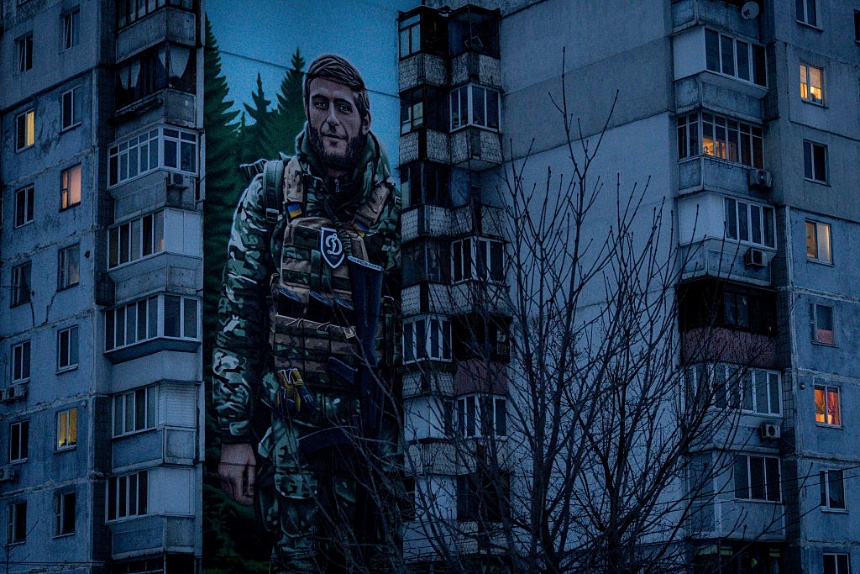
Apartments are illuminated at a building suffering from limited electricity and painted with the mural of a fallen Ukrainian soldier in Kyiv. As full-scale war approaches its fourth anniversary, Ukrainians have been forced to cope with subzero temperatures with widespread heat and electricity outages caused by Russia’s relentless attacks on its energy infrastructure. (Chris McGrath / Getty Images)
Behind Closed Doors in Geneva: “Meaningful Progress” With Nothing to Show
The doors in Geneva opened after exactly two hours.
Both delegations said they would brief their leaders. Both said the work would continue. That was the outcome.
US Special Envoy Steve Witkoff thanked Switzerland for hosting and credited President Trump with moving the process forward. “President Trump’s success in bringing both sides of this war together has brought about meaningful progress.”
Meaningful. But undefined.
Rustem Umerov described the talks as “intensive and substantive.” Political and military tracks engaged. Security parameters discussed. Implementation mechanisms reviewed. Some issues clarified. Others left for further coordination. “There is progress, but no details can be disclosed at this stage.”
Vladimir Medinsky called the negotiations “difficult but businesslike.”
Sources inside described the atmosphere as “very tense.” Delegates shifted between bilateral and trilateral formats. The military and technical group reportedly advanced on ceasefire monitoring mechanics. The political group stalled.
Territory blocked the path.
One person close to the talks told The Washington Post: “Russia may want peace, but only on its own terms.”
President Volodymyr Zelensky publicly questioned Moscow’s intentions. “What do they want?” he asked, accusing Russia of prioritizing missile strikes over “real diplomacy.”
The core dispute remained unchanged. Russia demanded full control of Donetsk—including territory it has not conquered in nearly twelve years of war. Kyiv rejected those demands without firm Western security guarantees.
Two hours. Promises of future meetings.
No breakthrough.
The Ultimatums That Never Left the Table
While negotiators spoke carefully in Geneva, Moscow’s message arrived bluntly through its embassy in Belgium.
In an interview with the state newspaper Izvestia, the Russian Embassy declared that any deal must legally enshrine a NATO non-expansion clause—based on a “draft treaty” Russia had created before the invasion. It was a direct return to December 2021.
Those pre-war ultimatums were not minor adjustments. They demanded the effective dismantling of NATO’s current structure: no deployment of forces or weapons systems to member states that joined after 1997, reversal of the alliance’s “open door” policy, a halt to eastward enlargement, abandonment of partnerships on NATO’s eastern flank—including Ukraine.
These were not new conditions. They were the original war demands.
By reiterating them in the middle of negotiations, Moscow signaled something unmistakable: partial concessions would not suffice. Even if territorial compromises were reached, Russia expected Ukraine, NATO, and the United States to accept the full framework of its earlier demands.
Foreign Ministry spokesperson Maria Zakharova added another layer, invoking the supposed “spirit” or “understandings” reached at the August 2025 Alaska summit. Kremlin officials have repeatedly leaned on that ambiguity—suggesting joint US-Russian understandings without formal documentation, framing them in ways advantageous to Moscow.
But the “understanding” was never codified. No formal agreement emerged. After the summit, Trump stated plainly: “no deal.”
Still, Kremlin officials continue to insist Russia will achieve its original war aims—by diplomacy if possible, by force if necessary.
Geneva concluded.
The December 2021 demands remained.
Preparing the Next Call-Up: War Without Saying the Word
In Moscow, the language changed first.
The State Duma passed a bill in its first reading strengthening penalties for “distortion of historical truth” and “evasion of the duty to defend the Fatherland.” Deputy Chairperson Anatoly Vyborny made the purpose plain: make avoiding service to the Russian “Motherland” “socially unacceptable.”
Translation: prepare the ground.
Telegram slowed in recent days, throttled just enough to tighten control over criticism of the government and the war. Information space narrowed as manpower math worsened.
The Kremlin is not declaring another September 2022-style partial mobilization. Not 300,000 at once. Not general war footing. Instead: limited, rolling call-ups designed to sustain current force levels in Ukraine. Replace losses. Maintain offensive tempo. Avoid flooding the front.
This groundwork began months ago. Since at least October 2025, conditions have been set. The Cabinet of Ministers approved deployment of reservists abroad without formal mobilization or state of war. Putin authorized year-round conscription processes. Another decree mandated compulsory “military assemblies” in 2026 for unspecified inactive reservists.
The voluntary recruitment system is fraying. Bloomberg reported Russia sustained roughly 9,000 more battlefield casualties than it replaced in recent months. Signing bonuses no longer fill the ranks.
Yet another large-scale call-up carries risk. The September 2022 mobilization sent an estimated 700,000 to 900,000 economically mobile Russians fleeing abroad. Russia already faces labor shortages: 800,000 in manufacturing, 1.5 million across trade, construction, and services. Officials say 2.4 million additional workers will be needed by 2030.
Putin’s strategy rests on endurance—replace losses, grind forward, outlast Ukraine and Western support.
But endurance costs.
And the Kremlin is preparing society for that bill.
“I Know How to Fight”: Zaluzhny and the Raid Inside Wartime Kyiv
Valerii Zaluzhny had just returned to his Kyiv office after a tense meeting at President Volodymyr Zelensky’s headquarters when the agents arrived.
It was during the 2022 northeast counteroffensive. Tensions were already rising over how to defend the country. Hours after that meeting, SBU officers entered the premises. More than a dozen British officers were present. No explanation was given.
Zaluzhny blocked access to documents and computers.
He called it a direct threat. He phoned then–presidential chief of staff Andriy Yermak and issued a warning: “I told Yermak that I would repel this attack, because I know how to fight.”
He also contacted SBU chief Vasyl Maliuk, who said he knew nothing about the operation.
Court documents later showed investigators had obtained a warrant tied to an alleged criminal case involving a strip club. Two employees told the Associated Press the club had closed at that location before Russia’s full-scale invasion.
Zaluzhny said the warrant was a pretext. It was implausible, he argued, that investigators had mistakenly targeted Ukraine’s main wartime command center.
The SBU countered that officers visited one of Zaluzhny’s undercover command posts but conducted no searches. Investigators were acting under a separate organized crime case involving multiple addresses, the agency said. One address coincided with a reserve covert command post. “In fact, no searches or investigative actions were carried out,” the SBU stated, adding that Maliuk and Zaluzhny clarified the situation directly.
But disagreements endured.
Zaluzhny told AP that clashes with Zelensky over military strategy continued, especially over the 2023 counteroffensive. He had urged concentrating forces into a “single fist” to retake Zaporizhzhia Oblast and drive toward the Sea of Azov, cutting Russia’s land corridor to Crimea. Instead, troops were spread thin.
Two Western defense officials corroborated his account.
Zaluzhny was later dismissed as army chief and appointed ambassador to the UK—widely seen as sidelining a potential rival.
That evening, Zelensky declared: “There is no room for any other politics in Ukraine right now. This is a time of war.”
Night of Fire and Blackouts: Five Dead Across Ukraine
The sirens began again overnight.
One Iskander-M ballistic missile rose into the dark. One hundred twenty-six drones followed. By morning, Ukrainian air defenses had intercepted 100 of them. But not all.
One missile and 23 drones struck 14 locations. Debris rained down in three more.
By dawn, at least five people were dead. Thirty others were injured.
In Mykolaivka, Donetsk Oblast, three people were killed and two wounded. In Zaporizhzhia Oblast, one person died and seven were injured. In Nikopol district, Dnipropetrovsk Oblast, a 54-year-old man was killed.
In Sumy city, a drone strike injured eleven people. In Bilopillia and Bereza communities, three men—aged 39, 46, and 52—were wounded. In Kherson Oblast, Russian forces targeted 30 settlements, injuring six people. In Snovsk community, Chernihiv Oblast, a 63-year-old man was hospitalized in moderate condition.
The damage spread beyond bodies.
Power failed across Odesa, Zaporizhzhia, Dnipropetrovsk, and Sumy oblasts. Odesa Oblast suffered most severely: more than 99,000 consumers remained without electricity after strikes compounded by severe weather.
Cities dimmed. Apartments flickered. Businesses shifted to backup plans.
Most regions operated under planned outage schedules. Shops and factories followed power restriction timetables. In some areas, emergency cuts were imposed.
The numbers are precise. The locations documented. The pattern familiar.
Another night measured in interceptions and impacts.
And in the morning, another list of names.
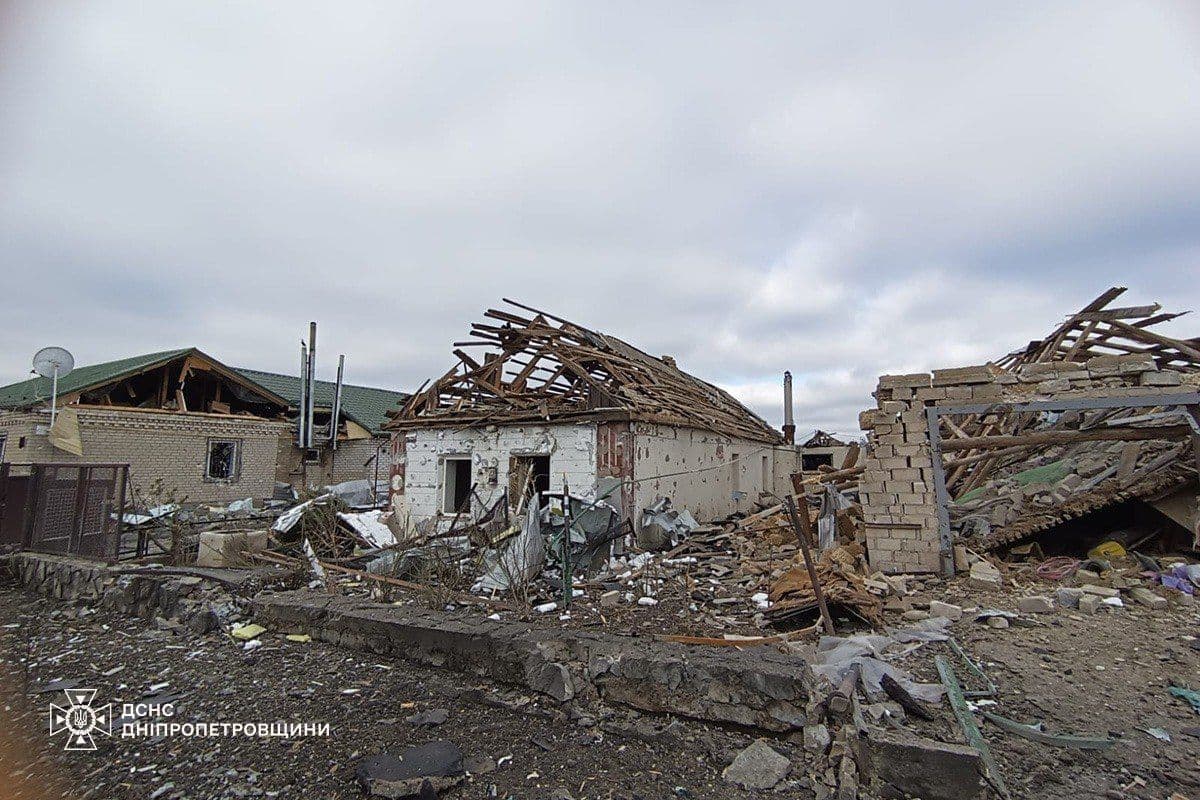
Aftermath of Russian attacks on Dnipropetrovsk Oblast, Ukraine, overnight. (Ukraine’s Emergency Service)
Deep Strikes and a $120 Million Target: Ukraine Hits Back
The counterblows came over two days.
Ukrainian forces struck six Russian military targets, pushing the fight beyond trench lines and into logistics, air defense, and industry.
Near Trudove village, a drone cluster was hit. In Tokmak, Zaporizhzhia Oblast, a drone workshop was targeted. In Staromlynivka, a communications hub went dark. In Donetsk city, a concentration of military equipment was struck.
Near Mariupol, the most expensive loss: a launcher for an S-300VM anti-aircraft missile system—also known as the Antey-2500—destroyed. Estimated value: at least $120 million. The system was designed to intercept short- and medium-range ballistic missiles, aeroballistic threats, and cruise missiles.
Further north, Ukrainian forces struck drone control centers in Salne village, Kursk Oblast, and in Rodynske village in Russian-occupied Donetsk Oblast.
The reach extended deeper.
Ukrainian drones hit the VNIIR-Progress enterprise in Cheboksary, Republic of Chuvashia. The facility manufactures Kometa antennas used in Shahed-type drones, Iskander-M ballistic missiles, unified gliding and correction modules for guided aerial bombs, and satellite GNSS receivers and antennas compatible with GLONASS, GPS, and Galileo systems.
Another strike targeted the Michurinskaya Combined Heat and Power Plant in Belgorod City. Overnight, an oil depot in Velikiye Luki, Pskov Oblast, was also hit, along with additional energy facilities in Belgorod, causing power outages in parts of the city.
Not symbolic strikes.
Systems. Workshops. Infrastructure.
Ukraine reaching for the machinery of war itself.
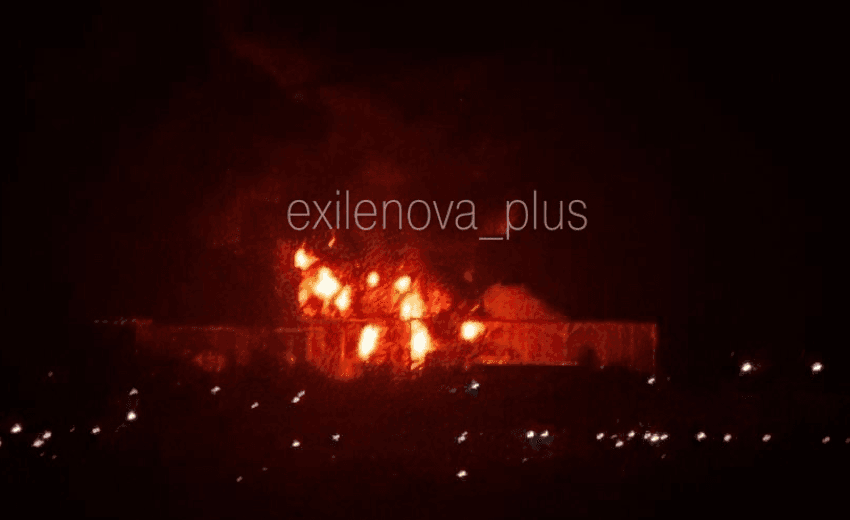
What purports to be a a fire buring at an oil depot in Russia’s Pskov Oblast overnight. (Exilenova+/Telegram).
Flags at the Opening Ceremony: Ukraine Draws a Line
The decision came from the International Paralympic Committee: six Russians and four Belarusians would compete under their national flags.
For Kyiv, that crossed a line.
Minister of Youth and Sports Matvii Bidnyi announced Ukrainian officials would not travel to the Paralympics, would boycott the opening ceremony, and would abstain from all official Paralympic events. “We thank every government official from the free world who will also boycott the official events of the Paralympics. We continue the fight!”
The names were specific. Alpine skiers Aleksey Bugayev and Varvara Voronchikhina. Cross-country skiers Ivan Golubkov and Anastasia Bagiyan. Snowboarders Dmitry Fadeyev and Philipp Shebbo. Four Belarusians—Valentina Birilo, Lidiya Loban, Darya Fedkovich, and Roman Sviridenko—would also compete under their national flag.
It would mark the first time the Russian flag flew at the Paralympics since the 2014 Sochi Games.
Bidnyi called the move “both disappointing and outrageous.” Russian and Belarusian flags, he said, “have no place at international sporting events that stand for fairness, integrity, and respect.” They represent regimes that turned sport into “a tool of war, lies, and contempt.”
Yet Ukraine’s athletes will still compete.
Valery Shuskevych, president of the Ukrainian Paralympic Committee, ruled out a full boycott. “If we do not go, it would mean allowing Putin to claim a victory over Ukrainian Paralympians and over Ukraine by excluding us from the Games. That will not happen!”
EU Commissioner for Sport Glenn Micallef called the decision “unacceptable” and said he would boycott the opening ceremony.
Ukraine’s team includes athletes whose disabilities were sustained fighting on the front lines. Hundreds of Ukrainian athletes and coaches have been killed. Hundreds of sports facilities destroyed.
The competition continues.
So does the war.
What the Day Revealed
Two tracks moved in opposite directions.
In Geneva, negotiators spoke of “meaningful progress” without details. The military group advanced on ceasefire monitoring mechanics. The political group stalled over territory. Moscow repeated its December 2021 ultimatums demanding NATO’s rollback. Zelensky repeated his refusal to cede land or withdraw from territory Ukraine controls.
Diplomacy circled. Positions held.
In Moscow, the State Duma advanced legislation targeting draft evasion while Putin prepared limited, rolling reserve call-ups. Not a sweeping mobilization—but enough to replace losses and sustain offensive tempo. Bloomberg reported Russia has suffered roughly 9,000 more battlefield casualties than it replaced. The voluntary recruitment pool is thinning. The manpower math is tightening.
Reading the sequence together suggests pressure. The Kremlin is pushing for Ukrainian capitulation in negotiations while quietly preparing society for more sacrifices. Telegram throttled. Legal language sharpened. Public opinion shaped in advance.
Inside Ukraine, Zaluzhny’s revelation about an SBU raid during the 2023 counteroffensive exposed fractures at the top. A strategy built around a concentrated “single fist” instead dispersed. Western officials corroborated his account. The war outside mirrors tensions within.
On the battlefield, five were killed and 30 injured in overnight strikes—126 drones launched, 100 intercepted. More than 99,000 in Odesa Oblast remained without electricity. Ukraine struck back: six targets over two days, including a $120 million S-300VM launcher near Mariupol and facilities tied to drone and missile production.
Even sport reflected the split reality. Russian and Belarusian flags return to the Paralympics. Ukrainian officials boycott the ceremony. Ukrainian athletes compete anyway.
Talks without details. Demands without change. Mobilization without announcement.
The war continues to move faster than the words meant to end it.
Prayer For Ukraine
- For truth and wisdom in negotiations
Lord, we pray for clarity where words are vague and motives are hidden. Guide Ukrainian leaders as they defend their people and their land. Expose deception. Prevent agreements that reward aggression. Let any path toward peace be rooted in justice, not exhaustion. - For those under fire and without power
We lift up the families who endured the night of drones and missiles. Comfort the grieving. Heal the wounded. Protect those living in darkness in Odesa, Zaporizhzhia, Dnipropetrovsk, and Sumy. Provide warmth, light, and strength for those facing another disrupted morning. - For soldiers on both sides of the front
Father, guard Ukrainian defenders as they strike military targets and protect their homeland. We also pray for Russian families facing call-ups and mounting casualties. Break cycles of manipulation and fear. Stir hearts toward life, not endless mobilization. - For unity within Ukraine’s leadership
Amid revelations of tension and distrust, we ask for humility, wisdom, and unity among those guiding the nation. Where there has been fracture, bring restoration. Where strategy has failed, bring learning. Preserve Ukraine’s strength from within. - For athletes who carry the weight of war
We pray for Ukrainian Paralympians—many wounded in combat—who will compete while their nation fights. Grant them courage and dignity. May their presence testify to resilience, not propaganda. Let sport reflect truth, not injustice.
Lord, sustain Ukraine. Protect the innocent. End the war.