
In a Berlin conference room, President Zelensky negotiated for five hours while Ukrainian drones simultaneously ignited oil refineries across three Russian time zones and Moscow systematically rejected every proposed path toward peace—diplomacy and destruction operating in parallel universes on day 1,390.
The Day’s Reckoning
The conference room in Berlin fell silent just after noon. President Volodymyr Zelensky sat across from Steve Witkoff and Jared Kushner—Trump’s envoys carrying a peace plan that European officials saw as capitulation dressed as compromise. Five hours of negotiation stretched ahead.
Eighteen hundred kilometers east, Ukrainian drones were already converging on their targets.
The Afipsky Oil Refinery in Krasnodar Krai erupted first. Then Uryupinsk. Then Yaroslavl—so deep inside Russia that most Ukrainians couldn’t have found it on a map before the war taught them precision strike geography. Flames climbed into winter sky across three time zones while Zelensky discussed security guarantees and territorial compromises in a city that knew something about historic negotiations.
In Zaporizhzhia, a Russian missile hit a supermarket at 11:43 AM. Fourteen wounded, including a six-year-old. Saturday shoppers buying groceries became casualties in a war that refused to pause for diplomacy.
In Moscow, Kremlin officials systematically rejected every proposed peace framework before even reading the details. Russia wanted what its military couldn’t capture. The strategy remained consistent: demand everything, concede nothing, hope Western fatigue delivered the victory Russian forces couldn’t achieve.
And in Sydney, on the first day of Hanukkah, Alexander Kleytman fell. The Holocaust survivor who had endured Siberian camps and rebuilt his life half a world away became one of sixteen people killed when terrorists opened fire on a beach celebration. Hatred, it turned out, traveled farther than Ukrainian drones.
Day 1,390. When everything happened simultaneously and nothing resolved. When diplomats negotiated while refineries burned, when peace talks proceeded while missiles struck grocery stores, when the paradox of modern war revealed itself with brutal clarity across a single rotation of the Earth.
This was what the conflict had become—not a war of frontlines and decisive battles, but a thousand simultaneous struggles operating on different timelines with contradictory logics, all interconnected in ways that made victory and defeat increasingly difficult to define.
Five Hours in Berlin: Negotiating Peace While Refineries Burn
The conference room filled just after noon. President Zelensky took his seat across from Steve Witkoff and Jared Kushner—Trump’s envoys carrying a peace plan that European officials called “capitulation disguised as compromise.” Five hours stretched ahead.
The stakes sat on the table like loaded weapons. Washington’s 20-point plan, reduced from 28, still demanded sweeping Ukrainian concessions. Kyiv needed guarantees that wouldn’t evaporate with the next American election.
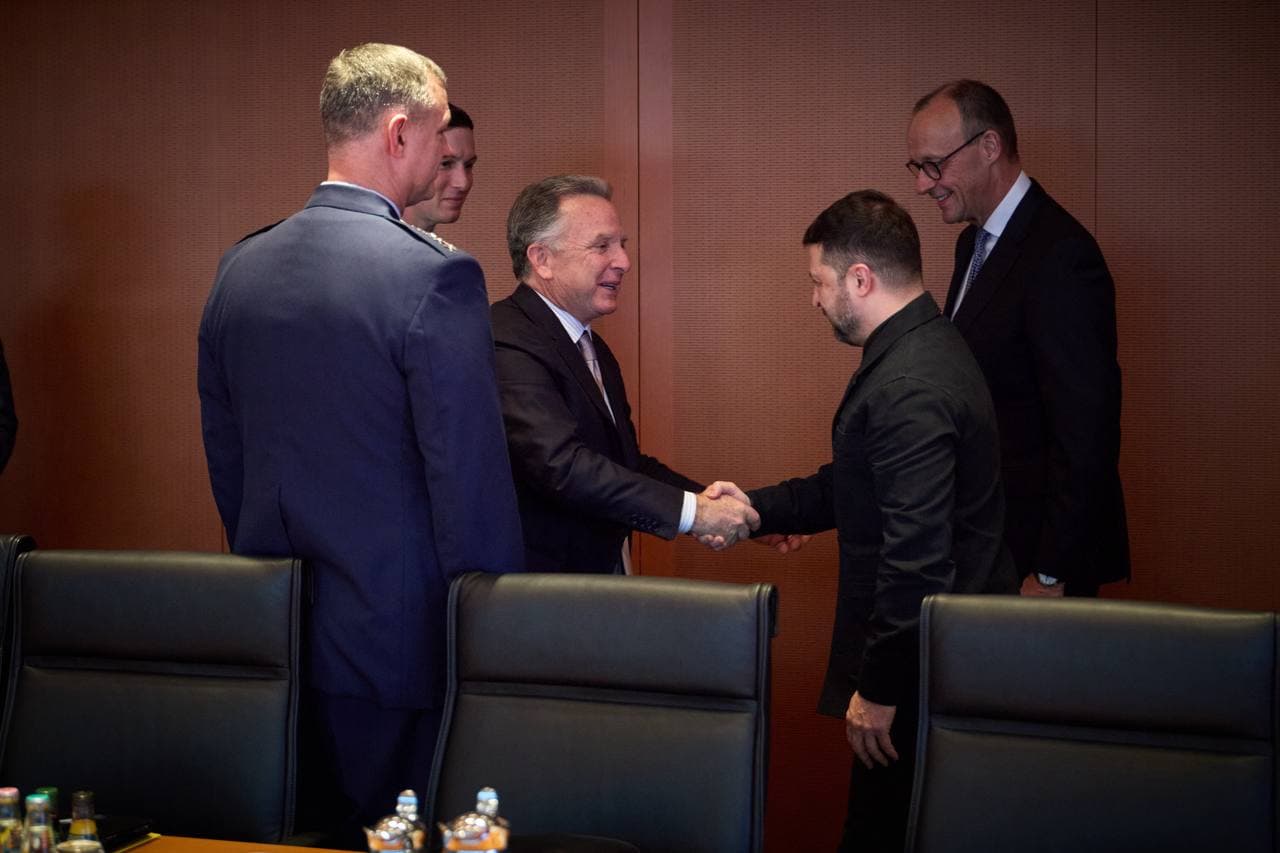
Berlin, December 14: The handshakes before five hours of negotiation—Zelensky greeting Trump’s envoys while Ukrainian drones converge on Russian refineries 1,800 kilometers east. Diplomacy and destruction, beginning at the same moment. (President Volodymyr Zelensky/Telegram)
Zelensky asked for “Article 5-like” bilateral security guarantees—not NATO membership, which America opposed, but something Congress would approve. “And that’s already a compromise from our side.”
Translation: Ukraine was already retreating from what it actually needed.
A senior U.S. official told Axios the Trump administration might provide such guarantees. “We want to give the Ukrainians a security guarantee that will not be a blank check but will be strong enough.”
The devil lived in “strong enough.”
Then came territories. Zelensky proposed ceasefire lines based on “we stand where we stand”—current positions frozen, final status negotiated later. Any “demilitarized zone” would only work if both sides withdrew symmetrically. “A question that currently has no answer.”
The negotiators weren’t even talking to Moscow directly. Russia’s positions were being relayed through Washington—diplomatic telephone where nuance died with each repetition.
“A lot of progress was made,” Witkoff told reporters afterward. The talks would continue December 15.
Translation: five hours produced nothing conclusive.
French President Macron called before the meeting, pledging France would “remain at Ukraine’s side.” British Prime Minister Keir Starmer would join the next session. A unified European position against whatever Trump’s team was offering.
Five hours of negotiation while Ukrainian drones ignited refineries 1,800 kilometers east. While Russian missiles hit a Zaporizhzhia supermarket. While soldiers died across a thousand-kilometer front.
Peace talks and war, happening simultaneously.
Moscow’s Strategy: Reject Everything, Demand More
While Zelensky negotiated in Berlin, Russian Presidential Aide Yuriy Ushakov sat before Kremlin journalist Pavel Zarubin’s cameras to deliver Moscow’s answer.
No.
Russia had “stated its position very clearly,” Ushakov announced. Any amendments from Ukraine or Europe would face “strong objections.” No discussions of demilitarized buffer zones in Donbas. No territorial compromises. Russia demanded guarantees and implementation systems—translation: Ukraine must prove compliance while Moscow reserved the right to ignore whatever it found inconvenient.
Kremlin Spokesperson Dmitry Peskov added the punchline: Moscow was “uninterested in reviewing the European position.”
Think about that. European nations were Ukraine’s primary supporters, essential to any lasting settlement. Russia was declaring it wouldn’t even read their proposals.
The pattern was clarifying. Russia demanded territories its military couldn’t capture—unoccupied parts of Donetsk, Luhansk, Zaporizhzhia, and Kherson oblasts that remained beyond Russian control despite nearly four years of war. Moscow wanted at the negotiating table what its soldiers couldn’t seize on the battlefield.
The strategy was elegant in its cynicism: demand everything, issue ultimatums, watch the West prepare concessions to maximalist demands, then reject those concessions as insufficient and demand more.
Ushakov’s interview revealed the calculation. By publicly rejecting Ukrainian and European proposals before reviewing them, Russia signaled negotiations were simply another tool for extracting concessions. Not compromise. Not peace. Just another front in the war.
The Kremlin was playing for time. Betting that Western fatigue would eventually produce the capitulation Russian forces couldn’t achieve. Every rejected proposal, every closed diplomatic door, every impossible demand—all designed to exhaust Ukrainian allies until someone in Washington or Brussels concluded that peace at any price was better than continued support.
Moscow wasn’t negotiating. It was waiting for Ukraine’s partners to quit.
1,800 Kilometers: When Distance Stopped Mattering
While diplomats talked in Berlin, Ukrainian drones were writing their own arguments in flames.
The Afipsky Oil Refinery in Krasnodar Krai erupted first. Explosions tore through infrastructure processing 6.25 million tons of oil annually. Geolocated footage showed flames consuming refinery towers, black smoke visible for kilometers.
The Uryupinsk Oil Depot in Volgograd Oblast ignited next. Volgograd Governor Andrei Bocharov claimed “drone debris” set the fire—the standard Russian explanation that tried to transform successful strikes into accidental consequences of defensive action.
Then came Yaroslavl.
The Slavneft-YANOS Oil Refinery—one of Russia’s largest—sat 1,800 kilometers from Ukrainian-controlled territory. Russian planners had assumed that distance meant safety. Local Telegram channels reported explosions near the facility as that assumption burned.
Ukrainian forces also struck the Dorogobuzhskaya Thermal Power Plant in Smolensk Oblast. Power outages cascaded across the region.
Each target told a story about vulnerability. Refineries processed oil that funded the war machine. Power plants provided energy for military production. Oil depots supplied fuel for vehicles and aircraft. Ukraine wasn’t just conducting military operations—it was systematically degrading Russia’s capacity to sustain the war.
The strikes forced Russian authorities to suspend airport operations and cut mobile internet services. Cities across Russia grappled with a new reality: geographic distance no longer guaranteed safety. The war that had seemed safely contained to Ukraine’s borders was reaching into the Russian heartland.
Air raid alerts in cities that had never heard them. Evacuation procedures for populations that assumed the war was somewhere else, happening to other people.
For Ukrainian military planners, the campaign represented more than tactical success. Every refinery fire, every evacuated airport, every interrupted internet service reminded Russian citizens that their government’s war carried consequences. Not propaganda. Not rhetoric. Actual fire consuming actual infrastructure in their cities.
Psychological warfare conducted through precision strikes rather than broadcasts.
Crimea’s Burning Night: Nowhere Safe
The strike campaign turned south into occupied Ukrainian territory.
Ukrainian forces hit two Russian PMM ferry bridge vehicles and Kasta-2E2 and 96L6E radar stations in occupied Crimea—expensive components for Russia’s S-300 and S-400 air defense systems, suddenly burning.
Ukrainian Special Operations Forces published geolocated footage showing drone strikes on a Russian fuel train near occupied Yantarne. Moving trains represented difficult targets. Ukrainian operators hit them anyway—direct strikes on rolling stock carrying military supplies.
The campaign escalated. Two oil depots in occupied Simferopol erupted. A substation in occupied Dzhankoi exploded. NASA FIRMS data confirmed fires at both the Bitumne oil depot and Dzhankoi power substation.
The power substation strikes cascaded. Russian occupation officials reported vast outages in occupied Zaporizhia and Kherson oblasts. One successful attack, multiple regions dark.
Ukrainian drones struck two command posts of the Russian 76th Airborne Division, a 9S19 Imbir radar station, a Volna-2 electronic warfare station, and a drone operator training center in occupied Donetsk Oblast. Each target represented capability suddenly removed from the battlefield.
Command posts—coordination degraded. Radar stations—air defenses blinded. Electronic warfare stations—jamming capacity destroyed. Training centers—fewer skilled operators to replace casualties.
In occupied Zaporizhia Oblast, a Russian TOR-M2 anti-aircraft missile system and a drone lab became targets. Current defensive capability and future innovation, both burning.
The comprehensive nature suggested months of intelligence gathering and operational planning, now executed with devastating precision.
The psychological impact was immeasurable. Command posts that should have been secure rear-area facilities became targets. Infrastructure that Russian military planners assumed was protected by distance and air defenses proved vulnerable to weapons arriving without warning.
Nowhere felt safe. Not refineries 1,800 kilometers inside Russia. Not command posts in occupied territory. Not radar stations behind multiple defensive layers.
The war had developed a long reach. And Ukrainian operators were getting better at using it.
11:43 AM: Saturday Shopping Becomes Carnage
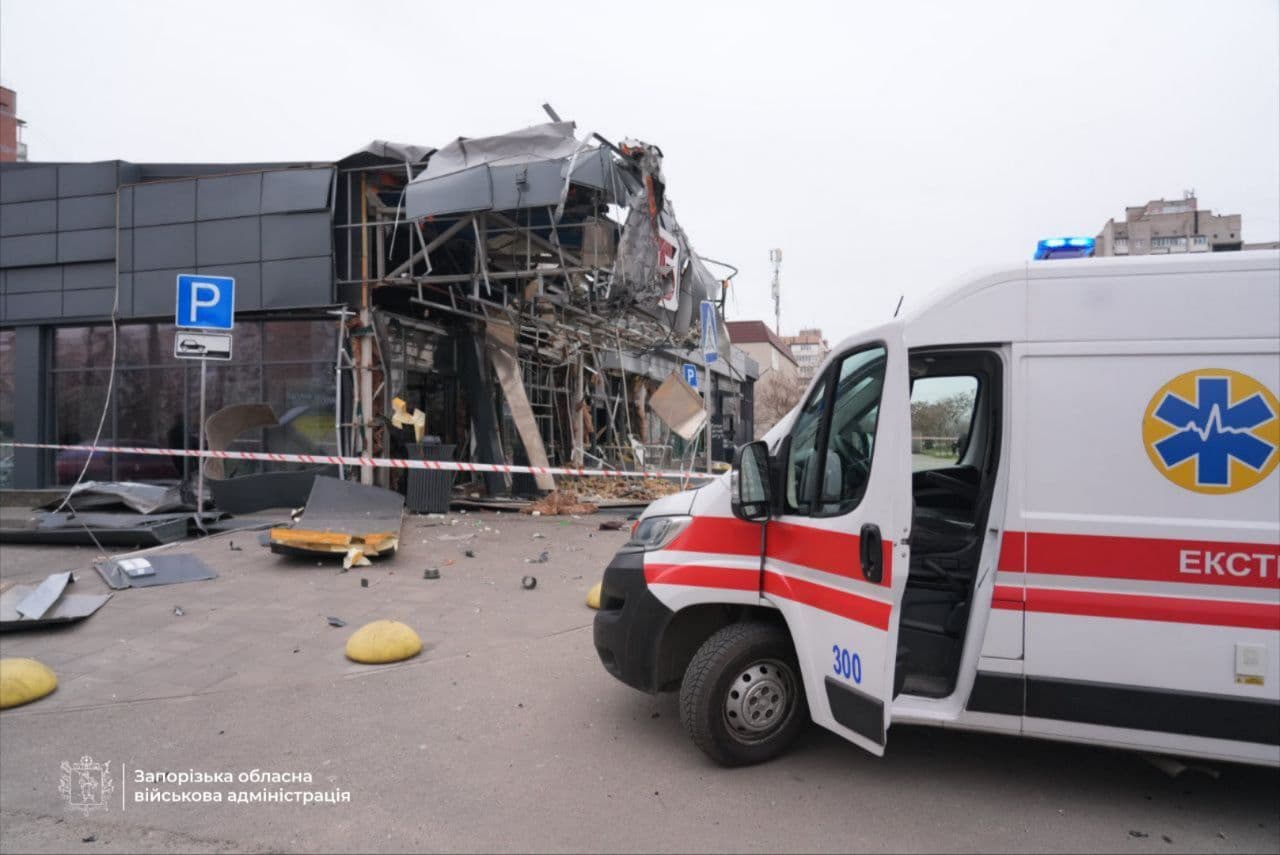
Saturday morning, 11:43 AM: The supermarket where families bought groceries for the weekend. Fourteen wounded including a six-year-old child, the ambulance still parked among the rubble. This is what Russia targets while diplomats talk peace in Berlin. (Zaporizhzhia regional military administration)
The Russian missile hit the supermarket at 11:43 AM. Families buying groceries for the weekend became casualties in an instant.
Fourteen wounded. A six-year-old child. Two first responders. A police officer. The building’s severe damage showed in footage from the scene—what had been a neighborhood grocery store was now a debris field with shattered glass and twisted metal where produce aisles had stood.
The supermarket sat in a residential neighborhood, surrounded by apartment buildings and family homes. No military installations. No weapons depots. No troop concentrations.
The strike had no conceivable military value. It was terrorism disguised as warfare, designed to create fear rather than achieve tactical objectives.
The timing was deliberate. Mid-morning on a Saturday when families would be shopping for weekend meals. Maximum casualties among civilians going about normal life.
Governor Ivan Fedorov’s report emphasized the grotesque juxtaposition: Russia continued its regular attacks on Ukrainian cities while simultaneously demanding capitulation terms at the negotiating table. The supermarket attack occurred the same day Zelensky was negotiating peace in Berlin.
Think about that. Diplomats discussing ceasefire lines while missiles struck grocery stores. Peace proposals drafted while six-year-olds bled in produce aisles.
For Zaporizhzhia residents, the strike was a reminder that negotiations in distant capitals offered no protection from missiles launched from Russian territory. The war continued regardless of diplomatic progress. Civilians remained targets for a strategy that increasingly focused on psychological pressure rather than battlefield victory.
You could negotiate all day in Berlin. Missiles still arrived at 11:43 AM in Zaporizhzhia.
Peace talks and precision strikes against shoppers. Happening simultaneously. The war’s fundamental paradox, written in blood on a Saturday morning.
The Week of Fire: 1,500 Drones, 900 Bombs, 46 Missiles
The supermarket strike was part of something larger.
Russian forces launched 138 Shahed-type, Gerbera-type, and other strike drones from multiple locations—Oryol, Kursk, Millerovo, Primorsko-Akhtarsk, Shatalovo, and occupied Crimea. One Iskander-M ballistic missile launched from Rostov Oblast.
Ukrainian air defenses repelled 110 drones across northern, southern, and eastern Ukraine. But the missiles and 10 drones struck six locations. Odesa Oblast bore the brunt—energy, transport, industrial, and civilian infrastructure damaged. Eighteen Russian drones remained in Ukrainian airspace as of 8:30 AM, forcing continued alerts throughout the morning.
Russian forces targeted a railway bridge at Zatoka with FAB glide bombs equipped with unified gliding and correction modules for the first time. Milbloggers claimed up to 20 Geran drones also struck Zatoka—a coordinated assault designed to overwhelm local air defenses.
President Zelensky put the week in context: over 1,500 strike drones, nearly 900 glide bombs, and 46 missiles of various types between December 7 and December 14. One of the most intense aerial campaigns of the entire war, timed for winter months when heating and electricity were most critical.
“Russia is dragging out the war and wants to do as much harm as possible to our people,” Zelensky said.
Hundreds of thousands of families remained without power across Mykolaiv, Odesa, Kherson, Chernihiv, Donetsk, Sumy, and Dnipropetrovsk regions. Emergency services worked to restore electricity, heating, and water supplies. The scale of damage complicated rapid repairs.
Ukrainian electronic warfare expert Serhiy Beskrestnov observed that Russian forces had started using Shahed drones equipped with dual warheads weighing 100 kilograms—a technical innovation designed to increase destructive impact. Russia was adapting to Ukrainian air defenses, constantly seeking new methods to penetrate defensive systems and inflict greater damage.
The numbers told the story. 1,500 drones. 900 bombs. 46 missiles. Eight days. Winter darkness. Families without heat.
Russia’s strategy, quantified.
The Daily Grind: Blood for Meters
Russian forces attacked across multiple directions. No confirmed advances.
Near Kupyansk, Ukrainian forces held defensive positions despite ongoing pressure. In the Kostyantynivka direction, Russian mechanized assaults met Ukrainian drones and artillery. The assaults failed.
The most significant tactical development occurred in the Hulyaipole direction. Russian forces reached the T0401 Dnipro City-Melitopol highway in southern Varvarivka.
Weeks of costly assaults. Hundreds of casualties. A few hundred meters of road control.
That was the exchange rate.
Ukrainian forces demonstrated continued effectiveness across multiple sectors. Drone and artillery strikes repelled Russian mechanized assaults attempting breakthroughs. The breakthroughs didn’t happen.
The frontline revealed modern warfare’s grinding character. Neither side achieved decisive victories. Both sides suffered casualties for minimal territorial changes.
Day 1,390 looked remarkably similar to day 1,389, which had looked like day 1,388. An endless repetition of attacks and counterattacks producing maps with slightly shifted lines and casualty lists with growing numbers.
Hundreds of meters. Hundreds of lives. The math never favored either side enough to matter strategically, but it mattered enormously to families receiving notifications that their sons, husbands, and fathers weren’t coming home.
The frontline was a meat grinder operating at industrial scale, consuming soldiers and producing territorial changes measured in meters. Both sides fed it continuously, hoping the other would run out of bodies first.
Day 1,390. Tomorrow would bring day 1,391 with the same script and different names on the casualty lists.
Belgorod Burning: The War Comes Home
A Ukrainian missile attack on Belgorod caused “serious damage” to local infrastructure late December 14. Local Telegram channels reported explosions at the city’s “Luch” thermal power plant—a key energy facility supplying approximately 10% of the city’s heat.
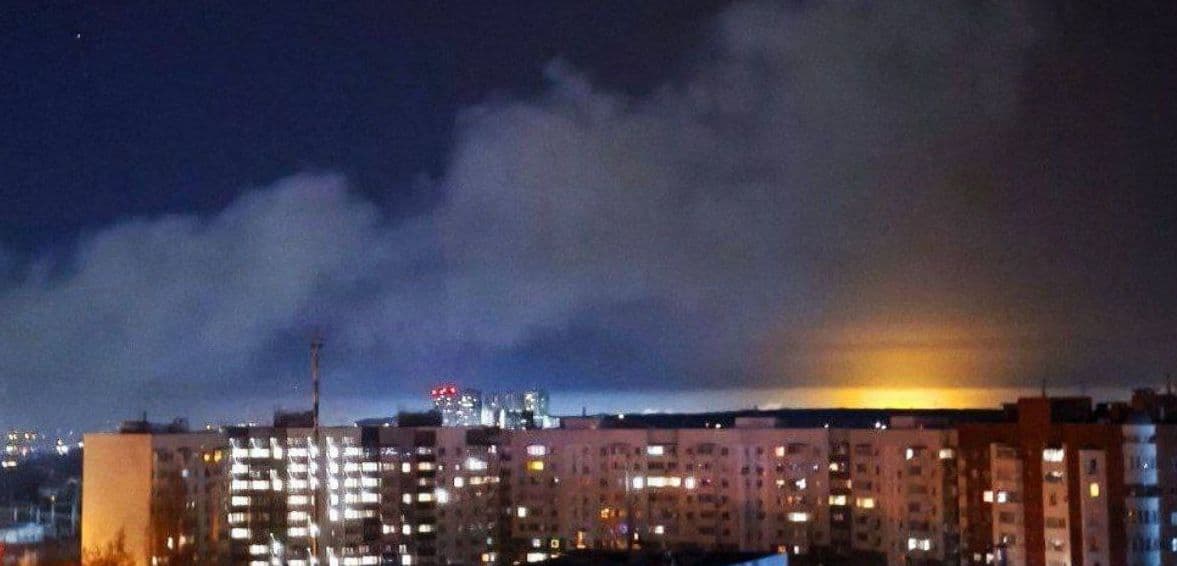
Belgorod burns: The thermal power plant that supplied 10% of the city’s heat becomes another target in a war that no longer respects borders. Russian cities that launched attacks for years now watch their own infrastructure burn. (Ashes of Belgorod/Telegram)
The strike damaged local homes and apartment buildings. Belgorod residents reported power outages following the attack, creating the kind of infrastructure disruption that Russian forces had been inflicting on Ukrainian cities for nearly four years.
Now it was happening to them.
Belgorod sat directly across the border from Kharkiv Oblast, serving as a regular staging area for attacks on Ukrainian territory. Ukraine had previously struck energy infrastructure in the region using HIMARS and multiple launch rocket systems—retaliating against Russia’s assault on Ukraine’s energy grid.
The strike demonstrated how the war had evolved. Russian cities that had spent years launching attacks on Ukrainian territory were now experiencing consequences. Infrastructure that local residents assumed was safely distant from combat became targets for precision weapons launched from Ukrainian-controlled territory.
For Russian civilians in border regions, the Belgorod strike was a reminder that geographic proximity to Ukraine meant vulnerability to retaliation. The war that Moscow had launched to achieve geopolitical objectives was now affecting ordinary Russians who had no role in military decisions but bore consequences nonetheless.
Belgorod residents checking for power. Heating systems offline. Winter cold seeping into apartments. The same disruptions Ukrainians had endured for nearly four years, now arriving in Russian cities.
The war had developed a habit of crossing borders and finding people who thought they were safe.
Bondi Beach: When Hatred Crosses Oceans
Alexander Kleytman survived the Holocaust. He endured “dreadful conditions in Siberia where he, along with his mother and younger brother, struggled for survival.” He eventually immigrated to Australia from Ukraine, building a life far from the violence that had defined his youth.
On December 14, Kleytman was among sixteen people killed in a terrorist attack as hundreds gathered at Bondi Beach to celebrate the first day of Hanukkah.
His wife Larisa, also a Holocaust survivor, described the moment: “We were standing and suddenly came the ‘boom boom,’ and everybody fell down. At this moment he was behind me and at one moment he decided to go close to me. He pushed his body up because he wanted to stay near me.”
Two gunmen—alleged to be father and son—fired from a pedestrian bridge before one was killed and the other taken into custody. Over 40 people were injured in what Australian authorities classified as a terrorist attack targeting the Jewish community.
President Zelensky expressed solidarity with Australia: “Terror and hatred must never prevail—they must be defeated everywhere and every time.”
The tragedy connected distant conflicts in ways that reminded everyone how violence metastasizes across borders. Kleytman had survived one genocide only to die in an attack motivated by hatred against his people. He had escaped war-torn Europe to find safety in Australia, only to be killed by terrorists on a beach celebrating Hanukkah—a festival about resistance against oppression.
Australia’s deadliest attack since 1996.
For Ukrainians, Kleytman’s death resonated with particular pain. He represented their diaspora—those who had fled violence only to find that violence followed them across oceans and decades. The Holocaust survivor killed in a terrorist attack embodied the continuity of hatred that refuses to respect borders or generations.
Siberia to Sydney. Genocide to terrorism. Ninety years of running from hatred, only to have it find him on a beach on Hanukkah.
Warsaw’s Growing Distance: An Alliance Under Strain
President Zelensky announced he might visit Poland on December 19 to meet President Karol Nawrocki—the first face-to-face meeting since Nawrocki’s inauguration. The timing was significant given growing tensions between Kyiv and Warsaw despite Poland’s role as one of Ukraine’s key allies since the invasion began.
“I don’t think we’ll be delaying anything. It is very important for us to maintain the relationship between us and Poland,” Zelensky said.
Translation: the relationship needed maintenance.
A Polish presidential press secretary confirmed the meeting was being “finalized,” with talks focusing on “security, economic, and historical matters.”
The careful diplomatic language concealed deeper complications. Nawrocki had expressed support for Ukraine’s fight against Russian aggression but spoke critically about Kyiv’s EU and NATO ambitions, often highlighting historical grievances—signals that Poland’s patience with refugee support was approaching its limits.
Ukraine’s Ambassador to Poland, Vasyl Bondar, told Polish media earlier in the week that preparations were underway and expressed hope the meeting would occur before year’s end. The diplomatic push reflected Ukraine’s recognition that maintaining Polish support was critical—Warsaw had been essential for weapons transit, refugee accommodation, and political backing in European forums.
The December 19 meeting would test whether Ukraine could navigate Poland’s domestic political pressures while preserving the alliance that had been vital to Ukrainian survival.
Historical grievances. Refugee fatigue. Nationalist politics in Warsaw. All threatening to complicate a relationship that Ukraine needed more than ever as American support became increasingly conditional.
Poland had been Ukraine’s most reliable ally. The word “had” was doing heavy lifting in that sentence.
The Daily Toll: Every Region, Every Day
Beyond the major strikes and diplomatic developments, December 14 brought the grinding casualties that had become routine.
An 80-year-old woman killed near Seredyna-Buda in Sumy Oblast. A Russian missile, an elderly woman, gone.
In Chernihiv Oblast, Russian forces hit a gas station and house in Semenivka. A woman and her 14-year-old son pulled from rubble, wounded but alive.
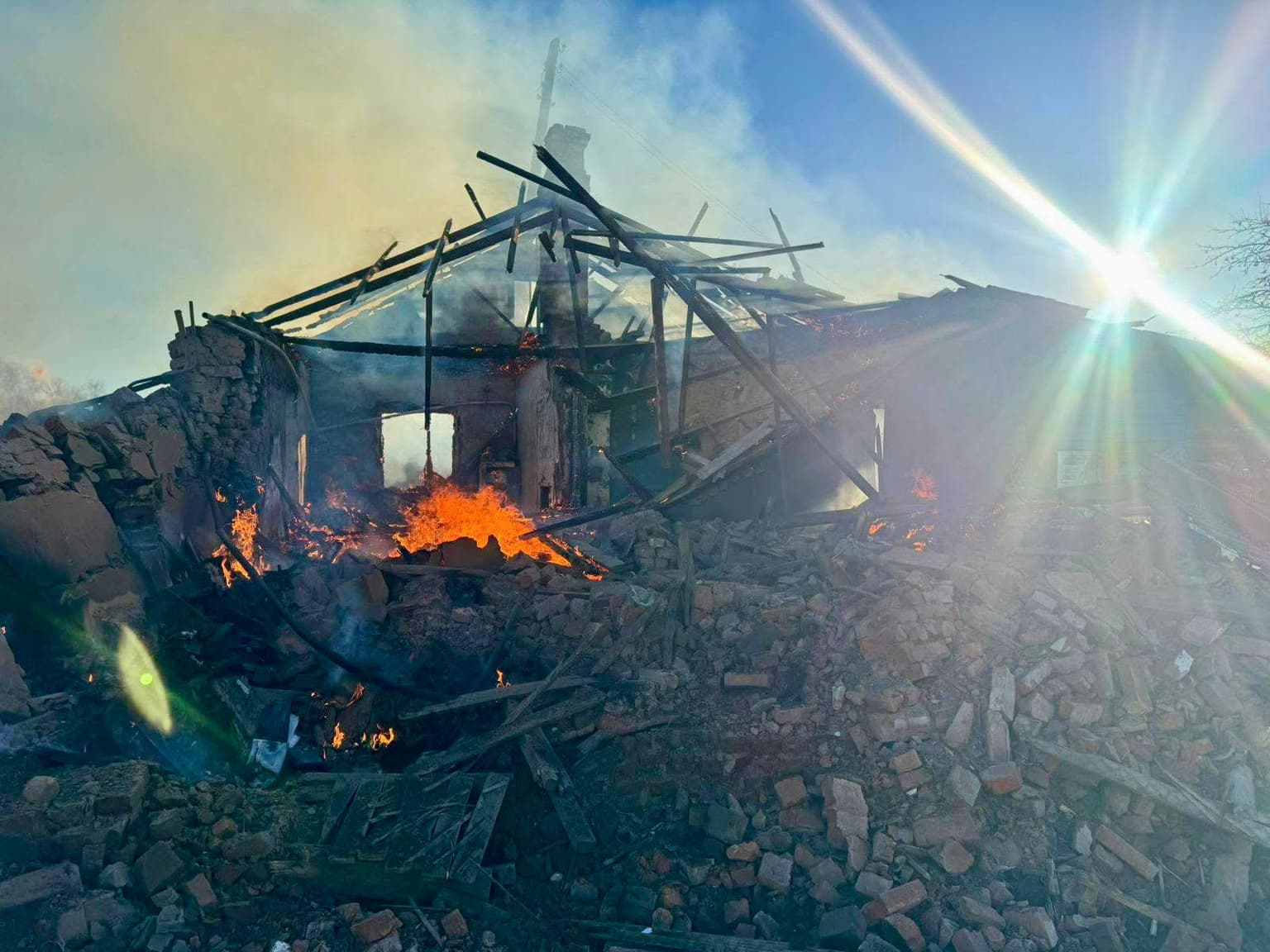
What was a gas station in Semenivka: A mother and her 14-year-old son pulled from this rubble, wounded but alive. The flames still smolder through twisted metal and shattered brick—another Saturday in northern Ukraine. (Viacheslav Chaus/Telegram)
A 20-year-old man injured near Pokrovske in Dnipropetrovsk Oblast. A 10-year-old girl and 65-year-old woman injured in Zarichne, Kharkiv Oblast. One killed and two injured in Kostiantynivka, Donetsk Oblast. Two more injured elsewhere in the region.
In Kherson Oblast, Russian forces targeted 26 settlements, injuring two people.
The daily casualty reports read like statistical abstractions—numbers on a page, ages and locations. But each represented a family shattered, a life ended or permanently altered, dreams extinguished by artillery shells and missiles launched from distant positions.
The geographic spread demonstrated Russia’s strategy: applying pressure across the entire country simultaneously. No region was safe. Elderly women in border villages, teenagers in small towns, shoppers in city supermarkets—all were targets in a campaign designed to break Ukrainian society’s will to resist.
For Ukrainian medical services and emergency responders, December 14 was another day of triage and trauma care. Ambulances racing to strike sites. Hospitals receiving wounded civilians. Morgues documenting casualties.
The machinery of war’s aftermath running at constant capacity, processing human suffering with grim efficiency born of nearly four years of practice.
80 years old. 14 years old. 10 years old. 20 years old. 65 years old.
Ages on a casualty list. Lives that had ended or changed forever on a Saturday in December.
What December 14 Revealed
Two realities operated simultaneously. In Berlin, diplomats spent five hours negotiating. Eighteen hundred kilometers east, Ukrainian drones ignited Russian refineries. Russian missiles hit a Zaporizhzhia grocery store. Moscow systematically rejected every peace proposal.
Day 1,390. When everything happened at once and nothing resolved.
The Berlin meeting represented genuine diplomatic effort—serious people working to find frameworks that might end the killing. But the Kremlin spent the same day rejecting every proposal. Moscow wanted territories it couldn’t capture militarily, demanded guarantees it wouldn’t honor, and sought to lock in gains while preserving options for future aggression.
Ukrainian strikes hit targets 1,800 kilometers from Ukrainian-controlled territory. Every refinery strike degraded Russia’s war capacity. Every destroyed radar station reduced air defense effectiveness.
But the grocery store strike revealed warfare’s brutal reality—diplomatic progress offered no protection. Fourteen wounded, including a six-year-old child. Russia’s strategy still centered on terrorizing Ukrainian society, hoping sufficient suffering would produce capitulation.
The frontline remained largely static. Minimal gains at enormous cost. Varvarivka’s highway: weeks of casualties for a few hundred meters.
Alexander Kleytman’s death in Sydney connected distant tragedies. The Holocaust survivor killed by terrorists embodied hatred’s continuity across borders and decades.
The week’s assault: over 1,500 drones, 900 glide bombs, 46 missiles. Infrastructure warfare during winter. Hundreds of thousands without power.
The question remained: could negotiations produce peace both sides would honor, or would the war continue until exhaustion?
Zelensky’s planned Poland meeting revealed another challenge: maintaining alliance solidarity as fatigue set in.
The war had become a permanent condition. Refineries would be repaired. Grocery stores rebuilt. Proposals drafted and rejected. Fighting would continue because neither side had found a way to stop that both could accept.
Day 1,390. Everything happened. Nothing resolved. Tomorrow: day 1,391.