
In a Florida golf club, Ukrainian negotiators sat across from Marco Rubio and Jared Kushner discussing territorial compromise while Russian drones burned through six floors of a Kyiv-area apartment building, killing residents in their beds—day 1,376, when America brokered peace and Russia demonstrated why Ukraine can’t accept it.
THE DAY’S RECKONING
The emergency crews reached Vyshhorod at 2:47 a.m., six minutes after the Shahed drone punched through the ninth-floor apartment and ignited everything inside. Flames climbed the building’s facade, turning windows into furnaces. Residents in pajamas stumbled down smoke-filled stairwells while fire consumed six floors above them.
Fifteen kilometers south, Kyiv’s air defense batteries had just gone quiet after intercepting 104 of 122 drones. The eighteen that got through found their targets.
Thirteen hours later and 8,000 kilometers west, Rustem Umerov walked into Steve Witkoff’s private golf club in Hallandale Beach. The Ukrainian security chief had flown to Florida to discuss peace terms with Marco Rubio and Jared Kushner. Outside, palm trees swayed in subtropical warmth. Inside, American officials talked about “productive discussions” and “laying groundwork” while carefully avoiding words like “deadline” or “commitment.”
Back in Vyshhorod, firefighters were still pulling bodies from the rubble.
This was day 1,376. The day when Ukraine’s negotiators sat in air-conditioned comfort explaining why their country couldn’t accept territorial compromise while Russian drones demonstrated exactly why Moscow believed it could impose one. The day when European unity fractured along predictable lines—Poland’s president-elect canceling his meeting with Hungary’s Orban after the Hungarian flew to Moscow for energy talks. The day when Norway pledged joint drone production with Ukraine while India prepared to pitch Russia on buying advanced fighters.
The contradictions weren’t accidental. They were the war itself—diplomacy and destruction, pledges and attacks, unity and fracture, all happening simultaneously because nearly four years of grinding combat had taught every player that words mean nothing without the violence to back them up.
By dawn in Vyshhorod, the death toll stood at five across Ukraine. Thirty-eight wounded. Nineteen locations struck. In Miami, the talking continued.
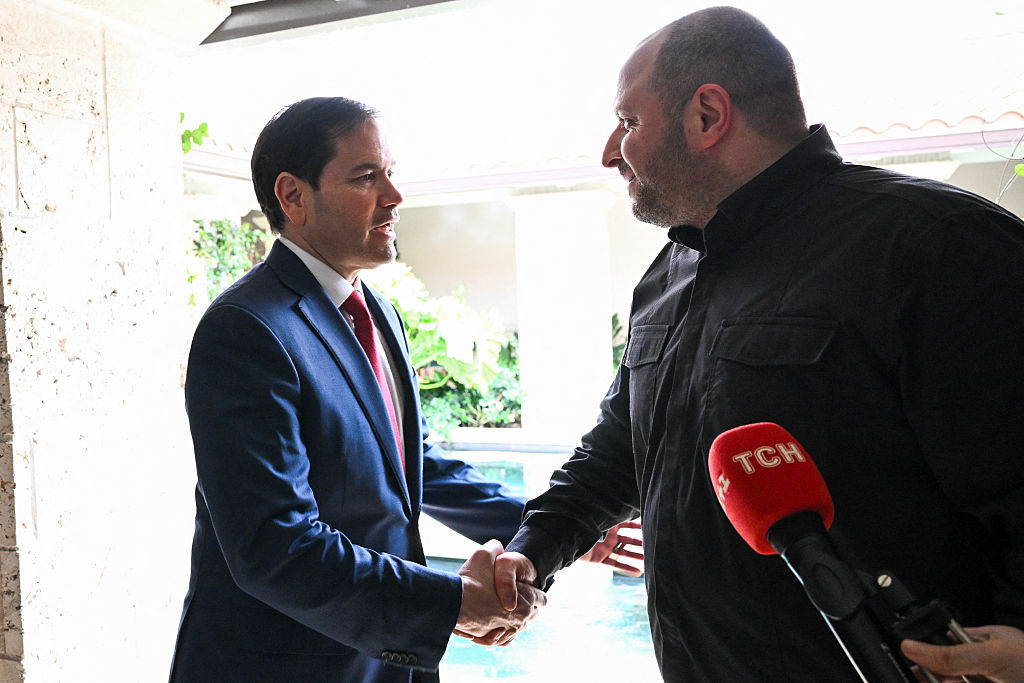
Secretary of State Marco Rubio shakes hands with Ukraine’s Rustem Umerov after talks in Florida that Rubio called “very productive”—hours after Russian drones killed five Ukrainians and wounded thirty-eight others, a reminder that Moscow negotiates through violence, not words. (Chandan Khanna / AFP via Getty Images)
MIAMI NEGOTIATIONS: THE UNCOMFORTABLE ART OF COMPROMISE
The golf carts sat idle outside Steve Witkoff’s private club in Hallandale Beach when Rustem Umerov’s delegation arrived just after 10 a.m. Inside, past the manicured greens and climate-controlled lobbies, Marco Rubio waited with Jared Kushner—the Secretary of State and the president’s son-in-law, an unconventional pairing that captured everything about how this administration conducts foreign policy.
No State Department conference rooms. No formal protocols. Just a businessman’s club where deals get made over handshakes and assurances that might not survive legal scrutiny.
Rubio emerged three hours later with the standard diplomatic vocabulary: “Very productive.” The talks were “delicate” and “complicated” with “a lot of moving parts” and “another party involved.” Translation: we talked extensively and agreed on very little. His carefully hedged observation that “there’s more work to be done” functioned as both encouragement and warning—progress exists, but don’t expect conclusions anytime soon.
Umerov’s assessment struck a firmer tone. “Substantial progress in advancing a dignified peace,” he told reporters, emphasizing that Ukraine’s “key objectives—security, sovereignty, and a reliable peace—remain unchanged.”
The words invited skepticism. Negotiations require compromise. Unchanged objectives suggest either successful Ukrainian resistance or American indifference to Ukrainian priorities. Given the power dynamics, the former seemed unlikely.
The substantive focus reportedly centered on the territorial control line—where to freeze the front, essentially. Sources characterized discussions as “intense but not negative,” diplomatic speak for difficult conversations that didn’t end in anyone walking out. The exploration of arrangements where Ukraine might be effectively barred from NATO through alliance decisions rather than Ukrainian constitutional changes represented the kind of creative compromise that lets everyone claim partial victory.
Ukraine maintains its NATO aspirations. Russia gets what it wants practically. And the distinction between aspiration and reality might matter more to domestic audiences than to strategic outcomes.
Trump’s earlier insistence on Thanksgiving peace had evaporated. “No deadline,” he acknowledged, a retreat that gave Ukraine breathing room while extending its vulnerability indefinitely—suspended between war and peace, unable to plan confidently for either.
Outside, the golf carts remained idle. Inside, the talking continued.
RUSSIA’S NEGOTIATING TACTIC: VIOLENCE AS DIPLOMACY
The Shahed drone hit Vyshhorod at 2:47 a.m., approximately eight hours before Rustem Umerov would shake hands with Marco Rubio in Florida. The timing wasn’t coincidence—it was strategy.
The explosion tore through the ninth floor of the apartment building, igniting everything flammable. Within minutes, flames engulfed six floors. Residents stumbled through smoke-choked hallways in pajamas and bare feet, many carrying children. By the time firefighters arrived, 146 people needed evacuation.
One dead. Nineteen wounded, including four children. Eleven hospitalized with burns, shrapnel wounds, smoke inhalation—clinical terms for skin bubbling off bone, metal fragments embedded in tissue, lungs scorched by superheated air.
This was Moscow’s opening statement for the day’s negotiations.
The overnight assault had deployed 122 Shahed drones and two Iskander-M ballistic missiles launched from occupied Crimea. Ukrainian air defenses intercepted 104 drones—an 85 percent success rate that sounds impressive until you calculate what the other 18 accomplished. They struck 13 locations across six oblasts.
Kherson: two dead, seven wounded, eleven houses damaged.
Donetsk: two dead, five wounded.
Zaporizhzhia: one child injured; twenty buildings damaged.
Dnipropetrovsk: a 68-year-old woman and 57-year-old man wounded.
Kharkiv: four injured.
The mathematics of terror—small numbers that accumulate into psychological weight. Russia doesn’t need to destroy Ukraine militarily. It just needs to make ordinary life unsustainable, to ensure that every night brings drones, every morning brings casualties, every week brings funerals.
Zelensky’s Telegram post captured the exhausted fury: nearly 1,400 strike drones, 1,100 guided bombs, and 66 missiles in one week alone. His call for “missiles and air defense systems” and “real, reliable solutions” carried the frustration of a leader whose allies provide enough support to prevent defeat but not enough to enable victory.
The message to Ukrainian negotiators in Florida was clear: whatever security guarantees you negotiate will prove worthless if we choose to ignore them. The message to American diplomats was equally blunt: this humanitarian crisis continues until you pressure Kyiv into acceptable terms.
Moscow negotiates from maximum violence. Always has. Always will.
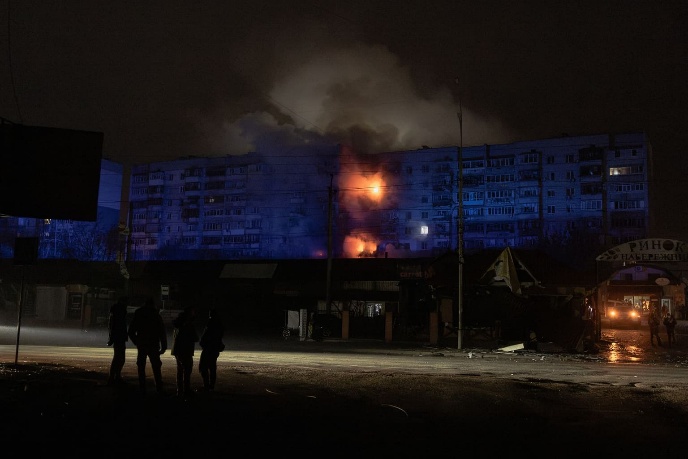
Vyshhorod, 2:47 a.m.: Residents stare at their apartment building burning after a Russian Shahed drone struck the ninth floor, the flames spreading through six stories while Ukrainian negotiators prepared to fly to Florida for peace talks. One dead, nineteen wounded, 146 evacuated—another ordinary night on day 1,376. (Roman Pilipey / AFP via Getty Images)
EUROPEAN FRACTURES: WHEN ORBAN FLEW TO MOSCOW
The cancellation came via terse statement from Karol Nawrocki’s office: the bilateral meeting with Viktor Orban would not happen. “Europe’s security depends on solidarity action, including in the field of energy.”
Translation: You flew to Moscow to discuss oil deals while Ukraine’s negotiators fight for their country’s survival. We’re done pretending this is acceptable.
Nawrocki, Poland’s president-elect, would still attend the Visegrad Group summit in Prague—diplomatic protocol required that. But the one-on-one with Hungary’s prime minister? Canceled. The gesture was small, symbolic, and long overdue.
Orban had landed in Moscow the previous day while Ukrainian officials prepared for Florida. The timing was deliberate provocation, the itinerary carefully choreographed. Hungary’s dependence on Russian energy had deepened since the invasion began—from 61 percent before February 2022 to 86 percent now. While Europe worked to diversify away from Russian oil and gas, Budapest doubled down.
The visit served multiple purposes beyond energy. It demonstrated Hungary’s willingness to defy European consensus. It allowed Orban to position himself as defender of Hungarian sovereignty against Brussels overreach. And it created exactly the kind of fracture in European unity that Moscow prizes most—not dramatic rupture, but steady erosion of collective will.
Orban’s counter-accusation arrived on schedule: Western countries wage “hybrid war” against Belarus and Russia, he claimed. Lithuania’s border closures were a “crazy scam.” The rhetorical inversion was standard procedure—the aggressor claims victim status, the defender gets accused of provocation.
For Nawrocki, the cancellation required careful calibration. As a Law and Justice coalition member, he occupied political space to the right of Poland’s current government. He’d previously opposed Ukraine’s NATO accession, demanded Kyiv address historical grievances like the Volhynian massacres. His nationalist credentials were solid.
But he’d also consistently backed military aid for Ukraine and warned against Russian threats. The cancellation signaled which priority mattered more—current security over historical grievances, European solidarity over nationalist affinity.
Ukrainian Foreign Minister Andrii Sybiha praised the decision immediately: “Poland’s principled stance and strong sense of solidarity.” The gratitude was genuine. When European unity fractures along predictable lines, even symbolic gestures matter.
Polish Foreign Minister Radoslaw Sikorski captured the broader pattern: “A few more months and maybe they’ll realize that those who hate the European Union and Ukraine usually love Putin.”
The observation wasn’t theoretical. It was warning.
NORWAY’S PRACTICAL COMMITMENT: DRONES OVER DIPLOMACY
The announcement came without fanfare or diplomatic flourish: Ukraine and Norway would jointly produce drones, with pilot production beginning in 2026. Defense Minister Denys Shmyhal and his Norwegian counterpart Tore O. Sandvik signed the agreement, shook hands, and released a brief statement.
No grand speeches. No vague promises about “laying groundwork” or “productive discussions.” Just a concrete commitment with timelines, production targets, and research partnerships with Norway’s leading technical institutions.
The contrast with Miami couldn’t have been sharper.
Drones have evolved from battlefield curiosity to central instrument of modern warfare. Ukraine and Russia deploy them by the tens of thousands—for reconnaissance, targeting, direct attack, air defense. Both sides have learned that future conflicts will be determined not by who fields the most expensive systems but by who can produce the most capable platforms in the greatest numbers.
Ukraine’s domestic drone industry emerged from necessity. Western allies provide finite quantities of expensive systems—HIMARS, Patriots, advanced fighters. But Ukraine needs massive numbers of relatively simple drones to contest Russian advantages in artillery and aviation. The country’s engineers and entrepreneurs responded, developing everything from FPV racing drones modified for combat to sophisticated naval drones that struck Russian oil infrastructure thousands of kilometers away.
The Norwegian partnership promised to scale production beyond what Ukraine could achieve alone. Norway brings advanced manufacturing capabilities, quality control systems, and research institutions that can accelerate technological development. Ukraine contributes operational experience, rapid innovation cycles, and engineers who’ve spent nearly four years learning what works under combat conditions.
The specific systems remained unspecified, but the scope likely included both strike drones and interceptor drones for air defense. Ukraine’s recently deployed Sting interceptors had successfully engaged Russia’s jet-powered Geran-3 drones—a significant achievement that demonstrated Ukrainian innovation could counter evolving threats. Scaling production of both types would enhance Ukraine’s ability to strike Russian logistics while defending against the constant drone attacks that had become Moscow’s preferred method of terrorizing civilians.
Norway’s $7 billion commitment to boost Ukraine’s defense sector represented more than money. It signaled long-term strategic partnership rather than crisis-response charity. For Norway, supporting Ukrainian defense industry served multiple interests—containing Russian aggression, strengthening Nordic security, demonstrating NATO solidarity without direct intervention.
The timing, coinciding with the Miami negotiations, sent its own message: some allies remain focused on enhancing Ukraine’s military capabilities rather than engineering its surrender.
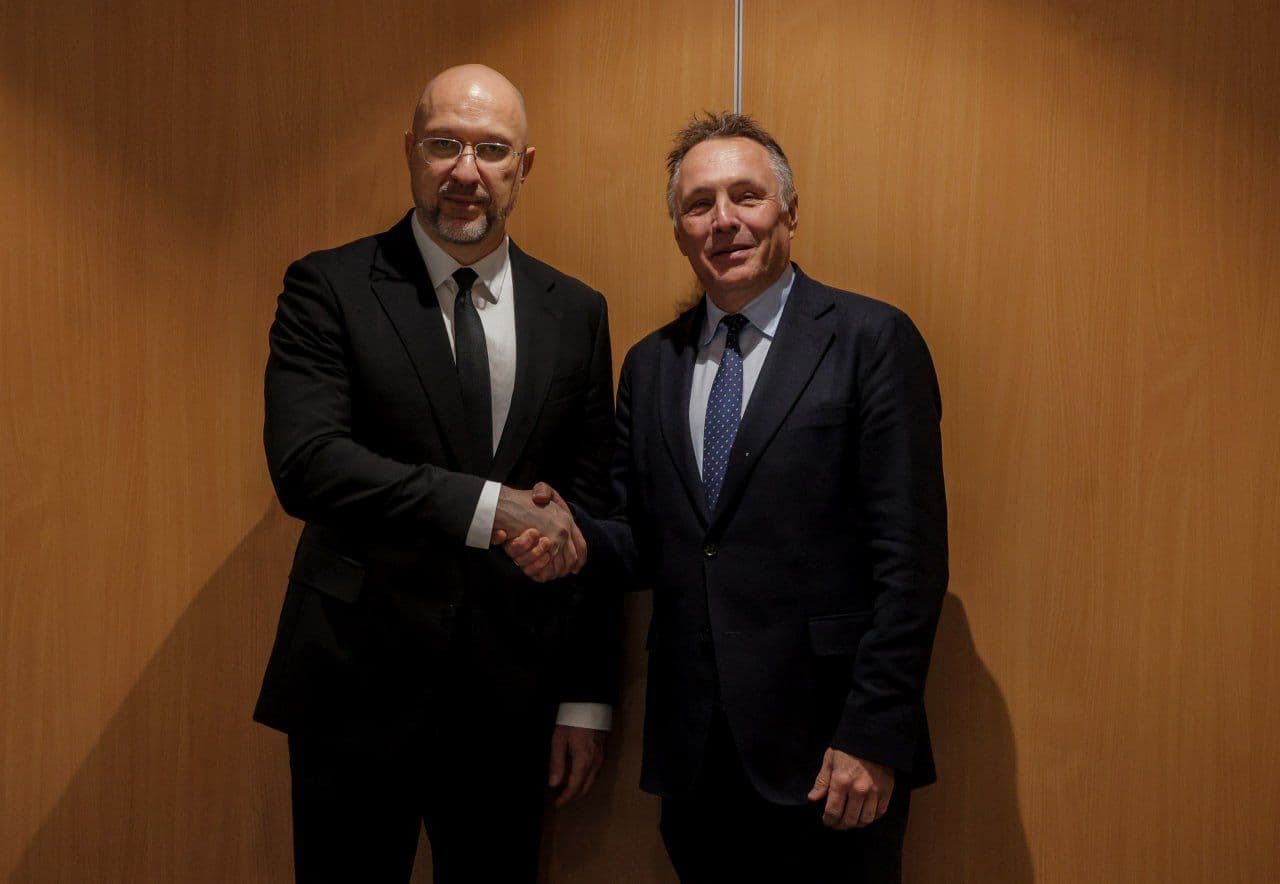
Ukrainian Defense Minister Denys Shmyhal and Norwegian counterpart Tore O. Sandvik after signing agreements for joint drone production starting in 2026—a concrete commitment to Ukraine’s defense while American diplomats in Florida discussed abstract concepts like “productivity” and “groundwork.” (Denys Shmyhal/X)
MARKAROVA’S RETURN: PLANNING FOR A PEACE UKRAINE DOESN’T WANT
Oksana Markarova’s appointment as presidential advisor on reconstruction and investment arrived with carefully managed messaging: Zelensky was pivoting from wartime crisis management toward planning for eventual peace. The role focused explicitly on “business climate, enhancing our state’s financial resilience, attracting investment, and planning reconstruction together with our strategic partners.”
Translation: Ukraine must prepare for compromises it spent four years insisting were unthinkable.
Markarova’s background positioned her uniquely for the assignment—finance minister from 2018 to 2020, ambassador to the United States during the invasion’s critical opening phase. She understood both financial mechanics and international relationships, having spent nearly four years navigating Washington’s complex politics while Ukraine fought for survival.
The timing revealed multiple calculations. Her appointment came as Zelensky grappled with his chief of staff Andriy Yermak’s recent resignation amid corruption investigations. Speculation swirled that Markarova had been offered Yermak’s position but refused, choosing instead the unpaid advisory role while maintaining her private sector work.
Her public statement refuting the speculation struck a careful tone: “Victory in peace will not be possible without active business engagement, a rapid increase in investment, and strategic planning for reconstruction starting now.” The framing suggested principled focus on post-war priorities rather than rejection of presidential authority.
But the subtext was clear: the political risks of becoming chief of staff outweighed the influence.
The role’s emphasis on reconstruction planning acknowledged brutal realities about Ukraine’s economic devastation. Nearly four years of full-scale invasion had destroyed infrastructure, displaced millions, and created budget gaps that foreign assistance barely covered. The European Investment Bank’s estimate—one trillion euros required for reconstruction—captured both the scale of destruction and the opportunity for those positioned to profit from rebuilding.
Markarova’s controversial tenure as ambassador had demonstrated both her political instincts and their limitations. The September 2024 incident loomed largest: she’d organized Zelensky’s visit to a Pennsylvania arms factory where he met Democratic officials during the presidential campaign. Republican anger and calls for her dismissal followed immediately. The visit, intended to showcase bipartisan support, instead crystallized partisan divisions and contributed to perceptions that Ukraine had chosen sides.
Her eventual dismissal and replacement by former Deputy Prime Minister Olha Stefanishyna had been framed as routine diplomatic rotation but clearly reflected political calculation about managing relationships with an incoming Trump administration that viewed the Pennsylvania incident as Ukrainian betrayal.
The advisory role offered rehabilitation without full restoration—allowing Markarova to contribute expertise while maintaining distance from politically sensitive decisions. Her focus on business climate and investment attraction aligned with Trump administration preferences for market-driven solutions over government assistance.
Zelensky’s public statement accompanying the appointment emphasized “the capacity to rebuild after the fighting and restore normal economic development” as Ukraine’s long-term goal. The language subtly acknowledged that military victory had become less plausible than negotiated settlement, that Ukraine’s best hope lay in building economic resilience capable of sustaining sovereignty even without territorial restoration.
The appointment prepared the ground for compromises coming.
INDIA’S BALANCING ACT: BUYING RUSSIAN WHILE UKRAINE BURNS
The Bloomberg report landed quietly: India plans to pitch Russia on purchasing Su-57 fifth-generation fighters and S-500 air defense systems during Putin’s December visit. The timing—as negotiations over Ukraine’s future advanced and Russian forces continued daily civilian attacks—would draw inevitable criticism.
India didn’t care.
Defense Secretary Rajesh Kumar Singh had already provided the framework: “They have been our friends through both fair and foul weather, and we are not going to stop our defense cooperation with them anytime soon.” Then came the key phrase: “India follows a policy of strategic autonomy.”
Translation: We serve Indian interests, not Western preferences.
The relationship predated the current crisis by decades, rooted in Cold War partnerships and sustained through years of American unreliability. Russia remains India’s largest defense supplier despite declining share—down from 72 percent in 2010-14 to 36 percent recently as New Delhi deliberately diversified. But the relationship provides more than hardware. It represents strategic autonomy, the principle that India’s foreign policy serves India.
The potential purchases would deepen dependence on Russian military technology precisely when such dependence carries political costs. India currently operates over 200 Russian fighter jets and multiple S-400 batteries, which saw deployment during May’s four-day confrontation with Pakistan. Committing to Russian systems means committing to Russian technical support, spare parts, and upgrades for decades.
American pressure had been explicit. Washington’s July decision to impose 25 percent penalties on Indian exports—raising overall tariff rates to 50 percent—demonstrated willingness to use economic coercion. The threats aimed to halt Russian oil purchases.
They failed. India continued buying Russian oil at discounted prices.
The timing of Putin’s visit—occurring as Ukraine’s negotiators wrestled with American pressure to accept territorial compromises—would inevitably draw criticism from Kyiv and Western supporters. India’s willingness to host Putin despite such criticism reflected confidence that its strategic position allowed independence that smaller nations couldn’t afford.
The calculation wasn’t irrational. India’s population, economy, and strategic location gave it leverage that permitted policies Western nations found objectionable. American need for Indian partnership in balancing China’s power limited Washington’s willingness to push confrontation beyond certain points. Russia’s increasing isolation from Western markets created opportunity for India to negotiate favorable terms on energy and defense purchases.
For Russia, maintaining defense relationships with major powers like India served purposes beyond revenue. Each partnership demonstrated that Western isolation remained incomplete, that alternatives existed to European and American markets. Each sale provided evidence that Russian military technology remained competitive despite sanctions limiting access to advanced components.
And each relationship created dependencies Moscow could potentially exploit—countries operating Russian equipment require Russian maintenance, creating leverage that extends beyond immediate transactions.
The day’s revelation illustrated how war’s prolongation was reshaping global alignments in ways that complicated Western strategy. India’s continued engagement with Russia forced Washington to choose between punishing a major democracy and maintaining strategic partnership against China.
India bet Washington would prioritize the China relationship over Ukraine solidarity.
Thus far, the bet had paid off.
VILNIUS AIRPORT: WEATHER BALLOONS AS WEAPONS
The unidentified objects appeared on radar at Vilnius International Airport just after 4 a.m., drifting through restricted airspace at low altitude. Air traffic controllers issued immediate ground stop. Departures halted. Arrivals diverted. Lithuanian authorities extended airspace restrictions until 5 a.m. the following morning.
The objects were believed to be weather balloons. The kind smugglers use to ferry contraband cigarettes across the Belarusian border.
This was hybrid warfare’s mundane face—not cyber attacks or disinformation campaigns, but weather balloons disrupting international airports, imposing costs through ambiguity about intention and origin.
European airports have faced repeated disruptions involving drones or unidentified objects. Copenhagen, Brussels, and now Vilnius—the pattern was clear even when attribution remained murky. The frequency of incidents and difficulty definitively assigning responsibility exemplified hybrid warfare’s essential characteristic: you can’t respond proportionally when you can’t prove who’s attacking or whether it’s attack at all.
Weather balloons used by smugglers might be purely criminal enterprise. Or they might be deliberately tolerated by Belarusian authorities precisely to create disruption. Or they might be both simultaneously—criminal activity that serves strategic purposes because someone in Minsk calculated that Lithuania’s discomfort serves Belarus and Russia.
Lukashenko’s accusation that Western countries wage hybrid war against Belarus and Russia, dismissing Lithuania’s border closures as “crazy scam,” demonstrated the rhetorical inversion that accompanies such tactics. The aggressor claims victim status. The defender gets accused of provocation.
Lithuania’s October decision to shut down both remaining border crossings with Belarus—responding to surge of balloon incidents—reflected frustration with inability to address disruption through normal channels. The country shares 680-kilometer border with Belarus, making comprehensive surveillance challenging and creating multiple vectors for harassment.
The checkpoints reopened last week after apparent stabilization, suggesting Lithuanian authorities had judged disruption from closures greater than disruption from balloons. The calculation might shift again depending on future incidents. The cat-and-mouse game served Lukashenko’s purposes regardless of outcome: sustained disruption undermined confidence in Lithuanian institutions, while border closures imposed costs on legitimate cross-border movement.
The apparent weaponization of smuggling activity represented innovation in the hybrid warfare toolkit. Traditional hybrid tactics combined conventional military pressure with cyber attacks, disinformation, and political subversion. The balloon incidents added another layer: exploitation of mundane criminal activity to achieve strategic objectives.
The approach offered several advantages: plausible deniability since Belarus could claim it merely failed to suppress smuggling rather than actively encouraging it; minimal cost since smugglers bore expense and risk; and difficulty of proportionate response since treating weather balloons as security threat risked appearing paranoid while ignoring them invited escalation.
The incident demonstrated how Russia and its allies had developed sophisticated understanding of NATO vulnerabilities—not primarily military but political and psychological. The alliance’s Article 5 collective defense commitment applied clearly to conventional military attacks but provided no obvious response mechanism for weather balloons disrupting civilian airports.
NATO members could hardly invoke mutual defense over smugglers’ tools. Yet the accumulated disruption served strategic purposes by demonstrating that alliance membership provided incomplete protection against determined harassment.
The gap between NATO’s military capabilities and its ability to address hybrid threats created space for Russia and Belarus to impose costs on frontline states without triggering responses that might escalate into actual conflict.
WHAT NOVEMBER 30 REVEALED
Two wars proceeded on parallel tracks. In Florida, Ukrainian negotiators discussed territorial compromise in climate-controlled comfort. In Vyshhorod, emergency crews pulled bodies from apartment buildings still smoldering from the 2:47 a.m. drone strike. The juxtaposition wasn’t accidental—it was the war itself.
Russia negotiates through violence. Always has. The overnight assault that killed five and wounded 38 across Ukraine wasn’t random escalation—it was calculated message. To Ukrainian negotiators: whatever security guarantees you negotiate will prove worthless if we choose to ignore them. To American diplomats: this humanitarian crisis continues until you pressure Kyiv into acceptable terms.
The day revealed uncomfortable truth that wars end not when one side achieves decisive victory but when all sides conclude that continued fighting costs more than available alternatives. Ukraine hasn’t achieved decisive victory and shows little prospect of doing so. Russia hasn’t achieved decisive victory either, but has demonstrated capacity to sustain grinding offensive operations while absorbing casualties that would break most militaries.
The strategic stalemate creates space for negotiation but ensures any agreement will satisfy no one completely.
The negotiations now underway will determine not just where boundaries get drawn but what kind of state Ukraine becomes. The difference between peace that preserves Ukrainian sovereignty and peace that renders it Russian protectorate might appear subtle in immediate aftermath but will prove decisive over time. Security guarantees that sound impressive in diplomatic documents might prove worthless if guarantors lack will to enforce them.
Norway’s joint drone production commitment represented genuine support precisely because it acknowledged war’s continuation and Ukraine’s need for sustainable defense capabilities. Poland’s symbolic rebuke of Orban’s Moscow visit mattered less than underlying reality that European unity remained fragile. India’s continued partnership with Russia illustrated limits of Western economic pressure when applied to countries with genuine strategic alternatives.
Ukraine’s position heading into negotiations combines weakness and strength in ways that make outcomes difficult to predict. The weakness is obvious: territory occupied, infrastructure destroyed, economy dependent on foreign assistance, political leadership under pressure, allies increasingly impatient. The strength is less apparent but no less real: military that has demonstrated capability to defend territory and strike deep into Russia, civilian population that has endured nearly four years without collapse, institutional resilience that has maintained basic state functions despite extraordinary pressure.
The question now is whether negotiated settlement can preserve Ukraine’s essential sovereignty and provide foundation for recovery, or whether diplomatic pressure will force acceptance of terms that make future Russian aggression inevitable.
The answer will depend partly on military facts—whether Ukrainian forces can hold current positions and impose sufficient costs on Russian offensives to make Moscow conclude that continued war serves no purpose. It will depend partly on diplomatic skill—whether Ukrainian negotiators can navigate between American pressure for rapid settlement and European insistence on security guarantees that have real meaning. And it will depend partly on factors beyond any party’s control—whether Putin’s health and political position make him more or less willing to compromise, whether American attention remains focused or shifts to other priorities, whether European publics continue supporting Ukraine despite economic costs.
What seems certain is that November 30 will be remembered not as the day peace arrived but as the day Ukraine confronted choices it had hoped to avoid. The Miami negotiations forced acknowledgment that military victory had become implausible, that territorial restoration might prove impossible, and that war’s end would involve compromises that four years ago would have seemed unthinkable.
Whether those compromises prove foundation for sustainable peace or merely prelude to the next round of violence will depend on decisions made in coming weeks by leaders in Kyiv, Washington, Moscow, and European capitals—decisions whose full consequences won’t become apparent for years.
Day 1,376. The talking continued. The violence continued. And nobody knew which would ultimately matter more.