
As the Kremlin threatened military retaliation against European peacekeepers in Ukraine while Russian drones devastated seven oblasts, Trump told European leaders he needed “answers” before attending weekend peace talks—and Congress passed legislation constraining his ability to cut Ukraine aid or withdraw troops from Europe.
The Day’s Reckoning
Lavrov’s voice echoed through Moscow on December 10, threatening military retaliation against any European troops deployed to Ukraine. While he spoke, 80 Russian drones were already airborne, hunting Ukrainian power plants across seven oblasts in the coldest weeks of winter.
Ukrainian forces struck back. Thirty-one drones descended on Moscow itself—air raid sirens, explosions in suburbs, four airports grounding flights. In the Black Sea, Sea Baby drones found the Dashan, a shadow fleet tanker carrying $60 million in Russian oil. Two strikes. Fire at the stern. The fourth tanker crippled in two weeks.
In Washington, the House voted 312-112 for $900 billion in defense spending. Buried in the legislation: $400 million annually for Ukraine, prohibitions on troop withdrawals from Europe, requirements to notify Congress before restricting intelligence sharing with Kyiv. Trump couldn’t negotiate away American support even if he wanted to.
But Trump had conditions. “They would like us to go to a meeting over the weekend in Europe,” he told reporters. “We don’t want to be wasting time.” European leaders wanted him at peace talks with Zelensky. He wanted “answers” first.
The battlefield ground forward with familiar brutality. Russian forces seized Vovchansk Technical School, advanced in Kostyantynivka, pushed across rivers near Hulyaipole. Ukrainian defenders held Pokrovsk despite mechanized assaults that reintroduced armor after weeks of interdiction.
In Odesa, authorities detained another shadow fleet vessel. In Transnistria, Russian forces mobilized reservists and established drone production centers. In Kyiv, Zelensky met with Treasury Secretary Bessent, BlackRock CEO Fink, and Jared Kushner, planning reconstruction while artillery still pounded cities.
Day 1,386. War as kinetic combat, economic siege, diplomatic standoff, and investment opportunity—all happening simultaneously.
“We Will Target Them”: Moscow’s Ultimatum to Europe
Lavrov chose his words carefully. Russia had no intention of going to war with Europe, he said. Then came the threat: the Kremlin would respond to “any hostile steps”—specifically European military contingents in Ukraine and the seizure of frozen Russian assets.
The timing wasn’t accidental. Hours earlier, Zelensky had announced that U.S., Ukrainian, and European negotiators would soon discuss security guarantees at a security council-level meeting. Lavrov was drawing red lines before the meeting even happened.
Alexei Chepa, First Deputy Head of the State Duma’s International Affairs Committee, made the threat explicit. Russia would “deliberately target” any European military contingents deployed to Ukraine. Not intercept. Not deter. Target.
The message was aimed at European voters, not European governments. Every French mother, every German father would now hear their leaders explain why sending peacekeepers or trainers to Ukraine was worth their children becoming Russian military targets.
The irony was almost obscene. Russia had violated the 1994 Budapest Memorandum. Shredded the 2015 Minsk Accords. Spent nearly four years bombing Ukrainian cities. Now Moscow demanded veto power over Ukraine’s future security arrangements—the very sovereignty Russia claimed to respect.
For European security planners, Lavrov’s threat clarified the fundamental question: Would Ukraine’s security guarantees require Russian approval? If yes, Moscow would have exactly the influence over Ukrainian sovereignty that the war was supposedly preventing.
The Kremlin had drawn its line. European capitals now had to decide whether to cross it.
When Elections Became Another Weapon
Zelensky thought he was solving a problem on December 9. He’d hold elections within 60 to 90 days if the U.S. and Europe ensured security. Western partners wanted democratic accountability during wartime? Fine. He’d give it to them.
Moscow’s response revealed he’d made a mistake.
Kremlin spokesman Dmitry Peskov dismissed the announcement with calculated indifference. Despite years of Russian demands that Ukraine hold elections as prerequisite for peace, Peskov now claimed the Kremlin hadn’t discussed Zelensky’s offer and would “monitor the situation as it unfolds.”
Translation: Russia didn’t want legitimate Ukrainian elections. It wanted a compliant Ukrainian government.
Foreign Ministry spokesperson Maria Zakharova made the game explicit. Zelensky’s request for international election security proved Ukraine had “lost its sovereignty,” she claimed. The logic was pure Orwell—asking allies to protect democratic process during wartime demonstrated dependence, while submitting to Russian military pressure would somehow restore independence.
Ambassador-at-Large Rodion Miroshnik called Zelensky’s readiness “an arrogant bluff” and suggested Russia would oppose Western election security efforts. He resurrected the Kremlin’s false narrative about Zelensky’s illegitimacy, noting Ukraine canceled May 2024 elections due to the war Russia itself started.
Then Russian state media platformed Viktor Medvedchuk—Putin’s close ally, convicted Ukrainian traitor, the man Moscow hoped to install after toppling Zelensky in 2022—calling for Zelensky’s forced removal. The symbolism was perfect: Russia’s preferred Ukrainian leader was a fugitive, not a democratic alternative.
The message aligned with Putin’s November 27 statement: Russia would only sign peace agreements with a pro-Russian government. Elections alone wouldn’t suffice.
Moscow would reject any Ukrainian government it didn’t control, regardless of how Ukrainians voted. Democracy disguised as concern for democracy. Another excuse to demand surrender.
Freezing Them Into Submission
Zelensky’s offer seemed reasonable: halt Ukrainian strikes on Russian refineries if Moscow stopped bombing Ukrainian power plants. Ukrainian drones had systematically targeted Russian oil infrastructure throughout 2025. A mutual ceasefire would reduce civilian suffering while maintaining conventional military pressure.
The Kremlin rejected it within 24 hours.
Peskov declared Russia was “working towards peace, not a ceasefire”—as if the two were somehow mutually exclusive. Lead negotiator Kirill Dmitriev accused Zelensky, Britain, and the EU of attempting to “trick” Russia into a temporary pause. This from the government that had exploited previous informal ceasefires to rebuild its own capabilities.
Alexei Chepa tried justifying the rejection through historical fiction, falsely claiming Ukraine had violated a prior U.S.-brokered energy ceasefire in March 2025. Reality: Russia and Ukraine never agreed to formal terms. Russia unilaterally declared a ceasefire began March 18. Moscow didn’t renew it. Then the Kremlin accused Ukraine of violations while using the pause to repair Russian infrastructure.
A Kremlin-affiliated milblogger revealed the actual strategy: Russia must fully destroy Ukraine’s power grid. Failing to do so could undermine offensive operations.
It was candid admission that Ukrainian civilian infrastructure wasn’t collateral damage—it was the primary objective.
Russian forces had intensified combined missile and drone campaigns, launching massive strikes every seven to ten days in deliberate effort to break the grid before winter temperatures peaked. The pattern was systematic: wear down air defenses through volume, then strike critical nodes to create cascading failures.
The arithmetic was brutal. Ukrainian strikes on Russian refineries reduced war revenue but could be repaired within months. Russian strikes on Ukrainian power generation left millions in darkness and cold, creating humanitarian pressure Moscow believed would force unfavorable peace terms.
Warfare through suffering. The Kremlin had just committed to that strategy through the coldest months of winter.
When Moscow’s Airports Went Dark
The first drones appeared over Moscow late December 9. Mayor Sergey Sobyanin’s Telegram channel began updating continuously as Russian air defense units tracked inbound targets. Thirty-one unmanned aerial vehicles, all bound for the capital.
Explosions echoed through Moscow suburbs. Emergency crews scrambled to crash sites across the metropolitan area, clearing debris while more drones kept coming.
All four major airports—Vnukovo, Domodedovo, Sheremetyevo, Zhukovsky—implemented temporary flight restrictions. Commercial jets circled, diverted, grounded. Air traffic controllers watched radar screens fill with objects that shouldn’t be there.
The 31-drone swarm matched Ukraine’s October 27 attack intensity—the pattern was escalating, not diminishing. Ukrainian forces had systematically targeted Russian oil refineries, weapons factories, ammunition depots throughout 2025. Now they were bringing the war to Moscow itself with increasing frequency.
For Moscow’s civilian population, the overnight attack delivered something no amount of state television propaganda could spin away: the war’s reality, arriving in their own skies.
Air raid alerts. Exploding drones. Airport closures.
Experiences Ukrainian civilians had endured for nearly four years were now regular occurrences in Russia’s capital. The psychological impact extended beyond immediate danger. Each attack reminded Muscovites that geographic distance from Ukraine no longer guaranteed safety from the war their government prosecuted.
The Kremlin could claim Russian forces were winning. Could broadcast footage of destroyed Ukrainian infrastructure. Could declare Ukraine was losing.
But Russian civilians in Moscow now went to bed wondering if they’d wake to explosions. Just like Kyiv. Just like Kharkiv. Just like Dnipro.
The war had come home.
Eighty Drones Hunting Power Plants
While 31 Ukrainian drones flew toward Moscow, 80 Russian drones were already airborne heading the opposite direction. The Ukrainian Air Force tracked them launching from Kursk City, Millerovo, Primorsko-Akhtarsk, and occupied Cape Chauda in Crimea. Roughly 50 were Shahed-type—Iranian-designed drones that had become Russia’s weapon of choice for infrastructure destruction.
Ukrainian air defenses downed 50. Twenty-nine got through.
They struck seven oblasts. Russian drones hit energy facilities, residential buildings, industrial complexes in Sumy, Odesa, Dnipropetrovsk, and Chernihiv—with three other oblasts suffering damage in the systematic campaign to destroy Ukraine’s power grid.
Each successful strike multiplied across interconnected networks. One transformer station destroyed meant cascading failures leaving hundreds of thousands without electricity when December temperatures dropped to their lowest.
That was the strategy—darkness and cold as weapons creating humanitarian pressure when Ukrainians were most vulnerable.
The dual drone campaigns revealed asymmetric warfare in stark terms. Ukrainian drones targeted Russian military facilities, oil refineries, weapons factories—degrading war-making capacity. Russian drones targeted Ukrainian power plants, apartment buildings, heating systems—creating civilian suffering to force political concessions.
Both sides used drones. But Ukraine aimed at Russia’s ability to fight. Russia aimed at Ukraine’s ability to endure winter.
The objectives weren’t comparable. One was military degradation. The other was civilian coercion.
Moscow called both terrorism. Only one actually was.
The City That Refused to Fall
Geolocated footage from December 9 contradicted the Russian milbloggers’ victory declarations. Ukrainian forces were operating along the Donetska Railway in northwestern Pokrovsk and northwestern Myrnohrad—positions they’d either held or recently recaptured. The city Moscow had declared lost remained contested.
But the situation was serious. Russian forces infiltrated central and western Myrnohrad in small groups, exploiting fog and low clouds when Ukrainian drones couldn’t fly. A Ukrainian brigade spokesperson reported Russian troops simultaneously assaulting Myrnohrad itself, its flanks, and logistics routes—forcing Ukrainian units to plan each rotation like a combat mission under constant threat of strikes.
Russian armor had returned. After Ukrainian interdiction efforts prevented mechanized operations in mid-November, elements of Russia’s 76th Airborne Division exploited poor weather to conduct mechanized assaults. Geolocated footage from December 10 showed platoon-sized Russian mechanized assault in western Pokrovsk—evidence Russian logistics had adapted to Ukrainian targeting.
Commander-in-Chief Oleksandr Syrskyi’s December 10 assessment captured the fluidity. Ukrainian forces operated in northern Pokrovsk but had been absent on an unspecified prior date—suggesting recent counterattacks retook limited positions. Syrskyi acknowledged Ukrainian withdrawals from Sukhyi Yar, Lysivka, and Novopavlivka—tactical retreats preserving forces for more defensible positions.
The Pokrovsk-Myrnohrad pocket had become a test of institutional adaptability. Ukrainian forces learned to rotate units under fire, maintain supply lines through interdicted routes, counterattack when Russian infiltrations overextended. Russian forces learned urban warfare’s cost against defenders with superior intelligence—every building cleared required more casualties, every street held demanded more reinforcements.
Western analysts assessed Russian forces would “very likely” seize both cities but would “take more time and suffer more casualties to do so.”
The cities would likely fall. But slowly. Bloodily. At costs eroding Russian combat power for future operations.
In attrition warfare, how a city fell mattered as much as whether it fell.
When Slow Progress Becomes Unacceptable
Russian forces seized the Vovchansk Technical School —a building in central Vovchansk, northeast of Kharkiv City. Ukrainian military observer Kostyantyn Mashovets reported the advance, noting it represented continued Russian pressure in a direction where Moscow demanded faster results than current rates delivered.
The slow advance rate had become unacceptable to Russian Northern Grouping of Forces command. Solution: redeploy elements of the 14th Army Corps and 1st Guards Tank Army from Kupyansk direction to Vovchansk to facilitate intensified offensive operations.
The planned redeployment revealed priorities. Russian military command was willing to deprioritize Kupyansk to concentrate forces for Vovchansk breakthrough. Mashovets assessed Russian forces would intensify strikes against Ukrainian ground lines of communication into Vovchansk from west, southwest, and south in the near future.
Russian forces had already begun targeting logistics. Strikes on the Pechenihy Reservoir Dam and bridge near Staryi Saltiv—16 kilometers from the frontline—forced Ukrainian authorities to close the T-2111 Chuhuiv-Velykyi Burluk road and the T-2104 Kharkiv City-Vovchansk highway. The strikes aimed to complicate Ukrainian logistics supporting Vovchansk defense.
The technical school’s seizure wasn’t strategically decisive. But combined with planned force redeployments and intensified strikes against Ukrainian logistics, it signaled Russian military command viewed Vovchansk as priority target worth significant resource commitment.
Even when advances came slowly. Even when the costs mounted. Even when other sectors stalled.
Moscow wanted Vovchansk. And was willing to strip forces from elsewhere to get it.
Infiltrations, Not Advances
Russian forces maintained positions in southeastern Kostyantynivka on December 10—infiltrations, not territorial control changing the forward edge of battle. Kostyantyn Mashovets reported Russian forces had advanced to conduct infiltrations in that area, though they represented small-group penetrations rather than sustained advances.
Russian milbloggers provided cautionary assessments contradicting optimistic claims. One claimed Russian forces only controlled several homes within Sofiivka southwest of Druzhkivka. The milblogger noted Ukrainian forces maintained limited presence near Stupochky east of Kostyantynivka, warning it was premature to claim Russian advances within the city proper.
Mashovets noted Russian forces couldn’t consolidate near Stupochky and Predtechyne. A Kremlin-affiliated milblogger acknowledged Russian logistical difficulties made advances deeper into Kostyantynivka risky, limiting Russian forces to small groups.
Bad weather shaped operations. A Ukrainian brigade spokesperson reported December 10 that reduced visibility cut Russian artillery strikes—Russian artillery elements depended on drone reconnaissance for counter-battery operations. Deteriorating road conditions forced Russian forces to move on foot, carrying equipment by hand rather than motorcycles.
But Russian forces exploited the same weather degrading Ukrainian drone operations. They conducted infiltration missions in fireteams of up to five servicemembers, using fog and cold to avoid Ukrainian observation.
Ukrainian brigade operating in Kostyantynivka direction reported Russian forces were intensifying assaults and increasing servicemembers deployed in each assault. Mashovets reported Russian military command continued attacks due to desire to report successes in battle for Kostyantynivka and isolate Ukrainian forces near Chasiv Yar.
Infiltrations weren’t victories. But Russian commanders needed something to report. So the small-group missions continued, exploiting weather, accepting casualties, claiming progress measured in houses rather than streets.
Where Rivers Decide Battles
Geolocated footage from December 9 showed elements of Russia’s 36th Motorized Rifle Brigade advancing in central Ostapivske at the junction of Haichur and Yanchur rivers. The small settlement’s strategic significance exceeded its size—Russian ability to cross the Haichur River would likely determine their capacity for operationally significant advances westward toward Hulyaipole.
Russian advances across the river could threaten to isolate Ukrainian forces near Hulyaipole from forces in Pokrovske-Oleksandrivka area along the T-0401 highway. The geography created potential for envelope attacks against Ukrainian positions.
Geolocated footage from December 10 showed Ukrainian forces striking Russian-occupied building in eastern Hulyaipole—Russian infiltration that didn’t change terrain control. Russian forces attacked near and within Hulyaipole on December 9 and 10. Russian milbloggers claimed Ukrainian counterattacks near Hulyaipole and Ostapivske.
The Hulyaipole direction demonstrated how terrain features shaped operational possibilities. Russian forces needed crossing points over Haichur River to support westward advances. Ukrainian forces needed to deny those crossings to prevent envelope attempts.
The tactical contest for Ostapivske reflected larger operational stakes about whether Russian forces could sustain advances beyond current lines.
Rivers. Junction points. Crossing sites. Not dramatic terrain—just mundane geography determining whether attacks succeeded or stalled.
Sometimes the most important question wasn’t about firepower or tactics. It was whether you could cross a river without losing half your forces in the water.
$60 Million in Russian Oil, Burning
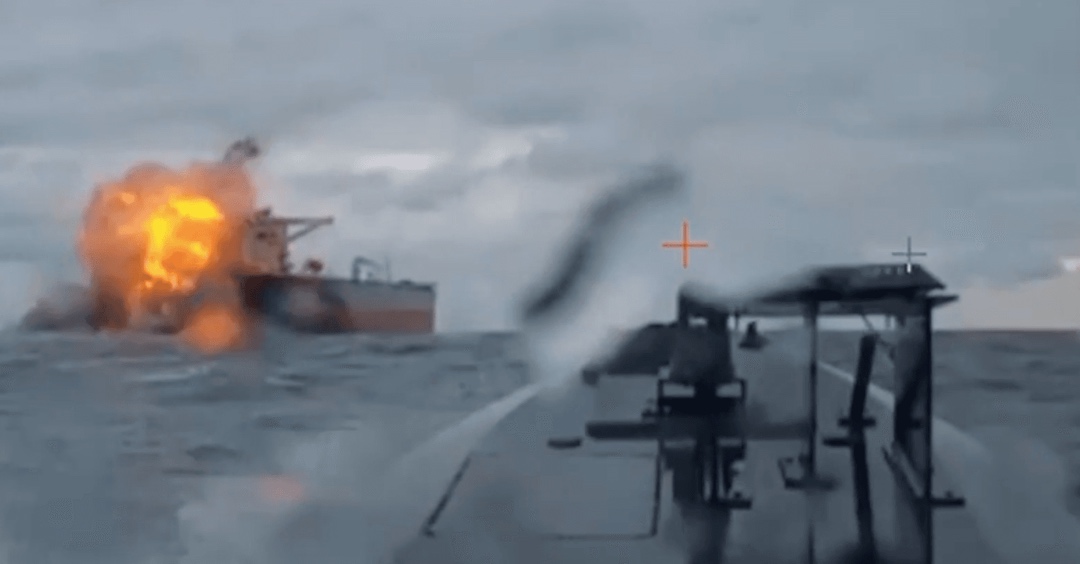
The moment before $60 million in Russian oil turned to fire: A Sea Baby drone strikes the stern of the Dashan, one of Putin’s shadow fleet tankers evading sanctions in Ukraine’s Black Sea waters. The ship limped away disabled—the fourth tanker Ukraine has crippled in two weeks. (Security Service of Ukraine)
The explosions ripped through the Dashan’s stern on December 10. Two Sea Baby drones found the Comoros-flagged tanker sailing through Ukraine’s exclusive economic zone, automatic identification system deliberately switched off—standard shadow fleet practice.
Video showed at least two strikes. Fire. Critical damage. The tanker limped away, forced out of service.
Dashan carried an estimated $60 million in petroleum products bound for Novorossiysk. The ship itself: $30 million. More significantly, it operated under sanctions imposed by the EU, UK, Canada, Australia, and Switzerland—a floating sanction-evasion scheme generating Kremlin revenue by accepting risks legitimate shippers wouldn’t.
This was the fourth oil tanker Ukrainian forces struck within two weeks. Sea Baby drones had previously disabled Kairos and Virat tankers in late November. Russian milbloggers acknowledged the pattern was creating genuine concern among shadow fleet operators who had previously considered the trade lucrative enough to justify minimal risks.
The strategy was straightforward: make the shadow fleet business model economically untenable by introducing real operational risk. Every tanker disabled meant weeks of repairs, potential cargo loss, insurance complications driving up costs. Ukrainian naval commanders weren’t trying to sink every ship—they were trying to make owners reconsider before accepting Russian contracts.
A former SBU officer explained: “They are trying to scare tanker owners away from entering Black Sea ports of Russian Federation and from loading Russian oil there. It’s very lucrative business, and there are many who want to be in it.”
But lucrative business required predictable costs and manageable risks. If Ukrainian drones could strike tankers with increasing frequency, risk premium would eventually exceed profit margin.
The Dashan strike demonstrated operational maturity. Ukrainian forces identified a high-value target, tracked movements through the exclusive economic zone, launched coordinated multi-drone attack, achieved mission success against a moving target in open water.
These weren’t experimental weapons anymore. They were proven capabilities deployed with increasing confidence against ships that thought the Black Sea was still safe enough for smuggling.
Seized at the Dock
The Security Service of Ukraine’s announcement carried weight beyond a single ship. Ukrainian authorities had detained a shadow fleet vessel in Odesa that arrived under an African flag claiming to export steel pipes. But its owner—sanctioned by Ukraine’s National Security and Defense Council—had systematically changed the ship’s name and registered beneficiaries to third countries attempting to evade restrictions.
The ship’s history revealed shadow fleet operational methods. Before Russia’s full-scale invasion, the dry cargo vessel docked in occupied Sevastopol at least seven times, illegally exporting agricultural products from Crimea. In January 2021, it transported nearly 7,000 tons of grain from Crimea to North Africa—using food as revenue while Russia portrayed sanctions as harming global food security.
Investigation uncovered flight plans, pilot cards, cartographic materials, radio logs providing evidence of illegal entry into occupied territory ports. The crew of 17—captain and 16 members from several Middle Eastern countries—faced potential criminal proceedings under four articles of Ukraine’s Criminal Code, including financing attempts to overthrow constitutional order, high treason, transport violations, illegal entry to occupied territory.
The detention demonstrated Ukraine’s expanding enforcement capabilities. Previous focus had been naval strikes in the Black Sea. Now Ukrainian authorities targeted vessels attempting to use legitimate commercial port access while serving sanctioned Russian interests.
For shadow fleet operators, detention created new calculus. Naval drone strikes threatened ships in transit. Port detentions threatened vessels seeking legitimate commercial cover.
Fewer safe operational windows. Higher probability any voyage could result in asset loss regardless of precautions.
The Black Sea had become dangerous for transit. Now even Odesa’s port—nominally safe harbor—had become an enforcement zone.
Eighty Kilometers from Odesa
Ukraine’s Main Military Intelligence Directorate issued a stark warning: the Kremlin was strengthening presence in Russian-occupied Transnistria by calling up reservists, bringing weapons out of storage, establishing drone production and training centers. The moves suggested Russia was preparing to threaten Odesa Oblast from the west, potentially forcing Ukraine to divert forces from frontline positions.
Geography made Transnistria strategically valuable. Capital Tiraspol sat just 80 kilometers from Odesa City, placing Ukraine’s critical Black Sea port within range of mid-range drones. Russian forces had demonstrated proficiency conducting operational-depth strikes—targeting Ukrainian rear areas 25 to 100 kilometers from the front—using specialized drone units. Transferring those capabilities to Transnistria would create a second front without requiring major troop deployments.
The GUR warning came as the Kremlin revived narratives claiming Odesa was historically Russian and threatening future aggression against Odesa and Mykolaiv oblasts. Rhetoric followed familiar pattern—historical claims preceded information operations that preceded military preparations for territorial seizures. Moscow used the same sequence in Crimea and Donbas before 2014, then again in Kherson and Zaporizhzhia oblasts in 2022.
But capability and intent diverged from practical execution. ISW assessed Russia remained unlikely to conduct major offensive operations toward Odesa in the near-term, constrained by forces committed to ongoing campaigns in Donetsk and logistical limitations. The threat was real but asymmetric—infiltration missions, sabotage operations, drone strikes rather than conventional ground offensives.
Strategic logic was nevertheless sound from Moscow’s perspective. Every Ukrainian unit defending against potential infiltration from Transnistria was one less unit available for counterattacks in Donetsk. Every air defense system positioned to protect Odesa was one less system protecting frontline cities.
Russia could fix substantial Ukrainian forces in place through threat of action without committing major military assets.
The Vote That Tied Trump’s Hands
The House voted 312-112 on December 10 to approve $900 billion in defense spending. Buried in the legislation were constraints on presidential power that complicated Trump’s goal of rapidly negotiating peace on terms favorable to Moscow.
The bill prohibited reducing U.S. troops in Europe below 76,000 for more than 45 days—directly limiting Trump’s flexibility to use troop withdrawals as negotiating leverage. His statements about NATO burden-sharing had raised concerns he might reduce American military presence to pressure allies. The legislation now required Congressional notification and restricted duration of any reductions.
Another constraint: Defense must notify Congress within 48 hours of restricting intelligence sharing with Ukraine. Trump’s criticisms of Ukraine and warm rhetoric toward Putin had generated anxiety that reduced intelligence cooperation might become pressure tool. The notification requirement wouldn’t prevent restrictions but would make them visible to oversight and public scrutiny.
The bipartisan 312-112 passage demonstrated Congressional Republicans weren’t uniformly aligned with Trump’s approach. Enough Republicans joined Democrats supporting Ukrainian aid to override potential presidential objections, signaling Trump’s negotiating flexibility would be constrained by domestic political realities.
Trump attempted reframing: “We’re not spending any money in Ukraine. We’re selling equipment, basically missiles and everything else, to NATO, and NATO’s paying us and then they distribute to who they want.”
Technically accurate regarding recent policy shifts—Trump’s administration had moved from Presidential Drawdown Authority to commercial sales through NATO partners. But the reframing revealed Trump’s political challenge: maintaining public support for his negotiating strategy while Congressional majorities insisted on continuing military assistance.
By emphasizing America was “profiting” from weapons sales rather than giving aid, Trump attempted satisfying both audiences—voters concerned about costs and European allies concerned about abandonment.
For Ukraine, Congressional action provided reassurance. $400 million annually through USAI represented baseline support continuing through fiscal years 2026 and 2027, creating stability amid uncertainty about Trump’s diplomatic initiatives.
“We’re Waiting to Hear Answers”
Trump told reporters that European officials wanted to arrange a meeting this coming weekend with Zelensky and American leadership to discuss peace in Ukraine. But the White House first needed “answers.”
Trump said he spoke with leaders of France, Germany, and the United Kingdom on December 10. “We discussed Ukraine in pretty strong words, and we’ll see what happens,” he said. “I mean, we’re waiting to hear answers.”
European leaders wanted a meeting involving both him and Zelensky in Europe this weekend. Trump required further persuasion before agreeing to attend.
“They would like us to go to a meeting over the weekend in Europe, and we’ll make a determination depending on what they come back with,” he said. “We don’t want to be wasting time.”
Trump didn’t discuss details of any proposed peace framework but said Zelensky needed to be “realistic.” He also mused aloud about Ukraine’s next presidential elections.
“I think (Zelensky) has to be realistic and I do wonder about, how long is it going to be before they have an election,” Trump said. “It’s a democracy. It’s been a long time.”
The comments came a day after Zelensky announced Ukraine had revised its original 28-point plan to 20 points in conjunction with European partners, and said the 20-point plan would be centerpiece of a threefold peace framework involving peace agreement, security guarantees, and reconstruction.
Trump’s emphasis on needing “answers” before attending the European meeting suggested frustration with the pace of negotiations and perhaps disagreement about the framework being proposed. His public questioning of Ukrainian elections—despite Zelensky’s announcement he was ready to hold them—suggested Trump was using democratic legitimacy questions as a pressure point.
European leaders wanted him at the table. He wanted concessions first. And Zelensky was caught between what Europe offered and what Trump demanded.
“I Will Not Allow Speculation Against Ukraine”
Zelensky discussed the election issue with members of Ukrainian parliament, addressing Trump’s repeated emphasis on elections in his latest push for a deal.
“I will not allow any speculation against Ukraine,” the president said in his evening address. “If our partners, including our key partner in Washington, talk so much and so specifically about elections in Ukraine, about elections under martial law, then we must provide legitimate Ukrainian answers to every question and every doubt.”
The statement came a day after Zelensky told reporters Ukraine could be ready to hold elections during Russia’s full-scale war if U.S. and European allies worked to ensure security. Presidential, parliamentary, and local elections in Ukraine are banned under martial law, which went into effect after Russia’s full-scale invasion February 24, 2022.
Kyiv had previously held firm on the need to postpone elections until the war’s end—or at least a ceasefire. Trump’s emphasis on elections in his latest push for a deal brought about a shift. Polling showed Zelensky’s popularity had hit a low point in the fallout of a major corruption scandal that saw his second-in-command, Andriy Yermak, resign from office.
Zelensky’s parliamentary discussion suggested he was building domestic political foundation for potentially holding wartime elections if that became necessary to maintain Western support. But he was also framing any such decision as response to partner demands rather than internal Ukrainian choice, protecting himself from accusations of exploiting war emergency to avoid electoral accountability.
Trump wanted elections as leverage. Zelensky was giving him elections—but on Ukrainian terms, with Ukrainian security requirements, framed as response to American pressure rather than Ukrainian weakness.
Legitimacy as shield. Democracy as defense. If Trump wanted to question Zelensky’s mandate, Zelensky would go to voters—provided Western partners ensured Russian bombs wouldn’t kill them at polling stations.
Billions in Contracts, Contingent on Security
Zelensky’s December 10 announcement of first talks between Ukrainian and American working groups on reconstruction carried significance beyond infrastructure planning. Ukraine was using postwar prosperity as negotiating leverage—offering American investors access to reconstruction opportunities contingent on security guarantees making those investments viable.
The American delegation’s composition revealed the strategy’s sophistication. Treasury Secretary Scott Bessent represented governmental financial architecture. BlackRock CEO Larry Fink brought private capital networks that could mobilize hundreds of billions. Jared Kushner, Trump’s son-in-law, provided direct connection to presidential decision-making and insight into what deals might satisfy Trump’s transactional instincts.
Zelensky framed reconstruction explicitly as dependent on security: “Overall security will determine economic security and underpin safe business environment.” The message was directed at investors but also at policymakers—reconstruction investment required credible guarantees Russia wouldn’t simply invade again in five years, rendering investments worthless. Security guarantees and economic recovery weren’t separate negotiations. They were mutually dependent components of a single framework.
“We discussed key elements for recovery, various mechanisms, and visions for reconstruction,” Zelensky said. “There are many ideas that, with right approach, could succeed in Ukraine.” Teams also updated positions on the 20-point framework document for ending the war, stressing the connection between security and economic viability.
For Trump, reconstruction discussions offered something his transactional worldview valued: tangible American commercial opportunities arising from diplomatic success. If U.S. companies secured major contracts rebuilding Ukrainian infrastructure, Trump could claim economic victories for America alongside whatever security arrangements emerged.
Diplomacy aligned with business interests. Precisely the combination Trump historically found compelling.
Ukraine was offering Trump something he understood: deals. Billions in contracts. American companies rebuilding Ukrainian cities. But only if Trump delivered something Ukraine needed: security guarantees credible enough to make investors believe their money wouldn’t burn in the next Russian invasion.
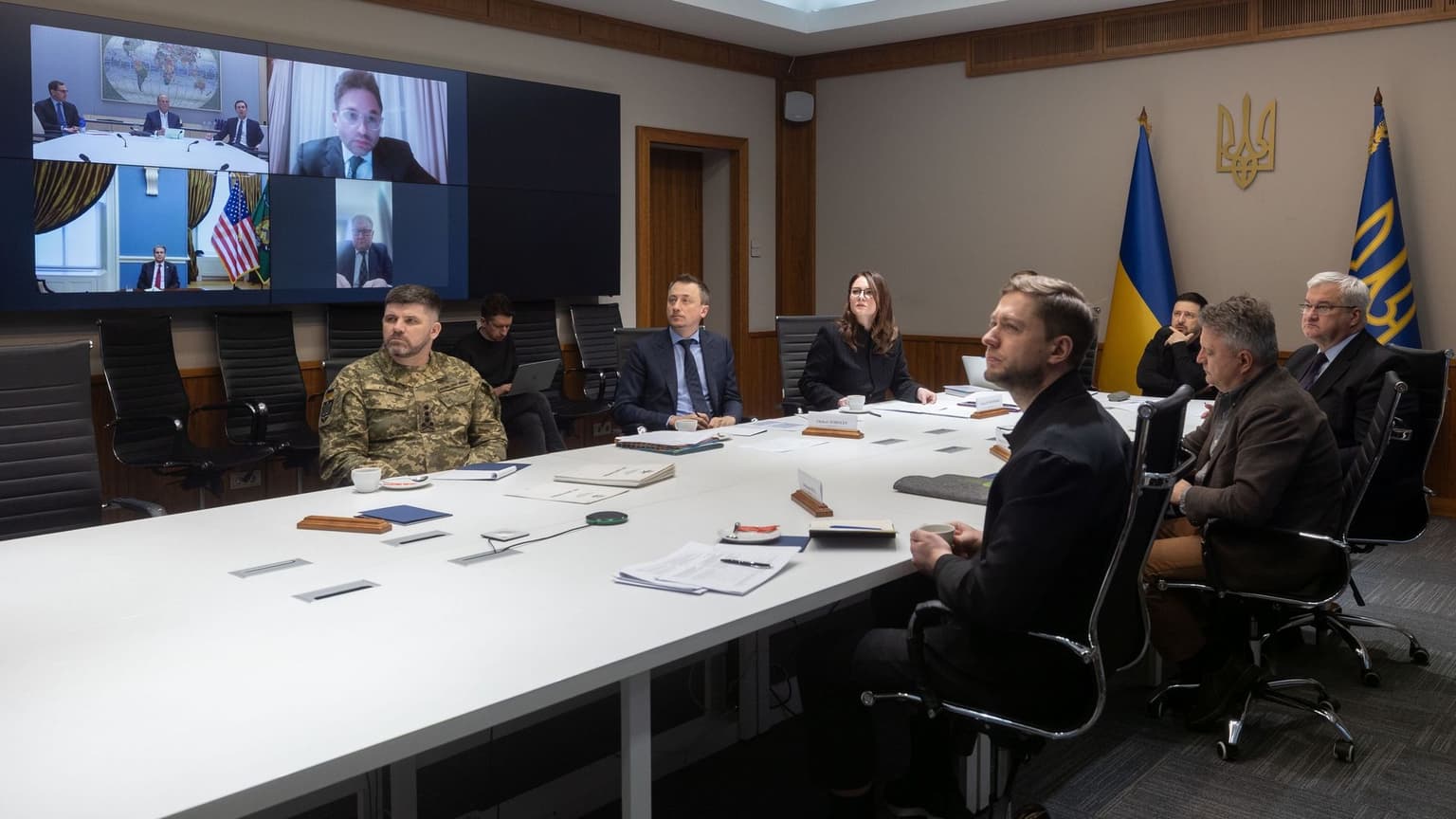
While Russian artillery pounds cities into rubble, Zelensky meets with Treasury Secretary Bessent, BlackRock CEO Fink, and Jared Kushner to plan Ukraine’s reconstruction. The message: investors need security guarantees before pouring billions into rebuilding what Putin keeps trying to destroy. (Volodymyr Zelensky/X)
Lance Corporal George Hooley, 28
U.K. Prime Minister Keir Starmer identified the British soldier killed during weapons testing in Ukraine. Lance Corporal George Hooley, 28, serving with the Parachute Regiment, died in what the Defense Ministry called a “tragic accident” away from combat zones while observing Ukrainian forces test “new defensive capability.”
Speaking in the House of Commons, Starmer said Hooley died after a “tragic accident” away from the front line. British Defense Minister John Healey said he was “devastated by death of U.K. service person in Ukraine.” “My thoughts are with their family, friends and colleagues as they grieve for loved one.”
The presence of British military personnel in Ukraine—even in testing and training roles—reflected deepening integration between Ukrainian forces and Western militaries. These weren’t diplomatic advisors or civilian contractors. They were uniformed soldiers whose expertise helped Ukraine adopt and optimize weapons systems provided by international partners.
“Defensive capability” suggested Ukraine was testing systems designed to counter Russian attacks. British support had included air defense systems, anti-tank weapons, electronic warfare equipment—all categories where testing required exposing personnel to controlled but dangerous conditions.
For Ukrainian forces, foreign military deaths during training created political complications. International support depended partly on publics in supporting nations accepting costs measured in financial terms and equipment transfers. When costs included their own soldiers’ deaths, even in accidents, political dynamics shifted.
Ukraine needed foreign expertise. But also needed minimizing risks to foreign personnel whose deaths could undermine domestic support.
Hooley’s death would likely prompt reviews of safety protocols, potentially slowing weapons testing and training programs at precisely the moment Ukraine needed rapid adaptation to counter Russian tactics.
Unavoidable tension between operational speed and acceptable risk. Tension with no good solution when fighting a war while integrating systems from dozens of international partners.
One British paratrooper. Twenty-eight years old. Killed testing defensive weapons far from the front line. The cost of international support, measured in more than money.
What December 10 Revealed
December 10 revealed Russia’s war had evolved beyond conventional military conflict—simultaneously kinetic combat, economic warfare, diplomatic maneuvering, and Congressional constraints on presidential power.
Moscow’s threats against European military contingents demonstrated the Kremlin’s insecurity about Ukraine receiving meaningful security guarantees. Russia’s rejection of elections it had previously demanded exposed the lie that war was about Ukrainian governance rather than territorial control. Refusal to consider energy infrastructure ceasefire confirmed civilian suffering was deliberate strategy.
Shadow fleet strikes and detention in Odesa showed Ukraine’s maturing capabilities to impose costs on sanction evasion. Congressional constraints on Trump indicated American support wouldn’t disappear regardless of who occupied the Oval Office. Reconstruction discussions signaled Ukraine was treating war’s end as inevitable rather than conditional.
Dual drone campaigns brought war’s reality to Moscow’s residents while demonstrating Russia’s commitment to civilian infrastructure destruction. Russian advances showed Moscow retained offensive capabilities. Ukrainian defensive adaptations demonstrated predicted victories would be slow, bloody, costly.
Trump’s demands for “answers” revealed impatience with negotiations. His questioning of Ukrainian elections suggested he was using democratic legitimacy as pressure. Congressional action complicated his ability to deliver whatever deals he might negotiate with Putin.
Zelensky was building frameworks to constrain eventual settlement terms. By offering commercial opportunities contingent on security guarantees, Ukraine aligned American business interests with Ukrainian security requirements—the transactional arrangement Trump understood.
The 1,386th day revealed structural shifts beneath surface continuity. Congressional constraints on presidential power. Shadow fleet operators reconsidering risks. Transnistria being prepared. Reconstruction planning parallel to combat. Elections as diplomatic leverage.
The question wasn’t whether war would end. The question was what structures would emerge, what lessons would be drawn, what precedents established.
Researchers would spend years interpreting results. But subjects of experiment—soldiers, civilians, families—lived consequences immediately.
The future was being written in real time through threats and negotiations, strikes and detentions, deaths and reconstruction planning. Whether anyone liked what was being written, they would all have to live with it.