
In Moscow, Ryabkov declared Russia would accept nothing less than complete victory while Russian forces advanced into central Kupyansk and infiltrated toward Myrove; in western Zaporizhia, entire battalions were “practically wiped out” with crews stripped from tanks to fill infantry ranks; in Pokrovsk, Ukrainian counterattacks recaptured positions as both sides measured progress in meters on day 1,373—when diplomatic maximalism collided with grinding battlefield reality
The Day’s Reckoning
The words came from Moscow at mid-morning. “There can be no talk of any concessions or any surrender.” Deputy Foreign Minister Sergei Ryabkov wasn’t negotiating. He was issuing an ultimatum for Ukrainian capitulation while Russian forces measured their daily advances in meters.
At the moment Ryabkov spoke, Russian infantry were picking their way through rubble in central Kupyansk. The town they’d been trying to capture for months was finally yielding—slowly, bloodily, street by street. Their supply corridor ran just 4.3 kilometers wide. One Ukrainian counterattack could cut it.
Three hundred kilometers south, Ukrainian soldiers in northwestern Pokrovsk were doing exactly what Moscow said couldn’t happen. They were counterattacking. Recapturing positions. Disrupting Russian timetables. The briefings would note “Ukrainian forces repelled attacks.” The reality was harder and more specific: Ukrainians were taking back ground.
Near Hulyaipole, Ukrainian forces pushed to the highway. In western Zaporizhia, a Russian milblogger was posting what his commanders wouldn’t admit: entire battalion wiped out, three to five survivors from every ten or twelve who attacked, tank crews stripped from vehicles because there weren’t enough infantrymen left breathing.
Moscow demanded total victory. Its forces were consuming soldiers faster than mobilization could replace them.
Day 1373. Russian attacks in dozens of locations. Minimal territorial changes. Catastrophic casualties. Ukrainian counterattacks. Adaptations. Survival. The grinding continued. The arithmetic never changed. Neither side could win this way. Both sides kept fighting.
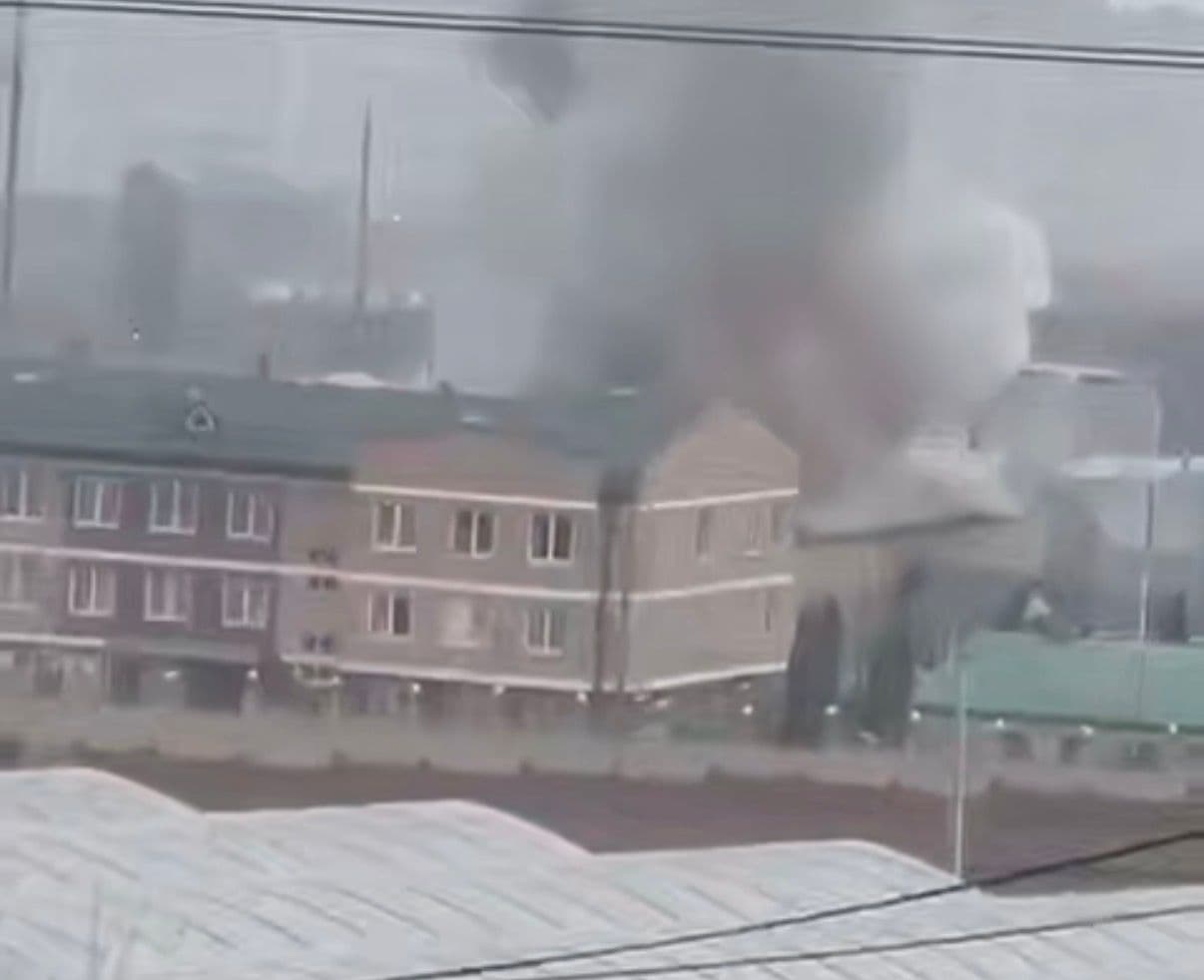
Grozny, Chechnya: Smoke rises from what Russian Telegram channels claim was a Ukrainian drone strike deep inside Russia’s heartland. Even Kadyrov’s fortress city isn’t beyond reach anymore. The war finds new addresses. (Telegram)
The Ultimatum from Moscow
Sergei Ryabkov chose his words carefully on November 27. “There can be no talk of any concessions or any surrender” of Russia’s “key aspects.” The Deputy Foreign Minister wasn’t leaving room for interpretation. The modified US peace proposal—the one diplomats had been quietly circulating for weeks—was dead on arrival.
Russia would achieve its “stated goals” through negotiations, Ryabkov explained. Translation: recognition of annexed territories, Ukrainian neutrality, limits on Ukrainian military capabilities, abandonment of NATO aspirations. Everything Moscow had demanded since February 2022. Nothing had changed.
If negotiations faced “any setbacks,” Russia would continue the war. Ryabkov invoked the “understanding” reached at the Alaska summit—an understanding nobody had publicly confirmed existed. The ambiguity was deliberate. Moscow was claiming American acceptance of Russian terms through diplomatic fog, leveraging closed-door meetings to pressure Ukraine into frameworks that guaranteed Russian victory.
Kremlin Spokesperson Dmitry Peskov added his own carefully calibrated hedge that same day. Asked whether Ukraine and Russia had never been closer to peace, he said “it is too early to say.” The distancing was strategic. Moscow was preparing to reject any compromise that didn’t grant complete control over four Ukrainian oblasts plus Crimea.
The diplomatic choreography revealed Russia’s fundamental calculation: demand capitulation while Russian forces struggled to advance, exploit Western fatigue, shift blame for diplomatic failure onto Ukraine and its allies. Ryabkov’s explicit rejection of “any concessions” came as Russian forces measured daily progress in meters and suffered catastrophic casualties in multiple sectors.
The disconnect was deliberate. Moscow believed it could achieve through diplomacy what it couldn’t secure on the battlefield—provided it maintained the fiction that reasonable Russian proposals were being rejected by intransigent Ukrainian leadership backed by warmongering Western allies.
The inversion was complete. Russia demanded total victory. Its soldiers were dying for meters.
The Railway Line That Became a Border
The Donetska Railway line cuts through Pokrovsk like a scar. It marked where Ukrainian control ended and contested ground began. North of the tracks: Ukrainian positions. South: Russian consolidation. The town had become a geography lesson in incremental loss.
Then Ukrainian forces counterattacked.
A military source reported they’d recaptured key positions in northwestern and western Pokrovsk. Near the railway line in the north, Ukrainian troops advanced and stopped Russian forces from reaching Hryshyne. The counterattacks disrupted Russian timetables. The offensive that was supposed to envelope Pokrovsk within days had stretched into weeks.
7th Rapid Reaction Corps Spokesperson Serhiy Okishev confirmed Ukrainian forces held positions in Pokrovsk with the frontline running largely along the railway. The railway had emerged as the de facto boundary—not through grand strategy but through the arithmetic of who could hold what under sustained pressure.
Russian forces weren’t just attacking Pokrovsk. They were attempting to encircle Myrnohrad simultaneously, attacking from north and south. Myrnohrad City Military Administration Head Yuriy Tretyak reported Russian attacks from the west near Rivne and Svitle. Multi-directional pressure designed to fix Ukrainian defenders in place while tightening the noose.
So Ukrainian forces adapted. They built protective corridors with nets to degrade FPV drone effectiveness. They covered logistics routes with air defenses to intercept reconnaissance and strike drones. They shifted to heavy drones and unmanned ground vehicles for resupply—removing humans from the kill zone.
The shift toward unmanned logistics wasn’t innovation for its own sake. It was survival. Russian drone density had made conventional supply runs suicidal.
Russian forces attacked near Pokrovsk itself, northwest toward Hryshyne, north near Rodynske, across a dozen other locations. The General Staff reported Ukrainian forces struck a Russian manpower concentration in the sector. Elements of multiple Russian brigades were operating across the area, including the 5th Motorized Rifle Brigade in Myrnohrad.
The railway line held. For now.
When Territorial Defense Gets Howitzers
A Russian milblogger posted the inventory. Reserve units in Belgorod Oblast—volunteer self-defense detachments, BARS units, Orlan anti-drone teams—had received their equipment package: howitzers, artillery systems, electronic warfare gear, thermobaric weapons, all-terrain vehicles.
The list didn’t match the mission.
Territorial defense units protecting rear-area infrastructure don’t need howitzers. They don’t need thermobaric weapons. They don’t need assault vehicles. Those are tools for offensive operations, not static defense of bridges and power stations.
Russia was setting conditions to deploy Belgorod Oblast reservists for combat operations in Ukraine. The units nominally assigned to guard critical infrastructure were being equipped to attack. The transformation wasn’t subtle—it was written in the equipment manifests.
The deployment preparations suggested Russian military planners recognized a problem they couldn’t publicly acknowledge: current casualty rates were unsustainable. The front was consuming soldiers faster than standard mobilization could replace them. So, Moscow was reaching deeper into reserve pools, converting territorial defense forces into assault infantry, equipping rear-area units for frontline combat.
Belgorod’s reservists were receiving howitzers because Russia needed bodies more than it needed protected infrastructure.
The math was simple and brutal.
The Offensive That Went Nowhere
Russian forces attacked across northern Sumy Oblast —north of Sumy City near Andriivka and Varachyne, northeast near Yunakivka. Elements of multiple regiments committed to the assaults. They didn’t advance.
The attacks accomplished nothing except consuming resources and revealing Russian operational priorities. A milblogger claimed Ukrainian forces counterattacked near Kindrativka, Yunakivka, and Oleksiivka, suggesting Russian gains—if any existed—lasted hours, not days.
Russian forces were conducting Geran-2 drone strikes against bridges and crossings throughout Sumy Oblast. The targeting pattern was deliberate: degrade Ukrainian logistics, create conditions for future ground offensives, make resupply progressively more difficult and dangerous.
Then came the internal Russian criticism. A milblogger reportedly affiliated with the Northern Grouping of Forces complained publicly about the 2nd Motorized Rifle Regiment’s deployment. The unit was being sent to conduct assaults in the Tetkino-Ryzhivka area—outside its doctrinal role—to support struggling elements of the 1427th Motorized Rifle Regiment. The milblogger also claimed the 810th Separate Naval Infantry Brigade was on the defensive near Oleksiivka, Andriivka, and Kindrativka after its 3rd Battalion conducted a failed counterattack.
The public criticism was unusual. Russian milbloggers rarely detailed tactical failures so explicitly.
Elements of the 34th Motorized Rifle Brigade, 217th VDV Regiment, 83rd Separate VDV Brigade, and Chechen Akhmat Spetsnaz operated across the sector. Multiple regiments attacking. No confirmed advances. Ukrainian counterattacks. Russian internal disputes about force employment.
Northern Sumy remained a sector where Russian numerical superiority produced minimal results.
Infantry Without Armor
Russian forces attacked northeast of Kharkiv City near Vovchansk, Lyman, Vilcha, Zybne, and Synelnykove. No confirmed advances. The pattern had held for almost a year.
A Ukrainian brigade spokesperson explained why. Russian forces weren’t conducting mechanized assaults in the southern Slobozhansk direction anymore. They were using infantry—mainly former convicts—advancing on foot with drones guiding them rather than armored vehicles supporting them.
No tanks. No infantry fighting vehicles. Just men walking toward Ukrainian positions while FPV operators overhead called adjustments.
East of Velykyi Burluk, Russian forces attacked near Dvorichanske, toward Hryhorivka and Kolodyazne. A milblogger claimed Russian forces conducted air and Geran-2 strikes against Ukrainian positions near Ustynivka and Ploske.
The attacks failed to produce territorial changes. Russian forces continued grinding forward with infantry because mechanized operations had proven too costly. The adaptation reflected force degradation masquerading as tactical evolution. Russia was using convicts on foot because it couldn’t afford to lose more armored vehicles.
The Kharkiv sector had become an infantry war by necessity, not choice.
The Corridor That Could Close
Ukrainian military observer Kostyantyn Mashovets reported Russian forces had advanced into central Kupyansk and consolidated positions there. The town Russian forces had been trying to seize for months was finally yielding. Russian forces infiltrated to central Myrove and the northern outskirts of Sobolivka—both settlements west of Kupyansk. The infiltrations suggested Russian intent: establish positions enabling envelopment from the west, cut Ukrainian supply routes, create conditions for encirclement.
Russian forces attacked near Kupyansk itself, east near Petropavlivka, southeast near Pishchane. Multi-directional pressure across the sector.
Then Mashovets added the assessment that mattered: Russian forces’ failure to rapidly seize Kupyansk had placed their troops inside the town at risk of encirclement. The tactical vulnerability was specific and measurable. Russian logistics to Kupyansk depended on a corridor approximately 4.3 kilometers wide near Zapadne, Holubivka, Radkivka, and Kindrashivka—settlements north of Kupyansk where both Ukrainian and Russian forces maintained contested positions.
One Ukrainian counterattack into that narrow corridor could sever supply lines, potentially trapping substantial Russian formations within the town.
Elements of the 347th and 272nd Motorized Rifle Regiments from the 47th Tank Division had intensified attacks east and southeast of Kupyansk to fix Ukrainian forces and prevent massing for counterattacks. The attacks represented Russian recognition of vulnerability. Despite significant effort, these attacks enabled Russian forces to advance only 1.5 kilometers west of Stepova Novoselivka, suggesting Ukrainian defenses remained effective at constraining Russian gains.
A Ukrainian company commander reported Russian forces exploited foggy or rainy weather that degraded Ukrainian drone detection capabilities to conduct assaults. The weather exploitation demonstrated Russian tactical adaptation—they understood clear weather meant Ukrainian drone dominance and death.
Approximately 3,000 civilians remained in the Kupyansk direction, including 560 in Kupyansk itself. A Russian milblogger claimed three FAB-500 UMPK glide bomb strikes hit Ukrainian positions in Podoly. FPV drone operators from the 47th Tank Division continued striking Ukrainian forces. Kub loitering munition operators from the 288th Artillery Brigade maintained pressure.
The corridor remained open. Barely.
A Thousand Still There
Russian forces attacked north of Borova near Bohuslavka and toward Novoplatonivka, east near Kopanky, southeast near Novoyehorivka, Hrekivka, and Novovodyane. The attacks produced no confirmed advances.
About 1,000 residents remained in the Borivska Hromada within the Borova direction. Ukrainian Kharkiv Oblast Military Administration Head Oleh Synehubov reported the figure without elaboration. A thousand people still living in contested territory, waiting to see which side’s artillery would find them first.
FPV drone operators from the Russian 2nd Motorized Rifle Division struck Ukrainian vehicles in Bohuslavka. The drones found targets. The attacks continued. The line didn’t move.
Borova remained what it had been for months: another sector where Russian forces attacked, Ukrainian forces held, and the arithmetic of attrition ground forward without breakthrough.
Where an Entire Army Concentrates
Ukrainian military observer Kostyantyn Mashovets reported Russian forces had advanced in northern Yampil and reached the Siverskyi Donets River south of the settlement. He attributed the advances to Russian numerical superiority in personnel and equipment and exploitation of forested and swampy terrain that provided concealment for infiltration missions. Dense vegetation and difficult ground complicated Ukrainian surveillance while enabling Russian forces to approach positions without detection.
The concentration of force was extraordinary. The Russian military command had massed the entire 25th Combined Arms Army in an 18-to-20-kilometer zone near Yampil. The 67th Motorized Rifle Division, 164th and 169th motorized rifle brigades, 11th Tank Brigade, and two to three motorized rifle regiments of Territorial Forces and Mobilization Reserve—all compressed into a narrow sector. An entire combined arms army squeezed into twenty kilometers. Russian commanders viewed Yampil as critical terrain whose seizure would enable operations against Lyman from the southeast.
Russian forces attacked near Lyman itself, northwest near Korovii Yar, Novoselivka, Drobysheve, and Serednie and toward Yarova, north near Ridkodub, Stavky, and Karpivka, east near Zarichne and Torske, southeast near Yampil and toward Ozerne. The geographic spread encircled Lyman from multiple directions, maintaining pressure along a broad arc. A milblogger claimed Ukrainian forces counterattacked near Drobysheve.
Elements of the 20th Combined Arms Army, including the 144th Motorized Rifle Division and attached elements from the 1st and 15th Motorized Rifle Regiments, had failed to advance more than several hundred meters near Serednie in recent weeks. The minimal progress despite weeks of effort suggested Ukrainian defenses remained robust. Russian forces consumed substantial resources for negligible territorial gain—hundreds of meters after weeks of attacks.
A Ukrainian brigade spokesperson reported Russian forces were intensifying drone-supported infantry attacks, likely attempting to meet deadlines imposed by senior commanders. The spokesperson noted Russian assault forces included poorly trained ex-convicts who often attacked without body armor, while properly equipped infantry were almost always Spetsnaz elements.
Expendable convicts to find the defenses. Spetsnaz to exploit the breaches.
Interdicting the Road to Siversk
Russian forces attacked near and within Siversk itself, northwest near Dronivka and toward Zakitne, northeast near Serebryanka, southeast near Vyimka, south near Svyato-Pokrovske, southwest near Sakko i Vantsetti. The attacks produced no confirmed advances.
A Russian milblogger claimed Russian forces were conducting regular artillery, drone, and air strikes to interdict Ukrainian ground lines of communication from Slovyansk through Rai-Oleksandrivka toward Siversk. The targeting was deliberate: make resupply progressively more difficult, degrade Ukrainian logistics, create conditions for future offensives.
In the Kostyantynivka-Druzhkivka tactical area, Russian forces attacked near and within Kostyantynivka itself, across a dozen other settlements from Chasiv Yar to Novopavlivka. No advances confirmed.
Drone operators of the 238th Artillery Brigade and 242nd Motorized Rifle Regiment coordinated loitering munition strikes. FPV drone operators from the 8th Separate Spetsnaz Battalion continued operations in the Kostyantynivka direction.
The attacks continued. The interdiction campaigns intensified. Russian forces struck logistics routes, hammered defensive positions, and launched assaults across wide fronts.
The lines didn’t move. Siversk remained Ukrainian. The road from Slovyansk stayed open—contested, dangerous, but open.
Expanding the Kill Zone
Russian forces attacked east of Dobropillya near Shakhove and Nove Shakhove, toward Vilne, southeast near Dorozhnie and Zapovidne. No advances confirmed.
In the Novopavlivka direction, Russian forces attacked near Novopavlivka itself, northeast near Muravka, south near Filiya, Yalta, and Dachne, southwest near Zelenyi Hai and Ivanivka. Again, no confirmed advances.
A Ukrainian drone battalion commander operating in Novopavlivka reported Russian forces were attempting to expand the “kill zone” to Slovyanka and the E-50 Pokrovsk-Pavlohrad highway. The phrasing was precise and ominous. Not “advance toward” or “attack toward” but “expand the kill zone”—the area where Russian fires could reach Ukrainian logistics and movement.
Elements of the 90th Tank Division were attacking toward Novopavlivka. The attacks continued without breakthrough. The kill zone expanded incrementally, meters at a time, defined not by territory seized but by where Russian artillery and drones could strike.
The highway remained beyond consistent Russian interdiction range. Ukrainian logistics still flowed. The expansion continued, measured in fire support range rather than infantry positions.
Pressure on Pokrovske
Russian forces attacked southeast of Velykomykhailivka near Sosnivka and Vorone, southwest near Oleksiivka and Verbove. No advances confirmed.
A Ukrainian brigade commander operating in the direction reported Russian forces were concentrating efforts on attacking toward Pokrovske. The Russians were employing the full toolkit: missile and bomb strikes, air strikes, drone and loitering munition interdiction against Ukrainian ground lines of communication. Elements of several combined arms armies operated across the sector.
The concentration of forces from multiple armies suggested Russian commanders viewed Pokrovske as critical terrain. The interdiction campaigns aimed to isolate Ukrainian defenders before ground assaults arrived. Degrade logistics. Cut supply routes. Create conditions for encirclement.
The attacks continued without breakthrough. Ukrainian logistics adapted. The highway remained contested but functional. Russian fires intensified but Ukrainian forces held positions.
Velykomykhailivka remained another sector where Russian numerical superiority and firepower concentration produced pressure without decisive results.
Looking at this Hulyaipole section, it’s complex with important details about Ukrainian success and Russian casualties—needs 250-280 words.
One of the Few Ukrainian Advances
A Ukrainian military source reported Ukrainian forces had advanced to the T-0401 Pokrovske-Hulyaipole highway west of Danylivka. The advance represented one of the few confirmed Ukrainian territorial gains of the day.
Russian forces attacked near Hulyaipole itself, northwest near Zarichne, north near Yablukove, Dobropillya, and Rivnopillya and toward Zelene and Varvarivka, northeast near Solodke, Krasnohriske, and Pryvilne, east near Zatyshshya, Zelenyi Hai, Vesele, and Vysoke. Milbloggers claimed Ukrainian forces counterattacked from Solodke to Rivnopillya and near Vidradne.
Ukrainian Southern Defense Forces Spokesperson Vladyslav Voloshyn reported Ukrainian forces withdrew to more advantageous positions near Vysoke but Russian forces had not seized the village. Voloshyn stated Russian forces could not bring reinforcements into Vysoke despite Ukrainian withdrawal. Ukraine’s Southern Defense Forces reported Russian forces were exaggerating claims of advance for informational effects though the situation remained tense.
Then came the casualty assessment: Ukrainian forces were inflicting 250-300 casualties on Russian forces per day in the sector. Russian forces had not encircled Ukrainian positions.
Russian milbloggers claimed FAB-500 glide bomb and TOS-1A thermobaric artillery strikes near Hulyaipole. Drone operators from the 11th Air Force and Air Defense Army struck Ukrainian positions near Andriivka and Hulyaipole. Elements of the 127th Motorized Rifle Division and 143rd Motorized Rifle Regiment operated across the Hulyaipole and Zaporizhia directions.
The sector told a different story than most. Ukrainian forces advanced. Ukrainian forces withdrew to better positions when necessary. Russian forces attacked with heavy fires but couldn’t bring reinforcements forward. And Ukrainian forces inflicted 250-300 Russian casualties daily.
Hulyaipole remained contested. But Ukrainian forces were holding—and occasionally pushing back.
Practically Wiped Out
Russian forces attacked south of Orikhiv near Novodanylivka, southwest near Novoandriivka, west near Prymorske. No advances confirmed.
Then came the milblogger post that Russian commanders wouldn’t acknowledge publicly. An unspecified battalion operating in the Zaporizhia direction was “practically wiped out” with only company and platoon commanders and NCOs remaining. The assessment was specific and devastating.
Reinforcements arriving from training grounds were attacking Stepnohirsk. Of ten to twelve newly arrived soldiers, only three to five survived. The milblogger claimed the Russian military command was transferring combat vehicle gunners to infantry assaults, leaving many vehicles without crews.
The report revealed tactical-level collapse masked by operational-level statistics. Russian forces weren’t just suffering high casualties—they were consuming entire units, stripping crews from armored vehicles to fill infantry ranks, and feeding inadequately trained reinforcements into assaults that killed most of them within hours or days of arrival.
Elements of the 71st Motorized Rifle Regiment operated in Novodanylivka. Elements of the 7th VDV Division operated in the Orikhiv direction. The unit designations continued appearing in daily reports. The milblogger’s assessment suggested those unit designations increasingly represented administrative fictions rather than combat-effective formations.
Western Zaporizhia had become a sector where Russian numerical superiority translated into catastrophic casualties without territorial gains. The attacks continued. The reinforcements arrived. Most of them died. The vehicles sat empty because their gunners were now dead infantrymen.
The arithmetic was unsustainable. Moscow kept feeding soldiers into the sector anyway.
The Quiet Sector
Russian forces attacked east of Kherson City near the Antonivskyi Bridge. No advances confirmed. The attacks remained limited—probing operations rather than major assaults.
Drone operators and other elements of the 98th VDV Division operated in the Kherson direction. The unit maintained presence without committing to large-scale ground operations.
Kherson remained what it had been for months: a sector where Russian forces conducted harassment operations, launched drones and artillery strikes against civilian areas, but avoided substantial ground attacks that might expose forces to Ukrainian counterattacks across difficult terrain.
The bridge remained contested. The line didn’t move.
Looking at this Occupation Developments section, it has two distinct stories—medical collapse and child deportation. This needs 150-180 words to give both proper weight.
Tuberculosis and Stolen Children
A Ukrainian partisan group posted details of medical staffing shortages in occupied Luhansk Oblast. A subscriber reported tuberculosis outbreaks due to lack of medical personnel and medicines. The most basic surgeries had become impossible to obtain.
The medical crisis revealed occupation’s reality beyond frontline combat. Russian control meant health infrastructure collapse, disease outbreaks, and inability to provide basic medical care. Moscow couldn’t administer the territories it claimed to be “liberating.”
The Center for National Resistance reported approximately 400 Ukrainian children would be sent to Russia from occupied Zaporizhzhia Oblast by year’s end through a mandatory exchange program. Parents had no opportunity to influence the organization of such exchanges. Russian officials framed the deportations as an “interregional exchange of educational and sports activities.” The children would be sent to Russia’s Yaroslavl Oblast.
The language—”exchange program,” “educational and sports activities”—obscured forced deportation. Four hundred Ukrainian children removed from their families and sent to Russia under the pretense of cultural exchange. The Geneva Conventions call this a war crime. Russia called it educational cooperation.
Occupation meant tuberculosis outbreaks and stolen children. The arithmetic of Russian control.
What November 27 Revealed
Two contradictory realities existed simultaneously. Ryabkov demanded unconditional surrender in Moscow while Russian forces in Kupyansk depended on a 4.3-kilometer-wide supply corridor one Ukrainian counterattack could sever. Moscow insisted on complete victory while Russian milbloggers posted about battalions “practically wiped out” in western Zaporizhia Oblast with vehicle crews stripped to fill infantry ranks.
The disconnect wasn’t diplomatic posturing. It revealed Russia’s fundamental strategic problem: the Kremlin couldn’t achieve through force what it demanded through negotiation, yet refused to accept anything less than total victory.
Ukrainian adaptations told their own story. Protective corridors with nets against drones. Unmanned ground vehicles for logistics. Counterattacks in Pokrovsk recapturing positions. Advances near Hulyaipole. Inflicting 250-300 Russian casualties daily in some sectors. These weren’t defensive actions of a collapsing force—they were tactical innovations of an army learning to survive and occasionally push back.
Russian mobilization of Belgorod Oblast reserves equipped with howitzers and thermobaric weapons suggested Moscow recognized current casualty rates couldn’t be sustained. Reports of reinforcements arriving from training grounds with ten to twelve soldiers but only three to five surviving their first assault indicated force quality had degraded to the point where numerical superiority translated into catastrophic casualties without territorial gains.
The medical crisis in occupied Luhansk Oblast—tuberculosis outbreaks, inability to conduct basic surgeries—combined with forced deportation of 400 Ukrainian children revealed what Russian occupation actually meant beyond propaganda claims.
Day 1373 ended without resolution. Russian diplomatic maximalism demanded impossible terms. Battlefield operations produced minimal changes at catastrophic cost. Both sides remained locked in positional combat neither could decisively win.
The fundamental question persisted: whether Western support would enable Ukrainian transition to liberation operations, or whether resource constraints would eventually force negotiations from weakness.
The grinding continued. The arithmetic never changed. And nobody could predict when—or how—it would end.