
Russia launched its largest aerial assault in months—704 missiles and drones targeting Ukrainian energy infrastructure, railway stations, and civilian facilities on St. Nicholas Day—even as negotiators in Miami spoke of Moscow’s need to demonstrate “good faith commitment to peace.”
The Day’s Reckoning
St. Nicholas Day began in darkness.
At 1:30 a.m., air raid sirens wailed across Kremenchuk. Kinzhal hypersonic missiles streaked toward the city of 215,000. By dawn, 704 Russian missiles and drones were airborne—targeting power stations, railway hubs, and apartment blocks across Ukraine. A holiday for children became a demonstration of Russia’s vision for peace.
In Miami, negotiators spoke carefully about Russia’s need to show “good faith commitment.” In Fastiv, Russian missiles obliterated the railway station where commuters would have caught morning trains to Kyiv. In Chornobyl, international inspectors documented how February’s drone strike had crippled the protective dome containing reactor No. 4’s radioactive remains. In occupied Zaporizhzhia, Russian forces cut power to Europe’s largest nuclear plant—again.
The arithmetic was brutal: 704 projectiles launched, 585 shot down, sixty strikes landing, twenty-nine locations hit. Energy facilities throughout eight oblasts went dark. Rolling blackouts spread nationwide. A 50-year-old man died in his home in Chernihiv. An 11-year-old boy was wounded in Nikopol. Warehouses storing food and medicine burned in three oblasts.
While diplomats discussed territorial compromises, Ukrainian forces raised their flag in northern Pokrovsk—still holding despite Russian encirclement attempts. While Russia spoke of ceasefire terms, Ukrainian drones struck the Ryazan Oil Refinery for the ninth time this year. While Moscow’s envoys outlined peace proposals, Ukrainian hackers erased 165 terabytes of Russian logistics data.
Day 1,382 revealed Russia’s definition of negotiation: maximum violence as diplomatic leverage. Talk peace, destroy infrastructure. Offer ceasefires, launch 704 missiles. Demand territory you couldn’t capture through combat.
Ukraine’s answer came in multiple domains simultaneously—air defense batteries firing, drones penetrating hundreds of kilometers into Russia, cyber warriors dismantling enemy logistics, infantry holding contested ground building by building.
The distance between words and weapons had never been wider. The gap between diplomatic rhetoric and battlefield reality had never been more impossible to ignore.
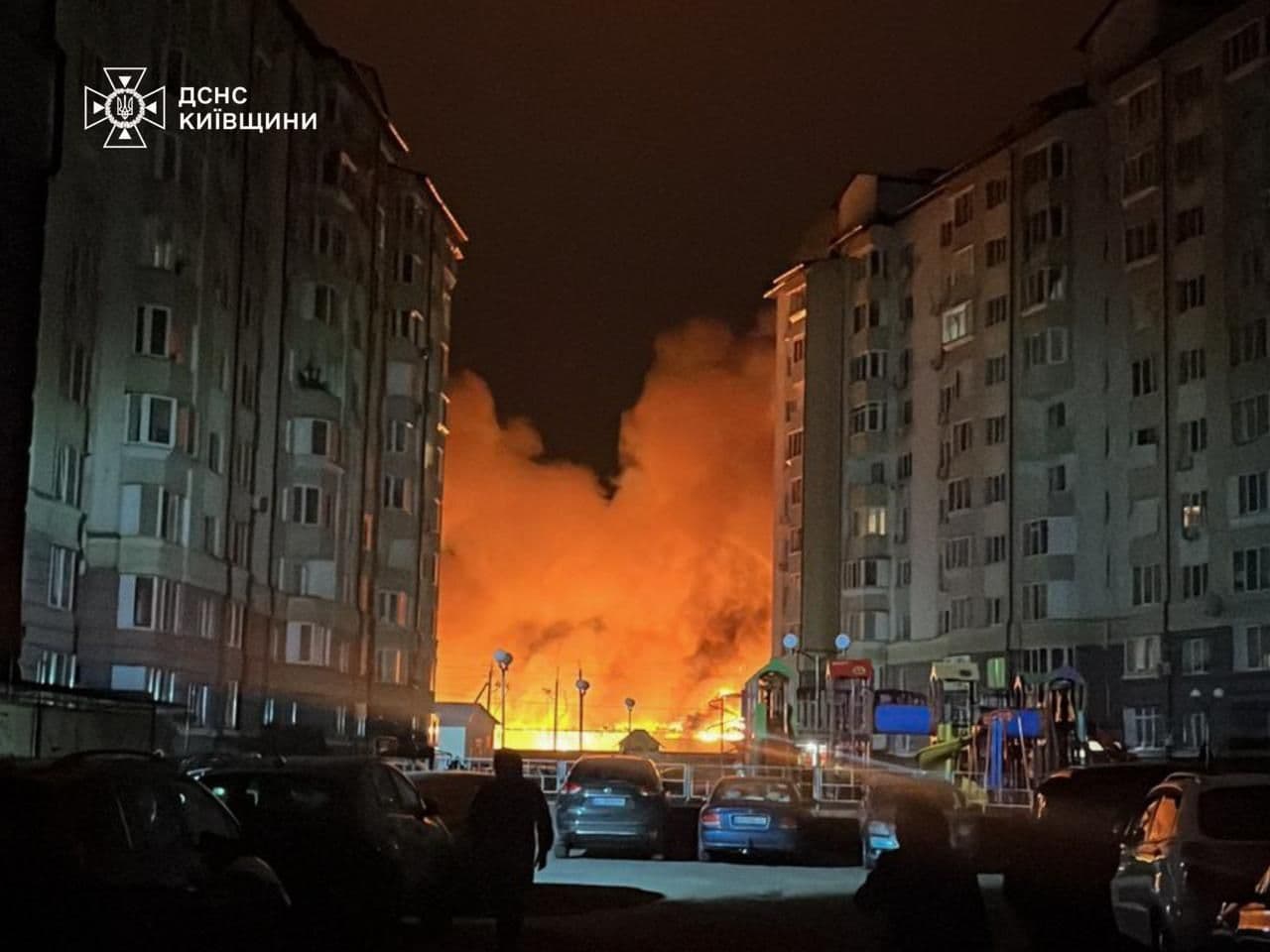
Dawn in Kyiv Oblast: Smoke rises from what was once a warehouse. Seven hundred four missiles and drones launched overnight—this is what Russia calls negotiating in good faith. (Ukraine’s State Emergency Service)
Seven Hundred Four Ways to Say “Peace”
The drones began lifting off at dusk on December 5. From Kursk, Oryol, and Bryansk. From Millerovo deep in Rostov Oblast. From occupied Crimea. Six hundred fifty-three Shahed and Gerbera drones, engines whining.
Then the missiles: three Kinzhal hypersonics screaming from 40,000 feet, thirty-four cruise missiles riding low, fourteen ballistic missiles arcing through space. Seven hundred four projectiles total. All aimed at Ukraine. All launched on St. Nicholas Day.
Ukrainian air defense crews tracked them through the night—radar operators watching screens bloom with threats, S-300 batteries swiveling skyward, mobile gun systems racing to intercept points. By morning: 585 destroyed, drones shredded mid-flight, missiles exploding before impact.
But 119 got through.
The targeting pattern revealed Russia’s strategy: substations in eight oblasts, electrical distribution nodes linking regional grids, chokepoints whose destruction would cascade nationwide. Not military installations. Civilian infrastructure. The facilities keeping Ukrainian homes warm and lit in December.
By morning, six oblasts went dark—Odesa, Chernihiv, Kyiv, Kharkiv, Dnipropetrovsk, Mykolaiv. Rolling blackouts spread everywhere else. Anatoliy Zamulko from Ukraine’s energy inspectorate noted Russian precision: strikes specifically targeted “facilities that redistribute electricity between Ukrainian regions.” Maximum disruption from minimum hits.
The Fastiv railway station—obliterated. Not freight. The passenger terminal where commuters catch morning trains to Kyiv. “Electric commuter trains connecting Kyiv with its suburbs,” Ukrzaliznytsia Chairman Oleksandr Pertsovsky emphasized. President Zelensky called it “militarily senseless.”
The military sense was obvious: terrorize civilians, destroy winter infrastructure, make life unbearable.
The casualties arrived in fragments: a 50-year-old man dead in his Chernihiv home, an 11-year-old boy wounded in Nikopol, two women injured north of Kyiv, a 42-year-old man catching shrapnel in Fastiv. Warehouses burning in three cities—food and medicine for winter going up in smoke.
Night fell. Russian drones returned to Chernihiv—bombing the same targets twice in twenty-four hours. Explosions echoed through Fastiv again, the city where morning missiles had destroyed the train station.
Seven hundred four projectiles on a children’s holiday. The sixth massive attack on power plants since October. This was Russia’s good faith.
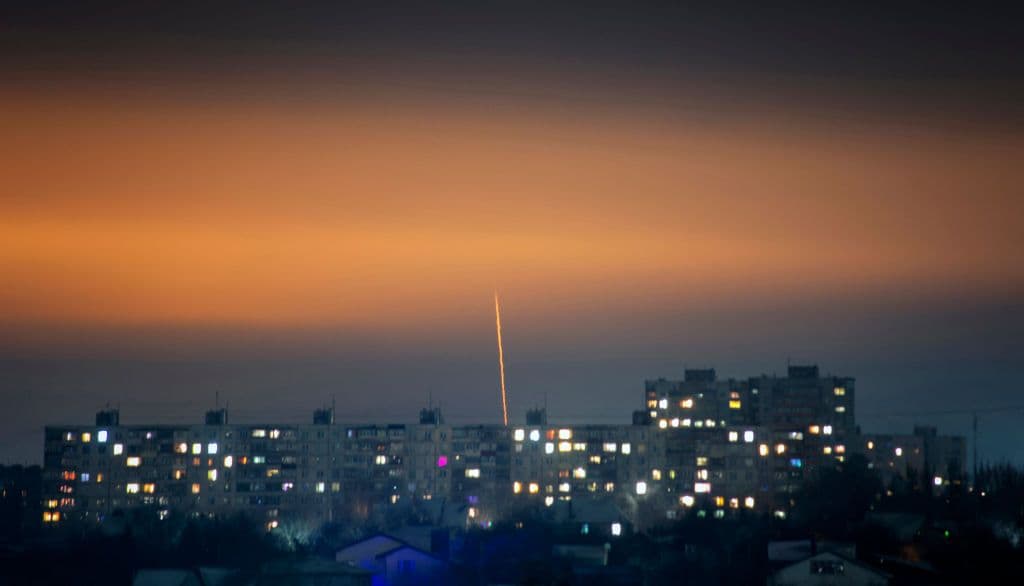
A missile screams toward Kharkiv from Russia’s Belgorod Oblast. Somewhere below, air raid sirens wail and people run for shelter. This is day 1,382. (Vadym Bielikov/AFP via Getty Images)
The Ninth Time’s Still the Charm
While Russian missiles demolished Ukrainian railway stations, Ukrainian drones were already airborne—heading northeast toward Ryazan.
The strike hit just after midnight. Explosions rippled through the Ryazan Oil Refinery’s low-temperature isomerization unit, the facility that turns crude oil into gasoline. Flames lit up the night sky 196 kilometers southeast of Moscow. Secondary blasts followed as fire spread to hydro processing units, catalytic crackers, and reforming equipment.
This was the ninth Ukrainian strike on Ryazan in 2025 alone.
The refinery processed 17.1 million tons of crude annually—five percent of Russia’s total capacity. It pumped out gasoline, diesel, jet fuel, and aviation fuel for Russian Aerospace Forces. Every successful strike degraded Russian logistics, complicated fuel supplies to frontline units, and demonstrated Ukrainian ability to reach deep into Russian territory despite Moscow’s air defenses.
Ryazan Oblast Governor Pavel Malkov claimed drone debris fell on an industrial site with no damage. Russian Defense Ministry announced twenty-nine drones shot down overnight. Translation: Ukrainian forces launched a substantial aerial assault, and most got through.
The systematic campaign—hitting the same refinery nine times in one year—sent a clear message: Ukrainian drones would return. Again and again.
Three hundred kilometers south, Ukrainian drones struck the Alchevsk Metallurgical Plant in occupied Luhansk. The facility produced artillery shell casings—mundane components, perhaps, but critical ones. Russian forces fired tens of thousands of shells daily. Disrupt casing production, create ammunition bottlenecks downstream.
Occupation authorities confirmed “a drone exploded in an industrial area” while insisting nothing important was hit. The confirmation and the denial, delivered simultaneously.
Then came the cyberattack.
Ukrainian military intelligence’s BO Team hit Eltrans+, a logistics company serving over 5,000 Russian businesses. Seven hundred computers and servers—down. One thousand user accounts—deleted. One hundred sixty-five terabytes of data—gone. Surveillance footage, cargo declarations, shipping manifests—all wiped.
Eltrans+ moved sanctioned goods and Chinese electronic components to Russian military factories. The components that build Russian drones and precision weapons. Now the company’s logistics network was blind, its data architecture destroyed, its business operations paralyzed.
The company’s website came back online briefly. It displayed a message congratulating Russian users on Ukraine’s Armed Forces Day. Then went dark again.
Kinetic strikes on refineries and factories. Cyber operations erasing logistics data. Ukraine was fighting across multiple domains simultaneously—and striking hundreds of kilometers inside Russian territory while defending against massive aerial assault at home.
Russia launched 704 missiles at Ukraine that night. Ukraine answered with drones, hackers, and the ninth strike on a refinery Moscow couldn’t protect.
Talking Peace While Launching Missiles
In Miami on December 4-5, US State Department officials and Ukrainian National Security Council Secretary Rustem Umerov crafted careful language about “Russia’s readiness to demonstrate good faith commitment to long-term peace.”
In Fastiv on December 6, Russian missiles obliterated the railway station.
The joint statement outlined security arrangements frameworks, deterrence capabilities, reconstruction agendas—reasonable objectives calibrated between security needs and diplomatic pragmatism. Umerov reaffirmed Ukraine’s priority: peace that protects independence and sovereignty.
Russian forces demonstrated their interpretation of “good faith” with 704 missiles and drones.
Commander-in-Chief Oleksandr Syrskyi told Sky News that just peace requires ceasefire first, negotiations second. The formulation rejected surrendering territory as a precondition for talks. Syrskyi warned Russia was using negotiations as “cover” to seize more land by force—prosecuting maximum violence while discussing peace terms.
The numbers supported his assessment: Russia deployed over 710,000 troops, losing 1,000 to 1,100 soldiers daily—most killed, not wounded. Moscow was accepting catastrophic casualties for incremental gains before any ceasefire could freeze positions.
Then came the fundamental questions about guarantees. Russia had violated the Budapest Memorandum. Russia had broken multiple ceasefires. Russia had demonstrated systematic contempt for every previous commitment. President Zelensky noted discussions focused on “removing the threat of a third Russian invasion, as well as the threat of Russia reneging on its promises, as it has done many times in the past.”
What guarantees could have meaning against that record?
The territorial question loomed largest. Moscow insisted Ukraine withdraw from parts of Donetsk it still controlled—demanding Ukraine surrender additional territory beyond what Russia had captured. The asymmetry was stark: Russia wanted territorial concessions as the price for ending a war it started.
Ukrainian Ambassador Olha Stefanishyna acknowledged “the main challenging issues concern territorial matters and security guarantees,” seeking solutions that were “realistic, fair, and sustainable.”
Defining those terms proved difficult when one party launched 704 missiles the night before talks.
For Ukraine, the calculus was brutal: refuse negotiations and concede moral high ground, or negotiate under bombardment and risk appearing weak. The solution—ceasefire before substantive talks, battlefield defense while pursuing diplomatic channels—walked a razor’s edge.
Russia’s position was simpler: talk peace, prosecute maximum violence, demand territorial rewards for aggression, accept no guarantees that constrain future invasions.
Day 1,382 exposed the distance between diplomatic rhetoric and battlefield reality. Words said one thing in Miami. Weapons said something entirely different in Fastiv.
The Flag That Still Flies
Three Ukrainian soldiers climbed through rubble on Yakuba Kolasa Alley in northern Pokrovsk. Debris crunched underfoot. Walls gaped where windows once stood. They reached the rooftop and raised the flag.
Geolocated footage confirmed it: Ukrainian forces still held positions inside the town.
Commander-in-Chief Syrskyi confirmed it too. Ukrainian troops maintained their grip on northern Pokrovsk—and limited positions in Myrnohrad to the east. Russian milbloggers reluctantly acknowledged the same reality their commanders didn’t want to admit.
But a Ukrainian drone battalion chief told The Telegraph what the maps couldn’t show: there was no front line anymore. Ukrainian and Russian positions existed in “pockets,” interspersed among neighboring buildings, sometimes separated by a single wall or courtyard. Russian forces had infiltrated between Ukrainian strong points without completing encirclement.
The tactical geometry created a logistics nightmare.
Russian artillery and drones could interdict supply routes from multiple directions. Ukrainian drone operators tried running unmanned ground vehicles through the gauntlet—small robotic carriers hauling ammunition and supplies. They carried less cargo than trucks and survived maybe two or three missions before Russian fire destroyed them.
A servicemember put it bluntly to The Telegraph: the robots weren’t enough.
Then came the reports of Russian soldiers wearing blue armbands—Ukrainian colors. Perfidy. A Geneva Convention violation. Disguising yourself as the enemy to gain tactical advantage crosses the line from combat to war crime. That Russian forces were willing to commit war crimes for minor tactical edge suggested desperation masked as audacity.
Russian strikes hammered positions throughout the Pokrovsk salient: the town center, northwest toward Hryshyne, north near Rodynske, northeast near Chervonyi Lyman, east in Myrnohrad, southwest near multiple settlements. Glide bombs. Artillery. Drones. Ukrainian forces counterattacked near Bilytske, pushing back where possible.
The calculation was brutal: hold Pokrovsk and complicate Russian westward advances, or withdraw and preserve forces for battles ahead. Staying meant accepting casualties in a pocket where logistics moved through robot carriers that barely survived their third mission. Leaving meant surrendering ground without forcing Russia to pay for every meter.
The flag still flew on Yakuba Kolasa Alley. For now, that was answer enough.
The Dome That Can No Longer Protect
IAEA inspectors spent the week of November 28 to December 5 examining what a Russian drone had done to Chornobyl nine months earlier. They climbed scaffolding around the New Safe Confinement structure—the massive steel arch engineered to contain reactor No. 4’s radioactive remains for a century. They documented fire damage to the outer cladding. They measured structural integrity. They assessed containment capabilities.
Director General Rafael Grossi delivered the verdict: the shelter could no longer fulfill its primary safety functions.
The February 14 drone strike had caused a fire that burned through protective layers. The damage compromised the fundamental purpose of a structure designed to prevent radioactive material from leaking into the environment. Chornobyl remained one of Earth’s most contaminated sites—requiring intact containment infrastructure to prevent catastrophe spreading far beyond Ukraine’s borders.
Grossi emphasized the plant needed “comprehensive repairs to ensure long-term nuclear safety.” Translation: the situation was dangerous and getting worse.
Three hundred kilometers southeast, the overnight Russian assault cut power to the occupied Zaporizhzhia Nuclear Power Plant. One of two lines supplying Europe’s largest nuclear facility—disconnected. The 330-kilovolt line came back after thirty minutes. The 750-kilovolt line stayed dead.
This was the eleventh time since the war began that ZNPP lost all off-site power.
Russian forces had occupied the plant since March 2022, transforming it into a military shield. They operated from the facility grounds, using its protected status to shelter equipment and personnel while creating persistent nuclear safety risks. Their own strikes on Ukrainian energy infrastructure regularly forced ZNPP into emergency protocols—protocols designed for accidents, not deliberate attacks.
The pattern was unmistakable: Russia was willing to compromise nuclear safety for military advantage.
The February Chornobyl strike served no military purpose. The facility housed no Ukrainian forces, contained no weapons, threatened no Russian positions. A drone deliberately targeted the protective dome over history’s worst nuclear accident site—either spectacular recklessness or deliberate nuclear terrorism.
Now inspectors confirmed what the fire damage suggested: the containment was failing. Radioactive material sat exposed beneath a compromised structure, protected by a dome that could no longer protect.
Russia called this good faith.
The Shopping List Moscow Took to New Delhi
Russian Deputy Prime Minister Denis Manturov laid out Moscow’s needs: 800,000 workers for manufacturing, 1.5 million for trade, construction, and services. Russia would accept an “unlimited number” of Indian migrant workers under a new bilateral agreement.
The labor shortage had a simple cause: the war was consuming Russian manpower faster than the economy could replace it.
But Manturov’s announcement was just the opening ask. Sergey Chemezov, head of state defense conglomerate Rostec, revealed Russia was discussing localizing drone production in India—including Lancet loitering munitions. The same Lancets that had killed thousands of Ukrainian soldiers. Producing them in India would expand Russian capabilities while circumventing Western sanctions.
President Putin reinforced the trajectory in an India Today interview: Russia wasn’t just selling military equipment to India but sharing technology for shipbuilding, missile manufacturing, and aircraft production. India already produced Russian T-90 tanks and Russian-Indian BrahMos cruise missiles domestically. The pattern suggested expanding joint production to drones Russia would deploy on Ukrainian battlefields.
A delegation from Russia’s Smolensk Oblast FPV Drone Piloting Center arrived in Goa to discuss training Indian drone operators. Meanwhile, occupation authorities in Kherson discussed attracting Indian migrant workers to strengthen agriculture in seized Ukrainian territory—integrating occupied land into international trade networks.
India was joining Russia’s expanding coalition of war enablers. China was already localizing Garpiya drone production, providing components critical to Russian drone manufacturing. North Korea had begun mass-producing FPV and strike drones—possibly for transfer to Russia—while sending soldiers, artillery shells, missiles, and migrant workers to Alabuga Special Economic Zone, where Russia produced Shahed drones.
The G7 and EU were considering replacing the oil price cap with an outright ban on maritime services for Russian crude exports. No Western insurance, no Western tankers—regardless of price.
Energy analyst John Gawthrop expressed skepticism: two-thirds of Russian crude already moved on shadow fleet vessels. “It’s a grand gesture that sounds good, and it will no doubt be an extra layer of hassle for Russia,” he observed. “But it won’t kill Russian exports.”
Russia was building alternative networks faster than the West could close existing ones. Indian workers, Indian factories, Chinese components, North Korean soldiers, shadow fleet tankers—Moscow was constructing a war economy beyond Western reach.
The shopping list had leaked. The strategy hadn’t changed.
What December 6 Revealed
Two wars happened simultaneously on day 1,382.
In Miami, diplomats crafted statements about Russian “good faith commitment to peace.” In Fastiv, Russian missiles demolished the railway station. In Chornobyl, inspectors documented how February’s drone strike had crippled the protective dome over reactor No. 4. In Zaporizhzhia, Russian forces cut power to a nuclear plant—for the eleventh time. In Ryazan, Ukrainian drones struck the oil refinery—for the ninth time this year.
Seven hundred four missiles launched. Five hundred eighty-five shot down. One hundred sixty-five terabytes of Russian logistics data erased. One flag still flying in northern Pokrovsk.
The day distilled Russia’s approach to warfare: diplomacy and violence aren’t alternatives but complementary tools toward the same end. Launch massive attacks while pursuing negotiations. Destroy civilian infrastructure while speaking of peace terms. Continue offensive operations while demanding territorial concessions. Use talks as cover for seizing more land.
The aerial assault’s targeting revealed systematic planning to weaponize winter. Energy facilities in eight oblasts, substations redistributing power between regions, railway stations serving commuters, water and heating systems in major cities—all struck on St. Nicholas Day, a children’s holiday. Russia’s message: no Ukrainian celebration proceeds without Russian violence.
Yet Ukraine shot down 83 percent of incoming threats while simultaneously striking refineries, factories, and logistics networks hundreds of kilometers inside Russia. Multi-domain warfare: air defense batteries firing, drones penetrating deep into Russian territory, hackers dismantling enemy infrastructure, infantry holding contested positions building by building, diplomats engaging in peace talks. Strategic sophistication matching Russian numbers with Ukrainian adaptability.
The Chornobyl revelation exposed Russia’s nuclear recklessness—attacking the protective structure containing history’s worst nuclear accident for no military purpose. Deliberate terrorism or spectacular carelessness? Either answer was terrifying. Any peace agreement must address nuclear security, yet Russia’s demonstrated contempt for safety norms raised questions about enforcement that no treaty language could answer.
The India developments showed Russia constructing alternative networks beyond Western sanctions reach: unlimited migrant workers, localized drone production, expanding military-technical cooperation. Add Chinese components, North Korean soldiers and ammunition, shadow fleet tankers. The G7 considered maritime service bans, but analysts noted Russia already moved two-thirds of its oil outside Western systems. Moscow was adapting faster than the West could isolate.
Pokrovsk encapsulated the war’s brutal arithmetic: Ukrainian forces holding positions despite Russian infiltration, logistics strangled by interdiction, supplies moving on robots that survived maybe three missions. The tactical geometry—interlocking positions, no clear front lines, battles fought building by building—suggested neither side could achieve breakthrough. Just grinding attrition, catastrophic casualties for incremental gains.
The unanswered questions: Can you negotiate with an adversary demonstrating systematic bad faith? Can ceasefire-first positions bridge gaps when one party demands territorial rewards for aggression? Can Ukrainian multi-domain operations impose costs sufficient to change Russian calculations? Can peace be constructed while violence continues?
Day 1,382 proved only that the distance between words and weapons had never been wider, that Russia viewed negotiations as another battlefield, that Ukraine would fight on every front simultaneously, and that this pattern would continue until the costs of aggression exceeded even Russia’s tolerance for violence.
The gap remained. The fighting continued. The certainty was continuation itself.