
As the Kremlin Rejects Peace Overtures and Accelerates Terror Campaigns, Ukraine Faces a Critical Test of Western Resolve
Summary of the Day – June 19, 2025
One year after articulating his strategy for grinding Ukraine into submission, Vladimir Putin delivered an unflinching reaffirmation of his theory of victory at the St. Petersburg International Economic Forum. Speaking to international journalists, the Russian president claimed his forces advance daily across all fronts and dismissed any notion of compromise, while explicitly stating he would never sign a peace agreement with Volodymyr Zelensky. As Putin’s words echoed through the gilded halls of Russia’s showcase economic forum, his military delivered brutal punctuation marks—launching devastating overnight strikes on Odesa that killed a civilian and wounded 14 others, while Russian attacks across Ukraine left at least 27 injured in a single day. The day crystallized a grim reality: while Ukraine exchanged prisoners and mourned its cultural losses, Russia’s economic officials admitted their nation teeters on recession’s edge, yet Putin remains convinced time favors his war of attrition.
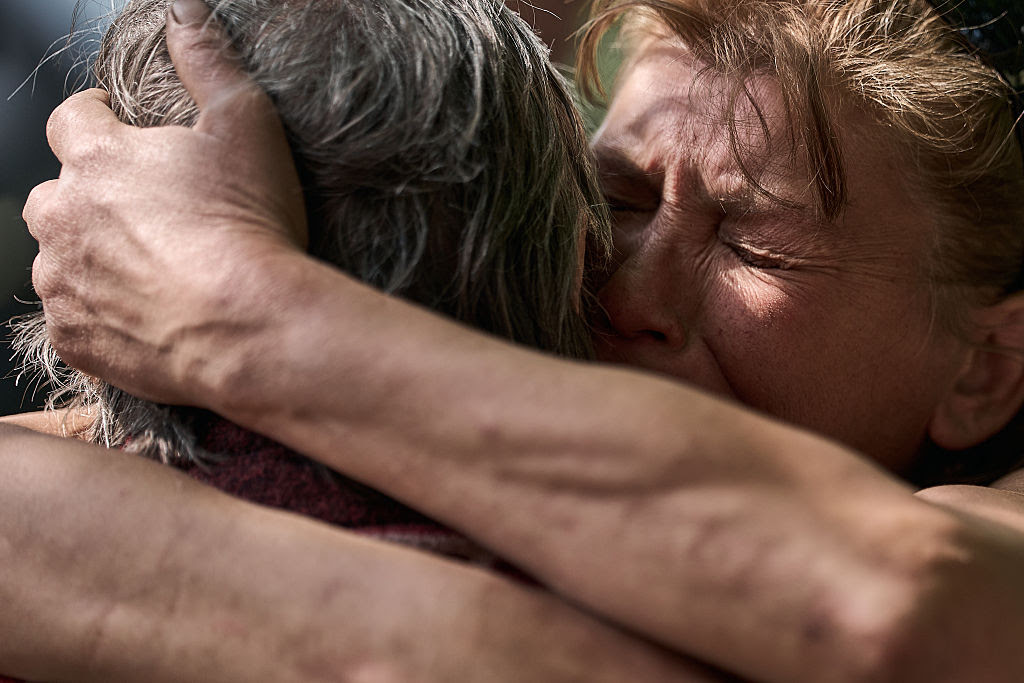
A mother and daughter say goodbye to each other as civilians are evacuated from the front-line city of Pokrovsk by the National Police’s “White Angels” unit in Donetsk Oblast. (Kostiantyn Liberov/Libkos/Getty Images)
The Theory Unchanged: Putin’s Year-Long Bet on Ukrainian Collapse
Exactly one year after Putin first outlined his strategy for defeating Ukraine through gradual territorial gains and sustained attrition, the Russian president used his June 19 meeting with foreign media to reaffirm every element of his original calculus. Speaking with the confidence of a leader who believes his gamble is paying dividends, Putin claimed Russian forces maintain a “strategic advantage” across all fronts and advance daily, even when progress appears minimal.
“The situation has changed” since the March 2022 negotiations in Istanbul, Putin declared, suggesting Russia’s terms today are far harsher than those Moscow offered three years ago. His message carried an unmistakable threat: Ukraine’s position will only worsen with time, and the West should “point to the realities of today” to pressure Kyiv into accepting Russian demands.
Putin explicitly stated he would never sign a peace agreement with Zelensky, whom he branded “illegitimate” based on deliberately false interpretations of Ukrainian law. While claiming readiness to negotiate with the Ukrainian president, Putin insisted Russia would only sign legal agreements with “legitimate” authorities—a logical contradiction that exposes Moscow’s true intentions for future betrayal of any agreements.
Economic Warfare Exposed: The Numbers Behind Russia’s Desperation
Even as Putin projected confidence about Russia’s military trajectory, his own economic officials delivered a starkly different assessment at the same St. Petersburg forum. Economy Minister Maxim Reshetnikov declared Russia “on the verge of a transition to recession,” while Central Bank Chairperson Elvira Nabiullina acknowledged that Moscow has exhausted the “free resources” that fueled two years of wartime economic growth.
The mathematical reality of Russia’s crisis became clear through Russian Ambassador to the U.K. Andrey Kelin’s inadvertent revelations during a CNN interview. Kelin confirmed approximately 600,000 Russian soldiers fighting in Ukraine while acknowledging recruitment of 50,000-60,000 volunteers monthly. If Russia recruits roughly 250,000 soldiers every five months but maintains fewer troops than the 700,000 Putin claimed in June 2024, the discrepancy suggests catastrophic attrition rates aligning with Ukrainian estimates of 217,440 Russian casualties since January 2025.
Russia’s sovereign wealth fund has decreased threefold to roughly $35.7 billion since the invasion began, while unemployment dropped to 2.3 percent—reflecting labor shortages from mass emigration and military conscription rather than economic strength. Kelin also outlined ultimatums for Ukraine, insisting Kyiv must accept Moscow’s terms or face “surrender under much worse conditions.”
Diplomatic Isolation: When America Walks Away
The collapse of meaningful peace efforts became evident across multiple fronts. Foreign Minister Andrii Sybiha marked 100 days since Ukraine accepted a U.S. proposal for an unconditional ceasefire that Russia continues to reject, while Kremlin Spokesperson Dmitry Peskov revealed that no Putin-Trump meeting is planned due to unresolved bilateral tensions requiring “homework” to remove irritants.
Trump’s disengagement crystallized at the G7 summit in Canada, which ended without joint statements supporting Ukraine or the anticipated Zelensky-Trump meeting. Trump’s early departure to address Middle East issues forced Ukraine to abandon hopes of convincing him to impose additional sanctions on Russia, with sources describing “resounding disappointment” within Zelensky’s circle.
Washington officials are expressing growing frustration with Andriy Yermak, head of Ukraine’s Presidential Office, whom they view as undermining Ukraine’s efforts to win Trump’s favor. Fourteen sources told Politico that many find Yermak abrasive and uninformed, with one describing him as an “existential liability for Ukraine” who struggled to secure meetings with Trump officials during his recent Washington visit.
The Terror Continues: From Kyiv’s Ashes to Odesa’s Flames
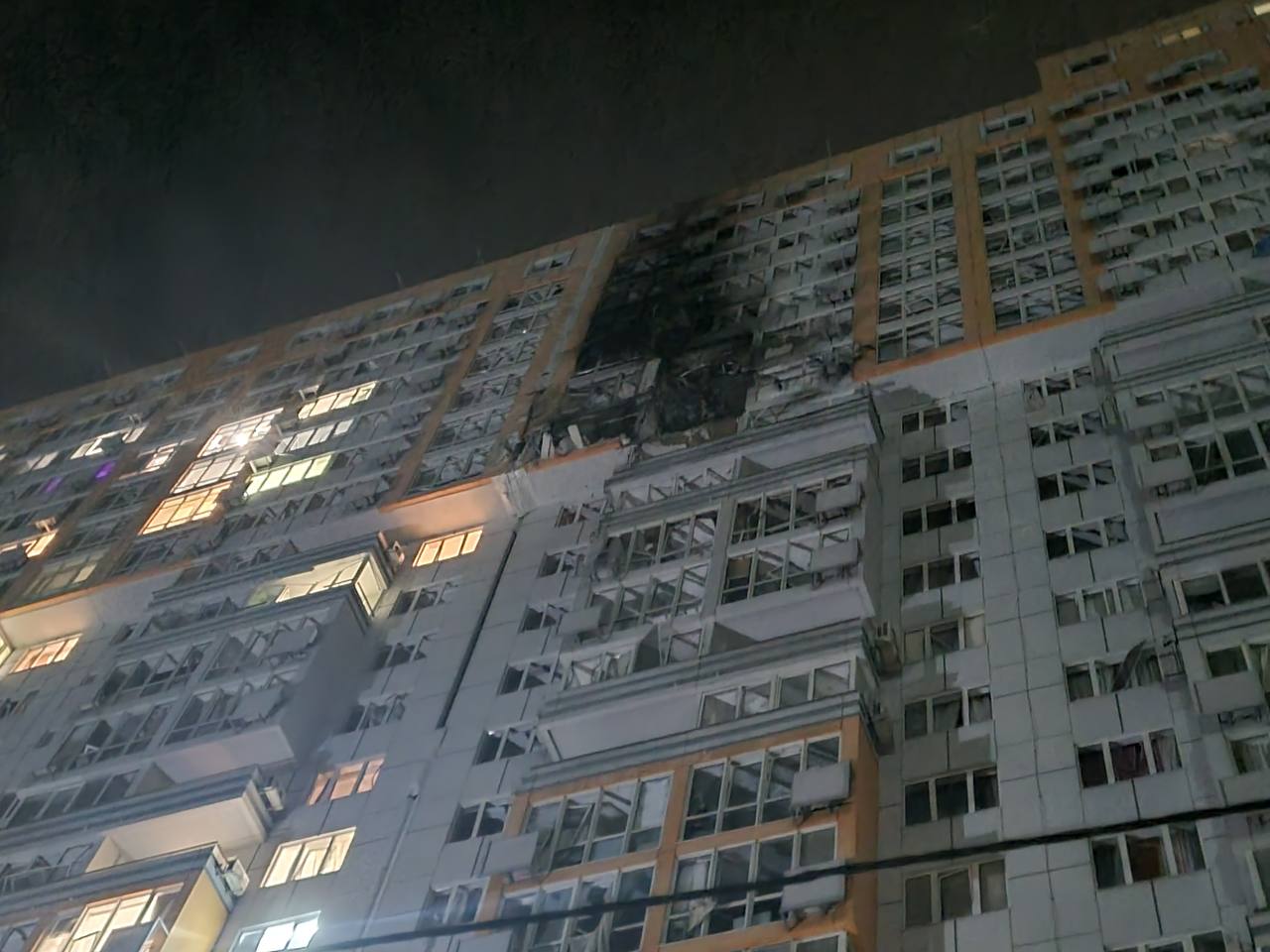
Russian forces maintained their campaign of civilian terror, striking residential buildings in Odesa overnight on June 20 with attack drones that killed a civilian and injured at least 14 others, including three emergency workers. The massive assault targeted over 10 locations, including seven residential buildings, triggering fires that required evacuating over 600 people from a 23-story building.
Across Ukraine during the previous 24 hours, Russian attacks killed at least one civilian and injured at least 27 others. The Ukrainian Air Force reported Moscow launched 104 Shahed-type drones overnight, with air defenses shooting down 40 while 48 disappeared from radars. Donetsk Oblast bore the heaviest burden with 13 wounded, while Kherson Oblast reported nine injuries amid sustained bombardment of dozens of settlements.
The attacks demonstrated Putin’s commitment to his attrition strategy even as he rejected peace overtures. In his evening address, President Zelensky declared Ukraine should continue inflicting “entirely justified” losses on Russia, describing the recent Kyiv assault as having “no military sense” while announcing new proposals for coordinated sanctions and deep strikes against Russian territory.
The Exchange Paradox: Humanitarian Progress Amid Strategic Deception
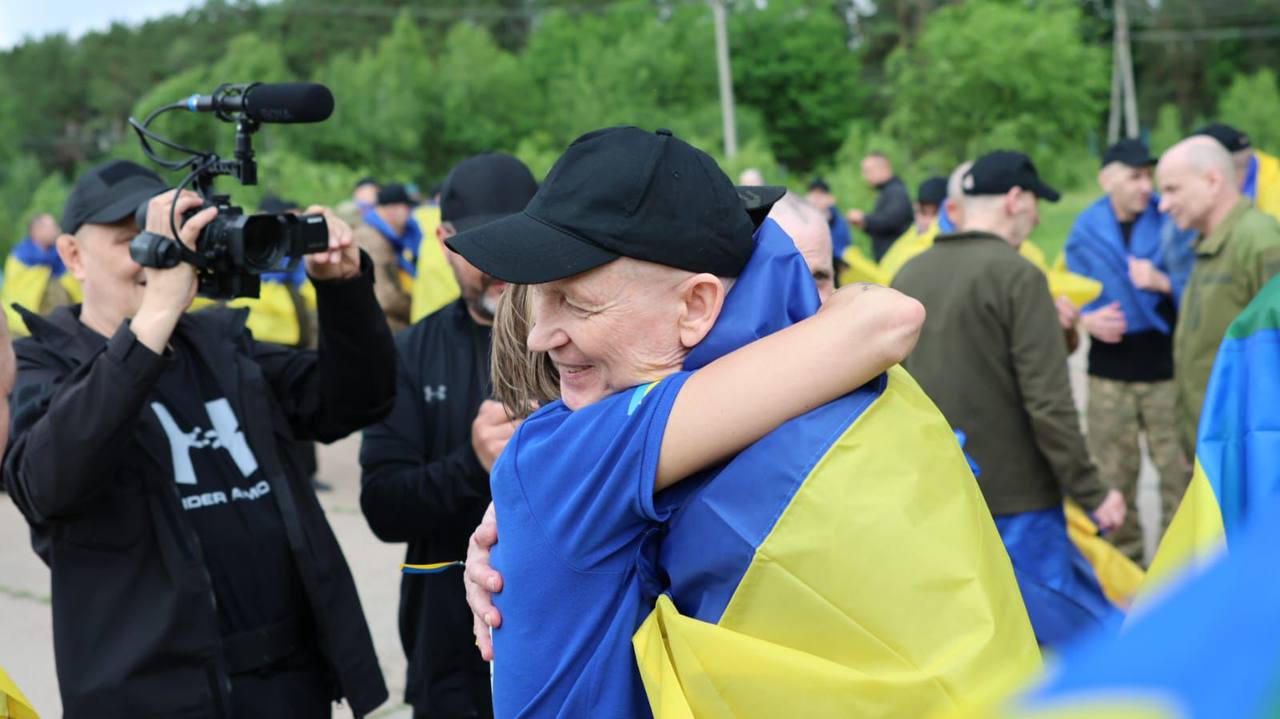
Ukraine and Russia conducted their fifth prisoner exchange under June 2 Istanbul agreements, with Zelensky announcing the return of severely wounded and sick prisoners without revealing specific numbers. The exchange focused on Ukrainian defenders captured during the 2022 Mariupol battle, many suffering from serious medical conditions after years in Russian captivity.
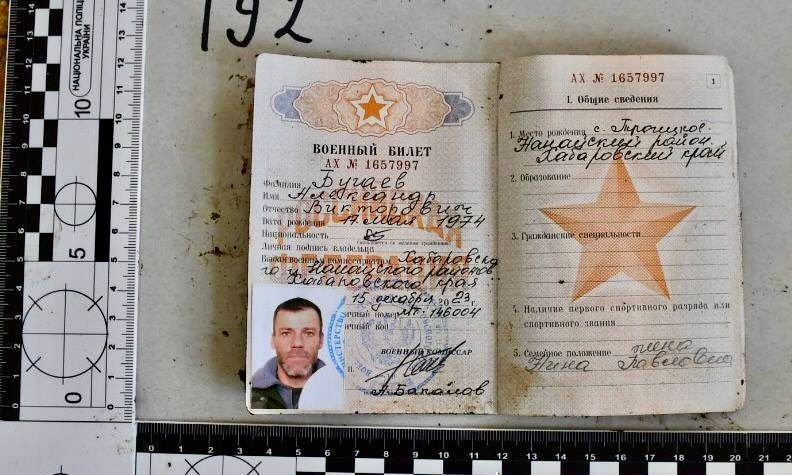
Yet even this humanitarian achievement was tainted by Russian deception. Interior Minister Ihor Klymenko revealed Moscow had deliberately included Russian soldiers’ bodies among Ukrainian remains in previous exchanges, apparently to inflate numbers while complicating identification efforts. One returned body belonged to Alexander Viktorovich Bugaev, a Russian soldier missing since March 2025, complete with passport and military ID—evidence of Moscow’s callous treatment of its own forces.
Ukraine also documented the systematic scope of Russian war crimes, with the Foreign Ministry revealing 366 cases of sexual violence since the invasion began, including 231 women, 134 men, and 19 children who suffered rape, sexual torture, and other violations prohibited under Geneva Conventions.
Cultural Casualties and Command Changes
The human cost of Putin’s war became evident as Ukraine mourned Yuriy Felipenko; a 32-year-old actor killed on the front lines just over a year after enlisting. His funeral drew hundreds to Kyiv, representing the broader artistic community’s devastating losses. His widow Kateryna’s words captured national grief: “I don’t blame anyone for this death, except Russia.”
President Zelensky appointed Brigadier General Hennadii Shapovalov as new Ground Forces commander, replacing Mykhailo Drapatyi who resigned after a Russian missile strike killed 12 Ukrainian soldiers at a training ground. Shapovalov, a graduate of U.S. Army War College and former South Operational Command leader, previously served as Ukraine’s representative to NATO’s Security Assistance and Training mission in Germany.
Justice and Retribution: Targeting War Criminals
Ukraine’s Security Service announced that Arkady Gostev, head of Russia’s Federal Penitentiary Service, was sentenced in absentia to 10 years for creating torture chambers in occupied Kherson Oblast. The court found Gostev guilty of transforming captured Ukrainian prisons into sites for brutalizing resistance members, adding him to a growing list of Russian officials charged with war crimes.
Ukrainian military intelligence also confirmed the June 18 assassination of Mykhailo Hrytsai, a Russian-appointed deputy mayor in Berdiansk, for his role in organizing repression and torture of Ukrainian prisoners of war.
International Alliances: The Putin-Xi Axis and North Korean Workers
Putin and Chinese President Xi Jinping agreed to meet in August and September during a phone call that included mocking commentary about G7 summit “rough edges.” The leaders planned meetings at the Shanghai Cooperation Organization summit, underscoring deepening Sino-Russian cooperation as both nations face Western pressure.
Meanwhile, Japan’s NHK reported North Korea is considering sending 25,000 workers to Russia’s Alabuga facility for mass Shahed drone production, seeking drone operation training in return. This follows Russian Security Council Secretary Shoigu’s visit to Pyongyang, where North Korea agreed to send 1,000 combat engineers and 5,000 military builders to Kursk Oblast for reconstruction efforts.
European Calculations: Defense Spending and Russian Assets
Spain became the first NATO member to reject the U.S.-backed proposal for 5% GDP defense spending, with Prime Minister Sanchez calling the target “unreasonable” ahead of the June 24-25 NATO summit. The rejection highlights growing transatlantic tensions over burden-sharing as Trump pushes for higher European defense commitments.
The EU is developing plans to generate additional Ukraine revenue by shifting nearly 200 billion euros in frozen Russian assets into higher-yield investments, moving beyond current conservative investments that generated 4 billion euros in 2024. Finance ministers from all 27 EU countries are expected to debate the proposal, reflecting urgency as existing funding mechanisms face depletion.
Nordic Security Responses: Finland’s Strategic Shift
Finland’s parliament voted to withdraw from the Ottawa Convention banning anti-personnel landmines, aligning with Baltic allies in response to Russian aggression. President Stubb defended the decision, noting the security reality along Finland’s 1,300-kilometer Russian border had changed dramatically since Ukraine’s invasion, with Russia “using landmines ruthlessly” despite being outside the treaty framework.
Global Intelligence Operations: From Argentina to South Africa
Argentina uncovered a Russian intelligence operation led by nationals Lev Andriashvili and Irina Yakovenko, allegedly linked to Project Lakhta and working to spread pro-Kremlin disinformation while recruiting local collaborators. The discovery prompted creation of a new Federal Investigations Department modeled on the FBI, reflecting growing concerns about Russian influence operations globally.
Putin received an official G20 summit invitation from South Africa despite the International Criminal Court warrant for his arrest over illegal deportation of Ukrainian children. The invitation highlights tensions within the international community over engaging Russia despite its pariah status, with Moscow likely to send Foreign Minister Lavrov instead.
European Warnings: The Price of Weakness
EU High Representative Kaja Kallas warned that insufficient support for Ukraine could force Europeans to “start learning Russian,” emphasizing that Ukraine serves as “Europe’s first line of defense.” She noted Russia now spends more on defense than the EU combined while conducting hybrid warfare operations including airspace violations and infrastructure attacks within EU borders.
Her warning came as analysis revealed Trump’s failed peace efforts across multiple conflicts, with experts describing his approach as “highly personalized” rather than evidence-based, driven more by image and quick wins than addressing underlying conflict dynamics.
Looking Forward: The Attrition Calculation
Putin’s confident reaffirmation of his strategy suggests unwavering belief that time favors Moscow’s position, despite mounting economic pressures and staggering military losses revealed by his own officials. The day’s events demonstrated the fundamental dynamic shaping this conflict: Putin’s willingness to absorb enormous costs versus the West’s diminishing capacity to maintain unified support for Ukraine’s resistance.
With American engagement waning, European resolve being tested, and Russian economic vulnerabilities growing, the coming months will determine whether Putin’s calculation proves prophetic or catastrophically miscalculated. The outcome will shape not only Ukraine’s fate but the future architecture of international order in an age where authoritarian powers test democratic resolve through sustained campaigns of attrition.