
Russia can boast about industrial momentum, but the “victory” is being paid for at home—through unaffordable housing, a higher VAT on everyday life, and a civilian economy that’s quietly starving.
The Day’s Reckoning
Inside the Kremlin, Denis Manturov stood before Vladimir Putin and sold a victory story in numbers: manufacturing investment up 23 percent, the defense sector now employing 3.8 million people after adding 800,000 jobs in three years, weapons output still growing even as the broader economy cooled.
Outside those ornate rooms, a different Russia kept doing the math. Mortgage rates above 20 percent turned homeownership into a closed door. A higher Value-Added Tax—raised from 20 to 22 percent—quietly made groceries, utilities, and transportation cost more. Civilian factories that weren’t feeding the war began shrinking their weeks, then their payrolls.
And the war kept widening its footprint beyond the front. Moscow leaned into the Oreshnik narrative, trying to make a delayed missile story feel like strategic inevitability. In Ukraine, partners kept patching the country’s ability to endure—money for energy resilience, modern equipment meant to keep soldiers alive, diplomacy grinding forward with signatures always just “almost” within reach.
Elsewhere, American foreign policy moved in headlines: tariffs announced like theater, alliances tested by impulses, and even Greenland dragged into the noise.
January 12 revealed the same truth from every angle: the war isn’t only fought in trenches—it’s fought in budgets, mortgages, supply chains, and political will. And on Day 1,419, the costs were landing harder at home, on every side.
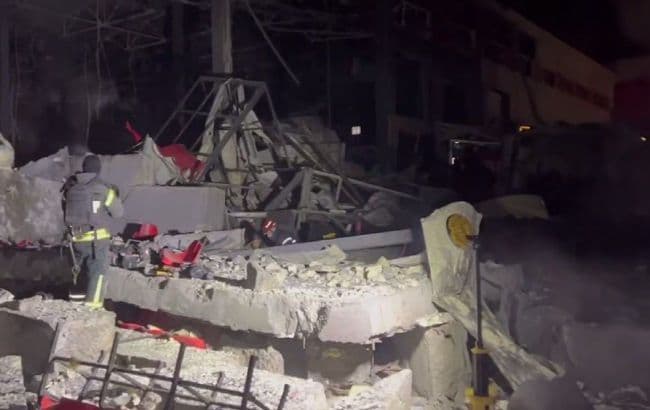
Damaged Nova Poshta terminal following a Russian drone and missile attack in Kharkiv, Ukraine. (Kharkiv State Emergency Service)
When the War Pays—And Families Go Broke
Inside the Kremlin’s briefing room, the story sounded like triumph. Denis Manturov stood with charts and a calm voice, laying numbers at Vladimir Putin’s feet like medals: five trillion rubles invested in manufacturing in the first nine months of 2025—up 23 percent. A defense sector swollen to 3.8 million workers, 800,000 added in three years. Factories still growing about three percent even as the rest of the economy cooled. Rate cuts. Cheap loans. Banks pushed toward preferential lending for weapons plants.
Outside those walls, the same numbers landed differently.
They showed up in a layoff notice folded into a coat pocket in Yaroslavl, where a furniture plant quietly cut 30 percent of its workforce. In Samara, where an appliance factory shortened the week and the paycheck. In Nizhny Novgorod, where two of three production lines went dark. Not because Russians stopped needing tables or washing machines—but because money and labor were being pulled, relentlessly, toward shells and drones.
The squeeze reached the most ordinary dream of all: a home. Mortgage rates above 20 percent turned a five-million-ruble apartment into a lifetime sentence—about 90,000 rubles a month for twenty years—while the median wage hovered near 70,000 before taxes. Banks had cheap capital for defense plants; families got crushing interest.
And then came the small, brutal arithmetic of the Value-Added Tax—20 to 22 percent—stitched into every receipt: bread, heat, bus fare, winter clothes. A state asking its people to pay, again, for a war it claimed was making them stronger.
On paper, Russia’s industrial machine was roaring. In kitchens and cold stairwells, another Russia was learning what it feels like to be priced out of your own life.
The Missile That Wanted an Audience
Four nights after the Oreshnik streaked west, Russia didn’t rush out a battlefield report. It waited—long enough for rumors to travel, for the story to ripen—then the Ministry of Defense stepped forward on January 12 with a crisp claim: the Lviv State Aircraft Repair Plant had been hit, operations “halted,” workshops and drone storage damaged, airfield infrastructure scarred.
The pause was the tell. This wasn’t only about what a missile did in the dark; it was about what Moscow could make the world picture in daylight.
Nothing came with proof an outsider could touch. Ukraine did not confirm the scale of damage, and without independent imagery the truth sat in the familiar trench between propaganda and silence. But for the Kremlin’s narrative-makers, the exact number of broken beams mattered less than the feeling they were trying to plant: even the far west is within reach.
Oreshnik was pitched as an answer to Western range—ATACMS, Storm Shadow, SCALP—an insistence that distance will not protect aircraft depots, repair lines, or the quiet back-of-house work that keeps a war going. And it carried a second warning to Kyiv and its donors: some threats are harder to stop. A ballistic plunge at hypersonic speed is a different problem than a drone or a cruise missile.
Even when the damage is uncertain, the adaptation is not. Disperse the repair work. Split the warehouses. Harden the hubs. Add guards, routes, radios, redundancies. Survive—but lose efficiency, kilometer by kilometer.
The strike’s most reliable effect may not be what it broke in Lviv, but what it tried to break everywhere: the belief that any place can be “rear area” in this war.

Firefighters work at the site of a building that was hit by a Russian drone in the Solomianskyi district of Kyiv on the morning. (Aleksandr Gusev/SOPA Images/LightRocket via Getty Images)
Five Lynx and a Promise in Steel
Somewhere in a Ukrainian motor pool, the old BMPs still wear their Soviet angles like a warning: thin steel, cramped space, the sense that a lucky drone or a well-placed missile can turn a ride into a coffin. Then the news lands on January 12—Rheinmetall says the first five Lynx KF41 infantry fighting vehicles could arrive at the beginning of 2026, tied to a contract signed the December before.
Five isn’t a brigade. It won’t rewrite the map. But to the soldiers who will climb inside, the Lynx is a different kind of world. Composite protection and reactive armor built for modern anti-tank threats, not the assumptions of the 1980s. A gunner’s sight that doesn’t guess—thermal imaging, laser rangefinding, ballistic computers—turning silhouettes into targets in smoke, snow, and darkness. A vehicle that can talk to the battlefield, sharing data with other armor, drones, and command posts in real time.
Its weapons match the war Ukraine is living now: a 30mm autocannon for armor and fortifications, guided missiles for tanks at distance, and the ability to contest the air that’s been filled with drones and helicopters.
The timing is its own message. Washington’s reliability is being questioned—ATACMS deliveries cut off, pressure rising for territorial concessions. Berlin, with all its historical caution and political strain, is still pushing modern protection and firepower toward Ukraine.
For planners, the five Lynx are a small step in a long conversion—Soviet-era machines slowly replaced by NATO-standard survivability and networking. For Russian intelligence, they’re another sign that every month Ukraine grows harder to kill.
Five vehicles won’t decide the war. But they may decide who comes home from a future fight.
Hope With a Knife Behind It
Zelensky spoke the way a leader talks when every sentence has to carry two weights at once: give people something to hold onto, and still leave room for what might go wrong. He said the paperwork for U.S. security guarantees was largely ready—close enough to sign, close enough to make the word “guarantee” feel less like a wish and more like ink. He told his team to push the documents upward for review at the highest level, while the next round of meetings with Washington took shape.
He also signaled that the talks weren’t only about survival. Economic agreements were being combed line by line so Ukraine’s interests weren’t traded away in fine print—security, reconstruction, recovery, all braided into the same negotiations.
But in the same breath he pointed toward the enemy that wasn’t acting like an enemy nearing peace. Russia’s behavior and rhetoric, he warned, still sounded like a state preparing for more war, not an end to it. That is the trap Ukraine keeps stepping around: Kyiv and its partners build frameworks and timetables, while Moscow keeps speaking the language of conquest.
So Zelensky put the burden where it belongs. What Russia chooses next, he said, depends on the partners—above all the United States and its president. A Western diplomat captured the mood more bluntly: there is movement, but don’t mistake momentum for resolution.
Because “largely ready” can still mean anything. Binding commitments, or a statement that dissolves the moment politics shift. After weapons cutoffs and pressure for concessions, Ukraine has learned to treat promises like glass—useful, but breakable.
For Zelensky, the task is simple to describe and brutal to execute: secure something real, before the window closes.
Kyiv, Warmth, and the Quiet Kind of Courage
Kyiv in January has a way of making every promise feel physical. You can see it in breath that hangs in the air, in stairwells lit by emergency bulbs, in kitchens where a kettle only boils when the power holds. When Norway’s foreign minister, Espen Barth Eide, arrived on January 12, he didn’t bring a speech about “values” and leave it at that. He brought money—340 million euros, about $400 million—aimed straight at the places Russia keeps trying to break: Ukraine’s energy system and the state budget that keeps salaries paid and repairs moving.
He said out loud what Ukrainians already live: the infrastructure that feeds electricity to ordinary homes is hit several times a week. The goal isn’t only darkness. It’s exhaustion—cold rooms, failed heating, meals that can’t be cooked, a life narrowed to survival. Keeping people warm and able to live something close to normal, Eide argued, is how a nation keeps fighting. And then the line that landed like a hand on the shoulder: this is a war Ukraine is fighting on behalf of us all.
Part of the package is crisis work—repairing damaged energy facilities, buying time against the next strike. Part is unglamorous endurance—paying teachers and civil servants, keeping government functioning while military spending devours everything else. Norway says this keeps its total support at roughly $8 billion in 2026. For a country of 5.5 million, it’s a commitment measured in sacrifice, not slogans.
The contrast was hard to miss. America, bigger and richer, wavered—ATACMS cut, pressure rising for concessions. Norway, small and steady, showed up anyway.
It won’t end the blackouts. But it helps Ukraine deny Russia what it wants most: a population too cold, too tired, and too alone to endure.
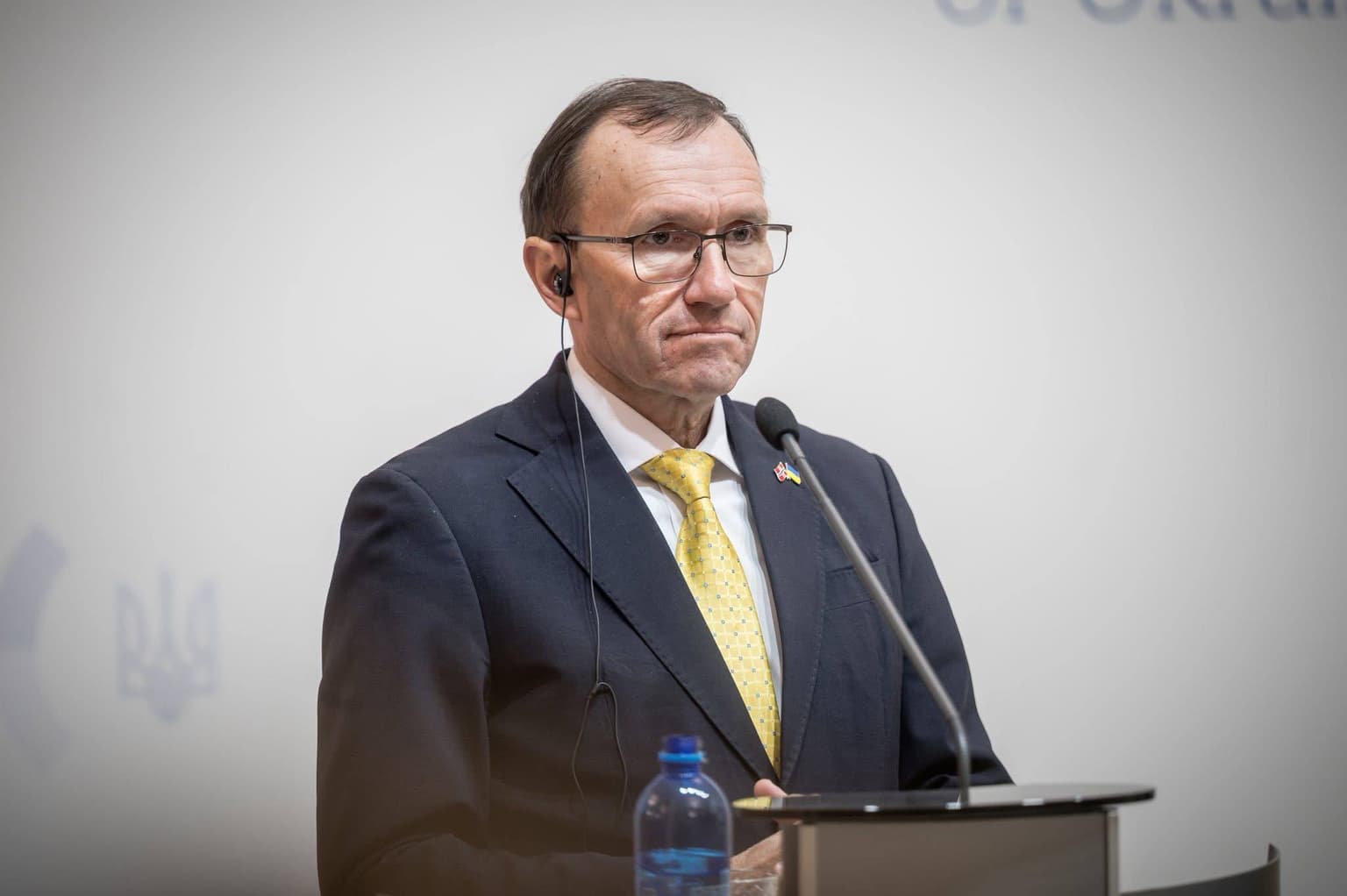
Norwegian Foreign Minister Espen Barth Eide during his visit to Kyiv. (Ukraine’s Foreign Ministry / Telegram)
Darkness, Then the Knock at the Door
When the lights go out in Belgorod in January, the cold doesn’t arrive politely. It creeps through window seals, settles into stairwells, makes phones precious and kettles useless. On January 12, Governor Vyacheslav Gladkov stood before the regional government and called the energy situation “extremely dire,” claiming losses at a near-catastrophic scale and saying Ukrainian strikes had left more than 550,000 people without power—numbers that could not be independently verified, but the fear behind them sounded real.
What came next was the part that should make any civilian in the dark look over their shoulder.
Instead of speaking first about warming centers, repairs, and protecting families through freezing nights, Gladkov pivoted to enemies—“external and internal.” He warned that every hardship invited “aggression,” not only from Ukraine but from people inside the region. He spoke about “information attacks,” about monitoring, about stopping those who might “provoke the population” and “stir up social tensions.”
In plain terms: if you complain too loudly about the blackout, you might become the problem.
Belgorod’s residents have watched their border region turn into a front porch for war—evacuations, strikes, casualties, the constant awareness that being close to Ukraine now means being within reach. When the power fails for days, questions come naturally: Why are we living like this? Why can’t the state protect civilian infrastructure? Why does this war keep getting closer?
Gladkov’s answer was not reassurance. It was suspicion. He offered the oldest authoritarian trade: hardship for silence, and silence enforced by fear. If the government cannot stop the strikes, cannot quickly restore normal life, cannot end the war that brought the strikes home—then it can still do one thing well. It can police speech, hunt scapegoats, and make people suffer alone.
In Belgorod on January 12, the message was chillingly simple: endure the dark—and watch what you say in it.
Tariffs, Thunder, and a Policy Written for Headlines
Trump posted it like a gavel strike—fast, absolute, and meant to echo. On January 12, in a Truth Social blast, he declared that any country doing business with Iran would be hit with a 25 percent tariff on “any and all” trade with the United States. “Effective immediately,” he wrote. “Final and conclusive.”
It landed while Iran was burning with anti-government protests—demonstrations met with lethal force, a death toll rumored in the hundreds, possibly more. Trump cast himself as the protestors’ champion, talking tough, hinting at military action, tossing encouragement into the chaos from an ocean away.
But the policy read less like strategy and more like theater—big lighting, unclear script. What counts as “doing business with Iran”? A direct oil purchase? A bank transfer? A component in a supply chain that touched an Iranian port months ago? Would past transactions count, or only future ones? Who, exactly, would enforce it—and how?
The questions got sharper when you named names. China is Iran’s largest trading partner and a buyer of its oil despite existing sanctions. Was Trump really prepared to slap 25 percent tariffs across Chinese goods and risk a consumer shock and trade war that would hit American shelves and wallets overnight? Europe still maintains limited ties with Iran even while condemning the regime; would Germany or France be punished next, pushing NATO unity further into strain?
The contradictions kept stacking. Russia has deepened cooperation with Tehran through the Ukraine war, benefiting from Iranian drones—yet U.S.-Russia trade is already tangled in sanctions, making the threat feel performative in one direction and toothless in another.
The U.S. Embassy urged Americans to leave Iran immediately, warning them not to rely on U.S. help if the situation worsened. Zelensky, watching the same unrest, voiced support for Iranian protesters—aware that instability in Tehran could ripple straight into Russia’s war supply lines.
For Trump, the post delivered exactly what it was built to deliver: headlines, toughness, and ambiguity. For allies, it delivered something else—another reminder that U.S. foreign policy could change with a single upload.
A Bill That Threatened NATO Like a Joke With Teeth
It arrived like a stunt, but stunts can still break things.
On January 12, Congressman Randy Fine introduced a bill to annex Greenland and make it a U.S. state. He dressed it up in national security language—Greenland as a “vital asset,” control of Arctic shipping lanes, the “security architecture” of the United States—as if a few paragraphs of legislative text could redraw borders that have stood for generations.
Everyone knew it wasn’t going anywhere. The bill had no serious path to passage. It ran headlong into international law, bipartisan resistance, the reality that Greenland is tied to Denmark, and the even more basic fact that Greenland’s 56,000 residents are not waiting to be adopted by Washington. It would require something the modern West claims it rejects: coercion, conquest, and the humiliation of a NATO ally.
So why introduce it?
Because it wasn’t lawmaking. It was a performance—an applause line for Trump’s expansionist talk, a way to keep the Greenland obsession circulating, another signal flare that American power could be spoken of as if it had no boundaries.
Europe heard it in the only way it could: as a threat, even if the weapon was ridiculous. EU Defense Commissioner Andrius Kubilius warned that a U.S. military takeover of Greenland would be “the end of NATO”—because an alliance built on mutual defense cannot survive one member targeting another. In that moment, Greenland stopped being an island and became a test question: does sovereignty still mean anything when the biggest partner starts joking about taking what isn’t his?
Fine’s bill would likely die in committee, forgotten by the next news cycle. But it did its work anyway. It forced Denmark to treat madness as a variable. It told smaller nations that respect can be revoked. And it added another uneasy line to the day’s growing ledger: America’s promises feel less like bedrock—and more like mood.
The Front That Wouldn’t Break—No Matter How Hard Russia Hit It
All along the line on January 12, the war sounded the same: the low thump of artillery, the snap of drones, the hurried radio calls, the infantry moving forward because someone, somewhere, demanded motion. Russia attacked as if volume alone could become victory—pushing in Sumy near Andriivka and Nova Sich, pressing the north of Kharkiv around Vovchansk and its scattered villages, probing toward Velykyi Burluk and Kupyansk, grinding at Borova, and throwing itself again and again toward Lyman’s treeline towns and river bends.
Farther south the pressure kept spreading like fire. Around Kostyantynivka and Druzhkivka, the names stacked up—approaches, outskirts, villages that have become directions instead of homes. Near Dobropillya and Pokrovsk, the assaults came where Moscow says the clock is ticking—an April deadline hanging over commanders like a blade. In Zaporizhia, the same story: attacks around Hulyaipole and west of Orikhiv, testing lines, hunting for a seam.
It wasn’t one offensive. It was dozens—simultaneous, relentless, expensive. Shells burned. Vehicles broke. Men went forward, fell back, went forward again. The entire machine fed itself into the day.
And then the map stayed still.
Despite the sweeping list of assaults across hundreds of kilometers, January 12 produced zero confirmed territorial advances. The effort was enormous; the result was nothing you could circle on a briefing slide.
This is what a stalled offensive looks like up close: a command structure that can’t stop attacking without admitting failure, and a defense that holds—but pays for every quiet hour with exhaustion. Ukrainian units repelled the pressure again, knowing “success” still means sleeplessness, ammunition spent, nerves worn thin, and tomorrow’s attacks already forming.
The front didn’t break. Russia didn’t break through. The war simply kept chewing—loudly, endlessly—without resolution.
The Day’s Meaning: When the War Starts Eating Its Own Countries
In Moscow, the war looked like a spreadsheet victory. Manturov stood in the Kremlin and fed Putin the kind of numbers that feel like reassurance: manufacturing up 23 percent, 800,000 new defense jobs, weapons production still climbing even as the wider economy cooled. In that room, the state sounded strong—organized, expanding, winning.
Outside, Russia’s strength felt like a trap. Mortgages above 20 percent turned homeownership into a joke told without laughter. Civilian factories quietly shortened work weeks and cut staff as demand dried up. A higher VAT pushed up the price of almost everything, so even ordinary errands began to feel like surrendering ground. The country had split into two economies living inside one border: the defense sector feasting, the civilian world thinning out—fewer choices, fewer jobs, fewer future plans that made sense.
And that contradiction is not a headline problem. It is a timer. The question is not whether it can last, but whether Russia’s domestic strain reaches its breaking point before Ukraine’s endurance does. Two societies, both stretched past normal limits, both trying to outlast pain that keeps getting more personal.
Ukraine, meanwhile, kept collecting the kind of help that matters when survival is the mission. Norway arrived with funding that keeps transformers repaired and salaries paid. Germany offered Lynx vehicles—small numbers, but a signal that modernization continues. As America wavered, Europe showed up in tangible ways, and that steadiness is becoming its own form of deterrence.
On the battlefield, Russia threw weight across the entire line and gained nothing confirmed. Attacks everywhere, advances nowhere—an expensive day that left the map unchanged and both armies more tired. On Russia’s side of the border, Belgorod’s governor answered blackouts by hunting “internal enemies,” as if complaints were more dangerous than the cold. In Washington, foreign policy became performance—tariffs announced like theater, annexation talk turned into legislation that could never pass but still poisoned trust.
January 12 made one truth hard to escape: this war is no longer only about territory. It is about systems—economies, alliances, morale, the ability to keep a society functioning while being punished. The endgame is still out of reach, but the pressure is not. It is building, day by day, until someone is forced to choose a path they cannot control.
Prayer For Ukraine
- Pray for Ukrainian families facing winter strain—heat, power, and water stability—and for repair crews to have protection, parts, fuel, and rest as they keep restoring what Russia keeps trying to break.
- Pray for Ukrainian soldiers holding exhausted defensive lines: alertness without burnout, wise leadership, strong unit cohesion, and protection from drones, artillery, and sudden breakthroughs.
- Pray for Ukraine’s leadership and negotiators to have clarity and courage—especially around security guarantees—so agreements are real, enforceable, and do not trade away Ukraine’s long-term safety for short-term quiet.
- Pray for steady, unified support from allies—Europe’s commitment to remain firm, America’s policy to be reliable—and for practical help (air defense, armor, ammunition, training, funding) to arrive in time to save lives.
- Pray for truth to cut through propaganda and fear—inside Russia and across the world—so intimidation fails, scapegoating collapses, and public pressure grows against a war that keeps consuming ordinary people on every side.