
In Dnipropetrovsk, Ukrainian forces liberated village after village across 400 square kilometers. In Moscow, 7,800 Telegram outage complaints flooded monitors as the Kremlin killed the app its own army depends on. In Nairobi, Kenya’s foreign minister flew to Moscow to retrieve citizens press-ganged into fighting. Day 1,483 — when Russia waged war on its own communications while losing ground it couldn’t afford to give.
The Day’s Reckoning
A Russian drone operator reaches for his phone to coordinate a strike. Telegram is gone. Not jammed by the enemy. Blocked by his own government.
March 16, 2026. The Kremlin killed the messaging app its soldiers used for everything — coordinating assaults, directing drones, passing orders. Over 7,800 outage complaints hit monitoring services in a single day. The state-controlled replacement, Max, was crashing under the load.
Russia was severing its own military’s nervous system.
Eight hundred kilometers south, the consequences were already measured in lost territory. Ukrainian forces had reclaimed more than 400 square kilometers in Dnipropetrovsk Oblast since late January — village after village falling back into Ukrainian hands while Russian commanders scrambled to pull naval infantry brigades and operational reserves from other fronts. Units meant for the spring offensive were plugging holes instead of punching through.
In Moscow, Peskov borrowed Trump’s language: Zelensky was “the main obstacle” to peace. In a press conference beside Kenya’s foreign minister, Lavrov went further — even surrendering all of Donbas wouldn’t end the war. In Brussels, the EU sanctioned nine Russian officers for the Bucha massacre. In Kyiv, Sean Penn arrived with a fresh Oscar he’d skipped the ceremony to collect.
Over the capital, 211 drones had swarmed overnight. At 8:26 a.m., more came — hitting during the morning commute. Near the Independence Monument, debris from something new: a Lancet loitering munition, possibly AI-guided, possibly delivered by a Shahed mothership. Or possibly dropped as a psychological operation.
Either way, the message landed.
Day 1,483. Russia silencing its own communications while losing ground it couldn’t afford to give. A peace process stalled because one side kept raising the price. Contradictions deepening. Costs mounting. Conclusions nowhere in sight.
The Villages Russia Couldn’t Hold
Somewhere in the headquarters of the Russian 39th Motorized Rifle Brigade, east of the Vovcha River, commanders were watching their map shrink.
Since late January, Ukrainian forces had clawed back more than 400 square kilometers across the Oleksandrivka and Hulyaipole directions in Dnipropetrovsk Oblast — two separate drives now converging into something the 39th Brigade couldn’t stop. Military observer Kostyantyn Mashovets tallied the week’s damage: Sichneve, entered. Voskresenska’s eastern outskirts, reached. Novoivanivka, under advance. Southeastern Novomykolaivka, penetrated. Rybne, seized. Sichneve and Vorone likely liberated entirely.
The 39th would probably have to fall back to the Voskresenka-Maliivka line just to find ground worth defending.
Then came the road. Ukrainian forces pushed to within two kilometers of the Hulyaipole-Velyka Novosilka highway — close enough to deny Russian logistics and equipment transport without crossing it. No boots on the asphalt. No need. The supply line was dead anyway.
That kind of precision — crippling an artery without overextending to seize it — signaled something beyond opportunistic counterattacks.
The dominoes kept falling. In the Oleksandrivka direction, Russian forces abandoned offensive operations entirely, switching to active defense. Translation: trying not to lose more ground. Northwest of Hulyaipole, Ukrainian assault groups reached Hirke’s eastern outskirts, Staroukrainka’s western edge, and pushed into Svyatopetrivka. The 5th Combined Arms Army, supposed to be driving west toward Orikhiv, couldn’t restore the battlefield to anything resembling its pre-counterattack state.
Zelensky underscored the stakes in his evening address. Russian troops were massing on the Zaporizhzhia front, he acknowledged.
“But we are destroying those forces.”
Cannibalizing the Spring Offensive
The 400 square kilometers weren’t just lost ground. They were a siphon — draining the reserves Russia had been stockpiling for its anticipated spring-summer 2026 offensive.
Watch the redeployments cascade. The 40th Naval Infantry Brigade and 55th Naval Infantry Division, pulled from the Dobropillya tactical area to Hulyaipole in late February. Then the 40th Naval Infantry Brigade again, plus the 120th Naval Infantry Division, redirected to the 36th Combined Arms Army’s sector in the Oleksandrivka direction. The 120th had been fighting near Dobropillya as recently as March 11.
Five days. That’s how fast the emergency consumed them.
The most revealing signal came from a Russian milblogger who reported drone operators of the 656th Motorized Rifle Regiment striking Ukrainian forces near Hai, southeast of Oleksandrivka. The 656th hadn’t appeared on any battlefield since August 2025. Seven months in reserve — pulled out, rebuilt, held back for whatever Moscow planned next.
Now it was plugging holes in a line that wasn’t supposed to need plugging.
Reading between the lines: Russia’s spring offensive was being eaten alive before it launched. Every brigade rushed to Dnipropetrovsk Oblast was one fewer brigade available for Pokrovsk. For Dobropillya. For the drives that were supposed to deliver decisive results before Western resolve wavered.
Ukraine’s counterattacks had found something more valuable than territory. They’d found the price Russia couldn’t afford to pay — and kept charging it.
A State Afraid of Its Own People
The order came down from the Russian Ministry of Defense: delete Telegram or get reassigned to an assault unit.
The threat landed on soldiers who used Telegram for everything. Coordinating strikes. Directing drones. Passing orders. “Everything” they did was “tied to Telegram,” one milblogger wrote. Even Kremlin spokesperson Peskov had recently acknowledged as much.
The replacement — Max, a state-controlled platform — was already failing. Commanders forced servicemembers to install it. Some units banned Max anyway. Others ignored the Telegram ban entirely. The result: a patchwork of compliance and defiance that guaranteed communication chaos across the force.
Then the Kremlin went further. Not just the military — everyone.
IT experts told Kommersant that authorities had begun blocking Telegram domestically. Monitoring service Sboy RF tracked the damage: 6,000 outage complaints on March 14. Over 12,000 on March 15. By March 16, reports hit 7,826. In regions where authorities had restricted internet to whitelisted websites, Telegram vanished completely — home internet and mobile data alike.
Moscow City and St. Petersburg bore the worst of it. The two population centers the Kremlin had spent four years shielding from the war’s consequences were now losing access to the country’s most popular communication tool. The blocking was so aggressive that whitelisted sites — including state-owned platforms — went dark in parts of central Moscow.
Pavel Durov, Telegram’s founder, now facing a Russian criminal case for “aiding terrorism,” captured the absurdity: “A sad spectacle of a state afraid of its own people.”
The military ban plus the domestic throttle added up to one outcome: degraded command and control at precisely the moment Russia’s overstretched forces needed it most. The Starlink block had already damaged frontline communications in February. Now Moscow was finishing the job itself.
“Even Donbas Won’t Be Enough”
Sergei Lavrov stood beside Kenya’s Foreign Minister Musalia Mudavadi at a joint press conference and said the quiet part out loud: even if Ukraine surrendered all of Donbas, Russia wouldn’t stop fighting.
Recognizing “realities on the ground” wasn’t enough. Ceding territory wasn’t enough. The democratically elected Ukrainian government itself was a “root cause” of the war. Translation: replace it with a puppet regime or the guns keep firing. European peacekeeping troops deploying to Ukrainian-held territory with Kyiv’s permission? “Occupying forces,” Lavrov called them — implying sovereign Ukrainian territory wasn’t Ukraine’s to invite anyone onto.
The full list of demands hadn’t changed: NATO expansion halted, Ukrainian neutrality enforced, “demilitarization” reducing Ukraine’s army to impotence, “denazification” replacing the elected government. Even at trilateral negotiations with the United States, Russia refused to move.
In Moscow, Peskov worked the other angle. He borrowed Trump’s own words — the NBC News interview where the American president expressed surprise that Zelensky “doesn’t want” a deal and suggested Putin was ready. “The Ukrainian side is the main obstacle,” Peskov told reporters.
The Kremlin and the White House, reading from the same script. Blame Zelensky.
The peace process itself had stalled. The Middle East conflict following U.S.-Israeli strikes on Iran consumed Washington’s diplomatic bandwidth. Envoys couldn’t travel. A fourth round of trilateral talks might happen “as soon as this week.” Or might not.
Zelensky stated the obvious: “The war and the security situation don’t allow them to leave the U.S. now.”
So, Russia demanded everything. America blamed Ukraine for not accepting it. And the diplomats who might bridge the gap were grounded by a different war entirely.
8:26 A.M.: Drones Over the Morning Commute
Two hundred eleven drones. Six launch directions — Oryol, Kursk, Bryansk, Millerovo, Primorsko-Akhtarsk, occupied Hvardiiske in Crimea. Over 100 Shaheds. Ukrainian defenses downed or suppressed 194. Sixteen hit ten locations. Debris rained on eleven more.
That was the overnight swarm. The real shock came at breakfast.
At 8:26 a.m., sirens split Kyiv’s morning commute. More than 30 drones bore down on the capital during rush hour — not the nighttime strikes residents had grimly adapted to, but a daylight assault timed to catch millions in the open. Explosions shook the city twenty minutes later.
Oliana Pavlyshyn, eighteen, a first-year philology student at Taras Shevchenko National University, had been waiting for her opening class. “We went down to the basement and stayed there for almost the entire air raid. You could hear the explosions clearly. It was very loud.”
Air Force spokesperson Colonel Yuriy Ihnat called the attack atypical. Russian forces controlled the drones via mesh networks — wireless systems letting drones maintain signals among themselves instead of relying on ground stations. Harder to jam. Harder to suppress.
Near the Independence Monument in central Kyiv, something stranger landed. Debris from a crashed drone turned out to be a Lancet loitering munition — a weapon designed for short-range frontline strikes, not capital cities. Defense Express assessed it was a new AI-equipped variant configured for drone swarms and autonomous navigation. MoD advisor Serhii Sternenko believed a Shahed mothership delivered it. Expert Serhiy “Flash” Beskrestnov suspected the opposite — that Russian forces simply dropped Lancet debris from a Shahed as a psychological operation.
Real capability or manufactured fear. Either way, the message reached its target.
Pavlyshyn said what millions felt: “I’m only 18 years old. I want to live. But many Ukrainians right now are not living. We are surviving.”
Two Dead. Twenty Wounded. A Routine Day.
Two killed. At least twenty wounded. Six oblasts hit. March 16 — another day that barely made the news.
In Zaporizhzhia Oblast, a woman died. Eight more were injured across 34 settlements that absorbed 710 Russian attacks. Eighty-eight reports of damage — homes, infrastructure, vehicles. In Kherson Oblast, five civilians were wounded and 12 residential buildings torn open. In Kharkiv Oblast, shelling hit Oskil and Cherkaski Tyshky, wounding two. A drone struck Kharkiv city’s Kyivskyi district, injuring a third.
In Sumy Oblast, a man was killed. Two women were wounded by a drone strike in the Velyka Pysarivka community. Another woman sought medical care after an attack in Shostka. In Dnipropetrovsk Oblast, Russian forces hit two districts more than ten times with artillery and drones. One person was hurt.
Seven hundred ten attacks on one oblast alone. Twelve buildings damaged in another. Numbers so routine they’ve lost the power to shock — which is precisely when they should shock most.
Burning What Russia Needs Most
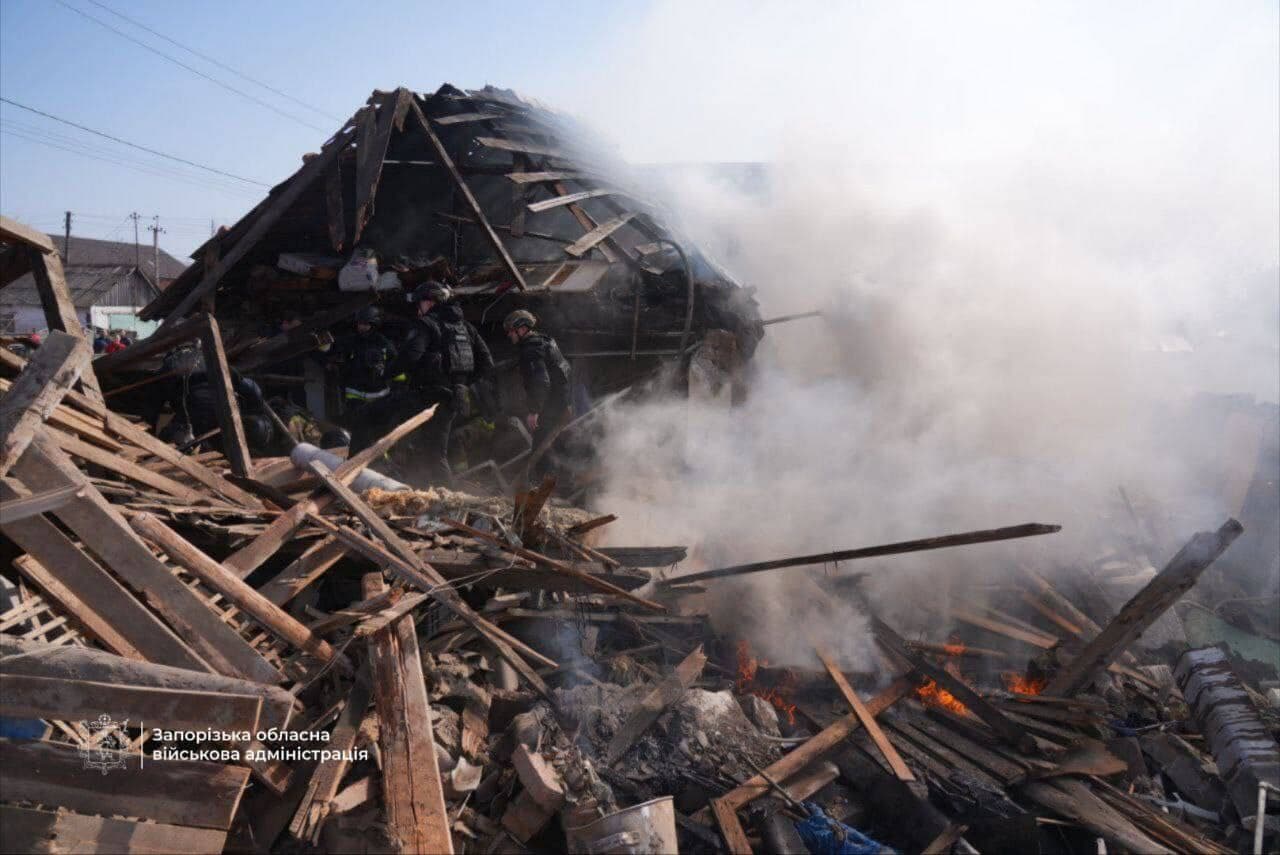
While 211 Russian drones hunted Ukrainian cities, Ukrainian drones found something more valuable: Russian war production.
Morning, March 16. Drones hit the Aviastar aircraft manufacturing plant in Ulyanovsk City — the facility that builds Il-76 transports, Il-78 tankers, and An-124 heavy transports for the United Aircraft Corporation. The oblast governor claimed five drones were destroyed overhead. A local Telegram channel told a different story: the plant was temporarily shut down. Transports that can’t be built can’t resupply the front.
Overnight, the Yugnefteprodukt oil depot in Labinsk, Krasnodar Krai, was already burning. Geolocated footage confirmed the blaze. Another node in Russia’s fuel network, gone.
Closer to the frontline, Ukraine’s systematic air defense hunt kept paying dividends. A Tor-M1 system destroyed near Korobkyne in occupied Luhansk Oblast — 127 kilometers behind the lines. A second Tor system struck near Balashivka in occupied Zaporizhzhia Oblast. An S-300 radar station hit near Chervone in occupied Donetsk Oblast — the second S-300 radar killed in the occupied territories this month. Command and observation posts near Stepne and Bahate, struck.
The Special Operations Forces piled on: an armored vehicle repair base in Yakymovka. A maintenance and weapons warehouse in Andriivka. A logistics center in Berestove. And deep in occupied Crimea — the generator and switching station of an electronic warfare complex at Khersones Air Base near Sevastopol.
Repair capability. Fuel supply. Air defense. Electronic warfare. Command infrastructure. Each strike removed a piece of the machinery Russia needs to sustain offensive operations. None of them, individually, ends the war. Together, they make it incrementally harder to fight.
Blood for Meters, Meters for Nothing
The rest of the front told the same story in different dialects: Russian pressure everywhere, breakthroughs nowhere.
Near Pokrovsk, Ukrainian forces pushed forward in northwestern Hryshyne while the 7th Rapid Reaction Corps struck Russian troops massing in southern and southeastern Pokrovsk — catching assault groups training under building cover. A Kremlin-affiliated milblogger conceded that most of Hryshyne remained a contested “gray zone.” The Russian command pulled the battered 2nd Battalion of the 5th Motorized Rifle Brigade off the line due to heavy losses — while redeploying fresh elements for anticipated assaults north of Pokrovsk and Myrnohrad.
Near Kostyantynivka-Druzhkivka, both sides gained ground. Ukrainian forces advanced south of Kostyantynivka. Russian forces seized Novopavlivka southwest of Druzhkivka. Advances measured in settlements, not sectors.
Along the Oskil River, Russian forces attacked near Kupyansk, Podoly, Kucherivka, Petropavlivka, toward Hlushkivka. No confirmed advances. In the Borova direction — Bohuslavka, Lozova, Hrekivka, Makiivka. Same result. Near Slovyansk, attacks from multiple angles — Lyman, Svyatohirsk, Yampil, Fedorivka Druha — with FAB-3000 glide bombs landing on Lyman itself. Still no breakthrough.
Dobropillya: stalled. Kharkiv: paused. A Ukrainian battalion deputy commander explained why — clear weather gave Ukrainian drones perfect visibility day and night. Russian troops were waiting for clouds or green foliage before trying again.
In Sumy Oblast, Russian forces attacked near Sopych and toward Nova Sich. Ukrainian counterattacks met them. More revealing: the command was “rushing” the 51st and 119th VDV Regiments to Yunakivka to “quell turmoil” in the 137th VDV Regiment — elite airborne troops shuffled between crises like cards in a game with too many hands.
Zelensky distilled it in his evening address: the intensity and scale were “not what the Russians had planned and what their command had promised the political leadership of Russia.”
The March offensive had been thwarted.
Four Years to Name Bucha’s Killers
Four years. That’s how long it took the European Union to sanction the commanders whose troops executed civilians in Bucha’s streets.
Nine names, finally on the list. Leading it: Colonel General Aleksandr Chayko, former commander of Russia’s Eastern Military District — the most senior Russian officer on Ukrainian soil when troops entered Bucha. The others commanded units in Bucha and nearby Hostomel, Irpin, and Borodianka. Over 1,400 civilians died under their authority. Bodies in the streets. Mass graves in the parks.
Asset freezes. Travel bans. One sanctioned individual was also accused of illegally adopting a child deported from occupied Donetsk Oblast. Approximately 2,600 Russian individuals and entities now face EU sanctions. Foreign ministers planned to gather in Bucha itself to mark the anniversary of the city’s liberation.
Lithuania’s Foreign Minister Kęstutis Budrys wanted more. At the EU Foreign Affairs Council, he proposed banning all Russian military personnel from entering the European Union.
“The European Union cannot allow war criminals to come to the EU, enjoy what we have here, sunny holidays and Aperol spritz in our capitals,” Budrys said. “You are not welcome here.”
Four years of delay. Nine names on a list. And a Lithuanian diplomat saying what the bureaucracy had taken too long to formalize.
Eleven Years for a Bank Transfer
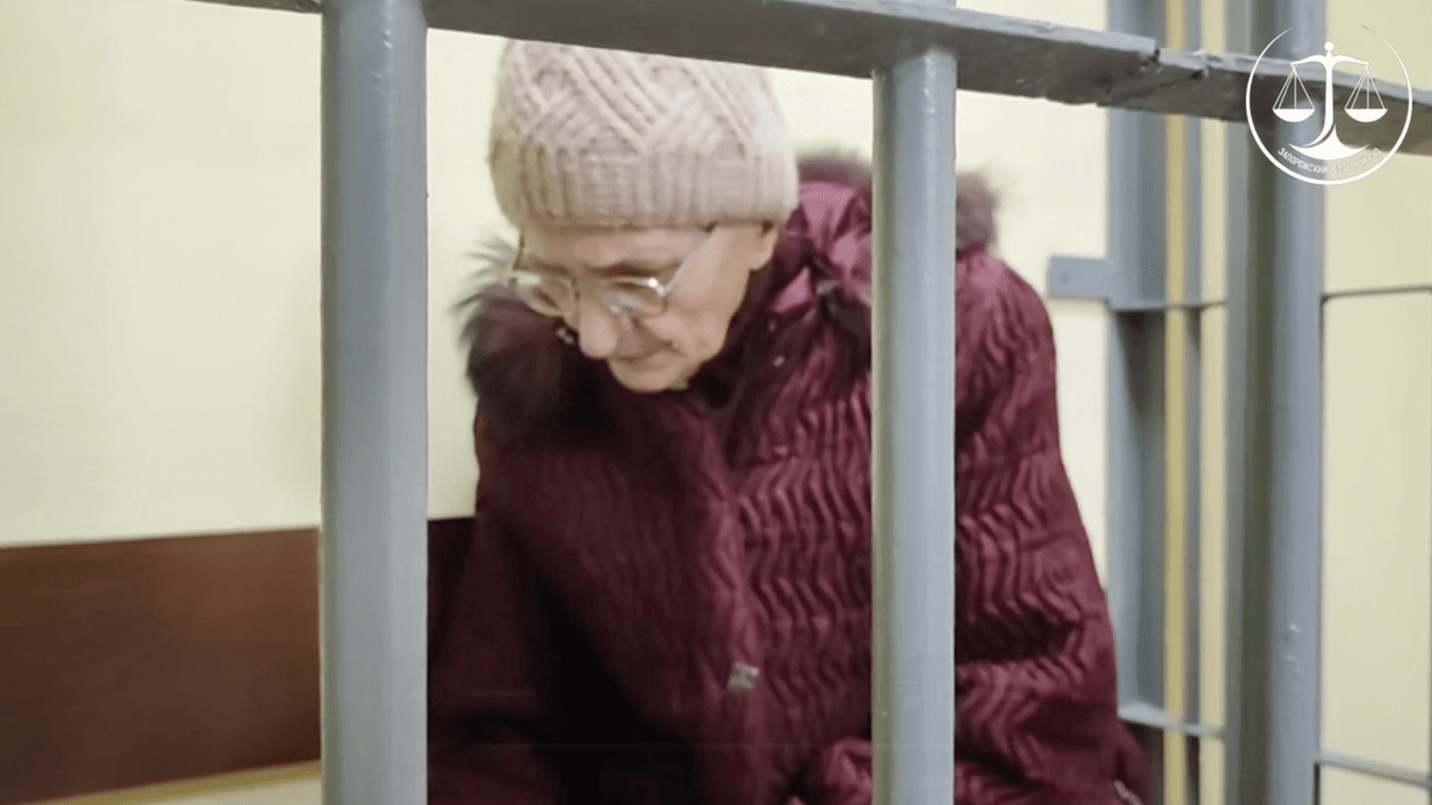
Halyna Bekhter is 69 years old. Retired. Living in Plodorodne, a village in occupied Zaporizhzhia Oblast. In July 2023, she opened her Ukrainian banking app and donated to the Armed Forces.
On March 5, 2026, a Russian-installed court sentenced her to eleven years in prison.
She wasn’t alone. In February, another 69-year-old woman in occupied Tokmak received fifteen years for the same act — donating her Ukrainian pension to her own country’s army. Ukraine’s Ombudsman called it what it was: “not justice but terror against civilians.”
The sentences landed on the twelfth anniversary of Russia’s illegal annexation of Crimea, where the repression machinery had been running far longer. Ukraine’s Foreign Ministry disclosed that approximately 300 people remained held on politically fabricated charges — including 159 Crimean Tatars, the peninsula’s indigenous people. At least 430 individuals had faced politically motivated cases since 2014. The real number likely exceeded 500.
Russia banned the Mejlis, the Crimean Tatar representative body. Shuttered the Ukrainian Orthodox Church. Carried out forced mobilization.
“Russia has turned Crimea into a territory of lawlessness,” the ministry stated, “where people are intimidated, persecuted, and imprisoned simply for the language they speak, the views they hold, or the faith they practice.”
Twelve years later, the peninsula served dual purposes: military base and drone launchpad. The occupied territory generating the weapons used to occupy more territory.
2027: The Year Ukraine Could Join Europe
While Lavrov declared Ukraine’s government illegitimate, the European Union was preparing to absorb it.
European Commissioner for Enlargement Marta Kos announced the EU would open technical negotiations on all of Ukraine’s remaining accession clusters — a significant procedural leap. Deputy Prime Minister Taras Kachka went further: Kyiv and the bloc could sign an accession agreement in 2027. Even before Ukraine met all requirements.
The groundwork supported the ambition. Ukraine had reached 84 percent progress under its Association Agreement by 2025. Hungary kept vetoing the formal opening of accession clusters, but a workaround agreement maintained momentum despite Budapest’s obstruction.
Kos offered the necessary caveat — “full membership comes only after full reforms.” The EU and G7 allies also committed to upgrading Ukraine’s energy infrastructure against Russian attacks, working directly with the Energy Minister.
The trajectory was unmistakable. Russia was trying to erase a country that Europe was simultaneously building the legal architecture to welcome.
The Pipeline Russia Broke, Hungary Blames on Ukraine
Slovakia made it official. Its energy system operator notified Ukrenergo that the mutual emergency energy assistance agreement would be terminated in May — unilaterally, without explanation.
The pretext: Slovak Prime Minister Robert Fico demanded in February that Ukraine restart Russian oil transit through the Druzhba pipeline. The detail Fico omitted: a Russian strike damaged the pipeline’s Ukrainian section in January.
Hungary’s Peter Szijjártó escalated further, accusing Ukraine of refusing to attend a trilateral meeting on the pipeline’s status. Ukrainian Foreign Ministry spokesperson Heorhii Tykhyi didn’t blink: “It is impossible to refuse something that was never planned.”
A Hungarian delegation had traveled to Kyiv to assess the pipeline. They failed to inspect it. Held no official meetings. Went home empty-handed. Naftogaz and the Foreign Ministry instead briefed ambassadors from 31 countries on the damage — without Budapest in the room.
The theatrics made more sense through a domestic lens. Orbán’s ruling Fidesz party trailed the opposition ahead of approaching elections. Hungary had already blocked the EU’s 20th sanctions package against Russia and a planned €90-billion loan to Ukraine. Pipeline outrage played well at home.
Ukrenergo put the practical impact in perspective: Slovakia’s emergency assistance had been used “quite rarely and in very limited volumes.” The gesture was political, not operational.
Promised Jobs. Given Rifles.
They came for work. Russia gave them guns.
Over 1,000 Kenyan citizens — lured to Russia with promises of well-paid civilian jobs, then press-ganged into fighting in Ukraine with minimal training. Kenyan intelligence services compiled the estimates. Kenya’s Foreign Minister Musalia Mudavadi flew to Moscow to get them back.
His agenda: secure safe repatriation, negotiate protections for Kenyans in the Russian labor market. His deputy had already found the words — denouncing Russia’s “unacceptable” use of Kenyans as “cannon fodder.”
Kenya wasn’t alone. South Africa repatriated 15 of its own citizens from the Donbas in late February after identical deceptions. The pattern was continental now. Russia, short on manpower, reaching into Africa for bodies to feed into the front.
Mudavadi met Lavrov. The same Lavrov who hours earlier had declared Ukraine’s government illegitimate and European peacekeepers “occupying forces.” Now he was shaking hands with a diplomat whose citizens Moscow had tricked into a war zone.
“They Miscalculated.” He Would Know.
Lavrov chose March 16 to lecture Washington and Jerusalem about hubris.
“If they thought they could subjugate it in a day or a few hours, they probably realize now just how seriously they miscalculated,” he said of the U.S.-Israeli campaign in Iran.
The words hung in the air. Russian propagandist Margarita Simonyan, 2021: “In a war, we’ll defeat Ukraine in two days.” The war just entered its fifth year.
Lavrov’s defense of Iran wasn’t purely philosophical. Tehran supplied the Shahed drones now hitting Ukrainian cities every night. U.S. officials alleged Russia was returning the favor — providing Iran with intelligence on American military positions in the region. Israel had just destroyed an aircraft used by the late Supreme Leader Khamenei, targeting Iran’s ability to coordinate with its allies.
Russia lecturing others about miscalculating the length of wars. The irony wrote itself.
The Oscar Nobody Collected
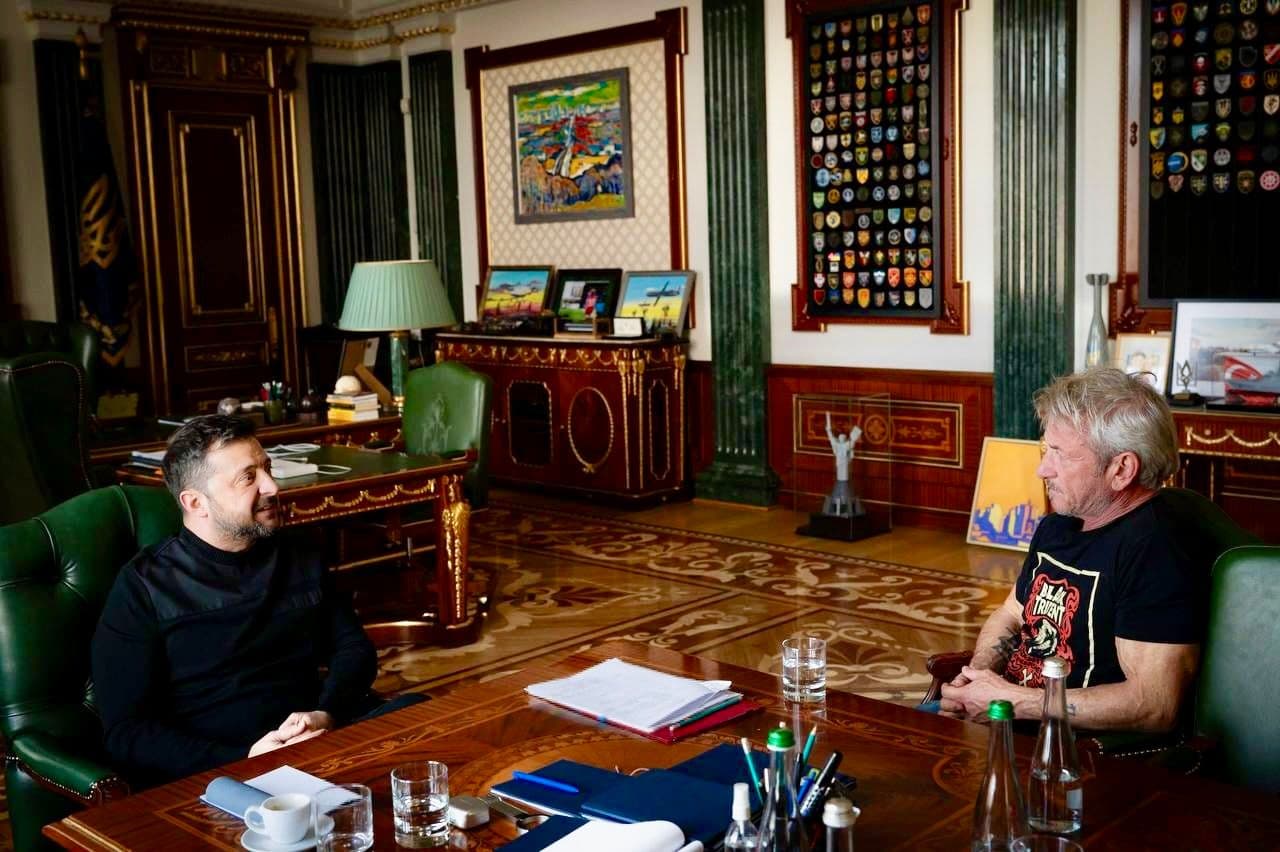
Los Angeles, March 15. Sean Penn’s name was called for Best Supporting Actor — his third Oscar, for “One Battle After Another.” His seat was empty. Kieran Culkin accepted on his behalf.
Penn was on a plane to a war zone.
He arrived in Kyiv on March 16 and met Zelensky. “Sean, thanks to you, we know what a true friend of Ukraine is,” the president said.
Penn had been in Ukraine the first day of the full-scale invasion. He filmed the documentary “Superpower.” He gave one of his previous Oscars to Zelensky. His organization, CORE Response, continued funding assistance for Ukrainian refugees. Ukraine awarded him the Order of Merit in 2022.
Hollywood’s biggest night, or a country fighting for survival. Penn picked the country.
Machine Tools and Plausible Deniability
Lukashenko sat down with Ryazan Oblast Governor Pavel Malkov on March 16. The agenda: machine tool manufacturing, passenger vehicles, freight vehicles. All dual-use. All potentially military.
No cameras caught the details. No joint statement clarified which factories or what specifications. Just another quiet meeting in what increasingly looked like a sanctions evasion pipeline — Belarusian industry filling the gaps Western restrictions carved into Russian manufacturing.
The goods were mundane. The implications weren’t.
Secret Maps, Two Bottles of Liquor, and a Meeting with Blinken
March 2024. A State Department-chartered train to Kyiv. Retired Major General Antonio Aguto Jr. — commander of the Security Assistance Group-Ukraine — handed classified maps to staff instead of a diplomatic courier.
On the return trip to Germany, the secret-classified maps were left on the train. In an unsecured cylindrical tube. The U.S. Embassy recovered them a day later when the train rolled back into Ukraine.
That wasn’t the worst of it.
One month later, May 14. Aguto sat down with Secretary of State Antony Blinken and Ambassador Bridget Brink. Something was wrong. The Inspector General’s 50-page report, dated March 12, 2026, found the cause: a concussion from at least one fall — possibly three — following a night of heavy drinking. Two bottles of liquor at a military engagement dinner the evening before.
The report recommended “appropriate action.” The classified materials incident was referred to the European Command Special Security Office. Aguto relinquished command in August 2024 and retired.
The general tasked with coordinating Ukraine’s military support lost classified maps on a train and showed up concussed to meet the Secretary of State. The IG wrote fifty pages about it. Three anonymous complaints triggered the investigation.
What March 16th Revealed
A war eating its own logic.
Russia killed the app its soldiers depended on, then demanded peak performance from a military that couldn’t coordinate. Moscow insisted on maximalist peace terms while bleeding reserves into counterattacks it never anticipated. The Kremlin called Zelensky the obstacle to peace while declaring that no peace short of Ukraine’s annihilation was acceptable.
Ukraine wasn’t winning on March 16. But it was systematically degrading Russia’s ability to fight. Four hundred square kilometers reclaimed. Reserves cannibalized from the spring offensive. Air defense systems hunted deep behind the lines. An aircraft factory shut down. And 194 of 211 drones knocked from the sky — a 92 percent intercept rate that kept millions alive another day.
The contradictions resolved nothing. Russian forces gained ground in some sectors. Ukrainian counterattacks reversed them in others. Peace talks stayed frozen between a president who wouldn’t accept annexation and an aggressor who wouldn’t accept less. EU accession advanced. Sanctions expanded. American attention drifted toward the Middle East.
In Crimea, 300 political prisoners marked twelve years of captivity. In Zaporizhzhia, Halyna Bekhter started an eleven-year sentence for a bank transfer. In Kyiv, Oliana Pavlyshyn said what millions felt.
“I want to live. But many Ukrainians right now are not living. We are surviving.”
The outages continued. The counterattacks continued. The drones continued. Day 1,483 ground forward — contradictions intact, costs mounting, conclusions nowhere in sight.
Prayer For Ukraine
- Protection for Ukraine’s Defenders Reclaiming Their Land
Lord, we lift up the Ukrainian soldiers advancing across Dnipropetrovsk Oblast — the assault groups entering Sichneve, pushing toward Voskresenska, seizing Rybne village by village. Protect those fighting to reclaim 400 square kilometers of their homeland. Shield the forces of the 7th Rapid Reaction Corps striking enemy positions in Pokrovsk, the defenders holding the line from Kupyansk to Sumy. Grant them strength, endurance, and the courage to keep pressing forward when exhaustion tells them to stop.
- Comfort for Those Surviving Under Fire
Father, we pray for Oliana Pavlyshyn, eighteen years old, hiding in a university basement as explosions shook Kyiv during the morning commute. We pray for the woman killed in Zaporizhzhia, the man killed in Sumy, and the twenty wounded across six oblasts who became statistics in a war that has made suffering routine. Hold the people of Ukraine who are not living but surviving. Comfort those in Odesa, Mykolaiv, and Kharkiv oblasts whose homes and schools were damaged overnight. Remind them they are not forgotten.
- Wisdom for Leaders Navigating Impossible Choices
God of wisdom, guide President Zelensky and Ukraine’s leaders as peace talks stall and allies grow distracted by conflict in the Middle East. Grant discernment to European leaders opening accession clusters and expanding sanctions. Give courage to those who resist pressure to accept unjust terms. And convict the hearts of those in Washington and beyond who would trade Ukrainian sovereignty for convenience.
- Justice for the Captive and the Condemned
Righteous Judge, we cry out for Halyna Bekhter — 69 years old, sentenced to eleven years for donating to her country’s army. For the 300 political prisoners marking twelve years in occupied Crimea. For the 159 Crimean Tatars held on fabricated charges. For the Kenyan citizens deceived into fighting a war that was never theirs. Bring justice for the commanders of Bucha, whose names the EU finally spoke aloud four years too late. Let accountability not be delayed another day.
- Endurance for a Nation That Refuses to Break
Lord, Ukraine’s air defenses knocked 194 of 211 drones from the sky on March 16. Its forces reclaimed territory Russia thought it owned. Its students went to class during air raids. Its diplomats answered threats with truth. Sustain this resilience. Strengthen the engineers rebuilding energy infrastructure. Encourage the soldiers holding positions from Kharkiv to Kherson. And we ask, Father — bring justice to those who wage this war, mercy to those who endure it, and an end to the suffering that has lasted 1,483 days too long.