
In Odesa, one million people woke in darkness after Russia’s largest aerial assault in months. In Kupyansk, Ukrainian soldiers reclaimed neighborhoods street by street. In Berlin, diplomats prepared for meetings that could end the war or merely pause it—and nobody knew which reality would prevail.
The Day’s Reckoning
The air raid sirens began just after midnight.
By dawn on December 13, 2025, Russia had launched 495 missiles and drones toward Ukrainian cities—one of the largest aerial assaults in nearly four years of war. Over one million people in Odesa Oblast woke to darkness. No power. No water. No heat. In the middle of winter. Three civilians were dead. Thirty-five wounded. Twenty power substations damaged or destroyed.
While Russian Kinzhals and Shaheds filled Ukrainian skies, Ukrainian soldiers were fighting house-to-house through Kupyansk’s Yuvileynyi neighborhood, completely liberating it by day’s end. Seven hundred kilometers inside Russia, Ukrainian drones struck the Saratov Oil Refinery, turning night into orange flame. In the Caspian Sea—supposedly safe from Ukrainian reach—SBU drones hit Lukoil platforms, halting operations that funded Moscow’s war machine.
And in three days, everything might change.
President Zelensky announced he would meet Trump’s Special Envoy Steve Witkoff in Berlin on December 15, alongside French President Macron, UK Prime Minister Starmer, and German Chancellor Merz. Not a photo opportunity. The real negotiations. The meetings where abstract concepts like “territorial concessions” and “security guarantees” would become concrete decisions determining whether Ukraine survives as a sovereign nation.
Washington was signaling impatience. European capitals feared being sidelined. Russian missiles kept falling. Turkish President Erdogan called for Black Sea ceasefires hours after Russian strikes damaged a Turkish vessel. Belarus freed 123 political prisoners in exchange for sanctions relief on potash exports.
It was a day when destruction and diplomacy, darkness and defiance, military pressure and peace talks all collided with stunning force. The war on the ground. The war in the skies. The war at the negotiating table. All happening simultaneously on day 1,389.
Nobody knew which battlefield would ultimately matter most.
When the Sky Turned to Metal: 495 Reasons to Run
The radar screens bloomed with contacts just after midnight.
Ukrainian Air Force operators watched the deadly constellation form. From Kursk and Oryol. From Millerovo and Primorsko-Akhtarsk. From occupied Crimea. The count climbed: 465 drones, sixteen Kalibr cruise missiles, four hypersonic Kinzhals, ten Iskander missiles.
Four hundred ninety-five individual decisions to kill.
Roughly 270 were Shaheds—Iranian-designed kamikaze drones. Moscow called it “infrastructure targeting.” Everyone else called it terror.
The air defense crews worked with surgeon’s precision. Four hundred seventeen drones fell. Thirteen cruise missiles exploded mid-flight. Electronic warfare operators twisted six more off course. An extraordinary interception rate representing thousands of training hours and billions in Western systems.
But thirty-three drones found targets. Eight missiles made it through.
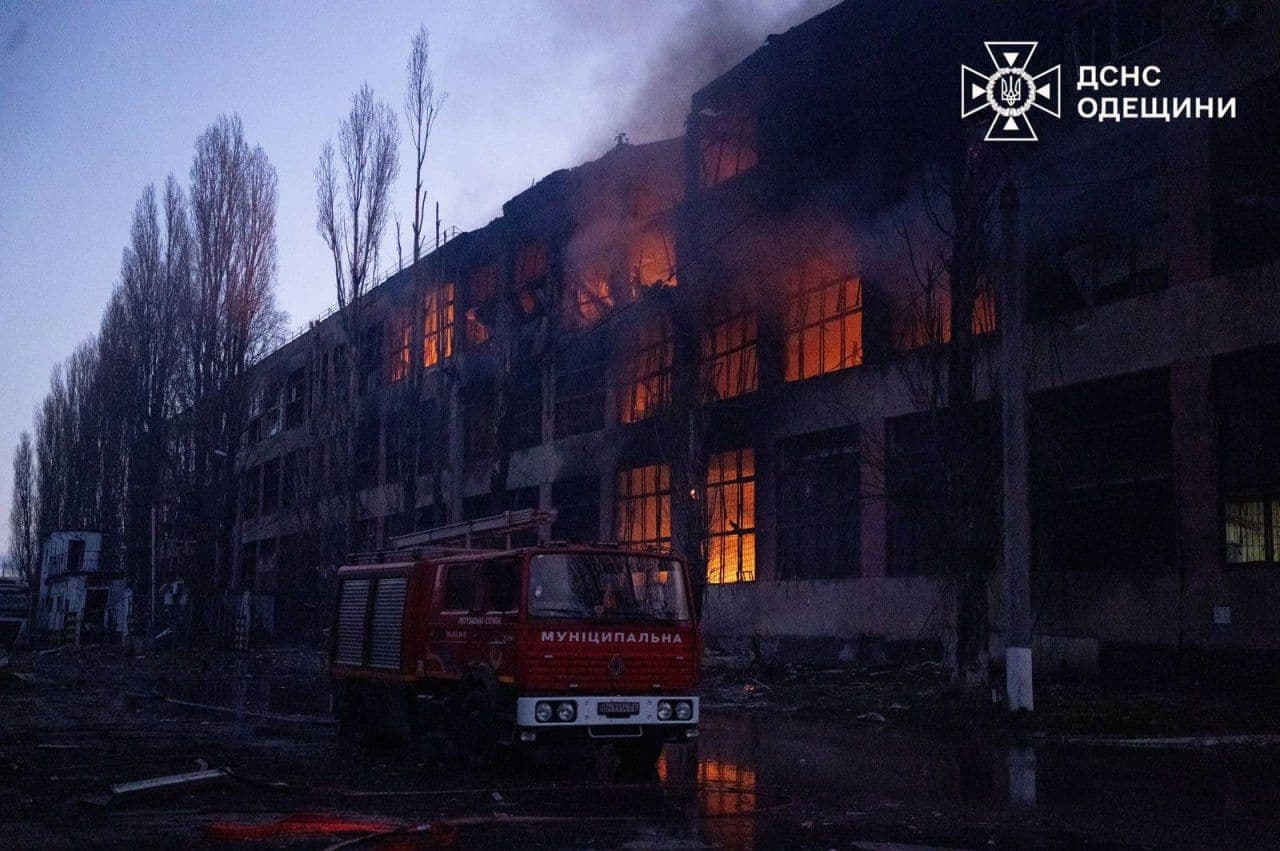
Aftermath of a Russian overnight attack on Odesa Oblast, Ukraine. Morning light reveals what the darkness brought: twisted metal, shattered concrete, and the work that begins before the fires are even cold. (Ukraine’s State Emergency Service)
By morning, twenty power substations in Odesa Oblast lay twisted and smoking. Over one million people lost electricity. No power. No water. No heat in December.
The targeting pattern revealed everything. Not military bases. Energy infrastructure. The grids keeping Ukrainians warm. The water keeping them alive. Russia’s calculation: suffering would accomplish what combat couldn’t.
One dead in Oleksiyevo-Druzhkivka, two in Kostiantynivka, six wounded in Druzhkivka. Nine injured across Kharkiv Oblast. Seven wounded in Kherson. Five in Mykolaiv, including a sixteen-year-old girl.
Three dead. Thirty-five wounded. One million without power.
Then the Turkish vessel Viva—struck by Russian drones hauling sunflower oil through the Black Sea. A NATO member’s ship hit by Russian weapons. Recklessness or escalation. Neither offered comfort.
The lights would come back on—they always did. Energy workers were already climbing damaged substations even as drones prowled the sky.
But in every darkened Ukrainian home, one question hung: when would the next wave come?
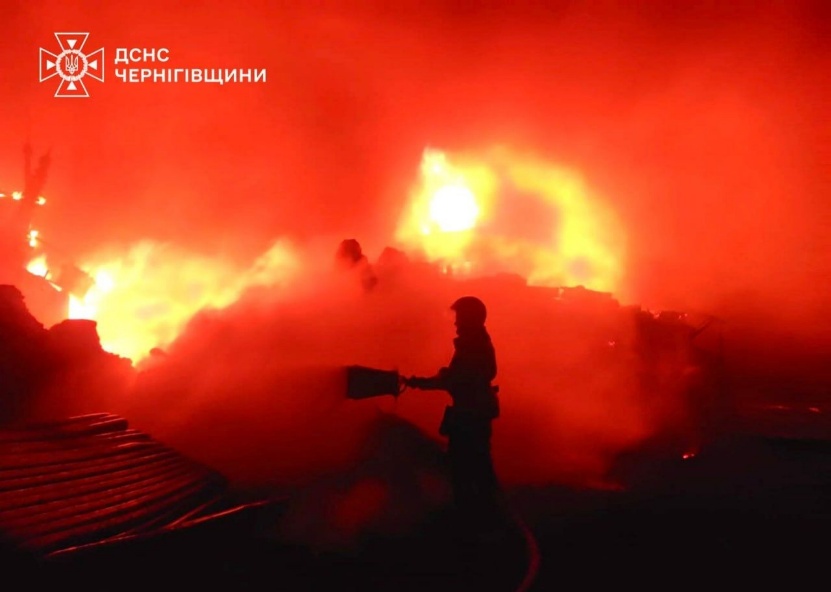
A single firefighter battles flames in Chernihiv Oblast after Russia’s overnight assault. The water fights fire while 495 missiles and drones found Ukrainian targets across the country. (Ukraine’s State Emergency Service)
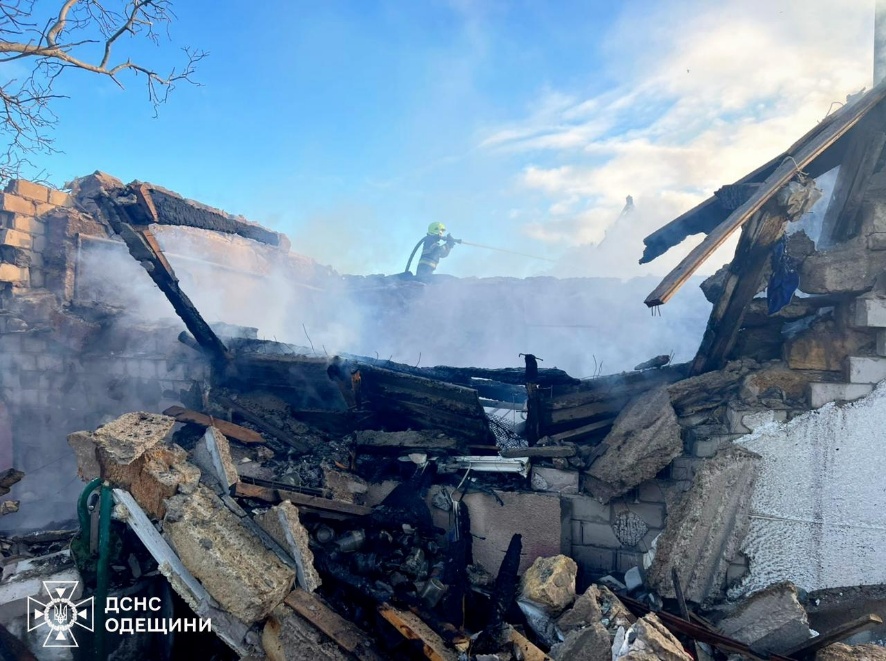
The fire is dying now, leaving only smoke and rubble in Odesa Oblast. One firefighter stands amid what used to be someone’s workplace, someone’s livelihood, someone’s ordinary Friday morning. (Ukraine’s State Emergency Service)
Every Window, Every Door: Taking Kupyansk Back
Picture yourself in a damaged apartment building in Kupyansk. Cold enough to see your breath. The last Russian position is two blocks away. Maybe.
The fog is so thick you can barely see across the street.
Your drone operator’s voice crackles: possible scouts next door. Or civilians who didn’t evacuate. Or nothing—just another empty building fought over for months.
This is urban combat in 2025. Slow. Methodical. Terrifying. Every window could hide a sniper. Every basement a platoon. Either you clear properly, or people die.
Ukrainian forces completely seized Yuvileynyi Microraion in southwestern Kupyansk. Military observer Yuriy Butusov assessed the liberation would prevent Russian forces from sustaining positions in southern Kupyansk. Holding the neighborhood cut logistics routes. Made Russian positions untenable.
Geolocated footage showed Ukrainian soldiers advancing building by building—clearing operations requiring coordination between infantry, drones, artillery.
Yuvileynyi wasn’t strategically critical—just apartment blocks and shops. But it proved Russian gains could be reversed. Streets claimed weeks earlier. Intersections marked secured. Buildings occupied. All back through patient planning and execution.
The contrast was stark. Russian forces seized parts through infiltration when defenses were thin. Ukrainian forces were taking it back through methodical clearing that would hold. There’s a difference between occupying and controlling.
Russian infiltration groups remained active, moving through fog that grounded Ukrainian drones. The same tactics—small groups, fast movement, exploiting weather.
But Ukrainian forces had learned. Drone operators developed workarounds. Infantry adapted. What worked in August worked less well in December.
Even Russian milbloggers acknowledged the advances, though many cast doubts despite evidence.
You couldn’t fake holding Yuvileynyi. Either your soldiers were clearing buildings, or they weren’t.
The footage said they were.
Three Days to End a War—or Pause It
Zelensky’s announcement came without fanfare: he would meet Trump’s envoys and European leaders in Berlin on December 15 “concerning the Foundation of Peace—a political agreement to end the war.”
Trump’s Special Envoy Steve Witkoff. French President Macron. UK Prime Minister Starmer. German Chancellor Merz. Ukrainian Chief of the General Staff Andriy Hnatov and defense sector representatives—the people who would make security guarantees work.
This wasn’t a photo opportunity. This was when “territorial concessions” and “security guarantees” would stop being abstract and start becoming concrete decisions determining whether Ukraine survived as a sovereign nation.
A White House official signaled flexibility: the United States would support a potential Ukrainian territorial referendum. Political cover for painful compromises framed as Ukrainian democratic choices rather than imposed concessions.
Zelensky identified three make-or-break issues: Ukraine’s withdrawal from unoccupied Donbas, the scope of security guarantees, Zaporizhzhia Nuclear Power Plant’s status.
Pressure came from everywhere. Washington signaling impatience—Trump was “sick of meetings just for the sake of meeting.” European capitals worried about being shut out. Russian missiles kept falling—Moscow’s negotiating position resting on its ability to inflict suffering.
No joint document yet. But Kyiv and European partners had handed Washington their revisions to the U.S.-proposed framework. Moving faster than public statements indicated.
EU foreign policy chief Kaja Kallas cut through diplomatic niceties: “The problem for peace is Russia. Even if Ukraine received security guarantees, without concessions from the Russian side, we would have other wars, perhaps not in Ukraine but elsewhere.”
Genuine Russian concessions would mean limiting armed forces size, restraining military budgets. Commitments that would constrain Moscow’s capacity for future aggression rather than simply pausing hostilities.
Three days. The people gathering in Berlin would decide whether peace meant protection or capitulation, whether security guarantees were promises or platitudes.
Seven Hundred Kilometers Deep: Making Russia Pay
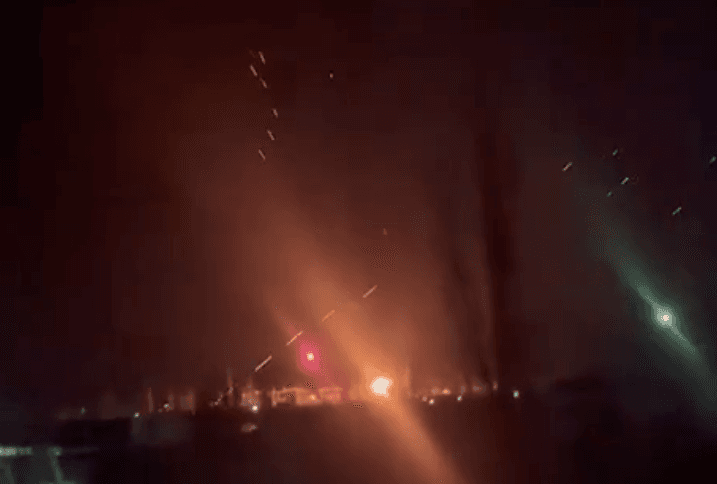
Orange flames light the December night somewhere in occupied Crimea. Ukrainian drones reached over 700 kilometers to make Russia’s war more expensive—one refinery, one chemical plant, one oil depot at a time. The fire burns bright enough to see for kilometers. Bright enough that Moscow can’t pretend it didn’t happen. (Exilenova+/Telegram)
The flames at Saratov Oil Refinery lit the night sky orange.
Ukrainian forces had struck over 700 kilometers from the nearest Ukrainian-controlled territory. Lieutenant Andriy Kovalenko confirmed it. Saratov Oblast Governor Roman Busargin acknowledged damage to “unspecified infrastructure”—the vagueness Russian officials employed when they couldn’t deny successful attacks.
Acknowledge something happened, minimize details, hope the news cycle moved on.
But the attacks kept coming.
Ukrainian forces hit the Minudobreniya Chemical Plant in Rossosh, Voronezh Oblast—producing chemicals for explosives and ammunition. A strike against Russia’s capacity to produce weapons used against Ukrainian cities.
Then the Caspian Sea. SBU drones hit Lukoil’s Filanovsky and Korchagin oil platforms, halting operations. Major revenue generators funding missile production, soldier salaries, Russian aggression.
The Caspian strikes proved Ukrainian forces weren’t limited by geography. Moving from the Black Sea to the Caspian wouldn’t help. Ukrainian drones reached there too.
Late December 13, the campaign continued. Explosions at an oil depot near Simferopol. Fires at the Akron Chemical Plant in Veliky Novgorod. Strikes near Uryupinsk and Smolensk. Forty-one drones over Crimea alone—saturation tactics overwhelming air defenses.
The logic was elegant: Russia’s oil and gas revenue funded the war. Every refinery shut down meant less money for missiles. Every damaged plant meant fewer explosives. Every disrupted platform meant smaller budgets.
Moscow could replace soldiers. It could replace tanks. Replacing industrial infrastructure generating revenue was harder.
Zelensky announced Ukrainian sanctions against nearly 700 vessels linked to Russia’s shadow fleet—operating under flags of over fifty jurisdictions evading Western sanctions.
The sanctions created legal complications, insurance risks, operational headaches. Ports reluctant to accept listed vessels. Insurance companies reluctant to cover ships.
Death by a thousand cuts. Dozens of strikes across hundreds of targets, each making Russia’s war harder to sustain.
Fog, Mud, and Empty Guns: Pokrovsk Holds
Commander-in-Chief Oleksandr Syrskyi’s visit to Pokrovsk came with news Ukrainian defenders already knew: Russia had deployed additional reserves to the sector.
The offensive was intensifying.
The situation remained “challenging”—military-speak for “difficult but not catastrophic.” Translation: Ukrainian forces were employing “active defense tactics,” defending aggressively, looking for opportunities to counterattack rather than just holding lines.
Pokrovsk had been under sustained Russian assault for a year. The city mattered because it sat astride critical logistics routes. Its fall would open approaches to other Ukrainian strongpoints. Russian forces were attacking from multiple directions: northwest near Hryshyne, north near Rodynske, east near Myrnohrad, southwest near Kotlyne.
Geolocated footage showed Russian forces operating in central Myrnohrad—infiltration missions that didn’t change territorial control but demonstrated Russian persistence. The Ukrainian 7th Air Assault Corps reported Ukrainian forces continued controlling northern Pokrovsk and were conducting raids south of the Donetska railway, pushing back against Russian claims of city capture.
Weather was playing its cruel role. Fog and rain limited Ukrainian drone operations, allowing Russian forces to move in small groups without heavy equipment. Some Russian soldiers were disguising themselves in civilian clothes—a violation of the laws of war that provided tactical advantage in murky conditions.
Then came the complaint.
One Russian milblogger griped about artillery shell shortages in strikes against Hryshyne—a detail suggesting Russian logistics weren’t keeping pace with operational demands.
Even with reinforcements, you can’t fight effectively if your guns have no shells.
Where Meters Cost Lives
Across the eastern front, the war continued its familiar pattern: dozens of Russian attacks, most failing, a few making marginal gains measured in meters.
In northern Kharkiv Oblast, Russian forces attacked near Lyptsi and Vovchansk but made no confirmed advances. A Russian milblogger acknowledged what Ukrainian defenders knew: Russian forces in lowlands would struggle to advance because Ukrainian forces held higher ground. Terrain still mattered, even in a war dominated by drones.
In the Lyman direction, Ukrainian forces had likely recaptured positions in southern Karpivka, though Russian forces advanced in the northern part. Street-level combat in a contested village—the kind generating dramatic milblogger claims but not changing operational realities.
In the Siversk direction, Russian forces advanced in central Svyato-Pokrovske. The gains were measured in city blocks—but in urban combat, a single block could take days to capture.
Ukrainian 11th Army Corps Spokesperson Colonel Dmytro Zaporozhets warned Russian forces were attempting to bypass Yampil from north and south. Poor weather inhibited Ukrainian defensive operations. Water features—likely the Siverskyi Donets River—prevented Russian forces from coordinating attacks across axes. Geography and weather were shaping the battle as much as tactics.
In northern Sumy Oblast, Russian forces had decreased small-group infantry attacks due to heavy losses and persistent failure to advance. Sometimes the most significant developments weren’t dramatic breakthroughs but Russian decisions to stop attacking because casualties weren’t worth non-existent gains.
In the Hulyaipole direction, Ukrainian forces struck Russian-occupied buildings during infiltration missions. Ukraine’s Southern Defense Forces published footage of twelve Russian servicemembers surrendering north of Novodanylivka, refuting Russian claims of capturing the settlement.
Grinding, unglamorous combat generating few headlines but consuming enormous resources and producing steady casualties. The kind of fighting that couldn’t be sustained indefinitely but somehow continued day after day.
When Nobody’s Listening: Erdogan’s Black Sea Problem
Turkish President Erdogan’s warning that the Black Sea should not become an “area of confrontation” came with exquisite timing.
The Russian air strike that damaged the Turkish-owned vessel Viva in Odesa’s port had occurred just hours after Erdogan personally raised the issue with Vladimir Putin at a summit in Turkmenistan.
Either Putin didn’t care about Turkish concerns, or he couldn’t control his military, or the strike was approved precisely to demonstrate that Russia’s military objectives trumped Turkish sensitivities.
“The Black Sea should not be seen as an area of confrontation,” Erdogan told reporters aboard his plane. “This would not benefit Russia or Ukraine. Everyone needs safe navigation in the Black Sea.”
The problem was that both Russia and Ukraine needed the Black Sea to be an area of confrontation. Russia needed to disrupt Ukrainian exports. Ukraine needed to attack Russian tankers. Turkish preferences didn’t factor into either calculation.
Erdogan called for a “limited ceasefire” on attacks targeting ports and energy facilities. Turkey controlled the Bosphorus Strait, giving Ankara leverage with both sides.
But leverage only works if someone’s listening.
“After this meeting we held with Putin, we hope to have the opportunity to also discuss the peace plan with US President Trump,” Erdogan said. “Peace is not far away, we can see it.”
The optimism clashed with reality—a Turkish vessel burning in Odesa’s port. Over recent weeks, several attacks had targeted tankers in the Black Sea. Ankara summoned envoys from both Russia and Ukraine.
But summoning envoys didn’t stop the attacks.
Turkey’s position illustrated a fundamental problem: when you’re caught between two warring parties, maintaining balance means satisfying neither.
Prisoners for Potash: Lukashenko’s Last-Minute Switch
Belarusian President Alexander Lukashenko pardoned 123 political prisoners in a carefully choreographed exchange for United States sanctions relief on Belarusian potash.
The deal represented a rare intersection of humanitarian concerns and economic interests. Its execution revealed Lukashenko’s characteristic unpredictability.
Belarusian opposition leader Svetlana Tikhanovskaya reported that Lukashenko decided at the last minute to send 114 of the released prisoners to Ukraine rather than to Lithuania as originally planned. Ukraine was unprepared to accept the suddenly arriving individuals.
The last-minute change demonstrated either poor coordination or deliberate maneuvering. Possibly both.
US Special Envoy to Belarus John Cole confirmed that Lukashenko had also agreed to stop Belarusian weather balloons from conducting incursions into Lithuanian airspace—a seemingly minor concession addressing NATO member concerns about border violations.
The package of agreements suggested American willingness to engage with the Lukashenko regime on specific issues even while maintaining broader opposition to his authoritarian rule.
The timing of the pardon, occurring as peace negotiations intensified and diplomatic positioning became crucial, suggested Lukashenko was maneuvering to maintain relevance in regional affairs while extracting economic benefits from Western engagement.
What December 13 Revealed
December 13, 2025, revealed a war fought on three fronts simultaneously. Russian missiles darkened cities. Ukrainian soldiers liberated streets. Diplomats prepared to decide whether peace meant protection or capitulation.
The 495 missiles and drones represented both capability and desperation—capability to sustain massive attacks four years into war, desperation evident in targeting civilian infrastructure when military objectives proved elusive.
Simultaneity defined the day. While Russian weapons darkened cities, Ukrainian forces reversed Russian gains in Kupyansk. Deep inside Russia, Ukrainian drones struck refineries and chemical plants, making the war more expensive.
Then Berlin. December 15 meetings where Trump’s envoy, European leaders, and Zelensky would make concrete decisions about Ukraine’s survival. The pressure was immense. Washington signaling impatience. European capitals worried about being sidelined. Moscow’s demands unchanged. Russian missiles kept falling.
The fundamental tension was inescapable: How do you ensure any peace agreement actually prevents future Russian aggression rather than simply pausing current hostilities long enough for Moscow to rebuild and attack again?
EU foreign policy chief Kaja Kallas had articulated it clearly: “Even if Ukraine received security guarantees, without concessions from the Russian side, we would have other wars, perhaps not in Ukraine but elsewhere.” Genuine Russian concessions would mean limiting armed forces size, restraining military budgets—commitments that would constrain Moscow’s capacity for future aggression.
The lights would come back on in Ukrainian cities—they always did. The question wasn’t whether Ukraine could survive Russian attacks. Nearly four years had answered that definitively.
The question was whether the peace being negotiated in Berlin would protect those lights from going dark again. Whether 1,389 days of war would culminate in genuine security or merely temporary respite.
Day 1,389. Three wars happening simultaneously. And nobody knew which battlefield would ultimately matter most.