
U.S. intelligence officials say Russia has been feeding Iran targeting data for strikes on American forces across the Middle East—just as Washington considers easing sanctions on Russian oil. At the same time, Zelensky traveled to the Donetsk frontline warning that Russia is preparing a major spring offensive. The revelations expose a widening strategic contradiction at the heart of the war.
The Day’s Reckoning
March 6, 2026, opened with a revelation that captured the strange geometry of this war and the conflicts surrounding it. U.S. officials told the Washington Post that Russian intelligence had been providing Iran with detailed targeting data on American military assets across the Middle East—satellite imagery, aircraft locations, base layouts, and logistics sites. The information could turn Iranian drone and missile strikes from scattered attacks into coordinated operations.
Only hours later, U.S. Treasury Secretary Scott Bessent suggested Washington was considering easing some sanctions on Russian oil to stabilize global energy markets disrupted by the Middle East crisis. Restrictions on Russian shipments to India had already been quietly relaxed the day before. The contradiction was stark: Moscow was accused of helping Iran target American forces while Washington debated restoring economic breathing room to Russia’s war economy.
On Ukraine’s eastern front, President Zelensky traveled to defensive positions in Donetsk Oblast, meeting brigades holding the Kramatorsk, Druzhkivka, and Sloviansk sectors. He warned commanders that Russia was preparing a new spring offensive and stressed that battlefield strength would determine Ukraine’s leverage in negotiations.
At the same time Zelensky rallied frontline defenders, Vladimir Putin spoke with Iran’s president urging an immediate ceasefire in the Middle East—casting Russia as a peacemaker while continuing its own war.
Ukrainian forces meanwhile pushed forward in Zaporizhzhia, liberating more than 240 square kilometers since January, while 300 prisoners of war returned home in the second exchange in two days.
Yet even as soldiers came home, Hungary threatened to halt crucial transit goods to Ukraine over the Druzhba pipeline dispute.
The day revealed a war defined by contradictions—alliances colliding, diplomacy clashing with reality, and every gain shadowed by new pressure.
The Coordinates from the Kremlin’s Shadows
Somewhere in the Middle East, a drone operator studies a screen. Coordinates flash into view—not rough grids, not guesses, but exact locations. A U.S. warship at sea. An aircraft on a runway. A temporary command post hidden among civilian buildings.
According to sources cited by the Washington Post, that precision may not be Iran’s work alone. U.S. officials say Russia has been providing Tehran with intelligence on American military assets since the February 28 U.S.-Israeli strikes. Ship movements. Aircraft positions. Base layouts. The kind of data that can turn a drone swarm into a guided attack.
Commercial satellite firms could not easily provide that level of detail. Planet Labs had already imposed a 96-hour delay on imagery covering Gulf conflict zones. Other companies had long refused to release images of U.S. or allied bases. If Iran wanted current targeting data, it needed another source.
Russia had one. Military satellites. Reconnaissance systems. The ability to direct imaging assets toward specific targets on demand. U.S. officials described Moscow’s support as comprehensive.
Analysts at the Center for Naval Analyses saw the pattern in Iranian strikes. These were not random hits. They were landing on radars, command nodes, and temporary operational sites—the kind of targets that require fresh, detailed reconnaissance. The attacks looked less like guesswork and more like guided targeting.
It would not be the first time. In 2024, Moscow reportedly gave targeting data to Houthi forces attacking Western shipping in the Red Sea. Now, officials believe, that partnership has widened—with American forces in the crosshairs.
The White House declined to confirm the reports. Press Secretary Karoline Leavitt said the administration would not comment on leaked intelligence and insisted U.S. forces were crushing Iran’s campaign.
The intelligence, officials say, is real. The danger is no longer theoretical.
Oil for War: Washington Weighs Relief as Russia Arms America’s Enemies
While Russian satellites were allegedly helping Iran track American forces, a very different conversation was unfolding in Washington.
On Fox News, U.S. Treasury Secretary Scott Bessent calmly explained why lifting sanctions on Russian oil might now make economic sense. Speaking on The Kudlow Report, he noted that “hundreds of millions of barrels” of Russian oil remained stranded under sanctions. If those restrictions were lifted, he argued, global supply could quickly increase.
The proposal followed a quiet move the day before: Washington had already eased restrictions on Russian oil shipments heading to India. Bessent framed the step as cooperation with New Delhi, which had previously reduced purchases at U.S. request. Now the signal was changing. India could buy again—with American approval.
The reasoning was simple, at least on paper. U.S. military strikes against Iran had disrupted Iranian oil production, tightening global markets. Russian oil could fill the gap.
But the timing carried a sharp contradiction. Only five months earlier the United States had sanctioned major Russian energy companies—including Rosneft and Lukoil—along with more than thirty other firms, citing Moscow’s refusal to show “serious commitment” to ending the war in Ukraine. The sanctions were meant to squeeze the Kremlin’s war finances.
Now those same restrictions were under review.
Democratic Senator Jeanne Shaheen voiced the concern spreading through Washington. Russia, she said, was targeting Americans across the Middle East, Ukraine, and beyond—yet the United States appeared ready to ease pressure on the very economy fueling the war.
The contradiction was hard to miss. Russia was accused of helping Iran threaten American forces. At the same moment, Washington was considering reopening the financial lifeline that helped fund Moscow’s war machine.
Transactional diplomacy had collided with strategic reality.
The Peacemaker’s Mask
Hours after reports that Russian intelligence had helped Iran target American forces, Vladimir Putin called Iranian President Masoud Pezeshkian.
His message was polished and calm. Russia, he said, opposed the use of force in the Middle East and supported “an immediate cessation of hostilities.” It was the language of restraint, crafted for foreign audiences still willing to imagine Moscow as a force for stability.
But the contradiction was glaring.
For more than three years, the Kremlin has refused any meaningful ceasefire in Ukraine. Every serious proposal has been rejected or tied to demands for Ukrainian concessions. Moscow has not pursued peace through compromise, only peace through victory.
Now Putin was urging Washington to stop its campaign against Iran while continuing Russia’s own war and, according to U.S. officials, helping Iran strike Americans.
That was not hypocrisy on the margins. It was the strategy itself.
Russia wanted to sound like the adult in the room while acting with complete ruthlessness. American force could be branded escalation. Russian force could be wrapped in diplomacy. Ceasefires were for others, never for Moscow.
The message was simple: speak the language of peace, keep the machinery of war running, and trust that enough of the world will pretend not to notice.
Zelensky Walks the Front: Leadership Where the Guns Speak
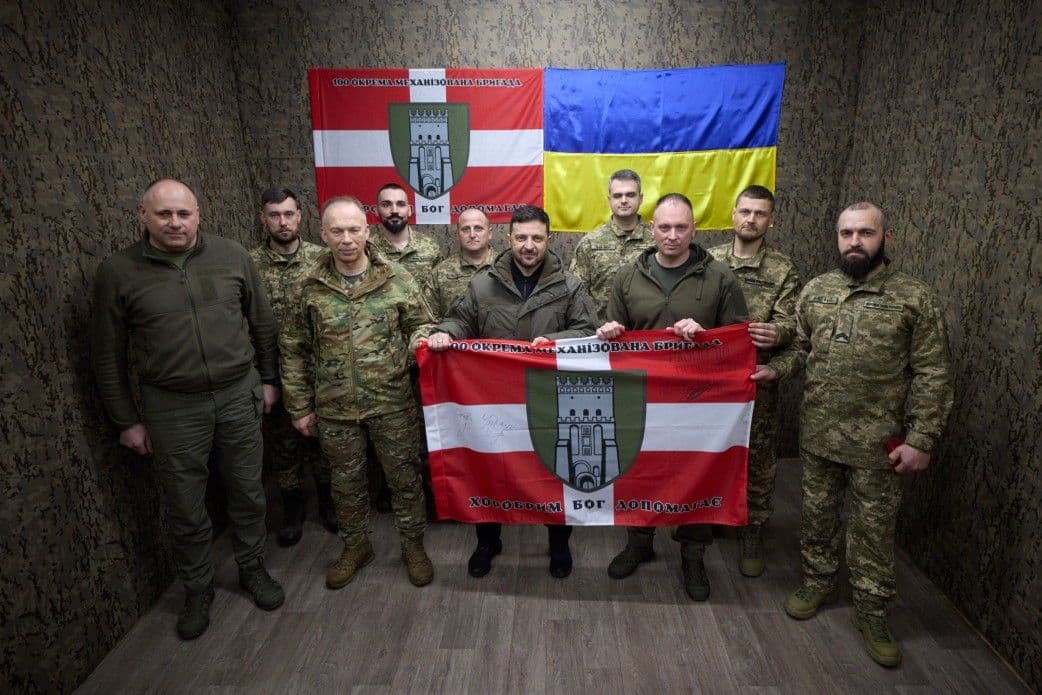
While diplomats argued in distant capitals and economists debated oil markets, Volodymyr Zelensky went somewhere far less comfortable—into the war itself.
In Donetsk Oblast, the Ukrainian president moved through defensive positions where the brigades holding the line would ultimately decide whether any negotiation mattered. The fighting around Kramatorsk, Druzhkivka, and Sloviansk had been grinding forward for months, Russian pressure never fully easing.
Standing before commanders, Zelensky delivered a warning as much as a message.
“The Russians are not abandoning the war,” he said. “Here in Donetsk Oblast, they are preparing an offensive for the spring.”
The words were meant for more than the soldiers listening. They were aimed at Western capitals where some policymakers had begun suggesting Ukraine should consider territorial concessions in exchange for peace.
Zelensky met units anchoring the defense of northern Donetsk: formations from the 11th and 19th Army Corps, the Azov Brigade, the 100th and 28th Mechanized Brigades. At the command post of the 81st Separate Airmobile Brigade, he convened a security meeting with Commander-in-Chief Oleksandr Syrskyi and senior officers responsible for holding the line.
The focus was simple: strength.
“Our positions must be strong. Our brigades must be fully supplied,” Zelensky said. “Our warriors are holding their ground with dignity.”
The visit carried several purposes at once. It showed frontline soldiers their president standing beside them in the sector where the next Russian offensive may begin. It allowed Zelensky to assess defenses firsthand. And it sent a clear signal to negotiators watching from afar.
In this war, diplomacy follows the battlefield.
“Evil must be stopped,” Zelensky said. “And Ukrainians here in Donbas are doing exactly that.”
The message was unmistakable: the stronger Ukraine’s defenses, the stronger its voice at the negotiating table.
The Villages That Broke the Line
The counteroffensive began quietly when Russian Starlink terminals went dark on February 1. Five weeks later, Ukrainian troops were still moving forward.
Since January 1, Ukrainian forces have liberated 244 square kilometers in Zaporizhzhia Oblast. During the same period, Russian forces captured only 115 square kilometers. The arithmetic is blunt: in this sector, Ukraine has taken back more ground than it has lost.
Military observer Kostyantyn Mashovets traced the advance village by village. South of the Vovcha River, Ukrainian troops consolidated control of Ternove and began pushing Russian units out of Berezove. They moved into central Novomykolaivka and continued south toward Novohryhorivka and Solodke.
West of the Haichur River, Ukrainian forces cleared Russian troops from territory Moscow had claimed to control. Ternuvate and Kosivtseve were liberated. Russian claims about capturing Rizdvyanka proved false—Ukrainian soldiers still held positions there. Even in contested villages like Tsvitkove, Krynychne, and Staroukrainka, Ukrainian units maintained footholds.
The geography matters because Hulyaipole matters. Russian commanders see the town as a potential springboard for future offensives toward Orikhiv or Zaporizhzhia City. But Ukrainian counterattacks are forcing Russia’s Eastern Grouping of Forces to commit reserves to defensive fighting—units meant for a future offensive.
Ukrainian officers say the gains were made possible by Russian mistakes late last year. Moscow focused on infiltration tactics for propaganda victories along the front but failed to build deeper defensive lines behind them.
When Ukrainian forces pushed forward, there was little waiting behind the first line.
Communications disruptions from the Starlink shutdown compounded the problem. Ukrainian troops exploited the confusion, advancing further than Russian commanders expected.
Every village liberated forces Russia to fight just to reclaim ground it once believed was secure.
The Long Road Home
The buses arrived carrying men who had spent months, and for some years, behind prison walls.
Three hundred Ukrainian servicemen stepped back into freedom in the latest exchange. The day before, two hundred more had returned. Five hundred prisoners in forty-eight hours, one of the largest swaps of the war.
Many had been captured in 2022. The youngest released soldier was twenty-six, taken at twenty-two. The oldest was sixty. Sailors, infantrymen, and sergeants from the fronts in Donetsk, Luhansk, Kharkiv, Zaporizhzhia, and Kherson. Some had defended Mariupol. Most had spent more than a year in captivity.
Russia also released two Ukrainian civilians.
President Zelensky thanked the mediators and said simply that “the agreements worked,” pointing to recent contacts in Geneva. Ukraine’s ombudsman, Dmytro Lubinets, said representatives monitored both exchanges to ensure compliance with Geneva Convention rules on prisoner treatment.
In a war where nearly every line between Kyiv and Moscow has broken down, prisoner exchanges remain one of the few channels still working. The United States and the United Arab Emirates helped mediate the latest swap.
Steve Witkoff, the U.S. Special Envoy to Peace Missions, credited sustained negotiations directed by President Donald Trump. His statement celebrated the return of prisoners while skirting the larger reality.
Peace talks remain frozen.
For now, the only agreements still moving are the ones that bring soldiers home.
Seven Hours of Detention: The Budapest Border Incident
Late in the evening, seven Ukrainian bank employees finally crossed back into Ukraine. That morning, they had been stopped in Hungary and detained for what Kyiv would later call “hostage-taking” and “state terrorism.”
Hungarian authorities had intercepted two armored bank vehicles carrying $40 million, 35 million euros, and 9 kilograms of gold from Austria to Ukraine. The seven Oschadbank employees traveling with the shipment were detained on suspicion of money laundering.
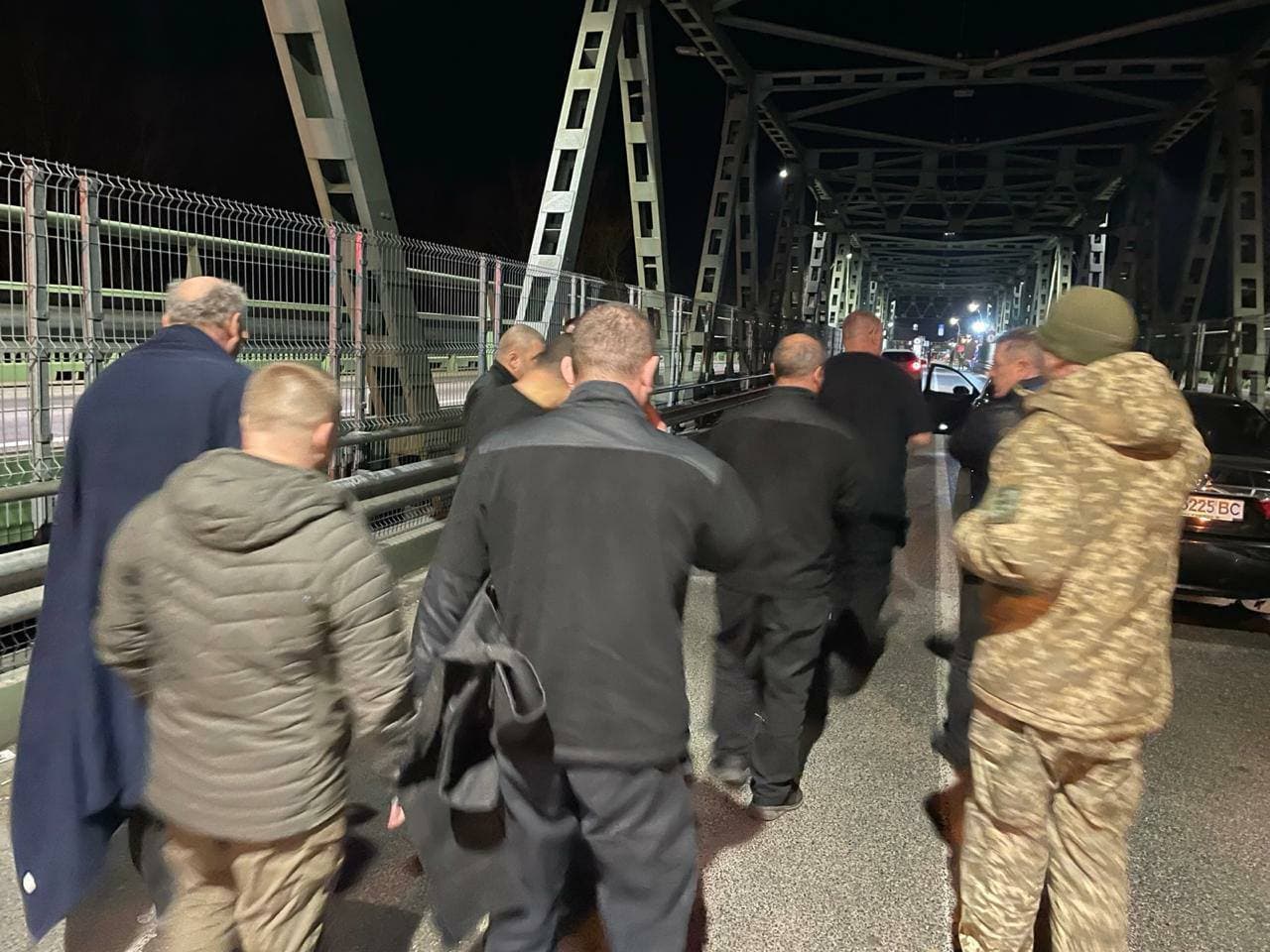
Budapest said Ukrainian consular officials were notified immediately. Kyiv said it received no information and was denied access to the detainees for hours.
Hungarian government spokesperson Zoltan Kovacs later revealed that among those detained were a former general from Ukraine’s Security Service and a former Air Force major—details suggesting Hungarian authorities knew exactly who they were stopping.
Foreign Minister Peter Szijjarto demanded “immediate answers” from Kyiv about the large financial transfers. He hinted at possible ties to what he called a Ukrainian “war mafia,” though no evidence was presented.
Oschadbank explained that the shipments were routine. Since Russia’s full-scale invasion began, foreign currency and bank metals have often been transported by land because normal financial channels were disrupted. The convoys were licensed and had been operating for years without incident.
After seven hours of detention, Hungarian authorities released the employees without charges and deported them.
But the incident had already achieved its purpose. Hungarian officials had created headlines about Ukrainian financial activity and reminded Kyiv that Hungary controls key land routes linking Ukraine to Western Europe.
Ukraine’s Foreign Minister Andrii Sybiha said the timing carried “Russian handwriting.” Hungarian officials had visited Moscow only days earlier, and Orbán was already threatening to force the reopening of the Druzhba pipeline as Hungary’s election season approached.
The Pipeline Ultimatum
Viktor Orban did not wait long to escalate.
Only hours after Hungarian authorities released seven detained Ukrainian bank employees, the Hungarian prime minister announced a new form of pressure—one aimed directly at Ukraine’s economy.
Speaking on Kossuth Radio, Orban declared that Hungary had already halted gasoline shipments to Ukraine and stopped diesel deliveries. Electricity exports would continue for now, he said, but the next step could be blocking the transit of goods moving through Hungary toward Ukraine.
The message was blunt: Kyiv must restore the Druzhba oil pipeline or face economic consequences.
The pipeline has been offline since late January after Russian strikes damaged energy infrastructure in western Ukraine. Budapest and Bratislava insist the line could already be operating and demanded the right to inspect the system themselves.
Zelensky has said repairs could take up to six weeks, though Kyiv has shown little enthusiasm for restarting the route. Druzhba carries Russian crude through Ukrainian territory to Hungary and Slovakia—oil revenue that ultimately feeds the same war machine attacking Ukraine.
Behind the confrontation lies domestic politics. Hungary faces parliamentary elections in April, and Orban’s Fidesz party is trailing the opposition Tisza Party in polls. Analysts say the prime minister needs an external adversary to rally nationalist voters. Ukraine, refusing to pump Russian oil while fighting Russia’s invasion, fits the role perfectly.
Hungary has already blocked the European Union’s twentieth sanctions package against Russia and delayed a 90-billion-euro EU loan for Ukraine.
Now Orban is threatening to use Hungary’s geographic leverage as a choke point.
For Kyiv, the choice is grim: restart the pipeline that helps fund Russia’s war or face economic pressure from an EU neighbor controlling one of Ukraine’s main routes to the West.
The Campaign Trail Through Kyiv
The remark was brief, but it detonated across Europe.
President Zelensky said he might give Ukrainian soldiers Viktor Orban’s “address” so they could speak to him “in their own language.” The line was ambiguous enough to provoke outrage and useful enough to exploit.
EU officials and Hungarian politicians moved fast. Peter Magyar, leader of the Tisza Party challenging Orban in the April elections, demanded Brussels cut ties with Ukraine until Zelensky apologized. European Council President Antonio Costa tried to cool the dispute while pushing a 90-billion-euro loan for Ukraine that Hungary had already blocked.
But this was less about diplomacy than politics.
Orban’s Fidesz party was trailing in the polls. He needed an enemy, preferably foreign, to rally nationalist voters. Ukraine was ready-made for the role: resisting Russia, refusing to move Russian oil, and now providing a quote that could be turned into a campaign weapon.
Magyar’s response revealed the deeper desperation. To outflank Orban, he moved even harder against Kyiv, casting Zelensky as a threat and Ukraine as a problem Hungary should punish.
What looked like an international incident was really electoral theater.
Ukraine’s war had become a backdrop for Hungary’s power struggle, with both sides competing to sound tougher while Kyiv played the villain in someone else’s campaign.
The Slow Destruction of Russia’s Black Sea Fleet
The explosions at Novorossiysk were the kind sailors notice even through steel hulls.
Ukraine’s General Staff confirmed what strike planners had already suspected: the March 2 attack on the Russian naval base damaged two Black Sea Fleet frigates, Admiral Essen and Admiral Makarov. Both ships are equipped to launch Kalibr cruise missiles—the same weapons repeatedly used against Ukrainian cities and infrastructure.
Initial assessments suggested the strike reached further. Ukrainian security sources reported damage to the minesweeper Valentin Pikul and the anti-submarine vessels Yeysk and Kasimov. Novorossiysk had become Russia’s main naval refuge after Ukrainian strikes made Crimea’s ports increasingly dangerous.
The attacks did not stop there.
The night before the naval strike was confirmed, Ukrainian forces hit targets across occupied Crimea. The Yevpatoriya Aircraft Repair Plant was struck, destroying production facilities. Near Dzhankoi airfield, two Pantsir-S2 air defense systems were damaged along with drones, fuel tankers, and a ground control station for Russian reconnaissance aircraft.
Days earlier, Ukrainian naval drones and aerial drones had attacked the Syvash drilling platform in the Black Sea. Russian forces had converted the structure into an electronic warfare site and observation post guiding drone attacks toward Ukrainian cities and shipping lanes. Ukrainian forces destroyed its electronic warfare systems and short-range air defenses and struck a Russian Ka-27 helicopter attempting to land on the platform.
Throughout February, Ukrainian intelligence reported similar strikes across Crimea targeting radar stations, patrol ships, helicopters, landing craft, and air defense systems.
The pattern is unmistakable.
Ukraine is dismantling the defensive shield protecting Crimea while degrading the naval and aviation assets Russia relies on to strike Ukraine.
Each successful attack forces Moscow into the same dilemma: repair the damage or prepare for the next strike.
Fire Beyond the Front
Flames tore into the night near Berezhnoe in Russia’s Krasnodar Krai. The target was infrastructure many Russian planners likely assumed was safe from Ukrainian reach: the 500 kV Abinsk electrical substation.
Geolocated footage showed a serious fire near the site. Russian authorities gave the usual explanation, saying falling drone debris caused the blaze after air defenses intercepted the attack.
But the location mattered more than the excuse.
Abinsk lies roughly 800 kilometers from Ukrainian-controlled territory. A strike there showed that Ukraine’s drones can reach deep into Russia’s rear, forcing Moscow to defend places once treated as secure.
That creates a growing problem for the Kremlin. Every system moved to protect infrastructure in Krasnodar is one less system guarding frontline troops or military facilities closer to Ukraine.
Kyiv does not need to destroy everything. It only needs to keep widening the map of what Russia must defend.
The Lessons Written in Drone Fire
For years, Ukrainian soldiers have watched Iranian-designed Shahed drones drift across their night skies. Now the knowledge learned from destroying them is spreading far beyond Ukraine.
Britain has deployed drone operators trained in Ukraine to help defend British bases in the Middle East, according to The Telegraph. The tactics they carry with them were forged under constant attack. Ukrainian defenders learned to build layered defenses: sensors that detect incoming drones, trackers that follow them, and interceptor drones that destroy them before they reach their targets.
Those interceptors are simple and cheap. Ukrainian engineers built them for only a few thousand dollars, designed to shoot down Shaheds that cost far more. The systems also listen for drone signals and disrupt the communications guiding them.
Years of war turned those techniques into a practical science. Ukrainian forces now report interception rates approaching ninety percent.
That experience is attracting attention. U.S. and Qatari officials are discussing the purchase of Ukrainian interceptor drones, recognizing that the same Shahed designs once used against Ukrainian cities are now appearing in attacks across the Middle East.
The economics explain the interest. Ukrainian interceptors cost thousands. Shahed drones cost tens of thousands. Western air defense missiles cost millions.
Ukraine discovered a brutal truth early in the war: defending against drone swarms cannot rely on million-dollar missiles.
Now the rest of the world is beginning to learn the same lesson.
A Frontline That Bends but Does Not Break
Across Ukraine’s vast front, the war rarely moves as one story.
In northern Sumy Oblast, Russian forces crossed into the village of Sopych and abducted nineteen civilians, according to Ukraine’s ombudsman Dmytro Lubinets. The raid suggested small Russian infiltration groups were moving through border settlements as Moscow tried to carve out a buffer zone along the frontier.
Near Kharkiv, the fighting slowed as Russian units regrouped for possible spring offensives. Ukrainian commanders reported that communication disruptions tied to the Starlink shutdown were still complicating Russian command and control. Attacks continued toward villages northeast of Kharkiv, but the tempo suggested preparation rather than breakthrough.
In Kupyansk, Ukrainian troops pushed back into central positions in a city that has repeatedly changed hands. Drone operators there reported Russian forces expanding their use of unmanned ground vehicles and heavy bomber drones—some copied directly from Ukrainian designs.
Farther south near Pokrovsk, Russian troops edged forward in Rodynske while trying to cut the H-32 highway, the key supply route feeding Ukrainian defenses. Muddy terrain forced Russian infantry to advance largely on foot.
Along the Slovyansk axis, Ukrainian units reported Russian forces deploying large hexacopter bomber drones similar to Ukraine’s Vampire systems while using reconnaissance drones to guide small infiltration teams into abandoned trenches and dugouts.
Near Hulyaipole, Ukrainian counterattacks continued to gain ground, even as Russian troops captured several nearby villages in recent days.
Taken together, the front resembled a shifting mosaic. Gains in one sector balanced losses in another. Both armies adapted tactics as the line bent and flexed, but neither side found the breakthrough needed to change the war’s direction.
The Night of 141 Drones
Before dawn, Ukrainian air defense crews watched their radar screens fill.
One hundred forty-one drones were inbound, launched from across Russia and occupied Crimea—Oryol, Kursk, Bryansk, Millerovo, Shatalovo, Primorsko-Akhtarsk, and Crimean airfields.
Most were Shahed drones, the Iranian-designed weapons Russia now manufactures domestically. Others were Gerbera and Italmas variants, forcing defenders to adjust interception tactics in real time.
The fight unfolded in darkness.
By morning, Ukrainian forces had destroyed 111 drones, a strong interception rate achieved by crews who fight this battle night after night.
Yet the mathematics of air defense is unforgiving.
Twenty-four drones still penetrated defenses and struck sixteen locations. In other areas, debris from destroyed drones fell onto buildings and streets.
Residential infrastructure was damaged in Chernihiv Oblast, and civilian sites were hit elsewhere. The pattern was familiar: damage daily life while avoiding destruction dramatic enough to provoke stronger Western escalation.
For Ukraine’s defenders, the result was both success and loss.
Most of the drones were stopped.
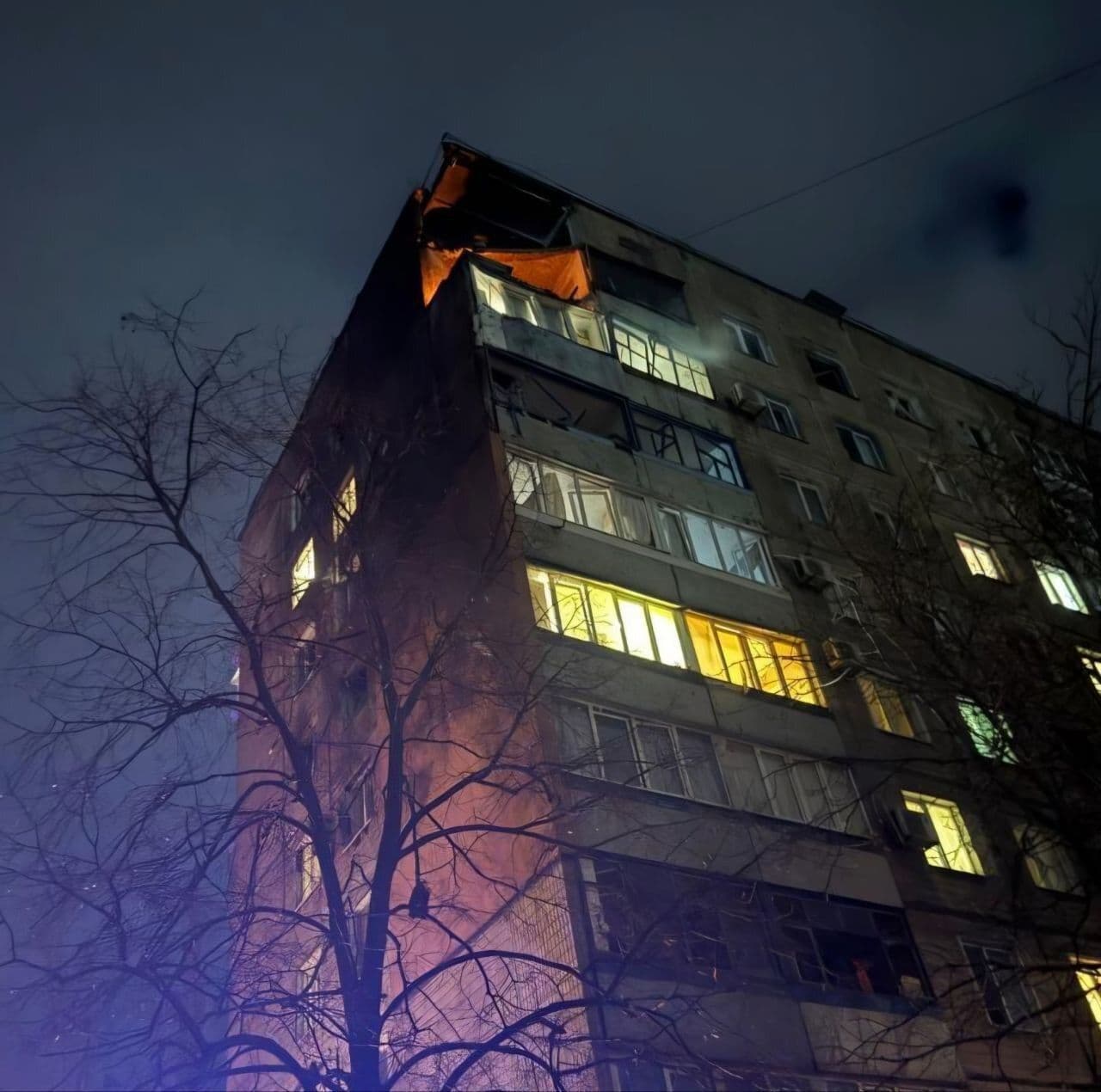
A fire at a residential building in Dnipropetrovsk Oblast after a Russian attack overnight. (Telegram)
The Conversation That Wasn’t Meant to Be Real
Watch Vladimir Putin’s face as Lieutenant Colonel Irina Godunova speaks.
She commands a Russian communications battalion. Her complaint sounds practical: Telegram is a problem for the military. Yet in the same breath she assures the president that Russian communications on the front are “excellent” and functioning without issue.
The exchange took place during a carefully staged meeting ahead of International Women’s Day. Putin raised the subject himself—Starlink disruptions and the dangers of relying on foreign technology. Telegram’s recent throttling hovered in the background of the conversation.
Godunova delivered the message neatly. Foreign communication platforms were dangerous, she said. Russia needed its own system. Once the state messaging app Max improved, everything would work better.
Putin nodded.
The purpose of the performance was clear: create the impression that Russian soldiers themselves wanted Telegram restricted. The pressure would appear to come from the front, not from the Kremlin.
But the reaction online broke the script.
Pro-war Russian milbloggers—normally loyal to the Kremlin—pushed back almost immediately. One complained that soldiers were forced to use Telegram because the military never provided secure alternatives. Another said frontline communications below the regiment level depended on foreign platforms entirely.
Telegram, they argued, was not the problem. It was the only system that worked.
The milbloggers still shielded Putin, claiming Godunova must have misled him. But the backlash revealed something unusual.
The staged conversation meant to justify tighter control instead exposed how obvious the propaganda had become.
The App That Watches
On millions of Russian phones sits an app many people would rather avoid.
Max is officially a state messaging platform. But researchers examining its code found it quietly checking whether users run VPNs and attempting connections to foreign services such as Telegram, WhatsApp, Google, and Amazon Web Services. Each connection reveals something about the user behind the screen.
The app functions less like a messenger and more like a sensor.
By linking activity across platforms to verified accounts, authorities can map how Russians move through the internet—who bypasses censorship, which services they use, and how often they try to reach blocked networks.
Few Russians use Max willingly. But the Kremlin solved that problem another way. Government services have been routed through the app: license renewals, benefit requests, official paperwork, tax filings. Even reluctant users must log in eventually.
Each login becomes data.
A VPN detected here. A connection attempt there. Piece by piece, the state builds profiles of citizens navigating the digital landscape.
At the same time, Russia’s antimonopoly agency has accused major foreign platforms—Instagram, Facebook, WhatsApp, YouTube, Telegram, and VPN providers—of violating advertising rules. Similar regulations once helped strangle independent media and later cut revenue streams for bloggers.
The pattern suggests a larger design.
First weaken foreign platforms by restricting their business. Then push citizens toward the state system. Finally justify broader bans by pointing to legal violations.
Individually, each step looks administrative. Together they form something larger: a surveillance and censorship structure assembled piece by piece.
Russia’s Prison Pipeline to the Front
Russia’s prison population has fallen to a historic low of 308,000 inmates, Deputy Supreme Court Chairman Vladimir Davydov announced, praising what he called a “humanistic” policy.
The explanation was mentioned only briefly. Since late 2022, convicted criminals have been allowed to end their sentences and clear their records by volunteering for military service in Ukraine. Russian courts issued more than 5,000 dismissal orders in 2025 alone for prisoners who signed army contracts.
According to analysis by The Moscow Times, Russia’s prison population has dropped by roughly 158,000 during the war. At least 21,400 former prisoners sent to Ukraine have been killed, while more than 200,000 convicts are believed to have joined the military overall.
The program expanded steadily. Initially limited to people convicted of violent crimes or drug trafficking, it later extended to suspects under investigation and even defendants awaiting trial.
The result was a steady pipeline from prisons to assault units.
Ukrainian defenders call the tactics “meat assaults”—frontal infantry attacks against prepared positions where casualties can exceed 70 percent. Wagner forces alone recruited about 50,000 prisoners during the battle for Bakhmut, throwing them repeatedly into such assaults.
Word of the losses is now spreading through Russian prisons.
One captured soldier said he spent nearly a year in solitary confinement for refusing to volunteer. After finally signing a contract, he received just 13 days of training before being sent into combat without a weapon and surrendered.
Another prisoner serving 13 years for drug charges said he volunteered fearing he would die in prison. Instead, commanders ignored his promised rear-area role and transferred him directly to an assault unit.
The Paralympic Debate Over Russian Soldiers
International Paralympic Committee President Andrew Parsons ignited outrage by saying injured Russian soldiers who fought in Ukraine should be allowed to compete in the Paralympic Games.
“It doesn’t matter to us what they have done on the combat field,” Parsons told the BBC. “Crimes of war are something different, but what we offer with the movement is a second chance.”
The statement came as the Winter Paralympics opened in Italy. Ukraine and six other national teams boycotted the event in protest of Russian and Belarusian participation. The IPC had lifted suspensions the previous year, allowing both countries to return to competition.
Parsons argued that Russia should now be treated like any other Paralympic committee. Many nations recruit athletes from the armed forces, he said, suggesting Russia’s approach was no different.
Investigations by the Poland-based outlet Vot Tak tell a different story. At least seventy participants in Russia’s invasion of Ukraine have already joined Russian Paralympic teams after being wounded in combat.
In effect, soldiers injured while fighting Ukrainian forces are now being prepared to represent Russia in international sport.
The IPC’s original suspension in 2022 was partly based on concerns that Paralympic sport was being used to promote Russia’s war effort. Critics argue the new policy risks legitimizing exactly that practice.
For Ukrainian athletes, the issue is not theoretical. Competing alongside athletes who were wounded while fighting their country was unacceptable.
The boycott became their only clear answer.
The First Automaker to Lose Everything
Mazda Motor has become the first foreign automaker to permanently lose its Russian assets after the three-year repurchase window tied to its 2022 exit expired without action.
When Western automakers left Russia after the invasion of Ukraine, many sold factories for symbolic sums but kept buy-back clauses in case relations improved. Mazda held such an option for its joint venture plant in Vladivostok.
That option has now expired.
Sollers, Mazda’s former Russian partner, confirmed the outcome bluntly: under current conditions it saw no need for Mazda to return.
The Vladivostok plant once produced Mazda CX-5 and CX-9 crossovers and Mazda 6 sedans. Today it builds Sollers-branded pickup trucks and assembles tourist buses using Chinese components.
Japanese engineering and supply chains have been replaced by Chinese parts and parallel imports. Mazda branding has disappeared from the production line entirely.
For other automakers with repurchase clauses—Renault, Mercedes-Benz, Hyundai—the message is uncomfortable.
Even if political conditions change, the factories they once operated may no longer exist in recognizable form.
The Real Estate Investment in a War Zone
The European Bank for Reconstruction and Development approved a 35-million-euro loan to Ukrainian developer Stolitsa Group for residential construction in Kyiv.
In a country regularly struck by Russian drones and missiles, real estate investment might seem reckless. Yet construction activity in Ukraine actually grew in 2025, rising about 24 percent in monetary terms compared with the previous year. Kyiv remained one of the most active locations for new projects, alongside the relatively safer regions of Lviv and Ivano-Frankivsk.
The financing will help expand the Varshavsky residential complex and support future developments. Apartments will be available through Ukraine’s eOselia program, a state-backed mortgage initiative launched in October 2022 to encourage wartime home buying. More than 22,000 Ukrainians—many from the military—have already received loans through the program.
The project is partly protected by guarantees from the EU’s Ukraine Investment Framework, reducing financial risk for lenders.
Still, the decision reflects notable confidence. International development banks are funding housing in a capital city regularly targeted by Russian strikes.
Ukraine’s housing sector faces enormous needs. The World Bank estimates roughly $90 billion will be required for recovery. Labor shortages, high costs, and ongoing attacks have reduced building compared with pre-war levels.
Yet demand remains urgent as millions of displaced Ukrainians, veterans, and families whose homes were destroyed still need housing.
The Day’s Meaning
Day 1,423 revealed a pattern now defining the war: diplomacy and reality moving in opposite directions.
Russia presented itself as a voice for restraint abroad while continuing its war in Ukraine. Vladimir Putin called for peace in the Middle East even as Russian intelligence reportedly supported Iranian operations targeting American interests. Moscow sought improved relations with Washington while aiding forces hostile to the United States.
Western policy showed its own contradictions. U.S. officials discussed easing Russian oil sanctions to stabilize markets affected by Middle Eastern fighting—even as Russian support for Iran complicated those same operations.
On the battlefield, Ukraine continued shaping diplomatic realities through military results. President Zelensky’s visit to Donetsk underscored a basic truth: negotiations ultimately reflect control of territory. Ukrainian gains in Zaporizhzhia showed how Russian command disruptions and weak defenses could still produce advances.
The war’s human dimension appeared in the return of five hundred Ukrainian prisoners over two days. Even amid total war, prisoner exchanges remain one of the few channels still functioning between the sides.
Pressure on Ukraine also came from within Europe. Hungary’s detention of Ukrainian bank employees and threats to halt transit routes showed how divisions inside the EU can echo Moscow’s strategic objectives.
Meanwhile Russia prepared for a longer war. Surveillance tools expanded, communication platforms tightened, and manpower shortages were filled by recruiting prisoners for high-casualty assault units.
At the same time Ukraine continued striking Russian naval assets and infrastructure while allies began studying Ukrainian innovations in drone defense.
Even under bombardment, international lenders financed housing in Kyiv—a sign Ukraine is building for the future while defending the present.
Day 1,423 showed a war unfolding across battlefield, diplomacy, economics, and information.
The contradictions are no longer anomalies. They are the strategy itself.
Prayer For Ukraine
- Protection in the Night Skies
Lord, Ukraine again faced waves of drones in the darkness, with air defense crews working through the night to protect cities and villages. We pray for the men and women guarding the skies and for the civilians sleeping beneath them. Protect homes, families, and children from every strike, and strengthen those who stand watch while others rest.
- Comfort for Prisoners and Families
We thank You for the five hundred Ukrainian prisoners who returned home after long captivity. Bring healing to their bodies and peace to their hearts after the trauma they endured. Comfort the families who waited for them and remember those who are still held far from home. Sustain hope until every captive is returned.
- Wisdom for Leaders and Diplomats
Father, this war continues amid complex negotiations, political tensions, and international pressure. Grant wisdom to Ukraine’s leaders and to the allies who support them. Guide decisions that strengthen justice, preserve freedom, and protect the people of Ukraine from those who seek to divide or weaken them.
- Justice Against Aggression
Lord, we ask that schemes meant to harm Ukraine—whether on the battlefield, through economic pressure, or through deception—be exposed and overcome. Restrain those who spread violence and give courage to those defending truth and sovereignty.
- Strength for Ukraine’s Future
Even while missiles and drones threaten the country, Ukrainians continue building homes, rebuilding communities, and preparing for tomorrow. Bless these efforts. Strengthen workers, families, and investors who believe in Ukraine’s future. Let their work become seeds of restoration.
God of mercy, sustain Ukraine, protect its people, strengthen its defenders, and bring this war to a just and lasting end.