
As Russian forces surge across multiple fronts while the Kremlin revives nuclear blackmail tactics, Ukraine braces for diplomatic upheaval amid dwindling Western resolve and America’s Middle East pivot.
Summary of the Day – June 21, 2025
The mask of Russian restraint finally slipped completely on June 21, as Vladimir Putin abandoned all pretense of seeking negotiated settlement and declared his intention to claim “all of Ukraine” as Russian territory. Speaking at the St. Petersburg International Economic Forum, Putin articulated Russia’s maximalist vision with chilling clarity: “Wherever the foot of a Russian soldier steps is Russian land.” The statement came as Russian forces achieved confirmed territorial gains near Novopavlivka and Velyka Novosilka, while Moscow ramped up domestic drone production to potentially 800 units per strike package. Against this backdrop of escalating aggression, Ukraine faced diplomatic isolation as the upcoming NATO summit was stripped of substantive Ukraine discussions to appease Donald Trump, whose attention has turned decisively toward the Middle East crisis following his authorization of airstrikes against Iranian nuclear facilities. Meanwhile, Ukraine approved its new Termit ground drone for frontline deployment, announced a complete diplomatic overhaul, and revealed that Russia has been mixing Russian soldiers’ bodies with Ukrainian casualties to obscure the true scale of Moscow’s losses.
Photo of the Day:

Participants wearing traditional outfits dance as they celebrate the holiday of Ivana Kupala, a traditional holiday related to the summer solstice that has been observed in Ukraine since pre-Christian times, in Kyiv, amid the Russian invasion in Ukraine. (Genya Savilov / AFP via Getty Images)
The Emperor’s New Map: Putin’s Territorial Maximalism Unveiled
Putin’s June 20 declaration that Russia owns any territory where “a Russian soldier steps” represents the clearest articulation yet of Moscow’s imperial ambitions. Speaking to international business leaders at the St. Petersburg forum, the Russian president dismissed any possibility of meaningful negotiations while Ukraine retains sovereignty over its internationally recognized borders.
“All of Ukraine is ours,” Putin stated with casual confidence, demanding that Ukraine accept neutrality, reject foreign alliances, agree to nuclear non-proliferation, and recognize Russian control over illegally annexed territories before any peace can be established. The comment exposed the fundamental impossibility of any territorial compromise—Russia’s appetite will never be satisfied by portions when it believes it deserves the whole meal.
Ukrainian President Volodymyr Zelensky responded with characteristic defiance, noting that Putin’s logic would extend Russian claims to Belarus, the Baltic states, Moldova, and Central Asia. “But when a murderer says he wants to kill, we take it seriously,” Zelensky declared, announcing defensive measures including a complete diplomatic overhaul.
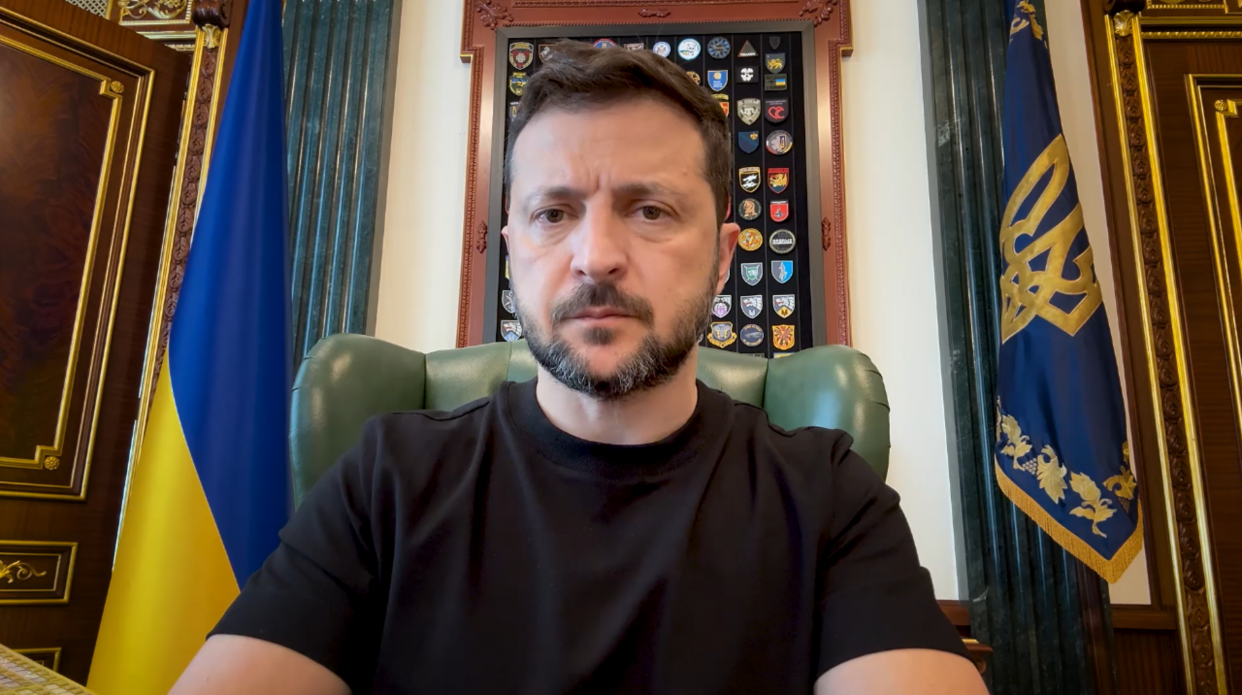
Foreign Minister Andriy Sybiha emphasized that Russian soldiers bring “only death, destruction, and devastation” wherever they step, calling for increased Ukrainian defense support, severe economic sanctions, recognition of Russia as a terrorist state, and complete diplomatic isolation of Moscow.
Nuclear Blackmail Returns: The Dirty Bomb Deception
Russian officials dusted off one of their most cynical propaganda tools on June 21, reviving the false narrative that Ukraine intends to deploy a “dirty bomb” against Russian forces. The manufactured controversy emerged during Putin’s forum appearance, when he claimed without evidence that such an attack would be a “colossal mistake” warranting “catastrophic” retaliation.
Deputy Security Council Chairman Dmitry Medvedev seized the opening to threaten tactical nuclear strikes in response to any alleged Ukrainian dirty bomb attack. The choreographed exchange echoed similar disinformation campaigns from March and October 2022, when Moscow used nuclear blackmail to slow Western weapons deliveries.
The revival appears timed to coincide with ongoing Congressional debates about military aid and European discussions about long-range weapons authorization. By raising the specter of nuclear escalation, Russia hopes to fracture Western resolve at a critical moment when American attention has shifted to the Middle East.
America’s Pivot: From Minsk to Tehran
The geopolitical calculus shifted dramatically on June 21 as U.S. Special Envoy Keith Kellogg conducted high-profile diplomacy in Minsk while President Trump authorized airstrikes against Iranian nuclear facilities. The juxtaposition illustrated America’s changing priorities as the Ukraine conflict enters its fourth year.
Kellogg’s meeting with Alexander Lukashenko—the first senior U.S.-Belarus engagement since 2020—produced the release of 14 political prisoners, including opposition leader Siarhei Tsikhanouski and citizens from Poland, Latvia, Estonia, Sweden, the U.S., and Japan. “You have caused quite a stir in the world with your arrival,” Lukashenko told Kellogg, questioning why normal dialogue couldn’t occur between the two nations.
Tsikhanouski, sentenced to 18 years for challenging Lukashenko in 2020, was transferred to Vilnius along with other freed prisoners. His wife, Sviatlana Tsikhanouskaya, welcomed the releases but noted that “1,150 political prisoners remain behind bars.”
Meanwhile, Trump’s strikes against Iran’s nuclear infrastructure marked dramatic Middle East escalation. “We have completed our very successful attack on the three nuclear sites in Iran, including Fordow, Natanz, and Esfahan,” Trump declared, later sharing “Fordow is gone.” The president demanded Iran join negotiations to end its nuclear program, warning of greater tragedy if the conflict continues.
For Ukraine, Trump’s Middle East pivot represents both opportunity and danger—reduced American attention at a critical juncture versus potential lessons about decisive action against adversaries.
The Drone Revolution: Innovation Meets Industrial Might
The technological arms race intensified with revelations about both sides’ rapidly expanding drone capabilities. Ukrainian expert Serhiy Beskrestnov warned that Russia has increased Shahed production sevenfold and could soon launch strike packages incorporating up to 800 drones—more than double current nightly attacks of 300-400 drones.
Russian forces have begun deploying Geran-2 drones for frontline strikes rather than exclusively targeting rear areas, indicating expanded production capacity and tactical adaptation. Head of Kharkiv Oblast Prosecutor’s Office Spartak Borisenko reported modernized Geran-2 drones with modified engines, increased warheads, and new antennas produced at two Russian factories using both domestic and imported components.
Ukraine responded with its own innovations, exemplified by entrepreneur Andriy Malyshev whose western Ukrainian factory produces 1,500 drones monthly using increasingly domestic components. “We made big progress in 2024—we can now produce our own frames,” Malyshev explained, noting that Ukrainian-made controllers now power drones that successfully struck Russian strategic aviation.
Engineer Andrii Belchev demonstrated superior Ukrainian-made circuit boards compared to Chinese versions, offering better performance and reliability. The domestic production surge has become essential as China’s alignment with Russia threatens future access to imported components.
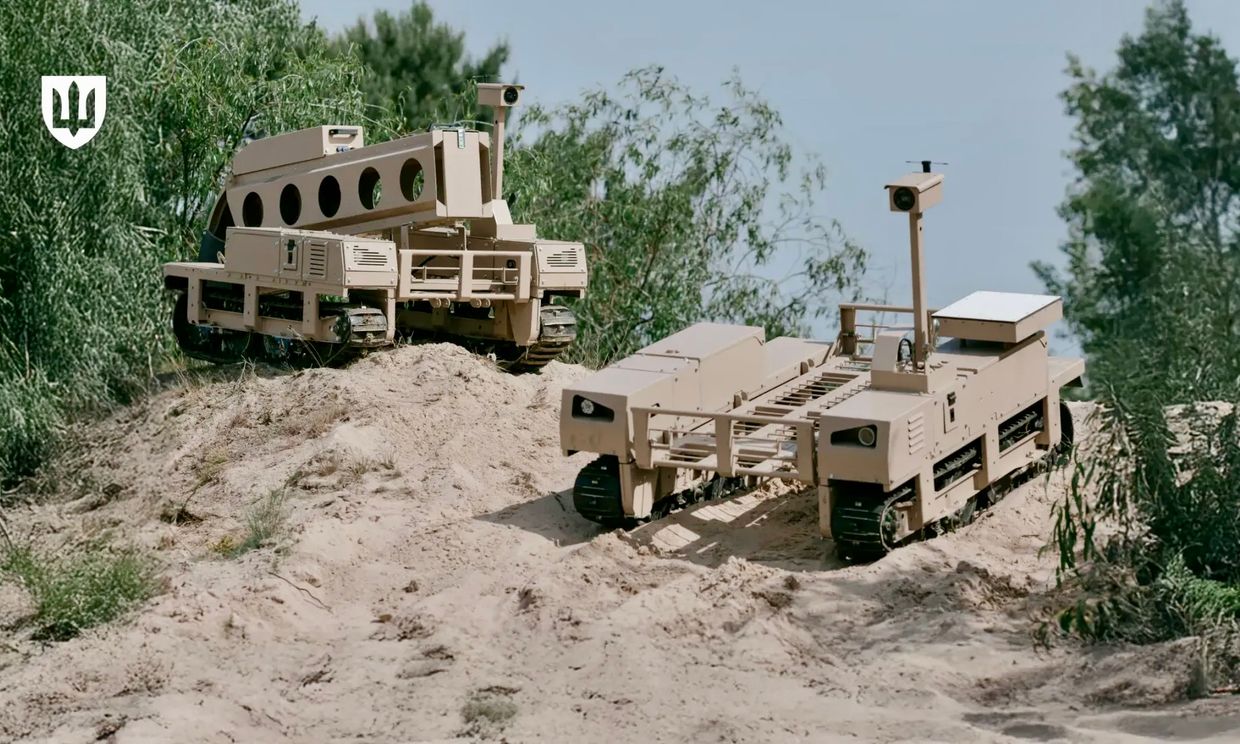
Ukraine’s Defense Ministry officially approved the new Termit unmanned ground vehicle for front-line use, capable of carrying 300 kilograms across various terrains for combat, medical evacuation, or supply missions. The tracked robot represents another domain where Ukraine pioneers new warfare technologies while Russian forces adapt with innovations like using electric scooters to rapidly traverse contested “gray zones.”
Frontline Dynamics: Grinding Advances and Tactical Evolution
Russian forces achieved confirmed territorial gains on June 21, with geolocated footage showing they seized Zaporizhzhia south of Novopavlivka and Shevchenko northwest of Velyka Novosilka. The 36th Motorized Rifle Brigade was credited with capturing Zaporizhzhia, while unconfirmed claims suggested additional advances toward Yalta, Zirka, and Piddubne.
Estonian intelligence colonel Ants Kiviselg provided sobering analysis of Russia’s summer offensive: “bogged down in stubborn Ukrainian defense” and reduced to “tactical-level combat operations” despite 150-160 daily attacks. “The Russians are trying to continue advancing despite heavy losses,” he stated, noting that strategic goals remain unchanged despite operational failures.
Ukrainian President Zelensky reported that 52,000 Russian forces are attacking in the Sumy direction, directing 23 percent of all strikes toward that sector. Despite initial Russian success, Ukrainian forces have largely halted the advance after correcting defensive mistakes.
The assessment aligns with observations about changing Russian tactics. Facing improved Ukrainian positions and electronic warfare capabilities, Moscow has abandoned large mechanized assaults for smaller infantry groups supported by drone swarms and unconventional mobility solutions.
The Humanitarian Toll: Massive Strikes and Hidden Deportations
Russian forces conducted one of their largest attacks of the conflict on June 20-21, launching 272 Shahed and decoy drones alongside Kinzhal hypersonic missiles, Kalibr cruise missiles, and Iskander ballistic missiles. Ukrainian air defenses intercepted 140 drones and several missiles, but the massive barrage injured at least 13 civilians across multiple regions.
In Zaporizhzhia Oblast alone, Russian forces carried out 343 attacks on 11 settlements over 24 hours—10 air strikes, 207 UAV attacks, seven MLRS strikes, and 119 artillery shells—damaging homes, apartments, and infrastructure. Seven people were wounded in Kherson Oblast, three in Donetsk Oblast, with additional injuries in Poltava, Sumy, and Zaporizhzhia oblasts.
The humanitarian crisis extends beyond combat zones. Over 45 Ukrainians forcibly deported from occupied territories remain trapped in a basement facility at the Russia-Georgia border without food, water, or basic healthcare. “We are in a basement without utilities: there is no shower or toilet, they don’t feed us,” one deportee told Astra.
The facility, operational since 2023, houses deported Ukrainians barred from entering Russia or occupied territories. Despite having only 17 sleeping spaces, another 100 deported Ukrainians are expected, reflecting systematic implementation of Putin’s decree requiring Ukrainians to obtain Russian citizenship or face expulsion.
The Body Count Deception and Migrant Cannon Fodder
Ukraine revealed Russia’s systematic deception in casualty accounting, with at least 20 bodies returned as Ukrainian actually being Russian soldiers, some still carrying Russian passports. “Putin is afraid to admit how many people have died. Because if the moment comes when he needs to mobilize, his society will be afraid,” Zelensky explained, citing cases including a deceased Israeli citizen fighting for Russia.
The deception emerged from June 2’s prisoner exchange in Istanbul, where Ukraine recovered 6,057 bodies while Russia took back only 78. Ukraine’s General Staff reported Russian casualties exceeding 1,010,000 since February 2022, with independent verification confirming 111,387 Russian soldiers killed.
To avoid another unpopular mobilization, Russia is systematically recruiting Central Asian migrant workers as “cannon fodder.” Ukrainian intelligence reported that Russian security services target workers seeking employment, offering military contracts with misleading promises. Among identified victims are Uzbek nationals Umarov Syroziddin Sabirjanovich and Kholbuvozoda Muhammad Faizullo, who died in combat.
“Mobilized migrants are formed into separate units, which are mainly used in the most dangerous areas of the front line,” Ukrainian intelligence noted. Investigative Committee head Alexander Bastrykin revealed that 20,000 naturalized migrants had been dispatched to Ukraine for failing to register for military service, reflecting the Kremlin’s desperate manpower situation.
Economic Warfare: Arsenal Expansion Despite Sanctions
Ukrainian intelligence revealed Russia’s strategic weapons stockpile exceeding 1,950 missiles and thousands of drones as of June 15, including 500 Iskander-M ballistic missiles, 150 Kinzhal hypersonics, 60 North Korean KN-23 missiles, and over 400 Kalibr cruise missiles. Russia produces up to 195 missiles monthly while planning to increase daily drone output from 170 to 190 units.
Drone stockpiles include over 6,000 Shahed-type attack drones and more than 6,000 Gerbera decoys designed to overwhelm Ukrainian defenses. Zelensky called for urgent sanctions on 39 Russian defense companies involved in Oreshnik missile production, noting that 21 remain unsanctioned despite receiving critical components.
The Financial Times reported that Oreshnik upgrades use advanced Western manufacturing equipment despite sanctions. Russian weapons institutes posted 2024 job listings specifying German and Japanese metalworking systems, with at least $3 million worth of Heidenhain components shipped to Russia despite restrictions.
Putin claimed Russia’s economy remains strong despite war and sanctions, dismissing recession warnings from his own officials by quoting Mark Twain: “Rumors of my death are greatly exaggerated.” However, Central Bank Governor Elvira Nabiullina warned that wartime economic momentum is fading, while Economy Minister Maxim Reshetnikov said Russia is “on the verge of transition to recession.”
According to economist Janis Kluge, Russia’s daily bill for military sign-up bonuses alone reaches $24 million, reflecting the economic strain of avoiding mass mobilization while sustaining military operations.
Diplomatic Revolution: Ukraine’s Strategic Overhaul
Kyiv announced preparations to overhaul its Foreign Ministry and diplomatic corps to strengthen international support as the war enters its fourth year. “We will make changes to certain staff positions, including within the Ukrainian diplomatic corps and institutional management, to increase Ukraine’s potential both in relations with partners and in internal Ukrainian resilience,” Zelensky stated.
Foreign Minister Sybiha confirmed that Zelensky had already made personnel decisions, with all ambassadors scheduled to meet in July. “The geopolitical situation requires the diplomatic service to find new arguments and approaches adapted to realities,” Sybiha explained, emphasizing that the criterion is simple: “results.”
Expected results include military aid packages, humanitarian assistance, and support for Ukrainians abroad. Sybiha described the coming month as “full diplomatic mobilization to bring about a just and sustainable peace for Ukraine.”
The overhaul follows disappointing G7 summit outcomes where Trump’s abrupt departure prevented hoped-for relationship resets. Ukraine is asking partner countries to allocate 0.25% of GDP to Ukrainian defense production, currently negotiating partnerships with Denmark, Norway, Germany, the UK, and Lithuania.
Zelensky called on Trump to “make the right choice for history” by standing with Ukraine, warning that Putin wants America absent from the conflict. “For President Trump right now, the Israel-Iran issue is definitely a higher priority,” Zelensky noted, expressing concern about potential Russian-American deals unfavorable to Ukraine.
Western Fragmentation: NATO Summit Stripped and Voices Silenced
The upcoming NATO summit in The Hague was deliberately streamlined to avoid substantial Ukraine discussions, representing significant concession to Trump’s demands. “Trump has to get credit for the 5%—that’s why we’re having the summit,” one European defense official told Politico. “Everything else is being streamlined to minimize risk.”
The single-day meeting will focus exclusively on raising defense spending targets to 5% of GDP, with no convening of NATO’s Ukraine Council. This year’s communique may exclude war references altogether, though NATO Secretary General Mark Rutte insisted the alliance remains committed to Ukraine’s “irreversible path” to membership.
For Ukraine, the summit represents another disappointing indication of waning Western resolve after missing planned Trump meetings at the G7. The diplomatic marginalization coincides with Trump’s systematic destruction of Voice of America, issuing layoff notices to over 600 employees and reducing staff to fewer than 200—an 87% reduction eliminating most global broadcasting capacity.
Russian propagandists celebrated the VOA destruction as a significant information warfare victory. The dismantling of America’s primary tool for countering authoritarian propaganda occurs as the administration engages diplomatically with authoritarian regimes while reducing focus on Eastern European security.
European Resistance: From Swedish Diplomacy to Dutch Protests
Sweden’s Foreign Minister Maria Malmer Stenergard urged Western allies to ramp up Ukraine support and pressure Putin toward negotiations during Washington meetings. “Russia doesn’t want peace now. They will only take a deal when we make them take a deal, not because they want to take a deal,” she stated after meeting Secretary of State Marco Rubio.
Stenergard suggested the U.S. “might have realized” there’s no quick end to the war, emphasizing that Nordic countries are “in the forefront” of supporting Ukraine. She called for partners believing in rules-based order to invest in Ukraine’s victory “or at least get an acceptable peace that can also be long term.”
Meanwhile, Dutch protesters will descend on The Hague during the NATO summit, organized by “Vredesdemonstratie” (Peace Demonstration)—a movement that poses as peace initiative but makes demands solely of Ukraine and supporters, never Russia. Previous demonstrations featured Russian flags and placards reading “Ukraine is evil for Dutch taxpayers” and “Sponsoring Kiev is sponsoring terrorism against Ukrainians.”
The anti-NATO demonstration includes controversial speakers like Ab Gietelink, who interviews Russian ambassadors; Marie-Thérèse Ter Haar, who promotes emigration to Russia; and far-right MP Gideon van Meijeren. A separate demonstration by the Counter-Summit Coalition chose to distance itself from the main protest.
Hungary’s Failed Consultation: Orban’s Anti-Ukraine Poll Flops
Hungary’s national consultation on Ukraine’s EU accession suffered the lowest turnout in such polls’ history, according to opposition leader Peter Magyar. Based on Hungarian Post information, only 3-7% of sent ballots were returned, representing “total failure” of government propaganda costing tens of billions in public funds.
The poll, launched by Prime Minister Viktor Orban in April, explicitly encouraged rejecting Ukraine’s EU bid. Orban publicly shared photos marking “against” on his ballot. Magyar estimated maximum 600,000 participants—fewer than his opposition party’s own polling, which showed 58.18% supporting Ukraine’s EU accession.
“This is the lowest number in the ‘glorious’ history of national consultations,” Magyar declared, noting the government’s continued threats to undermine Ukraine’s EU candidacy while maintaining positive relations with Russia.
Baltic Provocations: Moscow Tests Maritime Boundaries
Russia formally announced intentions to reassess Baltic Sea territorial waters on June 20, reviving a proposal first floated and withdrawn in May 2024. The government published coordinates suggesting maritime border adjustments near Estonian and Finnish territories, including strategically important islands.
The scaled-back proposal excludes Kaliningrad Oblast areas from the original version, suggesting officials learned from earlier negative reactions. However, any unilateral boundary alterations would constitute additional international law violations while testing Western responses during NATO summit preparations.
Looking Forward: The Gathering Storm
As diplomatic efforts stagnate and military pressures intensify, June 21’s events illuminate stark choices facing all conflict parties. Putin’s explicit territorial maximalism eliminates negotiated settlement possibilities based on current Russian positions, while Trump’s Middle East focus leaves Ukraine increasingly isolated diplomatically.
The upcoming NATO summit will test whether European resolve can compensate for American disengagement. With defense spending increases likely dominating discussions rather than concrete Ukraine support, the alliance faces critical moments defining collective security commitments.
For Ukraine, the path forward requires navigating reduced Western attention while building domestic capabilities sufficient to resist Russian conquest. The country’s drone innovation, ground vehicle development, and diplomatic overhaul represent adaptive responses to changed circumstances, but the fundamental challenge remains: convincing the international community that Ukrainian independence serves global security interests.
The phantom promises of diplomatic breakthrough continue dissolving against battlefield realities, leaving Ukraine confronting the possibility that victory requires not just Western weapons, but Western will—a commodity appearing increasingly scarce as global attention fragments across multiple crises.