
UKRAINE DAILY BRIEFING
September 25, 2026
A Russian drone tore into the tenth floor of a Kyiv apartment tower and killed a 14-year-old boy, opening a day in which seven people died in the capital and Russia went after the city’s data centers, its bakeries, and even a McDonald’s warehouse. Zelensky came home from New York saying Donald Trump had made a “final decision” to let Ukraine build its own Patriot missiles — the one weapon that reliably stops Russia’s ballistic missiles — though Washington has not said so itself. And Ukraine answered from 900 miles away, setting a refinery on fire near the Ural Mountains and hitting the factories that feed Russia’s missiles.
The Day’s Reckoning
It’s early morning in central Kyiv, and there is no siren. Just a muffled explosion, a family grabbing the dog, a run into the hallway. A Russian drone has hit a 16-story apartment building between the tenth and eleventh floors. A 14-year-old boy is dead.
By 2:30 in the afternoon, the capital has gone under air raid alert seven times. Russia is no longer aiming only at power plants. It is aiming at the internet — the data centers that carry your bank app, your messages, and, on this day, the phone alerts that warn you a missile is coming.
Four threads run through the day. Zelensky says Trump personally promised Ukraine the right to build Patriot missiles. Ukrainian drones set fire to a refinery 900 miles away and hit the plants making fuel for Russia’s missiles. Russian generals announce victories the evidence doesn’t support. And in Europe, one intelligence agency after another warns that Russia is preparing “something big.”
A war over territory has become a war over whether ordinary life can go on at all.
The Tenth Floor: A Boy Killed Before Breakfast
“There was no alarm — just a muffled explosion,” Yana, a real estate agent, said afterward. “We were asleep and woke up immediately. I grabbed the dog, and we ran into the hallway.”
The drone had struck her building in Kyiv’s central Pechersk district, punching into the tenth and eleventh floors of a 16-story tower. A 14-year-old boy was killed. At least seven residents were injured. Israel’s Foreign Ministry later identified the boy as an Israeli citizen. His mother was among the wounded.
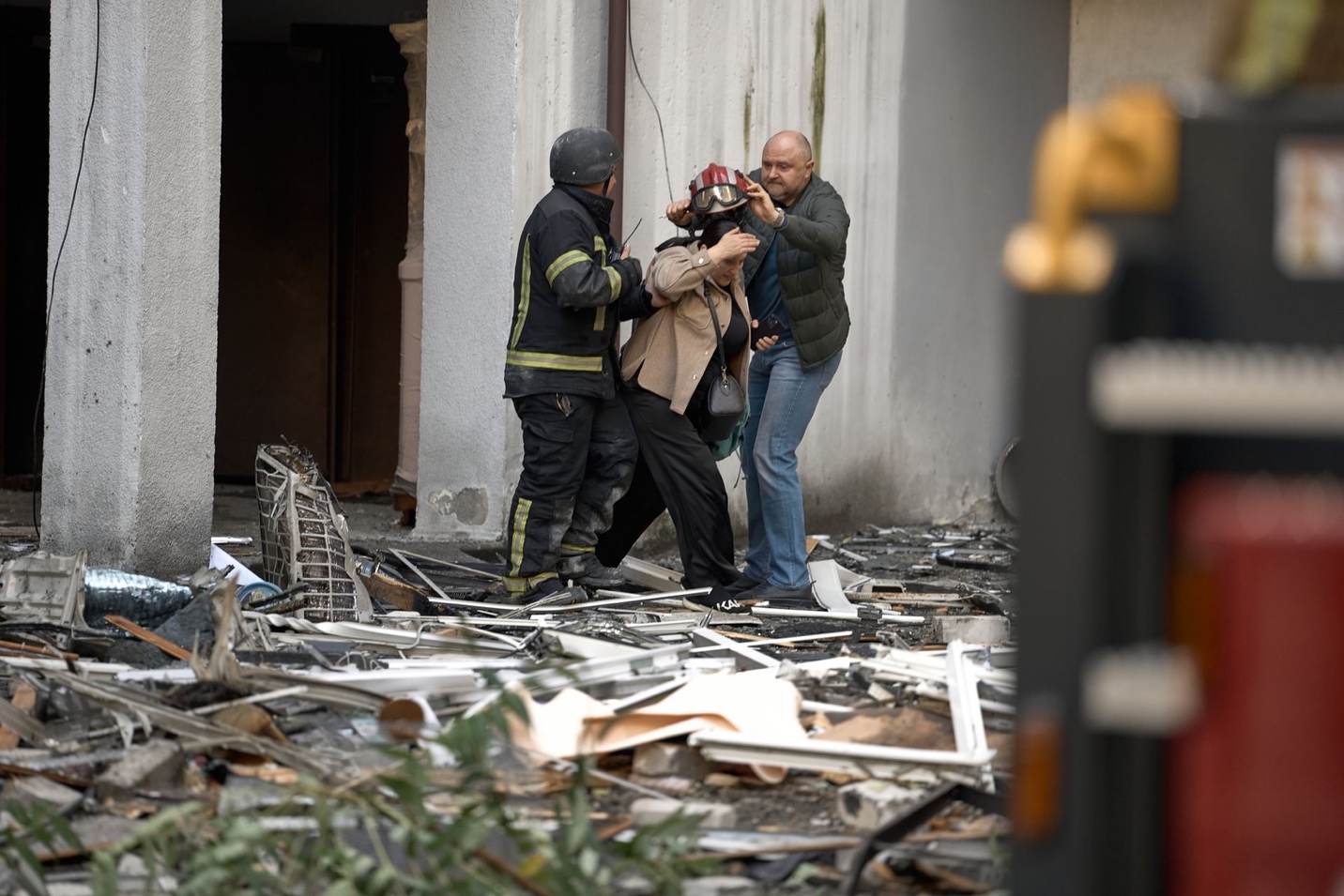
Ivan, a retiree who lives in the building, first assumed the blast was somewhere else. “The attacks are nonstop right now. We see the missiles flying, we see the Shaheds flying, but they’ve never hit us,” he said. Shaheds, if you’re new to this, are the Iranian-designed attack drones Russia now mass-produces — flying bombs that swarm Ukrainian cities night after night. “And now this tragedy has happened — it hit a place we never expected it to hit.”
Zelensky called the strike “absolutely savage and sickening” and “devoid of any military logic.”
The same day, he walked the halls of a Kyiv maternity hospital damaged in the previous night’s ballistic missile attack. Patients and staff had sheltered through that strike, and nobody was hurt. During it, a baby boy was born. Zelensky met the mother. “Every newborn deserves to begin life in peace,” he wrote afterward.
Hold those two images side by side: one boy born under the missiles, another killed by a drone in his own home. Yana put the city’s mood plainly. “We try to put it out of our minds and stay composed. But lately, our morale has taken a hit.”
Seven Air Raid Alerts by Midafternoon
The morning strike was only the beginning. In the Shevchenkivskyi district, a drone damaged the building of the High Council of Justice — the body Ukraine’s Constitution puts in charge of appointing, disciplining, and dismissing judges and prosecutors. Six people were hurt, windows shattered in nearby apartments, cars were wrecked, and the council suspended operations. The building sits less than 1,640 feet from the Lukyanivka metro station, a frequent Russian target. Around 9:30 a.m., another alert brought another explosion in the same district, as a drone hit a five-story non-residential building.
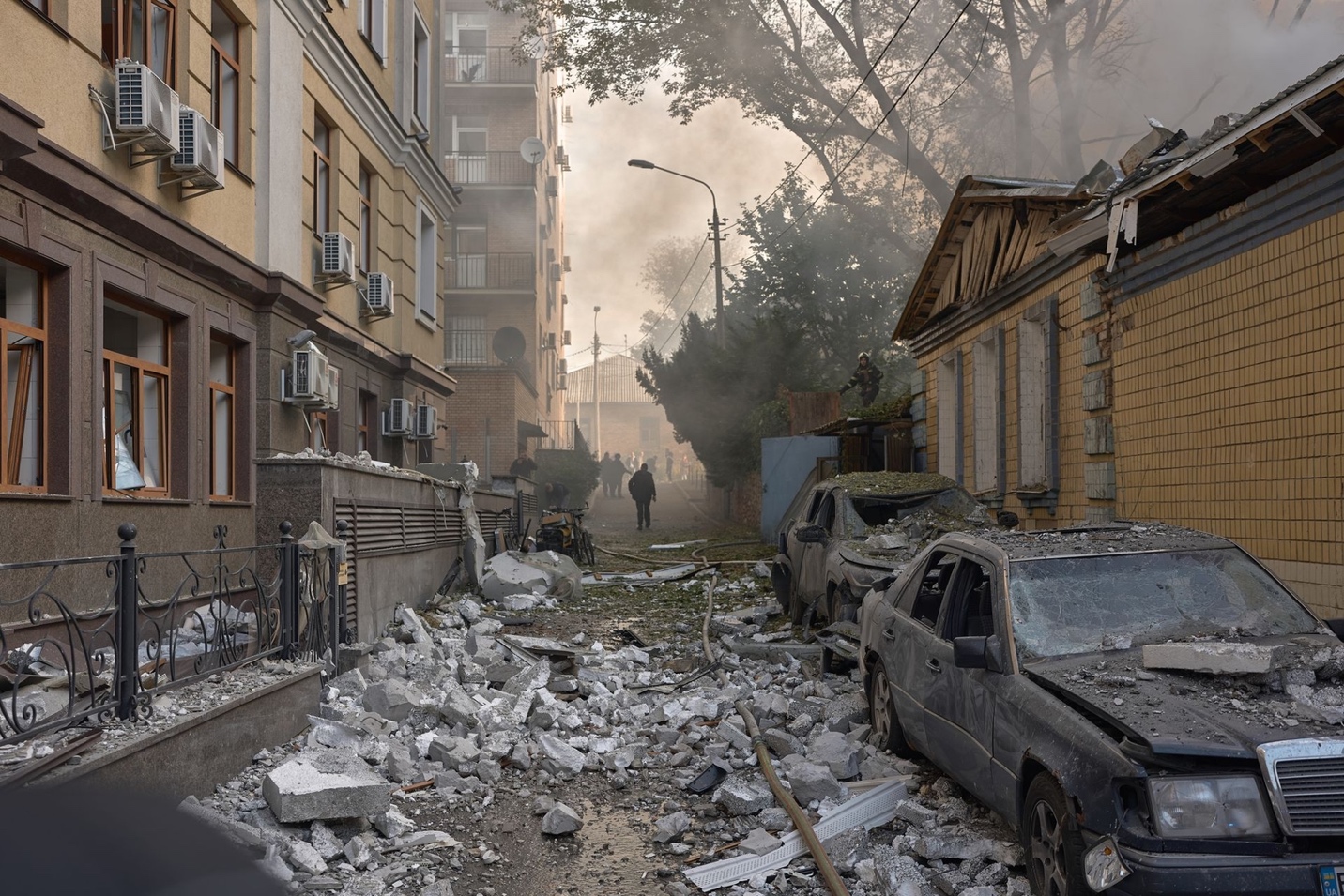
By 2:30 p.m., the city had been under alert seven times. Then a drone struck an office building in the Solomianskyi district. Four people were killed and seven injured, including a child, in the building’s parking lot, where cars caught fire. A nearby medical facility was damaged, and three people, one a child, were hospitalized. Russia hit the same district again around 6 p.m., blowing out another office building’s windows. A commercial building in Podilskyi was hit too, and overnight drone debris had damaged a 25-story apartment tower.
By evening, city authorities counted at least seven dead and 59 wounded in the capital. Some residents ran for shelter as explosions sounded in broad daylight; others just kept walking. Alisa Boyko, whose high-rise was damaged, said Russia wants to “torment” Kyivans so that “everyone is affected, one way or another.” Mykyta Sysoyev called it “a technological race and a technological war,” adding: “Unfortunately, people will suffer while we’re searching for solutions.”
And it didn’t stop at midnight. Early the next morning, a Russian drone hit a private medical clinic in the Obolonskyi district with 26 patients inside. Sixteen were moved to city hospitals, and three people were hurt, two seriously. Another drone set an office building in Solomianskyi on fire.
Bombing the Internet: Why Russia Is Hunting Data Centers
Quick explainer: a data center is a warehouse full of computers that stores and moves the internet — your banking, your group chats, a company’s payroll. Knock one out, and everything running through it stumbles.
Russia has hit these buildings in Kyiv every day since Wednesday, according to the Institute for the Study of War, a Washington think tank that tracks the war daily. Russia’s own Defense Ministry openly named data centers and telecommunications as targets earlier this month. On this day, a strike damaged a Kyiv data center run by Datagroup, a national telecom provider. Nobody was hurt. “Even after the data center was damaged, we continue to provide our services,” the company said.
The ripple still reached the western city of Lutsk, where electronic arrival boards at bus stops went dark. More seriously, Foreign Minister Andriy Sybiha said the outages disrupted the phone alerts that tell Ukrainians a drone or missile is inbound.
Moscow says the goal is cutting the Ukrainian army’s network. Oleksandr Fedienko, who heads parliament’s cybersecurity subcommittee, said authorities have seen no sign that military or government communications were hurt. Ukrainian officials and business leaders call it a “targeted escalation” aimed at banks, payment systems, and businesses — the same logic behind Russia’s attacks on ports and locomotives.
Can Russia shut Ukraine’s internet off entirely? Probably not. Serhiy “Flash” Beskrestnov, the president’s adviser on defense technology, said Ukraine has some of the most widely distributed internet channels anywhere — hundreds of roads into town rather than one bridge. The likelier cost is higher bills as providers pay for repairs.
That afternoon, the Stavka — Zelensky’s war council of top commanders, spy chiefs, and ministers, formed the day Russia invaded — ordered new protections for data centers and made officials personally responsible for carrying them out.
A Bakery, a Jeweler, and a McDonald’s Warehouse
“The building is completely destroyed. Equipment, furniture, and the warehouse burned down. But all our people are alive, and that is the main thing.”
That was Dukachi, a Ukrainian jewelry brand, after a Russian missile flattened one of its facilities overnight. It had company. A ballistic missile destroyed the factory and warehouse of TK-Domashniy Tekstyl, part of a textile group that brought in about $27.4 million last year. “Nothing military was produced or stored there,” the company wrote. Russia also hit a production site of Titka Klara, a bakery chain whose entire annual revenue was about $201,000 — a small business already running at a loss before this strike.
Nova Poshta — Ukraine’s FedEx and Amazon rolled into one — lost a branch and had a sorting depot damaged. After losing its largest sorting terminal in a June attack, the company has been deliberately breaking itself into smaller pieces. It’s now asking local entrepreneurs to open franchise sorting centers and offering to lease warehouses as small as 5,382 square feet. Think of it as a company learning to scatter so a single missile can’t take it all out.
Then, in the city of Brovary outside Kyiv, a drone hit a warehouse used by McDonald’s. “An attack drone against ordinary food,” Zelensky wrote. “American and other businesses, data centers, internet providers — for Russia, ordinary life in and of itself is simply a target.”
Why would an army spend missiles on pastries and necklaces? Because the target isn’t the bakery. It’s the idea that a Ukrainian can open a shop, hire people, and expect to still have a business next month. Zelensky called for Ukraine’s long-range strikes and Western sanctions to work together so that Russia “feels the consequences of its terror.”
The Steel Mill Goes Dark
For more than four years, the steelworks in Kryvyi Rih — Zelensky’s hometown — kept running through strikes that killed workers and wrecked furnaces. Now its owner has given up.
ArcelorMittal, Europe’s largest steel producer, has completely halted its Kryvyi Rih plant after relentless Russian missile and drone attacks. “It is with deep regret that we have concluded that we are no longer able to safely operate ArcelorMittal Kryvyi Rih,” CEO Mauro Longobardo said. The company expects to write down about $1 billion — an accounting admission that the plant, its machinery, and its buildings are worth that much less than it thought. Since 2022, ArcelorMittal had poured roughly $700 million into keeping the subsidiary alive.
Here’s the scale of the loss. Last year, the plant produced 1.7 million tons of steel — 23% of everything Ukraine made — and 1.6 million tons of rolled products, making it the country’s second-largest steelmaker after Zaporizhstal. It mines its own iron ore and turns it into rebar and wire rod, the skeleton of buildings and bridges, and sells to the EU, the Middle East, North Africa, and the United States.
This wasn’t one bad night. A 2022 strike killed an employee. On Aug. 16, a missile killed two workers and injured 13. The latest attack came Monday. Ukraine’s three main steel plants, which together made about 90% of its steel, have now all stopped. The company says it is working with the government to preserve the site so it can restart after the war.
Analysts say disruptions at Ukrainian mills could tighten Europe’s supply of some steel and push prices up — a reminder that when Russia shuts a Ukrainian furnace, the bill eventually shows up far from Kryvyi Rih.
Six Workers Sorting Vegetables: The Toll Beyond Kyiv
In the village of Stara Hnylytsia in the Kharkiv region, farm workers were sorting produce in a vegetable storage building. Russia fired three S-8000 Banderol missiles, a compact Russian cruise missile, at the farm. One hit the building. Six workers were killed, two men and four women, and 14 people were injured in the village.
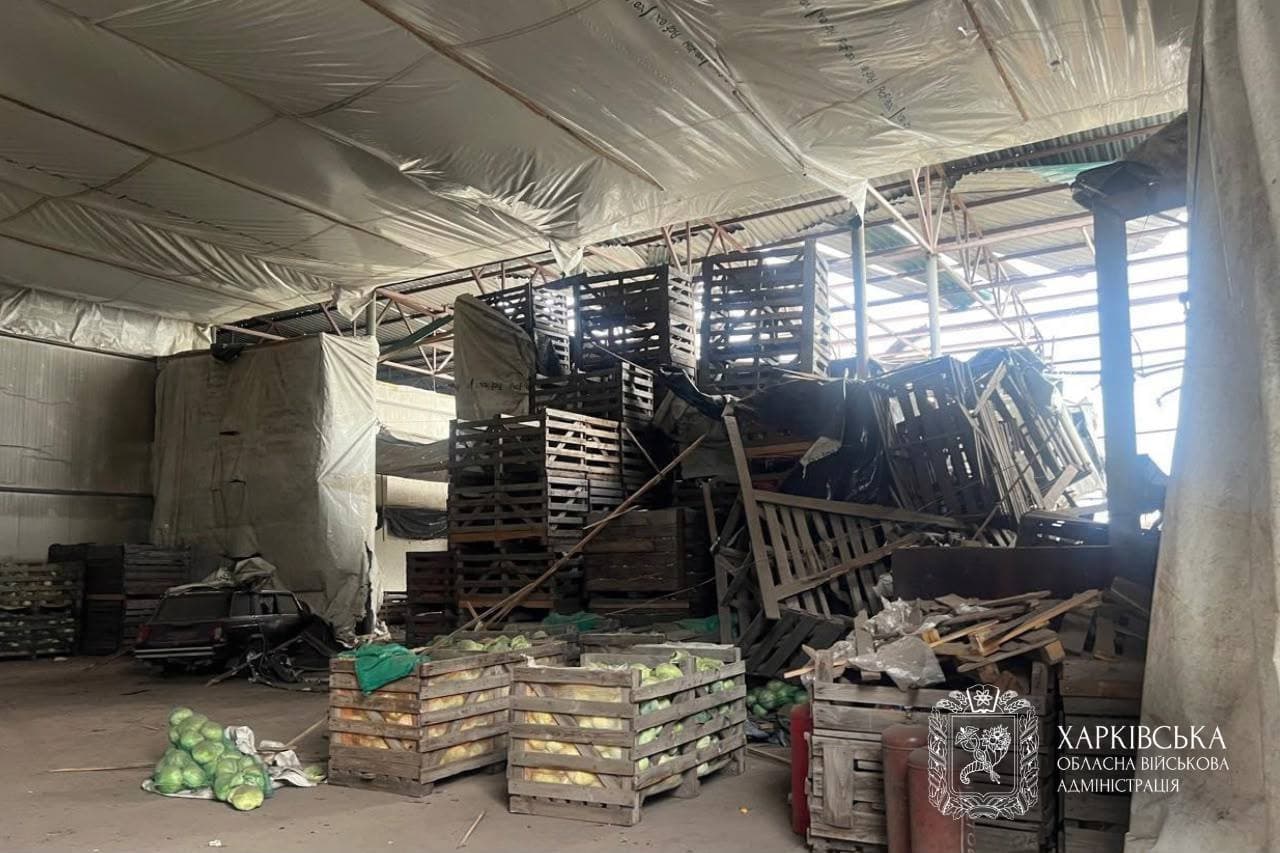
It was the worst single attack of a day in which Russia killed 10 people and injured 61 across Ukraine, local authorities said. Overnight, Russia launched 295 drones — 52 of them its newest jet-powered models. Why do those matter? The older drones putter along on piston engines; the jet versions reach 250 to 370 miles per hour, giving gunners far less time to shoot. Ukraine’s Air Force said it downed or jammed 267, but drones got through at 16 locations, and falling debris did damage at four more. Power went out in six regions.
In Donetsk Oblast, two civilians were killed and seven hurt. Four were injured in Dnipropetrovsk Oblast, nine in Kherson, and four in Sumy. In the Odesa region, one person was killed in a “double-tap” strike on a postal facility — hitting a site, waiting for rescuers to arrive, and hitting it again. In Zaporizhzhia, a drone set a hospital ward on fire; firefighters and medics evacuated seven patients, two people were hurt, and Russian drones also went after ambulances.
The night before had been heavier still: 282 drones plus ballistic and anti-ship missiles, two dead in Kyiv, and the strike that shook the maternity hospital. Look at what connects this day’s targets — a farm, a post office, a hospital. None of it is a military base.
Two Ways to Stop a Ballistic Missile
Ballistic missiles fly high and come down fast, and the American-made Patriot is one of few systems that can reliably stop them. Interceptors are scarce; in July, shortages reportedly let nearly three of every four Russian ballistic missiles slip through.
Zelensky says Ukraine can now build its own. “President Trump emphasized to me that yes, I have made a final decision. Ukraine will receive licenses for the production of Patriot missiles,” he said of their Tuesday meeting in New York. He didn’t say whether that means the older PAC-2, already licensed to Germany, or the advanced PAC-3, made only in the U.S. and Japan.
Weigh it carefully. The White House is silent, and two days earlier the State Department said no final decision had been made. In July, Trump said, “We’ll give them the right to make Patriots,” then walked it back, warning that sensitive technology could be turned against the U.S. Even a real license means time to build factories and source parts. Meanwhile, the U.S.-Israeli war with Iran has pulled Patriots toward the Middle East, and Washington is locking in the last $93 million of congressionally approved aid before it expires Sept. 30.
The second way: destroy the launcher first. Finland’s President Alexander Stubb appealed to Elon Musk: “I plead that Elon Musk would give the Ukrainians the possibility to use Starlink in areas where there are ballistic missile launchers.” Starlink, SpaceX’s internet-from-orbit network, carries Ukraine’s battlefield communications but is switched off over Russia, where the mobile launchers sit. Musk refused in July, saying the war should end through talks.
Zelensky says a new Patriot package lifted Ukraine’s interception rate to 60% in one recent attack. The longer-term hope is FREYJA, a joint European anti-ballistic system due for results in late 2026 or early 2027.
900 Miles Deep: Ukraine Hits Refineries and Missile Factories
Overnight, Ukraine’s farthest target was the Lukoil refinery in Perm, near the Ural Mountains, roughly 900 miles from Ukraine — farther than New York to Chicago. The plant processes about 13 million tons of crude a year and, according to Ukraine’s General Staff, fuels Russian forces. Footage appeared to show a Lyutyi, Ukraine’s homegrown long-range strike drone, hitting a unit that handles about a third of the refinery’s output. Perm’s governor confirmed an industrial site was struck.
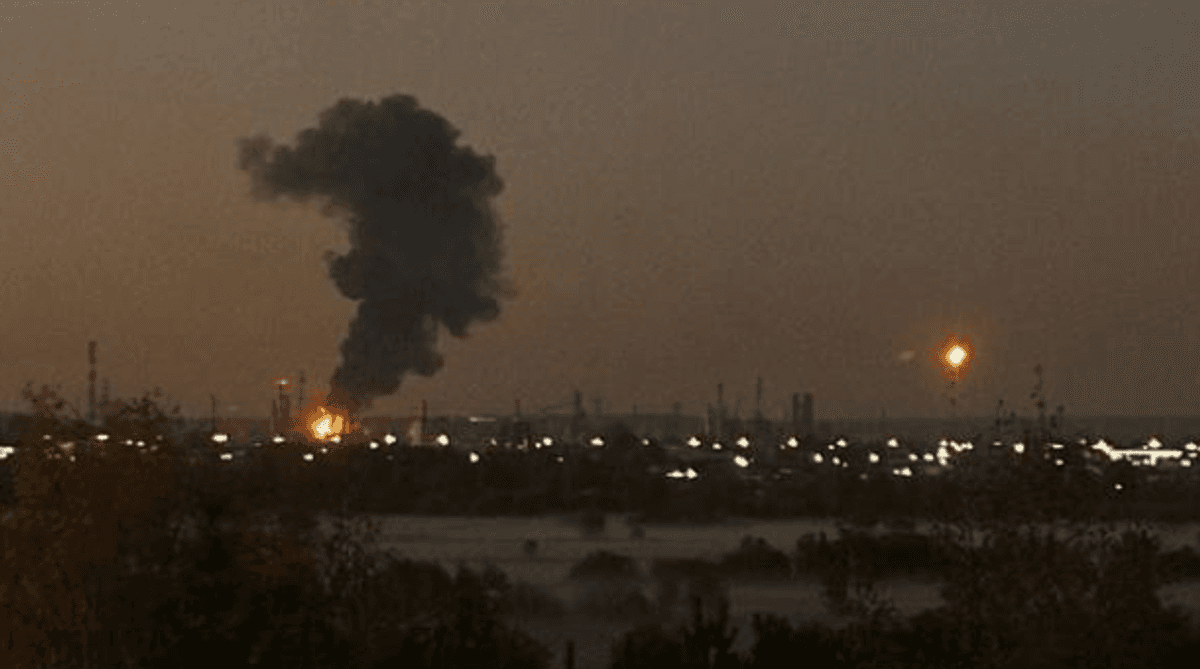
Closer in, Ukraine hit the Novoshakhtinsk refinery in Rostov Oblast, just nine miles from the border, plus two nearby radar stations, a Gamma-S1 and a Kasta-2E2. The regional governor admitted the refinery temporarily stopped working.
Then the missile factories. The Iskra plant in Ulyanovsk, about 500 miles away and part of defense giant Almaz-Antey, makes electronics and parts for the Kh-59 guided missile and the Pantsir air defense system. Plants in Efremov, about 190 miles in, and Voronezh, about 110, produce solid rocket fuel, including for the Iskander ballistic missiles that hit Ukrainian cities. Ulyanovsk’s governor confirmed damage, and a drone appears to have hit a nearby warehouse of Ozon, Russia’s answer to Amazon. The Ukrainian claims could not be independently verified.
Satellite images also show wrecked tanks, a pump station, and pipelines at the Kuibyshev refinery in Samara, about 570 miles in, reportedly idled since Tuesday’s strike. In the Samara region, Russian Railways reported “external interference” that damaged the locomotive and first car of a Moscow–Tolyatti passenger train, without saying who was behind it.
Why keep hitting oil? Because it’s both Russia’s paycheck and its gas tank. Poland’s foreign minister said Russia can fight on for another year or two, “unless Ukraine destroys more than half of its refinery capacity.”
Victories on Paper, Chaos on the Ground
Russia’s defense minister, Andrey Belousov, came to inspect troops in Ukraine’s northern Sumy region, and the local commander, Colonel General Yevgeny Nikiforov, had a triumphant report: 10 villages and about 97 square miles taken this summer. The Institute for the Study of War, which checks claims against geolocated footage, counts two villages and about 14 square miles over those three months. On the day itself, Russia attacked in Sumy and gained nothing. Putin undercut his generals too: in June he put his troops 6.5 miles from Sumy city; in September, 7.5 miles.
Analysts call this cognitive warfare: announce a victory on television and hope nobody checks the coordinates. Russian military bloggers — pro-war commentators who post about the front — claimed three more villages near Velykyi Burluk in the Kharkiv region and an “encircled” Ukrainian force there. Analysts see no evidence of any encirclement. In the south, Moscow claimed villages near Hulyaipole that sit 9 to 11 miles beyond its nearest confirmed position.
The lies carry a price, and Operation Vivaldi proves it. In recent months, Ukraine wiped out a Russian bulge north of Lyman, a town in the Donetsk region. A Ukrainian battalion commander said his troops hid their preparations with camouflage and disinformation — but Russian units helped by reporting advances they never made, leaving their own command blind. Imagine a coach calling plays from stats his players invented. Now Russian aircraft bomb villages and windbreaks almost at random, hunting positions they can’t find.
A Kremlin-aligned blogger admitted Ukraine’s gains will delay any Russian push on Slovyansk, where Ukrainians are digging in near Rai-Oleksandrivka. Ukraine counterattacked near Borova. Russia did advance southeast of Dobropillya, near Bilytske; near Kostyantynivka, Novopavlivka, and Orikhiv, it attacked without confirmed gains.
Earthen Roads to Crimea: Russia Guards Its Bridges
Crimea, the peninsula Russia seized in 2014, depends on a handful of roads and bridges. Ukraine has spent the summer breaking them.
New footage shows the bridge linking Crimea to the Kherson region near Henichesk, about 70 miles behind the front, still badly damaged from Ukrainian strikes in June. Russia’s fix is an improvised dirt causeway bulldozed alongside it. Picture a detour of packed earth running next to a broken overpass.
The big prize is the Kerch Strait Bridge, the direct link between Crimea and Russia, and Moscow is acting like it expects an attack. On Sept. 17, Crimea’s occupation transport ministry ordered priority for trucks carrying essentials like fuel and medicine. Locals say trucks with everything else are being sent the long way, down the land corridor through occupied southern Ukraine — roads Ukrainian drones have been hammering for months. A local channel reported new air and coastal defense firing positions on the Arshintsev Spit near Kerch, built to stop Ukrainian aerial and naval drones.
Russia is also trying to protect those southern roads with “mobile fire groups” — small teams that hunt Ukrainian drones. Ukraine is hunting them back. Footage showed a Ukrainian FPV drone — the small kind a pilot steers by camera, like a video game with real explosives — hitting one of these teams on the Tokmak–Berdyansk highway, 17 miles behind the front. Another strike, four miles back, hit a Zemledeliye, a system that fires mines across a field from a distance, cutting into Russia’s ability to seed the ground ahead of Ukrainian troops.
At the front near Kherson City, Russia attacked around the Antonivskyi Bridge and gained nothing. The south, for now, is less about who takes the next village and more about who can keep trucks moving.
The Drone Arms Race: Mines on Wings and Jets to Catch
A Ukrainian commander in the Sumy region, whose unit shoots down Russian drones with its own, described what’s coming at him now: an upgraded Molniya.
Explainer first. The Molniya is Russia’s cheap workhorse strike drone — about $1,600 apiece, with a range up to 30 miles and a warhead up to 22 pounds. The new versions carry more, are sturdier, and come with anti-tank mines strapped on. Russia is also building interceptor drones to hunt Ukraine’s scouts.
So, who builds the Molniya? Research from the Center for Defense Reforms, a Ukrainian think tank, found that most of the answer is untouched by sanctions. The manufacturer, Atlant Aero, is sanctioned by the EU and Canada but not by the U.S. or Britain, and its factory in Taganrog is expanding. Its parent company, its owner Viktor Grigoryev, and 10 Russian suppliers face no Western sanctions. Neither do 11 Chinese suppliers — including Shenzhen Xingkai Technology, whose mesh-network gear helps drones fly deep into Ukraine. Sanctions without enforcement, the think tank’s chairman said, “don’t work.”
Ukraine is adapting too. The Stavka ordered faster production of defenses against Russia’s jet-powered drones, approved new Ukrainian production lines for jet engines, and heard an intelligence briefing on Russia’s weapons plans for 2027.
And Ukraine is trading on something nobody else has: real war footage. Britain announced that up to 12 British companies will get first-ever access to Ukraine’s Avengers AI Labs, a trove of daylight and thermal battlefield video, to train AI for drone swarms — where a handful of operators can command many drones at once. Ukraine’s own AI, trained on that data, already spots 70% of targets in real time. London called it a “goldmine of battlefield data.”
“Something Big”: Europe’s Intelligence Chiefs Sound the Alarm
“We are receiving information… that Russia is preparing something big this year,” Polish Foreign Minister Radosław Sikorski said. He suspects Putin wants an excuse to draft more men — perhaps a staged “false-flag” attack so Moscow can tell Russians, “We are under attack.”
Denmark’s military intelligence went further. It sees a “low but growing risk” that Russia could launch a limited attack on a NATO country bordering Russia within months. Not an invasion — something small and deniable: strikes on infrastructure that supports Ukraine, dressed up as a Ukrainian accident, or a few troops without insignia crossing a border “to protect” ethnic Russians. “The aim is not to take over the country, but to divide NATO,” said agency director Thomas Ahrenkiel.
Why deniability? NATO’s Article 5 treats an attack on one member as an attack on all. If nobody can prove who attacked, allies may argue about responding — and that argument is the goal.
The warnings came with evidence: a Russian warship firing flares toward a Danish helicopter this month, Germany blaming Moscow for an attempted explosive-drone attack at Leipzig/Halle Airport, and Russian spies recruiting Danes through gaming platforms. Moscow calls the report unsupported. Then Russia’s state news agency published a column promising a “very short” war in the Baltics — “only missiles with an appropriate warhead” — after Lithuania proposed lifting its constitutional ban on hosting nuclear weapons. The agency quietly deleted it.
Putin said Russia has “no motives or grounds” for war with Europe — but will keep fighting “for the rights of compatriots abroad, including in the Baltic states.” Europe answered with money: the EU released €6.6 billion, about $7.5 billion, for Ukraine’s military from a fund Hungary had blocked since 2023. “Europe is doing the opposite,” said EU foreign policy chief Kaja Kallas.
Talks About Talks: Putin, the G20, and the Deal That Died in Alaska
Putin had a complaint for reporters. The Kremlin, he said, had been ready to restart peace talks after Russia’s parliamentary elections last week — but Ukraine attacked Moscow and polling stations instead. Every proposal remains “on the table,” he said. His price hasn’t changed: all of Ukraine’s Donetsk and Luhansk regions, which Kyiv flatly refuses. His foreign minister, Sergey Lavrov, says Russia won’t pause the fighting even during negotiations.
Washington keeps trying. Trump’s envoys Steve Witkoff and Jared Kushner met Kremlin envoy Kirill Dmitriev in New York, unannounced. The U.S. has invited Putin to the G20 summit in Miami in December. “He’ll meet. He’s willing to meet,” Trump said. The Kremlin welcomed the invitation, then said a day later it was too early to talk about it.
Ukraine unveiled an unconditional ceasefire backed by about 50 countries, and Finland’s Stubb endorsed Trump’s call for one. Secretary of State Marco Rubio said both sides showed interest in a narrower truce protecting grain and energy — less than Kyiv wants.
Zelensky says one thing has changed: the so-called “Anchorage agreements,” tied to Trump’s 2025 summit with Putin in Alaska and never published, are off the table. They reportedly would have recognized Russian rule over Crimea, Donetsk, Luhansk, and occupied parts of two more regions. Zelensky credits Ukraine’s soldiers: “the Russians are not making any major advances.” Lavrov insists the war would have ended a year ago if the West hadn’t “derailed” those deals.
Zelensky also asked Trump to press China’s Xi Jinping, who has sway over Putin; Trump met Xi the next day. “I have not yet received feedback,” Zelensky said. And Hungary’s Prime Minister Péter Magyar keeps blocking Ukraine’s EU membership talks — and mocked a new Ukrainian regional partnership by comparing it to a village football team.
Running Out of Men: Draft Rumors and Soldiers From 55 Countries
French President Emmanuel Macron says Russia shows “several signs” of preparing a new draft now that its elections are over. “The question is whether it will announce it or do everything without a public announcement,” he said, calling a figure of 300,000 men “plausible.” Ukraine warned in August that Russia may call up 600,000 over two years.
Why is that a big deal? Putin has ordered a forced mobilization only once, in fall 2022, and hundreds of thousands of Russians fled, lining up at the Georgian border. Since then, he has paid big signing bonuses instead, keeping the war away from most Russian families. A new draft breaks that bargain.
The recruiting has reached far beyond Russia. One in ten Russian prisoners of war held by Ukraine is a foreign citizen, from 55 countries, according to “I Want to Live,” a Ukrainian project that helps Russian soldiers surrender. Nearly 29,000 foreigners have signed Russian military contracts since 2022 and more have been captured this year than in all of 2025 — from Argentina, Panama, Peru, Honduras, Vietnam, and Mongolia. Ukraine counts nearly 3,000 recruits from 37 African countries, 486 of them confirmed dead. Amnesty International says the recruiting sometimes amounts to human trafficking: promises of civilian jobs, then passports and phones taken away. A Somali man once said he expected guard duty: “No shooting, no killing.” Ukrainian officials caution that captured soldiers often downplay their role.
North Korea is the one country that officially sent troops — more than 12,000, by U.S. estimates. Ukraine handed two captured North Koreans to South Korea, and Zelensky revealed it at the UN. South Korea’s president said that broke a secrecy agreement on a “highly sensitive” matter. Kyiv answered that keeping the whole transfer secret would have been “strange.”
The Closing
In Pechersk, the tenth-floor windows are black holes in a 16-story wall. Across the city, a newborn sleeps in a hospital that sheltered him through the missiles, in a capital where even the phone alerts can no longer be trusted to come through. Russia spent the day proving it can reach a bakery, a courtroom, and a server rack; Ukraine spent it proving it can reach the Urals. Both sides announced what they had won. Only the families in Pechersk and Stara Hnylytsia know what was lost.
A Prayer for Ukraine
1. For the Six in the Vegetable Store
Lord of the harvest, six workers in Stara Hnylytsia were sorting the season’s produce when the missile found them — two men, four women, doing the plain work that feeds a country. They were not soldiers. They were putting food away for winter. Receive them into Your rest, and gather up the grief of the families who will open that storehouse without them. Where the fields are left untended, raise up hands to finish their work.
2. For the Boy on the Tenth Floor
Father, a fourteen-year-old boy was at home in Kyiv when a drone struck, and he did not survive it. His mother lies wounded, carrying an injury no surgeon can reach. Hold her in the long nights ahead. And for the baby born beneath the missiles in a Kyiv maternity ward, we ask a different life than this one — a childhood measured in birthdays, not air raid alerts.
3. For Those Who Must Decide
God of wisdom, the leaders of this war are negotiating over missiles that do not yet exist, talks that may never happen, and promises that have been made and unmade before. Give them discernment to tell a real promise from a convenient one. Keep them honest when the news is bad. Let those who hold the power to help not confuse delay with prudence while the ballistic missiles keep falling.
4. For the Defenders Near Lyman
Lord of hosts, the soldiers who took back ground near Lyman now wait under bombs falling almost blindly, dropped on tree lines and villages by an enemy still searching for them. Keep them hidden. Keep them fed, rested, and together. Give their commanders patience and their medics steady hands. Let what they won at such cost hold through the autumn and into the winter ahead.
5. For the Truth Against the Lies
God of truth, this was a day of false victories — villages claimed but never taken, encirclements announced but never real. You see what is actually on the ground. Let the truth outlast the propaganda, and let every lie told to justify this war come at last into the light. In Your mercy, in Your justice, in Your time — bring this war to its end, and let the ending be worthy of what Ukraine has endured.