
On the day America’s government reopened and Ukraine’s drones burned Russian factories, fog cloaked a silent Russian advance—and Zelensky’s inner circle faced corruption charges.
The Day’s Reckoning: November 12, 2025
You wake to the low hum of a generator in a Kyiv apartment, the power already flickering from last night’s drone swarm. Your phone buzzes: ninety Shaheds downed, thirty-one slipped through, nineteen fires still burning. Somewhere south, a farmer in Zaporizhzhia peers through fog so thick he can’t see the next field; Russian boots are already in it. In Washington, a House clerk stamps the bill that ends the longest shutdown in history—five billion dollars of Javelins and shells suddenly unfrozen. And in a marble courtroom two blocks from where you stand, prosecutors play a wiretap: a voice you recognize from old comedy sketches laughing about “Energoatom margins.”
This is day 1,358.
You are not reading a briefing. You are living inside the same twenty-four hours that stretch from a Kenyan mother counting the dollars her son was promised, to a French rail worker watching a silent drone circle his tanks, to a Pokrovsk grandmother deciding whether to leave the apartment her grandson was born in. The war is no longer “over there.” It is in the fog, in the vote, in the courtroom, in the ledger where one hundred million dollars vanished while soldiers counted bullets.
The numbers arrive like artillery rounds: 1,154,180 Russian dead, plus one thousand more before breakfast. Four million Ukrainian drones built in a year—more than all of NATO. Two hundred Kenyans lured across continents to die in fields they can’t pronounce. Every figure is a life, a betrayal, a promise kept or broken.
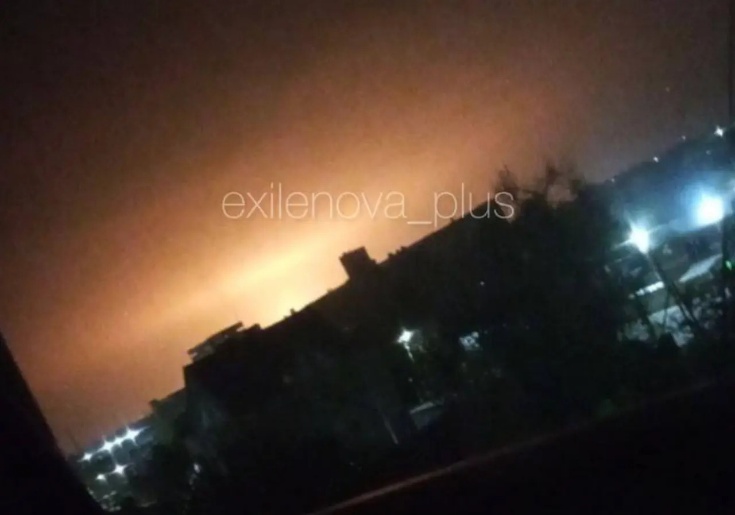
Flames devour Russia’s war machine at Stavrolen petrochemical plant—Ukraine’s drones strike 500 km deep. (Exilenova+/Telegram)
Fog Soldiers: The Silent Siege of Hulyaipole
You crouch in a trench outside Hulyaipole, fog so thick your breath vanishes before your eyes. Somewhere ahead, Russian boots creep through the white—three villages already gone by dawn. Commander Syrskyi’s voice crackles over the radio: “They’re using the weather.”
Colonel Voloshyn whispers the names like a prayer: Rivnopillya, Yablukove, Solodke. Tiny dots on a map, but you know the smell of their soil, the faces still hiding in cellars. Yesterday you pulled back from Rivnopillya—tactical, they call it. You call it leaving ghosts behind.
The Russians learned at Pokrovsk: starve the roads, blind the drones, then slip through the gaps like water. Now three armies coil around the T-0401 highway—5th from the east, 29th from the north, 35th waiting in the south like a held breath. They don’t need tanks in this soup, just men, rifles, and patience.
Your own mines lock you in place as much as they slow the enemy. Your artillery screams, but elite Russian drones hunt the gunners before they reload. Every countermeasure you invent, they’ve already adapted.
Hulyaipole—watermelon fields, anarchist ghosts—now the hinge of the entire southern front. If it falls, Zaporizhzhia opens like a wound. You grip your rifle tighter, listening for footsteps in the fog that swallows everything.
Pokrovsk: Streets That Bleed
You taste dust and cordite on the M-30 highway, where a motorcycle engine coughs to silence behind a shattered kiosk. The 7th Rapid Reaction Corps calls the Russian assault “partially successful.” Translation: they’re inside your city now.
The 68th Jaeger Brigade’s video plays on a cracked phone screen—your old school a gun nest, your neighbor’s balcony a sniper perch. Each block you scroll past is a memory erased.
Russian riders weave through rubble on dirt bikes and stolen sedans, fog swallowing their taillights. You shot five down yesterday; five more appear at dawn. They don’t need armor—just speed and the white curtain no drone can pierce.
Five kilometers away, Myrnohrad’s Zakhidnyi Microraion changes hands by the hour. Two-man teams slip through sewers, probing for the crack that will collapse the whole district.
Milbloggers scream victory from Moscow basements, splicing AI fakes of white flags. You almost believe them until a real grenade rolls under your window.
ISW says 46% of Pokrovsk is gone. The rest is a question mark.
In cellars, 1,253 souls wait in Pokrovsk, 1,350 in Myrnohrad—grandmothers clutching photo albums, diabetics rationing insulin. Aid trucks can’t reach them; only soldiers with rifles and dwindling bread.
You press your back to a wall that wasn’t there last week and listen for the next engine in the fog.
Drone Empire Rising
You’re in a Kyiv workshop, goggles fogged, soldering a new motor onto a drone frame when the radio crackles: “Moscow has launched its Unmanned Systems Forces.” Colonel Sergei Ishtuganov announces regiments, battalions, integrated logistics—centralized control, just like Ukraine did in 2024. Defense Minister Belousov promised it by Q3 2025. They delivered.
Andrii Kovalenko, head of Ukraine’s Center for Countering Disinformation, stares into the camera: “They copied our model.” Pride flashes, then dread. Ukraine’s factories—Skyeton, Fire Point—now run lines in Slovakia, Denmark, the UK. Engineers who once filmed weddings now build drones that strike 2,000 km deep into Russia. Four million a year—more than all NATO combined.
Russia wants the same volume, but with Soviet discipline: no more unit rivalries, no more volunteer chaos. A new military academy opens in 2027. Battlefield lessons become doctrine.
But the elite Rubikon Center—those silent killers who gutted Ukrainian supply hubs—still answer to the General Staff. Will the new bureaucracy leash them, or will they fly above it?
You tighten the last screw. The drone hums to life. Ukraine invented this war in the air. Russia is scaling it. And every night, the sky grows louder.
Shadows Over Europe: Drones and Deception
You’re a French tank commander in Mulhouse, Leclerc rumbling through the rail yard under sodium lights, when the hum starts—faint, like a mosquito in the dark. November 11 bleeds into 12; the drone circles once, twice, three times. No lights, no transponder. Just eyes in the sky, mapping your convoy’s spine.
Four hundred kilometers south, at Bergerac’s gunpowder plant, another shadow dances over the ammo sheds. It dips low, twice, as if tasting the air. The jamming net—your shield—goes dark. Coincidence? Or a hack from afar, fingers probing for the soft spots in Europe’s armor?
Dawn breaks in Lithuania, where border guards snag eight balloons drifting like ghosts from Belarus. One snags over Rūdninkai, NATO’s old exercise ground—cargo of contraband tucked in the gondola, a test balloon for bigger winds.
These aren’t accidents. They’re Russia’s Phase Zero whispers: drones scouting gaps in your skies, balloons mocking your borders. Minsk’s hand in Moscow’s glove, timing responses, sowing doubt. NATO logs every flight path, every burst transmission—evidence stacking like dry tinder. But proof dances just out of reach, too slippery for missiles or sanctions.
You scan the horizon from your turret, the hum echoing in your ears. The war isn’t just in Ukraine anymore. It’s overhead, waiting for the right shadow to fall.
Kyiv’s Shadow Hunt
You’re on the Kyiv metro at rush hour, packed shoulder-to-shoulder, when the SBU’s alert hits your phone: Bomb plot foiled. A Crimean FSB agent, recruited in 2014, wanted explosions here—shopping malls, clubs, this very station. He’d already built the devices, wired the cash, sent a recruit across borders to dig up a Makarov from a dead drop.
The prosecutor’s voice is calm: treason, terror, weapons charges. The suspect, 55, never saw the inside of a cell—charged in absentia. But the net was wider: a Kherson journalist marked for death, a brigade media officer too. All to crack morale while missiles fall on the east.
You glance at the stranger beside you, the backpack, the exit signs. The SBU struck first—network shattered, bombs inert. Yet the city’s pulse races faster. Every drone overhead, every late-night knock, feels like the next plot breathing.
You grip the rail tighter. Kyiv stands, but the shadows keep coming.
Kostiantynivka: Fog Turns the Tide
You’re in a 28th Brigade trench outside Kostiantynivka, fog so thick the world ends ten meters away. The Russians come again—boots in the mist, extra squads betting on the blind spot. You hear them before you see them: muffled engines, whispered commands.
Your thermal scope flickers; shapes ghost across the field. The brigade commander’s voice crackles: “Hold fire until they’re in the kill zone.”
They mass for the push, thinking the fog hides them. But it hides you too. When the first silhouette crosses the wire, your counterattack erupts—machine guns, mortars, drones dropping grenades from above.
Russian groups scatter. Some bolt back into the white; others drop where they stand, caught in open ground they never saw. Wrecked vehicles steam in the cold—fewer wheels for tomorrow’s try.
The fog that cloaked their advance now blinds their retreat. Friendly fire rips their own ranks; shouts turn to screams.
You reload, heart hammering. Kostiantynivka holds. The weather gave them the door—it slammed it on their fingers.
Blackouts and Body Counts
You’re in a Kharkiv apartment, candle flickering, when the UN report drops on your phone: 148 dead in October, 929 wounded—65% in the fire zones of Kherson, Kharkiv, Donetsk. Three massive strikes—October 10, 22, 30—gutted the grid; lights died from Lviv to the sea.
Your freezer thaws, insulin spoils, the elevator freezes between floors. January to October 2025 already outruns all of 2024 by 27%. The numbers aren’t statistics; they’re neighbors, kids, the old man who used to sell sunflower seeds on your corner.
Russian planners call it “hybrid warfare.” You call it winter without heat. Every blackout is a countdown to surrender they hope you’ll choose.
The UN logs every crater, every corpse—evidence for tribunals that feel a lifetime away. Tonight, the report offers no blanket, no bulb, no breath of warmth. Just proof the world is watching while you shiver in the dark.
Aid Unfrozen, Allies Betrayed
You’re a Ukrainian logistics officer in a Dnipro warehouse, staring at empty pallets where HIMARS rounds should be. Forty-three days of American silence—$5 billion frozen in partisan gridlock, your frontline calls going unanswered. Then, your radio crackles: House vote, 222-209. Trump’s pen scratches the bill. Factories hum back to life; shipments resume by dawn. Relief floods you like rain after drought.
But in London’s fog-shrouded halls, Jonathan Powell dials Yuri Ushakov—a desperate backchannel, born of Trump’s whims. “Listen to us,” Europe pleads, fearing the dealmaker’s solo dance with Putin. Peskov smirks from Moscow: “They wouldn’t hear ours.” The line goes dead, ambiguity your only shield.
Across the Atlantic, Niagara’s crisp air chills Andriy Sybiha’s handshake with Marco Rubio. G7 tables gleam under chandeliers; words fly on long-range strikes, drone factories, sanctions that bite. “Your peace efforts, your energy hammer on Russia—brilliant,” Sybiha says, teeth gritted. Trump’s zigzags alarm the room, but the plea lands: Ukraine’s winter demands more.
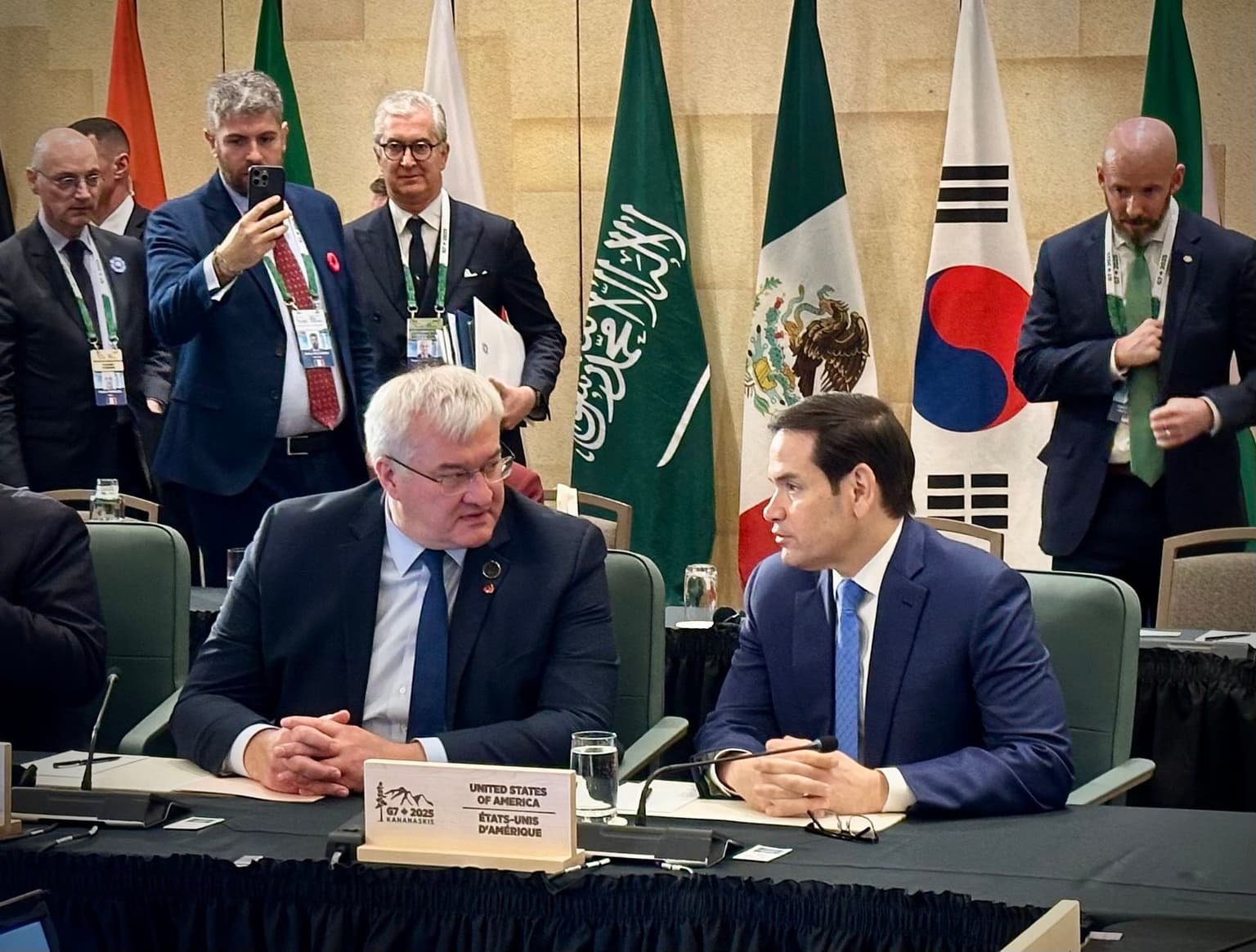
Two men, one war: Sybiha pleads for weapons as Rubio listens—Ukraine’s survival hangs on this handshake. (Andrii Sybiha/X)
Back in Kyiv, the courtroom air thickens. Wiretaps play: Timur Mindich—Zelensky’s old Kvartal 95 comrade—laughing over Energoatom bribes. $100 million siphoned, eight charged, four in cuffs with bail in the millions. Halushchenko and Hrynchuk resign at Zelensky’s command; Chernyshov faces enrichment counts; Umerov’s voice echoes in procurement chats. Mindich and Tsukerman fled like smoke.
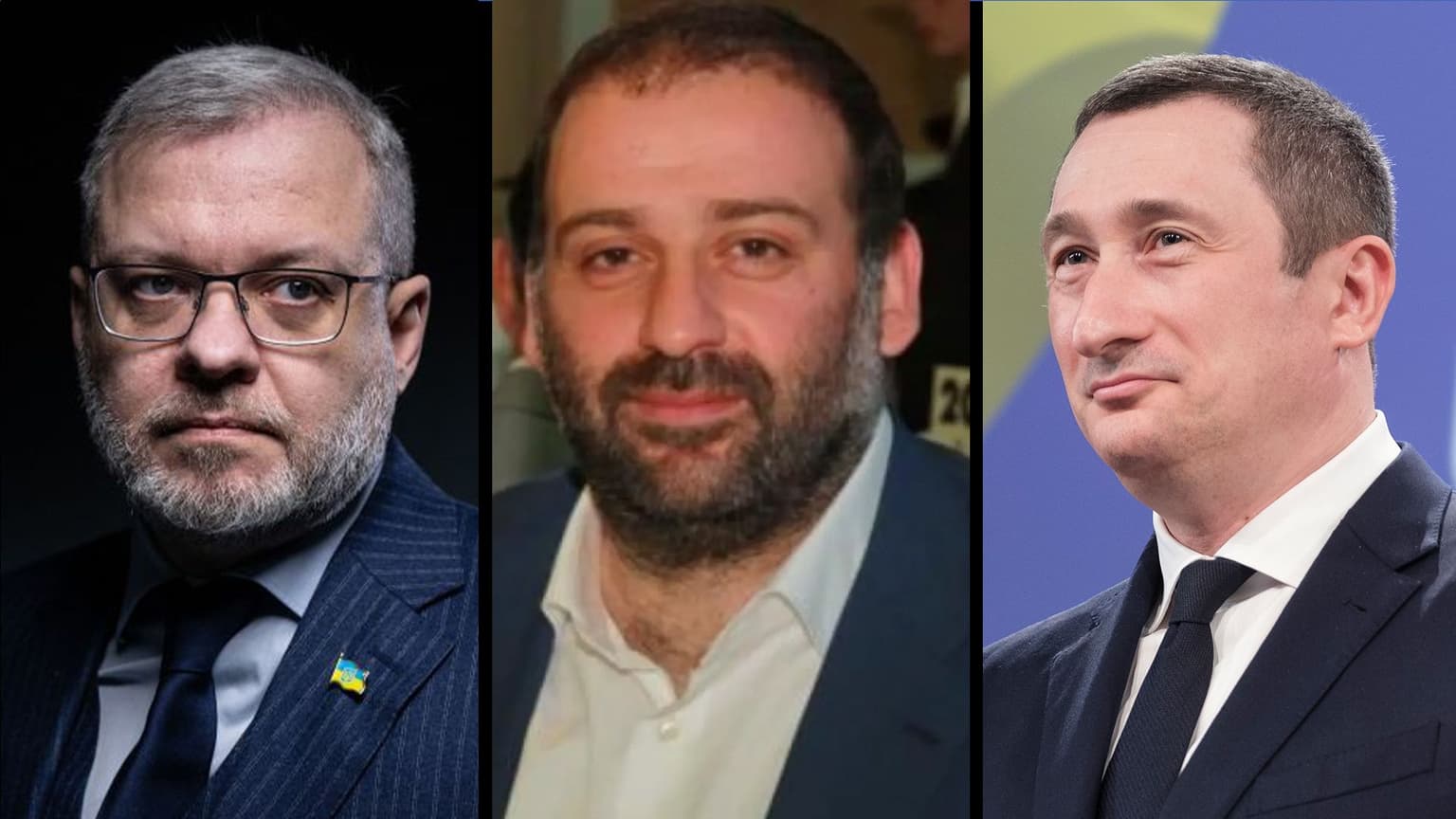
From comedy to courtroom: Zelensky’s inner circle—Halushchenko, Mindich, Chernyshov—now accused of stealing $100M while soldiers die. (Martin Bureau/AFP/Thierry Monasse/Getty Images, Collage by the Kyiv Independent)
You slam your fist on the crate. Soldiers bleed in Pokrovsk fog while comedians-turned-thieves loot the grid. Russian shells fall; propaganda crows. This betrayal cuts deeper than any blackout.
Echoes from Nairobi: Africa’s Stolen Sons
You’re in a Nairobi market, haggling over maize, when your phone lights up: Kenyan Foreign Ministry alert. Over 200 of your countrymen—sons, brothers—now shoulder rifles in Donetsk mud, lured by whispers of $18,000 for “Moscow security gigs.” Visas stamped, flights booked, then the truck to the front. Embassy cables confirm it: broken bones, missing limbs, promises of safe desks turned to assault waves.
One recruit’s call home, voice cracking over smuggled signal: “They took my passport. Said it’s just training.” September raid outside the city freed 22 more, one trafficker in irons. October warning screamed “lies and lures”—yet the syndicates slither on, peddling death as dollars.
Sybiha’s words from last week echo: 1,436 Africans from 36 nations, baited with cash, coercion, contracts that spell “death sentence.” South Africa probes 17 trapped in Donbas, distress calls begging extraction. They’re not volunteers; they’re fodder—language barriers, no tactics training, sent first into Ukrainian fire to draw the maps for Russian ghosts.
Moscow’s math: casualties at home spark riots in minority villages, so export the risk. North Koreans hold Kursk; Iranian drones scream overhead; Chinese chips power the shells. Ukraine’s aid snakes through 50 nations. But here, in the heat of the savanna, the war claims you—your kin vanishing into European snow, graves unmarked.
You pocket the phone, the maize forgotten. How far does one man’s ambition bleed?
Drones Over the Horizon
You’re in a Kharkiv basement, the all-clear barely sounded, when the sirens wail again: 121 Russian drones inbound—70 Shaheds screaming from Oryol, Millerovo, Crimea’s occupied claws. Your air defenses roar—EW jammers, hunter drones, chopper blades chopping the sky, mobile crews with MANPADS. Ninety fall like drunk birds. But 31 pierce the net, slamming 19 spots from Odesa to Dnipropetrovsk. A 47-year-old man in Synelnykove crumples, lifeless; fires chew warehouses till dawn.
Morning light filters through shattered panes in Kholodnohirskyi—three kamikaze bugs gut a factory, homes, lives. A 68-year-old man clutches his ribs; a 60-year-old woman bleeds out on her kitchen floor, both rushed to beds that might not wait. Russia’s winter siege: blackouts to freeze resolve, darkness to breed despair. Planners in Moscow map morale as terrain—hybrid hell, one blackout at a time.
But your phone pings victory: Deep Strike drones kiss Budyonnovsk, 500 km deep. Three hits bloom fire on Stavrolen’s polymer heart—fuel for their war birds. Russian nets snag 22; eight slip through, promising months of smoke and stalled lines.
In a Lviv factory, you solder circuits under fluorescent hum—4 million drones this year, Bloomberg whispers, 40 times America’s tally. FPV scouts to 15 km, long-range ghosts to Moscow’s doorstep. TSIR’s Oleksandr Hrachov boasts three upgrade generations while Finland builds his line. Modular, cheap, field-fixable—not Western gold, but attrition’s edge. FlyWell unites the swarm: air, ground, sea.
Denmark wires $77 million; Flamingo’s 3,000 km wings rise there, fuel plants humming. Slovakia, UK host your lines—NATO’s new forge. Post-war? You’ll arm the world’s next storm.
The sky quiets. For now.
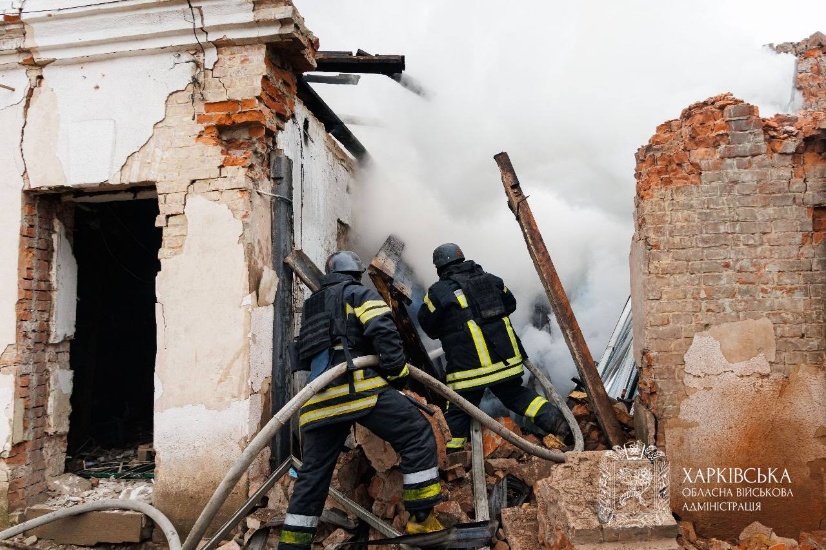
Shattered windows, broken lives: Russian drones turn Kharkiv’s heart to rubble—again. (Kharkiv Oblast Governor Oleh Syniehubov / Telegram)
The Unmined Future
You stand on an Odesa beach, sun high, waves gentle—until you see the tape: DANGER – MINES. August’s echo lingers: three swimmers, one blast, three lives erased by a relic in the sand.
The UN map flashes on your phone: 13,500 square kilometers of rivers, lakes, Black Sea coast—Puerto Rico’s size—laced with death. Only 1.4% cleared. 2,800 devices pulled by underwater bots and trembling hands.
Zoom out: 137,000 km² total—23% of Ukraine—bigger than Greece. Most mined nation on Earth. Afghanistan, Cambodia—they had decades. You’re still adding ordnance daily: Russian bombs fail to detonate, drift into streams, sink in silt.
You walk a Kherson field—barbed wire, warning signs where wheat should grow. Fishermen stare at empty nets; kids in school learn “Don’t touch the shiny thing.” A wrong step, a child’s curiosity—boom. Trauma doesn’t end with silence.
Demining crews crawl: one device, one hour, one life at stake. Rush, and you join the count. Wait, and the land starves.
Western funds flow—robots, training—but locals know every crater, every tide. Together, they chip away. Decades ahead.
You pocket a seashell, careful. The war’s gone quiet here, but the ground still remembers.
The Day’s Reckoning: Threads of Attrition
You close your eyes at midnight, the day’s fragments swirling like shrapnel: fog-choked trenches in Hulyaipole, where Russian lessons from four bloody years—air interdictions, weather as ally, ghost assaults—chip away at your lines. Pokrovsk’s streets run red with incremental horrors, a city not conquered in glory but ground to dust. No thunderous battles today, just the slow bleed of innovation: Russia’s adaptations outpacing your counters, a race where tomorrow’s drone might be yesterday’s ghost.
In Kyiv’s courtroom shadows, the wiretaps echo like betrayals—Energoatom’s $100 million vanishing while your friends fall in the east. Zelensky’s old allies, now fugitives, erode the trust you fight to keep. Soldiers die; civilians freeze; and here, the rot feeds Putin’s lies, saps Washington’s will, fractures the home front you bleed for. Victory demands more than rifles—it craves clean hands.
The world intrudes: Kenyan sons shipped to Donbas graves, American votes unlocking aid crates, French skies pierced by probing drones, your factories blooming in Danish barns. This war tests empires—not just steel on steel, but alliances fraying, sanctions pierced, factories racing. Africa’s mercenaries reveal Moscow’s desperation; Europe’s embrace, your ingenuity’s spark. Lessons etch into doctrine: adapt or die. But only survivors teach.
Dawn breaks with Russians deeper in Pokrovsk, nearer Hulyaipole—1,154,180 dead, another thousand ghosts by breakfast. You grip your gear: homegrown drones, fitful Western steel, the fire of knowing occupation’s boot waits. Politicians dither; thieves prosper; the globe watches, half-committed.
1,358 days in. The end? A myth, for now.