
Russian forces pressed forward across eight frontline directions, gaining meters but no breakthrough. At the same time, the killing of Iran’s supreme leader exposed how deeply Moscow depends on foreign drones to sustain its war. And in the North Sea, European commandos tightened the sanctions vise—seizing a shadow fleet tanker that keeps Russia’s war economy afloat.
The Day’s Reckoning
The day opened with explosions over Tehran and closed with armed Europeans descending onto the deck of a Russian shadow tanker in the cold waters of the North Sea. In between, the war in Ukraine moved the way it so often does now — not in sweeping arrows across maps, but in contested tree lines, shattered suburbs, and incremental gains measured in meters. Russian forces edged forward near Kostyantynivka and Druzhkivka. Ukrainian troops struck back near Dobropillya. Across eight active directions from Sumy to Zaporizhia, pressure mounted, but no breakthrough came.
The killing of Iran’s supreme leader cast a harsh light on Moscow’s war machine. Tehran had supplied roughly 50,000 drones that now shape daily life in Ukrainian skies. When the bombs fell on Iran’s leadership, the Kremlin responded with carefully phrased condolences, conspicuously avoiding direct confrontation with Washington. Weapons had flowed one way; meaningful protection did not flow back.
At sea, Europe tightened its grip. Belgian commandos boarded the sanctioned tanker Ethera, its tracking system dark, its ownership masked by shifting flags. Operation Blue Intruder signaled something more than symbolism — a willingness to move from monitoring to interdiction. Each seized vessel raises the cost of evasion.
On the front lines, the pattern held: Russian assaults, Ukrainian resistance, drones striking deep behind positions on both sides. The line bent in places, but it did not break. Pressure continued without decisive transformation — a war grinding forward, dependency by dependency, meter by contested meter.
Drones for Words: When Tehran Burned and Moscow Fell Silent
The Kremlin’s statement arrived polished and precise. Vladimir Putin mourned Ayatollah Ali Khamenei as an “outstanding statesman,” condemned his killing as a “cynical violation” of morality and international law — and never once named the United States or Israel.
The omission echoed louder than the condolences.
For three years, Iranian drones have hummed over Ukrainian cities — Shahed platforms slamming into power stations, attack UAVs stalking trenches, reconnaissance aircraft mapping defensive lines. Roughly 50,000 of them have flowed north, sustaining Russia’s campaign of pressure and attrition. The partnership was measured in engines, explosives, and circuitry.
When bombs fell on Tehran and decapitated Iran’s leadership, Moscow answered with carefully calibrated phrasing.
Sergei Lavrov worked the phones — Abu Dhabi, Doha, Beijing — speaking of coordination at the UN Security Council and the IAEA, offering stabilization without consequence. Russian diplomats echoed the same tone: statements issued, outrage expressed, nothing escalated. The performance was orderly. The substance was thin.
The imbalance stood exposed. Iran had supplied the weapons that darken Ukrainian skies. Russia supplied rhetoric and technical courtesies. When Tehran burned, Moscow chose caution over confrontation, unwilling to jeopardize its war effort by challenging Washington directly.
Iran’s interim leadership signaled openness to renewed talks with Washington even as explosions continued. Strategic partnerships, they understood, come with expectations. In crisis, Moscow’s capacity to repay the favor proved limited.
President Zelensky cut through the choreography with blunt clarity: giving the Iranian people a chance to rid themselves of a terrorist regime, he said, also meant protecting nations long scarred by terror that originated in Iran.
Ghost Ship in the North Sea
For months the tanker moved like something that did not want to be found.
It switched flags the way a fugitive swaps identities — Guinea, Panama, Martinique, Equatorial Guinea — registry hopping across jurisdictions while paperwork blurred its trail. On October 2, its tracking signal went dark. For nearly four months the Ethera sailed without a digital heartbeat, invisible to routine monitoring. Twice it slipped into Novorossiysk, Russia’s critical Black Sea oil terminal. Washington had sanctioned it. Brussels had sanctioned it.
It kept moving.
Then Belgian commandos climbed its ladders while French naval helicopters hovered overhead. The ship that relied on silence and shifting paperwork suddenly faced enforcement in steel and rope.
Defense Minister Theo Francken announced the seizure. The tanker would be escorted to Zeebrugge for formal confiscation. President Emmanuel Macron confirmed French support, framing the operation as proof that Europe intended to enforce its own sanctions. The Russian Embassy in Belgium said it had received no official communication. The claim changed nothing. The ship was sanctioned. The ship was seized.
What shifted was not just custody, but calculation.
Russia’s shadow fleet depends on inconsistency — on the assumption that some vessels will pass unchecked. Every unimpeded voyage weakens sanctions. Every interdiction strengthens them. Operation Blue Intruder signaled a turn from observation to action. Each captured tanker raises insurance costs for those still sailing dark. Each boarding increases risk. The economics that made shadow fleet operations profitable are eroding, one deck at a time.
Pressure Along a Line That Will Not Break
In northern Sumy Oblast, Russian forces kept pressing toward the border, chasing Moscow’s goal of carving out a defensible buffer zone. Attacks continued on both sides of the frontier — in Sumy and across into Kursk — generating steady pressure but no opening wide enough to exploit.
The fighting carried the same rhythm seen elsewhere along the front. Russian units concentrated force at select points, pushing forward in short bursts meant to widen territorial control. Ukrainian defenders absorbed the impact, shifting positions, tightening lines, preventing momentum from turning into breakthrough.
What emerged was strain without transformation. Russia could create local pressure. Ukraine could deny decisive gain. The result was movement measured in meters and firefights without operational collapse.
Across the northern axis, the pattern held: tactical thrusts, stubborn resistance, no strategic shift.
Kharkiv’s Winter of Inches
Across northern Kharkiv Oblast, the war moved in short, exhausting steps.
Northeast of Kharkiv City, fighting persisted around Vovchansk — a border town that has endured months of shelling, assault, and counterassault without decisive resolution. Russian forces pressed with the familiar objective: push Ukrainian units farther from the international line, widen control, create depth.
In the Velykyi Burluk direction, attacks flared near Chuhunivka and Novopokrovka. Assault groups advanced in bursts, seizing tree lines and battered positions measured in hundreds of meters. Ukrainian defenders recalibrated, falling back where necessary, reestablishing cohesion before pressure could turn into momentum.
Kupyansk felt the same strain. Russian units attacked near and inside the town, north of it, and across adjacent tactical sectors. Moscow’s Western Grouping of Forces spoke of Ukrainian counterattacks — a reminder that even under sustained pressure, Kyiv retained the ability to strike back and disrupt consolidation.
Farther south, northeast of Borova, clashes unfolded near Borivska Andriivka and neighboring settlements. The pattern was consistent: concentrated Russian force, incremental territorial shifts, Ukrainian withdrawals designed not as collapse but as preservation.
Across Kharkiv’s multiple fronts, ground changed hands in fragments, not in sweeping arcs. Lines flexed, positions adjusted, but the operational map refused to transform. The winter grind continued — a campaign of inches, not breakthroughs.
Eight Arrows Into Donetsk
Across Donetsk Oblast, the map is crowded with arrows.
Russian forces pushed in multiple directions at once, pursuing the larger aim of taking the entire region. Near Lyman in the Slovyansk direction, fighting flared in and around the town — ground contested for months, positions traded, no decisive outcome in sight.
In the Kostyantynivka-Druzhkivka area, recent Russian advances crept forward through sustained assaults. Units pressed near Kostyantynivka and northeast toward surrounding settlements, capturing hundreds of meters at a time. Ukrainian lines bent under pressure, defensive positions adjusted, but cohesion held.
Near Dobropillya, Ukrainian counterattacks disrupted Russian consolidation. Even as Russian forces struck northeast toward Shakhove, Ukrainian units maneuvered in the same contested space, preventing momentum from hardening into operational gain. Initiative shifted back and forth in narrow corridors of shattered ground.
The Pokrovsk direction remained under sustained assault. Attacks near and northwest of the logistical hub threatened supply routes without cutting them. Strain increased; collapse did not follow.
Southwest of Novopavlivka, clashes erupted near Filiya. Southeast of Oleksandrivka, fighting continued near Ternove and neighboring settlements. Russian forces maintained pressure across axes simultaneously, accepting losses to extract incremental gains.
Meanwhile, Russian FPV drone ranges stretched farther, striking beyond the reach of advancing troops. Even where ground did not move, the threat extended deeper into Ukrainian rear areas.
Eight directions. Continuous pressure. Lines shifting in fragments, not fractures.
Two Fronts in the Same Field
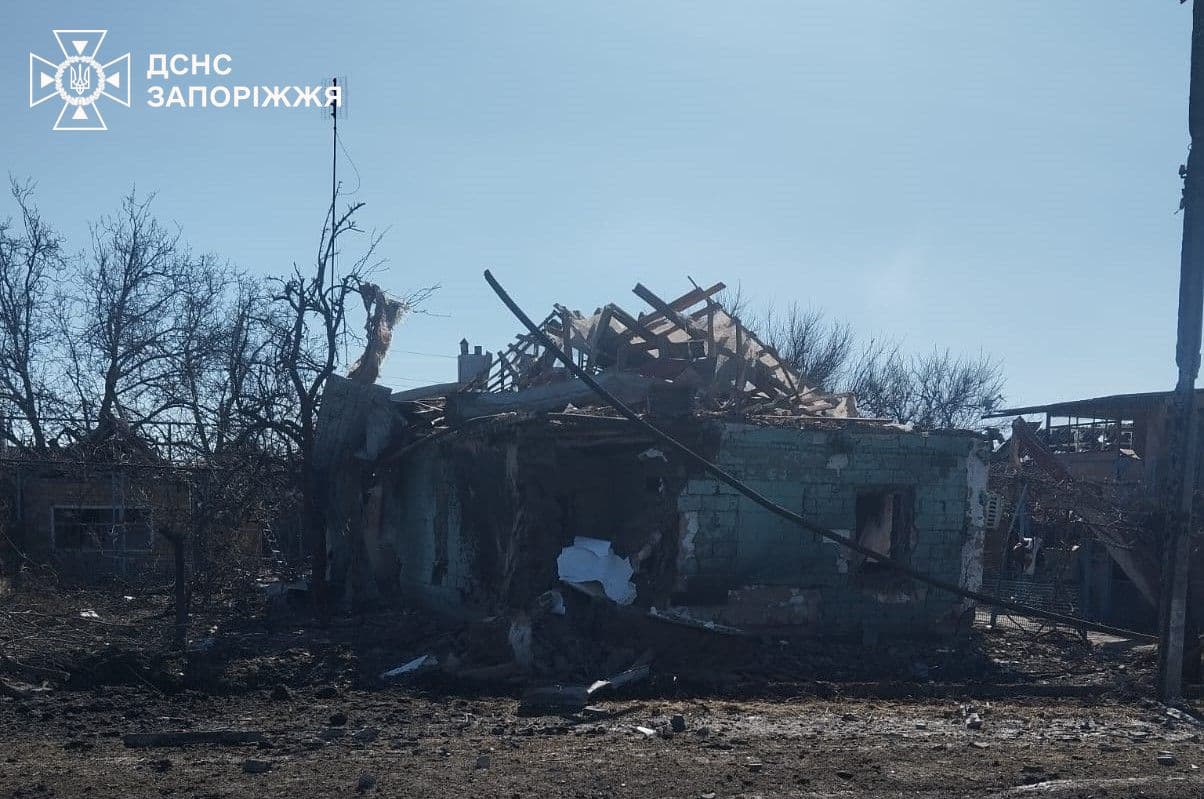
In Zaporizhia, the pressure comes from the front — and from behind.
Russian forces continued their push in the Hulyaipole direction, attacking near the town and northwest of it. The aim was steady and strategic: secure forward positions, protect rear areas, and prevent any Ukrainian move that might threaten the land bridge to Crimea.
West of Orikhiv, assaults struck near Myrne and surrounding settlements. The tempo across western Zaporizhia Oblast did not slacken. Infantry probed. Artillery followed. Ground was contested in narrow stretches, each advance measured and deliberate.
Ukraine answered without abandoning the defensive line.
Even as Russian units pressed forward, Ukrainian forces launched frontline and medium-range strikes against Russian logistics hubs and command nodes. Rear-area infrastructure — the arteries sustaining the offensive — came under fire. Defensive operations did not mean surrendering initiative.
In eastern Zaporizhia, the same pattern held. Ukrainian units absorbed ground pressure where necessary while targeting the systems enabling it. The approach revealed adaptation: defend at the edge, degrade at the depth.
The result was a layered fight. Russian forces pushed for territory. Ukrainian strikes sought to make that territory harder to hold.
War Beyond the Horizon
The fight does not end where the lines meet.
Ukrainian forces continued striking behind Russian positions, reaching for the arteries that keep an offensive alive. Mid-range attacks targeted ammunition depots feeding the guns, headquarters coordinating assaults across multiple directions, and assembly areas where follow-on forces waited for their moment. The goal was not dramatic collapse, but steady degradation.
Russia responded with drones launched from occupied territories and across the border. Ukrainian military positions, logistics routes, and command nodes came under attack. The campaigns mirrored one another — each side trying to fray the systems sustaining the other’s operations.
These strikes unfolded alongside frontline combat. Infantry clashed at the point of contact while supply hubs burned miles away. Neither side confined itself to trenches and tree lines; both sought advantage in depth.
Ukrainian strikes complicated Russia’s ability to sustain multi-axis offensives. Russian strikes disrupted Ukrainian logistics supporting defensive cohesion. The contest did not produce systemic breakdown or operational pause. Instead, it generated friction — delays, rerouting, recalculation.
The deep battle did not decide the front in a single stroke. It shaped the conditions under which the next assault would unfold.
Missiles, Messages, and Measured Distance
The first reports came tangled in contradiction.
UK Defense Secretary John Healey said Iran had fired two missiles toward Cyprus, home to British bases. Cypriot officials denied it outright. President Nikos Christodoulides said Prime Minister Keir Starmer assured him Cyprus was not a target. In the blur of retaliation after US-Israeli strikes, certainty was scarce.
Other facts were harder to dispute. Iran’s Islamic Revolutionary Guard Corps launched missiles at US bases across the Gulf — Qatar, Saudi Arabia, the UAE, Bahrain — and sent drones toward Israel. In Bahrain, three hundred British troops stationed near Iranian targets found missile impacts landing within several hundred yards. A high-rise building was struck. The IRGC promised its “most ferocious offensive operation” yet.
Healey stressed legality and restraint. British aircraft flying from Qatar defended Qatar. Aircraft from Cyprus defended Cyprus. He reminded viewers that Iran had been linked to twenty terrorist plots in Britain and had supplied Russia with 50,000 drones used against Ukraine. For London, the connection was direct: the same regime threatening Gulf bases had armed Moscow’s war.
Paris, Berlin, and London issued coordinated statements. The EU spoke of stability. Macron called for a UN Security Council meeting even as French forces assisted in seizing the Russian tanker Ethera.
Across Europe, calculations unfolded quietly. Support Ukraine. Contain escalation. Avoid deeper entanglement. Balance American alignment with European caution. The Middle East crisis rippled outward, and every capital measured what it could afford.
The Day’s Meaning: Pressure, Exposure, and the Cost of Dependence
Look at the map and it feels crowded. Eight Russian thrusts from Sumy to Zaporizhia. Ukrainian counterpressure near Dobropillya. Lines bending in Kostyantynivka and Druzhkivka but not breaking. The pattern is familiar now: concentrated assaults, gains measured in hundreds of meters, defensive withdrawals that preserve cohesion. No breakthrough. No collapse. Just relentless strain.
But the day was larger than the front.
While Russian units pressed forward, the architecture supporting the war was exposed. Iran had supplied roughly 50,000 drones that darken Ukrainian skies. When American bombs killed Iran’s supreme leader, Moscow responded with carefully scripted condolences that avoided naming Washington. The imbalance was unmistakable. Weapons had flowed north. Meaningful protection did not flow back.
At sea, another vulnerability surfaced. The tanker Ethera — a sanctioned ship that hid behind shifting flags and dark transponders — was boarded and seized. Operation Blue Intruder signaled a tightening of enforcement. The shadow fleet survives on uneven scrutiny. Each interdiction raises the cost of evasion. The pressure is cumulative.
Ukraine adapted in its own way. Defend across multiple axes. Counterattack selectively. Strike logistics in depth. Absorb drone innovation while extending reach behind Russian lines. Sustain the fight without promising quick reversal.
The war in its fifth year is no longer about sudden collapse. It is about endurance — military, economic, political. Russian offensives grind forward at high cost. Ukrainian defenses hold at high cost. Sanctions tighten without snapping the system.
Which strain breaks first remains unclear. On March 1, what became clearer was this: pressure continues, dependencies carry consequences, and every actor is discovering the limits of its reach.
Prayer For Ukraine
- For Strength Along the Front
Lord, as Russian forces press in eight directions and Ukrainian defenders hold lines that bend but do not break, grant endurance to every soldier standing watch. Strengthen their bodies, steady their hands, and guard their minds from exhaustion and despair. Let courage outlast pressure. - For Protection from Drones and Missiles
With thousands of Iranian-supplied drones shaping this war and new strikes launched across borders, we ask You to shield cities, frontline positions, and rear logistics. Confuse the guidance systems of weapons aimed at harm. Protect civilians, first responders, and those who serve in defense of their nation. - For Wisdom in International Decisions
As Europe tightens sanctions and leaders weigh responses to Middle Eastern escalation, give clarity and resolve to governments supporting Ukraine. Let enforcement remain firm, alliances remain steady, and distractions not weaken the commitment to freedom and justice. - For Exposure of Hidden Networks
As the shadow fleet tanker was seized and economic pressure slowly tightens, continue to expose corruption, evasion, and systems that fuel aggression. May truth surface. May unlawful systems unravel. May every hidden dependency that sustains violence be brought into the light. - For Endurance of the Ukrainian People
In a fifth year of grinding war, strengthen families, churches, volunteers, and leaders. Renew hope where fatigue has settled. Sustain unity. Let resilience outlast aggression, and bring a just and lasting peace that restores what has been shattered.
Lord, sustain Ukraine. Guard her defenders. Protect her people. And bring this war to an end.