
As Trump and Putin prepare for their August 15 summit, Ukrainian drones strike 2,000 kilometers deep into Russia while Moscow bombs civilians in Zaporizhzhia, exposing the brutal reality behind peace negotiations
Summary of the Day – August 10, 2025
Five days before President Donald Trump and Russian President Vladimir Putin sit down in Alaska to negotiate Ukraine’s fate, the battlefield told its own story of who truly wants peace. Ukrainian drones reached deeper into Russian territory than ever before, striking an oil refinery in the Komi Republic some 2,000 kilometers from the Ukrainian border, while Russian guided bombs terrorized civilians at a bustling bus station in Zaporizhzhia. As European leaders scrambled to influence Trump before his meeting with Putin, and Vice President JD Vance admitted that any peace deal would make “nobody super happy,” the war’s relentless rhythm continued unabated. The day crystallized the fundamental contradictions of the peace process: while diplomats speak of territorial swaps and ceasefires, combatants write the real terms with fire and steel across a thousand-kilometer front.
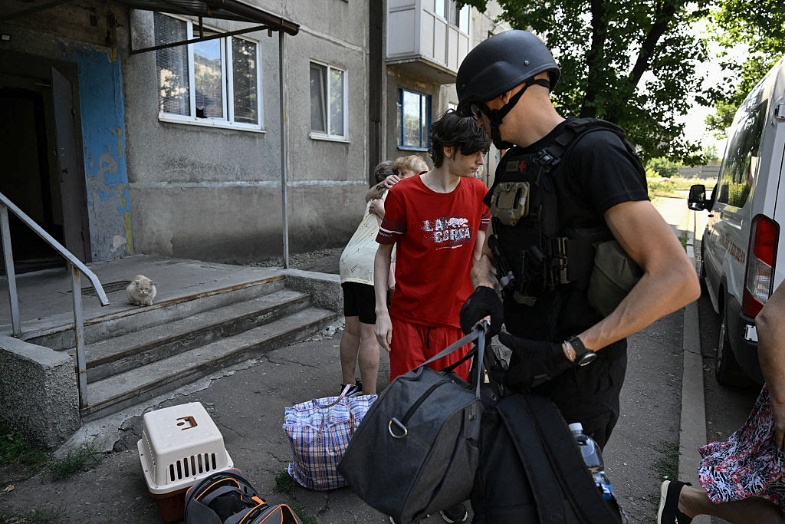
An evacuation team member from the East SOS Charity Foundation (R) helps residents to load their belongings onto a bus evacuating them from the town of Dobropillia, Donetsk Oblast. (Genya Savilov / AFP via Getty Images)
The Financial Pivot: Europe Assumes the Burden as America Steps Back
The United States and Ukraine’s European allies formalized a historic shift in war financing on August 10, with Europe assuming responsibility for future military and security assistance to Ukraine while America retreats from direct funding commitments. Vice President JD Vance confirmed the policy transformation in a Fox News interview, reiterating the Trump administration’s position that the United States would no longer directly fund the Ukrainian military effort.
“We’re done with the funding of the Ukraine war business,” Vance declared, explaining that European nations could continue purchasing American weapons for Ukraine and their own defensive needs while shouldering the financial burden themselves.
NATO Secretary General Mark Rutte revealed that the “floodgate” of lethal aid packages opened after Trump met with Rutte on July 14, with Canada and European NATO allies committing to continue weapons deliveries. The financial architecture supporting this transition includes the groundbreaking Bank for Defense, Security, and Resilience (DSRB), backed by NATO allies, the European Parliament, and financial giants including U.S. JP Morgan Chase, German Commerzbank, and Canadian RBC Capital Markets.
The DSRB will specialize in lending to NATO and allied countries for defense procurement, helping member states reach their ambitious goal of committing five percent of GDP to defense spending. UK Chancellor Rachel Reeves and Defense Secretary John Healey provided explicit endorsement for the initiative, with more than 40 countries expected to become shareholders in this revolutionary defense financing mechanism.
The Alaska Preparation: Trump’s Trilateral Gambit
President Trump’s consideration of a trilateral meeting with Russian President Vladimir Putin and Ukrainian President Volodymyr Zelensky during the August 15 Alaska summit dominated diplomatic discussions as the White House prepared for the historic encounter. CNN and NBC reported that while the administration was primarily preparing for a bilateral Trump-Putin meeting, officials had not ruled out inviting Zelensky to participate.
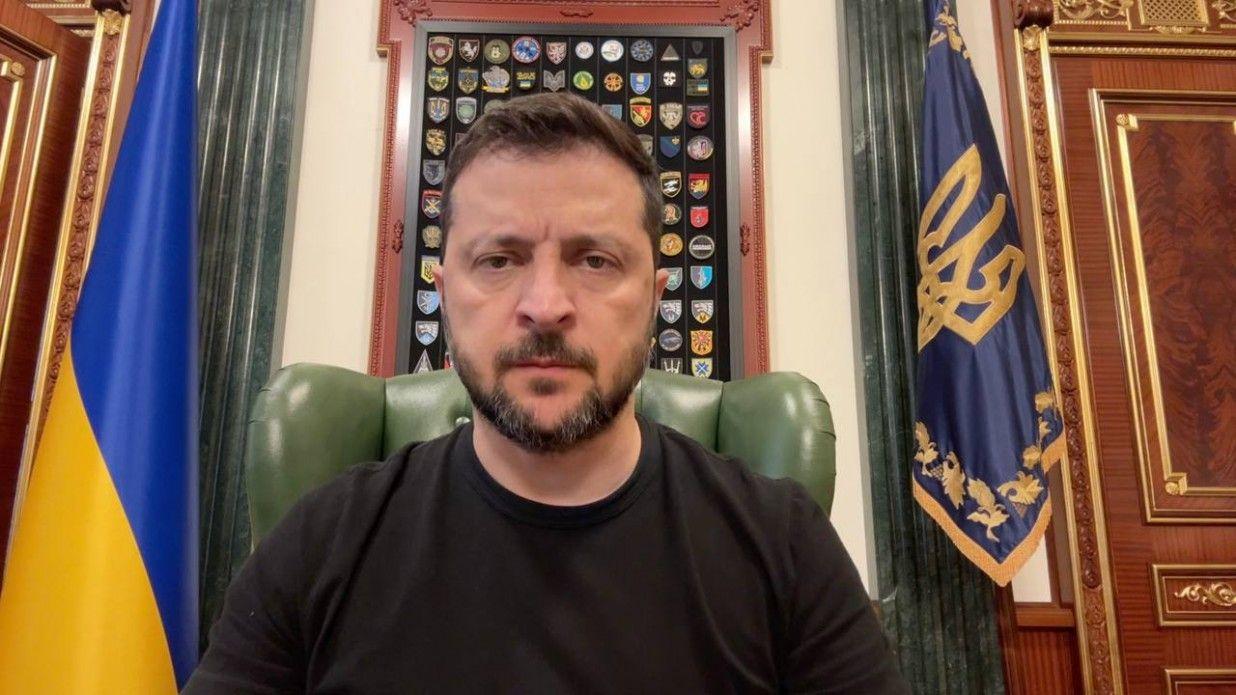
President Volodymyr Zelensky delivers his nightly video address in Kyiv. (Presidential Office)
Vance told Fox News that the United States was “trying to schedule a trilateral meeting between Putin, Trump, and Zelensky in order to negotiate an end to the war,” identifying Putin’s previous refusal to meet with Zelensky as “one of the most significant impediments to the peace process.” The vice president indicated that any meeting with Zelensky would likely occur after the initial Trump-Putin bilateral session.
Trump told Vance privately about the negotiations’ uncertain prospects, saying “maybe this works out, maybe it doesn’t, but it’s worth the effort.” The admission suggested even the administration recognizes the enormous challenges in bridging the gap between Russian territorial demands and Ukrainian sovereignty principles.
Vance’s Uncomfortable Truths: Admitting Peace May Fail
In remarkably candid comments, Vice President Vance acknowledged the fundamental contradictions at the heart of the Trump administration’s peace efforts while praising the president’s diplomatic abilities. Speaking with Maria Bartiromo, Vance admitted that any settlement would likely satisfy no one and might fail entirely.
“We’re gonna try to find some kind of negotiated settlement that the Ukrainians and Russians can live with, where they can live in relative peace, where the killing stops,” Vance explained. “It’s not gonna make anybody super happy. Both the Russians and the Ukrainians probably at the end of the day are gonna be unhappy with it.”
The vice president emphasized America’s withdrawal from direct military financing while maintaining weapons sales relationships with European allies. “I think the president and I certainly think that America, we’re done with the funding of the Ukraine war business,” he stated, arguing that Americans were “sick of continuing to send their money, their tax dollars to this particular conflict.”
The Kremlin’s Divide-and-Conquer Strategy: Blaming Everyone But Russia
Russian officials intensified their information campaign to portray Europe and Ukraine, rather than Russia, as obstacles to peace ahead of the Alaska summit. Deputy Security Council Chairperson Dmitry Medvedev claimed on August 10 that Europe was trying to prevent the United States from helping to stop the war, while Liberal Democratic Party Head Leonid Slutsky accused European countries of pursuing anti-Russian policies designed to prevent quick peace settlements.
Russian political scientist Sergei Markov told the Washington Post that Russia’s main interest in the Alaska summit was portraying Ukraine and Europe as the primary impediments to peace rather than Russia. Markov outlined Russia’s minimal compromise position: halting military efforts to seize Odesa and Kharkiv oblasts and Kherson and Zaporizhzhia cities while maintaining all other territorial gains and war demands.
The statements reflected Russia’s long-standing strategy of weakening Western cohesion as part of a broader campaign to deter support for Ukraine while distracting from Russian intransigence regarding genuine peace efforts.
Europe’s Desperate Diplomacy: Racing to Influence Trump
European leaders launched a frantic diplomatic offensive to reach Trump before his meeting with Putin, with EU foreign ministers scheduling a virtual meeting for August 11 to coordinate responses to the developing peace negotiations. The outreach reflected deep anxiety about being sidelined from discussions that could determine Europe’s security architecture for decades.
French President Emmanuel Macron, Italian Prime Minister Giorgia Meloni, German Chancellor Friedrich Merz, Polish Prime Minister Donald Tusk, UK Prime Minister Keir Starmer, Finnish President Alexander Stubb, and European Commission President Ursula von der Leyen published a joint statement expressing support for U.S.-led peace efforts while demanding Ukrainian and European involvement in future negotiations.
The European leaders called for a ceasefire or reduction of hostilities before negotiations begin, insisted that the current frontline should be the starting point for discussions, and demanded robust and credible security guarantees protecting Ukraine’s sovereignty and territorial integrity. They reaffirmed that international borders cannot be changed by force and that Russia’s invasion violates the UN Charter, Helsinki Act, and Budapest Memorandum.
Putin’s Territorial Demands: The Price of Russian “Peace”
Russian President Putin outlined his territorial demands during discussions with Trump’s special envoy Steve Witkoff, proposing a full ceasefire contingent on Ukraine withdrawing forces from Donetsk and Luhansk oblasts to grant Moscow complete control of those partly occupied regions alongside Crimea. The proposal represents Putin’s attempt to formalize battlefield gains through diplomatic means while maintaining pressure for additional concessions.
The Russian position demonstrates unwillingness to compromise on original war aims: preventing Ukraine from joining NATO, achieving regime change in favor of a pro-Russian proxy government, and securing Ukraine’s demilitarization—objectives that would ensure Ukraine’s complete capitulation rather than genuine peace.
The Longest Reach: Ukrainian Drones Touch the Arctic Circle
Ukrainian forces achieved their deepest penetration into Russian territory since the war began, striking the Lukoil-Ukhta oil refinery in Russia’s Komi Republic approximately 2,000 kilometers from the Ukrainian border. Ukraine’s military intelligence agency (HUR) confirmed the attack targeted a facility that supplies Russian forces with fuel and lubricants, demonstrating Kyiv’s evolving capability to project power across vast distances.
The strike hit a petroleum tank, causing spillage, and damaged a gas and gas condensate processing plant producing propane-butane and gasoline. Local residents reported power outages and mobile internet disruptions following the attack, while Russian authorities temporarily suspended flights from Ukhta Airport—a standard response to Ukrainian drone activities elsewhere in Russia.
The operation required sophisticated navigation and fuel management systems, suggesting Ukrainian engineers have solved complex technical challenges in extending drone range while maintaining payload capacity. The attack marks Ukraine’s first confirmed drone strike in the northwestern Komi Republic.
Double Strike Success: Saratov Refinery Burns Again
Ukrainian Unmanned Systems Forces struck the Saratov Oil Refinery for the fourth time since November 2024, causing fires at the facility that produces up to seven million tons of gasoline and diesel annually while supplying the Russian military with over 20 types of petroleum products. Geolocated footage showed large smoke plumes over the refinery, with NASA satellite data confirming heat anomalies consistent with significant fires.
Saratov Oblast Governor Roman Busargin acknowledged that drones damaged an industrial enterprise though avoided specifying the target. The repeat targeting demonstrates Ukrainian forces’ ability to strike the same facilities multiple times despite Russian defensive improvements, with previous attacks occurring in February 2025, January 2025, and November 2024.
Command Post Elimination: 25 Russian Officers Die Near Oleshky
Ukrainian forces achieved a significant tactical victory by striking a Russian battalion command post near occupied Oleshky in Kherson Oblast, killing 25 Russian personnel including the battalion commander. The precision strike eliminated key leadership elements in an area where intelligence had recently observed elements of the Russian 31st Separate Airborne Brigade, 328th VDV Regiment from the 104th VDV Division, and the 61st Naval Infantry Brigade from the Northern Fleet.
Such decapitation strikes demonstrate Ukrainian forces’ sophisticated intelligence gathering and precision strike capabilities, targeting high-value personnel rather than just equipment. The loss of experienced commanders and staff officers creates cascading effects on Russian operational effectiveness extending far beyond immediate tactical impacts.
Terror at the Bus Station: Russia’s Answer to Peace Talks
Russian forces provided their interpretation of the peace process by bombing a crowded bus station in Zaporizhzhia on the evening of August 10, with two KAB guided aerial bombs striking civilian infrastructure. The first bomb hit the busy transportation hub at 17:50, while the second targeted a university medical clinic, injuring 20 civilians ranging in age from 24 to 77.
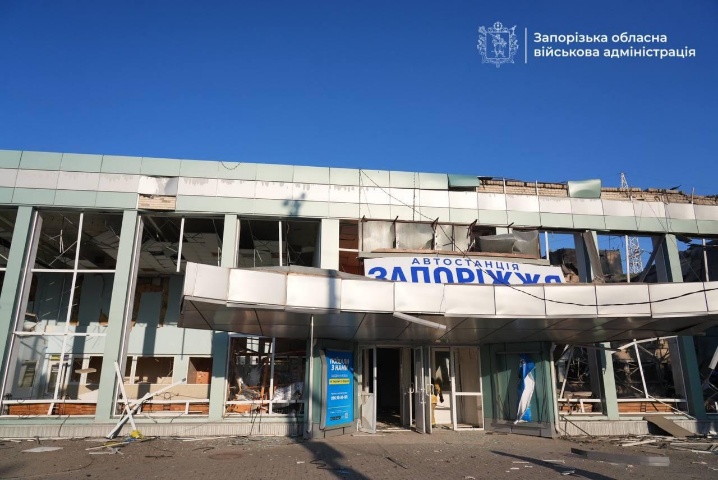
A bus station in the Ukrainian city of Zaporizhzhia after being hit by a Russian KAB guided bomb. (Ivan Fedorov / Telegram)
CCTV cameras captured the moment of impact, recording a massive explosion that illuminated the city center. Among the victims were men aged 24, 38, 39, 41, and 56, and women aged 25 and 77, with emergency workers continuing searches for victims trapped under rubble as of 7:50 p.m. The blast damaged seven apartment buildings and surrounding structures.
President Zelensky used the attack to underscore Russia’s true intentions amid diplomatic maneuvering: “Everyone can see that Russia has not taken a single real step toward peace, not a single step on the ground or in the air that could save lives.”
Night of a Hundred Drones: Russia’s Aerial Assault Intensifies
Russian forces launched their most intensive drone barrage in weeks, deploying 100 Shahed-type and decoy drones from Kursk City, Shatalovo in Smolensk Oblast, Primorsko-Akhtarsk in Krasnodar Krai, and occupied Hvardiivske in Crimea overnight on August 9-10. Ukrainian defenders successfully intercepted 70 drones across northern and eastern regions, achieving a 70-percent interception rate, but 30 penetrated defenses to strike 12 locations in Kharkiv, Chernihiv, Sumy, and Dnipropetrovsk oblasts.
Kharkiv Oblast bore the brunt of successful strikes, with officials specifically reporting hits on Chuhuiv, Rozdolne, and Martove that damaged civilian infrastructure. Drone debris caused additional damage at three unspecified locations, highlighting the persistent threat posed even by intercepted platforms.
Railway Inferno: Russia Targets Ukraine’s Transportation Lifelines
Russian forces struck a railway station in Ukraine’s Dnipropetrovsk region overnight, setting the facility ablaze and causing significant delays across the transportation network. Oleksandr Pertsovskyi, CEO of state-owned railway Ukrzaliznytsia, shared video footage showing the station building engulfed in flames.
The attack forced trains traveling between Dnipro and Zaporizhzhia to face hour-long delays as they passed the damaged section under auxiliary locomotive power. Two major routes required complete rerouting: Train No. 92 Odesa-Kramatorsk and No. 824 Dnipro-Kharkiv were diverted through the Samar-Dniprovsky station, with return flights following the same alternative path.
“The peace process carried out by the barbarian neighbors currently looks like this,” Pertsovskyi wrote, referencing the upcoming Alaska talks between the US and Russia without Ukraine’s participation.
The Wider Toll: Six Dead Across Three Regions
The nationwide death toll from Sunday’s Russian bombardment reached six civilians killed across the eastern regions of Donetsk, Zaporizhzhia, and Kherson oblasts. Emergency crews in Zaporizhzhia took at least 19 people to hospitals while continuing rescue operations at the bus station into Monday morning, with the methodical search highlighting the extensive damage caused by the guided bomb attacks.
The Tank Paradox: Russian Armor Losses Plummet as Tactics Evolve
Russian tank losses continued their dramatic decline in 2025, reaching the war’s lowest levels as confirmed by open-source intelligence tracking. Visual confirmation showed only 22 Russian tank losses in June 2025 and 19 in July 2025, compared to 116 and 97 losses respectively in the same months of 2024—representing an 80-percent reduction in armored vehicle casualties.
The declining losses reflect a fundamental shift in Russian tactics from costly mechanized assaults toward gradual infantry-led advances supported by expendable motorcycles and light vehicles. The transition began in December 2024 as Russian commanders recognized their inability to protect armored vehicles from Ukrainian drone capabilities. Analysis revealed that T-62 and T-90 loss rates remained consistent, T-72 losses declined proportionally, while T-80 losses fell dramatically as Russia exhausted stockpiles.
Battlefield Innovations: Ukrainian Drone Hunters Take Flight
Ukrainian defense manufacturer Besomar achieved a technological breakthrough with development of a reusable interceptor drone capable of downing Russian aircraft traveling up to 200 kilometers per hour, including Geran-type long-range strike platforms. The interceptor features a shotgun and automated firing system holding two to four rounds, plus digital communications systems designed to approach targets undetected by Russian evasion systems.
A sensor in the drone’s nose allows operators to initiate automated firing when targets enter range, providing both manual and autonomous engagement capabilities. The innovation addresses a critical capability gap in Ukraine’s air defense network against smaller, slower-moving drones that evade traditional missile systems.
Frontline Grinding: Combat Continues Across Multiple Sectors
Fighting continued across multiple fronts with Russian forces achieving limited tactical gains despite concentrated efforts. In Kursk Oblast, Russian milbloggers reported that elements of the 40th Naval Infantry Brigade struggled with cohesion when repelling Ukrainian counterattacks near Novokostyantynivka, while Ukrainian forces allegedly partially encircled elements of the 51st Airborne Regiment in forest areas near Sadky.
Russian forces continued offensive operations in the Sumy direction, with the military command redeploying a battalion of the 810th Separate Naval Infantry Brigade to the Kindrativka-Andriivka area to stabilize the frontline. Near Lyman, geolocated footage indicated Russian advances into northern Shandryholove and northwest of Kolodyazi.
In the Pokrovsk direction, Ukrainian spokesman Lieutenant Colonel Viktor Trehubov reported that Russian forces concentrated up to 100,000 personnel attempting to envelop the city from southwest and northeast to cut Ukrainian ground lines of communication. A Ukrainian brigade spokesperson described repelling a Russian motorized assault consisting of 25 motorcycles near Torske—the largest such assault encountered in the area.
Three Deaths by Sea: The Hidden Toll of Russian Mining
Three civilians died from sea mine explosions while swimming in prohibited areas along the Black Sea coast in Odesa Oblast. One man was killed at a beach 60 kilometers south of Odesa, while another man and woman died at a beach in Zatoka. Regional Governor Oleh Kiper urged residents to use only the 32 officially permitted swimming areas—including 30 in Odesa city, one in Chornomorsk, and one in Prymorske—that have undergone comprehensive inspection for mine danger both on land and in water.

A screenshot from a video posted to a local Telegram channel in Odesa showing the aftermath of a sea mine explosion on the beach in Odesa Oblast. (Dumska/Telegram)
“This proves once again that being in water areas uncleared from mines is deadly dangerous,” Kiper stated, highlighting Russia’s strategic use of sea mines to terrorize civilian populations along Ukraine’s Black Sea coast.
Azerbaijan’s Energy Anger: Baku Considers Lifting Arms Embargo
A series of Russian strikes on Azerbaijani-linked energy infrastructure prompted Baku to consider lifting its ban on supplying weapons to Ukraine, according to Azerbaijani outlet Caliber.Az. The potential policy shift followed Russian attacks on facilities crucial to Azerbaijan’s energy cooperation with Ukraine, including the August 8 strike when five Shahed drones hit the SOCAR oil depot in Odesa Oblast, seriously injuring four SOCAR employees.
President Zelensky discussed the attacks during an August 10 phone call with Azerbaijani President Ilham Aliyev, with both leaders condemning what Zelensky called “deliberate attacks not only on these facilities, but also on our cooperation.” The possible arms supply shift would represent a significant development, as Azerbaijan has maintained official neutrality regarding lethal aid since Russia’s full-scale invasion began.
Slovakia’s Inflammatory Rhetoric: Fico’s Elephant Analogy
Slovak Prime Minister Robert Fico sparked Ukrainian diplomatic anger by using an African proverb about elephants and grass to describe the upcoming Trump-Putin meeting, claiming that Ukraine would “have to pay dearly” regardless of the summit’s outcome. Fico suggested that “no matter how the elephants’ negotiations turn out, the grass will suffer—in this case, Ukraine.”
Ukraine’s Foreign Ministry immediately condemned Fico’s “openly offensive rhetoric against Ukraine and the Ukrainian people,” calling his comments “frivolity that insults the memory of the dead, the suffering of millions of Ukrainian families, and the sacrifice of those fighting for freedom.” The exchange reflected broader tensions between Ukraine and Slovakia, where Fico has maintained friendly ties with Moscow despite criticism from other Western allies.
Zelensky’s Evening Warning: Russia Aims to Deceive America
President Zelensky used his evening address on August 10 to warn that Russia aimed to “deceive” the United States in upcoming peace negotiations, emphasizing Ukraine’s constant communication with American partners on securing genuine peace. “We understand the Russians’ intention to try to deceive America—we will not allow this,” Zelensky declared.
The president said Russia had demonstrated no actual interest in peace, pointing to the bombing of the Zaporizhzhia bus station as evidence that Moscow’s primary goal remained destruction rather than negotiation. “That is why sanctions are needed, pressure is needed. Strength is needed—first and foremost the strength of the United States, the strength of Europe, the strength of all nations of the world that want peace and tranquility in international relations.”
Russian Command Breakdown: Panic in the Northern Forests
Russian military cohesion showed signs of strain in multiple sectors, with pro-Russian milbloggers reporting significant morale and coordination problems among Moscow’s forces. A milblogger affiliated with the Russian Northern Group of Forces claimed that Ukrainian forces had partially encircled elements of the 51st Airborne Regiment in forest areas near Sadky, northeast of Sumy City, with the Russian forces allegedly suffering communication breakdowns and “panicking and struggling to distinguish between enemy and friendly forces.”
The same source reported that elements of the 40th Naval Infantry Brigade struggled with cohesion when repelling Ukrainian counterattacks near Novokostyantynivka. Russian milbloggers also claimed that Russian forces repelled a Ukrainian sabotage and reconnaissance group near Manev, Bryansk Oblast, indicating continued Ukrainian special operations across the border regions.
Such reports, even from pro-Russian sources, suggested that the prolonged conflict was taking a psychological toll on Russian units operating in contested areas. The breakdown in unit cohesion and communication represents a critical vulnerability that Ukrainian forces appear increasingly capable of exploiting through targeted operations.
Claims and Counterclaims: The Fog of War in Real Time
The day’s military operations were characterized by conflicting claims and unconfirmed reports across multiple front sections. The Ukrainian General Staff reported that Ukrainian forces recaptured Bezsalivka northwest of Sumy City, but a Russian milblogger affiliated with the Russian Northern Group of Forces refuted this claim. Similarly, various Russian sources claimed advances near multiple settlements that remained unconfirmed by independent verification.
In the Sumy direction, Russian forces continued offensive operations but failed to make confirmed advances despite concentrated efforts. The pattern of unsubstantiated claims from both sides illustrated the challenges of real-time battlefield reporting and the propaganda dimensions of the information war accompanying physical combat.
The Alaska Paradox: Diplomacy’s False Dawn
As August 10 drew to a close, the contradictions inherent in the approaching Alaska summit became impossible to ignore. While Trump and Putin prepared to discuss territorial swaps and ceasefires, Ukrainian drones were striking targets 2,000 kilometers inside Russia and Russian bombs were killing civilians in Zaporizhzhia. The day’s events crystallized a fundamental truth that no amount of diplomatic finesse could obscure: peace negotiations conducted while one side actively terrorizes civilians and the other demonstrates increasingly sophisticated capabilities to strike back represent not the beginning of peace, but perhaps merely the next phase of war by other means.
The financial architecture was shifting, with Europe assuming responsibility for Ukraine’s defense while America stepped back from direct involvement. European leaders scrambled to influence Trump before his Putin meeting, understanding that their continent’s security architecture hung in the balance. Meanwhile, Russian officials worked to divide Western allies while battlefield realities continued to evolve independent of diplomatic timelines.
Ukrainian forces demonstrated their growing capability to project power deep into Russian territory, while Russian forces showed both tactical adaptations and concerning signs of command breakdown. The intersection of these military developments with the diplomatic maneuvering around Alaska created a volatile mix of escalation and negotiation that defied easy resolution.
The stage was set for Alaska, but the script remained unwritten. In five days, two leaders would sit down to discuss Ukraine’s fate while Ukrainian and Russian forces continued to write the war’s real terms in blood and fire across a thousand-kilometer front. Whether diplomacy could bridge the gap between Russian demands for capitulation and Ukrainian insistence on sovereignty would depend not only on what happened in Alaska, but on what continued to happen in places like Zaporizhzhia, Saratov, Ukhta, and Oleshky—where the war’s true nature revealed itself with brutal clarity, rendering diplomatic niceties irrelevant in the face of raw survival.