
As Trump Abandons Ceasefire Demands and Embraces “Land Swaps,” Ukrainian Forces Push Forward While Russian Troops Seize New Villages in Donetsk
Summary of the Day – August 16, 2025
The diplomatic earthquake that began with the Alaska Summit between Presidents Trump and Putin continued to send shockwaves across the international landscape, as Ukrainian President Volodymyr Zelensky prepared for a crucial White House meeting on August 18 while his forces fought desperately on multiple fronts. Trump’s dramatic abandonment of ceasefire demands in favor of “rapid peace deals” involving territorial concessions revealed the stark reality of America’s shifting position, even as Ukrainian forces advanced in Sumy Oblast and Russian troops captured additional villages in Donetsk. Meanwhile, Putin’s triumphant return to international diplomacy—complete with U.S. fighter jet escorts and red carpet treatment—marked a stunning end to Russia’s post-invasion isolation, setting the stage for negotiations that could reshape Ukraine’s future.
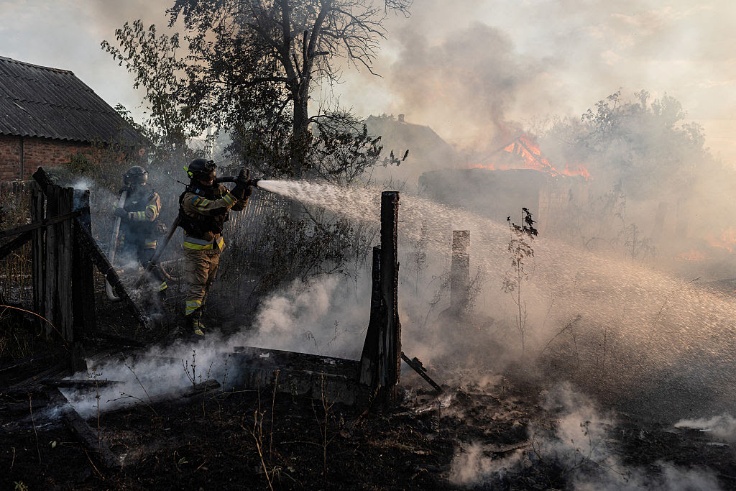
Ukrainian firefighters work to extinguish a blaze after a Russian shelling hit a house, when a Russian FPV drone attack damaged their fire truck during the operation, in Kostiantynivka, Ukraine. (Diego Herrera Carcedo/Anadolu via Getty Images)
Zelensky’s Warning: Russia’s Ceasefire Rejection Complicates Peace Process
President Zelensky directly addressed Russia’s rejection of ceasefire proposals on August 16, stating that Moscow’s unwillingness to halt attacks “complicates the situation” for achieving sustainable peace. His measured but pointed criticism came as Russian forces continued launching strikes even while diplomatic discussions proceeded.
“If they do not have the will to implement a simple order to stop the attacks, it may take a great deal of effort to get Russia to implement something much more significant, namely peaceful coexistence with its neighbors for decades to come,” Zelensky wrote on Telegram. The statement highlighted the fundamental contradiction between Russian diplomatic engagement and continued military aggression.
Zelensky confirmed he was “grateful for the invitation” to meet Trump in Washington while emphasizing the importance of clarifying “all the details and determining what steps are necessary and will work.” His cautious optimism reflected Ukraine’s precarious position between American pressure for territorial concessions and domestic resistance to capitulation.
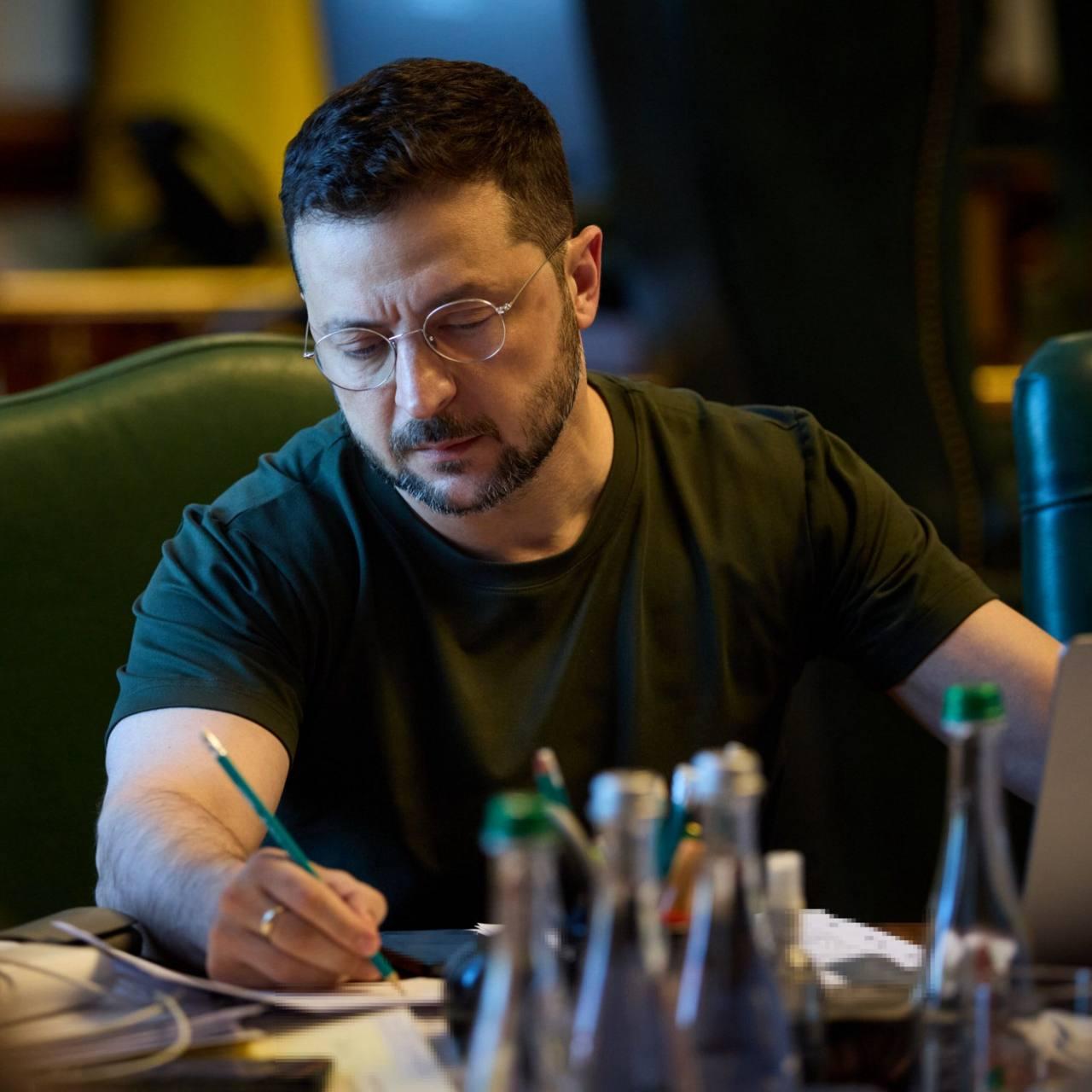
President Volodymyr Zelensky at work in Kyiv. (Presidential Office / Telegram)
Trump’s Evolving Position: From Territorial Swaps to Comprehensive Deals
Trump’s public statements revealed his growing alignment with Putin’s negotiating framework, moving beyond earlier ceasefire demands toward acceptance of permanent territorial changes. Speaking to Fox News after the Alaska Summit, Trump declared that he and Putin had “largely agreed” on territorial swaps and security guarantees for Ukraine.
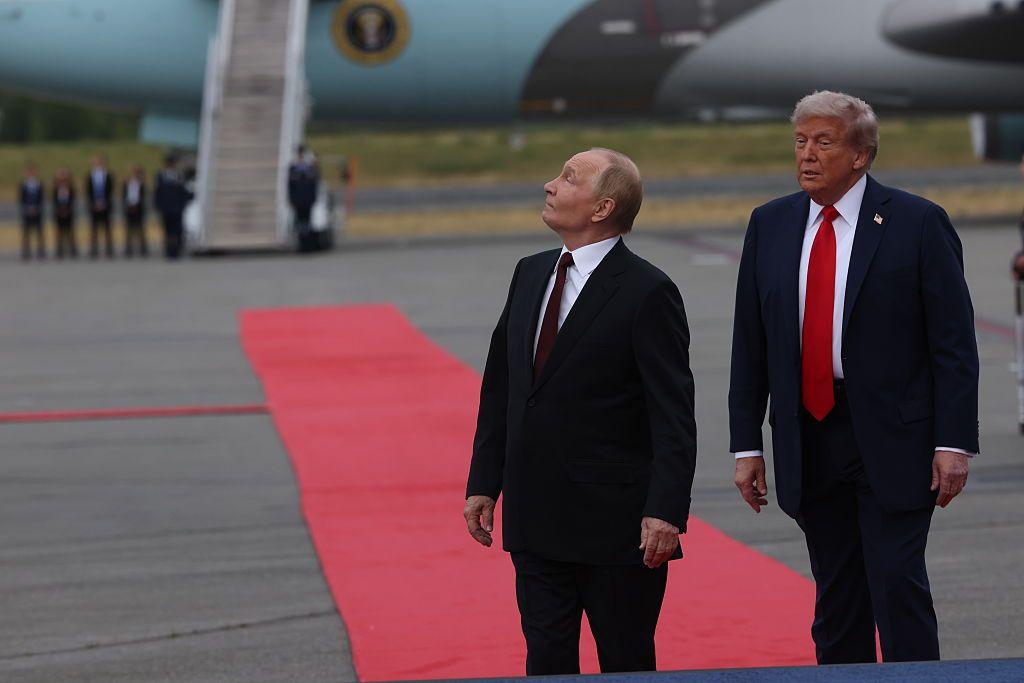
U.S. President Donald Trump and Russian President Vladimir Putin meet for their summit on the war in Ukraine, at U.S. Air Base, in Anchorage, Alaska. (Contributor/Getty Images)
“I think we’re pretty close to a deal,” Trump stated confidently. “Ukraine has to agree to it. Maybe they’ll say no.” The casual dismissal of Ukrainian agency in determining its own territorial integrity reflected the dramatic shift in American policy since the Alaska meeting.
When asked what advice he would give Zelensky, Trump’s response was blunt: “Gotta make a deal. Look, Russia is a very big power, and they (Ukraine) are not.” The statement encapsulated the realpolitik approach that increasingly dominated American thinking about the conflict.
Putin’s Gift Exchange and Protocol Details
The leaked State Department documents revealed the extraordinary protocol preparations for Putin’s visit, including Trump’s plan to present the Russian leader with a desk statue of an American bald eagle. The symbolic gift—America’s national bird presented to a war criminal—epitomized the summit’s elevation of diplomatic courtesy over moral clarity.
The documents included phonetic pronunciation guides for Russian delegation members, with Putin listed as “Mr. President POO-tihn,” and detailed seating arrangements for a planned luncheon “in honor of His Excellency Vladimir Putin.” Though the luncheon was ultimately canceled, the preparations revealed the extent of American efforts to accommodate Putin’s visit.
White House Deputy Press Secretary Anna Kelly’s dismissal of the security lapse as merely a “multi-page lunch menu” understated the documents’ revelation of sensitive meeting locations, staff phone numbers, and diplomatic protocols for hosting an ICC-wanted war criminal.
The Territorial Ultimatum: Putin’s Donetsk Demand and the Price of Peace
Behind the diplomatic pleasantries lay Putin’s crystalline demand: Ukraine must withdraw entirely from unoccupied areas of Donetsk Oblast as a precondition for any peace agreement. Sources familiar with the Alaska discussions revealed that Putin’s proposal would require Kyiv to surrender Ukrainian-controlled portions of both Donetsk and Luhansk oblasts in exchange for a Russian pullback from parts of Sumy and Kharkiv oblasts—a trade that would hand Moscow its most significant territorial gains since the war’s opening months.
The military arithmetic was stark and unforgiving. A Ukrainian withdrawal from Donetsk Oblast would compromise Ukraine’s fortress belt—the defensive backbone that Russian forces have been unable to breach since Fall 2022. ISW assessments painted a grim picture: such a withdrawal would position Russian forces “extremely well to renew their aggression against Ukraine on much more favorable terms,” having avoided the bloody struggle for territory that has characterized the conflict.
Putin’s demand that the United States recognize “these four oblasts” and occupied Crimea as Russian revealed the true scope of his ambitions. The reported “compromise” on Ukraine’s right to teach its own language in its own country—presented by some sources as Russian flexibility—exemplified the Orwellian nature of negotiations where basic sovereignty became a bargaining chip.
The Impossibility of Safe Retreat: Military Realities Versus Diplomatic Fiction
Military analysts highlighted a crucial flaw in Putin’s territorial demands: Ukrainian forces could not safely withdraw from Donetsk Oblast without a comprehensive ceasefire across the entire theater. The Donetsk Oblast administrative boundary lay far from Ukraine’s main defensive line, creating a dangerous gap that Russian forces could exploit during any withdrawal.
“Russian forces operating in Donetsk Oblast would likely pursue withdrawing Ukrainian forces along routes of egress, threatening to rout the withdrawing Ukrainian forces and degrade their ability to establish new defensive positions,” ISW warned. The specter of large Ukrainian force concentrations along major thoroughfares—prime targets for Russian aviation, drones, and artillery—illustrated why Putin’s offer of a “limited ceasefire” was militarily untenable.
Russian forces would need years, not months, to seize the remainder of Donetsk Oblast through conventional means. Their continued reliance on slow, grinding advances through attritional infantry assaults had proven incapable of achieving operationally significant breakthroughs. Ukrainian drone strikes had effectively neutralized Russian armored capabilities, forcing Moscow to rely on small infantry teams that could advance no faster than walking pace.
Battlefield Contradictions: Ukrainian Advances Amid Diplomatic Pressure
Even as diplomats discussed territorial concessions, Ukrainian forces demonstrated their continued fighting capabilities through successful operations across multiple fronts. In Sumy Oblast, Ukrainian troops advanced approximately two kilometers in a pointed reminder that the war’s outcome would not be determined solely in meeting rooms.
The Ukrainian General Staff confirmed that forces had “actively destroyed the enemy and liberated settlements” in Sumy Oblast—the very territory Putin proposed to withdraw from as part of his “generous” offer. The timing was unmistakably deliberate: as Trump and Putin discussed Ukrainian concessions, Ukrainian soldiers expanded their control over the contested borderlands.
Near Dobropillya, Ukrainian forces achieved their most significant success in days, clearing six settlements northeast of the city including Hruzke, Rubizhne, Novovodyane, Petrivka, Vesele, and Zolotyi Kolodyaz. The 1st Azov Army Corps reported eliminating 271 Russian personnel, wounding 101, and capturing 13 prisoners of war while destroying numerous vehicles and equipment.
Russian Gains and the Dobropillya Penetration
Russian forces achieved their own tactical successes, capturing the villages of Popiv Yar and Ivano-Darivka in Donetsk Oblast while maintaining pressure on Ukrainian positions around Pokrovsk and Sloviansk. The Ukrainian military acknowledged the “extremely difficult” situation in Donetsk Oblast, though Zelensky noted successful counterattacks in the Dobropillya and Pokrovsk directions.
The Russian penetration northeast of Dobropillya—a dangerous salient that had threatened to compromise Ukrainian defensive lines—appeared to be contracting under Ukrainian pressure. Russian milbloggers complained that the penetration was “not sustainable because it is too narrow and vulnerable to Ukrainian interdiction efforts,” acknowledging their forces’ inability to widen the breakthrough’s flanks or cut the crucial T-0514 Dobropillya-Kramatorsk highway.
One Russian military blogger’s assessment captured the fundamental challenge: “Russian forces are unable to cut the highway because the base of the penetration is too narrow for its depth, and Russian forces need to widen the penetration’s flanks before fighting toward the highway.” The admission revealed the limitations of Russian offensive capabilities even during successful operations.
The Red Carpet Treatment: Putin’s Triumphant Return to the World Stage
Putin’s arrival in Alaska represented far more than a diplomatic meeting—it marked Russia’s dramatic return to international legitimacy after three years of isolation. The red carpet treatment, complete with U.S. fighter jet escorts and formal protocol, provided Putin with invaluable domestic propaganda victories that Russian officials eagerly trumpeted.
“Western media are in a state that can be called insanity, bordering on complete madness: For three years, they have been talking about Russia’s isolation, and today they saw the red carpet that greeted the Russian President in the United States,” Foreign Ministry spokesperson Maria Zakharova declared triumphantly.
The symbolism extended beyond mere protocol. Russian Foreign Minister Sergei Lavrov’s decision to wear a USSR sweatshirt upon arrival in Anchorage sent a deliberate message about Russia’s imperial ambitions and its claim to Soviet-era spheres of influence. The gesture reinforced longstanding Russian narratives that the Soviet Union never legally dissolved and that Russia remained the rightful inheritor of its power and territory.
Lavrov’s Soviet Symbolism and Imperial Messaging
Russian Foreign Minister Sergei Lavrov’s arrival in Anchorage wearing a USSR sweatshirt represented a calculated provocation designed to assert Russia’s claim to Soviet-era power and influence. The staged gesture reinforced longstanding Russian narratives that the Soviet Union never legally dissolved and that Russia remained the rightful inheritor of its territory and treaties.
The symbolism extended beyond mere nostalgia, serving to present the war in Ukraine as an “internal process” within Russia’s sphere of influence rather than international aggression against a sovereign state. Lavrov’s sartorial choice complemented Putin’s statements during the joint press conference that Russia and Ukraine shared “the same roots” and constituted “brotherly” nations—language designed to delegitimize Ukrainian independence.
Additional Russian Official Statements
Federation Council Committee Chairperson Andrei Klishas reinforced the Kremlin’s messaging by claiming the Alaska meeting confirmed Russia’s desire for “long-term and just peace” achievable through either military or diplomatic means. His statement that “there can be no unconditional ceasefire in Ukraine” reiterated Russia’s rejection of the fundamental precondition for good-faith negotiations.
State Duma Deputy Alexei Zhuravlev expanded on Russian territorial demands in a separate interview, claiming the war could only end if the United States “confirmed Russia’s security guarantees” and explicitly stating that Ukraine and the EU should not participate in the peace process. Such statements revealed Moscow’s goal of marginalizing Ukraine from decisions about its own future.
Russian Domestic Control Measures
Even as Putin celebrated diplomatic breakthrough abroad, his regime tightened control at home through new restrictions on digital communications. Russia’s telecommunications authority Roskomnadzor placed limitations on voice and video calls through WhatsApp and Telegram, ostensibly to “protect the population from fraud” on “foreign messenger services.”
The timing coincided with aggressive promotion of the new Russian messenger app Max, developed by VK holding company owned by Putin confidant Yuri Kovalchuk. Intelligence services reportedly maintained easy access to the domestic platform, allowing comprehensive surveillance of private communications.
Russian journalist Viktor Shenderovich observed that the measures represented “a predictable and sweeping move in the direction of North Korea” affecting “millions of Russians, most of whom are by no means liberals.” The domestic crackdown revealed Putin’s concern that even diplomatic success required tighter information control to prevent domestic opposition from exploiting any perceived weakness.
As Trump embraced Putin’s territorial demands, European leaders scrambled to maintain pressure for Ukrainian sovereignty. The Nordic-Baltic Eight nations—Denmark, Estonia, Finland, Iceland, Latvia, Lithuania, Norway, and Sweden—issued a pointed rebuke to the Alaska Summit’s implicit acceptance of territorial changes through force.
“Experience has shown that Putin cannot be trusted,” their joint statement declared. “Ultimately it is Russia’s responsibility to end its blatant violations of international law. Russia’s aggression and imperialist ambitions are the root causes of this war.”
EU High Representative Kaja Kallas delivered perhaps the most pointed criticism: “Even as delegations met, Russia launched new attacks on Ukraine. Putin continues to drag out negotiations and hopes he gets away with it. He left Anchorage without making any commitments to end the killing.”
The contrast between European alarm and American accommodation highlighted the growing transatlantic divide over Ukraine policy. While Trump praised his “great relationship” with Putin and rated their meeting “a 10,” European leaders increasingly viewed the Alaska Summit as a Russian victory achieved at Ukraine’s expense.
Kremlin Media Instructions and the Preparation for Protracted War
Russian opposition outlet Meduza revealed the Kremlin’s careful management of domestic narratives surrounding the Alaska Summit through detailed instructions to state and pro-government media outlets. The directives illuminated Moscow’s dual strategy: present the summit as a superpower meeting between equals while preparing Russian society for continued warfare.
Media outlets received orders to report that “no deal was reached at the summit—and that no deal could have been reached,” emphasizing that Trump and Putin had not discussed “Ukrainian and European demands for an unconditional ceasefire.” The instructions revealed Putin’s intention to portray himself, rather than Trump, as setting the agenda for U.S.-Russian relations.
The Kremlin’s preparation for a “protracted war” contradicted Western hopes that diplomatic engagement might encourage Russian moderation. A media strategist working with the Russian Presidential Administration’s political team confirmed that the government aimed to “prepare the Russian public for the possibility that the summit would fail to pause fighting and emphasize that Putin is setting the terms.”
State Department Documents and Security Lapses
The discovery of classified U.S. State Department documents left in an Alaska hotel printer provided an embarrassing glimpse into the summit’s planning and revealed the extent of America’s accommodation of Putin. Eight pages of government documents disclosed exact meeting locations, phone numbers of U.S. staff, and a menu for a luncheon “in honor of His Excellency Vladimir Putin”—language that treated the Russian dictator as a legitimate head of state.
The documents revealed Trump’s plan to gift Putin a desk statue of an American bald eagle and included phonetic pronunciation guides for Russian delegation members, including “Mr. President POO-tihn.” White House Deputy Press Secretary Anna Kelly’s dismissal of the security lapse as merely a “multi-page lunch menu” reflected the administration’s casual approach to handling sensitive information related to a war criminal subject to an International Criminal Court arrest warrant.
The Abducted Children and Melania Trump’s Letter
Amid the diplomatic pageantry, U.S. First Lady Melania Trump delivered a letter to Putin concerning Russia’s systematic abduction of Ukrainian children—one of the few moments when the summit addressed war crimes that had prompted Putin’s ICC arrest warrant. The letter’s contents remained classified, but its existence highlighted the humanitarian crisis that diplomacy struggled to address.
Ukraine has identified more than 19,500 children abducted by Russia during the full-scale war, with only 1,509 returned home. Ukrainian officials estimate the true figure could reach 200,000-300,000 children subjected to forced adoption, military training, and propaganda designed to erase their Ukrainian identity.
The letter’s symbolic significance exceeded its practical impact. While Trump rolled out the red carpet for a man wanted for child trafficking, his wife’s private intervention acknowledged crimes that the summit’s public proceedings largely ignored. The contrast epitomized America’s moral confusion in dealing with Putin’s regime.
Enhanced Russian Missile Capabilities Challenge Ukrainian Air Defenses
A U.S. Defense Intelligence Agency report released as part of the quarterly Operation Atlantic Resolve assessment confirmed that enhanced Russian ballistic missiles had significantly undermined the effectiveness of Ukraine’s Patriot air defense systems. The report detailed how Russian tactical improvements, including enhanced guidance and maneuverability systems, enabled missiles to fly irregular flight paths and adjust trajectories mid-flight rather than following predictable ballistic arcs.
Ukrainian Air Force Spokesperson Colonel Yuriy Ihnat had acknowledged in late May 2025 that Russian adaptations to ballistic weapons were complicating Ukraine’s interception efforts. The technological evolution represented a significant shift in the war’s balance, forcing Ukrainian air defense operators to adapt to weapons that no longer behaved according to established patterns.
Despite these challenges, Trump committed during his August 16 call with Zelensky to assist Ukraine in locating additional U.S.-made Patriot systems available in Europe. The promise provided modest hope amid broader strategic uncertainties, though the fundamental challenge of countering evolved Russian missile technology remained unresolved.
Overnight Russian Missile and Drone Campaign
Russian forces launched a comprehensive strike package against Ukraine on the night of August 15-16, deploying one Iskander-M ballistic missile and 85 Shahed and decoy drones from multiple launch sites. The Ukrainian Air Force reported launch locations included Kursk and Oryol cities, Primorsko-Akhtarsk in Krasnodar Krai, Shatalovo in Smolensk Oblast, and occupied Hvardiiske in Crimea.
Ukrainian air defenses successfully intercepted 61 drones over northern and eastern Ukraine, demonstrating continued effectiveness against slower-moving targets despite challenges with ballistic missiles. Russian strikes primarily targeted frontline areas in Sumy, Donetsk, Chernihiv, and Dnipropetrovsk oblasts, with additional damage reported to civilian infrastructure in Kharkiv and Sumy oblasts.
The sustained Russian emphasis on drone warfare reflected Moscow’s adaptation to Ukrainian air defense capabilities while conserving more expensive precision missiles for critical targets. The overnight attacks also served as a practical demonstration that Russian military operations continued unabated despite diplomatic discussions.
Intelligence Cooperation Suspended and European Concerns
Perhaps most ominously for Ukraine’s long-term security, some U.S. national security agencies had suspended cooperation with international partners in countering Russian sabotage and cyber operations. The Biden administration’s coordination of at least seven security agencies working with European partners to disrupt Russia’s hybrid activities had effectively ceased under Trump’s leadership.
European officials expressed growing concern that Washington might cut a peace deal unfavorable to its allies without meaningful consultation. The suspension of intelligence cooperation suggested that America’s retreat from supporting Ukraine extended beyond diplomatic accommodation to operational disengagement from collective security efforts.
Slovak Endorsement and the Fracturing European Response
Slovakia’s Prime Minister Robert Fico provided Putin with a valuable European endorsement of the Alaska Summit, praising the meeting and repeating Kremlin propaganda about the “root causes” of Russia’s invasion. Fico’s declaration that “the war in Ukraine has historical roots, and we must speak equally about security guarantees for both Ukraine and Russia” echoed Moscow’s false equivalencies between aggressor and victim.
Russian state media quickly amplified Fico’s comments, which claimed the summit “rejected a black-and-white view of the military conflict in Ukraine” and helped “kick-start the standardization of relations between Russia and the United States.” The Slovak leader’s embrace of Putin’s narrative demonstrated how the Alaska Summit had legitimized Russian talking points within European politics.
Tactical Details from Multiple Front Sectors
Ukrainian brigade commanders reported specific tactical adaptations by Russian forces across different sectors. In the Kharkiv direction, Russian forces were attacking in small infantry groups guided by drones, using motorcycles and foliage for concealment to advance more rapidly. A Ukrainian spokesperson noted that Russian forces were “attacking blindly in small infantry groups with drones to guide their routes of advance.”
In the Siversk direction, recent rainfall had complicated Russian attempts to deploy infantry fighting vehicles, forcing greater reliance on dismounted infantry assaults. A Ukrainian brigade commander confirmed this weather-related tactical shift, noting how environmental conditions were influencing Russian operational choices.
The Novopavlivka direction witnessed particularly effective Ukrainian defensive operations, with drone crews successfully denying Russian forces the ability to advance closer than five kilometers from frontline positions through sustained strikes, mines, and anti-tank ditches. A Ukrainian unmanned systems battalion servicemember reported that Russian forces continued conducting small infantry assaults of two to four personnel against multiple areas simultaneously.
Near Lyman Pershyi, geolocated footage published on August 16 showed Russian forces conducting roughly platoon-sized mechanized assaults southwest of the settlement, demonstrating continued attempts at larger-scale operations despite overall tactical constraints.
Civilian Casualties and Infrastructure Attacks
Russian first-person view drone strikes against civilian infrastructure in Kostyantynivka killed one Ukrainian civilian, according to Kostyantynivka Military Administration Head Serhiy Horbunov. The attacks on August 15 represented the ongoing pattern of Russian strikes against non-military targets in violation of international humanitarian law.
The civilian casualty highlighted the human cost of Russia’s continued military operations even as diplomatic discussions proceeded, reinforcing Ukrainian arguments that meaningful peace negotiations required an immediate cessation of hostilities rather than continued attacks during talks.
War Crimes and Perfidy Tactics
Russian commanders openly described tactics that constituted clear violations of international law, providing rare public admissions of war crimes. Major General Apti Alaudinov, Deputy Head of the Russian Ministry of Defense’s Main Military-Political Directorate and Akhmat Spetsnaz Commander, detailed deception operations in Kursk Oblast where Russian forces deliberately used blue electrical tape identification markers knowing Ukrainian forces used the same system.
“We were supposed to have blue tape for the first 24 hours of the operation and then change it to red tape,” Alaudinov told TASS, explaining the tactic was designed to “prevent the Ukrainian military from understanding what was happening” and make them “think that their own units were advancing.”
Such deception constituted perfidy under the Geneva Convention, defined as “acts inviting the confidence of an adversary to lead him to believe that he is entitled to, or is obliged to accord, protection under the rules of international law applicable in armed conflict, with intent to betray that confidence.” The public admission highlighted Russia’s systematic disregard for international humanitarian law.
Additionally, a Ukrainian regiment commander reported Russian forces wearing civilian clothes to disguise themselves as locals while infiltrating Ukrainian positions in the Kupyansk direction—another clear violation of the laws of armed conflict that endangered civilian populations by blurring the distinction between combatants and non-combatants.
The Ukrainian Counteroffensive Continues
Despite diplomatic pressure for territorial concessions, Ukrainian forces demonstrated continued offensive capabilities through successful operations in multiple sectors. Near Velykomykhailivka, Ukrainian forces recaptured Andriivka-Klevtsove, providing a tactical success that contradicted Russian claims of momentum.
The Ukrainian advances in Sumy Oblast proved particularly significant given their timing. As diplomats discussed Putin’s demand for territorial exchanges, Ukrainian soldiers expanded their control over the very territories Moscow claimed it would “generously” withdraw from. The military contradiction highlighted the disconnect between diplomatic assumptions and battlefield realities.
Russian Advances in the Siversk Direction
Russian forces achieved a confirmed advance near Siversk, seizing the village of Serebryanka north of the strategic town. Geolocated footage published on August 16 provided visual confirmation of Russian control over the settlement, marking another incremental gain in Moscow’s grinding eastern offensive.
The capture of Serebryanka represented part of broader Russian pressure around Siversk, where attacks continued toward the town itself and surrounding settlements including Hryhorivka, Vyimka, Pereizne, and Fedorivka. A Ukrainian brigade commander operating in the Siversk direction noted that recent rainfall had complicated Russian attempts to deploy infantry fighting vehicles, forcing Moscow to rely more heavily on dismounted infantry assaults.
Limited Fighting in Kursk Oblast
Russian forces maintained their grinding offensive operations in Kursk Oblast, where Ukrainian forces had established positions during their 2024 incursion. A Russian milblogger reportedly affiliated with the Northern Grouping of Forces claimed Ukrainian forces attacked toward Tetkino and attempted river crossings, though the reports remained unconfirmed.
The continued fighting in Kursk Oblast highlighted Russia’s determination to expel Ukrainian forces from Russian territory, even as Moscow demanded Ukrainian territorial concessions elsewhere. The asymmetric nature of the conflict—with fighting occurring on both Russian and Ukrainian soil—complicated any potential ceasefire arrangements.
Industrial Targets and Long-Range Strikes
Ukrainian forces continued their campaign against Russian defense industrial infrastructure, striking the Azot chemical plant in Nevinnomyssk, Stavropol Krai—Russia’s largest producer of nitrogen fertilizers and ammonia. The attack, located roughly 650 kilometers from Ukrainian-controlled territory, marked the third strike against the facility during Summer 2025.
Similarly, Ukrainian drones successfully attacked the Kavkazskaya oil pumping station in Krasnodar Krai, damaging pipeline infrastructure and forcing the facility to suspend operations. The strikes on critical energy infrastructure demonstrated Ukraine’s continued ability to project power deep into Russian territory despite diplomatic pressure for restraint.
Air Defense Struggles and Missile Innovations
Russian forces launched 85 Shahed drones and one Iskander-M ballistic missile against Ukraine overnight, with Ukrainian air defenses successfully intercepting 61 drones. The attacks primarily targeted frontline areas in Sumy, Donetsk, Chernihiv, and Dnipropetrovsk oblasts, causing damage to civilian infrastructure in Kharkiv and Sumy oblasts.
The continued Russian emphasis on drone warfare reflected Moscow’s adaptation to Ukrainian air defense capabilities while conserving more expensive missile systems for critical targets. The overnight strikes also served as a reminder that Russian attacks continued even as diplomatic discussions proceeded.
Looking Ahead: The Washington Reckoning
As Zelensky prepared for his August 18 White House meeting, the parameters of Ukraine’s diplomatic challenge had crystallized with brutal clarity. Trump’s abandonment of ceasefire demands in favor of rapid territorial concessions represented a fundamental shift in American policy that left Ukraine increasingly isolated in its resistance to Russian demands.
The contrast between Ukrainian military successes and diplomatic isolation highlighted the war’s central paradox: Ukraine’s forces remained capable of tactical victories even as their political support eroded. Zelensky’s warning that Russia might “intensify attacks in the coming days to create more favorable political conditions” proved prescient as Moscow sought to leverage battlefield pressure into diplomatic gains.
The upcoming Washington meeting would determine whether Ukraine could maintain its territorial integrity in the face of combined Russian military pressure and American diplomatic accommodation. With Putin’s territorial demands now explicitly endorsed by Trump as the basis for negotiations, Ukraine faced the stark choice between resistance and capitulation.
The Alaska Summit’s ultimate legacy lay not in its failure to achieve immediate peace, but in its transformation of Putin from international pariah to legitimate negotiating partner. As U.S. fighter jets escorted Putin’s aircraft from American airspace, they symbolically escorted Russia back into the community of nations—regardless of its ongoing war crimes and territorial aggression.
For Ukraine, the path forward led through Washington, where Zelensky would discover whether America’s commitment to Ukrainian sovereignty could survive Trump’s apparent affection for Putin’s grand bargains. The meeting would reveal whether the democratic world’s support for Ukrainian resistance represented a principled commitment or merely a convenient fiction abandoned when politically expedient.
The war’s trajectory now depended less on battlefield outcomes than on diplomatic calculations made in distant capitals. Ukraine’s soldiers could seize territory and eliminate Russian forces, but they could not force their allies to reject attractive-seeming compromises with an enemy who specialized in making temporary concessions appear like permanent solutions. In that sense, the Alaska Summit’s most significant outcome was not what Putin gained, but what Ukraine’s allies proved willing to give away.