
With Putin-Trump Summit Set for August 15, Moscow Intensifies Military Pressure While Kyiv Faces Exclusion from Peace Talks and Territorial Concession Demands
Summary of the Day – August 11, 2025
Four days before Donald Trump’s high-stakes meeting with Vladimir Putin in Alaska, the battlefield reality starkly contradicted diplomatic optimism. Russian forces pierced Ukrainian defenses near Dobropillia in Donetsk Oblast, threatening a critical highway that could reshape the entire eastern front, while Trump confirmed that Zelensky would be excluded from the August 15 summit. The American president’s frank admission that “land swaps” were inevitable, coupled with his dismissal of constitutional constraints on territorial concessions, signaled a dramatic shift in U.S. policy. Meanwhile, Ukraine’s drone campaign reached deep into Russia, striking missile component facilities 759 kilometers from the border, as Moscow’s relentless aerial assault killed seven civilians and injured nearly fifty across multiple regions.
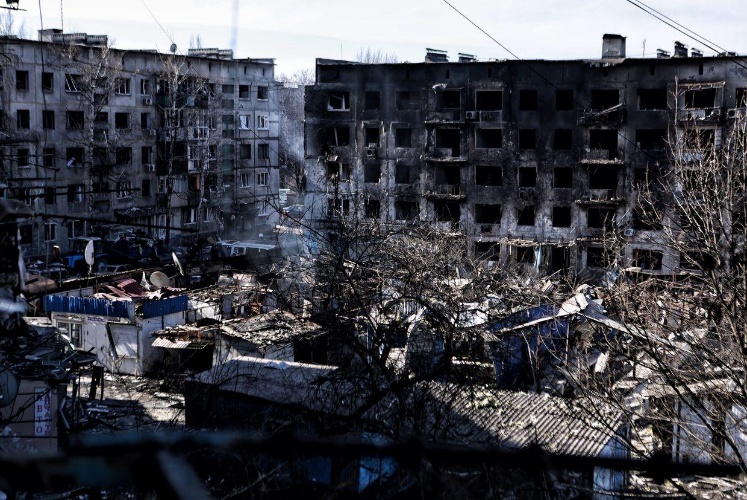
Destroyed buildings left after Russian attacks on Dobropillia in Donetsk Oblast, Ukraine. (Yan Dobronosov/Global Images Ukraine via Getty Images)
The Highway to Nowhere: Russian Forces Threaten Ukraine’s Eastern Lifeline
Russian forces achieved their most significant tactical breakthrough in weeks, advancing to within striking distance of the Dobropillia-Kramatorsk highway—a critical artery that has sustained civilian and military traffic as recently as mid-July. The Ukrainian battlefield monitoring group DeepState reported that Russian positions now touch the gray zone around the highway, with forces consolidating in Kucheriv Yar, Zolotyi Kolodiaz, and Vesele.
“After final consolidation and accumulation, attempts to move deeper into the territory will be inevitable,” DeepState warned, noting that drone crews would follow to complicate Ukrainian logistics. “With this development of events, if it does not change, we may encounter a situation where Dobropillia falls faster than Pokrovsk.”
The breakthrough represents more than tactical gains—it threatens to sever connections between Ukrainian-controlled cities in Donetsk Oblast, including Sloviansk, Kramatorsk, Druzhkivka, and Kostiantynivka. Ukraine’s General Staff acknowledged the gravity of the situation, announcing that the Commander-in-Chief had decided to deploy additional forces to detect and destroy enemy sabotage groups penetrating the defense line.
Excluded from Peace: Trump Confirms Zelensky’s Absence from Alaska Summit
In a stark declaration that underscored Ukraine’s diminishing role in determining its own fate, Trump confirmed that Zelensky would not participate in the August 15 summit with Putin. “He wasn’t part of it,” Trump told reporters during an August 11 press conference. “I would say he could go, but he’s gone to a lot of meetings; he’s been there for three and a half years, and nothing happened.”
Trump’s dismissal of the Ukrainian president extended beyond mere exclusion from talks. When questioned about Zelensky’s constitutional constraints on territorial concessions, Trump expressed bewilderment: “He’s got approval to go into war and kill everybody, but he needs approval to do a land swap? There’ll be some land swapping going on.”
The American president described the upcoming meeting as a “feel-out” session but predicted swift conclusions: “At the end of that meeting, probably in the first two minutes, I’ll know exactly whether or not a deal can be made.” His comments revealed the fundamental premise of his approach—that territorial adjustments were not only inevitable but necessary for peace.
The Economics of Coercion: Trump Credits Sanctions with Forcing Putin’s Hand
Trump’s most revealing comments centered on his belief that economic pressure had compelled Putin to seek negotiations. The president claimed that his announcement of 50 percent tariffs on India for importing Russian oil was “a big blow” to countries purchasing Russian energy, and that he had been “all set” to implement more significant restrictions when Russian officials requested talks.
“The Russian economy is not doing well right now,” Trump stated, correctly identifying Moscow’s economic vulnerabilities. His assessment aligned with intelligence indicating that Putin’s outreach came immediately before the United States planned to impose additional economic restrictions—undermining the Kremlin’s narrative that sanctions have not affected the Russian economy.
This economic dimension provided crucial context for understanding Putin’s motivations in seeking talks, even as Russian military pressure continued unabated across the front lines.
Constitutional Defiance: The Legal Impossibility of Ukrainian Territorial Concessions
While Trump dismissed constitutional constraints as inconvenient obstacles, Ukrainian law presents insurmountable barriers to any formal territorial concessions. Article 73 of Ukraine’s Constitution explicitly states that “alterations to the territory of Ukraine shall be resolved exclusively by the All-Ukrainian referendum,” making any unilateral presidential agreement on land swaps legally impossible.
Ukrainian officials and parliamentarians reinforced this reality through a chorus of rejections. MP Yaroslav Zhelezniak noted that “signing the agreement on the ‘exchange of territories’ will have obvious legal consequences for the signatories,” while MP Mykola Kniazhytsky warned that “even discussing such issues can lead to a criminal case.”
The constitutional barrier represents more than legal technicality—it reflects the fundamental incompatibility between American pragmatism and Ukrainian existential resistance to territorial dismemberment.
Deep Strike Capabilities: Ukrainian Drones Reach 759 Kilometers into Russia
Ukraine demonstrated its expanding long-range strike capabilities with a sophisticated drone operation against the Arzamas Instrument-Building Plant in Nizhny Novgorod Oblast. The Security Service of Ukraine (SBU) confirmed that at least four drones from its Special Operations Center ‘A’ struck the facility, which produces gyroscopic instruments, control systems, and components for Russian Kh-32 and Kh-101 cruise missiles.
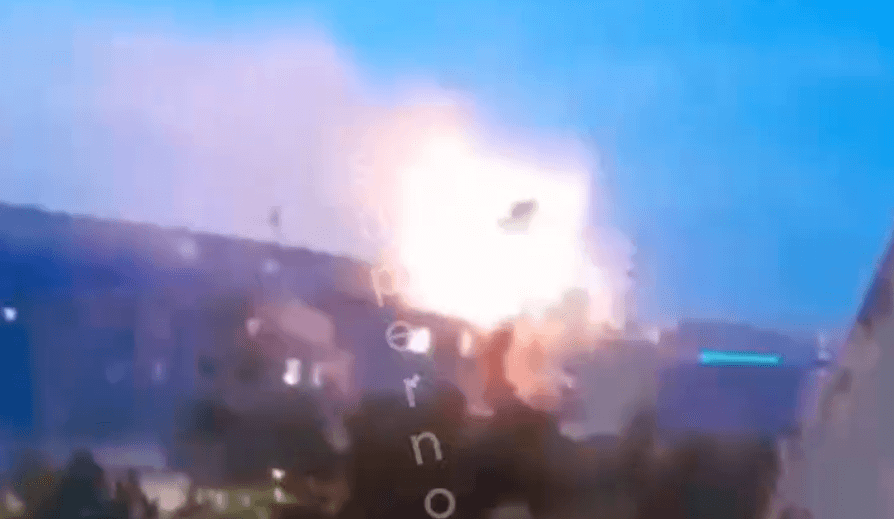
What appears to be an explosion at an industrial plant in Russia’s Nizhny Novgorod Oblast overnight. (Supernova Plus/Telegram)
The strike, occurring 759 kilometers from Ukraine’s border, represented one of the deepest penetrations of Russian airspace since the conflict began. Video footage showed significant damage to production facilities, with Russian officials confirming one death and two injuries.
The operation formed part of Ukraine’s broader campaign against Russian defense infrastructure, including strikes on the Lukoil-Ukhta refinery in Komi Republic approximately 2,000 kilometers from the border. These attacks underscore Ukraine’s determination to degrade Russian military capabilities even as diplomatic pressure mounts for territorial concessions.
Industrial Paralysis: Russian Oil Refineries Halt Operations After Ukrainian Attacks
The cumulative impact of Ukrainian drone strikes on Russian energy infrastructure became apparent as multiple refineries suspended operations. Bloomberg reported that Rosneft’s Saratov refinery halted oil intake following an August 10 drone attack, joining the Ryazan refinery (which halved production) and the Novokuibyshevsk refinery (which halted operations completely) in reducing output.
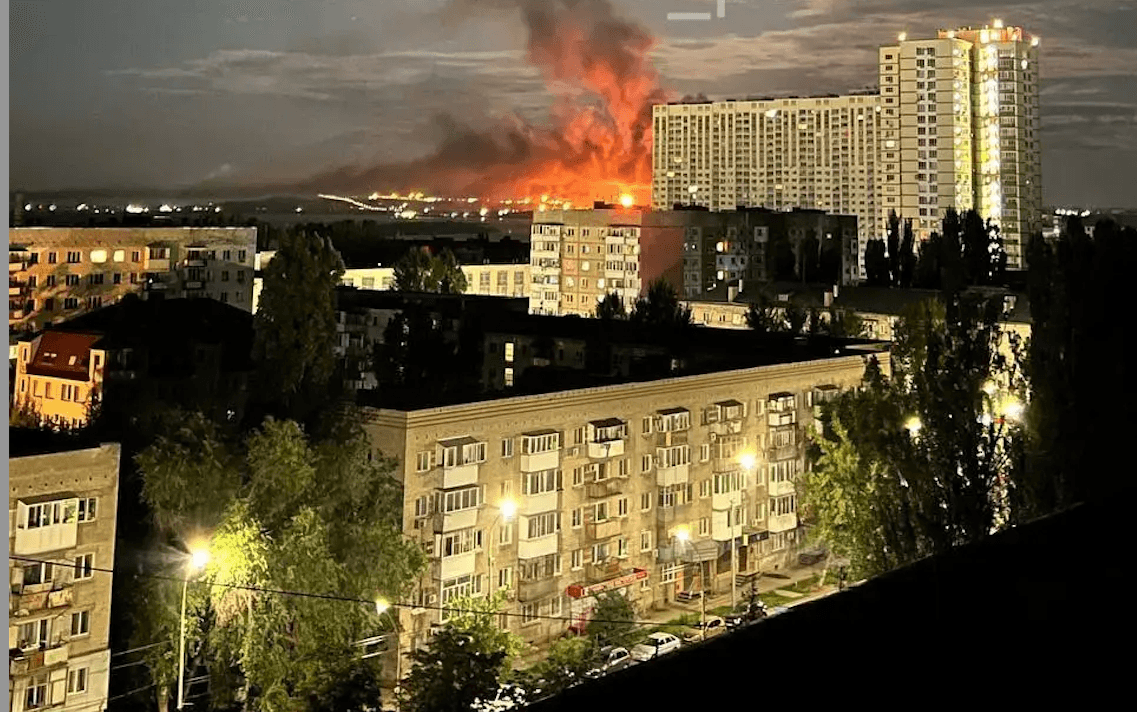
Photo reportedly showing the aftermath of a drone strike on an oil refinery in Saratov, Russia. (Exilenova+ / Telegram)
The Saratov facility’s 140,000 barrel-per-day processing capacity makes its shutdown particularly significant for Russian domestic gasoline supplies, which were already strained by previous Ukrainian strikes. The systematic targeting of energy infrastructure demonstrates Ukraine’s ability to impose economic costs on Russia even while facing pressure to make territorial concessions.
Diplomatic Isolation: Europe Scrambles to Maintain Relevance in Peace Process
European leaders found themselves scrambling to maintain influence in a peace process increasingly dominated by U.S.-Russian bilateral negotiations. Polish Prime Minister Donald Tusk reported that the United States had promised to coordinate with European partners before the Alaska summit, while EU foreign ministers convened an extraordinary virtual meeting to discuss their response.
The prospect of American-Russian negotiations without European participation sparked alarm across the continent. A joint statement from leaders of France, Germany, Italy, Poland, Britain, Finland, and EU Commission chief Ursula von der Leyen declared: “The path to peace in Ukraine cannot be decided without Ukraine.”
German Chancellor Friedrich Merz organized an online meeting for August 13 between Zelensky, European leaders, and Trump—a diplomatic attempt to inject European voices into the process before the Alaska summit. The meeting represents Europe’s recognition that its influence on Ukraine’s fate may be slipping away.
Moscow’s Maximalist Position: Kremlin Officials Reject Compromise Despite Summit
Despite Putin’s agreement to meet Trump, Russian officials continued emphasizing maximalist war aims that suggest limited genuine interest in compromise. State Duma Committee on International Affairs First Deputy Head Alexei Chepa claimed the summit would focus on “root causes” of the war—a reference to alleged Ukrainian discrimination against Russian speakers and NATO expansion.
More revealing was the reported demotion of Kremlin Deputy Chief of Staff Dmitry Kozak, who had advised Putin to immediately stop fighting and begin peace negotiations. The New York Times reported that Kozak, previously one of Putin’s closest advisors on Ukraine, lost influence after advocating for an end to the war and reduction of security services’ power.
Russian media also began setting conditions for reneging on any future agreement, with State Duma Deputy Alexei Zhuravlev claiming Trump was a “temporary person” whose agreements wouldn’t bind future U.S. administrations.
Arms Control Gambit: Putin’s Nuclear Card in Alaska Negotiations
Intelligence suggests Putin may attempt to leverage arms control discussions to extract concessions on Ukraine during the Alaska meeting. Russian Deputy Foreign Minister Sergei Ryabkov claimed Russia possessed a “fairly solid arsenal” of intermediate-range missiles and that withdrawal from the INF Treaty had achieved its “desired result” and “sobering effect” in the United States.
The arms control angle echoes the June 2021 Geneva summit between Putin and Joe Biden, which focused primarily on nuclear issues while largely ignoring Ukraine despite the buildup of Russian forces on Ukraine’s border at the time. The pattern suggests Putin’s willingness to use nuclear diplomacy as leverage for Ukrainian concessions.
Civilian Toll Mounts: Russian Strikes Kill Seven as Diplomatic Talks Loom
As diplomatic activity intensified, Russian forces maintained their assault on Ukrainian civilians and infrastructure. The latest attacks killed at least seven people and injured 49 across multiple regions, with Zaporizhzhia bearing the heaviest toll—22 injured when Russian guided bombs struck a bus station and university medical clinic.
The continuing civilian casualties underscore the disconnect between diplomatic optimism and battlefield reality. Zelensky noted that Russian forces had launched over 1,000 aerial bombs and 1,400 strike drones against Ukraine in the past week alone, emphasizing that “another week has ended without any attempt by Russia to agree to the numerous demands of the world and stop the killings.”
Strategic Infrastructure Under Fire: Russian Glide Bombs Target Zaporizhzhia Nuclear Monitoring
Russian forces struck the External Crisis Center of the Zaporizhzhia Nuclear Power Plant (ZNPP) building in Zaporizhzhia City on August 10, damaging critical infrastructure that monitors radiation levels at Europe’s largest nuclear facility. The Ukrainian Energy Ministry reported that the center has been essential for monitoring the plant’s nuclear and radiation status after Russian occupation authorities stopped transmitting data to Ukrainian officials.
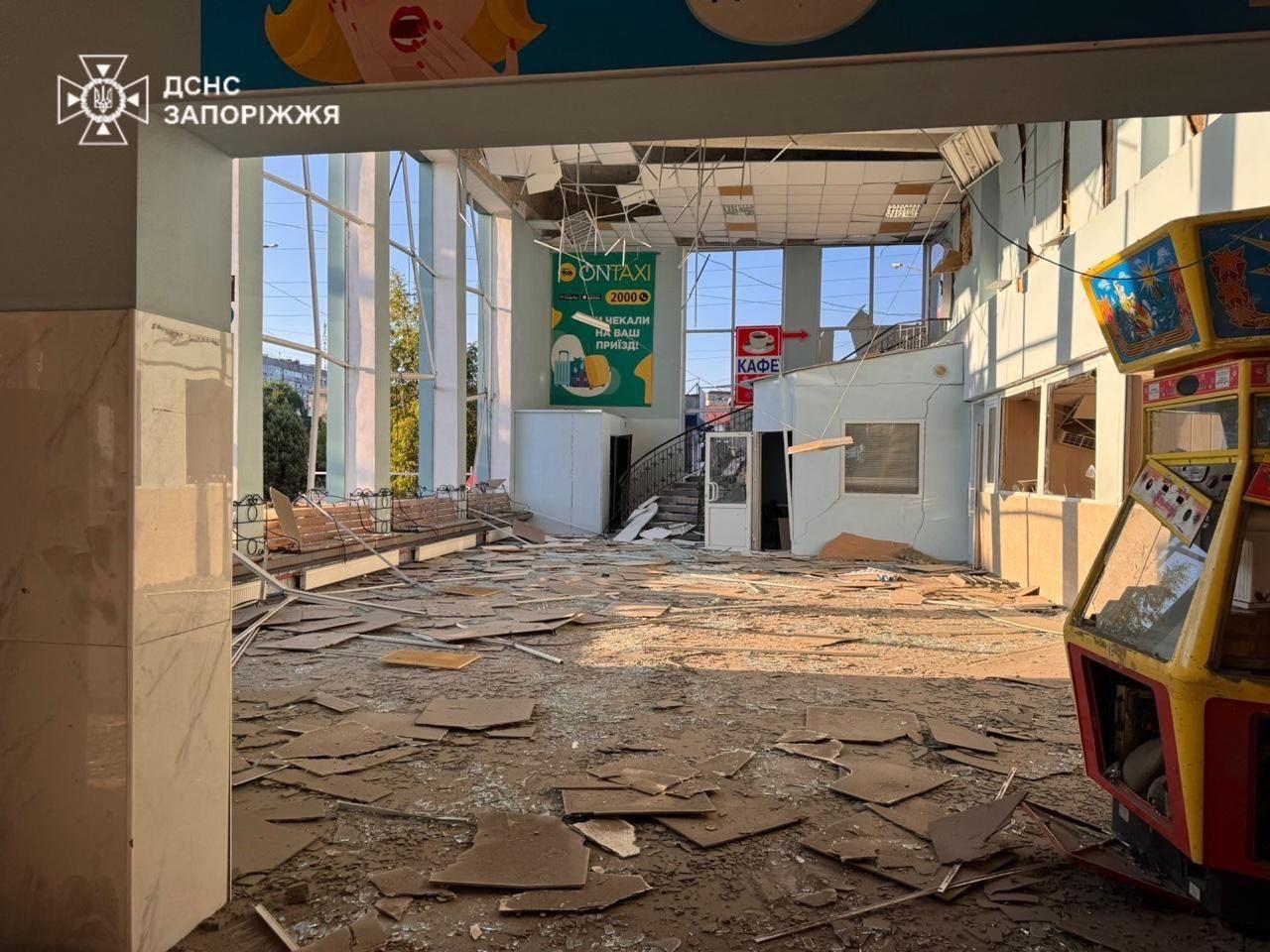
A bus station damaged during a Russian air strike against Zaporizhzhia, Ukraine. (State Emergency Service/Telegram)
The attack on nuclear monitoring infrastructure represents a dangerous escalation in Russia’s targeting of critical facilities, potentially compromising international oversight of the occupied nuclear plant that has been under Russian control since March 2022.
Union State Integration: Russia-Belarus Deepen Institutional Ties
Russia and Belarus continued developing governmental infrastructure to increase integration within the Union State framework. Putin appointed Russian Deputy Foreign Minister Alexander Grushko to serve as Russia’s Special Representative for the Agreement on Security Guarantees for the Union State, while Belarusian President Alexander Lukashenko appointed Deputy Foreign Minister Igor Sekreta as Belarus’ special representative.
The appointments signal continued efforts to formalize the Russia-Belarus alliance structure, potentially providing Moscow with additional strategic depth and logistical support for its operations against Ukraine.
Aerial Combat Intensification: Ukrainian Air Force Strikes Back
The Russian and Ukrainian air forces traded air strikes across the front over the past week in an intensification of air combat that has been heavily in Russia’s favor throughout most of the war. Ukrainian bombers—mostly Soviet-era MiG-29 or Su-27 fighter jets reconfigured to drop NATO-standard munitions—focused on Russian headquarters near fighting lines.
Ukrainian strikes included attacks on a Russian battalion headquarters in Oleshki, Kherson region, reportedly killing around 25 Russian personnel including the battalion commander and engineer troops commander. The General Staff confirmed the strike used precision-guided munitions, demonstrating Ukraine’s improving ability to target high-value military leadership.
Mining Campaign: Russian Drones Deploy Anti-Tank Mines Remotely
Russian forces adapted their indigenous Geran drones to carry anti-tank mines, enabling operators to remotely mine Ukrainian forces’ rear and near-rear areas. Ukrainian electronic warfare expert Serhiy “Flash” Beskrestnov confirmed that Russian Shahed-type drones are now capable of carrying two mines each.
This technological innovation represents another adaptation in Russia’s dramatically shortened innovation cycle, allowing forces to deny Ukrainian logistics routes without direct infantry involvement. The remote mining capability forces Ukrainian forces to take alternative roads and further stretch their lines of communication.
International Stakes: Armenia-Azerbaijan Peace Deal Showcases Trump’s Diplomatic Ambitions
Trump’s successful mediation of an Armenia-Azerbaijan peace agreement provided context for his confidence in resolving the Ukraine conflict. The 17-point agreement, signed at the White House, ended a decades-long territorial dispute over Nagorno-Karabakh, with both sides pledging mutual recognition and withdrawal of territorial claims.
Armenia and Azerbaijan published the full text of the agreement on August 11, affirming mutual recognition of borders as defined during the Soviet era and specifying that neither side has territorial claims against the other. The document also requires both countries to withdraw mutual claims in international courts within a month of ratification.
The Armenia-Azerbaijan breakthrough demonstrated Trump’s belief in rapid diplomatic solutions to territorial conflicts, potentially influencing his approach to Ukraine. However, the fundamental differences between the conflicts—including Ukraine’s constitutional constraints and the scale of Russian territorial demands—suggest the comparison may be overly optimistic.
Digital Iron Curtain: Russia Tests Communications Blockade
Russia conducted its first-ever tests to block voice and video calls on Telegram and WhatsApp, according to the digital monitoring project Na Svyazi. Downdetector registered nearly 7,500 reports of Telegram malfunctions and over 3,300 WhatsApp complaints on August 11, with users across Russia reporting call failures and disrupted audio.
The suspected move aligns with the Kremlin’s efforts to create a “sovereign internet” disconnected from global networks. President Putin had signed legislation in June to create a national digital platform based on the state-developed Max messenger, integrated with government services and potentially used for surveillance.
The communications restrictions came as Russian regional authorities intensified mobile internet shutdowns, officially citing “dangerous neighbors”—a reference that likely encompasses Ukrainian drone operations targeting Russian infrastructure.
Accountability at Sea: Finland Charges Oil Tanker Officers in Cable Sabotage Case
Finland filed criminal charges against the captain and two officers of the Baltic oil tanker Eagle S for severe damage to undersea cables in December 2024. Prosecutors accused the three officers of aggravated criminal mischief for allegedly dragging the ship’s anchor more than 90 kilometers across the Gulf of Finland on December 25, severing five electricity and telecom cables and causing nearly $70 million in damages.
The Cook Islands-registered tanker, believed to be part of a “shadow fleet” transporting Russian oil in violation of international sanctions, had just departed from a Russian port carrying oil products when the incident occurred. Finnish President Alexander Stubb said the incident was “definitely” linked to Russia, representing one of several cases of undersea infrastructure damage in the Baltic since 2022.
Baku’s Response: Azerbaijan Provides $2 Million in Aid After Russian Strikes
Azerbaijani President Ilham Aliyev signed an order allocating $2 million to provide humanitarian aid to Ukraine, following Russian strikes on Azerbaijani-linked facilities. The funds will purchase and ship Azerbaijani-made electrical equipment, responding to attacks on a SOCAR depot in Odesa Oblast that damaged a diesel pipeline and injured four workers.
The move followed a second recent Russian strike on Azerbaijani interests—an attack on a gas distribution station near Orlivka, part of the Trans-Balkan pipeline carrying Azerbaijani gas to Ukraine. Azerbaijani outlet Caliber.Az reported that Baku may consider lifting its ban on supplying Ukraine with weapons if Russia continues targeting Azerbaijani interests.
Domestic Repression: Russian Citizen Arrested for Ukrainian Song
In a stark illustration of Moscow’s crackdown on pro-Ukrainian sentiment, a 39-year-old Russian man was arrested and charged with petty hooliganism after his friend sang a Ukrainian song at his birthday party. Anton Petrenko was detained by Russia’s Federal Security Service after video of the incident in Krasnodar region went viral.
The song, “My Narod Neskorenyy” (We are an unconquered people), prompted authorities to force Petrenko to issue two public apologies—one profanity-laden statement to fellow villagers while holding a religious icon, and another to law enforcement. Authorities are weighing whether to charge him with discrediting the Russian Armed Forces, a criminal offense frequently used to silence dissent.
Kursk Persistence: Fighting Continues in Occupied Russian Territory
Fighting continued in Kursk Oblast on August 11, with Russian forces conducting offensive operations in unspecified areas. Ukrainian forces maintained their positions in the region they have occupied since August 2024, conducting limited attacks near Novyi Put southwest of Glushkovo according to Russian military bloggers.
The continued Ukrainian presence in Kursk Oblast provides Kyiv with a significant bargaining chip in any future negotiations, representing the only Russian territory under foreign military control since World War II.
Military Pressure Intensifies: Russian Advances Across Multiple Fronts
Beyond the critical breakthrough near Dobropillia, Russian forces continued applying pressure across multiple sectors. In Sumy Oblast, geolocated footage showed Russian advances in central Oleksiivka and southwest of Yunakivka, while the Lyman direction saw confirmed advances northwest and southeast of Kolodyazi.
The Toretsk and Chasiv Yar directions also witnessed Russian gains, with forces advancing in eastern Katerynivka and west of Stepanivka. These simultaneous pressures across the front demonstrated Russia’s ability to maintain offensive operations even while engaging in diplomatic discussions.
Friendly Fire Incidents: Russian Aircraft Bombs Own Territory
Ukraine’s military intelligence released an intercepted phone call revealing a Russian warplane had accidentally dropped a bomb on civilian property in Belgorod Oblast. “At five o’clock, there was a huge explosion,” a woman was heard saying. “And those were our planes. They were spotted on radar, and to avoid getting hit, they dropped it on a vegetable garden. Why are they flying over populated areas?”
The incident represents the latest in a series of Russian munitions falling on Russian territory during the full-scale invasion. The Washington Post previously reported that Russian aircraft dropped glide bombs on domestic targets nearly 40 times between April 2023 and April 2024, highlighting ongoing operational difficulties for Russian forces.
Ukrainian Counteroffensive: Military Retakes Village in Sumy Region
Ukrainian forces retook a village in Sumy region from Russian forces, demonstrating continued defensive capabilities despite pressure across multiple fronts. The village, located on the frontline about 20 kilometers west of the main fighting in the northern region, was recaptured after recent Russian gains in the area.
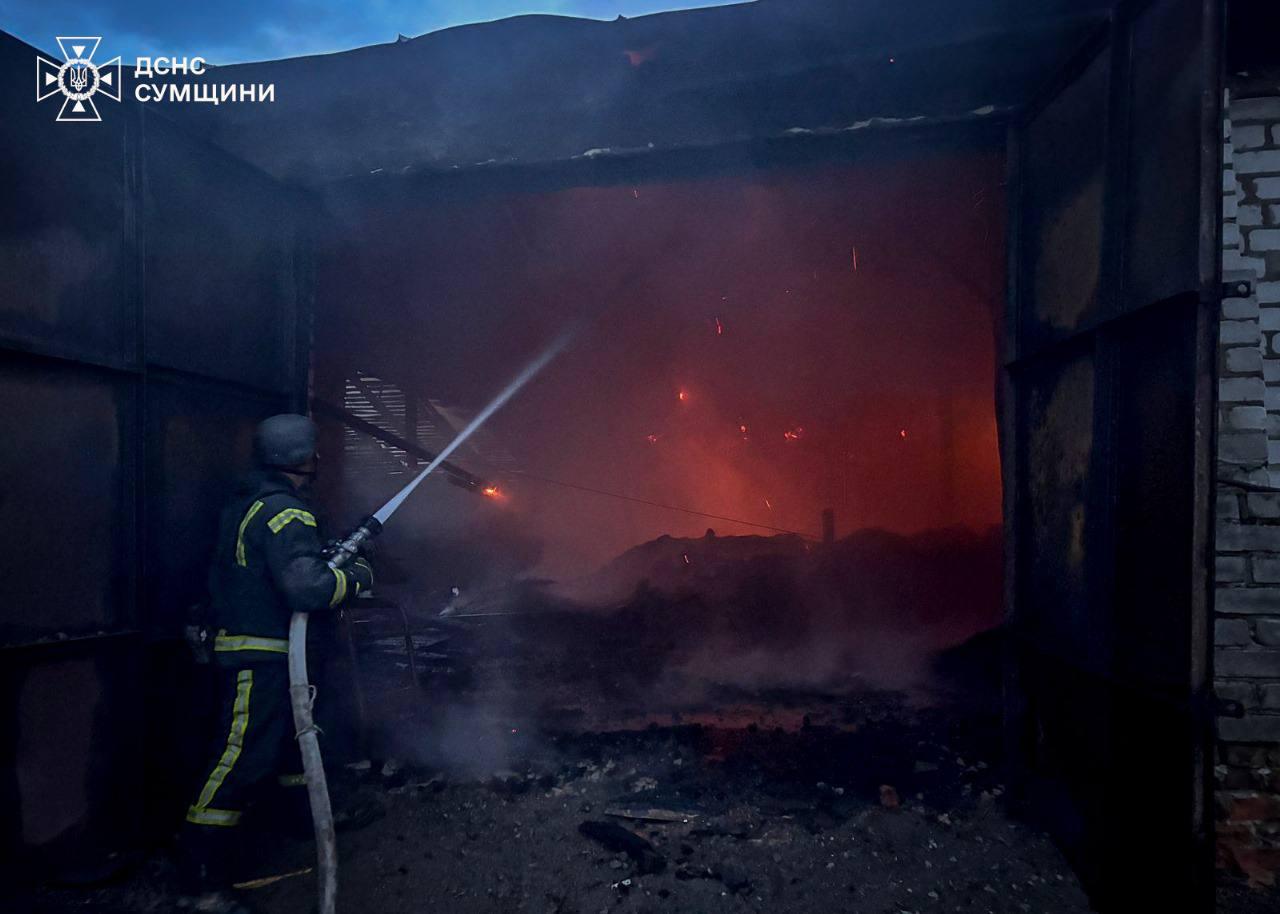
The aftermath of Russian attacks against Sumy Oblast, Ukraine, overnight. (State Emergency Service/Telegram)
The success provided a rare bright spot for Ukrainian forces facing sustained pressure from Russian advances across the eastern front, particularly in the Pokrovsk and Dobropillia directions where Moscow has concentrated significant resources.
Looking Ahead: The Alaska Summit’s Uncertain Outcome
As the August 15 summit approaches, the fundamental contradictions between the parties’ positions remain unresolved. Trump’s confidence in rapid solutions clashes with Ukraine’s constitutional impossibility of territorial concessions and Russia’s maximalist demands that extend far beyond current occupation lines.
The exclusion of Ukraine from the initial talks, combined with European concerns about being sidelined, suggests that any agreements reached in Alaska may face immediate challenges from those most directly affected by the conflict. Putin’s track record of using diplomatic engagement to consolidate military gains while preparing for renewed aggression adds another layer of uncertainty to the proceedings.
Kozak’s Fall: Putin Demotes Advisor Who Urged End to War
The New York Times reported that Kremlin Deputy Chief of Staff Dmitry Kozak lost influence after advising Putin to immediately stop fighting in Ukraine and begin peace negotiations. Kozak, previously one of Putin’s closest advisors who oversaw Kremlin strategy in Ukraine, reportedly presented a plan to end hostilities alongside proposals for internal reforms.
The development underscored Putin’s determination to continue the war despite private opposition from within his inner circle. Before the full-scale invasion, Kozak had warned about the risks of fierce Ukrainian resistance, and after it began, tried unsuccessfully to negotiate a truce. His marginalization demonstrates the consolidation of hardline elements around Putin.
The Fierce Reality: Zelensky’s Warning Against Capitulation
Ukrainian President Zelensky issued a stark warning against capitulating to Putin’s demands ahead of the Alaska talks, emphasizing that “Russia refuses to stop the killings, and therefore must not receive any rewards or benefits.” Writing on social media, he stressed that “concessions do not persuade a killer” and that “truly strong protection of life stops the killers.”
Zelensky noted that Russian forces had launched over 1,000 aerial bombs and 1,400 strike drones against Ukraine in the past week alone, with 137 combat engagements in just the past 24 hours. His warning came as concerns mounted that Washington and Moscow could sideline Ukraine from determining its own fate.
The next few days will reveal whether Trump’s unconventional diplomatic approach can bridge gaps that have proven insurmountable through traditional negotiations, or whether the Alaska gambit will merely formalize the battlefield realities that continue to evolve in Russia’s favor.