
As Russia’s President Declares Negotiations Impossible and Threatens Foreign Peacekeepers, Ukrainian Forces Strike Deep Into Russian Territory While Civilians Bear the Deadly Cost of War
Summary of the Day – September 5, 2025
The prospect of meaningful peace negotiations crumbled on September 5 as Russian President Vladimir Putin categorically rejected the legitimacy of Ukraine’s government and declared it “impossible” to conclude any agreement with Kyiv. His stark pronouncement, delivered at the Eastern Economic Forum in Vladivostok, effectively eliminated the possibility of serious diplomatic progress while simultaneously threatening any foreign peacekeepers deployed to Ukraine as “legitimate targets for destruction.” As Putin slammed shut the diplomatic door, Ukrainian forces demonstrated their growing reach by striking the massive Ryazan Oil Refinery deep inside Russia, while Russian bombardments claimed at least 11 civilian lives across Ukraine. Against this backdrop of escalating violence and diplomatic deadlock, European leaders pressed ahead with plans for security guarantees, even as the Kremlin’s mounting economic pressures revealed the true cost of sustaining its war machine.
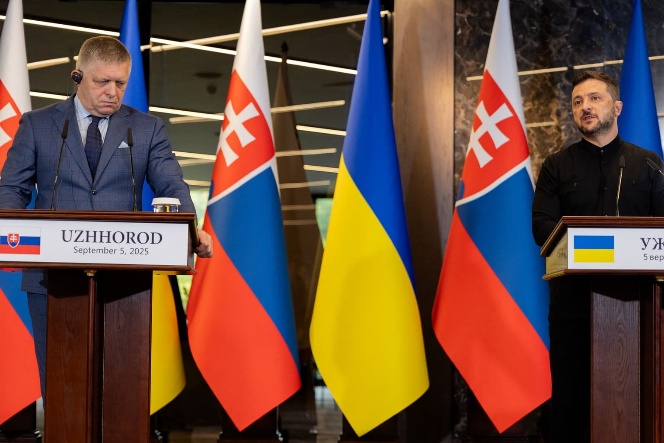
Ukraine’s President Volodymyr Zelensky (R) and Prime Minister of Slovakia Robert Fico (L) give a press conference following their meeting in Uzhhorod. (Tetiana Dzafarova/AFP)
The Diplomatic Dead End: Putin’s Ultimatum for Impossible Terms
Standing before an audience in Russia’s Far East, Putin delivered what amounted to a death sentence for near-term peace prospects. His September 5 declaration that he “do[es] not see much point” in negotiating with Ukraine marked not just a rejection of current diplomatic efforts, but a fundamental denial of Ukraine’s right to exist as a sovereign state.
Putin insisted that any agreement would require Ukraine to lift martial law, hold presidential elections, and conduct a referendum—effectively demanding that Ukraine dissolve its wartime government before talks could begin. He cast President Volodymyr Zelensky as illegitimate and claimed Ukraine lacks the “political will” to make an agreement. His offer to meet only in Moscow—”the best place for this is the capital of the Russian Federation, the hero city of Moscow”—underscored the theatrical nature of his diplomatic overtures.
The Russian president’s conditions revealed the cynical nature of his posturing: recognition of illegal annexations of Crimea and four partially occupied oblasts, Ukrainian withdrawal from territories it still controls, and acceptance of surrender terms. These demands, coupled with his rejection of Zelensky’s legitimacy, expose Putin’s true objective—not peace, but capitulation.
Putin’s most ominous pronouncement concerned international peacekeeping forces. “If any troops appear there, especially now, during the fighting, we assume that they will be legitimate targets for destruction,” he declared, deliberately mischaracterizing European proposals that envision deployment only after a comprehensive ceasefire in rear areas rather than frontline positions.
Kremlin spokesperson Dmitry Peskov reinforced the threatening stance, declaring that foreign contingents “definitely” could not provide Ukraine with security guarantees. The Russian position reflects a broader objective: to render meaningless any Western security guarantees for Ukraine, ensuring any future peace agreement would leave Kyiv defenseless against renewed aggression.
Deep Strike Capability: Ukrainian Forces Hit Russia’s Energy Heart
While Putin pontificated about peace, Ukrainian forces demonstrated their expanding capacity to strike deep into Russian territory. The overnight attack on the Ryazan Oil Refinery—one of Russia’s four largest refineries—marked a significant escalation in Ukraine’s campaign against Russian energy infrastructure.
Ukrainian Special Operations Forces, working alongside the Main Military Intelligence Directorate and Unmanned Systems Forces, struck the facility’s ELOU-AVT-6 primary oil refining unit. The targeted unit processes six million tons of oil annually out of the refinery’s total capacity of 17.1 million tons—representing more than one-third of the facility’s production capability. Geolocated footage confirmed fires at both the ELOU-AVT-6 and AVT-4 refining units.
Simultaneous Ukrainian operations across multiple Russian regions demonstrated the sophistication of Kyiv’s deep-strike capabilities. Forces also targeted an S-400 air defense system in Kaluga Oblast, damaging a command vehicle and control point, while the Security Service struck a military warehouse containing ammunition and drones in occupied Luhansk City.
The Human Cost: Civilian Deaths Mount as Russian Strikes Intensify
The diplomatic theater and strategic strikes could not obscure the war’s most devastating reality: the continued killing of Ukrainian civilians. Russian forces launched 157 Shahed-type drones, six S-300 missiles, and one Kh-59 cruise missile in overnight attacks that claimed at least 11 civilian lives and injured 32 others across multiple regions.
Donetsk Oblast bore the heaviest toll, with five civilians killed—three in Kostiantynivka alone. In Chernihiv Oblast, Russian forces deliberately targeted a Danish humanitarian demining group, killing two people and injuring five others. The strike represented a direct attack on international humanitarian workers—a war crime that epitomizes Moscow’s contempt for international law.
Kharkiv Oblast suffered three civilian deaths and six injuries across eight settlements. In Kherson Oblast, one person died and eight were wounded as attacks targeted residential areas and critical infrastructure, damaging an apartment building and 17 houses. Sumy Oblast saw four injuries and 122 attacks on 49 settlements, while Zaporizhzhia Oblast reported seven injuries across 14 attacked locations.
Ukrainian air defenses intercepted 121 of 157 drones, illustrating both Russia’s commitment to terror bombing and Ukraine’s growing defensive capabilities. Yet the 35 drones and seven missiles that penetrated defenses demonstrated the impossibility of providing complete protection against such massive bombardments.
Economic Pressure: Russia’s War Machine Shows Strain Across the Region
Putin’s defensive comments about Russia’s economic trajectory revealed mounting pressures created by his war economy. Speaking at the Eastern Economic Forum, he warned against rapidly lowering the Central Bank’s 18% interest rate, acknowledging that such a move “would result in rapid price hikes.”
The remarks followed German Gref’s stark assessment that Russia has entered “technical stagnation,” with the Sberbank chief warning that the current rate must fall to around 12% to spark recovery. Russia’s annual inflation of 8.8% in July remains far above the Central Bank’s 4-5% target, with a June Levada Center survey finding 58% of Russians listing rising prices as their top concern.
The strain extends beyond Russia’s borders. The Financial Times reported that Belarus’s economy suffers from high inflation and labor shortages similar to Russia’s, as defense spending has acutely impacted the country’s stability. The economic difficulties reveal how Russia’s war has created pressures throughout Moscow’s sphere of influence, threatening even the stability of Alexander Lukashenko’s government.
Putin’s warning to Russians not to rely on “opinions” found on the internet regarding the economy’s state suggested growing public awareness of the war’s costs. The economic strain reflects the limits of Moscow’s war-driven expansion, fueled by record defense spending but undermined by shrinking private consumption and weak civilian investment.
Europe’s Security Response: Immediate Guarantees and Sanctions Coordination
European leaders advanced plans for Ukraine’s security even as Putin rejected diplomatic solutions. Speaking at the Cernobbio Economic Forum in Italy, President Zelensky emphasized that security guarantees must be implemented immediately rather than waiting for a ceasefire.
“The first step to ending any war is a ceasefire,” Zelensky stated. “If pressure increases, not decreases… if there are security guarantees and sanctions, this will naturally push him [Putin] in the right direction.” The Ukrainian president stressed that guarantees must include military and economic support, implemented “without waiting for the end of the fighting.”
European Council President Antonio Costa announced that a European delegation will travel to Washington to coordinate new sanctions against Russia, following the September 4 Coalition of the Willing summit. “We are working with the U.S. and other partners to intensify our pressure through additional sanctions, both direct and secondary sanctions,” Costa stated.
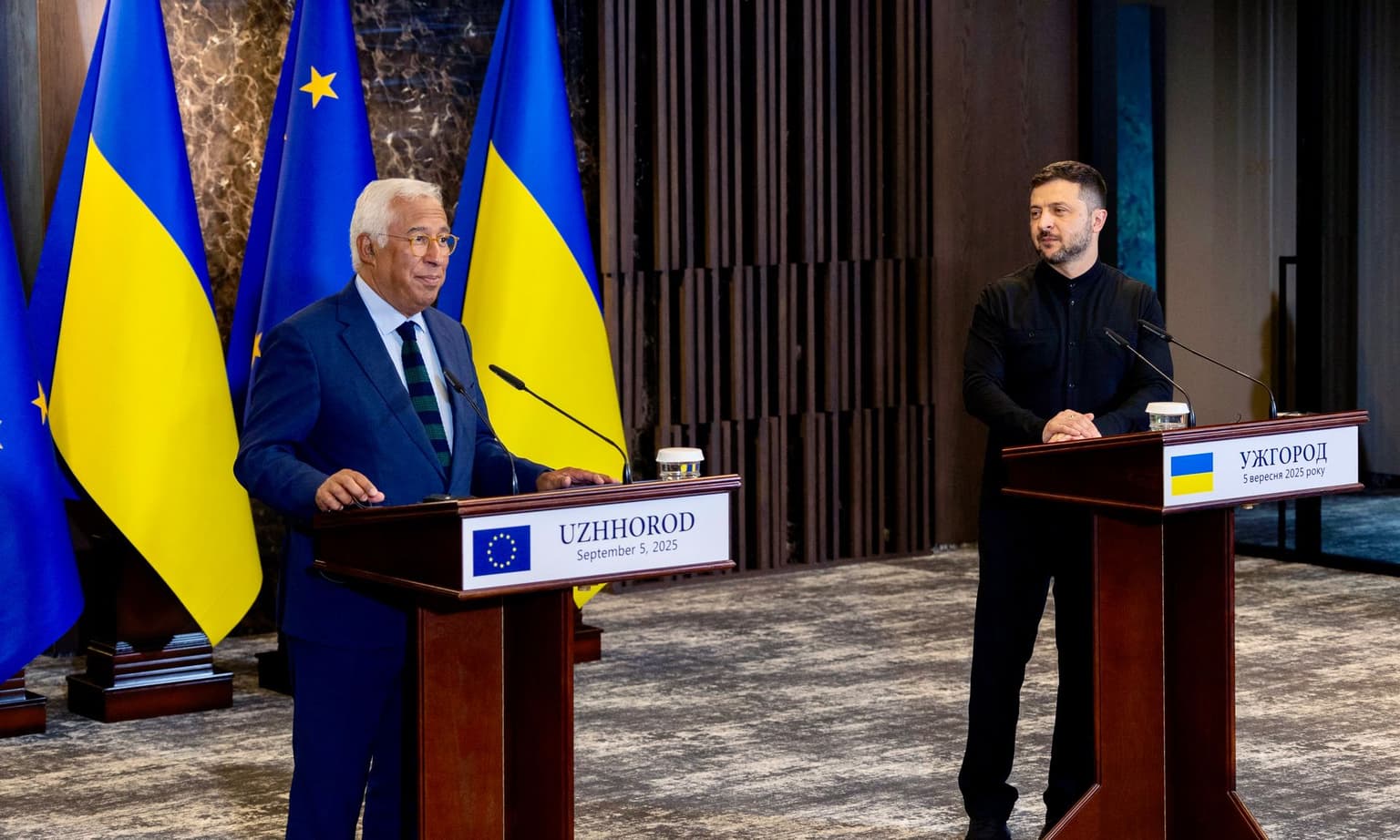
President Volodymyr Zelensky (R) and European Council President Antonio Costa in Uzhhorod. (Tetiana Dzhafarova / AFP)
The initiative represents European frustration with Trump’s limited sanctions response, consisting primarily of tariffs on Indian imports rather than comprehensive measures targeting Russian energy exports. The EU continues preparing its 19th sanctions package for September, having agreed on 18 previous packages since Russia’s full-scale invasion.
French President Emmanuel Macron confirmed that 26 countries are ready to contribute troops or support as part of security guarantees, but only after a ceasefire. The European-led coalition proposes deploying a multinational reassurance force alongside commitments of weapons, logistics, and training—measures that would not amount to NATO membership but rely on a strong Ukrainian military backed by more than 30 partners.
Energy Politics and Diplomatic Confrontation: The Fico Meeting
Zelensky’s meeting with Slovak Prime Minister Robert Fico in Uzhhorod revealed the complex energy politics complicating European unity on Russia sanctions. The encounter followed Ukrainian strikes on the Druzhba oil pipeline, which supplies Russian crude to Hungary and Slovakia—two EU countries remaining dependent on Russian energy.
“We will not stop responding to Russian attacks on our energy infrastructure,” Zelensky declared after Fico and Hungarian officials requested that Ukraine cease targeting the pipeline. The Ukrainian president offered to supply gas and oil to Slovakia “as long as it is not Russian gas or oil,” emphasizing that “Russian oil, like Russian gas, has no future.”
Fico’s response that Ukraine and Slovakia have “diametrically opposed views” about energy highlighted persistent EU divisions regarding Russian energy dependence. Hungarian Foreign Minister Peter Szijjarto’s concurrent statement that Budapest buys Russian oil directly because it “has no other option” underscored the challenges facing European energy independence.
The diplomatic tension occurred as European Council President Antonio Costa met with Fico at a Ukrainian border checkpoint, demonstrating high-level European engagement in resolving the energy dispute while maintaining pressure on Russian revenues.
Global Realignment: Trump’s Frustration with Shifting Alliances
President Trump’s reaction to images of Vladimir Putin, Chinese President Xi Jinping, and Indian Prime Minister Narendra Modi at the Shanghai Cooperation Organization summit revealed his frustration with shifting global alliances. “May they have a long and prosperous future together,” Trump wrote sarcastically on Truth Social, acknowledging that “it looks like we’ve lost India and Russia to deepest, darkest China.”
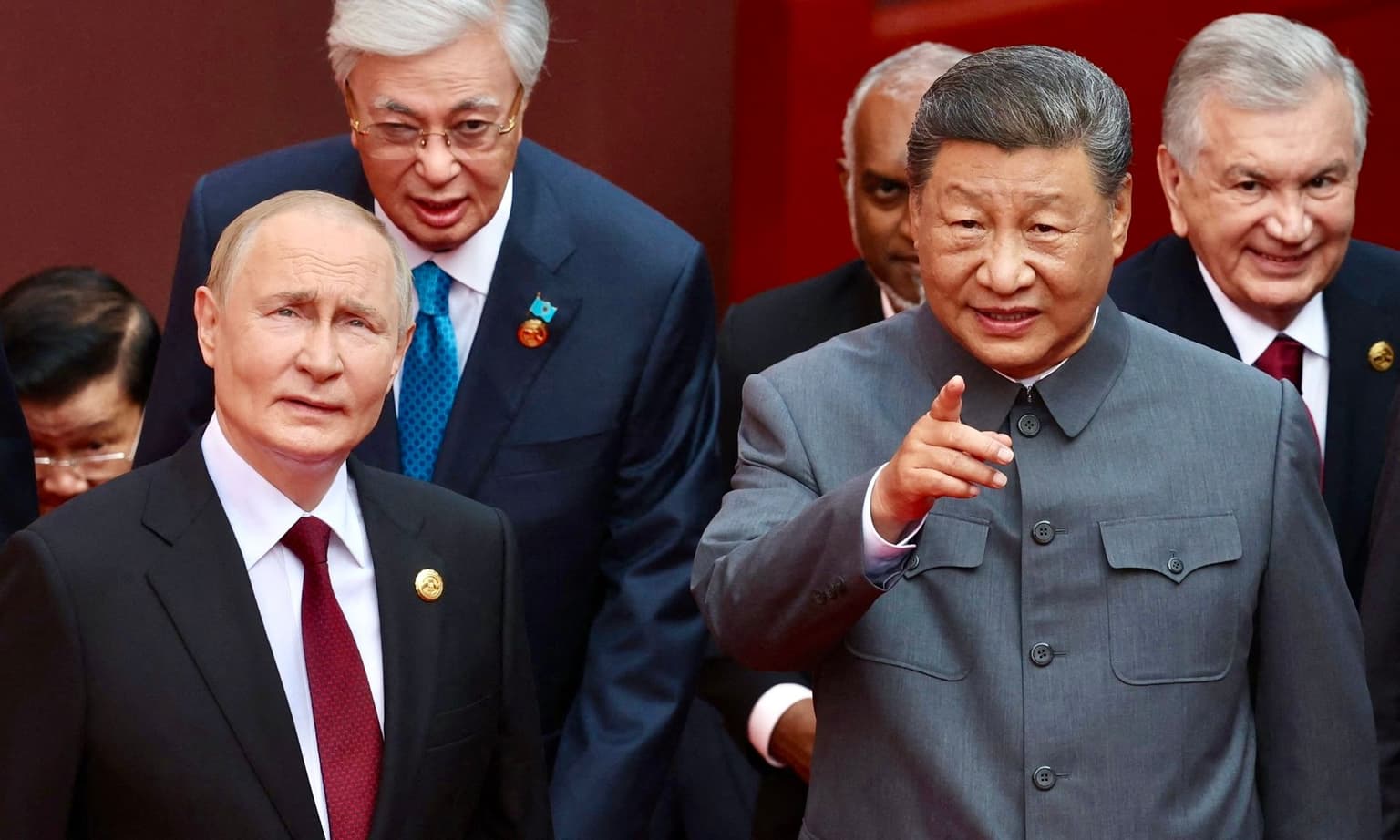
Russia’s President Vladimir Putin (L) speaks with China’s President Xi Jinping in Beijing’s Tiananmen Square. (Alexander Kazakov / POOL / AFP)
The SCO summit in Tianjin saw Xi calling for a new multipolar world order challenging U.S.-driven democracy as the primary force in global affairs. The deepening cooperation between Russia, China, and India—including the signing of the Power of Siberia-2 gas pipeline deal between Russia and China—demonstrates the consolidation of an anti-Western bloc.
Despite Trump’s tariffs on Indian imports and threats against Chinese exports, cooperation between the three powers continues expanding. The energy partnerships provide Moscow with crucial revenue streams to sustain its war effort.
Deteriorating Russian-Azerbaijani Relations: The Diplomatic Price of Aggression
Russian-Azerbaijani relations continued deteriorating over disputes stemming from the December 2024 Azerbaijan Airlines crash, likely caused by Russian air defenses. Russian Foreign Ministry spokesperson Maria Zakharova claimed that Azerbaijan could help restore bilateral relations by releasing 13 Russian citizens in Azerbaijani detention, following mutual arrests after Russian law enforcement raided Sputnik’s regional headquarters in Baku.
The Azerbaijani Foreign Ministry sharply rejected Zakharova’s framing, stating it was wrong to portray the detentions as the reason for deteriorating relations. Instead, Baku named Russia’s failure to take responsibility for shooting down Azerbaijan Airlines Flight 8243 as the primary issue. Azerbaijan also criticized Russian claims that insurance payments to crash victims satisfy demands for government compensation of the lost aircraft.
The Russian Foreign Ministry responded by rejecting Azerbaijan’s characterization while emphasizing that releasing the detained Russians would help normalize relations. The diplomatic spat reflects broader strains in Russian relationships with former Soviet states, as Moscow’s aggressive behavior creates friction even with traditionally friendly governments.
Ukraine’s Technological Transformation: From IT to Defense
Ukraine’s technology sector is undergoing fundamental transformation as conventional IT companies experience downturns and professionals migrate to defense technology. Oleksandr Yakovenko, founder of drone producer TAF Industries, announced plans to collaborate with Ukraine’s National Aviation University to train specialists in aerospace engineering.
TAF Industries exemplifies this shift, growing from 20 employees to 1,000 in just 18 months, with 100 IT specialists among its workforce and 150 unfilled positions. The company produces up to 80,000 drones monthly and ranks among the world’s top three drone manufacturers. “This is part of our long-term strategy: regardless of how active the hostilities are, Ukraine will remain in a risk zone as long as Russia exists,” Yakovenko explained.
Competition for talent has intensified dramatically, with some companies offering $10,000-15,000 monthly salaries compared to the normal $3,000-4,000 rate. Yakovenko warned that such inflated wages create “financial bubbles” that ultimately harm both companies and employees.
Simultaneously, Ukraine launched its first joint drone production line in Denmark and plans similar programs across Europe. “We are currently developing co-production with European countries. The first line has already been launched in Denmark,” Zelensky announced. “Such lines will be opened with other European countries.”
The international expansion reflects both the technology’s proven battlefield effectiveness and European recognition that supporting Ukraine’s defense industrial base serves broader continental security interests. Ukraine has the capacity to produce 8 million drones annually, requiring only additional financing to reach full potential.
Heroes Return and Civilian Resistance: Ukrainian Resilience on Display
Ukrainian Navy Commander Oleksii Neizhpapa announced the successful evacuation of four Ukrainian soldiers who had been hiding in Russian-occupied territory for three years. The Angels special forces unit rescued a marine, three National Guards, and a medical worker who had helped conceal the soldiers from Russian security services.
The rescued soldiers had been injured in combat and hidden in a hospital where “sympathetic doctors” protected them from Russian forces. The complex operation, planned in multiple stages, overcame intense Russian filtration measures and high-risk conditions. The emotional reunion footage showed one soldier waiting to meet his twin brother, whom he hadn’t seen for four years.
Meanwhile, hundreds of demonstrators gathered in Kyiv’s Independence Square to protest parliamentary bills imposing tougher criminal penalties on soldiers for disobedience. The rally, organized under the theme “Service is not slavery,” targeted draft laws that would increase liability for military personnel who disobey orders or use illegal weapons.
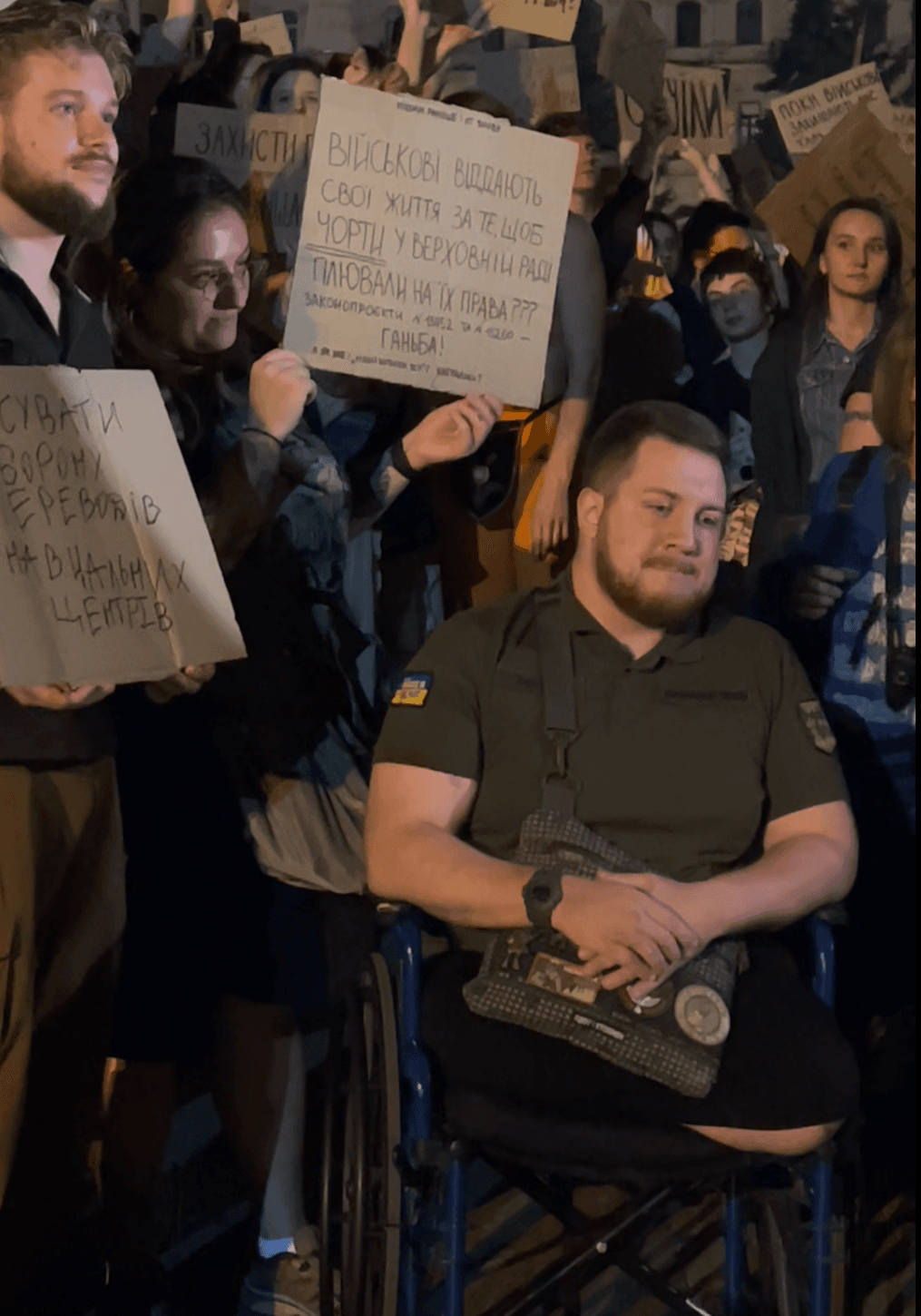
Protesters gather in Kyiv’s Independence Square to rally against new bills imposing harsher penalties on soldiers. (The Kyiv Independent)
Combat medic and veteran Alina Sarnatska argued that “the approach of ‘increase punishment and thus improve discipline’ does not work.” The demonstration marked the second significant protest in Kyiv this summer, following July rallies that successfully overturned laws dismantling independent anti-corruption agencies.
The Angels unit has now rescued 88 people total, while President Zelensky announced that Ukraine has secured the release of over 6,400 Ukrainians from Russian captivity since 2022, of whom 5,857 were freed during prisoner exchanges.
Battlefield Dynamics: Grinding Advances and Tactical Evolution
Ground operations across multiple fronts demonstrated the war’s continued intensity despite diplomatic discussions. Ukrainian forces advanced in northern Sumy Oblast northeast of Kindrativka, while Russian forces made limited gains northwest of Stavky near Lyman and in southwestern Udachne near Pokrovsk.
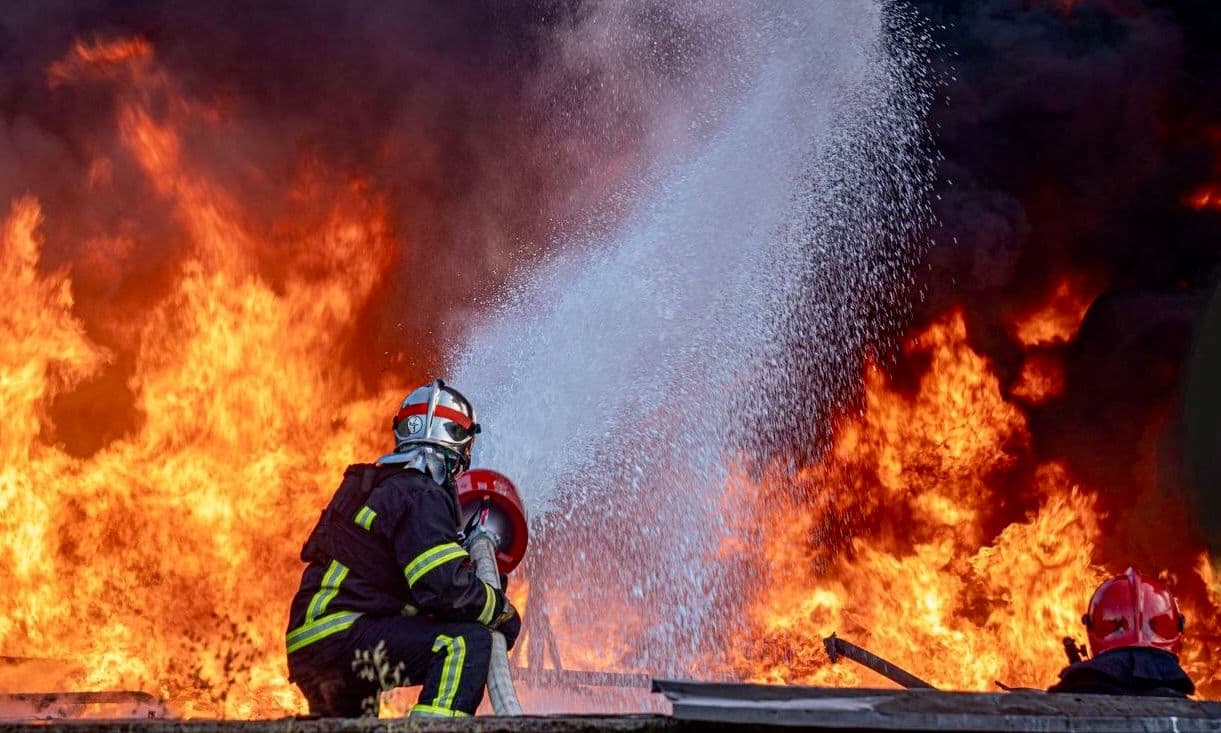
Firefighters extinguish a fire that erupted after a Russian strike on Sumy Oblast. (State Emergency Service / Telegram)
Ukrainian military commanders reported evolving Russian tactics across different sectors. In the Kupyansk direction, Russian forces increasingly rely on individual infiltration, sending one or two soldiers to penetrate Ukrainian defensive lines while avoiding direct engagement. Near Pokrovsk, Russian logistics increasingly depend on unmanned ground vehicles due to Ukrainian interdiction of ground supply lines.
Russian forces continued attacks across multiple directions including north of Kharkiv City toward Lyptsi, northeast toward Vovchansk, and in various sectors around Kupyansk, Borova, Lyman, and throughout Donetsk Oblast. The tactical evolution reflects both sides’ adaptation to the war’s prolonged nature and the increasing importance of drone warfare in shaping battlefield outcomes.
Looking Forward: The Widening Divide
Putin’s categorical rejection of negotiations and threats against Western peacekeepers represent a fundamental escalation in Moscow’s confrontation with the international community. His demands for Ukraine’s capitulation, coupled with warnings against any foreign security presence, reveal a strategic objective extending far beyond territorial conquest to the complete subjugation of Ukrainian sovereignty.
The day’s events crystallized the stark choice facing the international community: accept Russian hegemony over Eastern Europe or prepare for a prolonged confrontation requiring unprecedented Western unity and resolve. Putin’s economic vulnerabilities, evident in his defensive comments about inflation and the strain visible across his sphere of influence, suggest that sustained pressure could eventually force recalculation.
Ukraine’s technological transformation from conventional IT to defense manufacturing, combined with expanding international cooperation in weapons production, demonstrates the country’s adaptation to long-term security challenges. As Ukrainian forces demonstrate growing capability to strike deep into Russian territory and European leaders advance plans for immediate security guarantees, the conflict continues expanding beyond its original parameters. The war that began with Russia’s attempt to erase Ukraine from the map has evolved into a broader struggle over the future of the international order—one that Putin’s September 5 ultimatum made clear he has no intention of ending through compromise.