
As Moscow weighs limited concessions and Washington prepares new sanctions, Ukrainian forces repel massive Russian assaults while civilians bear the brunt of escalating strikes
Summary of the Day – August 5, 2025
With just three days remaining before President Donald Trump’s August 8 deadline for Russia to agree to a ceasefire, the Kremlin finds itself weighing limited concessions while maintaining its maximalist war objectives. Russian attacks killed at least 10 Ukrainian civilians and wounded 17 others in a devastating overnight barrage, while Ukrainian military intelligence claimed to have destroyed eight Russian companies in fierce combat in Sumy Oblast. As Trump’s special envoy Steve Witkoff prepares for crucial talks in Moscow, the administration contemplates sanctions on Russia’s shadow oil fleet, European allies commit over $1 billion for American weapons deliveries to Ukraine, and Putin’s confidence in weathering new economic pressure remains unshaken despite Russia’s energy revenues plummeting by nearly 30 percent.
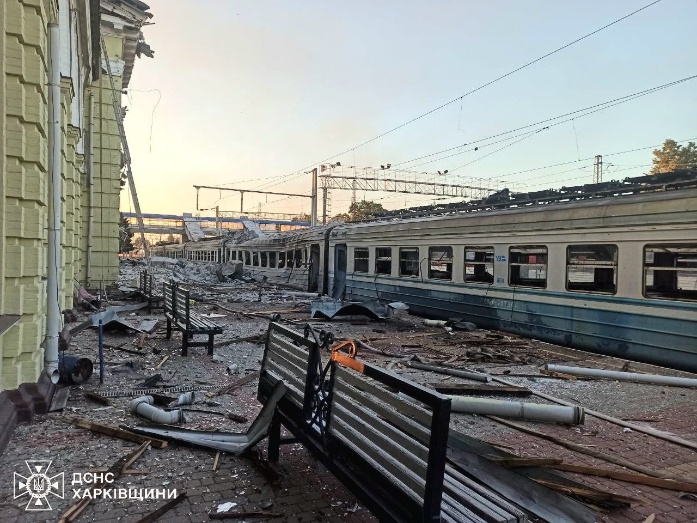
The aftermath of the Russian strike against the town of Lozova in Kharkiv Oblast overnight. (Ukraine’s Emergency Service)
The Shadow Fleet Gambit: Trump’s Next Move Against Russian Oil
The Trump administration is considering new sanctions targeting Russia’s shadow fleet of oil tankers should President Vladimir Putin fail to agree to a ceasefire by August 8, sources familiar with White House discussions told the Financial Times. The measures would represent the first U.S. sanctions targeting Moscow since Trump returned to the presidency in January, striking at vessels that have been central to Russia’s ability to bypass Western oil price caps.
The shadow fleet operates by concealing ownership, avoiding Western maritime services, and transporting crude to buyers such as China and India at prices above the G7’s $60-a-barrel cap. Previous Biden administration sanctions on 213 tankers, combined with EU listings of more than 400 vessels, proved effective by sharply reducing operational capacity. Analysis showed that 115 sanctioned crude carriers shipped an average of 48 million barrels of Russian oil per month before designation, compared with just 13 million barrels after.
Two sources confirmed that sanctions on the fleet are seen within the administration as a straightforward way to increase economic pressure on Russia, representing one of many “tools in his toolchest” that “every country can understand,” according to State Department spokesperson Tammy Bruce.
The Lozova Massacre: Russia’s Deadliest Strike on Kharkiv Railroad Town
Between 2:45 and 4:40 a.m. on August 5, Russian forces unleashed their most devastating attack on the town of Lozova in Kharkiv Oblast, launching 34 drones against the railway hub and killing two civilians while injuring five others. Among the injured were four railway workers hospitalized with minor to moderate injuries, while the fatalities included a mechanic on duty.
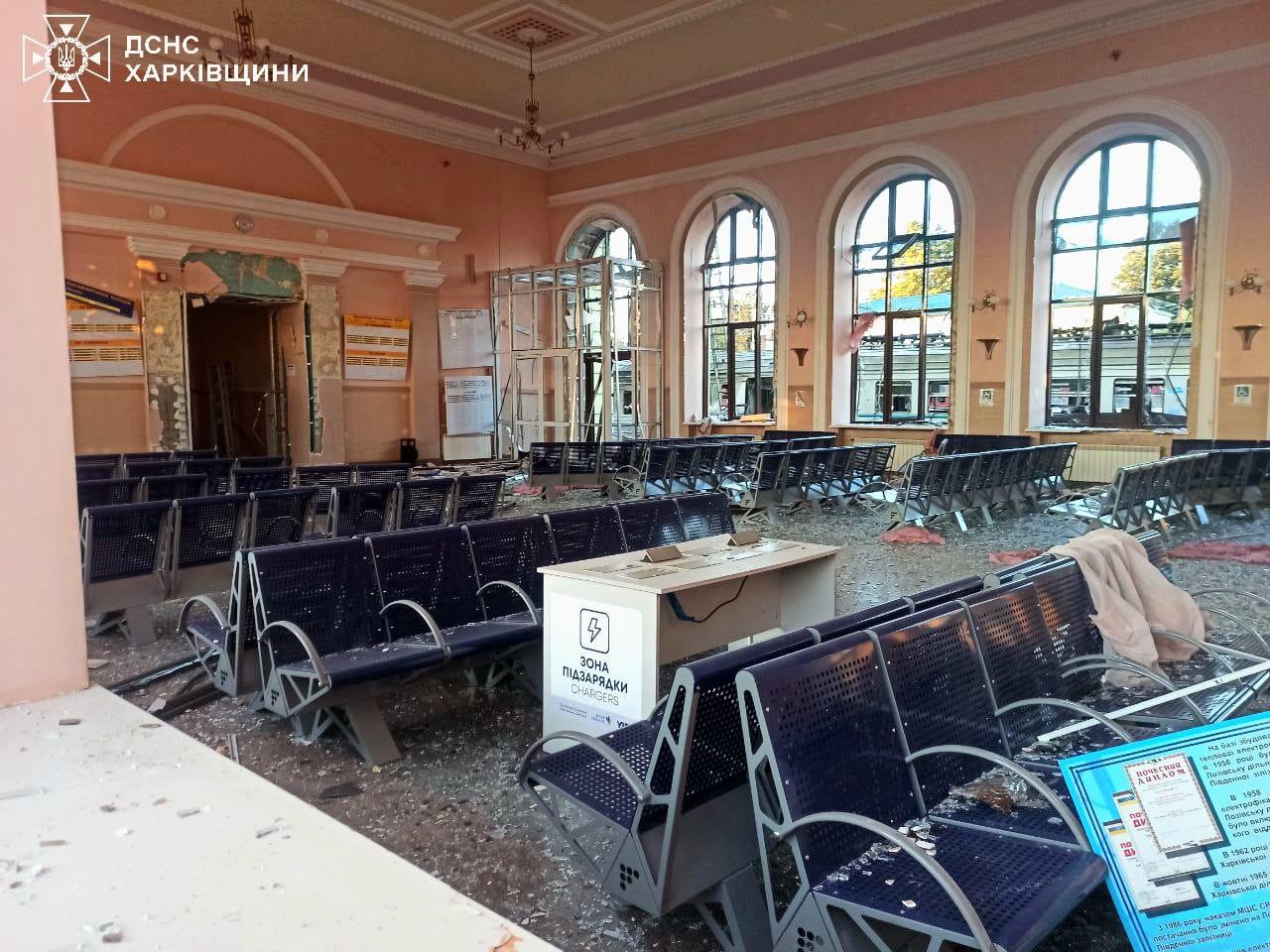
The aftermath of the Russian strike against the town of Lozova in Kharkiv Oblast overnight. (Ukraine’s Emergency Service)
“Last night, the Russians launched a ballistic missile and nearly 50 UAVs against Ukraine, most of them Russian-Iranian ‘Shaheds,'” President Volodymyr Zelensky stated. “Many drones were shot down by our defenders, but unfortunately, there were hits.”
The attack damaged railway infrastructure and ignited fires at the station and depot buildings, with five other people suffering shock, including a 14-year-old boy and a 13-year-old girl. Lozova Mayor Serhii Zelensky called it the heaviest attack against the town during the entire full-scale war, while rescue teams continued clearing debris and searching for possible victims beneath the rubble.
Moscow’s Limited Offering: The “Air Truce” Proposal
The Kremlin is weighing a proposal to pause its long-range strike campaign in Ukraine as a potential concession to Trump, even as it remains committed to continuing the war, Bloomberg reported citing sources familiar with the matter. Russian officials are exploring a limited “air truce” involving a pause in drone and missile strikes, but only if Ukraine agrees to participate.
“Trump needs some kind of a ‘gift,’ a concession from Russia,” Sergei Markov, a Kremlin-aligned political analyst, told Bloomberg. “An air truce could be such a gift.” The idea was also raised by Belarusian President Alexander Lukashenko during talks with Putin on August 1, though the Russian president did not comment publicly.
Kremlin spokesperson Dmitry Peskov confirmed the importance of upcoming meetings with Trump’s special envoy Steve Witkoff but declined to comment on specific proposals. The limited concession reflects Moscow’s attempt to ease mounting pressure from Trump while avoiding any substantive retreat from Putin’s territorial demands.
Witkoff’s Last Gambit: The Moscow Mission
Trump’s special envoy Steve Witkoff is scheduled to arrive in Moscow on August 6 after the Kremlin requested a meeting with him in a last-ditch effort to avoid punishing new sanctions. The aircraft used by Witkoff landed at Moscow’s Vnukovo Airport, according to Russian state news agency RIA Novosti, as Russia’s war in Ukraine grinds on.
Trump confirmed that Witkoff may travel to Russia on August 6 or 7, just days before the deadline. “They would like to see him. They’ve asked that he meet, so we’ll see what happens,” Trump told reporters. Whether Putin can convince Witkoff that he is serious about ending the conflict remains an open question, with Trump publicly casting doubt on Putin’s willingness to stop the fighting.
The atmosphere will be markedly different from Witkoff’s last meeting with Putin in April, as Trump’s frustration toward the Russian leader has mounted in recent months. Since that visit, Russia has resisted U.S.-led efforts to broker peace and has intensified missile and drone attacks on Ukrainian cities.
The Billion-Dollar Arsenal: Europe’s Massive Weapons Commitment
Sweden, Norway, and Denmark announced they will jointly contribute $500 million to NATO’s Prioritized Ukraine Requirements List (PURL) mechanism, adding to the Netherlands’ earlier commitment of $579 million to deliver American weapons to Ukraine. The combined European pledge now exceeds $1 billion for U.S.-made arms delivered directly from American stockpiles.
“This is an important initiative from NATO and the U.S. It helps ensure that Ukraine quickly receives crucial military equipment to defend themselves, and it strengthens cooperation between the United States and European countries in their support of Ukraine,” Norway’s Prime Minister Jonas Gahr Store stated.
Denmark is contributing approximately $90 million, Sweden is pledging $275 million, and Norway about $135 million, according to official statements. The funding will be channeled through NATO’s Support and Procurement Agency, enabling fast-track purchases of U.S. arms to meet Ukraine’s most urgent defense needs.
The Patriot Shortage: Europe’s Air Defense Dilemma
A deal between Trump and European NATO states to provide desperately needed Patriot air defense systems to Ukraine faces delays due to lengthy delivery timelines for replacement systems. Several European countries initially signaled interest in Trump’s proposal to sell new air defense systems to European militaries that donate their Patriots, but concerns remain about potentially lengthy gaps in their own defenses.
Germany asked for “watertight” guarantees from Washington that it will receive new U.S. air defense systems within eight months before shipping more Patriots, Defense Minister Boris Pistorius stated. Berlin has already sent three Patriot systems to Ukraine and agreed to deliver five more, leaving Germany with at most six Patriot systems remaining.
Romania’s experience illustrates the challenge: after sacrificing one of its two operational Patriot systems last year, officials hoped the U.S. could speed up orders for replacements, but the delivery date was set for the end of the decade. NATO’s Supreme Allied Commander estimates that lead time for new Patriot batteries is around seven years, though other sources suggest deliveries could take at least a couple of years.
Artillery Approved: U.S. Greenlights $200 Million in Military Sales
The Trump administration approved two new potential military sales to Ukraine worth more than $200 million, the Defense Security Cooperation Agency announced. The decision followed a “productive” phone call between Ukrainian President Volodymyr Zelensky and Trump, who have been discussing an end to Russia’s ongoing war.
The first package includes $104 million for the maintenance and repair of Ukraine’s M777 Howitzers, covering technical assistance, training, publications, and logistical support. The second package amounts to $99.5 million and covers transport, cargo consolidation, and logistics services.
“Entirely funded by partner countries, these packages are a boost to Ukraine’s defense and regional security,” Defense Minister Denys Shmyhal stated. The deals are subject to congressional approval and will be managed by BAE Systems in Barrow-in-Furness, the U.K., as the principal contractor.
The Intelligence Coup: Ukraine Obtains Russian Nuclear Submarine Secrets
Ukraine’s military intelligence agency claimed to have obtained classified internal documents on Russia’s newest strategic nuclear submarine, K-555 Knyaz Pozharsky, a Project 955A Borei-A-class vessel crucial to the Kremlin’s nuclear triad. Each vessel is equipped with 16 launch silos for R-30 Bulava-30 intercontinental ballistic missiles, with each missile capable of carrying up to 10 warheads.
The materials obtained by HUR include detailed lists of crew members with their roles, qualifications, and physical fitness levels; combat instructions; schematics of the vessel’s combat layout and survivability systems; and the crew’s organizational structure. The documents also contain internal regulations for cabin and living quarters, protocols for transferring wounded personnel and cargo, towing procedures, and various operational guidelines.
According to HUR, the Knyaz Pozharsky submarine officially joined the Russian Navy’s Northern Fleet on July 24, 2025, with its home base at Gadzhievo in Murmansk Oblast. Russian President Vladimir Putin personally presided over the ceremony marking the submarine’s entry into active service.
Congress Acts on Chemical Weapons: New Reporting Requirements
U.S. Senator Adam Schiff introduced legislation aimed at establishing a formal reporting mechanism on Russia’s use of chemical weapons, a move that would sharpen the U.S. government’s focus on a key area of concern in the war in Ukraine. The amendment was introduced as part of ongoing deliberations over the Fiscal Year 2026 National Defense Authorization Act.
The legislation would modify existing law to require a new section in the annual report on Russian military and security developments, specifically detailing Russia’s use of chemical weapons, including any substances prohibited by the Organization for the Prohibition of Chemical Weapons. It would also assess the use of such weapons to harm individuals outside of armed conflict and detail any actions the U.S. government has taken to hold Russia accountable.
Recent reports from European intelligence agencies have suggested that Russian forces have deployed chemical weapons, such as chloropicrin, on the battlefield with increasing frequency.
Russian Oil Revenues Collapse: 30 Percent Drop Reflects Sanctions Impact
Russia’s oil and gas revenues fell by nearly 30 percent year-on-year in July, marking the third consecutive month of declines, the Russian Finance Ministry reported. Russia collected 787.3 billion rubles ($9.8 billion) from oil and gas taxes in July, down 28 percent compared to the same month in 2024.
Mineral extraction tax revenue plunged 38 percent year-on-year to 634.1 billion rubles ($7.9 billion), with oil companies contributing 543.4 billion rubles ($6.7 billion), 36 percent less than in July 2024. Gazprom, Russia’s state-owned gas giant, has seen its exports to Europe hit lows not seen since the 1970s.
The EU approved an 18th sanctions package in July, lowering the price cap on Russian oil from $60 to $47.6 per barrel. Russia’s Finance Ministry has revised its 2025 oil and gas revenue projections downward by nearly a quarter to 8.32 trillion rubles ($103 billion) from the original 10.94 trillion rubles.
The Sumy Slaughter: Ukrainian Intelligence Claims Major Victory
Ukrainian military intelligence special forces fought off a Russian attempt to advance in Sumy Oblast, “destroying more than eight Russian companies” during the battle, HUR claimed. “Total Russian losses: at least 334 killed, more than 550 wounded,” the agency stated, releasing video footage of the engagement.

A soldier of the Ukrainian military intelligence (HUR) Tymur Special Unit during a close combat with Russian forces in Sumy Oblast, Ukraine. Footage released. (HUR/Telegram)
During the recent engagement, soldiers of the Tymur Special Unit moved behind Russian lines and cleared out Russian positions, disrupting the supply of provisions and ammunition. “According to intercepted communications, Russian soldiers refused to attack the positions of the Tymur Special Unit, citing fabricated reasons,” HUR claimed.
Russian forces entered Sumy Oblast earlier this year after recapturing most of neighboring Kursk Oblast, aiming to carve out a “buffer zone” along Ukraine’s northeastern border. While Russia continues to hold about a dozen border villages in Sumy Oblast, President Zelensky claimed last month that Ukrainian forces are “gradually pushing the Russian forces out.”
Putin’s Confidence Remains Unshaken Despite Economic Pressure
Russian President Vladimir Putin is confident that Russia can weather Washington’s potential new sanctions and doubts they would have a significant impact on the country’s economy, Reuters reported citing sources. Putin’s unwillingness to halt the offensive is fueled by his conviction that Russia holds the upper hand and by doubts that further U.S. sanctions would have a meaningful impact after more than three years of sustained economic pressure.
One source said Putin aims to fully seize Ukrainian Donetsk, Luhansk, Zaporizhzhia, and Kherson oblasts before entering any serious peace negotiations. According to the sources, some in the Kremlin doubt that Trump will follow through with his threats, while Putin still reportedly believes he can again befriend the White House and restore trade relations with the West.
Putin is reluctant to provoke Trump and recognizes that pressing ahead with the war could jeopardize a potential thaw in relations with Washington and the West, but his military objectives remain the top priority.
Corruption Crackdown: High-Ranking National Guard Officer Arrested
Ukraine’s High Anti-Corruption Court ordered the arrest of Colonel Vasyl Myshanskyi, the head of a National Guard unit suspected in a corruption case involving the purchase of electronic warfare equipment and drones. Myshanskyi, along with five other suspects, is accused of signing government contracts with supplier companies at intentionally inflated prices.
Myshanskyi was remanded in custody until September 30, with bail set at Hr 2 million ($48,000). Prosecutors said they are considering appealing the court’s decision. SAPO prosecutors said Myshanskyi received Hr 250,000 ($6,000) in kickbacks for procuring overpriced radar systems from a private company.
Oleksii Kuznietsov, a lawmaker from President Zelensky’s Servant of the People party, and Serhii Haidai, a former governor of Luhansk Oblast, are among the key suspects in the case. The corruption revelations came days after Ukraine’s parliament reversed course on the law curtailing the independence of NABU and SAPO.
The Mobilization Marathon: Russia Forms 10 New Divisions
Ukraine’s top military commander warned that Russia is accelerating its mobilization efforts, with plans to form 10 new military divisions by the end of the year. Commander-in-Chief Oleksandr Syrskyi said two divisions have already been formed, and Russian forces are adding approximately 9,000 troops each month despite suffering heavy losses.
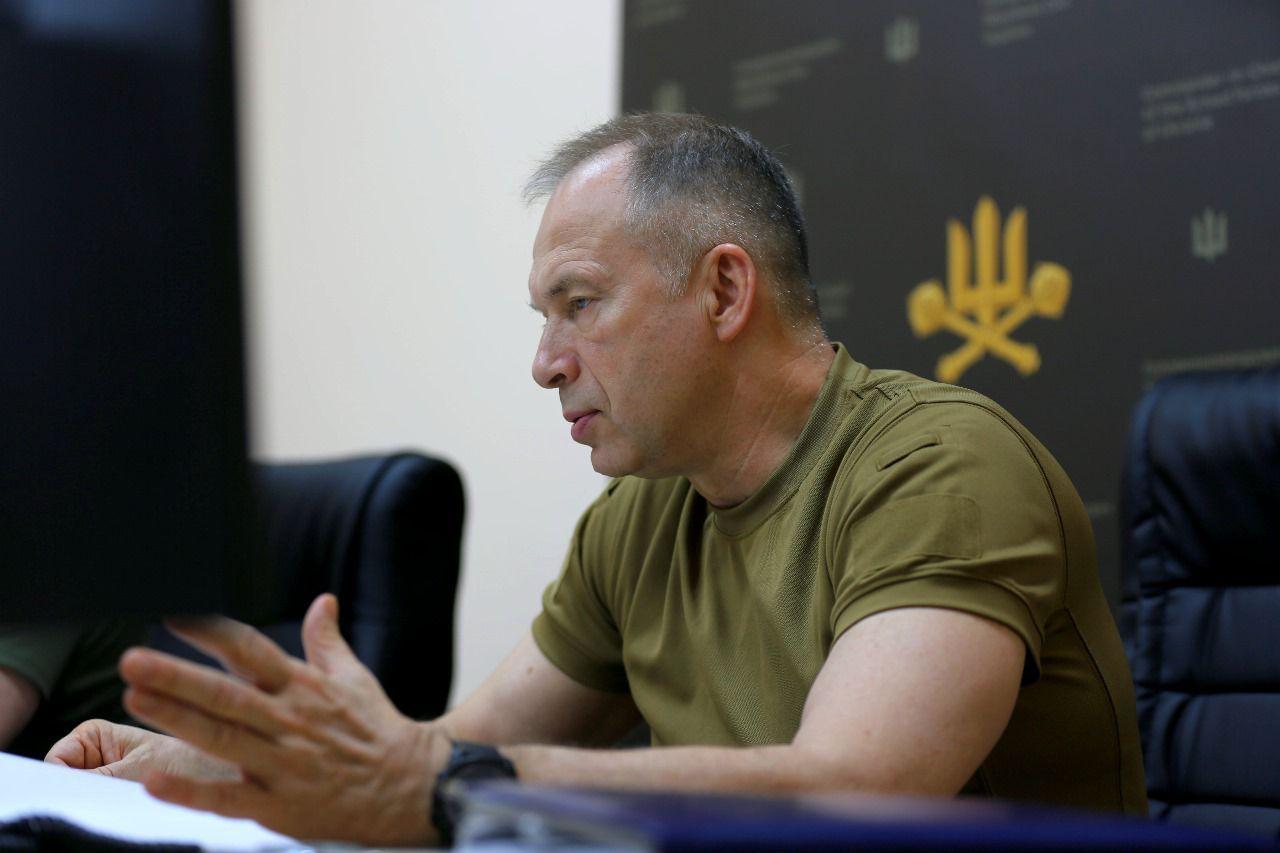
Commander-in-Chief of the Armed Forces of Ukraine Oleksandr Syrskyi during a meeting. (Commander-in-Chief of the Armed Forces / Facebook)
Russian forces lost more than 33,200 personnel in July alone—800 more than the previous month. Russia is estimated to have lost more than one million military personnel since the start of the full-scale invasion. “Despite this,” Syrskyi said, “the opponent is increasing its forces by 9,000 people every month.”
To respond to Russia’s growing military, Syrskyi said Ukraine has “no other choice but to continue mobilization measures, improve combat training, and strengthen the unmanned component of our troops.”
Ukrainian Drone Strikes Cripple Russian Oil Infrastructure
Ukrainian drones targeted multiple Russian oil refineries, halving production at the Ryazan facility and completely shutting down the Novokuibyshevsk refinery after strikes on August 2. Two sources told Reuters that the Novokuibyshevsk refinery in Samara Oblast ceased operations after drones damaged its main primary oil refining unit.
The Ryazan oil refinery in western Russia halted roughly half of its refining capacity, with two primary oil refining units ceasing operations since August 2. The remaining working unit covers 48 percent of capacity, or 23,200 tons of product per day. The Ryazan refinery processed some 13.1 million metric tons of crude oil last year.
Ukrainian drones also targeted the Annanefteprodukt fuel and lubricants storage base near Anna in Voronezh Oblast, the Primorsko-Akhtarsk military airfield in Krasnodar Krai, and the Elektropribor plant in Penza, according to the Security Service of Ukraine.
Battlefield Updates: Russian Advances Meet Ukrainian Resistance
Russian forces continued offensive operations across multiple fronts but made limited confirmed advances. In the Lyman direction, geolocated footage indicated that Russian forces marginally advanced north of Novomykhailivka northeast of Lyman. Ukrainian forces recently advanced east of Stupochky south of Chasiv Yar, while Russian forces advanced east and southeast of Nelipivka northwest of Toretsk and southeast of Shcherbynivka west of Toretsk.
In northern Sumy Oblast, Russian forces continued offensive operations but did not make confirmed advances, while Ukraine’s Main Military Intelligence Directorate reported that GUR elements entered the Russian near rear in the Sumy direction, gained a foothold, and disrupted Russian supplies.
Russian forces attacked near Kupyansk, in the Borova direction, and across multiple locations in Donetsk Oblast, maintaining pressure on Ukrainian defensive positions while suffering continued casualties from Ukrainian drone operations and defensive fire.
Russia Withdraws from Nuclear Treaty: Moscow Abandons INF Moratorium
Russia announced on August 4 that it will withdraw from the Intermediate-Range Nuclear Forces Treaty, claiming the conditions for its “unilateral moratorium” on deploying weapons banned under the INF Treaty are “disappearing.” The Russian Foreign Ministry stated that Russia “no longer considers itself bound” by the treaty’s restrictions following what it called Western deployment of “destabilizing” missiles near Russian borders.
Kremlin Spokesperson Dmitry Peskov responded that Russia is no longer “limited” in any way and has the right to take “appropriate measures.” Russian Security Council Deputy Chairperson Dmitry Medvedev claimed the withdrawal results from NATO states’ “anti-Russian policy” and warned the West should “expect further steps” from Russia.
Russia has long violated the INF Treaty, with the United States withdrawing in August 2019 due to Russian development of intermediate-range 9M729 missiles. Russia conducted a strike against Ukraine using an Oreshnik ballistic missile in November 2024, and Putin claimed on August 1 that Russia produced its first serial Oreshnik complex and missiles.
The Mongoose Hunter: Ukraine’s New Reusable Interceptor Drone
Ukrainian Technary design bureau launched a new reusable Mongoose interceptor drone designed to down Russian Shahed-variant drones. CEO Hennadii Suldin stated the Mongoose has a jet engine and automatic homing system, allowing it to approach enemy drones, fire projectiles into engines or propellers, and continue missions or return for refueling.
The drone can lock onto targets from 800 meters with auto-guidance activating within 150-200 meters range. It reaches speeds of 300-310 kilometers per hour with maximum flight altitude of 5,000 meters and combat radius of 12 kilometers. Suldin estimated one Mongoose could destroy 10-12 Shahed drones over its lifecycle, helping overcome Ukraine’s constrained interceptor drone production.
Ukrainian Air Force Spokesperson Colonel Yuriy Ihnat noted that Russian forces are launching new jet-powered Shahed drones flying at speeds of 500 kilometers or more, with Geran-3 drones reaching up to 800 kilometers per hour.
Kremlin Deflects Trump’s India Tariff Threats
The Kremlin criticized Trump’s threat to raise tariffs on India over its purchases of Russian oil, with spokesperson Dmitry Peskov stating that “sovereign countries have the right to choose their own trading partners.” Without naming Trump, he criticized calls to “force countries to sever trading relations” with Russia as “illegitimate.”
Trump specifically threatened India with higher tariffs on Monday, prompting New Delhi to brand any potential move “unjustified and unreasonable.” The president said that his special envoy may travel to Russia on August 6 or 7, just days before the deadline, with Putin reportedly maintaining maximalist ambitions including seizing Ukrainian regions of Donetsk, Luhansk, Zaporizhzhia, and Kherson.
Battlefield Dynamics: Mixed Results Across Multiple Fronts
Ukrainian forces recently advanced east of Stupochky south of Chasiv Yar, while Russian forces made confirmed advances near Lyman, in the Siversk direction with marginal advances in eastern Serebryanka and northwest of Soledar, and in the Toretsk direction with advances east and southeast of Nelipivka and southeast of Shcherbynivka.
Russian forces continued offensive operations in the Pokrovsk, Novopavlivka, and Velykomykhailivka directions but did not make confirmed advances. In northern Kharkiv Oblast, Russian forces maintained pressure near Kozacha Lopan, Kudiivka, Hoptivka, and Vovchansk but did not advance. Ukrainian forces conducted successful drone strikes against Russian positions across multiple sectors.
The governor of Russia’s Kamchatka Krai declared the tiny village of Sedanka Russia’s first “Village of Military Glory” after half of its adult males volunteered for Putin’s war in Ukraine. Of 67 males over 18, 39 reportedly went to fight, with at least five dying on the front line.
Governor Vladimir Solodov wrote that the villagers had “risen to defend the Motherland,” though reports paint a different picture of motivation. Journalist Alexandra Novikova described Sedanka as “the most depressed place she’d ever seen,” with residents having “abandoned their traditional way of life” and “simply trying to survive.”
The village population has nearly halved from 457 registered residents to around 250, with Soviet-era housing in disrepair, lacking indoor toilets, running water, or heating beyond log-burning stoves. The manpower situation became so dire that “there’s no one left to chop firewood,” prompting governor promises of support programs that have yet to materialize.
Kremlin’s Nuclear Rhetoric: Moscow Urges Caution After Trump’s Submarine Threat
The Kremlin said everyone should be “very, very careful” about nuclear rhetoric, responding to Trump’s statement that he had ordered a repositioning of U.S. nuclear submarines. In its first public reaction to Trump’s Friday announcement, the Kremlin played down the significance and said it was not looking to get into a public argument.
“In this case, it is obvious that American submarines are already on combat duty. This is an ongoing process,” Kremlin spokesman Dmitry Peskov told reporters. “But in general, of course, we would not want to get involved in such a controversy and would not want to comment on it in any way. Of course, we believe that everyone should be very, very careful with nuclear rhetoric.”
Trump said Friday he had ordered two nuclear submarines moved to “the appropriate regions” in response to remarks from former Russian president Dmitry Medvedev about the risk of war between the nuclear-armed adversaries.
OPEC Defies Russia: Oil Production Surge Despite Moscow’s Opposition
OPEC+ approved a 411,000-barrel-per-day increase in oil production for July—the third consecutive monthly hike—pushing crude prices to a four-year low, Bloomberg reported. Russia opposed the move but was overruled by key producers like Saudi Arabia, contributing to the downward pressure on oil prices that Trump suggested could compel Putin to end the war.
Two key U.S. defense contractors, Lockheed Martin and Raytheon, are increasing Patriot missile production from around 500 to 650 missiles per year. Raytheon announced it “will increase monthly GEM-T interceptor production by 150% between now and 2028 to meet unprecedented demand,” referring to an updated variant of missiles used by the Patriot system.
The Kremlin criticized Trump’s threat to raise tariffs on India over its purchases of Russian oil, with spokesperson Dmitry Peskov stating that “sovereign countries have the right to choose their own trading partners.” Without naming Trump, he criticized calls to “force countries to sever trading relations” with Russia as “illegitimate.”
Trump specifically threatened India with higher tariffs on Monday, prompting New Delhi to brand any potential move “unjustified and unreasonable.” The president said that his special envoy may travel to Russia on August 6 or 7, just days before the deadline, with Putin reportedly maintaining maximalist ambitions including seizing Ukrainian regions of Donetsk, Luhansk, Zaporizhzhia, and Kherson.
Looking Ahead: The Final Hours Before Decision
As Witkoff’s aircraft touches down in Moscow and the clock ticks toward Trump’s August 8 deadline, the gulf between Russian maximalist demands and American expectations for swift progress remains vast. Putin’s confidence in weathering additional sanctions, combined with his unwillingness to abandon territorial objectives, suggests that any last-minute concessions are likely to fall short of Trump’s expectations for meaningful progress toward peace.
The coming hours will determine whether diplomatic engagement can produce even limited agreements or whether Trump will follow through on his threats of sweeping new sanctions that could reshape global energy markets and further strain Russia’s already declining economy. For Ukraine, the outcome of these final diplomatic maneuvers will determine the trajectory of international support as the conflict approaches its fourth year.