
As the UK unveils £1 billion in military aid funded by Russian assets and Putin acknowledges gas shortages, European leaders finalize security guarantees amid growing divisions over troop deployments and Trump’s admission that peace proves more elusive than expected
Summary of the Day – September 4, 2025
September 4 marked a pivotal moment in the financial dimension of the Ukraine conflict as Britain revealed it had used frozen Russian assets to fund £1 billion in military aid—the largest such transfer to date. The announcement came as Russia’s economy showed signs of “technical stagnation” according to Sberbank’s chief, with Putin himself acknowledging gas shortages in the Far East. Meanwhile, European leaders gathered in Paris to finalize security guarantees for Ukraine, with 26 countries pledging support despite growing divisions over troop deployments. The day’s tragic note came from Chernihiv Oblast, where a Russian missile killed two Danish humanitarian workers clearing landmines, while Trump admitted that ending the war has proven “more difficult than expected” as his peace efforts enter their eighth month without results.
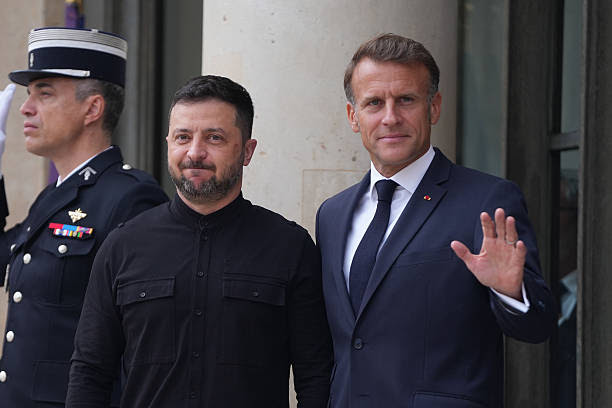
French President Emmanuel Macron and President Volodymyr Zelenskiy at the Elysee Palace in Paris, France ahead of a meeting of the Coalition of the Willing. (Nathan Laine/Bloomberg via Getty Images)
The £1 Billion Arsenal and Economic Warfare: Britain Turns Russian Wealth Into Ukrainian Weapons
UK Defense Secretary John Healey’s arrival in Kyiv on September 4 delivered the most significant financial blow to Russia’s war effort to date. Britain had used frozen Russian assets to fund £1 billion in military aid, representing the largest such transfer since the conflict began. The military support, financed through a £2.26 billion loan provided by the UK government, enabled delivery of hundreds of thousands of rounds of artillery ammunition, hundreds of air defense missiles, spare parts, and new support contracts for equipment maintenance.
British defense officials revealed they had delivered 4.7 million rounds of small arms ammunition during the previous 50 days, along with 60,000 artillery shells, rockets and missiles, more than 2,500 drones and 30 vehicles. According to The Independent, the UK has frozen over £25 billion of Russian assets since the full-scale war began, creating a substantial reservoir for future military support.
Dmitry Medvedev, deputy chairman of Russia’s Security Council, responded with characteristic vitriol, threatening to seize British assets in Russia and Ukraine. “British thieves transferred Russian money to neo-Nazis,” Medvedev wrote on Telegram, calling UK Foreign Minister David Lammy “the English idiot” and suggesting Russia would return seized valuables “in kind” through territorial conquest.
As Britain weaponized Russian wealth, Vladimir Putin faced uncomfortable economic realities at the Eastern Economic Forum in Vladivostok, acknowledging that Russia was experiencing gas shortages in the Far East where supplying new enterprises had become challenging. Putin’s admission represented a rare acknowledgment of resource constraints in a country possessing 63.4 trillion cubic meters of gas reserves.
German Gref, head of Sberbank, declared that Russia’s economy had entered “technical stagnation” from April-June 2025. Economy Minister Maxim Reshetnikov reported GDP growth had slowed to 0.4% in July from 1% in June, with “many engineering factories now underutilized” and some moving to four-day workweeks. The International Monetary Fund had already slashed Russia’s 2025 growth forecast to 0.9% from 4.3% in 2024—the steepest downgrade among major economies.
The Coalition Finalizes Security Guarantees Amid European Divisions
The Paris summit of the “Coalition of the Willing” delivered concrete commitments as 26 countries pledged to provide troops or other support for Ukraine’s security guarantees. President Zelensky’s “long and very detailed conversation with President Trump” preceded the summit, focusing on “how to push the situation toward real peace” through economic pressure and discussing “maximum protection for Ukraine’s skies.”
However, significant cracks appeared in European unity as major NATO allies clarified their positions. Italy, Poland, and Romania announced they would not send troops to Ukraine but would support security in other ways. Italian Prime Minister Giorgia Meloni committed to monitoring and training initiatives outside Ukraine, while Romanian President Nicusor Dan offered support for peacekeeping missions. Polish Prime Minister Donald Tusk specified that Warsaw would provide logistical support rather than combat forces.
French President Emmanuel Macron emphasized that Germany, Italy, and Poland were “definitely among Ukraine’s security guarantors,” though details remained deliberately vague. The framework remained dependent on U.S. participation, which Trump’s administration approached with characteristic unpredictability as the president admitted that ending the Ukraine war had proven more challenging than anticipated.
Trump moved to rename the Department of Defense to the Department of War, citing historical precedent: “We won World War 1, World War 2 – it was called the Department of War.” The symbolic change would restore the name used until 1947, with Defense Secretary Pete Hegseth’s title changing to Secretary of War.
Targeting Humanitarian Workers and Ukrainian Military Innovation
The day’s most tragic development occurred in Chernihiv Oblast, where a Russian missile struck a Danish humanitarian demining site, killing two Ukrainian colleagues and injuring eight others. The Danish Refugee Council confirmed its teams were conducting “purely civilian humanitarian activities—working to clear landmines and explosive remnants of war” when the attack occurred.
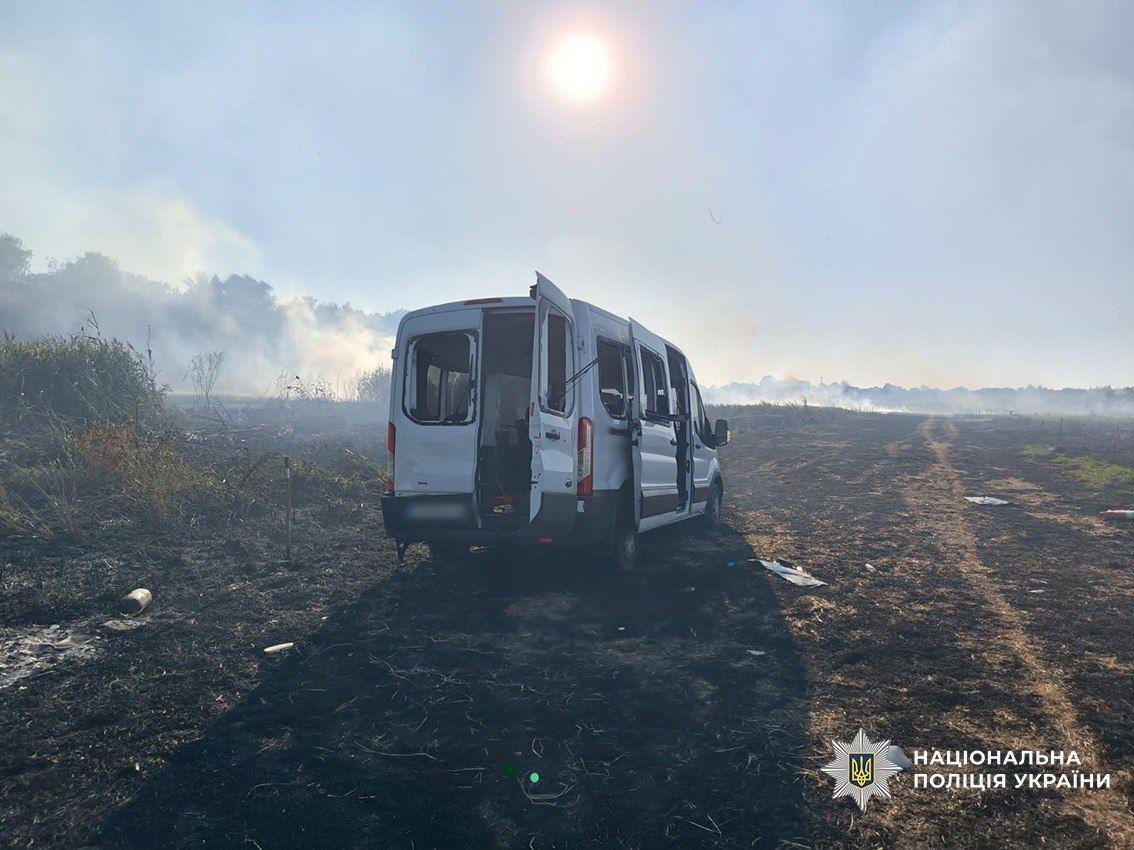
The aftermath of the deadly Russian missile strike on a Danish humanitarian demining group in Chernihiv Oblast, Ukraine. (National Police of Ukraine)
Governor Viacheslav Chaus captured the cruel irony: “First, Russians mined Chernihiv Oblast with explosives and mines. Now, they are killing people, civilians, who are risking their lives to clean up our land from the consequences of the Russian invasion.” The attack highlighted Ukraine’s massive landmine challenge, with 139,000 square kilometers—23% of the country’s territory—contaminated with mines and unexploded ordnance.
Meanwhile, Ukrainian defense company Fire Point announced development of two new ballistic missiles alongside air defense systems. The FP-7 medium-range missile claimed a 200-kilometer range, while the more ambitious FP-9 reportedly could hit targets 855 kilometers deep in Russian territory. Unlike jet engine-powered cruise missiles, ballistic missiles are rocket-powered and launched high into the atmosphere, making them more difficult to intercept while reaching speeds exceeding 3,200 kilometers per hour.
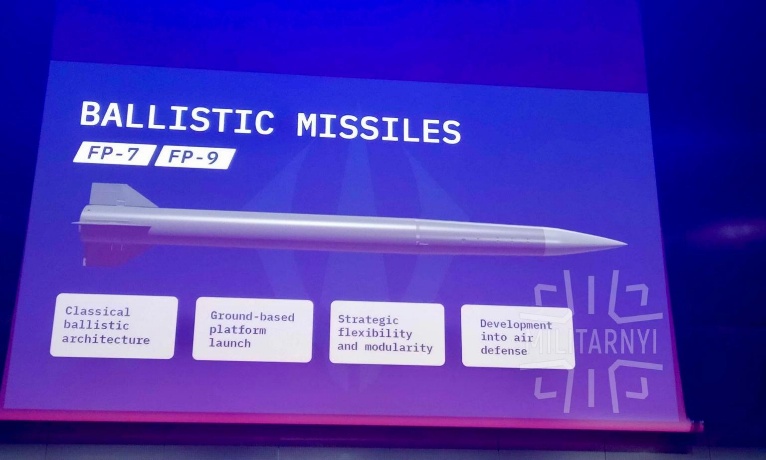
Ukrainian defense company Fire Point announced it has developed new FP-7 and FP-9 ballistic missiles in Poland. (militarnyi.com)
The development reflected Ukraine’s prioritization of long-range capabilities to disrupt Russian supply lines and strike command centers deep in Russian territory. President Zelensky emphasized that Ukraine does not coordinate use of domestically produced long-range weapons with the United States, maintaining strategic autonomy in targeting decisions.
Deteriorating Alliances and Continuing Provocations
The Trump administration prepared to phase out funding for U.S. security assistance programs supporting European countries bordering Russia. Pentagon officials informed European diplomats that the United States would no longer fund programs training and equipping militaries in eastern European countries, particularly affecting the Baltic states of Estonia, Latvia, and Lithuania.
A Rzeczpospolita survey revealed that 52.7% of Poles now opposed their country supporting Ukraine’s NATO membership bid, compared to 33.5% in favor. The shift from August 2023, when 47.7% opposed immediate Ukrainian NATO membership, reflected Poland’s increasingly strained relations with Kyiv over agriculture, refugees, and funding disputes.
North Korean state media reported Kim Jong Un’s declaration that his country “fully supports” the Russian army, describing military assistance as a “fraternal duty.” According to South Korea’s intelligence, North Korea planned to send an additional 6,000 troops as part of a third wave of deployment, while the National Intelligence Service estimated that 2,000 North Korean soldiers had been killed in the conflict.
Polish Armed Forces confirmed that two drones entered Polish airspace overnight on September 3 during Russia’s large-scale attack on Ukraine, continuing a pattern of provocations as Moscow tested NATO defenses. The drones left Polish territory without causing damage while Dutch F-35 jets assisted in patrolling Polish airspace.
International Incidents and EU Leadership
Ukraine’s Foreign Ministry confirmed that a Ukrainian citizen born in 1971 was among 16 people killed in a funicular derailment in Lisbon, Portugal, on September 3. President Zelensky expressed condolences while Portugal declared a day of mourning.
EU foreign policy chief Kaja Kallas declared that “a strong Ukrainian military is the main security guarantee for Europe” as Russia showed no signs of ending its war. “It is clear that Russia shows no real wish to end this war,” Kallas stated, warning about the Beijing military parade attended by Putin, Kim Jong Un, and Xi Jinping as “a direct challenge to the international system built on rules.”
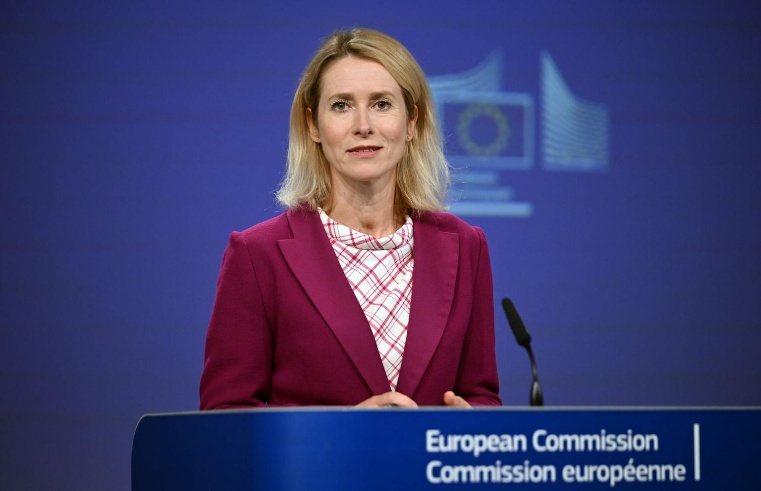
EU foreign policy chief Kaja Kallas holds a press conference in Brussels, Belgium. (Dursun Aydemir/Anadolu via Getty Images)
Looking Forward: Financial Warfare and Diplomatic Uncertainty
September 4 crystallized the evolving financial and diplomatic dimensions of the Ukraine conflict. Britain’s use of frozen Russian assets established a precedent that could unlock billions more in support while demonstrating how economic warfare could directly counter military aggression. Russia’s economic stagnation and resource shortages suggested sustained pressure was affecting Moscow’s war-making capacity, though Putin’s regime showed no signs of strategic retreat.
European security guarantee discussions advanced despite clear divisions over troop deployment commitments, with the framework remaining dependent on unpredictable U.S. participation. The coming days would test whether financial pressure could compound military and diplomatic isolation to force Russian recalculation.