
As Putin Promises Negotiations, His Ballistic Missiles Kill 23 in Ukraine’s Capital While European Diplomatic Buildings Burn and Oil Refineries Blaze Across Russia
Summary of the Day – August 28, 2025
In one of the deadliest attacks on Kyiv since the war began, Russia launched 629 drones and missiles overnight, killing at least 23 civilians including four children, even as the Kremlin claimed it “remains interested” in peace negotiations. The massive strike, which damaged the EU delegation headquarters and the British Council building, came just two weeks after President Donald Trump met Vladimir Putin in Alaska. Meanwhile, Ukrainian forces struck back hard, hitting two major Russian oil refineries, damaging a Kalibr missile carrier in the Azov Sea, and attacking railway infrastructure in Tver, as Moscow extended its gasoline export ban through October to cope with mounting fuel shortages. The attack exposed the hollow nature of current peace efforts, with European leaders accusing Putin of “mocking” diplomacy while Trump’s team prepares for talks in New York this week.
Moscow’s Answer to Peace: 23 Dead in Kyiv’s Rubble
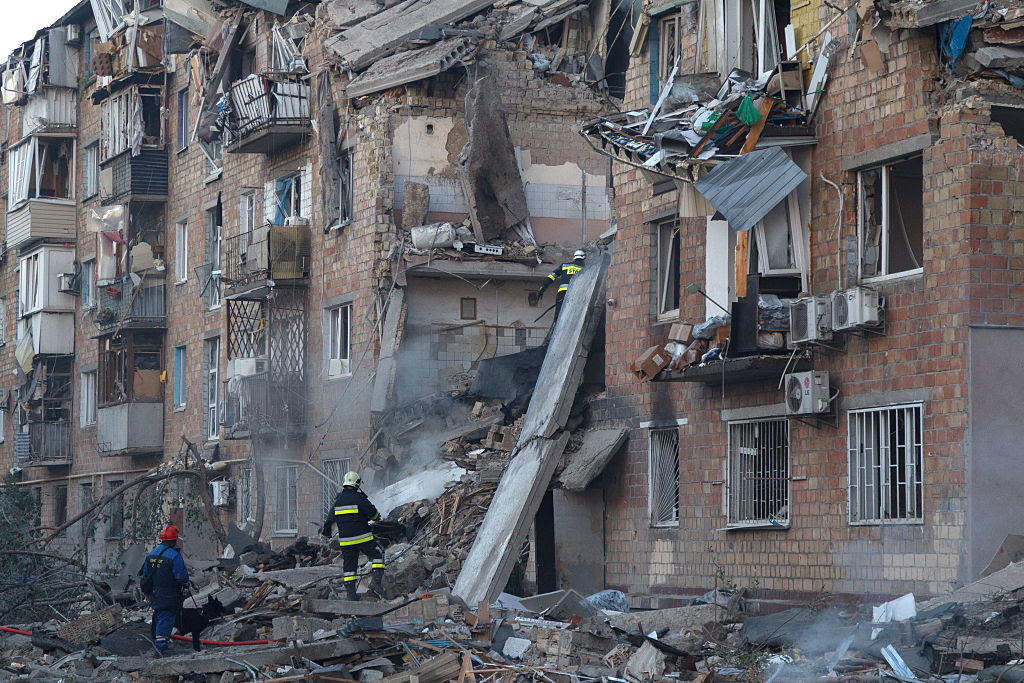
Twenty-two-year-old Andrii Lyutiy knew the missile was coming for his building. Living near the Kyiv Radio Plant in the Darnytskyi district, he understood his five-story apartment complex was a likely target. When air raid sirens wailed at 3 a.m., he convinced his mother to head to the basement—a decision that saved their lives.
The first Russian missile struck the fifth-floor moments after they reached shelter. Then came the second missile, leaving Lyutiy concussed and bleeding. He escaped barefoot with his mother as his home collapsed behind him.
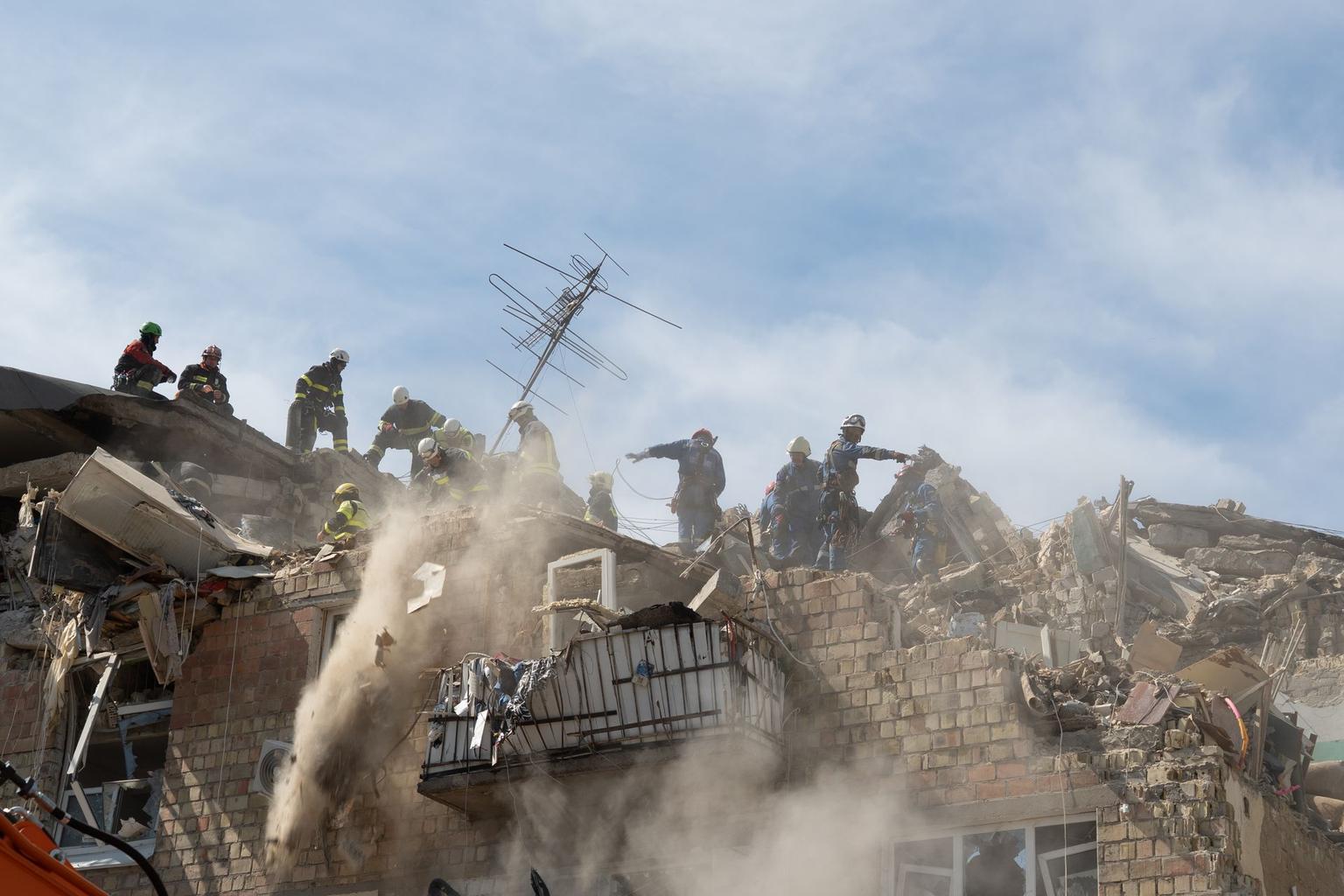
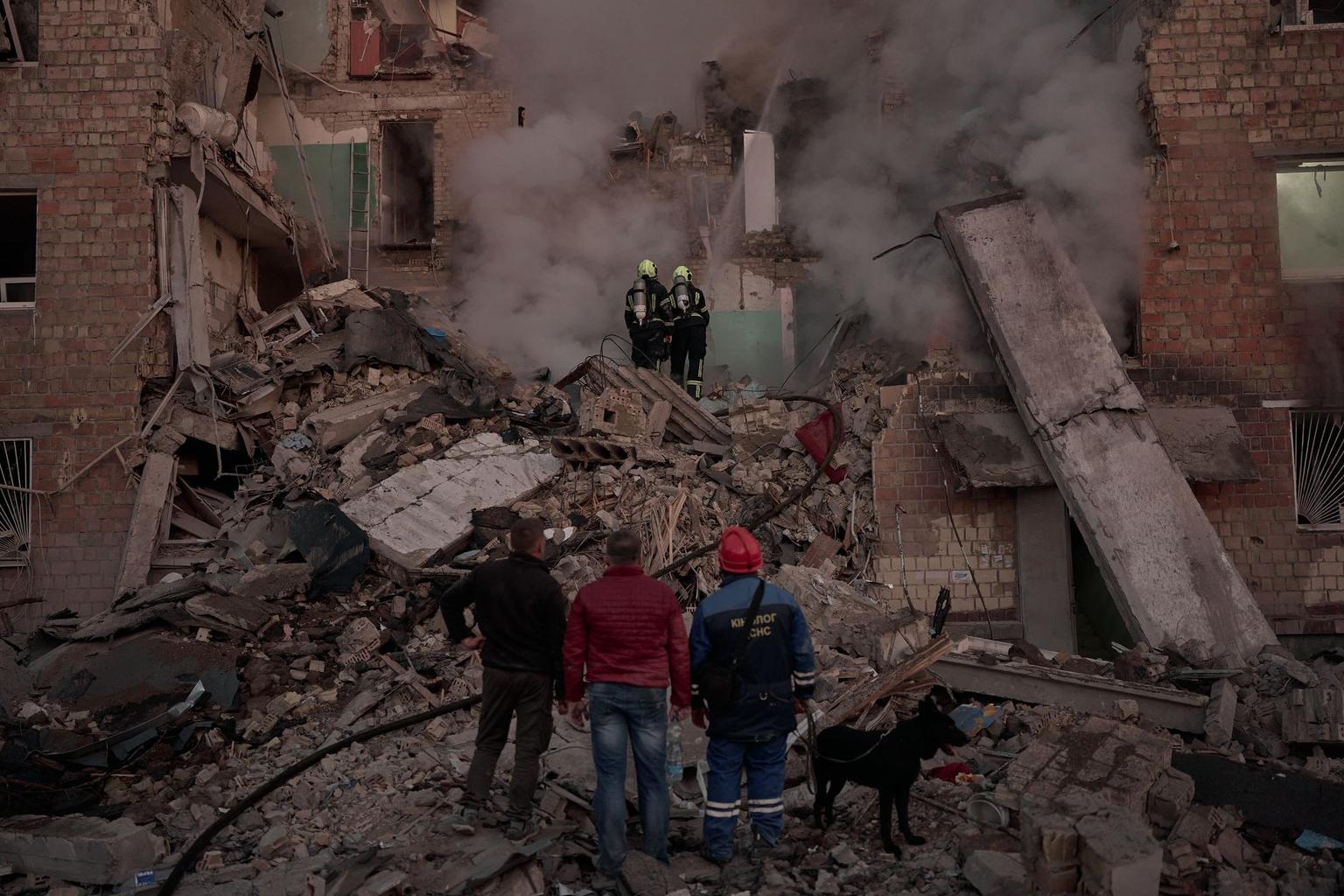
Russia’s overnight assault involved an unprecedented 598 drones and 31 missiles, including hypersonic Kinzhals and North Korean-supplied KN-23 ballistic missiles. Ukrainian air defenses intercepted 563 drones and 26 missiles, but the strikes that got through devastated multiple districts. Among the 23 dead were four children aged 2, 14, and 17. Sixty-three people were injured, with 30 requiring hospitalizations.
Poland’s military scrambled Polish and NATO aircraft “to ensure the safety of Polish airspace” in response to the massive attack.
Hours after the massacre, Kremlin spokesperson Dmitry Peskov claimed, “the Russian Armed Forces are successfully striking Ukraine’s military infrastructure, but Russia remains interested in continuing negotiations.”
Diplomatic Buildings Under Fire: Europe Erupts in Fury
Two Russian missiles struck within 50 meters of the EU delegation headquarters within 15 seconds, blowing out windows and partially collapsing ceilings. The British Council building, Radio Free Europe/Radio Liberty, and Ukrainska Pravda offices suffered similar damage, though no diplomatic staff or journalists were killed.
European Commission President Ursula von der Leyen condemned the strikes as proof “the Kremlin will stop at nothing,” immediately summoning Russia’s envoy and promising to accelerate the 19th sanctions package. Polish Foreign Minister Radosław Sikorski declared: “Putin mocks [European] and [US] peace efforts.”
In a notably weak response, Slovakia’s Foreign Ministry condemned “attacks on civilians — whether in Ukraine, Gaza, or elsewhere,” but failed to mention Russia by name.
The timing was particularly provocative—the strikes came as Presidential Office Chief Andriy Yermak and Defense Minister Rustem Umerov prepared to travel to New York for security guarantee discussions with Trump’s team.
Washington’s Split Response: Congress Condemns, White House Shrugs
The missile strikes triggered rare bipartisan fury on Capitol Hill. Senator Richard Blumenthal said he was “embarrassed & ashamed” that “Putin mocks & manipulates” the President. Senator Lindsey Graham demanded “bone-crushing” sanctions on countries buying Russian oil, directly addressing India and China: “How do you feel right now that your purchases have resulted in innocent civilians, including children, being killed?”
Yet the White House response remained tepid. Press Secretary Karoline Leavitt said Trump was “not happy” but also “not surprised”—a reaction that infuriated European allies. U.S. Special Envoy Keith Kellogg called the attacks “egregious” but offered no concrete response.
Despite the diplomatic turmoil, the State Department approved an $825 million military sale to Ukraine for 3,350 Extended Range Attack Munition (ERAM) missiles with 400-kilometer range, funded by Denmark, Norway, and the Netherlands.
Ukraine’s Multi-Front Retaliation: Oil Refineries, Railways, and Warships
Ukrainian forces struck the Kuibyshev refinery in Samara Oblast—800 kilometers from the border—and the Afipsky refinery in Krasnodar Krai. The Kuibyshev facility, producing 7 million metric tons annually, erupted in flames. The Afipsky refinery, crucial for military fuel supplies with 6.25-million-ton capacity, also burned through the night.
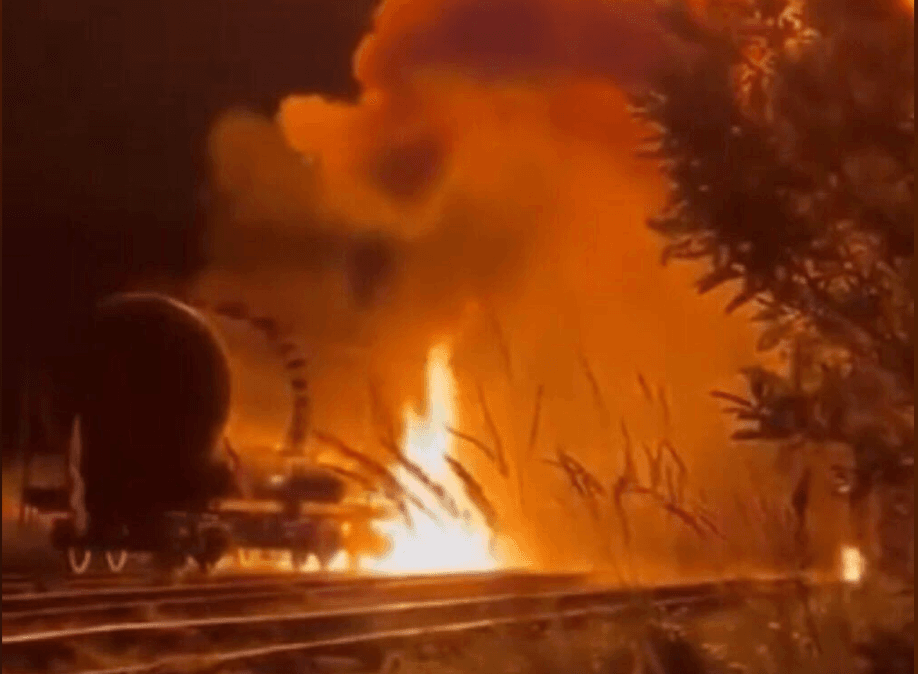
Ukraine also damaged Russian railway infrastructure and fuel tanks at the Tver railway junction, 800 kilometers from the Ukrainian border. Military intelligence sources reported explosives were planted under fuel railway tanks, causing a massive explosion around 5 a.m. that engulfed the entire railway station in flames.
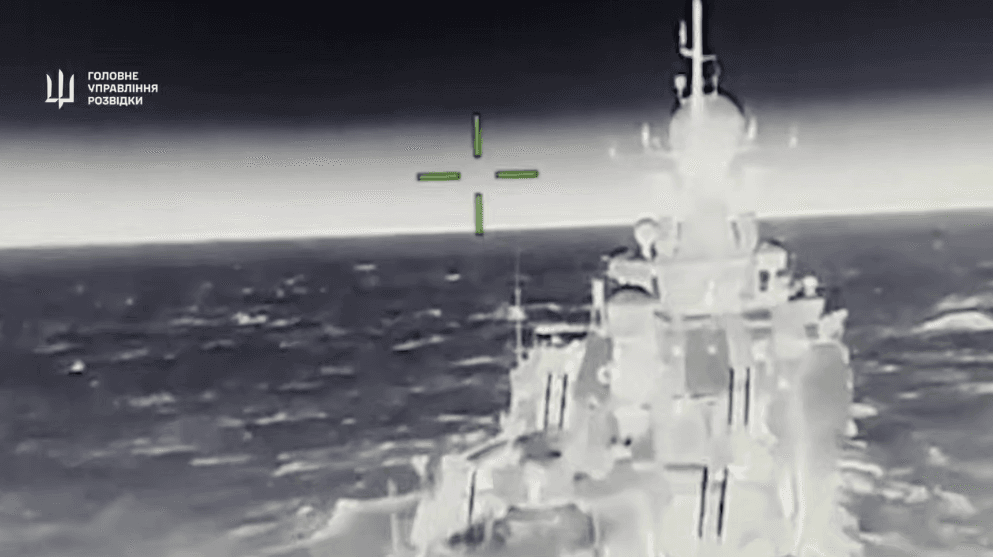
Ukrainian military intelligence damaged a Russian Buyan-M missile ship carrying Kalibr cruise missiles in the Azov Sea, with HUR’s “Prymary” unit destroying the ship’s radar before special forces hit the hull. In retaliation, Russia struck the Ukrainian Navy ship Simferopol, killing one sailor and leaving several missing.
The strikes forced Moscow to extend its gasoline export ban through October—until September 30 for producers and October 31 for non-producers—as Russia struggles with domestic fuel shortages that are driving inflation and macroeconomic instability.
The Battlefield Grinds Forward: War Crimes and Tactical Advances
Russian forces made incremental advances across multiple fronts. Geolocated footage showed Russian advances east of Kozacha Lopan along the E-105 highway in Kharkiv Oblast and to the northeastern outskirts of Novomykhailivka near Lyman. Ukrainian forces counterattacked successfully in southern Novoekonomichne near Pokrovsk and advanced in southern Prymorske in Zaporizhia Oblast.
Russian Major General Apti Alaudinov described tactics that may constitute perfidy—a war crime under the Geneva Convention. He claimed Russian forces used blue electrical tape identification marks knowing Ukrainian forces use the same, designed to make Ukrainians “think that their own units were advancing.”
In Kursk Oblast, aerial reconnaissance captured commanders of the Russian 155th Naval Infantry Brigade beating and executing a subordinate—another potential war crime. The Kharkiv Oblast Prosecutor’s Office reported a Russian FPV drone struck an ambulance in Kupyansk, injuring two emergency responders in violation of international law.
Fighting remains particularly intense around Pokrovsk, where Russian commanders use penal colony recruits as “kamikaze” soldiers carrying explosive backpacks, advancing along single roads with minimal logistics before self-detonating at Ukrainian positions.
Infrastructure Under Attack: Railways and Power Grids Targeted
Russia struck the Intercity+ high-speed train depot in Koziatyn, Vinnytsia Oblast, severely damaging trains and causing massive power outages impacting railways throughout Ukraine. A Russian milblogger called Koziatyn “the most important railway junction in Ukraine” and urged more strikes on transportation nodes.
The attack initially left over 60 towns and villages without power in Vinnytsia Oblast, though restoration efforts reduced this to 15 by midday. Additional strikes hit civilian areas across multiple oblasts: two women injured in Chernihiv, two men wounded in Dnipropetrovsk, five injured in Kharkiv Oblast including elderly victims aged 70 and 78, four injured near Zaporizhzhia, two killed in Kostiantynivka, and four killed with five injured in Kherson Oblast.
Russia’s Digital Hunt: Teenage Saboteurs and Spy Drones
As Ukrainian teenagers prepare for school, they face a sophisticated Russian recruitment network operating through Telegram. Of 700 individuals arrested for espionage and sabotage in the past eighteen months, about a quarter were under 18. Russian operatives use Telegram—used daily by 86% of Ukrainians aged 16-35—to recruit teens with promises of easy money.
The recruitment follows a pattern: friendly contact, small requests like photographing buildings, then escalation to arson and bombings. Some teens become unwitting suicide bombers—in March, Russia remotely detonated explosives two boys had been paid to plant in Ivano-Frankivsk, killing one.
Ukrainian authorities’ education campaigns, including celebrity endorsements from heavyweight boxing champion Oleksandr Usyk, appear effective. Child recruitment cases have decreased “exponentially” while reports of failed recruitment attempts surged to 74 cases.
Meanwhile, Russian or proxy drones are spying on U.S. and European arms routes in eastern Germany, tracking weapons shipments to Ukraine. Some drones appear Iranian-manufactured and launched from Baltic Sea vessels—marking a new phase in Russia’s hybrid operations against NATO.
Occupied Territories: Water Crisis and Forced Russification
A humanitarian crisis deepens in occupied Donetsk Oblast as residents published a video appeal to Putin describing catastrophic water shortages. Elderly pensioners drag water bottles from tanks to use toilets, while parasites and bacteria grow in water supplies. One Russian milblogger nearly lost his eyesight from a parasitic infection contracted from showering.
DNR Head Denis Pushilin deflected blame, claiming water can only be restored “immediately after the liberation of Slovyansk”—a city 20 kilometers from Russian positions that would require years to capture. His administration installed 1,000 water tanks but cannot address bacterial contamination or hours-long queues.
Russia is also deepening institutional infiltration of schools in occupied Ukraine. The “Conversations about the Important” program will begin testing in occupied kindergartens on September 1, teaching children aged 3-7 “love for the Motherland.” New mandatory subjects for 2026/2027 include “fundamentals of security and protection of the Motherland” and “spiritual and moral culture of Russia.”
The Russian Education Ministry is finalizing a behavioral assessment model to grade children’s perceived behavior, with occupied Luhansk Oblast as a testing ground. Human rights groups warn this will increase surveillance for pro-Ukrainian behavior among schoolchildren.
Russia continues forced passportization, with Kherson Oblast authorities announcing pensioners and disabled individuals will lose social payments if they retain Ukrainian documents past January 1, 2026. The DNR held a passportization ceremony for Ukrainian youth in occupied Volnovakha on August 26.
International Defiance: India and China Defy U.S. Pressure
Despite 50% U.S. tariffs taking effect August 27, India plans to increase Russian oil imports by 10-20% in September—an additional 150,000-300,000 barrels daily. Indian refiners will increase purchases despite Trump’s executive orders imposing cumulative 50% duties on Indian goods.
China took its first delivery of liquefied natural gas from the sanctioned Arctic LNG 2 plant, with the tanker Arctic Mulan docking at Beihai terminal. The delivery tests Washington’s reaction as gas imports to China have declined due to increased domestic production.
These moves coincide with Putin’s planned visit to Beijing for a September 3 military parade marking Japan’s WWII surrender. Putin and Kim Jong Un will attend alongside Slovak Prime Minister Robert Fico—the only EU leader present. Serbian President Aleksandar Vucic is also expected. Kremlin spokesperson Dmitry Peskov called the visit “absolutely unprecedented.”
Europe’s Defense and Legal Battles
NATO Secretary General Mark Rutte announced Europe can now produce six times more artillery shells than two years ago—reaching 2 million rounds annually. Speaking at Rheinmetall’s Unterluess plant, the largest artillery facility in Europe planning 350,000 shells yearly, Rutte emphasized needs for tanks, air defense systems, and missiles.
The EU’s ReArm Europe program aims to raise 650 billion euros in additional defense spending with 150 billion euros in defense loans. NATO allies agreed to increase spending targets from 2% to 5% of GDP, with military aid to Ukraine counting toward the goal.
Hungary formally sued the EU over using interest from frozen Russian assets to aid Ukraine, challenging the allocation of 3-5 billion euros annually through the European Peace Facility. The lawsuit could take years but highlights persistent European divisions.
Belarus continues military integration with Russia, testing automated command and control software and ensuring communication systems interoperability ahead of the Zapad-2025 joint military exercise.
Zelensky’s Diplomatic Push: Security Guarantees “On Paper” Within a Week
President Zelensky spoke “extensively” with Turkish President Erdogan about security guarantees hours after the Kyiv attacks. “National security advisors are now working on every specific component, and the entire framework will be set out on paper next week,” Zelensky said.
“Ukraine is ready to engage in the format of leaders, as this is the only effective format. Unfortunately, it is Russia that avoids this and continues its war,” he added, noting Putin’s refusal to meet because “he doesn’t like” Zelensky, according to Trump.
Zelensky declared the strikes were “against Ukraine… against Europe… and also against President Trump,” urging additional sanctions and warning “there are no deadlines that Putin would not break.”
Looking Ahead: Peace Theater While Cities Burn
As Yermak and Umerov head to New York, analysts agree the peace talks are largely theatrical. “Putin will not agree to any meaningful compromises with Ukraine,” said Ryhor Nizhnikau of the Finnish Institute of International Affairs. “Putin offers Kyiv two options: agree to his political demands and turn into another Belarus or be militarily defeated and annexed piece by piece.”
The August 28 attacks crystallized the fundamental contradiction: Putin talks peace while killing children, Trump delays pressure while claiming progress, Europe demands guarantees Russia will never accept, and Ukraine cannot compromise without protection no one can provide. Until this deadly script changes—through military pressure, economic devastation, or political upheaval—the choreography continues, measured in missiles and mourning, diplomatic meetings and children’s funerals.