
In Beijing, oil executives scrambled to cancel Russian contracts. In Moscow, Putin declared America an adversary. In Kramatorsk, two journalists died for telling the truth. The 1,338th day of war—the day everything changed.
The Day’s Reckoning
The phone calls started before dawn in Beijing. Oil traders at PetroChina stared at their screens, watching American sanctions flash across terminals in real time. Rosneft. Lukoil. Russia’s two largest oil companies—suddenly toxic. In Mumbai, executives at Indian refineries ran the same calculations: How much Russian crude was already in transit? Which contracts could be canceled? How fast could they pivot to other suppliers?
In Brussels, European diplomats initialed the nineteenth sanctions package—another turn of the screw on Russia’s economy. The document was thick with targets: shadow fleet tankers, Chinese refineries processing sanctioned crude, UAE entities laundering Russian oil money, financial institutions keeping Putin’s war machine liquid.
In Moscow, Vladimir Putin stood before cameras and said what his officials had spent two years avoiding: America is an adversary. Not a partner. Not even a rival. An adversary. The word hung in the air like a verdict.
But while ministers postured and traders scrambled, the war kept its own brutal rhythm. On a road outside Kramatorsk, a Russian Lancet drone locked onto a vehicle carrying Ukrainian journalists. Two died instantly. A third survived—barely. In the skies over Lithuania, Russian fighter jets crossed the border, turned back, crossed again. In London, British counter-terrorism police kicked down doors and arrested three suspected Russian spies. And across a thousand kilometers of front line, Russian mechanized columns pushed forward through autumn fog, battalion after battalion fed into Ukrainian kill zones, trading lives for meters of scorched earth.
This was day 1,338 of a war that had evolved beyond recognition. No longer just armies clashing over territory, it had metastasized into something more complex—fought simultaneously in commodity markets and trenches, in espionage networks and diplomatic chambers, with economic sanctions wielded as precisely as artillery fire. The question wasn’t which weapon mattered more. It was whether they would finally, collectively, force Moscow to calculate that continuing cost more than stopping.
On this single autumn day, that calculation shifted. Not dramatically. Not decisively. But unmistakably against the Kremlin.
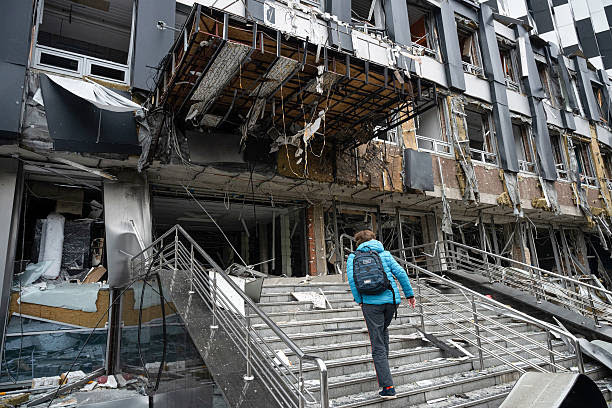
Morning in Kyiv’s Podilsky district: A woman climbs stairs in a business center that Russian drones struck hours earlier. The night’s attack left high-rises gutted, a kindergarten damaged, and office workers returning to shattered glass and twisted metal. This is how Ukrainians go to work on day 1,338. (Danylo Antoniuk/Ukrinform/NurPhoto via Getty Images)
The Moment Beijing Blinked
The Reuters alert hit trading floors at 9:47 a.m. Hong Kong time. Within minutes, crude oil futures spiked. The headline was stark: China’s state oil giants—PetroChina, SinoPec, CNOOC, Zhenhua Oil—had suspended purchases of seaborne Russian crude. “At least in the short term,” the carefully worded statement read.
The timing told the real story. Twenty-four hours earlier, American sanctions had landed on Rosneft and Lukoil—Russia’s two largest oil companies, the twin pillars holding up Putin’s war economy. Now Beijing’s biggest players were backing away from the wreckage.
For three years, Chinese refiners had perfected an elegant dance. Buy Russian oil through intermediaries. Maintain plausible deniability. Profit from discounted crude while Moscow got the cash it needed to keep the war grinding forward. Everyone won. Everyone stayed clean.
Until the Americans changed the rules.
Secondary sanctions. The two words that made Beijing’s risk managers sweat. Do business with sanctioned Russian companies, and suddenly you’re sanctioned too. Access to dollar markets—gone. American financial system—closed. The sophisticated shell games and paper trails that had worked for three years? Suddenly worth nothing against Treasury Department lawyers with subpoena power.
Independent Chinese refiners hit pause. Not a dramatic halt. Just a pause. Time to assess. Time to recalculate whether discounted Russian crude was worth potentially losing access to Western markets.
The tremor spread south. In Mumbai, executives at Indian refineries ran the same math. Bloomberg and Reuters both carried the story: India would “significantly cut” Russian oil imports. An industry source used a blunter word: “massive.” Not immediate. Not total. Indian refiners would still buy some Russian crude through intermediaries. But the volume was dropping—fast.
The system was cracking. For thirty-three months, Russia had survived Western sanctions by pivoting east. Europe stopped buying? Fine. Redirect the tankers to Asia. China and India, hungry for energy and willing to ignore Western pressure, became Putin’s economic lifeline. Russian oil revenues kept flowing. The war machine kept running.
Now that lifeline was fraying.
In Moscow, finance ministry analysts understood what the oil traders in Beijing and Mumbai already knew: Russia’s war consumed roughly one thousand soldiers—killed or wounded—every single day. Keeping that meat grinder operational required money. Lots of it. And that money came from one place: oil revenues.
The two countries that had kept Russia’s economy breathing were reconsidering their exposure. Not abandoning Moscow entirely. Not yet. But stepping back. Hedging. Calculating whether Putin’s war was becoming too expensive—not in lives, but in access to Western markets.
For the Kremlin, this wasn’t just an economic problem. It was existential.
Brussels Tightens the Noose
While traders in Beijing calculated their exposure to Russian oil, diplomats in Brussels were putting signatures on Document 2025/19—the European Union’s nineteenth sanctions package against Russia. Nineteen rounds. Nearly three years of economic warfare, each package more sophisticated than the last.
This one had teeth.
The centerpiece would bite deepest: a total ban on Russian liquefied natural gas imports into the EU. Not immediately—Brussels had learned that lesson the hard way in 2022. Long-term contracts would die in January 2027. Short-term deals had six months—until April 2026. The staggered timeline was pure pragmatism. Punish Moscow without plunging Budapest or Vienna into energy crises. Strangle Russia slowly enough that Europe wouldn’t choke on its own medicine.
But the gas ban was just the headline. The real work was in the details.
European analysts had spent months mapping Russia’s shadow fleet—the ghost armada of aging tankers with murky ownership chains that moved sanctioned oil across global waters. Panamanian flags. Liberian registries. Layers of shell companies thick enough to obscure any connection to Moscow. The package targeted dozens of these vessels by name, making them untouchable in European ports and uninsurable by Western companies.
A UAE entity that served as a financial clearinghouse for the shadow fleet found itself on the list. So did four Chinese oil refineries that had been processing sanctioned Russian crude, turning Putin’s oil into profits despite three years of Western restrictions.
The sanctions committee widened its scope beyond energy. Russian financial institutions that kept the war economy liquid—sanctioned. UAE and Chinese operators supplying military equipment and dual-use goods to Russian factories—sanctioned. Russian diplomats across Europe would face new travel restrictions, new authorization requirements, new bureaucratic friction at every border crossing.
Then came the names that carried moral weight.
Eleven individuals. Russian officials and administrators involved in the systematic deportation, abduction, and forced militarization of Ukrainian children. Thousands of kids ripped from occupied territories, stripped of their Ukrainian identity, fed Russian propaganda, and prepared for conscription into the army that had destroyed their homes. The International Criminal Court had called it a war crime. Legal scholars debated whether it constituted genocide. The EU didn’t wait for the verdict—it added their names to the sanctions list.
Package nineteen wasn’t just economic pressure. It was a statement: Europe had chosen sides, and the cost of Putin’s war would keep climbing.
In Moscow, officials dismissed it as more Western posturing. But in the finance ministry, analysts were tallying the cumulative weight of nineteen packages, each one closing another loophole, blocking another workaround, making it harder to move money, sell oil, or sustain the industrial base that kept the war machine fed.
The noose was tightening. Slowly. Methodically. But unmistakably.
The Word Putin Wouldn’t Say—Until Now
The cameras were rolling in Moscow when Vladimir Putin finally said it. For two years, through every provocation and sanction, Russian officials had performed linguistic gymnastics to avoid this single word. Partner—sometimes. Rival—occasionally. Competitor—when pressed.
But never adversary.
“No self-respecting country does anything under pressure,” Putin told the assembled journalists, his voice tight with controlled anger. The new American sanctions were “an unfriendly act toward Russia.” They were damaging bilateral relations. Disrupting global energy markets. Unacceptable coercion that Russia would not tolerate.
Then came the admission, buried in defiance: “There is nothing good or pleasant” about the sanctions.
It was the closest Putin would come to acknowledging what his finance ministers already knew—these sanctions would hurt. The posturing about Russian resilience, the claims of economic immunity, the dismissive rhetoric about Western pressure—all of it rang hollow against that one unguarded phrase. Nothing good. Nothing pleasant.
But Putin maintained deniability. He danced around the word, implied the sentiment, suggested the reality without quite declaring it.
Dmitry Medvedev had no such restraint.
Within hours, Putin’s Security Council Deputy Chairperson was on Telegram—both his English and Russian accounts—saying what the boss wouldn’t. “The United States is Russia’s adversary.” Not could be. Not might become. Is. Present tense. Declarative. Final.
America was “fully embracing its warpath against Russia,” Medvedev wrote. Recent U.S. policy decisions constituted “an act of war.” The conflict in Ukraine? That was Trump’s war now. Trump owned it.
The Kremlin has long used Medvedev as its attack dog—the man who says the quiet part loud while Putin maintains presidential composure. Float the extreme position through Medvedev. Gauge the reaction. If it lands well, Putin can adopt it. If it creates blowback, Medvedev was just being hyperbolic again. Plausible deniability perfected into an art form.
This time, Medvedev wasn’t going rogue. He was translating. What Putin implied, Medvedev declared. The message was unmistakable: the brief honeymoon between Trump and Putin—the expectation that Trump’s return to the White House would bring sanctions relief and recognition of Russian interests—was over. Dead. Buried under oil sanctions and broken promises.
Russian officials scrambled to reinforce the narrative. State Duma Deputy Svetlana Zhurova dismissed the sanctions as ineffective, claiming they wouldn’t alter Russian policy or address what Moscow needed to end the war. Alexei Chepa, First Deputy Head of the Duma’s International Affairs Committee, insisted that Trump’s “blunt and sweeping” statements and the canceled Budapest summit didn’t mean future meetings were off the table. Preparations would continue, he insisted—though for what meeting, with what agenda, he didn’t specify.
In Washington, reporters caught Trump in a hallway and asked about Putin’s claim that sanctions wouldn’t meaningfully impact Russia.
Trump’s response was pure Trump: “I’m glad he feels that way. I’ll let you know about it six months from now. Let’s see how it all works out.”
No commitment. No clarification. Just ambiguity wrapped in a timeline—six months to see who was right. Whether Putin’s defiance was genuine strength or desperate bluffing. Whether the economic vise would tighten enough to force Moscow’s hand.
The clock was running. Putin had played his card—declaring America an adversary. Now everyone would wait to see if the word mattered more than the sanctions.
The Flag That Wasn’t There
The video appeared on Vladimir Saldo’s Telegram channel at 11:23 a.m. A Russian soldier, silhouetted against gray sky, raising the tricolor on Karantynnyi Island in southwestern Kherson. The occupation head’s caption told a dramatic story: reconnaissance and airborne units had crossed the Dnipro River under fire, seized a bridgehead, repelled Ukrainian counterattacks, mined the approaches, and were now organizing supply lines to the island.
Within minutes, Russian milbloggers were amplifying the narrative. The 31st VDV Brigade’s drone operators had achieved air superiority, they claimed. Artillery elements of the 18th Combined Arms Army were pounding Ukrainian positions. The bridgehead was real. The offensive was beginning. Kherson would be Russian again.
It was compelling footage—professionally shot, carefully geolocated, packaged for maximum impact.
It was also nonsense.
Six hours later, a Ukrainian brigade published their own geolocated video. Same island. Same day. Ukrainian soldiers walking freely across terrain the Russians supposedly controlled, waving at the drone camera. No Russian positions. No fortifications. No minefields. Karantynnyi Island was quiet. So were the nearby areas of Antonivka and Sadove. Russian forces weren’t operating on the west bank of the Dnipro at all.
The discrepancy wasn’t a mistake. It was the point.
Welcome to cognitive warfare, where the goal isn’t to capture territory but to capture minds. Moscow wasn’t trying to convince military analysts—anyone with access to satellite imagery could verify the Ukrainian brigade’s claims. The target audience was broader and more valuable: Western politicians already weary of funding Ukraine’s defense, European publics questioning another winter of high energy prices, Ukrainian civilians exhausted by thirty-three months of war.
The message was simple: Russian victory is inevitable. Look—they’re crossing the Dnipro, retaking Kherson, advancing despite everything you’ve thrown at them. Ukraine should surrender territory now to avoid worse losses later. Allies should cut their losses and stop supporting a losing cause.
A bridgehead that didn’t exist became proof of momentum that wasn’t real, designed to manufacture a surrender that hadn’t been earned on any battlefield.
The Kremlin had learned this lesson well. When you can’t win the war, win the narrative. When you can’t take the territory, take the headlines. When you can’t break the Ukrainian army, try to break Western resolve.
One flag raised for cameras. One dramatic claim. One carefully crafted lie spreading across Telegram channels and social media, designed to do what artillery couldn’t: convince Ukraine’s allies that supporting the fight was pointless.
The flag wasn’t on Karantynnyi Island. But it was flying across the information battlefield, trying to win a surrender Moscow couldn’t force at gunpoint.
When the Drones Can’t See
The clouds hung low across Donetsk Oblast, thick and gray, dragging rain across the killing fields. Russian battalion commanders watched the weather reports and made their calls: send in the armor.
For months, Ukrainian drones had turned Russian mechanized assaults into suicide missions. Tanks and infantry fighting vehicles barely made it a kilometer before FPV drones dropped from the sky, guided by operators watching thermal feeds from five kilometers away. Clear weather meant death. The math was simple and brutal.
But fog changed the equation.
Near Siversk, a Russian reinforced platoon rolled out from Serebryanka and Verkhnokamyanske under the gray ceiling—tanks leading, infantry fighting vehicles behind them, buggies and motorcycles fanning wide to exploit any breakthrough. Ukrainian drone operators from their battalion struggled with degraded video feeds, thermal signatures blurred by moisture in the air, targeting solutions uncertain.
They still killed most of them.
One tank—destroyed. Three infantry fighting vehicles—burning. Three buggies—shredded. Roughly twenty motorcycles—scattered wreckage. And bodies. Lots of bodies. The Ukrainian after-action report estimated “majority of the assault force” killed. Fog bought the Russians extra time to advance. Maybe an extra kilometer. It didn’t buy them survival.
East at Chasiv Yar, the pattern repeated. A Russian platoon-sized mechanized assault pushed forward under clouds while rain hammered the positions. Ukrainian 11th Army Corps forces waited, calculated ranges through degraded optics, and opened fire. Two MT-LB armored fighting vehicles—destroyed. Two all-terrain vehicles—eliminated. Approximately forty Russian soldiers—dead. Weather monitoring confirmed what the corpses proved: cloudy conditions and rain gave attackers concealment, not invincibility.
Near Myrnohrad east of Pokrovsk, another reduced platoon tried the same gambit under cloud cover. Same results. Different grid coordinates.
This wasn’t random. Russian commanders were systematically exploiting weather windows when Ukrainian drones operated at reduced effectiveness. Check the forecast. Wait for fog. Launch the assault. Accept catastrophic losses in exchange for meters of advance. It was calculated, methodical, and horrifically expensive—but it was all Moscow had left. Clear weather meant certain death. Fog meant probable death. They chose probable.
But autumn was extracting its own price from Russian forces.
A Ukrainian brigade operating in the Lyman direction reported an unexpected advantage: the trees were bare. All summer, Russian infantry had used foliage for concealment, moving between positions under canopy that blocked Ukrainian drone surveillance. Now the leaves were gone. Every trench. Every fighting position. Every soldier moving between dugouts—exposed to aerial observation.
What fog temporarily obscured in one sector, bare branches revealed in another. The seasons were fighting Russia as surely as Ukrainian guns.
Russian commanders could time their assaults for cloudy days. They couldn’t make the trees grow leaves again. They couldn’t change that winter was coming, that every mechanized assault chewed through equipment faster than factories could replace it, that even under perfect fog cover, most of their soldiers died for nothing.
The weather gave them opportunities. It didn’t give them victories.
The Night Ryazan Burned
The orange glow was visible for kilometers across Ryazan Oblast, bright enough that residents filmed it from apartment windows 300 kilometers from Ukraine. The Rosneft refinery was burning.
Ukrainian drones had flown through the night—low and slow, navigating Russian air defenses, hunting for the massive industrial complex that processed 17 million tons of crude oil annually. They found it. The Ukrainian General Staff confirmed the strike hours later, almost casually: yes, that was us.
Geolocated footage showed flames consuming the AVT-2 Crude Distillation Unit, the heart of the refining process. Without it, crude oil stayed crude—useless for fueling Russian military operations across central Russia. This wasn’t the first time Ukrainian drones had hit Ryazan. Russian opposition outlet ASTRA counted it as the fifth strike in 2025 alone. The refinery kept operating, kept repairing, kept burning.
Ryazan Oblast Governor Pavel Malkov tried spinning the damage: just “drone debris” causing “property damage” at an “unspecified enterprise.” As if the flames weren’t visible from space. As if everyone didn’t know exactly which enterprise was burning.
While Ryazan burned, Belgorod exploded.
Ukrainian forces hit an ammunition depot near Valuyki. Not just a strike—a catastrophic chain reaction. Secondary explosions rippled through the facility as stored munitions cooked off, the kind of sustained detonation that meant tons of artillery shells, rockets, and missiles that would never reach Ukrainian positions. The Ukrainian General Staff noted the secondary explosions with professional satisfaction: mission accomplished.
But the strike that shook Moscow happened 1,800 kilometers from Ukraine’s border.
Kopeysk, Chelyabinsk Oblast. The Plastmass munitions plant—owned by Technodinamika, a subsidiary of state-owned Rostec. At 8:47 p.m. local time, an explosion tore through the facility. Twelve workers killed. Nineteen injured. A Ukrainian open-source analyst reported the plant was destroyed, not damaged—destroyed.
Chelyabinsk Governor Alexey Teksler blamed “safety violations.” Russian authorities categorically denied Ukrainian drones had reached the Urals. Just an accident. Industrial negligence. Nothing to see here.
Except accidents don’t usually destroy munitions plants owned by Rostec subsidiaries, and Ukrainian drones had already proven they could reach Moscow—twice. Chelyabinsk was farther, but not impossibly far. And if Ukrainian drones hadn’t done it, that meant Russia’s munitions plants were exploding from sheer incompetence while producing weapons for the war. Either explanation was damning.
Russian milbloggers added another data point: an explosive device near the military base of the 247th Airborne Regiment in Stavropol, Krasnodar Krai. Sabotage, they claimed. Someone inside Russia was attacking military installations.
Five strikes. Three confirmed Ukrainian. One probable Ukrainian. One possible sabotage. All in a single night.
This was no longer opportunistic harassment of border regions. This was systematic campaign warfare reaching into Russia’s industrial heartland. Ukrainian long-range strike capabilities had evolved from experimental to operational, from tactical nuisance to strategic threat. Refineries processing fuel for military operations. Ammunition depots supplying the front lines. Munitions plants producing the weapons killing Ukrainians—all of them burning.
Moscow could deny the drones reached Chelyabinsk. But the plant was still destroyed. The workers were still dead. And the message was unmistakable: nowhere in Russia was safe anymore. Not the border regions. Not the heartland. Not even the Urals.
The war Putin had promised would stay in Ukraine was coming home. One burning refinery at a time.
130 Drones in the Dark
They came from six directions.
Kursk. Oryol. Millerovo in Rostov Oblast. Shatalovo in Smolensk Oblast. Primorsko-Akhtarsk in Krasnodar Krai. Cape Chauda in occupied Crimea. Russian launch crews fed coordinates into 130 Shahed-type and Gerbera-type strike drones, programmed loitering patterns, and sent them west into the night.
The armada crossed into Ukrainian airspace in waves, engines buzzing like massive insects, infrared signatures blooming across Ukrainian air defense radar screens. Mobile air defense teams scrambled. The shooting started.
Ukrainian forces downed ninety-two of them—shotgunned from the sky by anti-aircraft fire, intercepted by fighter jets, crashed by electronic warfare jamming. Ninety-two flaming wrecks scattered across fields and forests.
But thirty-eight got through.
Twenty-five drones struck their intended targets across eleven locations. Drone debris from destroyed UAVs—still carrying explosive payloads—crashed into eleven more areas, detonating on impact. It wasn’t a failure of Ukrainian air defenses. Stopping 92 out of 130 was extraordinary. But mathematics are cruel: 38 drones was enough.
In Novhorod-Siverskyi Raion in Chernihiv Oblast, energy infrastructure exploded. In Lozovskyi Raion in Kharkiv Oblast, more substations went dark. Thirty thousand subscribers in Kharkiv Oblast alone lost power—no lights, no heat, no way to charge phones or preserve food in refrigerators.
In Kyiv, residential buildings took hits. Nine civilians injured, dragged from rubble by emergency crews working in darkness. In Sumy, a Russian drone found the city railway station—deliberately targeting civilian infrastructure to disrupt logistics and break morale.
By morning, Ukrenergo—Ukraine’s state electricity transmission operator—reported that twelve oblasts had implemented rolling blackout schedules. Not because Ukraine lacked electricity generation capacity, but because Russia had systematically destroyed the transmission infrastructure connecting power plants to cities.
This was the nightly equation Ukrainians had learned to calculate: charge everything before dark, fill bathtubs with water in case pumps go offline, keep flashlights ready, know where the nearest shelter is, sleep lightly enough to wake when air raid sirens scream.
This wasn’t collateral damage. It was deliberate strategy. Russia couldn’t break Ukrainian military resistance, so it tried to break civilian will. Make winter unbearable. Make survival exhausting. Make every Ukrainian calculate whether defending their country was worth freezing in darkness.
One hundred thirty drones. Thirty-eight hits. Thirty thousand people without power. Twelve oblasts implementing blackouts. Another night in Ukraine’s fourth winter under Russian bombardment.
The drones kept coming. The Ukrainians kept shooting them down. And the lights kept going out, one substation at a time, as Russia tried to extinguish Ukraine’s will to fight by extinguishing the lights that kept ordinary life possible.
The Guns Went Silent (Briefly) So the Lights Could Come On
For one carefully orchestrated window, the shooting stopped along the Dniprovska power line.
Ukrainian repair crews approached the damaged transmission infrastructure connecting the Zaporizhia Nuclear Power Plant to Ukraine’s grid. Russian forces, occupying the plant itself, held fire. Engineers worked quickly—splicing cables, replacing damaged transformers, testing connections. No artillery. No sniper fire. Just technicians doing the math that keeps nuclear reactors from melting down.
International Atomic Energy Agency Director General Rafael Mariano Grossi announced the success: the ZNPP was reconnected to the Ukrainian power grid. After a month running on backup diesel generators—the kind of precarious situation that keeps nuclear engineers awake at night—Europe’s largest nuclear power plant was stable again.
It was an absurdly fragile arrangement. Two countries locked in total war, killing each other across a thousand-kilometer front, but agreeing to brief ceasefires so repair crews could prevent a nuclear disaster neither side wanted. Russian forces occupied the plant. Ukrainian technicians still operated it. Both sides understood that Chernobyl—39 years ago, 110 kilometers north—had proven that nuclear accidents don’t respect borders or political affiliations. Radiation doesn’t care who wins the war.
Grossi noted that the IAEA was already coordinating with both Ukraine and Russia for ongoing repairs to the ZNPP’s Ferosplavna-1 line—another power connection disabled since May. More localized ceasefires. More temporary truces allowing technicians to do work that prevented catastrophe.
It was cooperation in the narrowest possible sense. Not peace. Not even détente. Just mutual recognition that some things were worse than continuing the war—and a nuclear meltdown contaminating half of Europe was one of them.
The repair crews finished their work. The ceasefire ended. The guns resumed their conversation. But the lights at ZNPP stayed on, and the diesel generators that had been running for thirty days finally shut down.
One small victory in a war of attrition: preventing the disaster that nobody wanted, even if they couldn’t stop killing each other everywhere else.
Blood for Meters
The geolocated footage told the same story from a dozen sectors: Russian soldiers advancing. Slowly. Expensively. Dying by the hundreds for gains measured in meters.
Near Kupyansk, Russian infantry pushed north along the Pivdenna Railroad and into western Dvorichna. A Ukrainian brigade spokesperson watched wave after wave hit their positions—mostly penal recruits with minimal training, worse equipment, and orders to attack until something broke. The attacks were nearly constant. The casualties were staggering.
Water was becoming a problem for Russian assault troops. Not tactical water resupply—basic drinking water. Russian soldiers were resorting to “extreme measures” to find it, a phrase Ukrainian defenders used carefully, knowing what it implied. After thirty-three months of war, Russia’s military logistics still couldn’t reliably deliver water to frontline troops. Artillery shells, yes. Body armor, sometimes. Clean water? Figure it out yourself.
Southeast of Kostyantynivka, Russian forces advanced north of Shcherbynivka. Victory, according to the official reports. Except a Russian milblogger—trying to explain the situation to his followers—accidentally admitted uncomfortable truth: Ukrainian forces still maintained positions in western Predtechyne. The settlement Russian commanders had claimed captured in July. Four months ago. Ukrainians were still there, still fighting, still very much not defeated.
The pattern repeated across the front. Russian forces advanced near Siversk during their mechanized assault—the one where Ukrainian drone operators killed most of the attackers. East of Velykomykhailivka, geolocated footage confirmed Russian gains north of Novoselivka. Forward. Always forward. At any cost.
Then came the confession that Russian military leadership didn’t want published.
A milblogger affiliated with Russia’s Northern Grouping of Forces published a devastating assessment of the Synelnykove sector. Russian commanders, he wrote, were systematically exaggerating advances in official reports. If the incremental gains reported since September were accurate, Russian forces would have advanced eleven kilometers. The reality? The frontline had barely moved.
Worse, commanders were making tactical decisions based on these false reports—sending undertrained infantry into attritional assaults against positions they believed were weakened but weren’t. Pulling sick and injured soldiers from hospitals because the reports said victory was close, just one more push needed. Feeding men into a meat grinder based on lies told up the chain of command.
Near Vovchansk, a Ukrainian brigade spokesperson provided the accounting: at least 15,000 Russian soldiers killed in that single sector since May. Five months. Fifteen thousand dead. For a city that was now “nearly completely destroyed”—rubble that both sides were dying to control because giving up rubble meant admitting defeat.
A significant portion of those 15,000 dead, the spokesperson noted, were penal recruits. Prisoners promised freedom or reduced sentences in exchange for six months of military service. Most didn’t survive long enough to collect.
This was Russia’s offensive in autumn 2025: mechanized assaults through fog, penal battalions thrown at fortified positions, soldiers dying of thirst because logistics couldn’t deliver water, commanders inflating battlefield reports while feeding undertrained troops into assaults based on fictional progress, and advances measured not in kilometers but in hundreds of meters purchased with thousands of lives.
The arithmetic was simple and horrifying: Russia was willing to spend any number of soldiers to move the frontline forward. The question was whether Russia had enough soldiers to spend before Ukrainian defenses, Western weapons, or economic collapse made the equation impossible.
Every day, Russian forces advanced somewhere. Every day, Ukrainian defenders killed hundreds of them. Every day, the frontline shifted—slightly, incrementally, at catastrophic cost.
Blood for meters. That was the exchange rate. And Russia kept paying it.
Finland Puts Money Where Its Border Is
Helsinki’s announcement was concise: 100 million euros to the Prioritized Ukrainian Requirements List. Finnish Prime Minister Petteri Orpo signed the commitment without fanfare or lengthy speeches. Finland doesn’t do symbolic gestures when it comes to Russia—not with 1,340 kilometers of border running through forests where Soviet tanks once rolled and might roll again.
This was Finland’s first PURL contribution since joining NATO, and the amount told a story about how seriously Nordic countries take Russian aggression when it happens in their neighborhood. Finland had spent seventy-seven years after World War II carefully navigating neutrality with a nuclear-armed neighbor. Then Russia invaded Ukraine, and Helsinki decided neutrality was a luxury it could no longer afford. NATO membership in 2023. Arms to Ukraine in 2024 and 2025. The calculation was simple: better to stop Russia in Ukraine than wait for Moscow to test Article 5.
Hours later, Spain climbed aboard.
Ukrainian President Volodymyr Zelensky announced Madrid’s PURL commitment with timing that seemed almost deliberate. The day before, Trump had renewed his criticism of Spain’s defense spending—the recurring American complaint that European NATO members weren’t pulling their weight. Spanish Prime Minister Pedro Sánchez’s PURL announcement looked like a carefully calibrated response: we’re committed to European security, just not necessarily through the mechanisms Washington prefers.
Madrid was threading a needle—deflecting American pressure about NATO defense budgets while demonstrating support for Ukraine in ways that didn’t require explaining increased military spending to a Spanish public still skeptical of defense investment. PURL contributions could be framed as humanitarian and economic support rather than military escalation.
The initiative was becoming the de facto mechanism for European defense cooperation. More than half of NATO allies had signed on. The Netherlands, Denmark, Norway, Sweden, Germany, and Canada had each consolidated $500 million packages. Estonia, Belgium, Lithuania, and Luxembourg pledged additional contributions. The list kept growing—not through NATO bureaucracy or EU consensus requirements, but through direct bilateral commitments that bypassed the institutional paralysis that had slowed European responses for months.
PURL was evolving into something more significant than a fundraising mechanism. It was becoming proof that European countries could organize collective defense outside traditional alliance structures when those structures moved too slowly. Finland and Spain joining the same initiative—Nordic pragmatism and Mediterranean diplomacy finding common ground—suggested that European security architecture was reorganizing in real time around the reality of sustained Russian aggression.
Moscow was fighting Ukraine. But Europe was finally figuring out how to fight back collectively, one PURL commitment at a time.
The Last Story They’ll Never File
The Lancet drone tracked the vehicle for three kilometers before striking. Olena Hramova was in the passenger seat, reviewing footage. Yevhen Karmazin was checking camera batteries in the back. Oleksandr Kolychev was driving, navigating the pockmarked road outside Kramatorsk where Ukrainian forces operated and Russian drones hunted.
The drone struck with precision designed for tanks and armored vehicles—guided munitions with fragmentation warheads, optimized for killing. Against a civilian car carrying journalists, it was overkill. Hramova and Karmazin died instantly. Kolychev survived, barely, pulled from the wreckage with injuries severe enough to require immediate hospitalization.
They were on assignment for Freedom TV, documenting the war in Donetsk Oblast. The kind of work that gets articles written, footage broadcast, stories told to audiences who need to understand what’s happening in eastern Ukraine. The kind of work that makes journalists targets.
The Institute of Mass Information keeps the accounting: at least 133 media workers killed by Russian forces since the full-scale invasion began. Not caught in crossfire. Not collateral damage. Targeted. Russia has decided that journalists documenting the war are legitimate targets in an information war—that killing the people telling the story is as important as controlling the territory.
President Volodymyr Zelensky said it plainly: “Russia continues to target journalists who are documenting its war against Ukraine—killing them and wounding them.” No diplomatic hedging. No careful language about “allegations” or “reports.” Just the reality that Ukrainian media workers understood every time they drove toward the front: Russian forces were hunting them.
Freedom TV knew this better than most. Their Kyiv newsroom had been destroyed twice by Russian missile strikes in 2025. Not damaged—destroyed. Both times, the network cleared the rubble, rebuilt the studio, and kept broadcasting. When your newsroom gets obliterated twice in one year and you keep reporting anyway, you’ve already made peace with the risks.
The Kramatorsk strike wasn’t isolated. The same day, Kramatorsk City Council reported three separate fiber-optic FPV drone strikes against the city, hitting residential buildings. Russia was using its most advanced drone technology—fiber-optic guided systems that can’t be jammed—to strike civilian areas and kill journalists documenting what was happening.
Hramova and Karmazin join the list of 133. Their names added to the memorial that shouldn’t exist, for a profession that’s supposed to be protected under international law, killed by a military that views truth-telling as a threat worth eliminating.
They were documenting the war. The war documented them instead. And somewhere in Russia, a drone operator marked the successful strike, filed a report, and prepared for the next mission.
The cameras Karmazin was maintaining will never record another frame. The story Hramova was working on will never be finished. But Freedom TV will keep broadcasting, because that’s what journalists do when their colleagues are murdered for doing their jobs: they keep telling the stories that someone is willing to kill to suppress.
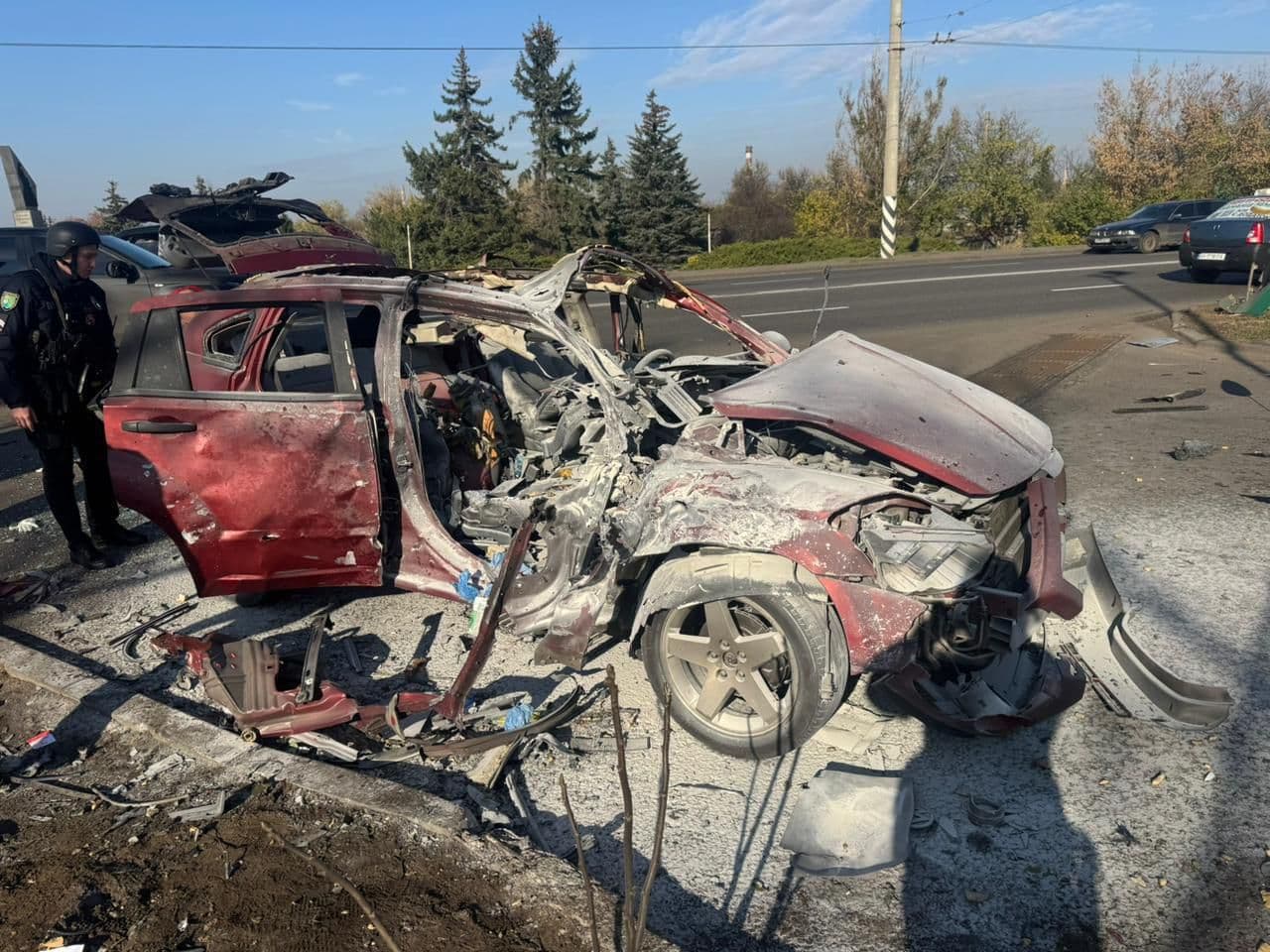
What remains of a journalist’s final assignment: The skeletal frame of the vehicle carrying Freedom TV reporter Olena Hramova and cameraman Yevhen Karmazin through Kramatorsk when a Russian Lancet drone found them. They were documenting the war. The war documented them instead. (Donetsk Oblast Governor Vadym Filashkin/Telegram)
Eighteen Seconds Over Lithuania
The Russian Su-30 and Il-78 refueling plane crossed into Lithuanian airspace at 7:43 p.m., flying roughly 700 meters from Kaliningrad before banking back into Russian-controlled territory. Total time inside NATO airspace: eighteen seconds.
Eighteen seconds was enough.
Lithuanian radar tracked the entire incursion. Air defense crews locked targeting solutions. NATO’s Baltic Air Policing mission scrambled two Spanish Eurofighter Typhoons from their alert stations. By the time the Spanish fighters reached the intercept coordinates, the Russian aircraft were already back over Kaliningrad, mission accomplished.
The mission wasn’t reconnaissance. Russia’s intelligence services don’t need Su-30s to gather information about Lithuania—they have satellites, drones, and agents for that. The mission was messaging: we can cross your borders whenever we want, stay just long enough to make you scramble jets and activate air defenses, then leave before you can do anything about it. Repeat as necessary until NATO stops taking it seriously.
Lithuanian President Gitanas Nausėda wasn’t interested in normalizing the behavior. He called it “a blatant breach of international law and territorial integrity of Lithuania.” Prime Minister Ingrida Šimonytė was blunter: Russia was behaving “as a terrorist state in spite of international law.”
The Russian Defence Ministry’s Telegram account posted a carefully worded denial: none of their Su-30 jets training over Kaliningrad violated borders of other countries. Lithuanian tracking data said otherwise. NATO monitoring systems said otherwise. The Spanish pilots who scrambled to intercept said otherwise. But Moscow had its statement on record, and plausible deniability costs nothing.
This is what hybrid warfare looks like at 30,000 feet—violations calculated to stay below the threshold that would trigger Article 5, designed to test NATO resolve and normalize Russian aggression one eighteen-second incursion at a time.
While Russian fighters tested Baltic airspace, Russian intelligence officers were being arrested in London.
British counter-terrorism police kicked down doors at three addresses in central and west London, arresting men aged 44, 45, and 48 on suspicion of espionage for Russia. Searches were ongoing. Computers seized. Documents cataloged. Phone records pulled. The methodical work of dismantling an intelligence network.
Dominic Murphy, head of Counter Terrorism Policing London, noted what investigators already knew: they were “seeing an increasing number of proxies being recruited by foreign intelligence services.” Not just trained intelligence officers with diplomatic cover anymore—ordinary residents recruited, blackmailed, or paid to conduct surveillance, photograph infrastructure, track targets.
The London arrests weren’t isolated. September had brought three more suspected Russian spies into custody. Earlier in the year, British courts had convicted operatives connected to an arson attack on Ukraine-linked businesses—an operation authorities alleged was orchestrated by Russia’s Wagner mercenary group.
The pattern was clear: Russia was conducting espionage operations across Europe with an aggressiveness not seen since the Cold War. Recruiting proxies. Testing air defenses. Burning businesses. Eighteen seconds over Lithuania. Three arrests in London. All part of the same strategy—probe for weakness, normalize aggression, make Europe accept that Russian hybrid warfare was the new normal.
Lithuania and Britain were pushing back. But the question hanging over European capitals was whether the collective response would be strong enough to make Moscow reconsider, or whether Putin would keep pushing boundaries—eighteen seconds at a time, three arrests at a time—until something broke.
The Mathematics of Surviving Winter
The National Bank of Ukraine’s announcement was technical, careful, wrapped in the language of monetary policy: benchmark interest rate held at 15.5 percent. Behind the bureaucratic phrasing was a calculation no central bank should have to make—how do you manage an economy when your energy infrastructure is being systematically destroyed by nightly drone strikes?
Governor Andrii Pyshnyi explained the impossible balancing act. Inflation had declined recently—good news. But inflation expectations remained high, and inflationary risks were rising. Why? “Larger energy shortages and greater budgetary needs.” Translation: Russia keeps blowing up power plants, Ukraine keeps spending money on air defense and reconstruction, and winter is coming.
The bank had forecast rate cuts beginning in late 2025. That forecast was now pushed to the first quarter of 2026. Maybe. If the energy situation stabilized. If international financing materialized. If winter didn’t break the economy the way Russia intended.
The numbers were staggering: a $60 billion external financing gap for 2026 and 2027, despite $13 billion in international support flowing in since August. Ukraine wasn’t running out of money immediately—but the runway was getting shorter, and every destroyed substation, every demolished power plant, every night of 130 drones overhead extended the gap between what Ukraine needed and what it had.
Mykhaylo Demkiv of Investment Capital Ukraine called the central bank’s decision “very cautious” and “a bit unexpected.” Reading between his careful analyst’s language: the bank was spooked. Waiting to see if the European Union’s reparations loan would materialize before making any moves that might destabilize an economy already operating on the edge.
Then Kyiv Mayor Vitali Klitschko said what everyone was thinking: “Ukraine is facing the most difficult heating season in all the years of full-scale war.”
Not the first winter. Not the second. Not the third. The fourth—and the worst.
Every Ukrainian understood the reality Klitschko was acknowledging. Russia had spent three years learning how to weaponize winter. Now Moscow had perfected the strategy: “massive, simultaneous attacks on all key energy and heat-generating facilities—using drones, missiles, and everything they can to destroy critical infrastructure.”
The most critical situations were in Chernihiv, Sumy, Odesa, and Kharkiv oblasts. In Chernihiv alone, 140,000 people were without power. Not temporarily. Not for rolling blackouts. Just… without power. While temperatures dropped and winter approached.
This was Russia’s economic warfare strategy in its purest form: make survival so exhausting, so expensive, so unbearable that Ukrainians would calculate that surrender was easier than enduring another winter in darkness. Freeze them into submission when military force couldn’t break them.
The National Bank of Ukraine was holding interest rates steady not because of abstract economic theory, but because policymakers were watching Russian drones destroy the infrastructure that kept the economy functioning. The heating season warnings weren’t about comfort—they were about whether Ukraine’s economy could withstand another winter of systematic infrastructure destruction.
Ukrainian economists were doing math that no peacetime central banker ever contemplates: How many more power plants can we lose before the grid fails? How much international financing can we secure before the gap becomes unbridgeable? How cold can it get before civilian morale breaks?
Russia was betting that the answers to those questions would force Ukraine to surrender territory to end the bombardment. Ukraine was betting it could survive another winter, rebuild again, and outlast Putin’s willingness to keep destroying infrastructure.
The benchmark interest rate staying at 15.5 percent was the central bank’s way of saying: we’re still here, still managing, still functional. But it’s going to be a very hard winter.
One Thousand Bodies, Thirty-One Questions
The trucks arrived at the exchange point carrying cargo nobody wanted to deliver. One thousand bodies, Russia claimed—all Ukrainian soldiers killed in action. Ukraine’s Coordination Headquarters for the Treatment of Prisoners of War received them, documented them, loaded them into refrigerated vehicles for transport to forensic facilities.
In return, Ukraine handed over thirty-one bodies of Russian soldiers.
One thousand for thirty-one.
The mathematics didn’t work. Not unless you believed Russian forces were suffering casualties at a 32-to-1 ratio—a disparity that contradicted every battlefield report, every intelligence assessment, every geolocated video of Russian mechanized assaults getting shredded by Ukrainian drones. Either Russia was experiencing historically unprecedented military competence, or something else was happening.
Ukraine suspected something else.
This wasn’t the first time Moscow had played games with body exchanges. Ukrainian officials had previously accused Russia of padding the numbers—handing over bodies of Russian soldiers with Ukrainian identification, deliberately inflating Ukrainian casualty figures while hiding the scale of Russian losses from the domestic audience. If Russian mothers believed only thirty-one of their sons died while Ukraine lost a thousand, it made the war seem winnable. It made continued mobilization seem justified.
The Ukrainian statement was professionally cautious: “investigators from law enforcement agencies and Interior Ministry experts will carry out all the necessary examinations to identify the repatriated bodies.” Translation: we’re checking every single one because we don’t trust you.
Identification would take weeks, maybe months. Modern warfare doesn’t leave bodies intact. Artillery. Drones. Thermobaric weapons. Fires that burn hot enough to consume flesh and bone. DNA testing takes time. Dental records help, when they exist. Personal effects—dog tags, phones, letters—can be misleading or planted. The forensic work would be painstaking, methodical, and heartbreaking.
Behind each of those one thousand bodies was a family waiting for confirmation. Parents who’d reported their son missing six months ago, checking their phones every morning for updates. Wives who’d heard nothing since their husband’s unit was encircled near Bakhmut. Communities preparing memorial services for soldiers whose fates had been unknown until now.
Some of those families would get answers. Others would get more questions—if the body claimed as their loved one turned out to be someone else, misidentified deliberately or by accident in the chaos of war.
The exchange was one of the war’s grimmest bureaucratic functions—a moment when both sides briefly cooperated to return the dead to their families. But even this humanitarian gesture had become weaponized, turned into another tool for information warfare and casualty manipulation.
One thousand Ukrainian families would bury their dead. Or they’d bury someone else’s dead, if Russia was lying. Either way, the funerals would happen. The grief was real even if the accounting wasn’t.
Thirty-one Russian families would get closure too. Their sons were coming home, acknowledged casualties in a war Moscow insisted was going well. The small number was its own form of propaganda—look how few we’ve lost, look how successful we are.
The truth was somewhere in those refrigerated trucks, waiting for forensic examination to separate fact from propaganda, to give names back to bodies, to let families finally mourn soldiers who’d been missing long enough.
One thousand bodies. Thirty-one bodies. And weeks of identification work ahead to figure out how many of those numbers were real.
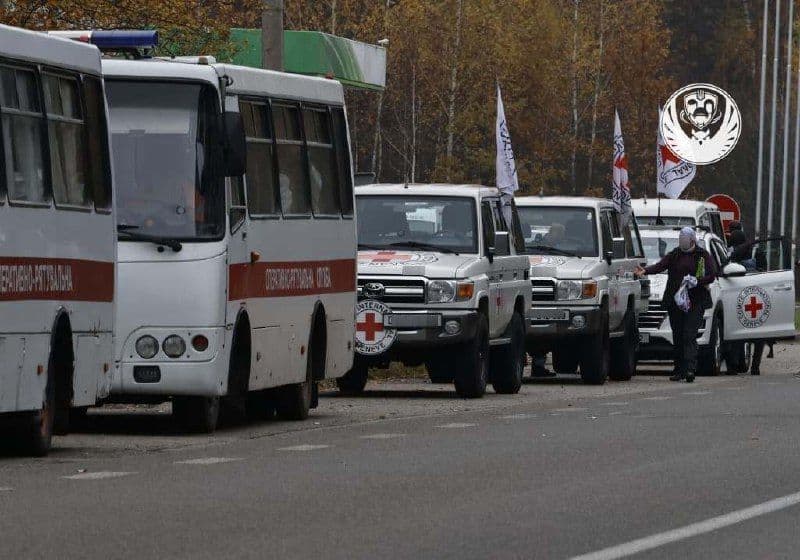
The grim arithmetic of war: Ukraine receives 1,000 bodies from Russia—soldiers Moscow claims are Ukrainian dead. In return, Ukraine sent back 31 Russian bodies. The stark disparity raises questions Kyiv has asked before: Is Russia padding Ukrainian casualty numbers while hiding its own losses? Forensic teams will spend weeks finding answers families have waited months to hear. (Ukraine’s Coordination Headquarters for the Treatment of Prisoners of War / Telegram)
The Door Trump Won’t Quite Close
White House Press Secretary Karoline Leavitt chose her words with the precision of someone who’d been given very specific talking points: a Trump-Putin meeting was “not completely off the table.”
Not likely. Not planned. Not scheduled. Just… not completely off the table.
It was vintage Trump diplomacy—keep every option open, maintain maximum flexibility, never commit to anything that might limit future negotiating leverage. Even after imposing sanctions on Russia’s two largest oil companies, even after Putin declared America an adversary, even after canceling the Budapest summit, the White House was still leaving a sliver of possibility that Trump and Putin might eventually sit down together.
Leavitt framed the sanctions as Trump acting “when he felt it was appropriate and necessary”—language that emphasized presidential discretion over any systematic policy shift. But then came the qualifier that revealed the administration’s real position: they wanted “a tangible, positive outcome” from any meeting, something that would be “a good use of the President’s time.”
Translation: Putin needed to offer something substantial before Trump would waste political capital on a summit that might accomplish nothing. The Budapest meeting had been canceled because Moscow wasn’t coming to the table with serious proposals. If Putin wanted another chance, he’d need to bring more than vague promises about eventual negotiations.
Leavitt deployed the both-sides framing that characterized Trump’s approach to the war: “The President has also long expressed his frustration with Vladimir Putin and, frankly, both sides of this war.” Trump had seen “not enough interest and enough action” from Russia to advance toward peace—but the implication was clear that Ukrainian intransigence was also frustrating the President.
It was carefully calibrated ambiguity. Sanction Russia hard enough to look serious about supporting Ukraine. Criticize Putin publicly enough to maintain credibility with European allies. But leave the diplomatic door open enough that Moscow understood a deal was still possible if Putin calculated that negotiating served Russian interests better than continuing the war.
In Kyiv, Ukrainian officials read the subtext and chose to focus on the concrete rather than the conditional.
Ambassador Olha Stefanishyna welcomed the sanctions as historic: “the first time in office as the 47th President of the United States of America” that Washington had “passed a decision to impose full blocking sanctions against Russian energy companies.” She emphasized the precedent—Trump had crossed a line previous administrations avoided, directly targeting Russia’s economic jugular.
What she didn’t emphasize was Leavitt’s careful preservation of diplomatic flexibility. Ukrainian officials understood the game: accept the sanctions, praise the decision, don’t draw attention to the fact that Trump was keeping the door open for the summit that might trade Ukrainian territory for a deal with Putin.
The diplomatic door wasn’t closed. It wasn’t open either. It was ajar—just enough to let both sides see the possibility of eventual negotiations, but not enough to commit to outcomes that neither side was ready to accept.
Trump had imposed sanctions. Putin had called America an adversary. But both leaders were still performing the dance that might eventually lead to a room where they’d negotiate Ukraine’s future, with or without Ukraine’s full participation.
The question wasn’t whether that meeting would eventually happen. It was whether, when it did, Ukraine would be negotiating from a position of strength or watching from the sidelines while great powers decided its fate.
What October 23 Revealed
No single event defined the day. The convergence did.
Beijing’s oil traders pausing Russian contracts. Brussels finalizing sanctions package nineteen. Putin saying “adversary” after two years of avoiding the word. Two journalists dead in Kramatorsk. Russian jets testing Lithuanian airspace for eighteen seconds. Indian refineries calculating their exposure.
This was the war after 1,338 days—not just armies clashing, but a multi-dimensional struggle fought simultaneously across battlefields, oil markets, diplomatic chambers, and espionage networks. Russia advancing militarily while losing economically. Ukraine holding ground while its energy infrastructure burned. Trump imposing sanctions while leaving diplomatic doors ajar.
For the Kremlin, the day marked what Moscow wouldn’t acknowledge: the Trump cultivation strategy had collapsed. American oil sanctions struck where it hurt. China and India were reconsidering their positions. Putin’s “adversary” declaration was an admission dressed as defiance.
The question ahead wasn’t whether sanctions would immediately collapse Russia’s economy or military aid would suddenly shift battlefield momentum. The real question was about cumulative weight and breaking points.
How many more oil customers could Russia lose before revenues couldn’t sustain operations consuming a thousand casualties daily? How many more winters could Ukrainians endure systematic infrastructure destruction? How long before Trump’s ambivalence hardened into something more consequential—either full support or pressure for territorial concessions?
October 23 didn’t answer those questions. It shifted the variables incrementally against Moscow’s position. The trajectory was bending—slowly, not decisively, but unmistakably—away from the Kremlin’s interests.
The war was entering its fourth winter with accumulated pressures building toward some future breaking point. Whether that break would favor Kyiv or Moscow, whether it would come through economic collapse, military exhaustion, or negotiated compromise—nobody could predict.
What was clear: the cumulative weight had shifted. Not enough to force the decision both sides were avoiding. But enough to matter.
And winter was coming.