
September 7, 2025: When 810 Flying Weapons Delivered Russia’s Answer to Peace
The Dawn of Terror
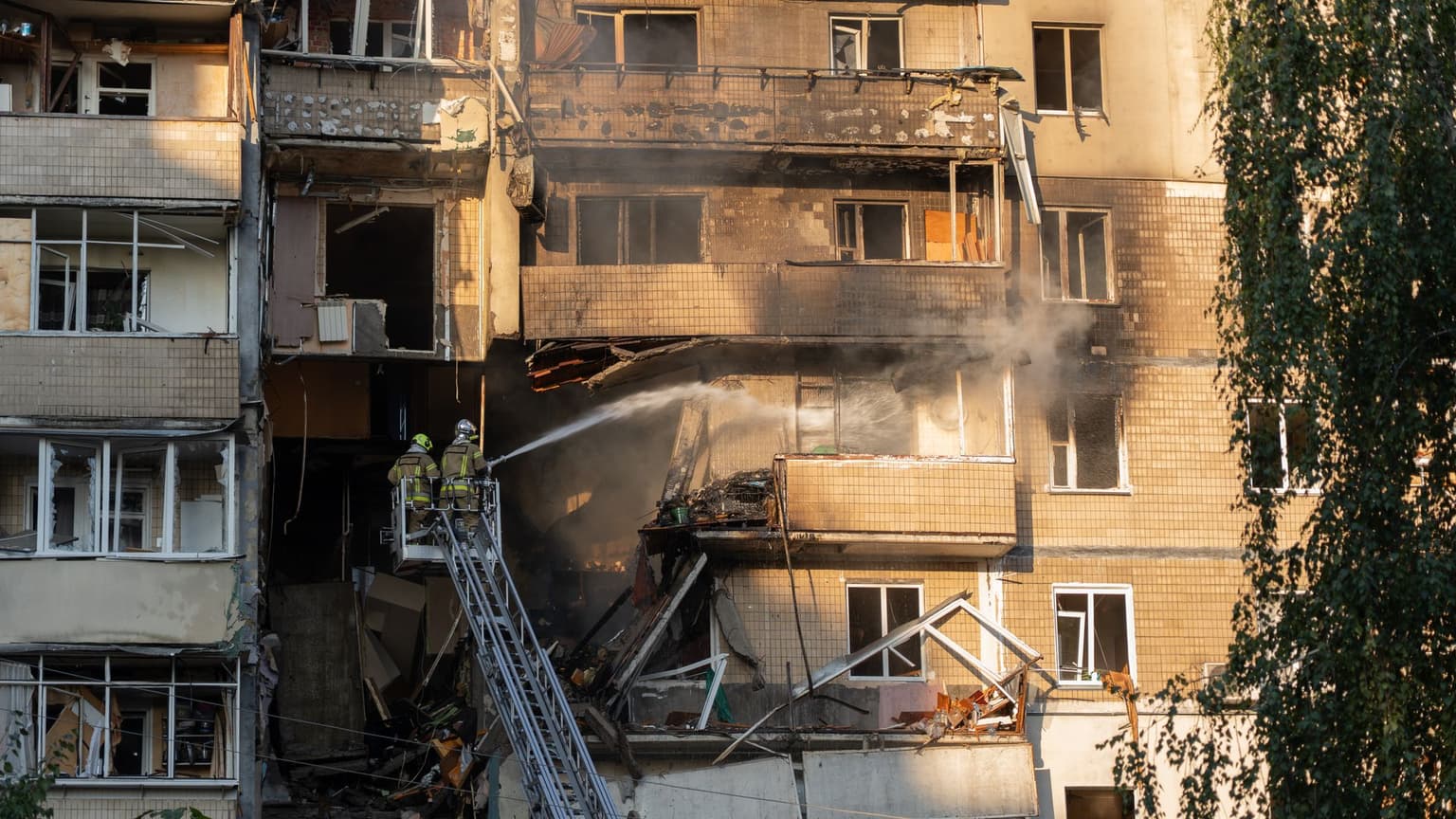
In the pre-dawn darkness of September 7, 2025, the largest swarm of killer drones in human history lifted off from seven different launch points across Russia and occupied Crimea. Their destination: every corner of Ukraine. Their message: Vladimir Putin’s definitive answer to those calling for peace.
What unfolded over the next seven and a half hours would shatter records, burn government buildings, and kill a newborn baby—crystallizing in a single day how a war that began with tanks had evolved into something far more sinister.
At 4:30 AM, air raid sirens wailed across Kyiv as the first wave of what would become 810 Shahed-type drones crossed into Ukrainian airspace. Mixed among them were 13 cruise and ballistic missiles, turning the early morning sky into a deadly constellation of incoming death.
When the Government Burns
By dawn, something unprecedented had happened. For the first time since Russia’s invasion began nearly four years ago, the heart of Ukrainian democracy was literally on fire. The Cabinet of Ministers building—where Ukraine’s entire government conducts its daily business—erupted in flames as a Russian drone found its mark in central Kyiv.
Prime Minister Yulia Svyrydenko stood in the smoke-filled corridors where she and her colleagues had worked just hours before. “Russian terror will not stop the government’s work,” she declared, her words carrying the defiance that had become Ukraine’s trademark. “We will restore the damage. But Ukrainian lives cannot be restored.”
The targeting wasn’t accidental. Sources revealed the building had been deliberately selected, marking Putin’s willingness to strike at the very symbols of Ukrainian statehood. When Russia’s Defense Ministry later claimed they had only hit “industrial enterprises,” the still-smoldering government building made their denial look absurd.
The Mother and Her Baby
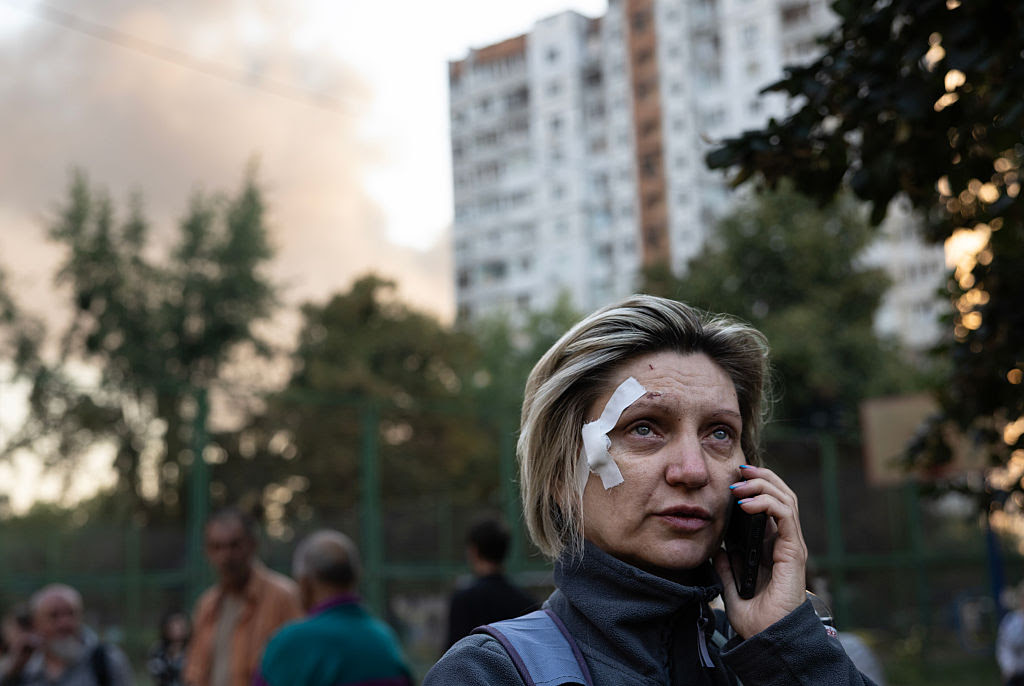
Six miles away in the Sviatoshynskyi district, Inna heard the explosion that would haunt her forever. The blast wave from a Russian drone had carved through floors four through eight of a nearby apartment building like an invisible scythe.
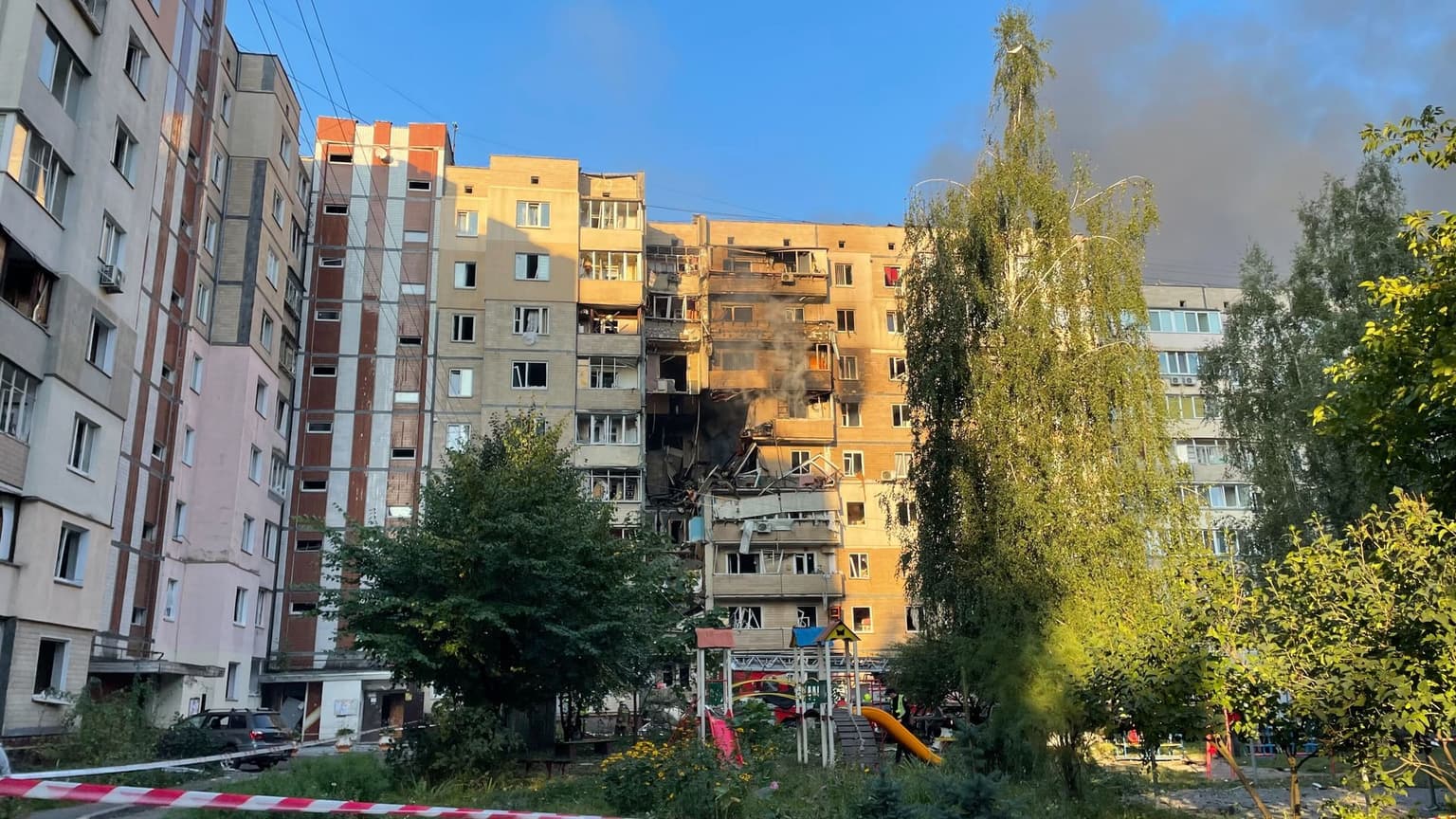
“There was a young woman living on the 6th floor, who had recently given birth,” Inna later told reporters, her voice breaking. “She was thrown out into the street by the blast wave. She was found under the slab of the building at 5 a.m. The child was also found dead.”
The victims—a 32-year-old mother and her two-month-old son—became the faces of Putin’s “peace” initiative. Nearby, a 24-year-old pregnant woman fought for her life after being rushed into emergency labor, doctors battling to save both her and her premature baby.
These weren’t military targets. They were bedrooms and nurseries, the most private spaces where families should feel safest. Putin’s message was clear: nowhere in Ukraine was beyond his reach.
The Chinese Connection
The 810 drones that swarmed Ukraine that morning represented more than Russian engineering—they were the product of a sophisticated partnership with China that had transformed Putin’s war machine. Each Shahed-type drone contained at least 41 Chinese-made components: engines, electronics, batteries, telecommunications equipment—the technological sinews of modern warfare.
In the Alabuga Special Economic Zone in Tatarstan, and at the Izhevsk Electromechanical Plant, Russian workers assembled what Moscow claimed were “domestic” weapons. But intelligence revealed the truth: these were essentially Chinese drones assembled in Russia, part of Putin’s goal to launch over 1,000 drones per day by fall.
The September 7 attack wasn’t just about Ukraine—it was a preview of the industrial-scale drone warfare that could soon define conflicts worldwide.
Ukraine Strikes Back
Even as Russian drones swarmed overhead, Ukrainian forces delivered their own punishing blows deep inside Russia. In a masterpiece of strategic targeting, they struck two critical nodes in Putin’s war economy: the Ilsky oil refinery in Krasnodar Krai and the “8-N” oil pipeline control station in Bryansk Oblast.
The “8-N” facility wasn’t just another pipeline—it was part of the “Steel Horse” complex that pumps 10.5 million tons of oil annually, a crucial artery feeding Russia’s war machine. Ukrainian drones found their mark with surgical precision, erupting in fires that lit up the night sky 500 kilometers from the nearest Ukrainian position.
At the Ilsky refinery, Ukrainian Special Operations Forces struck the ELOU-AT-6 complex—the facility’s heart—processing 6.42 million tons of oil annually for the Russian military. The explosions were visible on social media before officials even confirmed the attack.
While Putin’s drones killed babies in their cribs, Ukraine’s strikes hit the economic lifelines funding his war.
Trump’s Calculated Response
In Washington, President Donald Trump faced the kind of moment that defines presidencies. Putin had just launched his largest attack of the war—while Trump was actively trying to broker peace. The optics were devastating, the challenge unmistakable.
“Yeah, I am,” Trump told reporters when asked if he was ready for a new phase of sanctions against Russia. For a president who had consistently sought rapprochement with Putin, the words carried unusual weight.
Treasury Secretary Scott Bessent outlined the strategy: expanded secondary tariffs on countries buying Russian oil, economic pressure designed to force Putin to the negotiating table. “We are in a race now between how long can the Ukrainian military hold up, versus how long can the Russian economy hold up,” Bessent explained.
But Trump also revealed his broader vision: Europe would lead any future security guarantees for Ukraine. It was a subtle shift—America would help, but Europe would take the lead in defending its own backyard.
Europe’s Fury
Across European capitals, the reaction was swift and unified. Putin had given them the perfect example of his true intentions, and they seized it.
“This is Putin’s response to calls for peace,” declared Norwegian Foreign Minister Espen Barth Eide. European Commission President Ursula von der Leyen was more blunt: “Once again, the Kremlin is mocking diplomacy, trampling international law and killing indiscriminately.”
Czech Foreign Minister Jan Lipavsky captured the moral clarity of the moment: “Putin pretends he wants to end the war, but in reality he only seeks to kill as many Ukrainians as possible. Last night he launched over 800 drones and missiles, killing a mother and her two-month-old baby.”
The unified European response reflected a continent that had watched Putin’s promises crumble into ash and smoke over the Cabinet of Ministers building.
Messages in Moscow
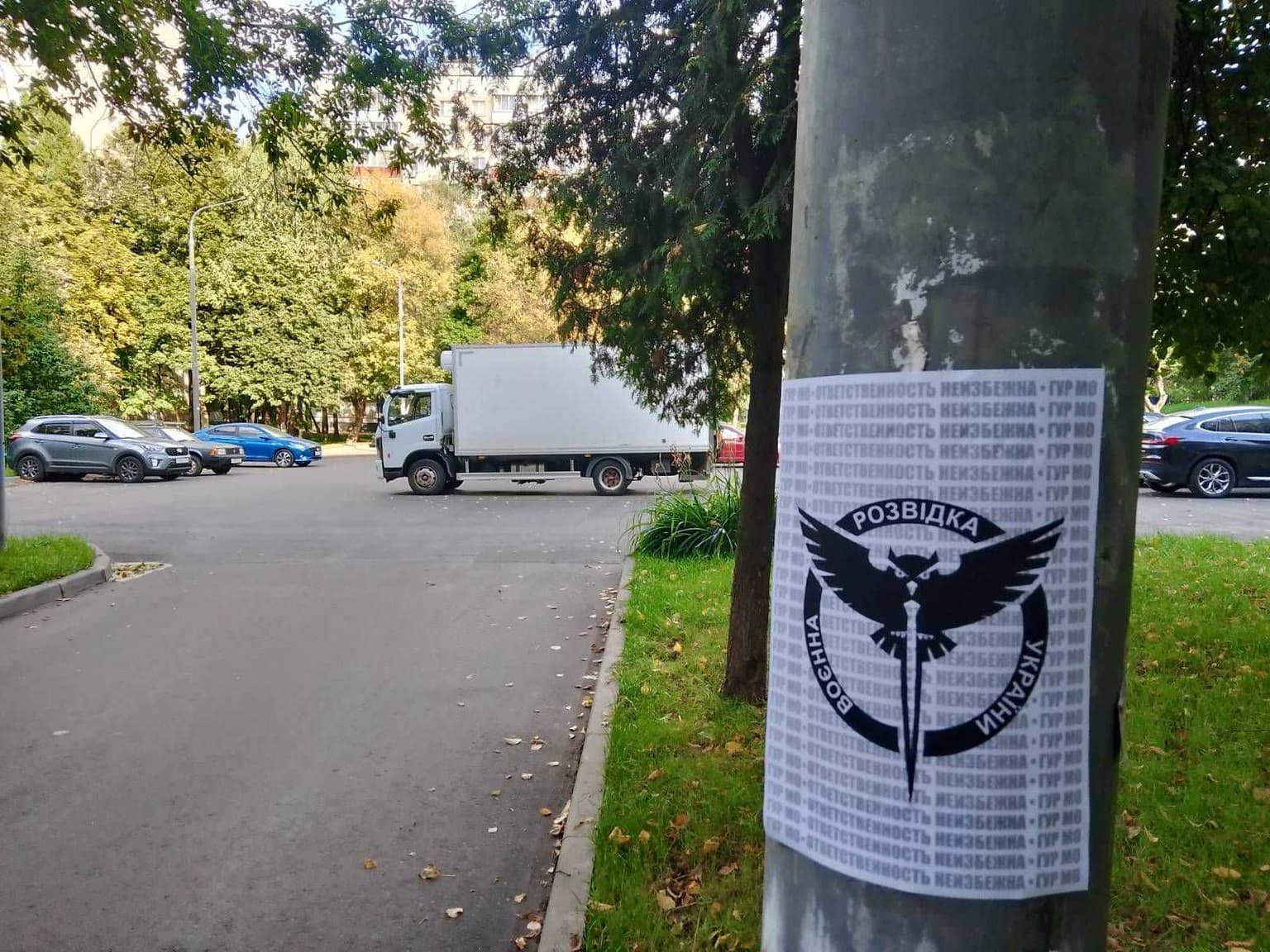
A sign with Ukraine’s military intelligence agency’s (HUR) logo and the phrase “Responsibility is inevitable” displayed in Moscow, Russia
On the morning of September 7, residents of Moscow woke to find their city decorated with an unusual sight: “greeting cards” bearing the logo of Ukrainian military intelligence and the ominous message “Responsibility is inevitable.”
The signs appeared everywhere—on fences, in parks, at bus stops, on walls—a psychological operation timed to coincide with the 33rd anniversary of Ukraine’s intelligence service. More than propaganda, it was a demonstration: if Ukrainian intelligence could paper Moscow with impunity, what else might they do?
“Residents of the capital of so-called Russia can obviously expect special congratulations from Ukrainian military intelligence soon,” a source hinted darkly.
The Revolution in Ukraine’s Arsenal
While Putin’s drones filled the skies, President Zelensky revealed a remarkable transformation happening below: nearly 60% of weapons on the front line were now made in Ukraine. What had begun as a country dependent on foreign aid had evolved into a military-industrial power in its own right.
“During this war, Ukraine has already reached the level where nearly 60% of the weapons we have, weapons in the hands of our warriors, are Ukrainian-made, and they are strong weapons, many of them cutting-edge,” Zelensky declared.
The numbers told the story: Ukraine’s 2025 budget allocated $1.3 billion to defense manufacturing, while companies like Fire Point announced new ballistic missiles and air defense systems. The invaded had become the innovator.
Meanwhile, intelligence revealed Putin’s own industrial surge: plans for 2,500 high-precision missiles in 2025, 57 combat aircraft, 250 tanks, and recruitment of 280,000 new soldiers. But this wasn’t just about Ukraine—Putin was preparing for a potential NATO war by 2030.
The Pokrovsk Paradox
In eastern Ukraine’s most contested battleground, something unexpected was happening. Despite Russia’s massive offensive around the strategic city of Pokrovsk, Ukrainian forces had achieved the impossible: they were winning more territory than they lost.
In August, Russia captured 5 square kilometers around Pokrovsk—but Ukraine recaptured 26. Near Dobropillia, Russia took 13.5 square kilometers but lost 25.5. It was a tactical revolution hidden within a strategic defense.
Ukrainian Commander-in-Chief Oleksandr Syrskyi revealed the secret: Ukraine’s new Assault Forces were conducting aggressive counterattacks, clearing villages like Novoekonomichne and Udachne that Russia had briefly occupied.
“The Pokrovsk axis remains one of the most challenging,” Syrskyi admitted. “Over the past week, our units have repelled approximately 350 Russian attacks.” Yet somehow, Ukraine was not just surviving—it was advancing.
The Forgotten Prisoners
Behind the headlines of drone swarms and burning buildings lay a quieter tragedy: 2,577 Ukrainian soldiers remained in Russian captivity, according to an independent investigation by the Organization for Security and Cooperation in Europe.
The numbers were grim enough, but the details were worse. Ukraine’s Prosecutor General had documented at least 273 prisoners of war executed by Russian forces. The International Committee of the Red Cross couldn’t even confirm the status of 680 additional people, including 91 civilians.
The face of this horror was 33-year-old National Guard soldier Vladyslav Nahornyi, who had survived five days crawling back to Ukrainian lines after Russian forces slit his throat and threw him into a pit. Unable to speak, he documented in his journal the systematic mutilation of Ukrainian prisoners: eyes gouged out, lips and ears cut off, noses removed.
These weren’t the actions of a military following international law—they were the calculated cruelties of an army that had abandoned civilization.
Zelensky’s Challenge to America
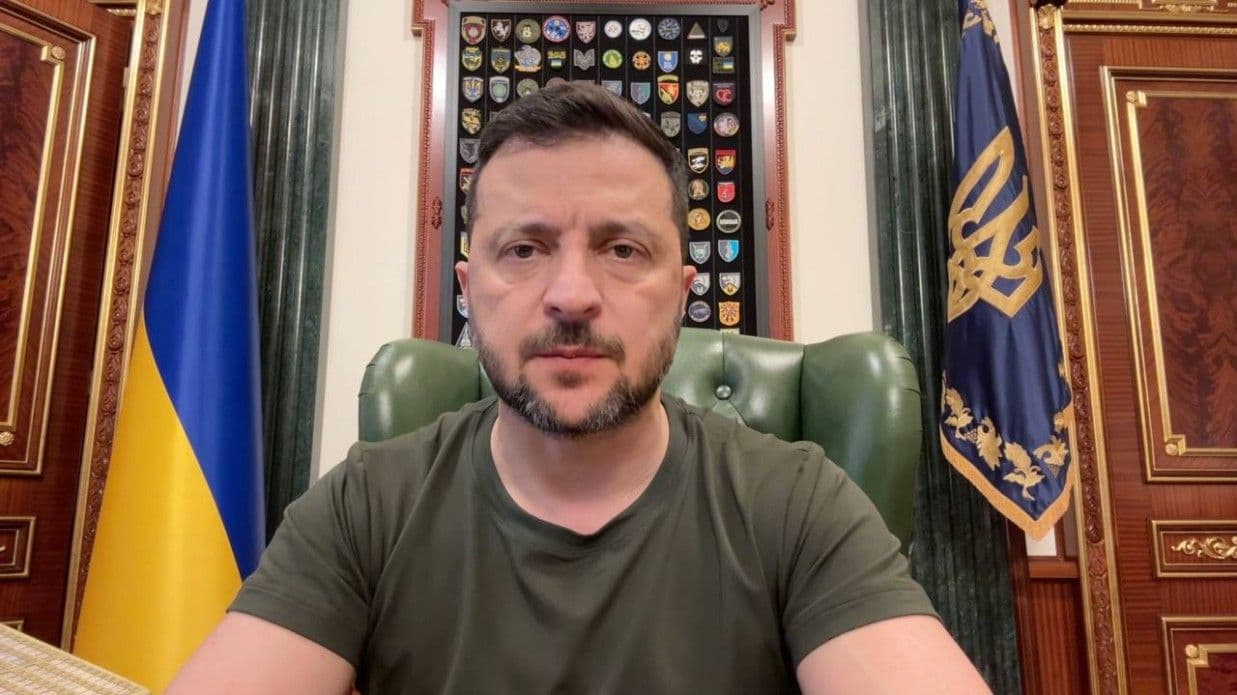
As smoke still rose from Kyiv’s government district, President Zelensky issued a direct challenge to Washington: “We are counting on a strong reaction from America. This is what is needed.”
It wasn’t a plea—it was an expectation backed by moral authority. Ukraine had endured Putin’s largest attack while fighting for democracy itself. Now Zelensky wanted to see America’s response match the moment’s gravity.
“Strong actions—sanctions against Russia, against individuals associated with Russia, and strong tariffs and other restrictions on trade with Russia,” he specified. But he also demanded something more: “Their losses must be felt.”
Ukraine needed not just defensive weapons but the ability to strike back at the sources of Russian power. The message was clear: help Ukraine win, don’t just help it survive.
The Historical Moment
September 7, 2025, marked more than just another day of war—it crystallized the nature of the conflict that would define the early 21st century. This wasn’t traditional warfare between armies, but a new kind of struggle where swarms of drones could burn government buildings, where economic warfare mattered as much as military action, and where the line between civilian and military targets had effectively disappeared.
Putin’s 810 drones delivered a message that reverberated far beyond Ukraine’s borders: in the wars of the future, no one would be safe, nowhere would be sacred, and the only language that mattered was force.
But Ukraine’s response—striking Russian oil infrastructure while building its own weapons industry, conducting intelligence operations in Moscow while defending democracy in Kyiv—suggested that this new kind of warfare cut both ways.
As the smoke cleared over the Cabinet of Ministers building and rescue workers searched for survivors in apartment blocks across Ukraine, one thing had become unmistakably clear: Putin had given his answer to peace. Now the world would have to give its answer to Putin.