
As Moscow announced a new conscription cycle and record defense spending, Ukraine struck deep into Russian territory while diplomatic battles raged from Budapest to Chisinau
The Story of a Single Day
On September 29, 2025—the 1,314th day of the war—Russia revealed the machinery behind its continuing offensive. President Vladimir Putin signed a decree launching the fall conscription cycle, calling 135,000 young Russians to military service. The Kremlin submitted a budget dedicating 38 percent of federal spending to war and security. And across occupied territories and Russian rear areas, Ukrainian forces demonstrated their capacity to strike back, hitting military production facilities and downing helicopters with improvised weapons.
This single day captured the war’s grinding reality: Russia mobilizing its population and treasury for indefinite conflict while Ukraine adapted, innovated, and punched far above its weight. From the frozen calculations of Moscow’s budget planners to the split-second decisions of Ukrainian drone operators downing Russian helicopters, September 29 revealed a conflict with no end in sight—only escalation, adaptation, and the relentless accumulation of casualties on both sides.
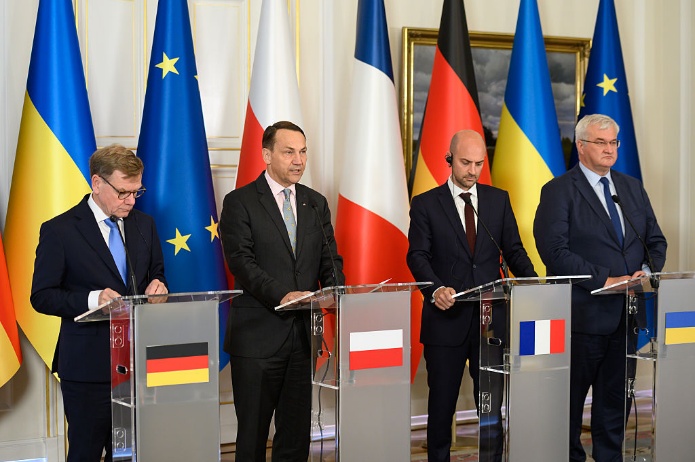
From left to right, Germany’s Foreign Minister Johann Wadephul, Poland’s Deputy Prime Minister and Foreign Minister Radoslaw Sikorski, French Minister for Europe and Foreign Affairs Benjamin Haddad, and Ukrainian Foreign Minister Andrii Sybiha address the media during the Weimar Triangle meeting press conference in Warsaw, Poland. (Aleksander Kalka/NurPhoto via Getty Images)
Putin’s Decree: 135,000 More Russians Called to Service
The decree Putin signed on September 29 was bureaucratic in its precision but chilling in its implications. Russia would conscript 135,000 citizens between October 1 and December 31 for twelve months of mandatory military service. Officially, these conscripts would serve only on “Russian territory” and would not participate in combat operations in Ukraine. The reality was far more complicated.
Deputy Chief of the Main Organizational and Mobilization Directorate Vice Admiral Vladimir Tsimlyansky emphasized that the upcoming conscription cycle was “not related to the war in Ukraine.” Conscripts would only serve on Russian territory and would not conduct tasks related to the war—meaning they would not serve even in occupied Ukraine that Russia illegally defined as “Russian territory.” The Russian military command would start sending conscripts to assembly points on October 15, with a third receiving specialized training in training units and at military bases.
But Russian law’s prohibition on deploying conscripts to combat had already been violated in practice. Conscript border guards had participated in combat during the Ukrainian incursion into Kursk Oblast, causing particular discontent in Russian society. The distinction between “defensive” service in border regions and “offensive” combat operations had collapsed under the pressure of Ukrainian operations on Russian soil.
These conscripts would become reservists after their twelve months of service, joining a pool that Russia could call up in the future. They were notably different from the active strategic reserve that Russia had reportedly been forming of soldiers who had signed contracts with the Russian Ministry of Defense. But Russian officials continued to deceive and coerce conscripts to sign military contracts to increase the number of servicemembers deployed to combat in Ukraine or to the active strategic reserve.
Russia appeared to be taking efforts to mitigate bureaucratic bottlenecks that would slow down involuntary reservist call-ups in the future, including expanding conscription administrative processes to be year-round. The machinery of mobilization was being refined, optimized, and prepared for a conflict that Moscow’s actions suggested would continue indefinitely.
The Budget of Endless War: 17 Trillion Rubles for Death
The draft budget that the Russian government submitted to the State Duma on September 29 laid bare the Kremlin’s priorities. Russia planned to spend 17 trillion rubles—approximately $183 billion—on national security and defense in 2026. This represented roughly 38 percent of its planned annual expenditures, a staggering commitment that would crowd out virtually every other government function.
The budget projected federal revenues in 2026 at roughly 40.3 trillion rubles ($485 billion) and federal expenditures at roughly 44.1 trillion rubles ($531 billion)—a deficit that would require either borrowing, drawing down reserves, or creative accounting to finance. Within this framework, 12.9 trillion rubles ($155 billion) would go toward “National Defense” expenditures in 2026.
The budget forecasted that defense spending would increase to 13.6 trillion rubles ($164 billion) in 2027 and then decrease to 13 trillion rubles ($156.5 billion) in 2028. Another 3.9 trillion rubles ($47 billion) would go toward “National Security.” The combined defense and security expenses of 17 trillion rubles represented about 38 percent of planned federal spending.
Buried in the budget details were line items that revealed the human cost. The budget allocated 58 billion rubles ($698 million) in 2026 to fund compensation payments and social benefits for servicemembers killed or wounded in action and their family members. The budget also allocated roughly 13.9 billion rubles ($167 million) in 2026 to fund the “Defenders of the Fatherland Fund,” which supports Russian veterans and their families.
Russia was reducing its defense and security spending in 2026 by roughly 200 billion rubles ($2.4 billion). The Kremlin had announced an increase in value-added tax specifically to fund defense and security, which the Finance Ministry estimated would generate about $14.2 billion in additional revenue in 2026.
The budget revealed a nation transforming itself into a permanent war economy, sacrificing social services and economic development for military production and operations. Every ruble allocated to missiles was a ruble not spent on hospitals, schools, or infrastructure. Russia was mortgaging its future for the war in Ukraine.
Propaganda and Control: Television’s Return to Dominance
The budget contained another revealing detail about the Kremlin’s priorities. Russian opposition outlet Verstka reported on September 29 that the government planned to spend 106.4 billion rubles ($1.28 billion) on state television channels in 2026—a significant increase from planned spending.
The significant rise in funding toward television suggested that the Kremlin was returning to traditional methods of disseminating state propaganda, particularly against the backdrop of recent restrictions on social media and the creation of the Russian state messenger Max.
Television remained the primary information source for most Russians, particularly in rural areas and among older demographics. By flooding the airwaves with state-controlled messaging, the Kremlin could shape narratives about the war, the economy, and Russia’s place in the world without the messiness of competing voices on social media platforms.
The shift back to television represented recognition that despite the rise of internet-based media, traditional broadcast remained the most reliable tool for population control. The investment in propaganda was as essential to Russia’s war effort as the investment in tanks and artillery.
Kellogg’s Confirmation: No Sanctuaries in Russia
US Special Envoy to Ukraine General Keith Kellogg’s statement on September 29 marked a significant shift in American policy—or at least in the willingness to acknowledge existing policy publicly. In an interview with Fox News on September 29, Kellogg responded to a question about whether President Donald Trump had authorized Ukrainian long-range strikes against Russian territory with unambiguous clarity: “The answer is yes, use the ability to hit deep, there are no such things as sanctuaries.”
Kellogg stated that Trump’s, Vice President JD Vance’s, and Secretary of State Marco Rubio’s statements all indicated that there were no sanctuaries in Russia and that this was why Ukrainian President Volodymyr Zelensky had requested US Tomahawk Land Attack Missiles. Kellogg stated that it was up to Trump to decide whether the US would provide Ukraine with Tomahawks.
The acknowledgment represented a reversal of longstanding Western hesitance to explicitly support Ukrainian strikes on Russian territory. Kellogg’s statement stripped away that pretense, acknowledging what Ukrainian forces had already been doing with tacit Western approval.
The policy had practical implications. Russia had been able to amass ground forces, materiel, and subsequently launch new offensives into Ukraine and conduct long-range strikes against Ukraine within the protection of sanctuaries. By explicitly removing those sanctuaries—or at least acknowledging they no longer existed—the United States was enabling Ukraine to disrupt Russian logistics, command and control, and military production far from the front lines.
Kellogg noted on September 29 that the final decision on whether Ukraine may conduct long-range strikes within Russia falls to Trump on a case-by-case basis. “Russia is not winning this war. If they (were) winning, they would be in Kyiv, Odesa, they would be over the Dnipro river,” he said.
The Kremlin’s Reflexive Control: Deterring Tomahawk Delivery
Kremlin officials responded to discussions of Tomahawk missiles with familiar tactics of intimidation and threat. Spokesman Dmitry Peskov questioned on September 29 whether it would be Ukrainian or American forces launching the Tomahawk missiles into Russia and who would be conducting the targeting for the strikes. Peskov claimed that the Kremlin must determine which forces would be involved in the process before it could determine its response.
Peskov attempted to downplay the effect Ukrainian Tomahawk strikes could have on the Ukrainian war effort, claiming that Tomahawk missiles would not change battlefield dynamics. First Deputy Chairperson of the Russian State Duma Defense Committee Alexei Zhuravlev claimed that US provisions of Tomahawk missiles to Ukraine would be a new stage in the war, with the United States becoming a direct participant. Zhuravlev threatened that Russia would respond by moving its Oreshnik ballistic missiles closer to the United States, possibly to Venezuela.
Chairperson of the Federation Council Committee on Constitutional Legislation Alexei Pushkov claimed on September 29 that Ukraine would conduct “dangerous” provocations with US-provided Tomahawk missiles, directly involving the United States in the war. The messaging was coordinated and familiar—portray any new Western military aid as dangerous escalation that could trigger Russian retaliation, possibly including nuclear weapons.
The Kremlin was attempting to employ reflexive control tactics designed to push the West to make decisions that actually benefit Russia. The pattern had become predictable: Russia threatened, the West hesitated, weapons were eventually provided, and the war continued without the catastrophic Russian escalation that had been promised.
Shadow Drones Over NATO: The Violations Continue
Even as diplomatic discussions continued about long-range strikes and missile deliveries, Russian provocations of NATO airspace intensified. Norwegian Armed Forces Operational Headquarters Spokesperson Lieutenant Colonel Vegard Finberg reported on September 29 that Norwegian forces observed drones near unspecified military facilities in Troms and Finnmark. A spokesperson for a Norwegian airline reported that authorities observed unidentified drones within the exclusion zone at Bronnoysund Airport in Nordland.
The Romanian Ministry of National Defense reported on September 29 that witnesses reported unidentified drones in the Sontea Noua Canal area and that Romanian officials were investigating fallen debris in the area. The pattern of drone sightings across NATO territory was becoming impossible to ignore or dismiss as coincidence.
Ukrainian Navy Spokesperson Captain Third Rank Dmytro Pletenchuk reported on September 29 that Russian forces were leveraging civilian vessels to conduct reconnaissance and sabotage missions in international waters, including targeting underwater cables with anchors. The allegation suggested Russian forces were using civilian infrastructure for military purposes, creating legal and operational complications for NATO responses.
The questions had no easy answers, which was precisely why Russia employed such tactics. By operating in gray zones—using civilian infrastructure for military purposes, violating airspace with drones rather than manned aircraft, conducting operations that fell short of traditional acts of war—Moscow could probe NATO defenses and demonstrate the alliance’s inability to respond effectively without triggering full-scale conflict.
Moldova’s Aftermath: Protests and Denials
The pro-European Party of Action and Solidarity’s victory in Moldova’s parliamentary elections represented a significant defeat for Russian influence operations, but the Kremlin and its Moldovan allies were not conceding defeat on September 29. PAS had won 50.2 percent of the vote, securing 55 out of 101 seats in the Moldovan Parliament.
Igor Dodon, a Kremlin-linked former Moldovan president, called on Moldovans to conduct peaceful protests outside the parliament building in Chisinau on the afternoon of September 29. The protests were limited and calm, with about 300 people in attendance and lasting only about 30 minutes. Dodon stated on September 29 that the leaders of the Patriotic bloc, which won 24.17 percent and 26 seats, did not recognize the results and would appeal.
Kremlin-linked Moldovan politician Ilan Shor claimed on Russian state television channel Rossiya 24 that his Pobeda electoral bloc also did not recognize the results and planned to appeal. Shor stated on September 29 that the Pobeda bloc would discuss its plan with unspecified colleagues over the “next day or two” and then would call for protests.
The allegations of election fraud followed predictable patterns. Shor claimed on September 29 that the elections were “obviously rigged” and that Moldovan authorities had intimidated ten to twenty percent of voters to prevent them from voting. Vasile Tarlev, the leader of the Future of Moldova party within the Patriotic bloc, claimed that Moldovan authorities restricted observers’ and journalists’ access to polling stations to “conceal fraud and provocations,” including in Transnistria.
Kremlin Spokesperson Dmitry Peskov claimed on September 29 that “some political forces” in Moldova were declaring their disagreement with the election results and discussing possible election violations. Peskov claimed that Russia could “confirm” that Moldovan authorities “denied” hundreds of thousands of Moldovans living in Russia the opportunity to vote. Russian Liberal Democratic Party Head Leonid Slutsky claimed on September 29 that Moldovan authorities violated electoral rights and freedoms, falsified the results, and were leading the country “down the path of Ukraine.”
First Deputy Chairperson of the Russian State Duma Defense Committee Alexei Zhuravlev claimed that Western intelligence agencies interfered in the Moldovan elections. The coordinated messaging suggested preparation for a sustained campaign to delegitimize Moldova’s democratic choice.
Neptune Strikes Deep: The Karachev Factory Burns
While diplomatic battles raged, Ukrainian forces demonstrated their capacity to strike Russian military-industrial targets hundreds of kilometers from the front lines. The Ukrainian Navy reported on September 29 that Ukrainian forces had conducted a Neptune missile strike against the Elektrodetal plant in Karachev, Bryansk Oblast—approximately 240 kilometers from Ukrainian territory.
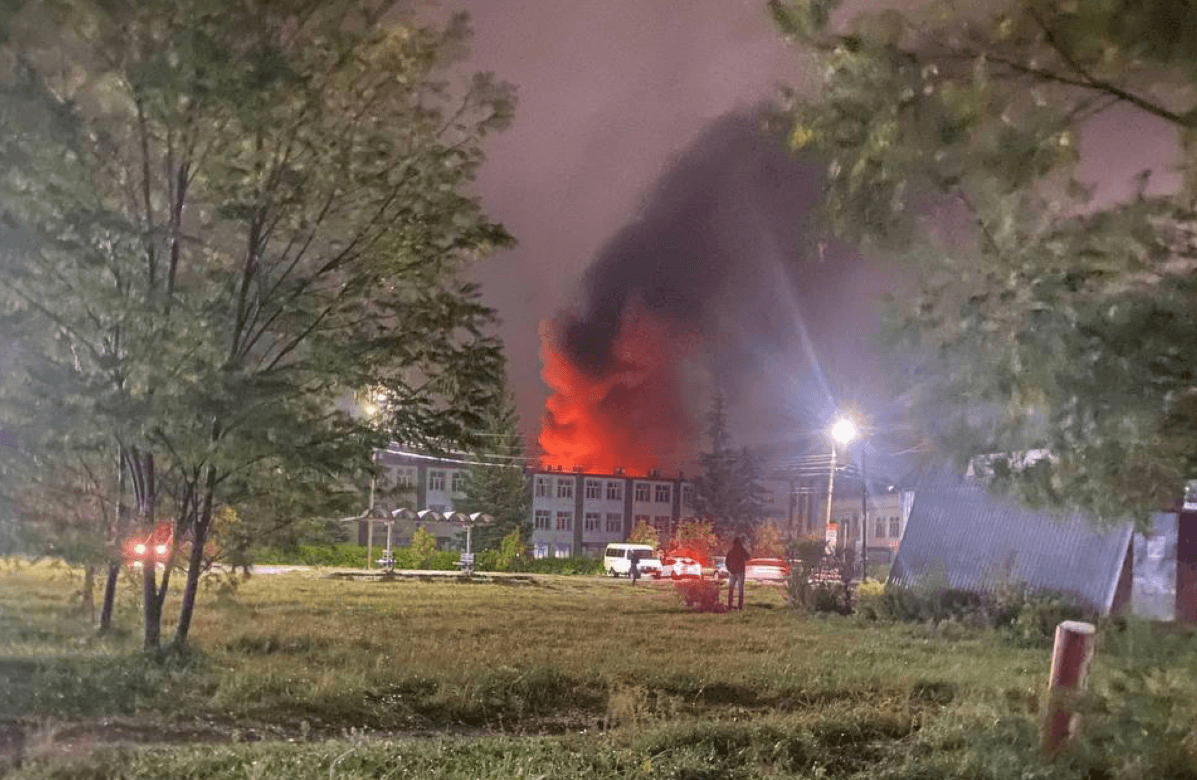
A fire reportedly burns at the Karachev electrical components plant in Russia’s Bryansk Oblast overnight, following a drone attack. (Astra/Screenshot/Telegram)
Ukrainian Center for Combatting Disinformation Head Lieutenant Andriy Kovalenko stated on September 29 that the plant produced electrical connectors and military equipment for missile control systems, armored vehicles, and command and control devices. Sources in the Bryansk Oblast Emergency Services told Russian opposition outlet Astra on September 29 that the strike started a fire that damaged the plant’s boiler room building and an electrical connector assembly workshop, forcing the plant to halt operations.
The strike represented the use of Neptune missiles—Ukrainian-developed cruise missiles originally designed for anti-ship warfare—against ground targets deep in Russian territory. It demonstrated Ukraine’s ability to adapt its weapons systems for missions beyond their original design parameters and to reach targets that Russian planners had assumed were safe from Ukrainian strikes.
Ukrainian Navy Commander Oleksii Neizhpapa confirmed on September 29 that the strike was carried out using Neptune cruise missiles. The General Staff reported on September 29 that the attack was conducted by Ukraine’s missile and artillery forces in coordination with other branches of the Ukrainian Armed Forces.
Disrupting production of electrical connectors might seem mundane compared to destroying tanks or aircraft, but modern military equipment depended on precisely engineered electrical systems. Missile control systems required reliable connectors. Command and control devices needed standardized interfaces. Armored vehicles depended on electrical systems for everything from fire control to communications. By targeting the component manufacturers, Ukrainian forces were attacking the supply chains that fed Russia’s war machine.
The Grinding Front: Tactical Advances and Counterattacks
Across the eastern front on September 29, Russian forces continued their methodical, costly advances while Ukrainian forces demonstrated their capacity for limited counterattacks. The day’s fighting produced a complex map of small territorial changes that represented enormous human costs.
Geolocated footage published on September 29 showed Ukrainian forces had advanced in northeastern Yampil near Lyman. The Russian Ministry of Defense claimed on September 29 that Russian forces had seized Shandryholove. Russian forces attacked in multiple directions around Lyman on September 29. A Russian milblogger claimed that Ukrainian forces counterattacked near several settlements north and northwest of Lyman. Another milblogger claimed that northern Yampil was a contested “gray zone.”
Russian forces continued offensive operations on September 29 in multiple sectors including near Velykyi Burluk, Siversk, Kostyantynivka-Druzhkivka, and other tactical areas. Ukrainian military observer Kostyantyn Mashovets stated on September 29 that elements of the Russian 39th Motorized Rifle Brigade were attacking in certain sectors. Mashovets reported that elements of the 70th Motorized Rifle Division, which the Russian military command recently redeployed from southern Ukraine, were operating in the Kramatorsk direction.
The redeployment from southern Ukraine was significant. It suggested Russian commanders were stripping forces from less active sectors to reinforce operations in the east, accepting reduced presence elsewhere in exchange for concentrated combat power where advances seemed possible.
In northern Kharkiv Oblast, Russian forces continued offensive operations on September 29 but did not make confirmed advances. The chief of staff of a Ukrainian drone battalion operating in the area stated on September 29 that Russian forces constantly operated drones above Ukrainian positions and were trying to infiltrate Ukrainian positions. The chief of staff stated that Russian forces had not conducted mechanized assaults in the area due to Ukrainian drone strikes. Russian forces were employing small, motorized infantry groups with motorcycles and buggies.
In the Pokrovsk direction, Russian forces attacked on September 29 but achieved no confirmed advances. Ukrainian Dnipro Group of Forces Spokesperson Colonel Viktor Trehubov stated on September 29 that Russian forces were trying to advance into Pokrovsk in small groups. Trehubov stated that Russian forces in the area were poorly trained and were mostly Russian citizens who signed contracts with the Russian Ministry of Defense for the financial incentives.
Russian forces attacked in multiple directions on September 29 near Novopavlivka, Velykomykhailivka, and other areas along the front.
Dobropillia: Encirclement and Liberation
Ukrainian Commander-in-Chief General Oleksandr Syrskyi made a significant claim on September 29: Ukrainian forces had “surrounded” some Russian units in the Dobropillia direction. Syrskyi reported on September 29 that Russian forces had lost 3,185 personnel, of which 1,769 were irretrievable losses, and 969 pieces of weapons and military equipment. Syrskyi stated that Ukrainian forces had liberated roughly 175 square kilometers and cleared almost 195 square kilometers of Russian sabotage groups.
Ukrainian military observer Mashovets reported on September 29 that Ukrainian forces continued to hold Pankivka and Zapovidne and had successfully counterattacked southeast of Vilne, pushing Russian forces back toward Nove Shakhove. Elements of the Russian 114th and 132nd motorized rifle brigades maintained positions in Kucheriv Yar and areas north.
A non-commissioned officer of a Ukrainian brigade operating in the Dobropillia area reported that the number of Russian assault groups and soldiers in each group had increased. Russian forces were suffering an average of ten personnel casualties every day. The NCO stated that Russian naval infantry elements, including elements of the 155th Naval Infantry Brigade, had recently entered combat in the brigade’s area of responsibility, after which the number of Russian assaults and losses increased.
The NCO provided a crucial detail about Russian logistics: Russian forces in the area were having issues with fuel and lubricant supplies due to Ukrainian strikes against Russian oil refineries. The strategic campaign against Russian energy infrastructure was having tactical effects on the front lines, limiting Russian forces’ ability to sustain mechanized operations.
The Helicopter Killer: FPV Drone’s Deadly Innovation
Perhaps the most striking tactical development of September 29 was the Ukrainian Unmanned Systems Forces’ report, confirmed by geolocated footage, that a Ukrainian first-person view drone had downed a Russian Mi-8 helicopter near Kotlyarivka.
The implications were profound. FPV drones cost a few thousand dollars. The Mi-8 helicopter they destroyed was valued at over $10 million. The asymmetry was staggering—Ukrainian forces were using weapons that cost less than a used car to destroy military assets worth more than most houses.
Robert “Madyar” Brovdi, commander of the Unmanned Systems Forces, credited the strike to coordinated intelligence and operational efforts by pilots from the 59th Brigade. The brigade’s statement on September 29 was direct: “Whoever flies there ‘for a look’—be prepared. For the future: do not give us any ‘surprises’ from the air—it will cost you dearly.”
The development meant that Russian helicopter operations near the front lines had become dramatically more dangerous. Helicopters had provided crucial close air support, troop transport, and medical evacuation. If FPV drones could reliably threaten them, Russian forces would need to find alternative methods or accept unacceptable loss rates.
A Ukrainian servicemember operating in the Novopavlivka direction reported on September 29 that Ukrainian drones were blocking Russian advances along logistics routes and that Russian forces moved on foot within 20 kilometers of the frontline to avoid detection by Ukrainian drones. The servicemember stated that only one out of every ten attacking Russian soldiers reached Ukrainian positions.
Zelensky’s Accusation: Tankers as Drone Platforms
President Zelensky’s statement at the Warsaw Security Forum on September 29 contained a striking allegation: “There is growing evidence that Russia may have used tankers in the Baltic Sea to launch drones—the drones that caused major disruption in Northern Europe.” If a Russian tanker was used to launch drones, Zelensky argued, it had no place in the Baltic Sea. “This is de facto Russia’s military activity against European countries, so Europe has the right to close straits and sea routes to protect itself.”
The allegation, if accurate, represented a significant escalation in Russian hybrid warfare. Using civilian merchant vessels as military platforms would transform commercial shipping into potential military targets. It would create impossible dilemmas for NATO navies.
Zelensky’s call for closing straits and sea routes to Russian tankers carried its own complications. The Baltic Sea connects to international waters through narrow straits controlled by NATO members. Closing these to Russian shipping would be economically painful for Russia but would also raise questions about freedom of navigation and international law.
Zelensky also pointed to Moldova’s elections on September 29, where President Maia Sandu’s pro-European Action and Solidarity Party won parliamentary elections. “Maia Sandu did a very good job, because there have been many risks, and probably some risks stay there, remain there, but it’s good that the population demonstrated where they want to go and which future they foresee for them,” Zelensky said. “I think that there are also risks in the direction of Kazakhstan and many others,” he added.
The president stressed on September 29 that the response to Russia’s actions from allies must be united, including Europe and the US. “We must look not only at the European countries, we must look at the countries that were in the USSR as well, the countries where Russia is losing its clout.”
The Nuclear Clock: 120 Hours Without Grid Power
By September 29, the Zaporizhzhia Nuclear Power Plant had been disconnected from the Ukrainian electricity grid for 120 hours—five full days. Greenpeace Ukraine’s nuclear energy expert Shaun Burnie told the Kyiv Independent on September 29 that this marked “the longest by far loss of power to the plant since the criminal Russian attack and occupation.”
The plant had now exceeded safe operational thresholds and was operating in untested territory. Every additional hour on emergency diesel generators increased the risk of mechanical failure, fuel exhaustion, or human error that could trigger a nuclear incident.
“There is no justification for Russian engineers to fail to repair the damage to the grid line, and this must be done immediately,” Burnie said on September 29. The plant had been forced to rely on backup diesel generators to maintain critical safety functions.
Burnie argued on September 29 that the primary threat was attempting to reconnect the occupied Ukraine grid to territories south and east of ZNPP and then restart one of the reactors. “The Russian attempt to reconnect the ZNPP may be the worst yet, posing the greatest risks. Moscow is actively attempting to enlist the IAEA in this adventure and justify its theft of the ZNPP.”
The prolonged blackout raised questions about the international community’s response. Ukraine continued to demand the withdrawal of Russian forces from the plant and the establishment of a demilitarized zone around the facility, a proposal Russia has repeatedly rejected.
Orban’s Provocation: The Sovereignty That Wasn’t
Hungarian Prime Minister Viktor Orban’s statement on September 29 represented a new low in relations between Budapest and Kyiv. Responding to allegations that Hungarian drones had violated Ukrainian airspace, Orban acknowledged the possibility but dismissed its significance: “I trust my ministers, but, let’s say, it flew a few meters over there, so what? Ukraine is not an independent country, not a sovereign country.”
Orban elaborated in a pro-government political talk show on September 29: “We support Ukraine, the West supports it, we give it weapons—Ukraine should not behave as if it is a sovereign state.” According to Orban, Ukraine had lost a fifth of its territory during Russia’s war, “and that was the end of its sovereignty.”
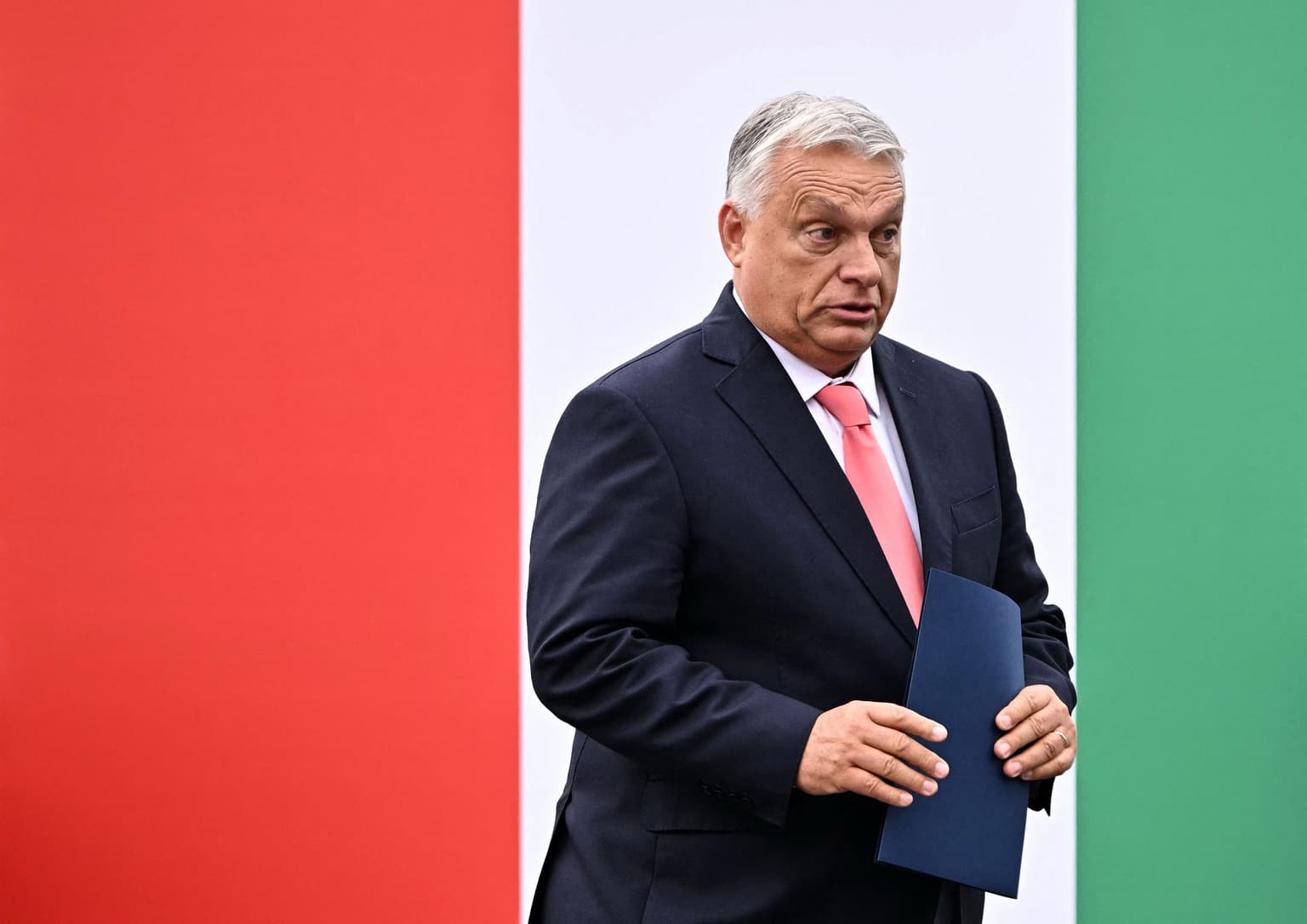
Hungarian Prime Minister Viktor Orban arrives to deliver a speech during a ceremony to celebrate the 130th anniversary of the Maria Valeria Bridge in Esztergom, Hungary. (Attila Kisbenedek/AFP via Getty Images)
The statement was breathtaking in its cynicism. Orban was arguing that because Russia had invaded Ukraine and occupied territory through military force, Ukraine had lost the right to protest violations of its remaining territory. It was the logic of might makes right dressed up as geopolitical realism.
Foreign Minister Andrii Sybiha responded on September 29 that Orban “remains intoxicated by Russian propaganda.” Sybiha wrote on X: “We will be eager to hear his thoughts on state sovereignty and independence once he has broken free from his dependence on Russian energy, as US President Donald Trump and European partners insisted multiple times.”
The exchange highlighted the fundamental division within the Western alliance. While most NATO and EU members supported Ukraine’s sovereignty and territorial integrity, Hungary—a member of both organizations—was actively undermining that position. Orban’s government consumed 8 billion cubic meters of Russian gas annually and remained the European Union’s biggest buyer of Russian gas.
Hungary announced on September 29 that it was blocking twelve Ukrainian media outlets in response to Kyiv’s earlier ban on several foreign publications. Hungarian Cabinet Minister Gergely Gulyas said on September 29 that the ban included popular Ukrainian sources such as Ukrainska Pravda, European Pravda, NV, hromadske, and TSN. Gulyas described the ban on Hungarian outlets in Ukraine as “a completely unjustified attack” and wrote on Facebook on September 29: “With Ukraine’s accession, the EU would only become more fragmented.”
Russia’s Withdrawal: Torture as State Policy
Russia’s withdrawal from the European Convention for the Prevention of Torture, formalized when Putin signed the law on September 29, represented explicit acknowledgment that torture was part of Kremlin state policy. Ukrainian Ombudsman Dmytro Lubinets stated on September 29: “The path Russia has chosen is that of a repressive, murderous state. Its denunciation of the convention only confirms that torture and inhuman treatment are systemic practices of the Kremlin.”
The convention had established a preventive mechanism allowing the European Committee for the Prevention of Torture to conduct regular and unannounced visits to detention facilities. Russia had consistently undermined this mechanism by refusing to cooperate and barring experts from entering the country. Now Moscow was making explicit what had been implicit: international oversight of how Russia treated prisoners was no longer acceptable to the Kremlin.
The bill’s explanatory note said Russia lacked a representative on the European Committee for the Prevention of Torture. “Now, that possibility is lost as well,” Lubinets said on September 29.
According to Lubinets, Moscow’s move showed Russia was “deliberately avoiding” international oversight and removing mechanisms to respond to torture in Russian prisons and occupied territories holding Ukrainian prisoners of war and civilians. For Ukrainian prisoners of war and civilians held in Russian captivity, the withdrawal meant the complete removal of even theoretical international protection.
Danish-Ukrainian Cooperation: Counter-Drone Exercises
Ukrainian military specialists arrived in Denmark on September 29 to take part in joint counter-drone exercises following recent reports of unidentified drones violating the Nordic country’s airspace. The “Wings of Defense” training would bring together Ukrainian and Danish forces to practice countermeasures against unmanned aerial vehicles, the General Staff of the Ukrainian Armed Forces said on September 29.
Over the course of a week, participants would carry out practical tasks, exchange expertise, and strengthen their ability to defend against drones and aerial threats. “Such exercises are an important step in strengthening the interoperability of the Armed Forces of Ukraine and Denmark and make our states stronger in their common pursuit of peace and security in Europe,” the General Staff said on September 29.
Ukrainian specialists were invited to share their combat-tested knowledge in countering drones—an area in which Kyiv has gained extensive experience and developed significant innovations. Denmark has been a staunch supporter of Ukraine, supplying Kyiv with military equipment and investing heavily in the Ukrainian defense industry, including joint drone production.
Strikes in Occupied Crimea: The Feodosia Oil Depot
Ukrainian forces likely struck an oil depot in occupied Crimea on September 29. Russian opposition outlets and milbloggers posted footage on September 29 of smoke at the oil depot in occupied Feodosia, Crimea. Crimean occupation advisor Oleg Kryuchkov claimed that a fire broke out at an empty fuel tank at the oil depot due to a welding violation. Kryuchkov claimed that the Feodosia oil depot was not involved in the fuel and lubricant supply chain for gas stations in occupied Crimea. A Russian milblogger stated that occupation authorities in Crimea were “denying” the strike on the oil depot occurred.
The Feodosia oil terminal has a transshipment capacity of about 12 million tons per year and can store up to 250,000 tons of petroleum products at a time. If confirmed as a Ukrainian strike, it would represent another successful attack on Russian fuel infrastructure that sustains military operations.
Russian Strikes: Three Dead, 76 Injured
Russian attacks against Ukraine killed at least three civilians and injured at least 76 others over the past day, regional authorities reported on September 29. Russian forces launched 32 Shahed-type drones and decoys from Russia at Ukraine overnight, according to Ukraine’s Air Force.
Ukraine’s air defense and electronic warfare intercepted 23 drones, while another nine drones reached their targets in eight locations. Ukrainian officials, including the Ukrainian State Emergency Service, reported that Russian drones struck administrative, educational, and residential buildings in Dnipropetrovsk, Kyiv, and Sumy oblasts.
Polish Foreign Ministry Spokesperson Pawel Wronski reported that Russian strikes damaged the Polish embassy in Kyiv City. European Union Ambassador to Ukraine Katarina Mathernova stated that Russian strikes also damaged vehicles at the EU mission in Kyiv City.
In Kharkiv Oblast, a Russian strike killed a 44-year-old man and injured a 41-year-old woman and a 14-year-old girl in the village of Slatyne. In the village of Borshchova a 79-year-old man was killed, while a 67-year-old woman suffered injuries in the village of Shevchenkove. In Dnipropetrovsk Oblast, a Russian drone attack injured a 44-year-old man, while another FPV drone strike killed a woman. In Zaporizhzhia Oblast, 49 people suffered injuries as a result of Russian attacks. Russian forces launched 696 strikes across 17 localities in the region.
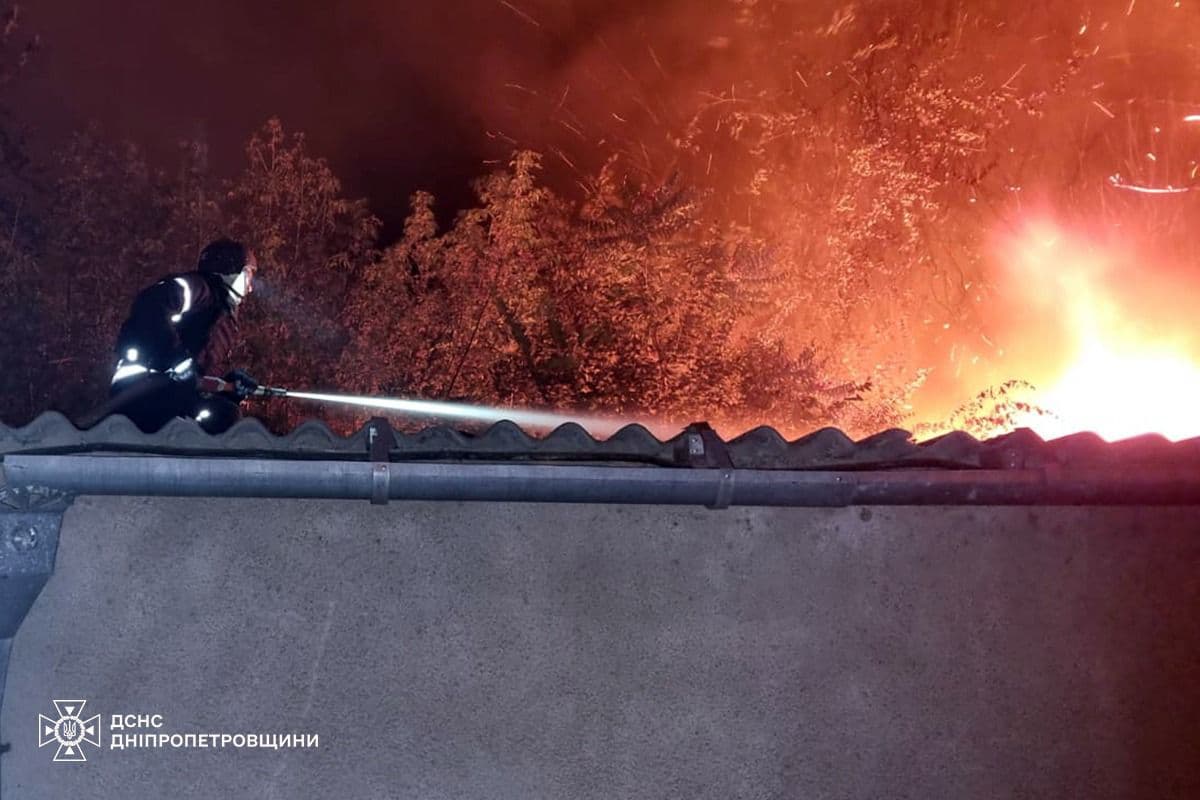
Aftermath following the Russian overnight strike on Ukraine’s Dnipropetrovsk Oblast. (Ukraine’s Emergency Service)
In Donetsk Oblast, Russian attacks injured 11 people, including five in the town of Kostiantynivka, five in the village of Oleksiievo-Druzhkivka, and one in the village of Vodianske. In Sumy Oblast, a Russian drone attack injured a 42-year-old woman and two men, while three women suffered injuries in another community. In Kherson Oblast, Russia targeted 34 settlements, resulting in five people suffering injuries.
A Ukrainian strikes monitoring service reported that Russian forces launched Shahed-type drones against Ukraine from Kacha Air Base in occupied Crimea. The monitoring service noted that this was the twelfth known Russian drone launch site and that Kacha Air Base is located on the western Crimean coast, reducing the flight time to Odesa, Kherson, and Mykolaiv oblasts.
The Day’s True Measure: A War Economy Fully Mobilized
When September 29 ended, the accumulated evidence painted a clear picture. Russia was not preparing for peace. The conscription decree, the budget allocations, the propaganda investments—all pointed toward a nation organizing itself for indefinite conflict. Putin’s signature on the conscription decree meant 135,000 more young Russians would be pulled from civilian life into military service. The budget meant 38 percent of federal spending would go to death and destruction rather than health, education, or economic development.
Ukraine’s responses demonstrated adaptation and innovation. Neptune missiles struck military production facilities 240 kilometers from the border. FPV drones downed helicopters worth millions of dollars. Ukrainian forces encircled Russian units near Dobropillia and liberated 175 square kilometers of territory. But these tactical successes could not obscure the strategic reality: Russia’s larger population and industrial base meant it could sustain losses that would be catastrophic for Ukraine.
The international dimension added further complications. While Kellogg acknowledged US permission for long-range strikes, the Kremlin worked to deter Tomahawk deliveries. While most of Europe supported Ukraine, Hungary’s Orban questioned Ukrainian sovereignty and blocked Ukrainian media. While NATO members reported Russian drone violations of their airspace, clear responses remained elusive.
Moldova’s election provided one bright spot—democracy had survived Russian interference, at least for now. But the protests on September 29, limited though they were, represented the beginning of what would likely be a sustained campaign to delegitimize the democratic choice. The pattern was clear: when Russia could not win through legitimate means, it would use propaganda, intimidation, and the threat of violence to undermine outcomes it disliked.
The nuclear situation at Zaporizhzhia remained the day’s most ominous development. Five days without grid power represented unprecedented risk for Europe’s largest nuclear facility. Every additional hour on emergency generators was another hour closer to potential catastrophe. Yet the international community seemed powerless to force Russia to restore power or withdraw from the plant.
For Ukrainian civilians, September 29 brought the familiar horror of Russian strikes. Three dead, 76 injured, homes and hospitals damaged. The Polish embassy struck. The EU mission damaged. Each attack was a reminder that for all the diplomatic discussions and strategic calculations, the war’s reality was measured in broken bodies and shattered lives.
The day captured the war’s fundamental character as it entered its fourth year. Russia was willing to commit enormous resources to continuing the conflict, transforming its economy and society into instruments of war. Ukraine continued to innovate and adapt, finding ways to strike back despite limited resources. The international community remained divided between those who saw Ukraine’s survival as essential to European security and those like Hungary who prioritized their own interests over collective defense.
September 29, 2025 was not a day of dramatic breakthroughs or decisive battles. It was a day of preparation, calculation, and grinding attrition. Russia prepared to conscript more young men. Ukraine prepared to strike deeper into Russian territory. The West prepared for difficult decisions about weapons deliveries and sanctions. And across the front lines, soldiers on both sides prepared for another day of combat in a war that showed no signs of ending.
The conscription decree Putin signed would send 135,000 more Russians into military service. The budget allocated 17 trillion rubles to war and security. The propaganda machine received billions for television broadcasts that would shape Russian perceptions of the conflict. And at the Zaporizhzhia Nuclear Power Plant, diesel generators continued their ominous rumble, each hour of operation another increment of risk that the world had learned to accept as the new normal in a war that recognized no boundaries and respected no limits.