
European Leaders Race to Finalize Ukraine Security Framework While Russian Budget Crisis Deepens and Battlefield Violence Continues Unabated
Summary of the Day – August 20, 2025
August 20 marked a pivotal convergence of diplomatic momentum and harsh battlefield realities as European leaders accelerated negotiations on security guarantees for Ukraine while Russia grappled with mounting economic pressures from its prolonged war effort. The day’s events crystallized the war’s central contradiction: as diplomats in world capitals discussed frameworks for lasting peace, Russian forces continued their systematic targeting of Ukrainian civilians and infrastructure, killing at least three and injuring 34 others in overnight strikes. Moscow’s war economy showed dangerous strain with budget deficits exceeding annual targets, while international efforts to finalize multinational security arrangements gained unprecedented urgency following Trump’s endorsement of European troop deployments and potential American air support.
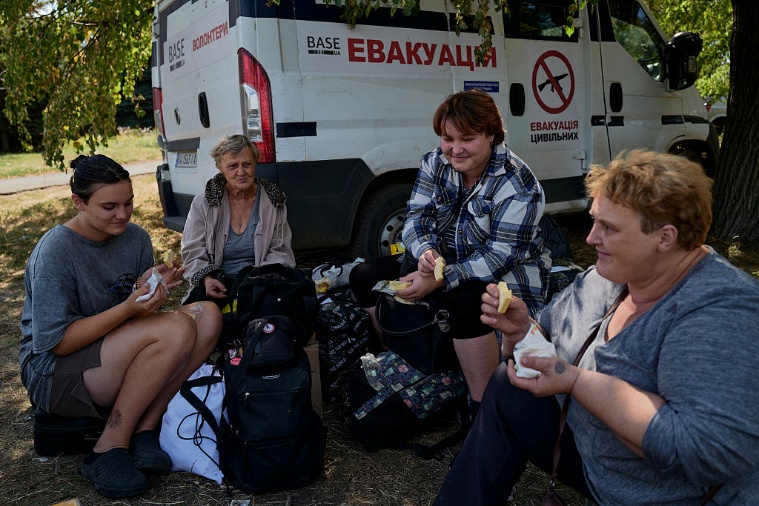
Residents of a front-line town in Ukraine’s Donetsk Oblast were evacuated amid threats of Russian first-person-view (FPV) drone strikes and bombings in Novodonetske, Ukraine (Pierre Crom/Getty Images)
The Bloodiest Month on Record: July’s Civilian Toll Exposes War’s Human Cost
August 20 brought sobering confirmation that July 2025 had become the deadliest month for Ukrainian civilians since May 2022, with UN Human Rights Monitoring Mission documenting 286 killed and 1,388 injured. The statistics transformed abstract diplomatic discussions into stark human reality, revealing the systematic nature of attacks against civilian populations across Ukraine.
Since January 2025 alone, four humanitarian workers have been killed, including two in the line of duty, while at least 32 others sustained injuries attempting to reach those most in need. Tom Fletcher, UN Under-Secretary-General for Humanitarian Affairs, captured the crisis: the humanitarian system stands “underfunded, overstretched and under attack” precisely when Ukraine’s civilians face their greatest peril.
The broader toll since Russia’s February 2022 invasion reached devastating proportions: at least 13,883 civilian deaths, including 726 children, with 35,548 civilians injured, including 2,234 children. More than 100 incidents involving harm to humanitarian personnel, assets, and facilities have been reported, highlighting the growing dangers faced by those working to reach people in desperate need.
Ten Nations Ready: European Coalition Accelerates Security Guarantee Framework
August 20 witnessed unprecedented diplomatic activity as approximately ten European allies signaled readiness to deploy ground forces as part of a multinational security guarantee framework for Ukraine. Bloomberg reported that discussions had advanced significantly, with British and French troops forming the core of a deterrence force designed to prevent future Russian aggression.
Japanese Prime Minister Shigeru Ishiba became the latest leader to signal participation, stating Japan would “play an appropriate role” while carefully considering “various legal and capability aspects.” Swedish Prime Minister Ulf Kristersson emphasized his country’s preparedness to provide air surveillance and naval resources, describing the situation as “critical.”
Lithuanian President Gitanas Nauseda took the strongest position, declaring readiness to deploy ground troops: “We are ready to contribute as many troops as the parliament allows for peacekeeping, and also military equipment.” The coalition’s scope extends beyond Europe, with Canada and other non-European partners expressing willingness to participate.
Polish officials clarified their nation’s role, with Defense Minister Wladyslaw Kosiniak-Kamysz stating Poland would assist with logistics and infrastructure while protecting NATO’s eastern flank rather than deploying troops directly to Ukraine. Italian Prime Minister Giorgia Meloni proposed a framework requiring allies to decide within 24 hours of any renewed Russian attack whether to commit troops—essentially extending NATO’s Article 5 protections without formal membership.
Russia’s Economic Strain Exposed: Budget Deficit Exceeds Annual Target by 25%
August 20 brought damning revelations about Russia’s war economy as Reuters reported Moscow facing a budget deficit of 4.9 trillion rubles (roughly $61 billion) from January through August 2025—already exceeding the government’s full-year target by a staggering 25%. The numbers revealed a war economy straining under its own ambitions.
Russia now allocates over 17 trillion rubles ($211 billion)—representing 41% of its federal budget—to defense and national security. Government sources assessed that actual defense spending likely exceeds the stated 8% of GDP, with no anticipated decrease in 2026 even in the event of a ceasefire.
The government now prepares to increase taxes and reduce non-defense spending while pulling funds from healthcare and education sectors to sustain its military industrial base. Russian Federation Council Committee Chairperson Anatoly Artamonov had warned in late July that Russia needed to “urgently start fiscal consolidation” amid increasingly pessimistic economic indicators and declining oil and gas revenues.
The strain extends beyond immediate budgetary concerns to mounting future costs for veteran compensation, medical care, and psychological support over coming decades—financial obligations that will persist long after any potential peace settlement.
Oil Revenue Under Siege: Secondary Tariffs Force Deeper Russian Discounts
Russia’s primary war funding source faced intensifying pressure on August 20 as Bloomberg reported Moscow deepening oil discounts from $1 in July to $2.50 per barrel compared to Dated Brent, desperately attempting to maintain buyers amid U.S. tariff threats.
India’s state-owned refineries resumed Russian oil purchases after a brief pause triggered by Trump’s 25% tariff on Indian imports, but only after securing the enhanced discount. Russian deputy trade representative in India Yevgeny Griva confirmed Russia expects India to continue buying due to a five percent discount, though the deeper discounting suggests mounting desperation.
Chinese refiners simultaneously ramped up purchases, with Urals crude imports doubling to nearly 75,000 barrels per day in August as Beijing capitalized on Moscow’s growing economic pressure. Treasury Secretary Scott Bessent called India’s oil purchasing practices “unacceptable,” while U.S. officials warned that countries continuing to buy Russian oil could face tariffs up to 100% on their exports to America.
The economic arithmetic proved sobering: oil revenues account for roughly one-third of Russia’s federal budget, making energy exports vital for war financing. Yet secondary tariffs may cost Russia additional foreign funds if discount-driven sales fail to compensate for the gap between reduced prices and market rates.
Moscow’s Diplomatic Counter-Offensive: Lavrov Demands Russian Veto Over Security Guarantees
Russian Foreign Minister Sergey Lavrov revealed Moscow’s counter-strategy on August 20, demanding veto power over any Western security arrangements for Ukraine. Speaking publicly, Lavrov declared that “seriously discussing security issues without Russia is a road to nowhere” and insisted that Russia “cannot agree” that proposed collective security arrangements could proceed without Russian input.
Lavrov’s demands appeared designed to undermine the entire Western framework by granting Moscow the ability to dictate conditions that would weaken Ukraine’s defensive capabilities. He specifically referenced the failed 2022 Istanbul negotiations as a preferred model—arrangements that would have permanently prohibited Ukraine from joining NATO, imposed limitations on Ukrainian military capabilities, and banned Western military assistance without imposing corresponding restrictions on Russian forces.
The Istanbul framework would have treated Russia as a neutral “guarantor state” alongside other UN Security Council permanent members, failing to acknowledge Moscow as the war’s aggressor. Such arrangements would grant China and Russia veto power over any response to renewed Russian attacks by routing authority through the UN Security Council, where both nations hold vetoes.
Lavrov claimed Putin confirmed his readiness to continue direct negotiations with Ukraine in the Istanbul format, though he suggested a summit between Putin and Zelensky would need thorough preparations that could take time—potentially undermining Trump’s timeline for immediate bilateral meetings.
Venue Diplomacy: Poland Rejects Budapest While Switzerland Offers Putin Immunity
The choice of venue for potential Putin-Zelensky talks became a diplomatic minefield on August 20 as Polish Prime Minister Donald Tusk voiced sharp opposition to Hungary as a host location. Tusk noted the historical irony: “In 1994, Ukraine already got assurances of territorial integrity from the U.S., Russia, and the U.K. In Budapest. Maybe I’m superstitious, but this time I would try to find another place.”
Tusk’s reference to the Budapest Memorandum—under which Ukraine surrendered its nuclear arsenal in exchange for security assurances later violated by Russia—highlighted the symbolic weight of venue selection. Hungary’s April parliamentary vote to withdraw from the International Criminal Court would allow Putin to travel without facing arrest despite his 2023 ICC warrant for Ukrainian children’s deportation.
French President Emmanuel Macron proposed Geneva as an alternative, citing Switzerland’s neutrality. Swiss Foreign Minister Ignazio Cassis confirmed on August 20 that Putin would receive immunity from arrest if traveling to Switzerland for peace talks, though the arrangement would represent a significant compromise of international justice principles.
Putin held a phone call with Turkish President Recep Tayyip Erdogan on August 20 to discuss the war in Ukraine, with the Kremlin noting Putin’s satisfaction with “Turkey’s assistance in hosting talks between Russian and Ukrainian representatives in Istanbul.” The call positioned Ankara as another potential host while Putin briefed Erdogan on his recent Alaska summit with Trump.
Separately, NATO Secretary General Mark Rutte spoke with Erdogan on August 19 about peace talks between Ukraine and Russia and Turkey’s role in Black Sea security. Erdogan’s office reported that the call “addressed the latest developments concerning the peace process between Ukraine and Russia,” highlighting “Turkey’s key role in the Ukraine peace process and the security of the Black Sea.” The diplomatic activity underscored Ankara’s unique position as one of the few countries maintaining direct contact with both Kyiv and Moscow while controlling access to the Black Sea through the Bosporus and Dardanelles straits.
Battlefield Grinding: Russian Advances Continue Across Multiple Fronts
Military operations on August 20 demonstrated the war’s continued intensity despite diplomatic acceleration. Geolocated footage confirmed Russian advances near Zarichne (east of Lyman), within southern areas, and advances in the Velykomykhailivka direction including the seizure of Novoheorhiivka by elements of the Russian 57th Motorized Rifle Brigade.
In the Sumy direction, Russian forces seized Bezsalivka (northwest of Sumy City) and advanced into central Oleksiivka (north of Sumy City), though Ukrainian Center for Countering Disinformation Head Lieutenant Andriy Kovalenko noted that Russian milbloggers were mentioning Sumy Oblast less frequently due to mounting Russian losses and gradual retreats in several areas.
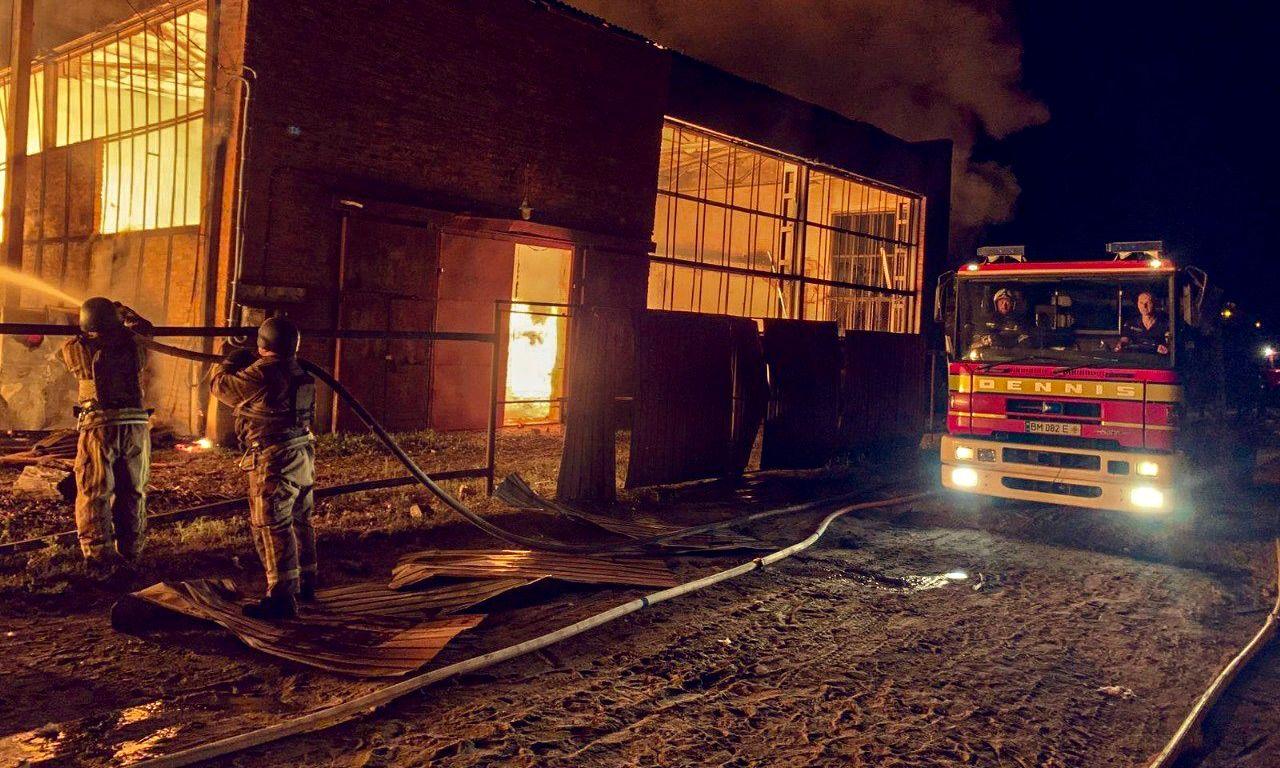
A Russian strike on Sumy Oblast sparked a fire, hitting civilian infrastructure. (State Emergency Service / Telegram)
Ukrainian forces demonstrated resilience by conducting counterattacks along the entire perimeter of the Dobropillya penetration, with military observer Kostyantyn Mashovets reporting fluid fighting where neither side could seize decisive initiative. The tactical picture remained one of grinding attrition with limited but significant territorial changes across the eastern front.
Fighting continued across multiple directions including Kupyansk, Lyman, Toretsk, and Pokrovsk, with both sides adapting tactics to overcome technological and tactical challenges. A Ukrainian intelligence officer reported that Russian forces increasingly employed anti-drone thermal imaging cloaks and transported electronic warfare systems to forward positions via motorcycles and scooters.
Civilian Infrastructure Collapse: Postal Services Shutter as Cities Become Uninhabitable
August 20 brought a symbolic milestone as Ukrposhta, Ukraine’s state postal service, announced the closure of its Kostiantynivka offices due to deteriorating security conditions. Russian forces now positioned within six kilometers of the city’s outskirts, making continued operations impossible for even the most essential civilian services.
CEO Ihor Smilyanskyi captured the service’s critical role: “For a long time in Kostiantynivka, we were alone: no banks, no competitor colleagues. Only Ukrposhta was there, supporting the lives of thousands of people.” The closure left thousands of residents without access to pension payments and essential packages, highlighting how military advances translate into humanitarian catastrophe.
Since June 2025, Kostiantynivka has faced what officials termed a looming “humanitarian catastrophe” as Russian strikes systematically destroyed critical infrastructure, leaving residents without electricity, gas, and stable water supplies. The nearest operating Ukrposhta branches now stood 5-7 kilometers away in Druzhkivka and Oleksievo-Druzhkivka.
Night of Terror: Russian Strikes Kill Three, Injure 34 Across Ukraine
Overnight strikes from August 19-20 demonstrated Russia’s continued targeting of civilian infrastructure despite intensifying diplomatic discussions. Russian forces launched 93 Shahed-type drones and two Iskander-M ballistic missiles, with Ukrainian air defenses intercepting 62 drones and one missile while 31 projectiles struck 20 locations across the country.
The attacks killed at least three civilians and injured 34 others, including children. Sumy Oblast bore particular devastation, with Russian forces firing more than 140 times on 52 settlements, injuring 16 people including two children. In Okhtyrka, a drone strike left 14 injured, including a family with three children aged 5 months, 4 years, and 6 years.
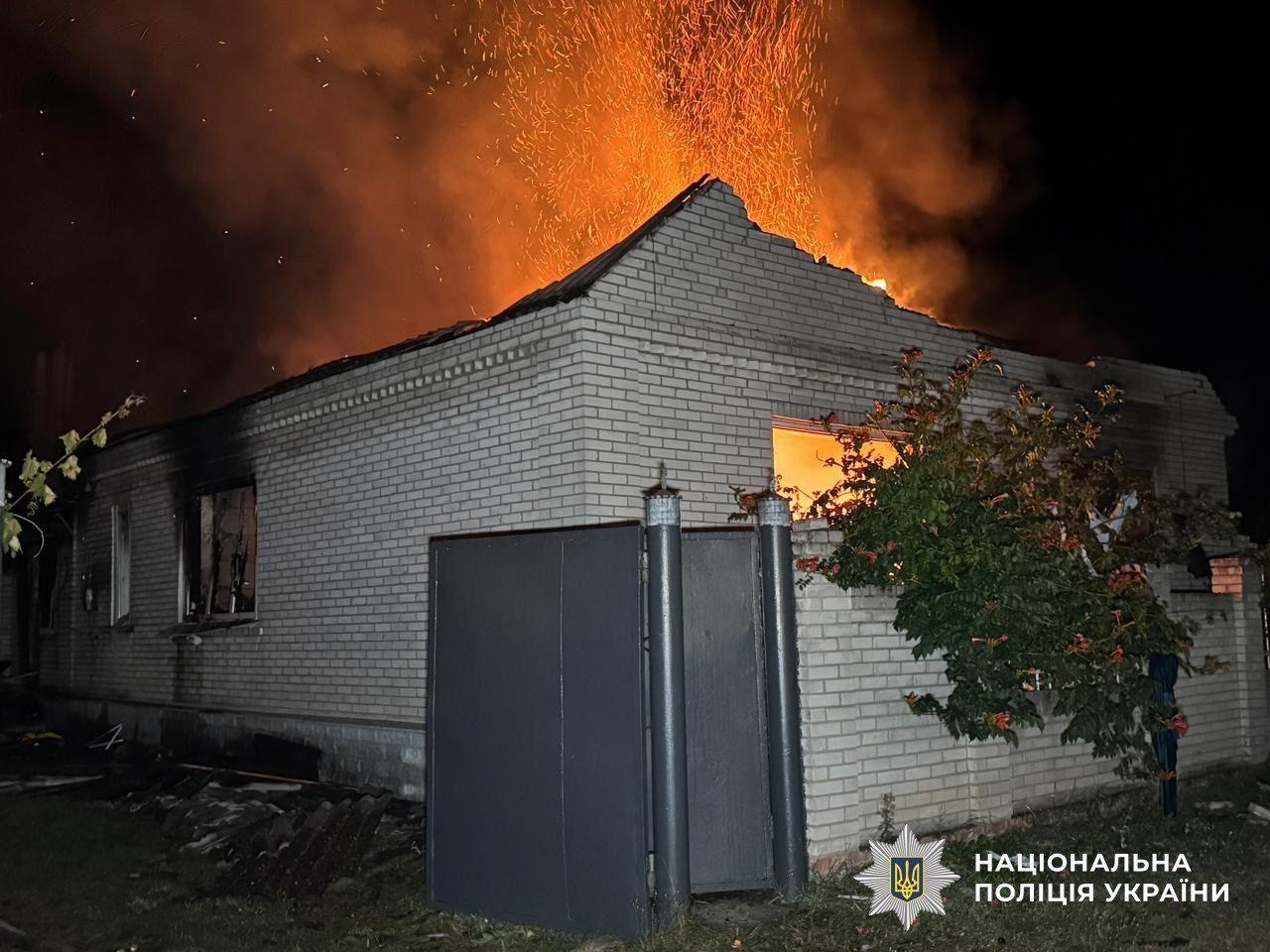
Aftermath of a Russian drone strike on Okhtyrka in Sumy Oblast. (National Police of Ukraine/Telegram)
Regional casualties mounted across multiple oblasts: one killed and one injured in Dnipropetrovsk Oblast, one killed and 10 injured in Donetsk Oblast, two injured in Kharkiv Oblast, one killed and three injured including a child in Kherson Oblast, one injured in Odesa Oblast where port infrastructure was damaged, and one injured in Zaporizhzhia Oblast.
The systematic nature of these attacks underscored Moscow’s strategy of degrading civilian morale while maintaining negotiating leverage, even as world leaders discussed frameworks for ending the violence.
Poland’s NATO Alert: Russian Drone Crash Sparks Provocation Claims
Regional tensions escalated on August 20 as Polish officials reported a Russian drone crash in eastern Poland’s rural Lublin Voivodeship, describing the incident as a “deliberate provocation” amid international peace negotiations. The unmanned aerial vehicle fell into a cornfield near Osiny village, prompting immediate diplomatic protests from Warsaw.
Defense Minister Wladyslaw Kosiniak-Kamysz characterized the incident as part of a broader pattern: “Russia once again provokes NATO countries—after drone incidents that took place in Romania, Lithuania, and Latvia, as well as after airspace violations that occurred in almost all NATO countries.” Foreign Minister Radoslaw Sikorski announced a formal diplomatic protest against the “perpetrator.”
Polish military analysis suggested the drone, powered by a commercially available Chinese-made engine, was likely a decoy designed to confuse air defenses before self-destructing. General Dariusz Malinowski noted the device appeared to fly very low to avoid radar detection and carried only small explosive amounts.
The incident underscored NATO’s eastern flank vulnerabilities while highlighting the war’s potential for regional escalation. Poland has repeatedly accused Moscow of testing alliance defenses through deliberate airspace violations and drone flights designed to destabilize the region.
Elite Reshuffling in Moscow: Bastrykin’s Potential Replacement Signals Generational Change
Moscow’s internal dynamics shifted on August 20 as business newspaper Vedomosti reported Kremlin considerations to replace Russian Investigative Committee Chairman Alexander Bastrykin, potentially moving the 72-year-old to chair the Supreme Court. The move would represent another step in Putin’s gradual elite renewal process.
Kremlin sources viewed Bastrykin’s potential replacement as an opportunity to “introduce new blood” to the investigative apparatus. The move aligns with Putin’s recent practice of reassigning rather than retiring older inner circle members, as demonstrated by former Security Council Secretary Nikolai Patrushev’s appointment to oversee shipbuilding in May 2025.
Putin’s elite rotation increasingly favors younger officials with significant war involvement, such as former Tula Oblast Governor Alexei Dyumin, who became the youngest-ever Security Council member in September 2024. The pattern reflects Putin’s February 2024 announcement of forming a new elite from veterans and committed war supporters.
America’s Diplomatic Shift: U.S. Abstains from Georgia Condemnation
A notable diplomatic development emerged on August 20 as the United States abstained from a joint UN Security Council statement condemning Russia’s 2008 invasion of Georgia, breaking with previous American practice of joining such condemnations. Representatives from Denmark, France, Greece, the U.K., Slovenia, and incoming member Latvia denounced Russia’s continued military presence in Georgia’s Abkhazia and South Ossetia regions.
Slovenia’s deputy permanent representative read the statement demanding Russian compliance with the 2008 EU-brokered ceasefire agreement and force withdrawal: “Russian invasion of Georgia in August of 2008 demonstrated the start of Russia’s more aggressive stance towards its neighbors. Russia has continued down this path with its unprovoked and unjustified aggression against Ukraine.”
The American absence mirrors Washington’s February vote against a UN General Assembly resolution explicitly naming Russia as Ukraine’s aggressor. Secretary of State Marco Rubio had explained the opposition as avoiding content “antagonistic to either side” and contradicting U.S. negotiation efforts with Russia. The shift reflects broader changes in American diplomatic approach under Trump, prioritizing negotiation facilitation over moral clarity regarding Russian actions.
Zaluzhnyi Speculation: Former Commander’s Team Denies Presidential Campaign
Speculation surrounding Ukraine’s political future intensified on August 20 as media adviser Oksana Torop denied reports that former Commander-in-Chief Valerii Zaluzhnyi was establishing a presidential campaign team in London. The denial came after U.S. journalist Katie Livingston claimed Zaluzhnyi “already set up a campaign staff in London, with recruitment underway.”
Torop firmly rejected the claims: “There is no talk of any campaign headquarters. Valerii Zaluzhnyi has stated his position more than once: while the war continues, we need to work to preserve the country, not think about elections.” The clarification addressed growing speculation about Ukraine’s post-war political landscape.
Zaluzhnyi remains Ukraine’s most trusted public figure according to July 2025 polling, with 73% trust compared to Zelensky’s 67% and military intelligence chief Kyrylo Budanov’s 56%. The former commander’s dismissal in February 2024 and subsequent appointment as ambassador to the United Kingdom positioned him as a potential future political player, though Ukraine cannot hold elections while martial law remains active.
NATO Military Coordination: Alliance Leaders Meet Virtually on Security Guarantees
August 20 saw NATO military leaders conduct virtual meetings to coordinate security support for Ukraine, reflecting the alliance’s growing involvement in post-war planning despite Ukraine’s non-membership status. European officials indicated that participating nations in the “coalition of the willing” could hold additional meetings in coming days to finalize security guarantee details.
The military coordination represented unprecedented allied planning for Ukraine’s post-conflict security, with discussions reportedly including force positioning, command structures, and response mechanisms. António Costa, president of the European Council, emphasized that guarantee terms would be arranged “in the coming days, preferably this week.”
While leaders hailed recent diplomatic progress as breakthrough developments, officials acknowledged doubts about whether any guarantees could persuade Putin to honor agreements. The Kremlin has consistently rejected NATO troop deployments on Ukrainian soil, creating fundamental tensions over enforcement mechanisms.
Iran-Belarus Alliance Deepens: Pezeshkian Visit Signals Enhanced Military Cooperation
Iranian President Masoud Pezeshkian met with Belarusian President Alexander Lukashenko in Minsk on August 20 to discuss opportunities to expand bilateral relations, with both leaders emphasizing their shared opposition to Western influence. Pezeshkian stated that Iran and Belarus share common interests and seek to combat U.S. and European efforts to “push unilateralism” in regional and international affairs.
The visit resulted in the signing of 12 memorandums of understanding focused on increasing bilateral trade, military-technical cooperation, and mutual investment. Iranian Minister of Foreign Affairs Abbas Araghchi announced that Iran plans to sign a comprehensive strategic partnership with Belarus, building on defense and security cooperation that has intensified in recent years.
The timing proved particularly significant as Iran has reportedly worked to establish a drone factory in Belarus since May 2023 to support Russia’s invasion of Ukraine. Iran showcased military equipment at a Belarusian military exhibit in May 2025, demonstrating the deepening military-industrial cooperation between the two nations.
Pezeshkian emphasized that Iran and Belarus can cooperate to mitigate the effects of international sanctions, creating a sanctions-evasion partnership that could complicate Western efforts to isolate both Moscow and Tehran. The enhanced cooperation represents another example of authoritarian regimes deepening ties in response to Western pressure over the Ukraine war.
Economic Resilience Amid Destruction: Ukraine’s Q2 Growth Signals Adaptation
Despite the war’s devastation, economic data released on August 20 showed Ukraine’s remarkable adaptability with 1.7% GDP growth in the second quarter of 2025, accelerating from 0.8% in the first quarter. The Institute for Economic Research and Policy Consulting noted growth supported by metallurgy, construction materials, and light manufacturing, while agriculture, coal mining, and oil processing weakened.
The sectoral performance revealed wartime economic realities. Clothing and footwear output rose, likely driven by military demand, while metallurgy expanded through rail and sea exports. Mining contracted 10% due to coal losses from Pokrovsk and Selidove’s fall to Russian occupation in late 2024, though gas extraction and construction materials showed partial recovery.
Energy remained critically vulnerable with natural gas storage at just 10 billion cubic meters—32.3% capacity and the lowest level in 12 years. Russian strikes earlier in 2025 cut domestic gas production by half, though Ukraine has since restored about 50% of capacity while seeking alternative European sources for winter heating needs.
Agricultural challenges proved particularly severe, with real value added falling 26% year-over-year in July due to lower harvest volumes following 2024’s drought and the reintroduction of EU export quotas.
Diplomatic Momentum Meets Battlefield Reality: The Day’s Stark Contradictions
August 20 crystallized the war’s central paradox: unprecedented diplomatic acceleration occurring alongside continued battlefield violence and civilian suffering. As European leaders finalized security guarantee frameworks and scheduled military coordination meetings, Russian forces maintained systematic attacks on Ukrainian cities and infrastructure.
The economic pressures on both sides intensified—Russia’s budget deficit exceeding annual targets while Ukraine adapted its wartime economy with mixed success. Oil revenues faced mounting pressure from secondary tariffs while Ukrainian energy infrastructure endured systematic targeting.
The day’s events set the stage for potentially decisive developments: Putin-Zelensky talks potentially within two weeks, finalization of multinational security guarantees, and continued military operations that could reshape negotiating positions. Whether diplomatic momentum can translate into sustainable peace remains the fundamental question as both sides prepare for what could be the war’s most consequential phase since February 2022.
The challenge of August 20 remained bridging the vast gulf between diplomatic aspiration and battlefield reality, between guarantees on paper and safety in practice, between the promise of peace and the persistence of violence across Ukraine’s embattled landscape.