
As Russian Forces Gain Ground in Pokrovsk Direction and Strike Ukrainian Conscription Offices, Ukraine Targets Chemical Plants Deep in Russia While Former Kursk Governor Takes His Own Life
Summary of the Day – July 7, 2025
Russian forces continued their methodical advance in the Pokrovsk direction on July 7, with geolocated footage confirming gains northeast of Novoekonomichne and in southern Novoekonomichne during a platoon-sized mechanized assault. The tactical gains came as Russian drones struck Ukrainian conscription offices in Kharkiv and Zaporizhzhia, injuring several people in a deliberate campaign to disrupt mobilization efforts. Ukraine struck back with long-range drone attacks on the Krasnozavodsk Chemical Plant near Moscow and the Ilsky oil refinery in Krasnodar Krai, while Russian airports canceled 287 flights due to drone threats. The day ended with the shocking suicide of former Russian Transport Minister Roman Starovoit following his dismissal by Vladimir Putin amid mounting transportation sector failures.
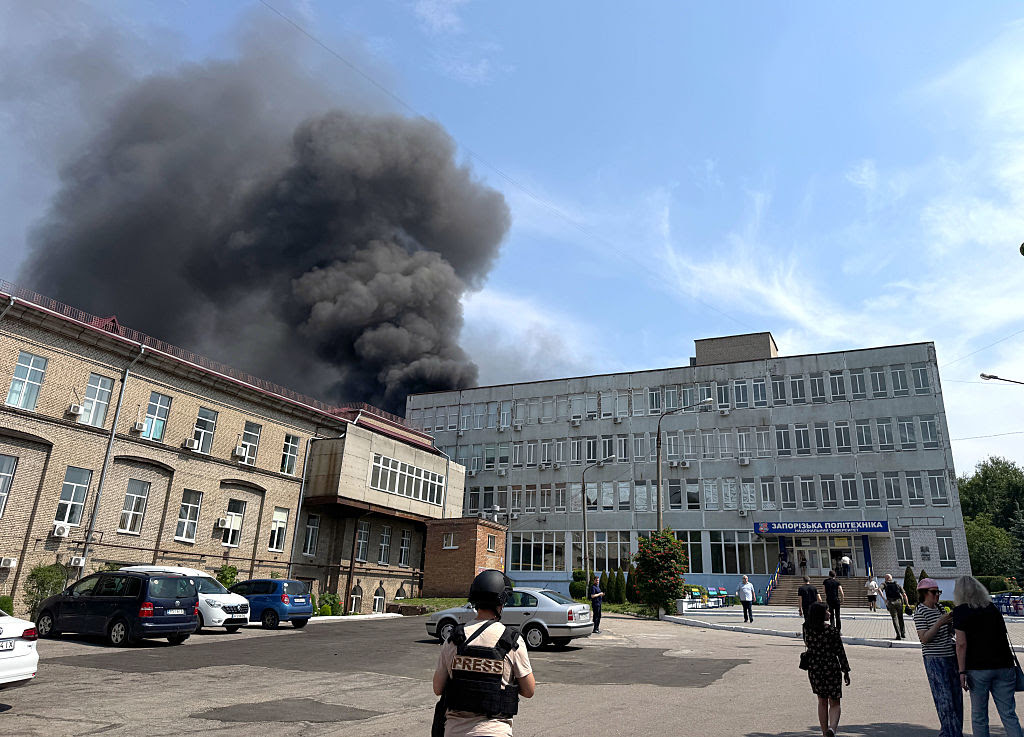
A plume of black smoke rises over the area where a Russian attack drone lands near the Zaporizhzhia Regional Territorial Recruitment Centre in Zaporizhzhia, Ukraine. (Dmytro Smolienko / Ukrinform / NurPhoto via Getty Images)
Russian Advances: Pokrovsk Envelopment Strategy Continues
Russian forces advanced northeast of Novoekonomichne and in southern Novoekonomichne during a platoon-sized mechanized assault, according to geolocated footage published on July 6 and 7. Russian milbloggers claimed additional advances northwest of Koptieve, west of Myrne, and southwest of Myrolyubivka.
Russian forces attacked toward Pokrovsk itself, northeast near Myrne, Razine, and Malynivka, east near Myrolyubivka, Promin, and Novoekonomichne, southeast near Lysivka and Mykolaivka, south near Novoukrainka and Shevchenko, and southwest near Udachne, Kotlyne, and Zvirove on July 6 and 7.
A Ukrainian brigade spokesperson reported that Russian forces are conducting highly attritional, infantry-led assaults, sometimes without weapons, to divert Ukrainian attention from well-equipped groups attacking on the flanks. Russian forces are using summer foliage as camouflage against Ukrainian drones.
Russian forces have struggled to advance into Novoekonomichne over the last two months in the face of ongoing Ukrainian defensive operations and counterattacks in the area. One Russian milblogger noted that Russian forces previously unsuccessfully attempted to advance into Novoekonomichne from the east near Malynivka, but that Russian forces were able to advance into the settlement from the south.
Chemical Plant Strike: Ukraine Hits Moscow Oblast Defense Facility
Ukrainian forces struck the Krasnozavodsk Chemical Plant in Moscow Oblast on July 7, according to Ukraine’s General Staff. The plant, located 88 kilometers northeast of Moscow, produces industrial and military-grade chemicals, including explosives, ammunition components, and aircraft protection systems.
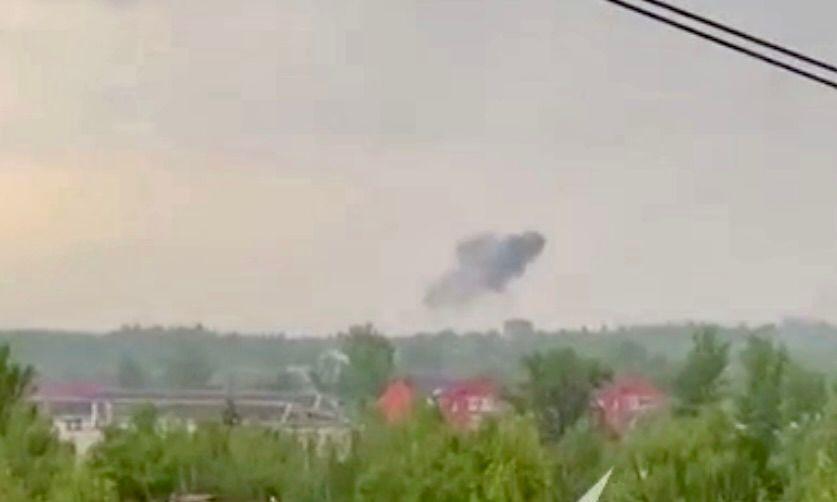
A purported image shows smoke near the Krasnozavodsk Chemical Plant in the town of Krasnozavodsk, Moscow Oblast, Russia. (Astra / Telegram)
The facility produces pyrotechnics, ammunition, and thermobaric warheads for Shahed-type drones. Geolocated footage published on July 7 showed smoke and fires at the Krasnozavodsk Chemical Plant. The plant is affiliated with the Russian state defense conglomerate Rostec and supplies the Defense Ministry, Interior Ministry, Federal Security Service, and other law enforcement agencies.
Russia’s Defense Ministry claimed that air defenses intercepted or destroyed 91 Ukrainian drones across multiple regions, including eight over Moscow Oblast. The Ukrainian General Staff confirmed that units from its Unmanned Systems Forces carried out a precision strike against the facility to disrupt Russia’s ability to produce explosive materials and ammunition.
Oil Refinery Targeted: Ukraine Strikes Ilsky Facility in Krasnodar
Ukrainian drones struck the Ilsky oil refinery in Russia’s Krasnodar Krai on July 7, hitting one of the facility’s technological workshops, according to a HUR source. Located roughly 500 kilometers from Ukrainian-controlled territory, the refinery is among the largest in southern Russia, producing over 6 million tons of fuel annually.
The refinery is involved in the reception, storage, and processing of hydrocarbons and distributes refined products via road and rail. The Russian regional operational headquarters claimed that “drone debris” fell on the oil refinery. This marks the second known Ukrainian strike on the Ilsky refinery, following a February 17 attack.
Airport Chaos: 287 Russian Flights Canceled Due to Drone Threats
Russian airports canceled 287 flights on July 6 due to safety concerns over Ukrainian drone attacks, according to the Russian Federal Aviation Agency. Moscow’s Sheremetyevo Airport saw 171 flights canceled and 56 delayed, while St. Petersburg’s Pulkovo Airport had 90 flights canceled and 37 delayed. In Nizhny Novgorod, 26 flights were canceled and 13 delayed.
The restrictions followed a wave of closures triggered by drone threats. Russia’s Defense Ministry claimed to have intercepted 120 drones on Russian territory overnight between July 5 and July 6. Flight restrictions were also imposed on Russia’s Ivanovo, Kaluga, Pskov, and Tambov airports.
Conscription Offices Targeted: Russian Strikes Hit Ukrainian Mobilization Centers
Russian drones struck Ukrainian conscription offices in Kharkiv and Zaporizhzhia on July 7, injuring three people in Kharkiv and one soldier in Zaporizhzhia. The attacks damaged military infrastructure and surrounding areas in both cities.
The strikes are part of what Ukrainian military officials describe as a deliberate Russian campaign to target enlistment infrastructure and undermine mobilization efforts. On July 3, a Russian strike on Poltava killed two people and injured 47 others, causing a fire at the city’s military conscription office.
Ukraine’s Ground Forces spokesperson Vitalii Sarantsev stated that Russia is systematically conducting “precision strikes” against Ukrainian registration and enlistment offices to disrupt Ukrainian recruitment efforts.
Minister’s Suicide: Former Transport Chief Dies After Putin Dismissal
Former Russian Transport Minister Roman Starovoit shot himself dead in Odintsovo following his dismissal by President Vladimir Putin on July 7, according to Russian media reports. Starovoit’s body was found in his private vehicle with a gunshot wound, with preliminary findings suggesting suicide.
Starovoit’s dismissal came after nearly 500 flights were grounded at major Russian airports on July 5-6 due to Ukrainian drone attacks. An explosion aboard the Eco Wizard tanker at the Ust-Luga port in Leningrad Oblast on July 7 added to the transportation sector crisis.
Former Kursk Oblast official Aleksei Smirnov, who had served as Starovoit’s deputy, provided testimony implicating Starovoit in embezzling 1 billion rubles during the construction of defensive structures in the border region. Starovoit had served as governor of Kursk Oblast before being appointed transport minister in May 2024.
Massive Civilian Casualties: 12 Killed in Russian Attacks Across Ukraine
At least 12 civilians were killed and 69 others injured in Russian attacks across Ukraine on July 7. Russia launched 101 drones and four S-300/400 guided missiles, with Ukrainian forces intercepting 75 drones.
Donetsk Oblast suffered the heaviest casualties with seven civilians killed – four in Kostiantynivka, two in Druzhkivka, and one in Novohryhorivka – and 15 others injured. Kharkiv Oblast reported 27 people injured, including three children. Kherson Oblast saw two civilians killed and nine injured.
Sumy Oblast reported two civilians killed in a drone strike, while Odesa Oblast had one civilian killed. Zaporizhzhia saw 12 people injured, including 10 during a drone strike on the city center. Dnipropetrovsk Oblast reported five civilians injured.
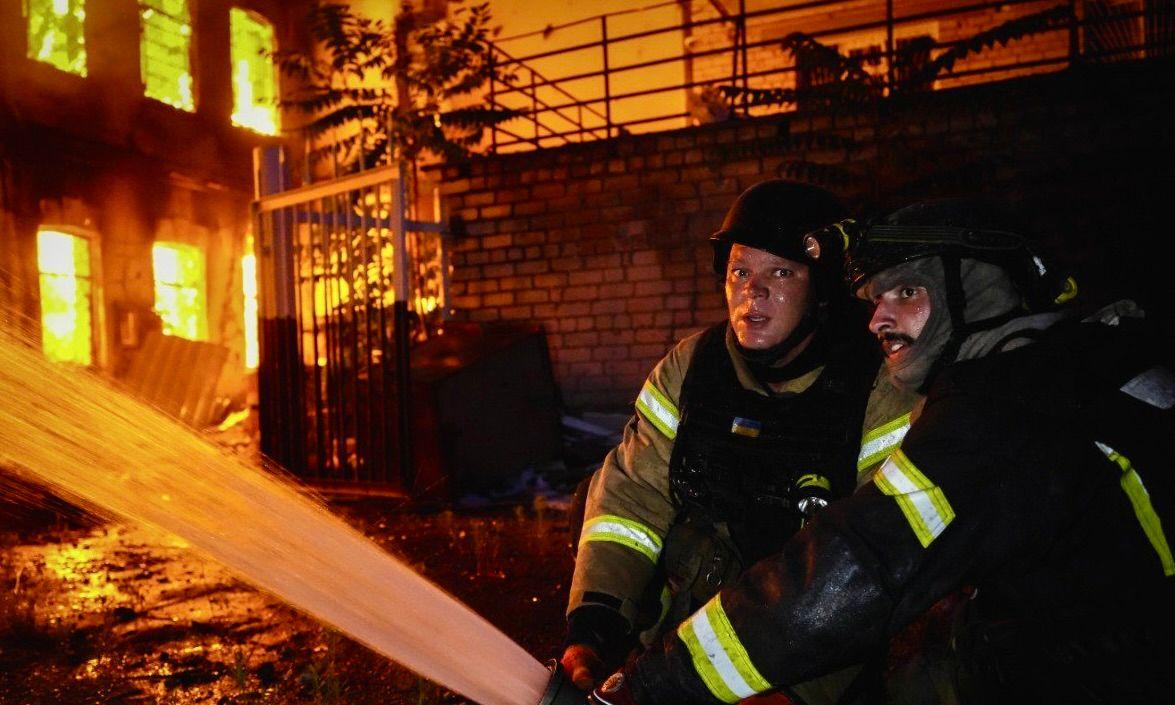
Firefighters extinguish the fire that erupted after a Russian attack against Ukraine’s Kherson Oblast. (State Emergency Service / Telegram)
Lavrov Rejects Ceasefire: Russia Demands Demilitarization and Regime Change
Russian Foreign Minister Sergei Lavrov reiterated the Kremlin’s rejection of a ceasefire and unchanged demands in an interview with Hungarian outlet Magyar Nemzet published on July 7. Lavrov claimed that a settlement must eliminate the “root causes” of the war, which he defined as NATO’s expansion and Ukraine’s alleged discrimination against Russian-speakers.
Lavrov explicitly highlighted Russia’s demands for Ukraine’s demilitarization and “denazification” – a phrase Russia uses to demand regime change in Ukraine. He also demanded international recognition of Russia’s illegal annexation of Luhansk, Donetsk, Zaporizhia, and Kherson oblasts and Crimea, including areas Russian forces do not currently occupy.
Lavrov called for sanctions relief and the return of frozen Russian assets as part of any future settlement.
Frontline Fighting: Multiple Sectors See Continued Combat
Russian forces continued offensive operations across multiple frontline sectors on July 7. In northern Sumy Oblast, geolocated footage confirmed Russian forces advanced north of Yunakivka. Russian milbloggers claimed Russian forces seized Bezsalivka and advanced south of the settlement.
In the Kupyansk direction, Russian forces attacked northeast near Krasne Pershe and Kamyanka, north near Holubivka, and northwest near Kindrashivka and Moskovka. A Ukrainian brigade spokesperson reported Russian forces continue attacking constantly in small groups with a manpower advantage.
The Lyman direction saw continued Russian assaults north of Lyman near Hlushchenkove, Ridkodub, Zelena Dolyna, Karpivka, and Novyi Myr. Russian milbloggers claimed advances east of Hlushchenkove and northwest of Ridkodub.
In the Toretsk direction, geolocated footage confirmed Russian forces advanced northwest of Dyliivka. Russian forces attacked near Toretsk itself, north toward Dyliivka and Pleshchiivka, and northwest near Yablunivka, Popiv Yar, Poltavka, and Rusyn Yar.
Ukrainian Advances: Gains Reported in Novopavlivka Direction
Ukrainian forces advanced in northern Dachne, according to geolocated footage published on July 6. Russian forces also advanced to southern Tovste in the same area, with the Russian Ministry of Defense claiming seizure of Dachne.
Ukraine’s Donetsk Operational-Tactical Group denied the Russian claimed seizure of Dachne, stating that fighting is ongoing. Russian forces attacked toward Novopavlivka itself and in multiple directions around the settlement.
A Ukrainian brigade operating near Dachne reported that Russian forces are deploying infantry to evade Ukrainian drones more effectively than with light vehicles.
Rubikon Drone Center: Russia Leverages Advanced Unmanned Technologies
Ukrainian servicemembers operating in the Kostyantynivka direction told the New York Times that the arrival of drone operators from Russia’s Rubikon Center represented a “turning point” in Russia’s tactical drone capacity. Russia deployed Rubikon drone units to Kursk Oblast in early 2025, where fiber optic drones played a significant role in eliminating the remaining Ukrainian salient.
Rubikon units redeployed to the Kostyantynivka area in Spring 2025, allowing Russian forces to significantly complicate Ukrainian logistics. The Russian Ministry of Defense oversees Rubikon and prioritizes supplying and staffing the center.
Rubikon is organized into four parts: the center for unmanned systems development, the center for teaching instructors, the center for analytics, and frontline combat units. The center operates various types of drones, including Lancet loitering munitions, Molniya strike drones, fiber optic drones, and long-range FPV drones.
BRICS Summit: Members Condemn Ukrainian Railway Strikes
BRICS summit participants condemned recent attacks on Russia’s railway infrastructure in a joint declaration from Rio de Janeiro on July 6. The document condemned “attacks on bridges and railway infrastructure deliberately targeting civilians in the Bryansk, Kursk and Voronezh regions” on May 31 and June 1 and 5, 2025.
BRICS leaders called for a negotiated peace agreement between Russia and Ukraine, stating they “expect that current efforts will lead to a sustainable peace settlement.” The declaration avoided urging Russia to cease its war efforts in Ukraine.
Trump Administration Reversal: U.S. to Send Additional Weapons to Ukraine
U.S. President Donald Trump announced on July 7 that his administration would send Ukraine additional weapons. “We’re going to send some more weapons. We have to,” Trump told reporters during a dinner with Israeli Prime Minister Benjamin Netanyahu, adding “defensive weapons, primarily, but they’re getting hit very, very hard.”
The move came days after the Pentagon imposed a pause on some shipments to Kyiv. White House press secretary Karoline Leavitt said the pause was “a routine review of existing weaponry” that had “nothing to do” with the President.
The Pentagon issued a statement noting that at Trump’s direction, it was sending additional defensive weapons to Ukraine to “ensure the Ukrainians can defend themselves while we work to secure a lasting peace.”
Chinese Components in Russian Drones: Growing Beijing Support for Moscow
Ukraine’s Main Military Intelligence Directorate reported to Radio Svoboda that Russia is increasingly relying on Chinese drone components, with 60 to 65 percent of the components in Geran-2 drones being Chinese. Russia’s growing dependence on Chinese technology underscores Beijing’s support for Moscow’s war effort.
Ukraine’s sanctions commissioner Vladyslav Vlasiuk told journalists on July 7 that China’s role in supporting Russian weapons production is increasing, with Beijing expanding its technological capabilities to replicate American technologies.
Military Units: Order of Battle Updates
Elements of the Russian 810th Separate Naval Infantry Brigade are operating near Gornal in Kursk Oblast. Elements of the 11th Airborne Division are also operating in Kursk Oblast.
In the Sumy Oblast border area, elements of the Russian 177th Naval Infantry Regiment and 40th and 155th naval infantry brigades are operating near Kindrativka and Kostyantynivka. Elements of the 83rd and 11th separate airborne brigades, reinforced by elements of the 22nd Motorized Rifle Regiment and 1443rd Motorized Rifle Regiment, are operating near Novomykolaivka.
In the Pokrovsk direction, elements of the Russian “Typhoon” Detachment of the 506th Motorized Rifle Regiment are operating. In the Novopavlivka direction, elements of the Russian 36th and 37th Motorized Rifle Brigades are operating near Myrne.
British Sanctions: UK Targets Russian Chemical Weapons Officials
The United Kingdom imposed new sanctions on Russian individuals and an organization involved in the use and transfer of chemical weapons in Ukraine. The measures target Russia’s Scientific Research Institute of Applied Chemistry, Lieutenant General Alexei Rtishchev, head of Russia’s Radiological, Chemical and Biological Defense Troops, and his deputy, Andrei Marchenko.
The Scientific Research Institute of Applied Chemistry was sanctioned for providing Russia’s military with handheld chemical grenades used against Ukrainian Armed Forces. The sanctions come amid growing international concern over Russia’s escalating use of banned chemical agents.
Air Defense Discussions: Zelensky and Trump Address Ukraine’s Ambassador
President Volodymyr Zelensky and U.S. President Donald Trump discussed a potential change in Ukraine’s ambassador to Washington during a recent phone call, according to sources. Prime Minister Denys Shmyhal, Deputy Prime Minister Olha Stefanishyna, Defense Minister Rustem Umerov, and Energy Minister Herman Halushchenko are among the candidates being considered.
Current ambassador Oksana Markarova has held the post since April 2021 and played a central role in coordinating U.S. military and financial support during the early phases of Russia’s full-scale invasion.
Child Deportation Schemes: Russia Continues Forced Transfers
A Russian State Duma deputy oversaw the deportation of children from occupied Kherson Oblast to Russia under the guise of escorting them to a rehabilitation program. Anna Kuznetsova told TASS on July 2 that she took a group of children from occupied Kherson Oblast to the IRIS neuro-rehabilitation center in Sochi.
The new Russian occupation governor of Mariupol announced plans for 2,000 children from occupied Mariupol to attend summer camps in St. Petersburg in 2025. Russian nuclear energy operator Rosenergoatom is sponsoring the removal of Ukrainian children to summer camps in occupied Crimea.
Russian occupation officials continue to deport Ukrainian youth to military-patriotic training camps in Russia, with 50 teenagers from occupied Kherson Oblast and 100 from occupied Zaporizhia Oblast participating in the “Time of Young Heroes” program.
Surveillance Expansion: Russia Develops “Safe City” System in Occupied Crimea
Sevastopol occupation governor Mikhail Razvozhaev stated on July 4 that his administration is developing “Safe City,” a surveillance system that will act as Sevastopol’s “digital shield.” The system will unite over 2,000 surveillance cameras with facial recognition capabilities, object tracking, and license plate monitoring.
A Ukrainian partisan group reported that Russian occupation authorities are forcing residents of occupied Ukraine to use the new Russian MAX messaging platform, warning that MAX “functions as spyware” that collects personal information transmitted to Russian security services.
Armenian Base Expansion: HUR Claims Russia Increases Military Presence
Ukraine’s military intelligence published a document on July 7 claiming to be a Russian army order to increase military presence at a base in Armenia. The order allegedly lists measures for “urgent replenishment” of Russian units by selecting personnel from the 8th, 18th, 49th and 58th combined arms armies of the Southern Military District.
Armenia’s Foreign Ministry denied HUR’s initial July 5 claim about Russia increasing forces at the Gyumri base. HUR stated the document shows Russia’s efforts to exert greater influence in the South Caucasus and “destabilize the global security situation.”
Belarus-Russia Cooperation: Joint Armored Vehicle Production
Belarus unveiled a jointly produced Russian-Belarusian modernized armored personnel carrier. The Belarusian 140th Repair Plant coordinated with a Russian defense industrial enterprise to produce a modernized BTR-60MB3 that features enhanced firepower, an upgraded powertrain, and a modernized troop compartment equipped with advanced electronics and surveillance cameras.
The Russian Ministry of Defense-run TV network Zvezda claimed the modernized vehicle is intended for foreign customers. The vehicle still suffers from insufficient armor protection, difficult dismount procedures, and an underpowered engine.