
With Hours Before the Historic Summit, Russia Prepares Burevestnik Missile Test While Ukrainian Forces Stabilize Dobropillia and Secure Major Prisoner Exchange
Summary of the Day – August 14, 2025
On the eve of the most consequential diplomatic encounter since the war began, Russia appeared to orchestrate a nuclear demonstration as satellite imagery revealed preparations for testing the experimental Burevestnik cruise missile at the Arctic Pankovo site. With Putin and Trump set to meet at Joint Base Elmendorf-Richardson in Alaska at 11:30 AM local time, the Kremlin’s delegation—including Finance Minister Siluanov and investment fund chief Dmitriev—signals Moscow’s intent to pivot toward economic negotiations rather than genuine peace talks. Meanwhile, Ukrainian forces demonstrated resilience by stabilizing the situation near Dobropillia with fresh reinforcements, securing the return of 84 prisoners including a man imprisoned since 2016, and continuing strategic strikes against Russian oil infrastructure. As civilian casualties in July reached a three-year high of 1,674—the highest since May 2022—the stark reality of Russia’s escalating brutality contrasts sharply with diplomatic optimism, while India’s major shift away from Russian oil purchases under Trump’s tariff pressure reveals the economic leverage available if properly applied.

Ukrainians after their release from Russian captivity. (President Volodymyr Zelensky/Telegram)
Nuclear Theater: Burevestnik Test Timed for Diplomatic Impact
Russian forces appeared poised to conduct a test of their experimental nuclear-powered Burevestnik cruise missile just days before the Alaska summit, according to satellite imagery analyzed by U.S. researchers. Jeffrey Lewis of the Middlebury Institute and Decker Eveleth of CNA identified extensive activity at the Pankovo test site on Novaya Zemlya, including equipment, personnel, ships, and aircraft associated with previous Burevestnik tests.
Planet Labs imagery revealed stacks of shipping containers, cranes, and helicopters at the launch site, while two radar-equipped aircraft were positioned at Rogachevo military airfield. Vessel-tracking data showed a cargo ship linked to earlier tests heading toward Novaya Zemlya, with notices to mariners suggesting a possible launch window from August 9-22.
The timing appears deliberately calculated to overshadow the Alaska talks, reinforcing Putin’s narrative of Russian strength. The Burevestnik—described by Putin as “invincible” with unlimited range—has suffered multiple test failures and a 2019 accident that killed several nuclear specialists, raising questions about both its reliability and the radioactive fallout risks from any test.
Summit Details: Putin’s Economic Delegation Reveals True Priorities
Russian Presidential Aide Yuriy Ushakov confirmed the Alaska summit will begin at 11:30 AM local time with a one-on-one meeting between Putin and Trump, followed by a “five-on-five” delegation format and joint press conference. The Russian delegation’s composition reveals Moscow’s strategic focus: Finance Minister Anton Siluanov, investment fund chief Kirill Dmitriev, Foreign Minister Sergei Lavrov, and Defense Minister Andrei Belousov.
Neither Siluanov nor Dmitriev attended previous Ukraine peace negotiations in Istanbul, but Dmitriev participated in February’s U.S.-Russia talks, positioning himself as an economic intermediary. The Kremlin has frequently leveraged Dmitriev to frame Russia as an attractive economic partner while using Siluanov to downplay sanctions’ effectiveness—a strategy designed to secure much-needed economic relief.
Ushakov emphasized that beyond Ukraine, the leaders will discuss bilateral cooperation “in the trade and economic sphere” where there is “enormous” and “untapped” potential. State Duma officials predicted economic deals and sanctions discussions, with one deputy claiming “Russia and the United States will conclude an economic deal in any case.”
Russia’s Economic Desperation: Weakened Position Creates Leverage
The Kremlin enters Alaska negotiations from a severely weakened economic position, affording Trump significant leverage. Bloomberg reported that Western sanctions and Russia’s wartime economy are seriously damaging Russian finances, with oil revenue continuing to fall despite Putin’s stabilization attempts. Russia now faces its highest budget deficit in 30 years due to falling oil prices, heavy sanctions, and declining energy revenue.
Unnamed officials revealed that Putin has repeatedly requested sanctions relief as part of any Alaska deal, indicating genuine concern about economic deterioration. The February 2022 law forcing Russian lenders to issue preferential loans to war contracts at below-market rates has effectively subordinated banks to government wartime goals, but Russian bankers now face growing non-performing loans and seek state bailouts.
Trump’s threatened secondary sanctions against countries importing Russian oil have already proven devastating, as demonstrated by India’s rapid shift away from Russian energy purchases following 50% tariffs on Indian goods.
Trump’s Measured Expectations: 25% Chance of Failure
Trump expressed cautious optimism about Putin’s readiness to “make a deal” while acknowledging significant uncertainty. In a Fox News interview, the president stated there’s a “25 percent chance” that a potential secondary meeting between Zelensky and Putin could fail, suggesting realistic expectations about diplomatic prospects.
White House officials emphasized that Trump has additional sanctions and measures available if negotiations fail, while describing the Alaska talks as primarily a “feel-out” session. Trump acknowledged that economic sanctions are “incredibly powerful” and that Putin likely agreed to meet because of secondary sanctions impact and threats of further U.S. measures.
The president indicated plans for a trilateral meeting with Zelensky following Alaska, with three potential locations under consideration, and suggested European leaders might join future negotiations.
Ukrainian Resilience: Dobropillia Situation Stabilized
Ukrainian forces demonstrated tactical resilience by stabilizing the situation near Dobropillia with newly-arrived reserves, countering Russian penetration attempts that had advanced 10-17 kilometers into Ukrainian positions. Ukrainian General Staff Spokesperson Andriy Kovalev and Donetsk Oblast Military Administration Head Vadym Filashkin confirmed that fresh reserves successfully halted Russian advances and are holding defensive lines.
Russian military bloggers acknowledged Ukrainian counterattacks in the Dobropillia direction, noting that reinforcements have “started to stabilize the situation” and pushed Russian forces back in unspecified areas. A former Storm-Z instructor highlighted Russian supply difficulties in exploiting their narrow penetration, particularly facing Ukrainian drone operations and flank attacks.
The stabilization demonstrates Ukraine’s continued ability to respond to Russian breakthroughs through tactical flexibility and reserve deployment, though the initial penetration revealed ongoing pressure on Ukrainian defensive positions across the eastern front.
Prisoner Liberation: 84 Ukrainians Return Home
Ukraine secured the return of 84 soldiers and civilians in a major prisoner exchange, including individuals held since 2014, 2016, and 2017. The exchange included 33 military personnel and 51 civilians, with one person spending 4,013 days in Russian captivity—the longest detention period among the returnees.

Ukrainians after their release from Russian captivity. (President Volodymyr Zelensky/Telegram)
Among the freed were Volodymyr Cherkas, illegally detained in 2017 at age 65, and Vitalii Atamanchuk, 74, who became the oldest person in the swap after being arrested in 2018 in Donetsk. Both men had been accused by Russia of espionage in politically motivated cases. Almost all released prisoners require medical care and significant rehabilitation.

Ukrainians after their release from Russian captivity. (President Volodymyr Zelensky/Telegram)
The exchange demonstrated continued humanitarian cooperation mechanisms despite military tensions, bringing Ukraine’s total prisoner recoveries to over 6,400 Ukrainians freed from Russian captivity since 2022, including 5,857 through formal exchanges.
Strategic Strikes Continue: Volgograd Refinery Hit
Ukrainian forces struck the Lukoil oil refinery in Volgograd City with drones, causing multiple fires at Russia’s largest fuel and lubricant producer in the Southern Federal District. The facility produces over 15 million tons annually—5.6% of Russia’s total oil refining—including diesel, gasoline, and aviation fuel essential for Russian military operations.
The attack forced temporary suspension of flights from Volgograd Airport and demonstrated Ukraine’s continued capability to target strategic infrastructure deep in Russian territory. These strikes complement Ukraine’s broader campaign against Russian energy facilities, which has already forced three refineries to cut or suspend operations this month due to sustained Ukrainian attacks.
Rostov Attack: Drone Strikes Residential Building
A Ukrainian drone struck a residential building in Rostov-on-Don, injuring at least 13 people in the city center near Voroshilovsky Avenue. Acting regional Governor Yuri Slyusar confirmed that two of the injured required hospitalization, while several apartment buildings on Telman and Lermontovskaya streets suffered damage.
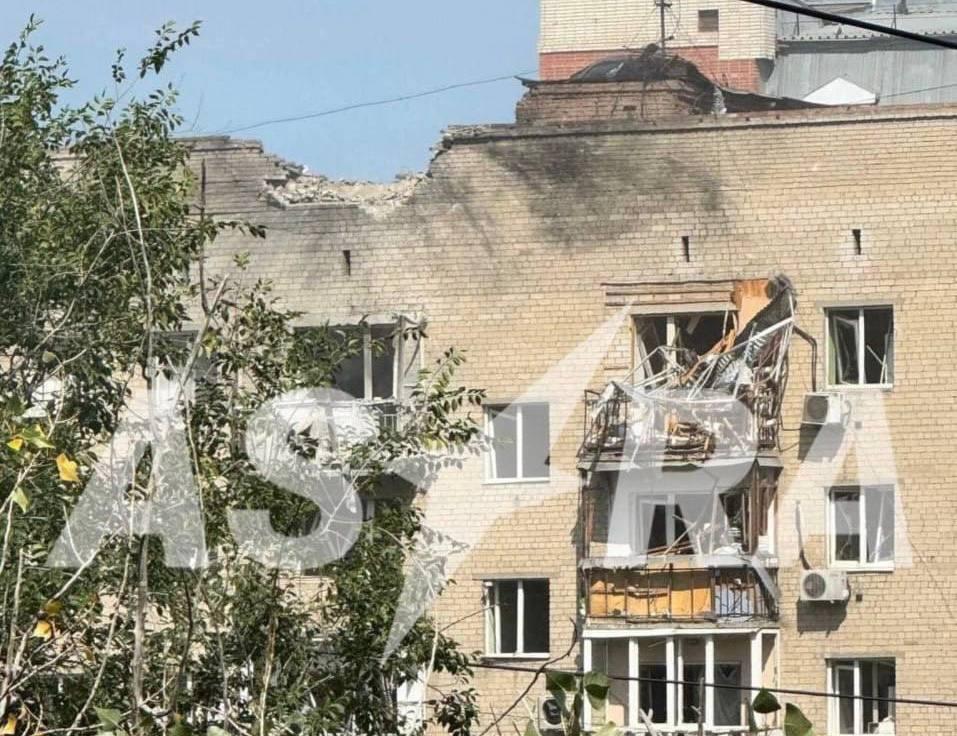
A damaged apartment building after a drone strike in Rostov-on-Don, Russia. (Astra/Telegram)
Russian Telegram channels published video footage showing a fixed-wing drone crashing into the building, though the footage could not be independently verified. Emergency services and Rostov administration officials responded to the scene as residents reported hearing the incoming drone before the explosion.
Russian Air Loss: Su-30 Fighter Crashes Near Snake Island
Russia likely lost a Su-30SM fighter jet while conducting a mission southeast of Snake Island, according to the Ukrainian Navy. The twin-engine, two-seat aircraft crashed for unknown reasons, with Ukrainian intelligence intercepting radio communications indicating loss of contact with the aircraft.
Russian forces launched a search and rescue operation after debris was spotted on the sea surface, though the pilots remain missing. The loss adds to a growing list of Russian Su-30 aircraft destroyed during the war, including two downed by Ukrainian sea drones in May and another likely damaged at an airfield used for Kinzhal missile launches.
Daily Civilian Toll: Eight Dead, 18 Injured Across Multiple Regions
Russian attacks killed at least eight civilians and injured 18 others across multiple Ukrainian regions on August 14, with Russia launching 45 Shahed-type drones and two S-300/400 missiles. Ukrainian air defenses destroyed or disabled 24 drones in northern and eastern regions.
In Kherson Oblast, four people died and six were injured in drone and artillery strikes, with attacks damaging over 100 houses, a gas pipeline, medical vehicle, and agricultural equipment. A 16-year-old boy was hospitalized with blast trauma and shrapnel wounds from a morning artillery strike.
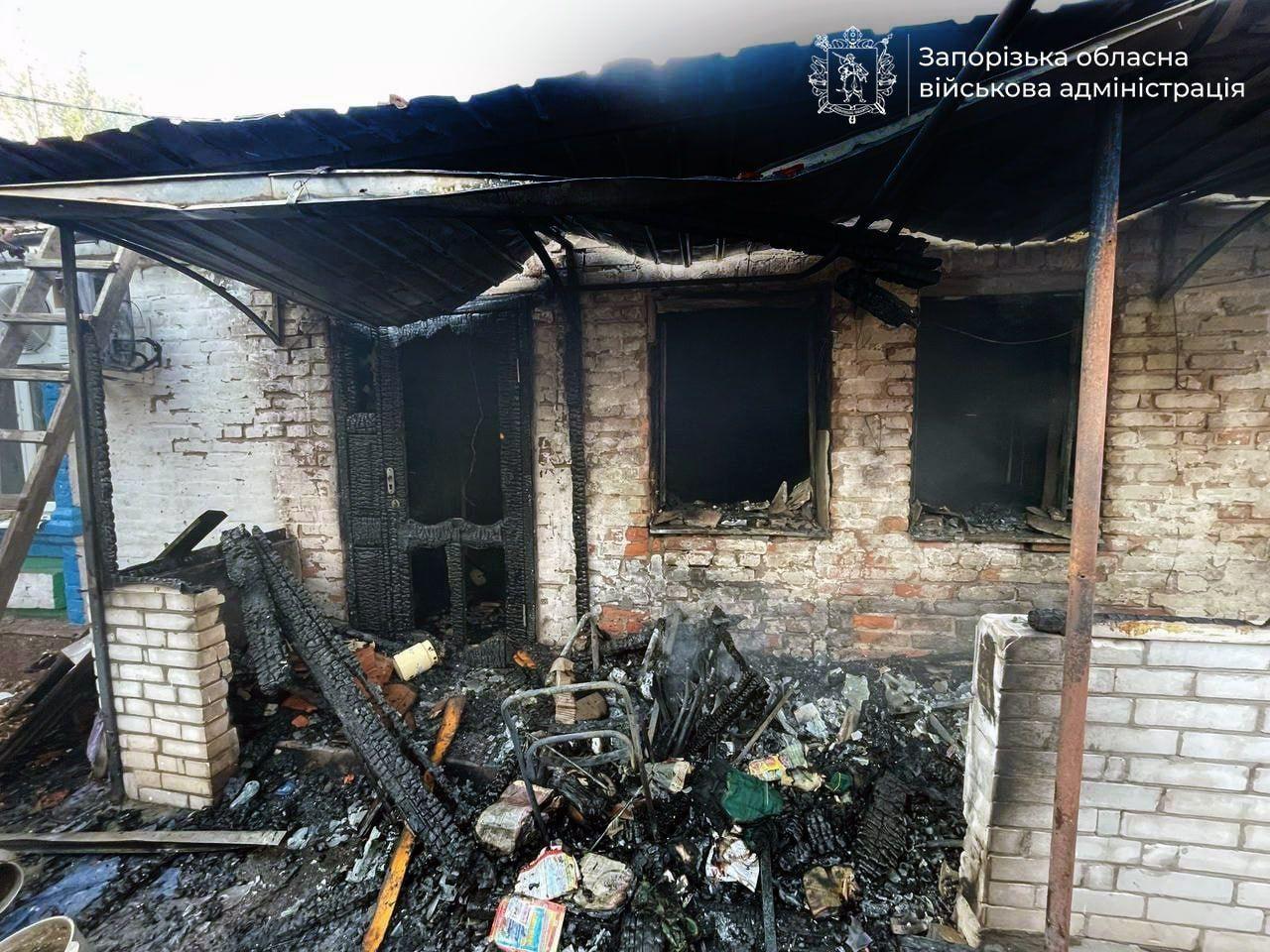
A house burned after a Russian strike in Zaporizhzhia Oblast, Ukraine. (Ivan Fedorov/Telegram)
Donetsk Oblast lost three civilians in strikes on Kostiantynivka, Pokrovsk, and Rodynske, while Kharkiv Oblast suffered one death and one injury from shelling and drone attacks. Sumy Oblast endured heavy attacks injuring seven civilians including a 7-year-old child, with one house destroyed and multiple buildings damaged.
Civilian Catastrophe: July Records Highest Casualties Since 2022
The United Nations reported that civilian casualties in July 2025 reached 1,674—the highest monthly toll since May 2022 and a 22.5% increase from July 2024. The figure includes 286 civilians killed and 1,388 injured, underscoring Russia’s intensifying attacks on civilian targets despite diplomatic efforts.
Russian glide bombs accounted for the largest increase in casualties (276 in July versus 114 in June), while long-range drone and missile strikes caused nearly 40% of civilian losses. Short-range drones targeting civilian vehicles along highways represented 24% of casualties, demonstrating Russia’s systematic effort to terrorize civilian populations.
The seven-month total for 2025 was 48% higher than the same period in 2024, revealing the escalating nature of Russian attacks despite international pressure for restraint.
Military Developments: Confirmed Advances and Continued Pressure
Russian forces achieved confirmed territorial gains by seizing Andriivka-Klevtsove in the Velykomykhailivka direction, while Ukrainian forces countered with advances in southern Torske near Lyman. Both sides continued intensive operations across multiple fronts, with Russian forces maintaining pressure in the Pokrovsk, Toretsk, and Kupyansk directions.
Ukrainian commanders reported Russian tactical adaptations, including increased drone usage in the Pokrovsk direction—over 250 drones shot down in the last week compared to 100-150 per week in spring. Russian forces have largely abandoned armored assaults in favor of small infantry groups supported by drones, with Ukrainian defenders destroying only one tank and three armored vehicles recently.
Fighting continued in Kursk Oblast with limited Russian offensive operations, while Ukrainian forces conducted cross-border operations near Novokostyantynivka and Bezsalivka, maintaining pressure on Russian border positions.
India’s Energy Pivot: Trump’s Tariffs Force Major Shift
Indian refineries accelerated their move away from Russian oil purchases ahead of the Alaska summit, securing supplies from the United States, Brazil, and Middle Eastern producers for September-October delivery. State companies Indian Oil Corp. and Bharat Petroleum Corp. returned to traditional suppliers after becoming the world’s largest buyers of Russian seaborne crude.
Trump’s 50% tariffs on Indian goods and demands to stop Russian energy purchases before meeting Putin have effectively severed a major revenue stream for Moscow. Saudi Arabia will supply 22.5 million barrels to India in September—the largest monthly shipment since September 2024—while Russian producers have responded by cutting prices for Chinese buyers.
The rapid Indian shift demonstrates the potential effectiveness of targeted economic pressure when applied with clear consequences and alternatives, providing a model for broader sanctions enforcement.
European Military Support: Poland’s €3.25 Billion F-16 Modernization
Poland signed a €3.25 billion contract with the U.S. government to upgrade its entire fleet of 48 F-16 fighter jets to the advanced Viper (Block 72) standard. Defense Minister Władysław Kosiniak-Kamysz announced the comprehensive modernization at Military Aviation Works No. 2 in Bydgoszcz, describing the aircraft as the backbone of Poland’s combat aviation.
The upgrade will improve reconnaissance and communication capabilities, including integration with fifth-generation F-35 combat jets ordered for Poland. Kosiniak-Kamysz noted that while the current C/D version capabilities are “very good, after 20 years they are inadequate in the face of threats to our security.”
Germany simultaneously announced funding for $500 million in U.S. military equipment through NATO’s Prioritized Ukraine Requirements List, joining previous commitments from Netherlands, Denmark, Sweden, and Norway totaling $1.5 billion. The Czech-led ammunition initiative delivered one million rounds of large-caliber ammunition to Ukraine in 2025.
Diplomatic Preparations: UK and European Coordination
President Zelensky met with British Prime Minister Keir Starmer in London following their August 13 video call with Trump and European leaders. The talks focused on security cooperation within the coalition of the willing, possible security guarantees, and support for Ukrainian military and defense industry.

President Volodymyr Zelensky (R) meets British Prime Minister Keir Starmer in London, U.K. (President Volodymyr Zelensky/X)
Zelensky invited the UK to join the PURL initiative while discussing the 100-year partnership agreement signed in June. The meeting demonstrated continued European coordination efforts to present unified positions ahead of the Alaska summit, with coalition leaders rejecting any limitations on Ukraine’s military or NATO aspirations.
Intelligence Operations: Russian Recruitment and Sabotage Networks
Poland arrested a 17-year-old Ukrainian citizen accused of vandalizing monuments and defacing buildings with anti-Polish slogans on behalf of foreign intelligence services. The incident, designed to incite Polish-Ukrainian tensions, exemplifies Russia’s hybrid warfare tactics using vulnerable individuals to conduct provocations.
Ukrainian intelligence has warned that Russian services actively recruit Ukrainians, particularly from occupied territories, for illegal operations across the European Union. Poland has intensified crackdowns on suspected Russian networks following multiple sabotage incidents, with several spy rings uncovered over recent years.
Japan’s Economy Ministry uncovered a sanctions-evasion scheme involving over 300 precision machine tools sold to Russia via Chinese companies, with approximately 30 units already traced to Russian territory. The investigation led to contract terminations and enhanced monitoring of technology transfers.
Economic Warfare: Cryptocurrency Sanctions and Technology Controls
The U.S. Treasury re-designated Russian-linked cryptocurrency exchange Garantex Europe OU for processing over $100 million in illicit transactions since 2019, sanctioning its successor Grinex along with three executives and six associated firms. The action targeted key infrastructure supporting Russian ransomware operations and sanctions evasion.
Garantex maintained accounts for hundreds of thousands of users, including Russia-linked ransomware groups such as Conti, Black Basta, LockBit, and Ryuk. Despite previous sanctions and law enforcement actions, the exchange created new systems to conceal activities and continue servicing sanctioned entities.
Regional Implications: Belarus Military Cooperation
Belarus received another batch of Su-30SM2 multirole fighter aircraft from Russia as part of bilateral military-technical cooperation, enhancing the country’s air capabilities ahead of the massive Zapad-2025 exercises. The delivery follows previous aircraft transfers in May 2025 and demonstrates continued Russian military integration with Belarus.
The aircraft delivery occurs as hundreds of Russian troops arrive in Belarus for September exercises that NATO estimates could involve up to 150,000 personnel, maintaining pressure on Ukraine’s northern border and forcing defensive resource allocation.
Looking Ahead: The Alaska Moment of Truth
As Putin and Trump prepare for their 11:30 AM meeting at Joint Base Elmendorf-Richardson, the fundamental contradictions between Russian demands and Ukrainian sovereignty remain unresolved. Putin’s economic delegation signals desperation for sanctions relief, while nuclear demonstration attempts reveal continued reliance on intimidation rather than genuine negotiation.
The stabilization of Dobropillia, successful prisoner exchanges, and continued strategic strikes demonstrate Ukrainian resilience even as diplomatic uncertainty looms. India’s rapid energy shift under U.S. pressure proves the potential effectiveness of economic leverage when applied decisively.
The next 24 hours will determine whether Trump’s “feel-out” session can generate meaningful progress toward peace or merely provides Putin with a platform to project Russian strength while continuing territorial conquest. For Ukraine, the Alaska summit represents either a breakthrough toward genuine peace negotiations or confirmation that the war must continue until Russian imperial ambitions are definitively defeated.
The civilian casualty figures, Ukrainian tactical successes, and international support mechanisms all point toward Ukraine’s continued capacity for resistance, even as the diplomatic process tests whether American leadership can match Ukrainian courage with strategic clarity and unwavering commitment to international law.