
Russian President Demands Regime Change at Shanghai Summit While U.S. Treasury Secretary Warns All Options on Table as Moscow Intensifies Strikes Despite Peace Talks
Summary of the Day – September 1, 2025
The first day of September crystallized Russia’s rejection of diplomatic compromise as Vladimir Putin addressed the Shanghai Cooperation Organization summit, reiterating demands for complete Ukrainian capitulation while coordinating with exiled former president Viktor Yanukovych to legitimize regime change. U.S. Treasury Secretary Scott Bessent warned that Washington is considering new sanctions after Putin intensified strikes despite peace talks. Russian military command redeployed elite naval infantry and airborne forces to Donetsk Oblast for autumn offensive preparations, while a map behind Russia’s top general revealed broader territorial ambitions including Odesa and Kharkiv. Hybrid warfare escalated as suspected Russian GPS jamming forced European Commission President von der Leyen’s aircraft to land using paper maps, while Ukraine demonstrated growing strike capabilities with successful Flamingo cruise missile attacks and accelerated air defense procurement.
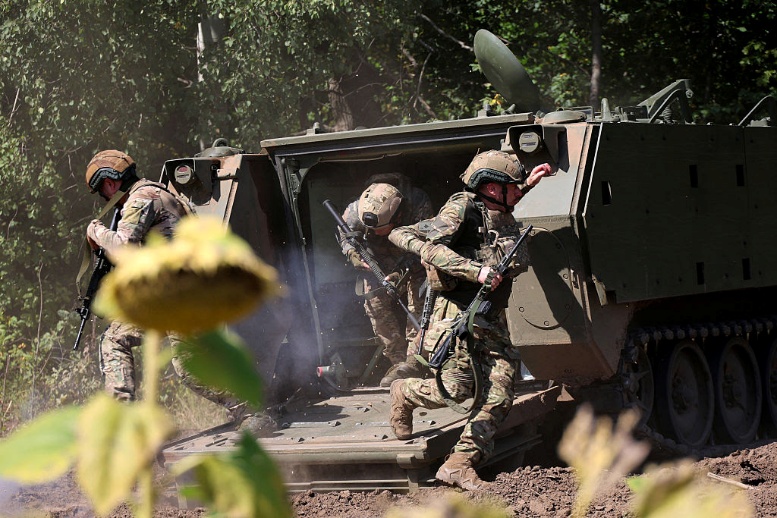
Infantrymen of the operational battalion of the 13th Brigade of the National Guard of Ukraine, “Khartiia,” practice airborne skills using an American M113 tracked armored personnel carrier in Kharkiv Oblast. (Viacheslav Madiievskyi / Ukrinform / NurPhoto via Getty Images)
Washington’s Warning: Bessent Signals Sanctions Escalation
U.S. Treasury Secretary Scott Bessent delivered a stark warning to Moscow on September 1, telling Fox News that “everything’s on the table” regarding new sanctions against Russia after Putin intensified strikes on Ukraine despite recent peace talks. Speaking from Washington, Bessent directly criticized Putin’s response to diplomatic overtures, noting that the Russian leader had “done the opposite of following through on what he indicated he wanted to do.”
“President Putin, since the historic meeting in Anchorage, since the phone call, when the European leaders and President Zelensky were at the White House the following Monday, has done the opposite of following through,” Bessent stated. “As a matter of fact, he has, in a despicable, despicable manner, increased the bombing campaign.”
The Treasury Secretary’s remarks represent the strongest U.S. warning since Trump’s Alaska summit with Putin on August 15, signaling growing American frustration with Russia’s rejection of diplomatic engagement. Bessent emphasized that “with President Trump, all options are on the table,” indicating potential policy shifts if Moscow continues its military escalation rather than pursuing negotiations.
Putin’s Shanghai Declaration: No Compromise on Ukrainian Capitulation
At the Shanghai Cooperation Organization summit in Tianjin, Vladimir Putin delivered his most explicit rejection yet of meaningful peace negotiations, reiterating longstanding demands for Ukraine’s complete surrender while blaming the West for provoking the conflict. Speaking to assembled leaders including Xi Jinping and Kim Jong Un, Putin claimed the “crisis” in Ukraine arose from a Western-provoked “coup” in 2014, not “as a result of Russia’s attack on Ukraine.”
Putin insisted that sustainable peace could only emerge if settlements eliminate the “root causes” of the war—a formulation the Kremlin has consistently used to demand Ukraine’s neutrality, NATO’s abandonment of its Open Door Policy, and replacement of Ukraine’s government with a Russian puppet regime. His claim that the 2014 “coup” “eliminated” Ukrainian leaders served as a direct reference to the Kremlin’s narrative that Ukraine’s current government lacks legitimacy.
The Russian president’s remarks demonstrated his unwillingness to retreat from original war aims despite nearly four years of conflict and mounting casualties. His reiteration of these demands at the SCO summit—his most significant international appearance in months—sent an unmistakable signal that Moscow views military victory rather than negotiated compromise as its path forward.
Orchestrated Theater: Yanukovych Returns to Russian Airwaves
In carefully choreographed timing, Russian state media published a video message from former Ukrainian President Viktor Yanukovych on September 1, his first public appearance since July 2022. Yanukovych claimed he had worked to bring Ukraine closer to the EU during his presidency and blamed Ukrainian-EU partners for “behaving incorrectly” during negotiations.
The exiled leader, who fled Ukraine during the 2014 Revolution of Dignity, opened his statement by declaring Putin “absolutely correct”—seemingly responding to the Russian president’s SCO remarks. This coordination suggests the Kremlin may be positioning Yanukovych as Ukraine’s “legitimate” leader, despite his democratic removal and Ukraine’s subsequent elections.
Yanukovych’s reappearance serves multiple propaganda purposes: legitimizing Putin’s regime change demands, undermining President Zelensky’s authority, and providing Moscow with a potential puppet leader should military circumstances permit. The timing of his statement reinforces that Russia’s diplomatic engagement remains fundamentally tied to achieving Ukraine’s political capitulation.
Kremlin’s Diplomatic Denial: No Meetings on the Horizon
Russian Presidential Aide Yuriy Ushakov definitively rejected White House statements about potential bilateral Ukrainian-Russian or trilateral meetings, stating “there was no agreement” for discussions between Zelensky and Putin or involving Trump. This denial directly contradicts Trump’s August 18 statement planning a bilateral meeting between the Ukrainian and Russian presidents followed by trilateral talks.
Ushakov’s categorical rejection undermines Trump’s ongoing diplomatic efforts and demonstrates Moscow’s unwillingness to engage in substantive peace discussions. His August 16 statement that he didn’t know when Trump and Putin would meet again, combined with claims that leaders hadn’t discussed trilateral meetings, reveals Russia’s fundamental disinterest in the diplomatic track Trump has championed.
The disconnect between American optimism and Russian reality highlights the fundamental challenge facing U.S. peace efforts: Putin’s commitment to achieving military victory rather than accepting negotiated compromise.
Territorial Ambitions Revealed: Map Hints at Odesa and Kharkiv Targets
Footage released by Russia’s Defense Ministry on August 30 showed a map behind Chief of the General Staff Valery Gerasimov suggesting Moscow’s potential ambitions to seize Odesa and Kharkiv oblasts beyond its publicly stated territorial demands. The map appeared as Gerasimov delivered his speech about Russia’s spring-summer campaign and commitment to continue fighting.
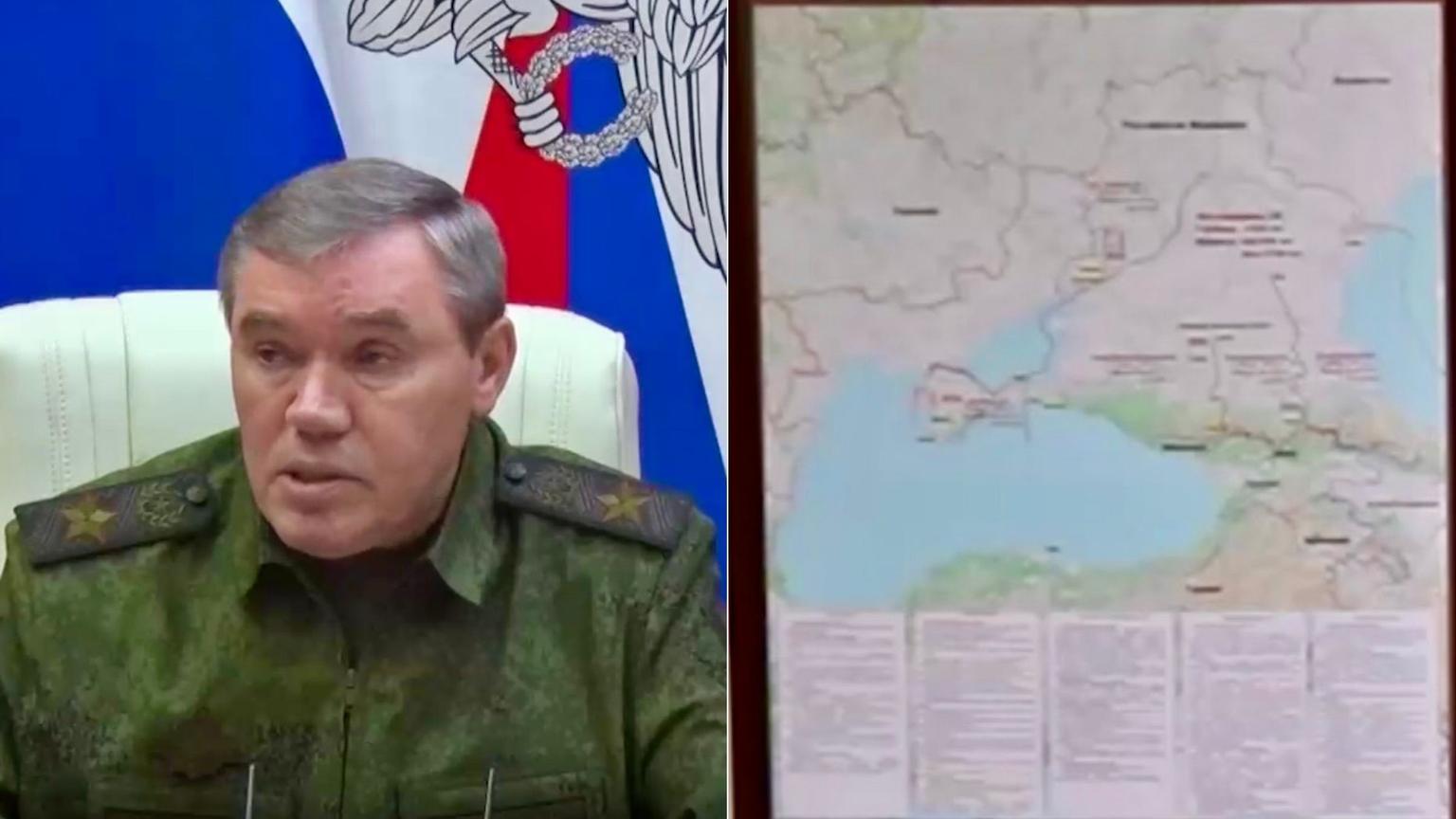
Russian Chief of the General Staff Valery Gerasimov gives a speech on Russia’s spring-summer campaign. (Russia’s Defense Ministry)
While Moscow has publicly insisted on full control of Donetsk, Luhansk, Kherson, and Zaporizhzhia oblasts, the map indicated possible plans extending to Odesa and Kharkiv—neither of which had been included in earlier territorial demands. Russia currently occupies only about 4% of Kharkiv Oblast while Odesa Oblast remains fully under Ukrainian control.
Capturing both regions would give Russia control of Ukraine’s Black Sea coast, major transport hubs, and industrial centers—longstanding strategic goals for Moscow. The revelation provides insight into Russian military planning beyond current battlefield objectives and suggests broader territorial ambitions that would fundamentally alter Ukraine’s geographic and economic viability.
Elite Forces Head East: Russian Military Prepares Donetsk Push
Russian military command executed significant troop redeployments on September 1, moving relatively elite naval infantry and airborne forces from northern Sumy Oblast and Kherson direction to Donetsk Oblast. Ukrainian intelligence reported that elements of the 155th Naval Infantry Brigade (Pacific Fleet) had been redeployed from Kursk Oblast to reinforce offensive operations toward Dobropillya.
Additional redeployments included elements of the 177th Naval Infantry Regiment and 40th Naval Infantry Brigade from northern Sumy Oblast, while the 11th Separate VDV Brigade and 76th VDV Division were “urgently” deployed to what Russian commanders termed “the hottest direction.” The 70th Motorized Rifle Regiment was also redeployed from Kherson Oblast to Bakhmut, possibly to support offensives toward Kostyantynivka or Siversk.
These redeployments suggest Russia is concentrating its most capable units for an autumn offensive focused on seizing the remainder of Donetsk Oblast, particularly around Dobropillya, Pokrovsk, and Kostyantynivka. The scale of the repositioning indicates Moscow views the Donetsk campaign as critical to achieving its territorial objectives before potential peace negotiations.
Sky Sabotage: von der Leyen’s Plane Targeted by Russian Jamming
Suspected Russian GPS jamming forced European Commission President Ursula von der Leyen’s aircraft to land at Plovdiv Airport in Bulgaria using paper maps on September 1, marking a dramatic escalation of hybrid warfare against European leaders. The incident occurred as von der Leyen flew from Warsaw during her tour of eastern EU states discussing European security.
European Commission spokesperson Adrianna Podestà confirmed GPS jamming had affected the flight, with Bulgarian authorities suspecting “blatant” Russian interference. The pilot was forced to navigate using analog maps after GPS signals “went dark” in the airport’s vicinity, requiring an hour of circling before successful landing.
The targeting of von der Leyen—who has been leading discussions about European troop deployments as Ukraine security guarantees—represents a significant escalation from previous Russian electronic warfare operations. The incident demonstrates Moscow’s willingness to directly threaten senior Western officials as part of its hybrid campaign, potentially in response to von der Leyen’s advocacy for stronger European support for Ukraine.
Flamingo Takes Flight: Ukraine’s First Domestically Produced Cruise Missile Strike
Ukraine conducted its first confirmed strike using domestically produced FP-5 Flamingo cruise missiles against a Russian Federal Security Service (FSB) base near occupied Voloshyne, Crimea, on August 30. The attack demolished an administrative building, destroyed six military-grade hovercraft, and killed one FSB operative, marking a significant milestone in Ukraine’s indigenous weapons development.
At least three Flamingo missiles struck the facility, which has been operated by Russia’s main intelligence agency since the 2014 annexation of Crimea. The destroyed hovercraft were identified as A-8 Khivus or A25PS models designed to carry 8 or 25 armed personnel respectively. Fresh satellite imagery showed explosion and fire damage within the base perimeter, confirming the strike’s effectiveness.
The successful Flamingo deployment represents a breakthrough for Ukraine’s strategic strike capabilities, particularly given U.S. restrictions on using Western-supplied long-range weapons against Russian territory. With a range exceeding 3,000 kilometers and warhead capacity of 1,150 kilograms, the Flamingo provides Ukraine with unprecedented ability to target Russian infrastructure and command facilities deep in occupied territory.
Accelerating Defense: Zelensky Announces Air Defense Procurement Push
President Volodymyr Zelensky announced on September 1 that Ukraine would accelerate procurement of additional air defense systems to enhance protection against Russian missile and drone attacks. The announcement followed intensified Russian strikes including the August 28 attack on Kyiv that killed 25 people, demonstrating the urgent need for enhanced defensive capabilities.
“We are accelerating the supply of additional air defense systems to enhance protection against missiles,” Zelensky wrote on social media, instructing National Security and Defense Council Secretary Rustem Umerov to coordinate with officials and regional authorities to procure more short- and medium-range systems.
Zelensky also announced preparations for a Technological Staff meeting with domestic producers of missiles, drones, and air defense systems, emphasizing the priority of intercepting Shahed-type drones that have become central to Russia’s bombardment campaign. The initiative represents Ukraine’s recognition that defensive capabilities must expand rapidly to counter Russia’s escalating aerial assault.
Disrupting the Drone Factory: Ukrainian Strikes Cut Shahed Production
Ukrainian forces achieved significant success in reducing Russian drone production capabilities, with strikes against manufacturing and storage facilities cutting Shahed launches from 6,303 in July to 4,132 in August—a one-third reduction. Ukrainian military and security services targeted multiple Russian facilities involved in producing, storing, and transporting the Iranian-designed drones throughout the summer campaign.
Key strikes included the July 1 attack on the Izhevsk Electromechanical Plant “Kupol,” which destroyed four workshops and collapsed building roofs, forcing complete production stoppage. Additional successful strikes hit warhead production facilities in Moscow region and the Krasnozavodsk Chemical Plant producing thermobaric explosives for Shahed warheads.
The August 15 strike on Olya seaport eliminated an Iranian ship carrying drone parts and ammunition, demonstrating Ukraine’s ability to disrupt both Russian production and foreign supply lines. These attacks forced Russia to slow accumulation strategies and reduce the size of massive drone assault pools, significantly degrading Moscow’s ability to sustain large-scale bombardment campaigns.
Slowing Russian Momentum: DeepState Reports 18% Decline in Territorial Gains
Russian territorial gains slowed by 18% in August, with Moscow’s forces occupying 464 square kilometers compared to previous months, according to DeepState monitoring group analysis published September 1. The assessment revealed that Russia now controls 19% of Ukraine’s territory—the same level first reached on October 3, 2022, before Ukrainian forces liberated large parts of Kherson Oblast.
“The increase in occupied territory over the past two years and 11 months is virtually zero,” DeepState reported. “However, it is also true that in eastern Ukraine, we have lost roughly the same amount of land as was liberated on the right bank of Kherson Oblast during that time.”
The analysis highlighted that while Russia captured mainly smaller villages and farmland during August, the pace of advance has dramatically slowed compared to earlier phases of the conflict. The territorial gains do not reflect operational breakthroughs, with Russian forces failing to achieve larger strategic objectives despite massive resource expenditure.
Reconstruction Fund Activated: Ukraine Names U.S. Partnership Board Members
Prime Minister Yulia Svyrydenko announced Ukraine’s selection for the U.S.-Ukraine Reconstruction Investment Fund’s board of managers ahead of its inaugural meeting on September 3. The Ukrainian delegation will include Economy, Environment, and Agriculture Minister Oleksiy Sobolev, his deputy Yehor Perelyhin, and State Secretary of the Foreign Ministry Oleksandr Karasevich.
The fund represents the operational implementation of the “minerals deal” signed between Washington and Kyiv on April 30, designed to attract billions for Ukraine’s reconstruction while providing American companies access to Ukrainian critical raw materials. Ukraine has already greenlit the fund’s first tender for the Dobra lithium deposit containing 80-105 million metric tons of the strategically important material.
Under the agreement, Ukraine will transfer 50% of profits from new licenses, royalty payments, and production sharing agreements to the fund over 10 years, with potential U.S. military aid contributions. The fund’s activation provides a concrete mechanism for American private investment in Ukrainian reconstruction while advancing U.S. strategic interests in critical minerals access.
Gas Pipeline Pressure: EU Considers Closing Russian Supply Loopholes
European Union countries are weighing new measures to close potential loopholes allowing Russian gas to continue flowing into the bloc after a full ban takes effect by end of 2027, with Denmark circulating proposals requiring importers to prove their supplies don’t originate in Russia. The initiative specifically targets gas shipped through TurkStream pipeline linking Russia with Southeast Europe.
The Danish proposal reflects concerns that Russian supplies could be blended with other gas and re-exported to Europe, a process difficult to track as fuel often changes hands before reaching consumers. Under current phaseout plans, short-term gas contracts must cease by June 2026, with longer-term agreements prohibited by end of 2027.
Denmark hopes to secure backing from EU member states by October, with negotiations with the European Parliament aimed at finalizing legislation before year-end. The measures would prevent future swap deals disguising Russian deliveries as non-Russian shipments, closing crucial loopholes in the existing sanctions regime.
Financial Pressure: Chinese Bank Abandons Russian Transactions
China’s Heihe Rural Commercial Bank ceased accepting payments from Russia after falling under European Union sanctions, eliminating one of the last remaining channels for Russian financial transactions with Chinese institutions. The small rural lender had become crucial for Russian small and medium-sized businesses after larger Chinese banks terminated services to avoid Western sanctions.
The European Union sanctioned Heihe on July 18 for providing cryptocurrency services allegedly helping Russia bypass sanctions, with measures taking effect August 9. While payments continued for several weeks after sanctions implementation, the bank attributed the final suspension to “adjusting infrastructure,” effectively severing another financial link between Russia and its most important economic partner.
The development highlights growing impact of Western sanctions on Russia-China financial cooperation, despite Beijing’s political support for Moscow. Even smaller Chinese institutions now face pressure to comply with Western sanctions rather than risk their own international access, demonstrating the effectiveness of secondary sanctions threats in constraining Russian economic relationships.
Ukraine Strikes Russian Infrastructure: Railway and Refinery Targets Hit
Ukrainian forces continued their systematic campaign against Russian military and energy infrastructure with successful strikes on railway and petroleum facilities across multiple regions overnight August 31-September 1. Ukrainian drones attacked a railway traction power substation in Kropotkin, Krasnodar Krai, with geolocated footage confirming fires at the facility and NASA satellite data showing heat anomalies.
Additional strikes targeted the Nizhnekamsk oil refinery in Tatarstan, with satellite data confirming heat anomalies following Ukrainian drone attacks. Satellite imagery collected September 1 showed scorch marks near distillation units at the Krasnodar Oil Refinery from August 30 Ukrainian strikes, demonstrating sustained effectiveness of Ukraine’s long-range strike campaign.
The coordinated infrastructure attacks force Russia to divert resources toward defending rear areas while disrupting military logistics and energy production capabilities. Ukrainian targeting of railway infrastructure particularly impacts Russian military supply chains supporting front-line operations across multiple theater sectors.
Liberation in the East: Ukraine Retakes Novoekonomichne
Ukrainian forces of the 425th Regiment successfully liberated the village of Novoekonomichne in Donetsk Oblast, raising the national flag in the settlement center on August 31 after two weeks of intensive fighting. The village, located 14 kilometers northwest of embattled Pokrovsk, had remained in the contested “gray zone” since mid-July.
The liberation represents a significant tactical victory in the broader battle for Donetsk Oblast, demonstrating Ukrainian forces’ continued ability to conduct successful offensive operations despite Russian pressure. Novoekonomichne’s pre-war population of nearly 2,800 made it one of the larger settlements to change hands in recent months.
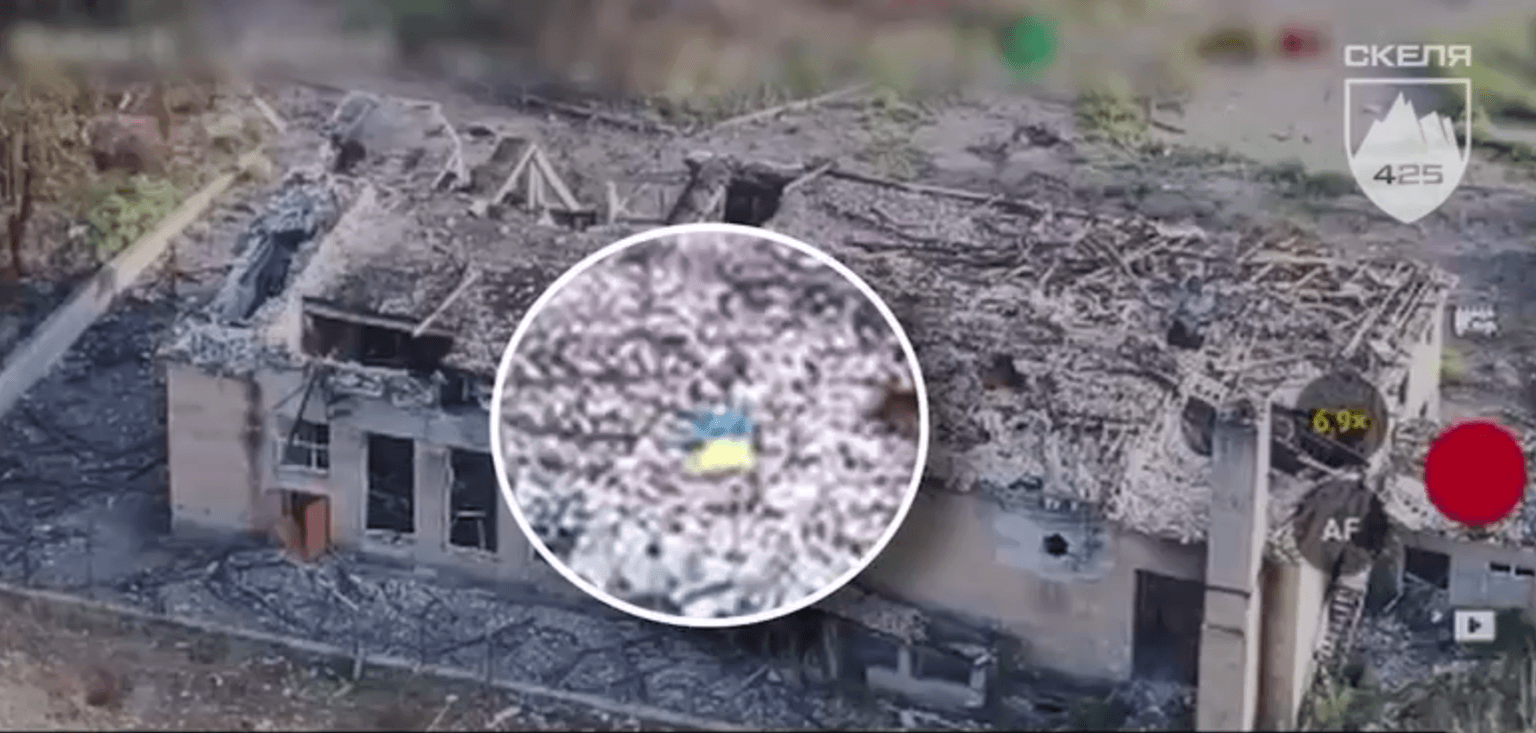
Ukrainian soldiers raise their nation’s flag in liberated Novoekonomichne in Donetsk Oblast in footage published. (Screenshot / Ukraine’s General Staff / Telegram)
The successful operation follows Ukraine’s August 24 liberation of Novomykhailivka and indicates Ukrainian forces maintain offensive capabilities even while defending against major Russian assaults. These tactical successes provide Ukraine with stronger defensive positions around Pokrovsk while potentially disrupting Russian offensive preparations.
Kadyrov’s War Crimes: SBU Files Formal Charges
The Ukrainian Security Service announced formal war crimes charges against Chechen leader Ramzan Kadyrov on September 1, based on his public statements endorsing the execution of Ukrainian prisoners of war and use of human shields. Investigators cited Kadyrov’s admission that he ordered Chechen fighters to kill Ukrainian soldiers rather than take them prisoner, along with commands to place captured Ukrainians on military facility rooftops in Grozny as protection against drone strikes.
The charges under Article 438 of Ukraine’s Criminal Code represent the first formal legal action against Kadyrov for war crimes, though he was notified in absentia given his location in Russian-controlled territory. The SBU emphasized that comprehensive measures are ongoing to hold him accountable for crimes against Ukraine and its citizens.
Kadyrov’s statements align with previous admissions by Chechen commanders about using perfidy tactics—including wearing Ukrainian identification tape during covert operations—that constitute war crimes under the Geneva Convention. The formal charges document the systematic nature of Russian-directed war crimes and create legal precedent for future prosecutions.
International Diplomatic Maneuvers: Summit Preparations and Meetings
North Korean leader Kim Jong Un crossed into China by special train to attend Beijing’s commemoration of Japan’s World War II surrender, joining Putin, Xi Jinping, and Iranian President Masoud Pezeshkian at the largest multilateral gathering Kim has attended. The summit provides Putin with an opportunity to strengthen ties with fellow authoritarian leaders while demonstrating that Russia is not internationally isolated.
Slovak Prime Minister Robert Fico announced plans to visit China for the military parade, where he will meet with Putin before hosting President Zelensky in Slovakia on September 5. Fico’s participation makes him the only EU leader attending the Chinese commemoration, highlighting the divisions within European responses to Russian aggression.
Meanwhile, President Zelensky prepared to meet European leaders in Paris on September 4 at French President Emmanuel Macron’s invitation. The meeting will focus on security guarantees for Ukraine and diplomatic coordination as Russia continues avoiding peace efforts, representing European determination to maintain unity despite American diplomatic frustrations.
Looking Ahead: The Convergence of Military and Diplomatic Pressure
The convergence of American sanctions threats, Russian territorial ambitions beyond current fighting, and accelerating Ukrainian defensive preparations establishes the framework for intensified autumn warfare. Russia’s concentration of elite forces in Donetsk Oblast signals a determined push to achieve territorial objectives that would strengthen Moscow’s position in any eventual negotiations, while revealed maps suggest broader ambitions extending to Ukraine’s coast and major cities.
The escalation of hybrid warfare against European leaders, combined with successful Ukrainian strikes deep in Russian territory, indicates both sides are expanding the conflict beyond traditional battlefield boundaries. Ukraine’s growing indigenous weapons capabilities and successful disruption of Russian drone production provide new tools for strategic pressure, while American willingness to consider additional sanctions suggests growing frustration with Moscow’s diplomatic intransigence.
As diplomatic efforts stall and military preparations intensify, the autumn campaign appears set to determine whether Russia can achieve sufficient territorial gains to dictate peace terms or whether Ukrainian resistance and Western pressure will force Moscow toward genuine negotiations. The stakes have never been higher for both sides’ strategic objectives.