
As Trump Issues Two-Week Peace Ultimatum, Russian Kalibrs Destroy U.S. Factory While Ukrainian Drones Strike Deep Into Enemy Territory
Summary of the Day – August 21, 2025
August 21 exposed the gap between diplomatic rhetoric and battlefield reality. Trump issued his starkest ultimatum yet—two weeks to achieve peace or face “a different tact”—while Russian Kalibr missiles deliberately destroyed an American-owned Flex Ltd. factory in Mukachevo, part of Russia’s largest assault: 574 drones and 40 missiles. Ukrainian forces responded with precision strikes on GRU facilities in Crimea and energy infrastructure in Russia. The day also saw arrest of a Ukrainian Nord Stream suspect, Kim Jong Un decorating North Korean soldiers, and Gabbard halting intelligence sharing with Five Eyes allies.

Olga (L) and Zabit (R), Ukrainian citizens of Azerbaijani origin who fled Soviet crackdowns during Azerbaijan’s independence uprising in 1990, harvest potatoes in their garden plot on Aug. 21, in Sloviansk, Ukraine. Sloviansk is the city where the war began in 2014, marked by its occupation by Russian militias led by Igor Strelkov, also known as Girkin. The town is located in Donetsk Oblast, a Ukrainian region cited in peace-talk discussions involving U.S. President Donald Trump and Russian President Vladimir Putin over a potential front-line freeze and territorial exchanges. (Pierre Crom/Getty Images)
“Two Weeks or Different Tact”: Trump’s Ultimatum Meets Russian Reality
President Donald Trump delivered his most explicit deadline yet for ending the Ukraine war, telling conservative commentator Todd Starnes that his administration would know “within two weeks whether there will be peace in Ukraine.” The ultimatum carried an ominous edge: “After that we will have to maybe take a different tact.”
The statement marked the latest in a series of Trump deadlines that have come and gone without consequences, but this time the president acknowledged a fundamental shift in his position. On Truth Social, Trump wrote that Ukraine “cannot win the war without striking inside Russia,” directly contradicting his December 2024 stance when he called deep strikes into Russia a “big mistake” that risked dangerous escalation.
“Interesting times ahead!” Trump added, suggesting his patience with diplomatic solutions was wearing thin. The reversal came as Russian missiles were already in flight toward American business interests in Ukraine, providing a stark answer to whether Moscow was interested in Trump’s peace overtures.
When Coffee Machines Become Targets: The Flex Factory Burns
At precisely 4:30 a.m., two Russian Kalibr cruise missiles slammed into the Flex Ltd. electronics plant in Mukachevo, a city just 50 kilometers from the Hungarian border that had never been attacked since the war began. The American-owned facility, listed on Nasdaq and operating in Ukraine for over 13 years, produced nothing more threatening than coffee machines, printer cartridges, and electronic price tags.
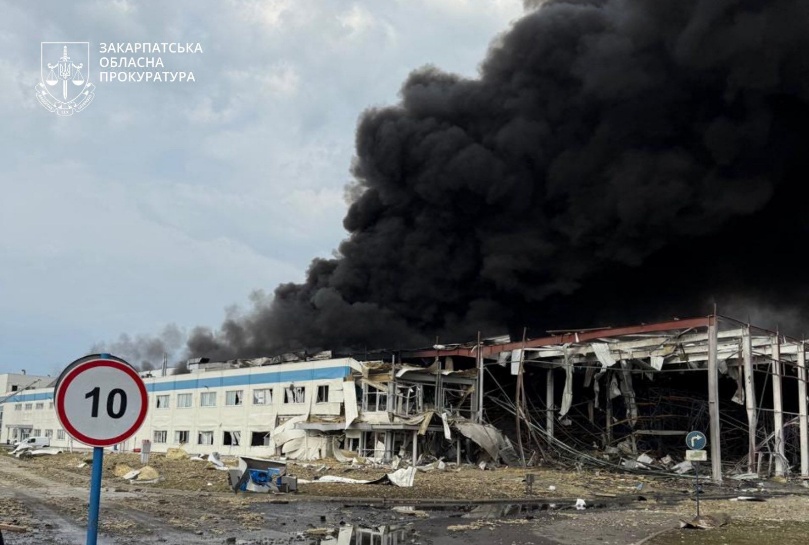
The aftermath of a Russian attack on the Flex plant in the city of Mukachevo, Zakarpattia Oblast, Ukraine. (Prosecutor General’s Office)
The attack injured 23 people and forced 800 night-shift workers to evacuate to concrete shelters as their workplace erupted in flames. The timing was deliberate—coming six days after Trump’s Alaska summit with Putin and three days after his White House meeting with Zelensky.
“This was an ordinary civilian facility with American investment. They produced everyday household items, such as coffee machines,” President Volodymyr Zelensky said with barely concealed anger. “The Russians knew exactly where they lobbed the missiles. We believe this was a deliberate strike specifically on American-owned property here in Ukraine.”
Foreign Minister Andriy Sybiha emphasized the plant’s civilian nature: “This is a completely civilian facility with no connection to defense or the military.” The message was unmistakable—no American investment in Ukraine was safe from Russian retaliation, regardless of peace talks.
574 Drones of War: Russia’s Record-Breaking Assault
The attack on the Flex plant formed part of Russia’s largest single-day aerial assault of the war. Overnight on August 21, Moscow launched 574 drones and decoys along with 40 missiles, including four hypersonic Kh-47 Kinzhal ballistic missiles and two Iskander-M or North Korean KN-23 ballistic missiles.
“Last night, the Russian army set one of its crazy anti-records,” Zelensky stated as the scope of the attack became clear. Ukrainian air defenses performed remarkably, intercepting 546 drones and 31 missiles, but the sheer volume overwhelmed defensive systems in western regions far from any military targets.
The assault killed one person in Lviv Oblast and injured 26 across western Ukraine, with explosions reported in Rivne, Lviv, Lutsk, and Mukachevo. Air raid sirens wailed across the entire country as Russian MiG-31 fighter jets launched Kinzhal missiles from Belarusian airspace, demonstrating Moscow’s ability to strike anywhere in Ukraine despite three years of war.
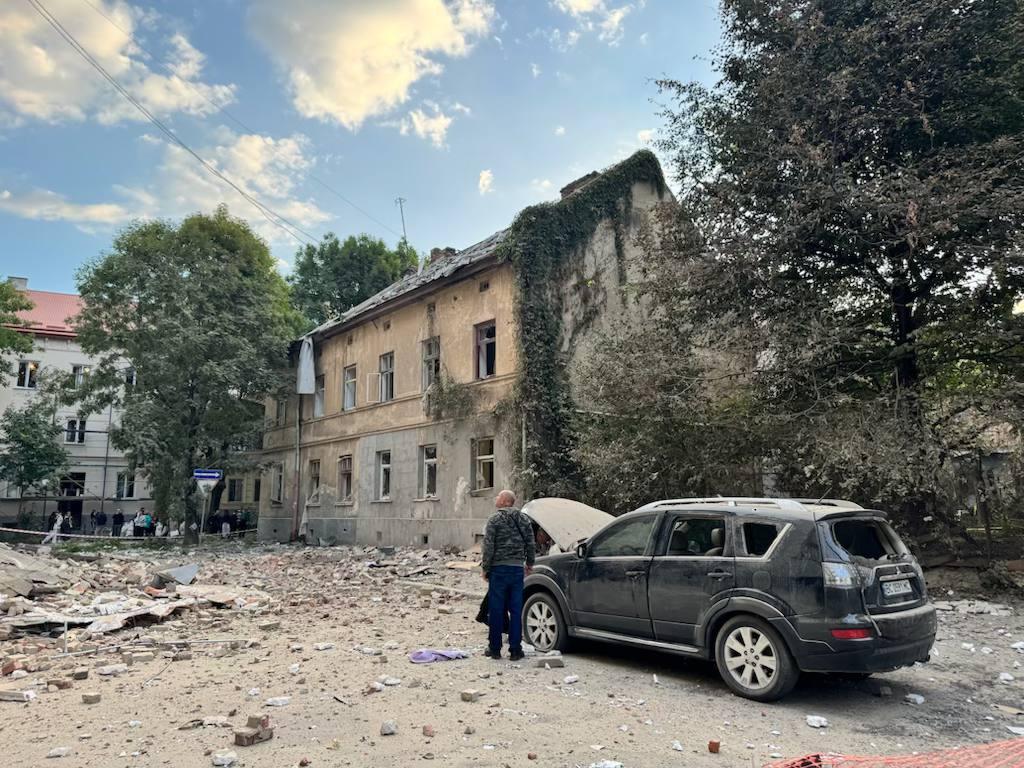
Damage in Lviv as a result of a Russian missile and drone attack on western Ukraine overnight. (Andryi Sadovyi/Telegram)
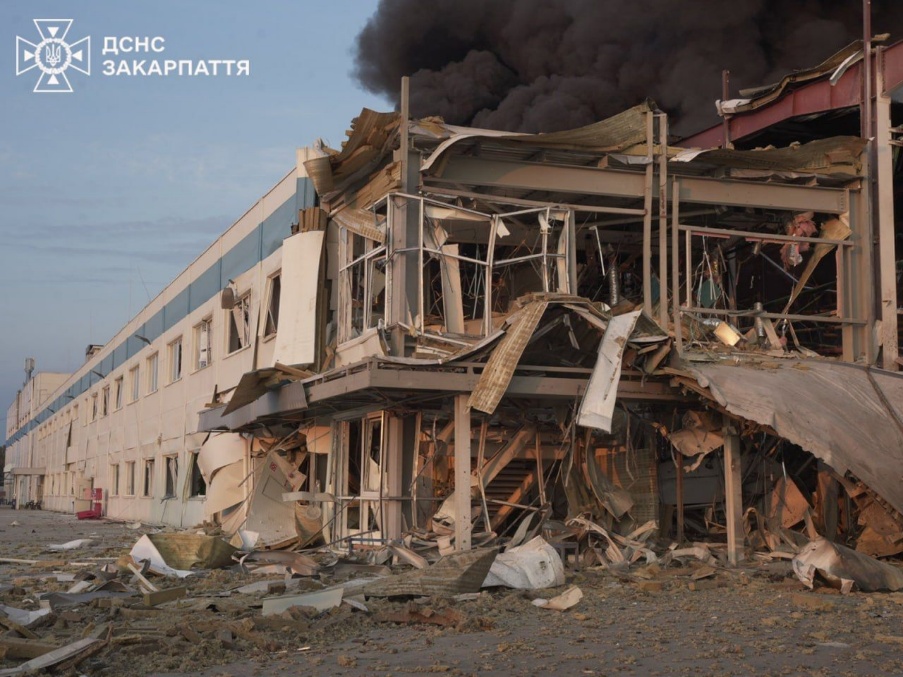
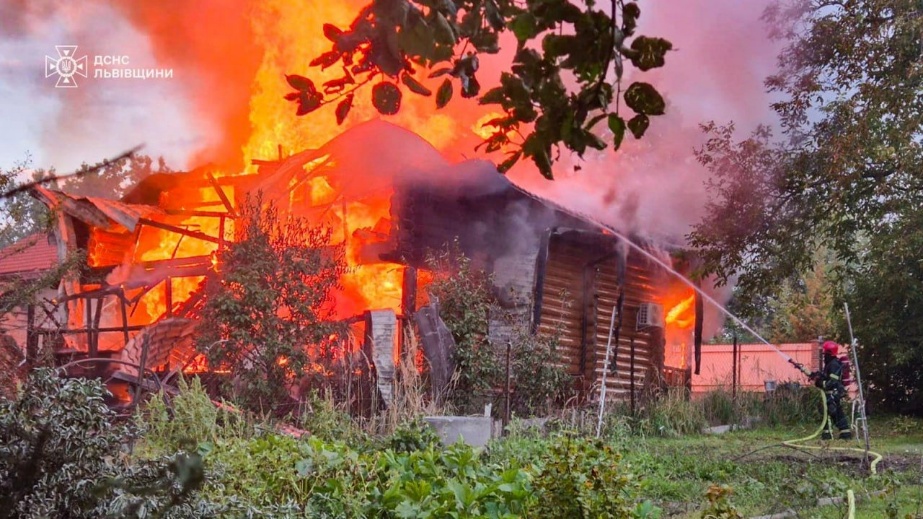 The aftermath of a Russian mass attack on Ukraine’s west overnight. (State Emergency Service)
Ukraine Strikes Back: Precision Hits Across Russian Territory
Ukrainian forces responded with their own coordinated strikes across Russian territory, demonstrating growing capability to project power deep behind enemy lines. The most significant attack targeted a GRU military intelligence compound adjacent to Sevastopol’s military airport in occupied Crimea, where 10-15 Ukrainian drones scored multiple hits on facilities housing Russia’s elite naval reconnaissance unit.
NASA satellite data showed fires covering approximately two square kilometers at the base, despite Russian air defenses deploying Pantsir and Tor systems. Local occupation authorities confirmed “loud sounds” and fires, while attempting to downplay the damage as a “training exercise.”
A second wave of Ukrainian drones struck the Novoshakhtinsk oil refinery in Rostov Oblast, creating black smoke clouds visible for kilometers and fires covering four square kilometers of the facility. The refinery, with capacity to process 5-7.5 million tons of oil annually, feeds fuel to Russian military operations and represents critical infrastructure for Moscow’s war effort.
Ukrainian forces also targeted railroad power infrastructure near Zhuravka village in Voronezh Oblast, striking a transformer station that delivers electricity to the regional rail network. The attack delayed 19 trains and marked the 17th Ukrainian strike on this strategically important facility, part of a sustained campaign to degrade Russian military transport capacity.
The Druzhba Pipeline Under Fire: Hungary’s Energy Lifeline Attacked
Commander Robert “Madyar” Brovdi of Ukraine’s Unmanned Systems Forces announced another significant strike on the Unecha oil pumping station in Bryansk Oblast, which feeds the Druzhba pipeline supplying crude oil to Hungary and Slovakia. Video released by Brovdi showed the facility engulfed in flames, with the commander writing “Ruszkik haza!” (Russians, go home!) in reference to the 1956 Hungarian Revolution.
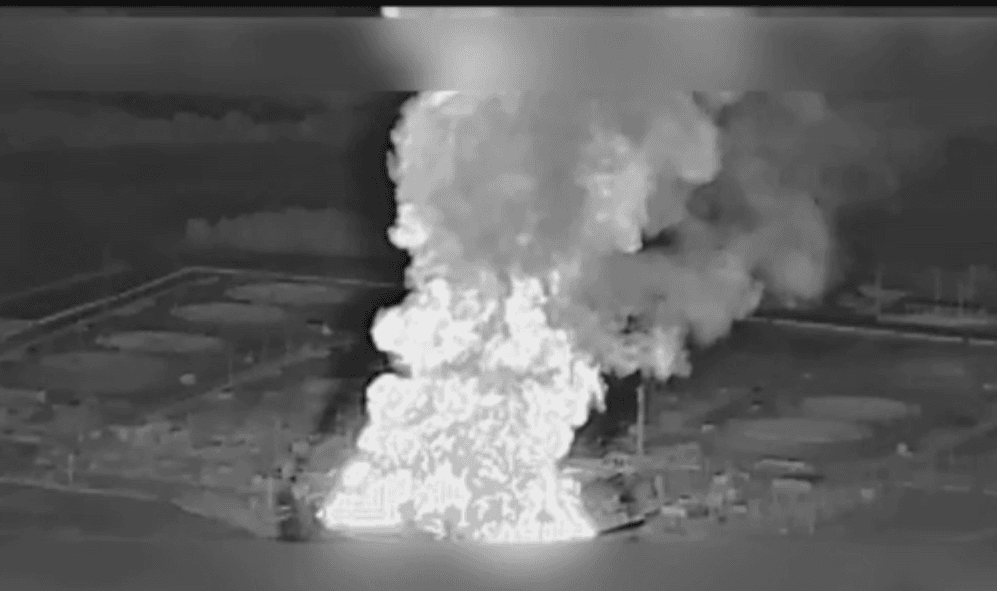
A screenshot from a video published by the commander of Ukraine’s Unmanned Systems Forces showing the aftermath of a Ukrainian drones strikes on oil pumping station in Russia’s Bryansk Oblast. (Robert “Madyar” Brovdi/Telegram)
The attack highlighted the complex energy politics surrounding the war, as Hungary remains one of only two EU countries still importing Russian oil under sanctions exemptions. Budapest has consistently condemned Ukrainian strikes on the pipeline infrastructure that supplies its energy needs, creating tension within the Western alliance.
The timing underscored Ukraine’s message: as long as European countries facilitate Russian energy revenues funding the war, their supply chains remain legitimate targets regardless of political sensitivities in Budapest or Bratislava.
NATO’s Watching Eyes: Reconnaissance Aircraft Circle the Black Sea
In the hours following Ukraine’s strikes on Russian targets, two NATO reconnaissance aircraft appeared in international waters near Crimea, monitoring the aftermath of the attacks. A Turkish Air Force Bombardier maritime patrol plane flew tracks between Bulgarian and Turkish coasts, while a U.S. Navy Boeing P-8A Poseidon naval reconnaissance aircraft orbited 90-100 kilometers offshore from the major Russian naval base at Novorossiysk.
The Poseidon’s flight path brought it within 100-110 kilometers of Russia’s sensitive Kerch Bridge connecting occupied Crimea with the mainland, approximately eight hours after Ukrainian drones attacked Sevastopol. The presence of Western intelligence aircraft so quickly after Ukrainian operations continued to fuel Russian accusations that NATO passes targeting data to Kyiv’s military.
Russian Defense Ministry claims of shooting down 49 Ukrainian drones—21 over Rostov region, seven over Voronezh, and four over Crimea—could not be independently verified, though officials acknowledged fires and power grid damage resulting from the attacks.
The Tovste Victory: Ukrainian Forces Advance in Donetsk
Amid the aerial warfare, Ukrainian ground forces achieved a significant tactical victory by retaking the village of Tovste in eastern Donetsk Oblast. The 5th Separate Heavy Mechanized Brigade pushed Russian troops from the settlement through coordinated operations involving infantry, drone units, and artillery.
Tovste sits in a strategically important location southwest of the Russian-occupied city of Donetsk and near the key occupied town of Vuhledar. The successful operation demonstrated Ukrainian forces’ continued ability to conduct effective combined-arms operations despite Russian advantages in manpower and artillery.
The advance came as part of broader Ukrainian efforts to retake territory in Donetsk Oblast, challenging Russian narratives of inevitable victory in the eastern regions that Moscow demands Ukraine surrender as part of any peace agreement.
International Arrest Warrants and Diplomatic Immunity: The Nord Stream Case Reopens
Italian police arrested 49-year-old Ukrainian national Serhii K. under a European arrest warrant connected to the 2022 Nord Stream pipeline explosions, German prosecutors announced. The suspect was detained overnight in Rimini province while staying with his family at tourist accommodation.
German investigators suspect Serhii K. of coordinating the operation that destroyed the underwater pipelines connecting Russia to Germany, using a sailing yacht that departed from the German port of Rostock. The vessel had been rented through intermediaries using forged identification documents, according to prosecutors.
The arrest reopened one of the war’s most controversial episodes, with Sweden’s Expressen identifying another suspect as Volodymyr Zhuravlov, a 44-year-old diving instructor who remains at large. While investigators linked the explosions to a pro-Ukraine group, they have not alleged authorization from Kyiv, and Ukraine has consistently denied involvement.
Immunity for Peace: Switzerland and Austria Open Doors for Putin
Both Switzerland and Austria signaled willingness to grant Russian President Vladimir Putin immunity from International Criminal Court arrest warrants if he attended peace negotiations in their countries. Swiss Foreign Minister Ignazio Cassis told SRF broadcaster that “the goal of welcoming Mr. Putin to Switzerland without him being arrested is 100% achievable.”
The Austrian Foreign Ministry echoed similar comments, noting opportunities to contact the ICC to ensure Putin’s participation given Vienna’s headquarters agreements with international organizations. The offers highlighted the complex legal calculations surrounding any potential Zelensky-Putin summit.
With ICC warrants outstanding for Putin’s role in systematically abducting Ukrainian children, traditional diplomatic venues faced unprecedented constraints. The Swiss and Austrian proposals offered potential solutions, though they raised questions about the precedent of suspending international justice for diplomatic convenience.
Graham’s Ultimatum: Children or Terrorism Designation
Senator Lindsey Graham delivered a stark ultimatum to Moscow, demanding the return of over 19,000 Ukrainian children abducted during the war or face designation as a state sponsor of terrorism. “Stealing children from their home country is a despicable and barbaric act,” Graham wrote on X, warning that the designation would make “doing business with Putin’s Russia radioactive for other countries.”
The classification would impose sweeping sanctions similar to those applied to Cuba, North Korea, Iran, and Syria, including restrictions on foreign assistance, defense exports, and financial transactions. With only 1,560 children returned home according to Ukrainian initiative “Bring Kids Back UA,” human rights groups estimate the true figure ranges from 150,000 to 300,000 abducted children.
Graham’s threat carried particular weight as one of Trump’s closest congressional allies, suggesting the administration might be willing to escalate pressure on Moscow if diplomatic efforts failed to produce results within Trump’s two-week timeline.
Lavrov’s Red Line: No Foreign Troops in Ukraine
Russian Foreign Minister Sergey Lavrov rejected any possibility of European troops in Ukraine as part of security guarantees, calling such deployments “foreign military intervention” that Moscow would not support. His comments came as Bloomberg reported that roughly ten European countries stood ready to deploy forces to Ukraine as part of comprehensive security arrangements.
“The intentions of the West and Ukraine are essentially about providing guarantees through foreign military intervention on some part of Ukrainian territory,” Lavrov claimed, reiterating Russia’s opposition to any foreign military presence. He insisted that security guarantees could not be discussed without Russia’s participation, effectively demanding veto power over Ukraine’s future security arrangements.
The Russian foreign minister’s statements highlighted the fundamental contradiction in pursuing peace while preparing for deeper military involvement by Western allies, suggesting Moscow remained committed to solving the Ukraine question through force rather than diplomacy.
Lithuania’s Airspace Closure: Preparing for Zapad-2025
Lithuania closed its airspace along the Belarus border until October 1, citing security risks from drone incursions and upcoming Russian-Belarusian military exercises. The decision followed discovery of a Russian-made Gerbera drone carrying two kilograms of explosives at a Lithuanian training ground earlier in August.
The closure anticipated “Zapad-2025” military drills scheduled for September 12-16, involving around 13,000 troops in the largest joint Russian-Belarusian exercises in years. Lithuanian officials expressed concerns about hybrid warfare tactics as Moscow tested NATO’s eastern borders through proxy operations.
The move reflected growing anxiety among Baltic states about Russian escalation beyond Ukraine’s borders, with Lithuania strengthening air defenses and purchasing new detection systems to counter drone threats from Belarusian territory.
Kim’s Victory Celebration: Decorating the Dead
In Pyongyang, Kim Jong Un publicly decorated North Korean soldiers who fought alongside Russian forces, praising their role in the “liberation of Kursk” and demonstrating the “fighting spirit of the heroes.” The ceremony honored troops from an estimated deployment of 12,000-15,000 soldiers, of whom roughly 600 have been killed according to South Korean intelligence.
The public celebration marked a significant escalation in North Korea’s direct involvement in the conflict, with reports suggesting Pyongyang might deploy an additional 20,000-30,000 troops to support Russian operations. Kim’s praise for overseas deployment demonstrated the regime’s commitment to supporting Moscow despite mounting casualties.
The decoration ceremony included concerts and banquets with bereaved family members, highlighting the human cost of North Korea’s decision to enter Europe’s bloodiest conflict since World War II. The event served both domestic propaganda purposes and international signaling about Pyongyang’s readiness to expand its commitment.
Intelligence Blackout: Gabbard Restricts Sharing with Allies
Director of National Intelligence Tulsi Gabbard ordered a halt to sharing information about Russia-Ukraine peace talks with Five Eyes partners—Canada, Britain, Australia, and New Zealand—according to CBS News. The July 20 directive compartmentalized intelligence within individual agencies, breaking decades of seamless cooperation among America’s closest allies.
The decision came without public explanation, raising concerns among European partners that Washington might pursue a separate peace deal. The restriction extended to a broader purge of 37 current and former intelligence officials, including senior CIA Russia analysts who had documented Moscow’s 2016 election interference.
Among those stripped of security clearances was the CIA’s former top Russia analyst who oversaw the agency’s assessment of Russian election interference. The unprecedented action sent chills through the intelligence community, with former CIA officer Larry Pfeiffer noting that losing clearance represents a “career ender.”
Corruption in Wartime: Defense Official Charged
Kyiv prosecutors charged a former acting director general of a state defense enterprise with abuse of power, alleging he awarded himself 700,000 UAH ($17,000) in unauthorized bonuses. The case highlighted ongoing efforts to combat corruption within Ukraine’s defense sector even as the country fought for survival.

Authorities charge a former acting director general of a state-owned defense enterprise with abuse of power after allegedly awarding himself 700,000 UAH ($17,000) in bonuses and extra payment during his service. (The city of Kyiv’s Prosecutor’s Office/Telegram)
The unnamed official allegedly justified the payments as rewards for “significant contributions to the development of the enterprise” and “diligent performance of official duties,” according to prosecutors. The charges came weeks after Parliament restored independence to anti-corruption agencies NABU and SAPO following widespread protests over legislation that had constrained their powers.
The prosecution demonstrated Ukraine’s continued commitment to transparency and accountability despite wartime pressures, sending a message that the fight against corruption would continue even as the nation defended itself against foreign invasion.
Looking Forward: Messages Sent and Received
August 21, 2025, will be remembered as a day when actions spoke louder than diplomatic words. Russia’s deliberate targeting of American business interests while Trump issued peace ultimatums revealed Moscow’s true position on negotiations. The massive 574-drone assault demonstrated Putin’s preference for demonstrating power rather than pursuing compromise.
Ukrainian strikes across Russian territory showed Kyiv’s growing capability to impose costs on Moscow, while the arrest of Nord Stream suspects, Lithuania’s airspace closure, and Kim Jong Un’s military decorations highlighted how far this conflict has spread beyond Ukraine’s borders.
Trump’s two-week deadline will likely pass like others before it, but the events of August 21 clarified the fundamental choice facing all parties: genuine peace negotiations requiring mutual compromise, or continued escalation as each side seeks military advantage. The missiles that struck Mukachevo and the drones that hit Sevastopol provided their own answer to which path the war’s protagonists have chosen.
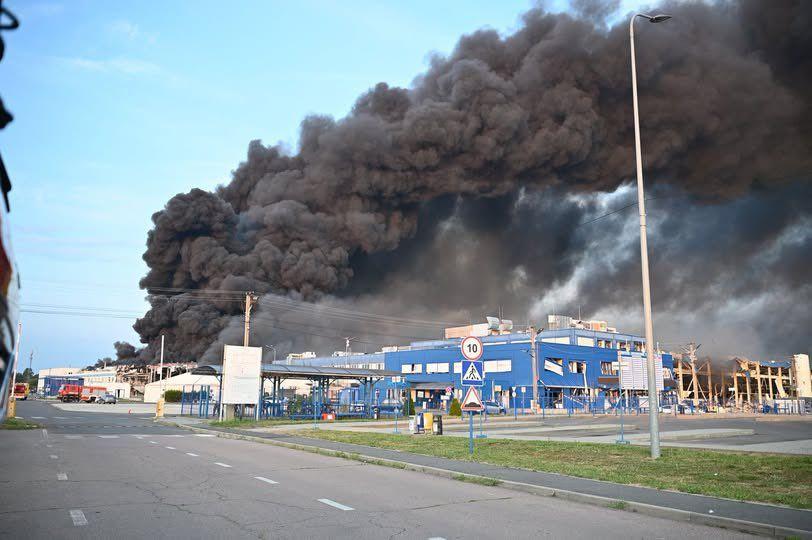
The aftermath of a Russian attack on the Flex plant in the city of Mukachevo, Zakarpattia Oblast, Ukraine. (Andrii Sybiha/X)