
As European Leaders Reject Russian Demands and Present Counter-Proposal, Confusion Reigns Over Exact Terms of Moscow’s Ceasefire Offer Ahead of August 15 Alaska Summit
Summary of the Day – August 9, 2025
A diplomatic fog descended over Washington as the Trump Administration described Vladimir Putin’s ceasefire demands in four contradictory ways since August 6, revealing fundamental confusion about Russia’s actual negotiating position. German outlet BILD exposed that U.S. Special Envoy Steve Witkoff misunderstood Putin’s demands during their August 6 meeting, interpreting Russian territorial demands as offers for Russian withdrawal. While Ukrainian and European officials united to reject Putin’s territorial demands and present their own counter-proposal during meetings in the United Kingdom, Trump failed to impose promised sanctions despite missing his August 8 deadline. As European leaders issued stark warnings that “the future of Ukraine cannot be decided without Ukrainians,” Ukraine continued its strategic drone campaign with devastating strikes against Russian infrastructure, while civilian casualties mounted from continued Russian assaults including a double-tap attack on a civilian bus in Kherson.
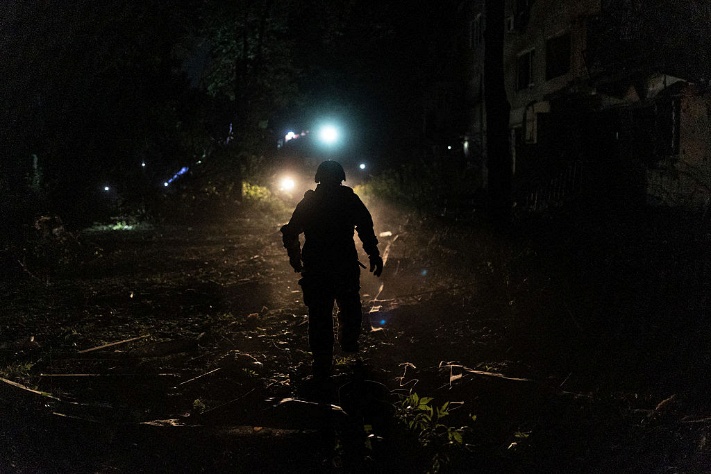
Ukrainian firefighters extinguish a fire after a Russian multiple rocket launcher strike on a residential building in Kostiantynivka, Ukraine. (Diego Herrera Carcedo/Anadolu via Getty Images)
Four Versions of One Proposal: The Translation Crisis
The most significant revelation of August 9 emerged from German investigative reporting that exposed fundamental miscommunication between Moscow and Washington. BILD reported that U.S. Special Envoy Steve Witkoff misunderstood Putin’s demands during their August 6 meeting, interpreting Russian demands for Ukrainian withdrawal from Zaporizhzhia and Kherson oblasts as offers for Russian withdrawal from those same territories.
This translation error cascaded through the diplomatic process, creating four distinct versions of Putin’s position within 72 hours. Initially, Trump told Ukrainian and European officials that Putin would withdraw from occupied Zaporizhzhia and Kherson oblasts in exchange for Ukraine ceding unoccupied Donetsk areas. By August 7, Witkoff walked back this interpretation, stating Russia would “both withdraw and freeze” frontlines in those regions.
By August 8, after European officials demanded clarification, Witkoff admitted the “only offer” was Ukrainian unilateral withdrawal from Donetsk Oblast. A Ukrainian Presidential Office source added further complexity, claiming Putin offered to withdraw from northeastern Kharkiv and Sumy oblasts as a “sign of goodwill.” Bloomberg’s reporting suggested even broader Russian demands, including complete control over Donetsk, Luhansk oblasts, and Crimea.
European Unity: The Counter-Proposal Emerges
Ukrainian and European officials meeting with U.S. Vice President JD Vance in the United Kingdom on August 9 presented a comprehensive counter-proposal that fundamentally rejected Putin’s framework. The European counter-proposal demands that full ceasefire implementation must precede territorial negotiations, directly contradicting Putin’s sequencing that places Ukrainian territorial concessions as prerequisites.
The proposal stipulates that territorial exchanges must be reciprocal and that Ukraine must receive robust security guarantees to prevent future Russian aggression. Finnish President Alexander Stubb presented this counter-proposal directly to Trump via phone call, while European leaders coordinated statements supporting Ukrainian sovereignty.
Estonian Foreign Minister Margus Tsahkna declared: “If borders can be changed by force, none are safe. If nations can be forced to live under a bigger neighbor’s dictate, none are free.” Lithuanian Foreign Minister Kęstutis Budrys reinforced this position: “Ukraine’s borders, sovereignty and independence are non-negotiable. From Luhansk to Crimea, every inch belongs to the sovereign nation of Ukraine.”
Macron’s Warning: Nothing About Ukraine Without Ukraine
French President Emmanuel Macron emerged as the most vocal European critic of bilateral U.S.-Russia negotiations, warning that “the future of Ukraine cannot be decided without Ukrainians.” Speaking after consultations with Zelensky, German Chancellor Friedrich Merz, and British Prime Minister Keir Starmer, Macron insisted that “Europeans will also necessarily be part of the solution because their security is at stake.”
European leaders issued a joint statement declaring: “The path to peace in Ukraine cannot be decided without Ukraine. We remain committed to the principle that international borders must not be changed by force. The current line of contact should be the starting point of negotiations.” The statement was signed by Presidents Macron, von der Leyen, and Stubb, along with Prime Ministers Meloni, Tusk, and Starmer, plus Chancellor Merz.
Trump Misses Sanctions Deadline
Despite threatening 100% secondary tariffs targeting countries purchasing Russian oil, Trump failed to impose fresh sanctions on Russia as his August 8 deadline passed. The missed deadline occurred as Trump prepared for the August 15 Alaska summit with Putin, suggesting diplomatic momentum took precedence over economic pressure.
Trump had previously shortened his original 50-day ultimatum as he voiced frustration with Russian strikes on Ukrainian cities and Moscow’s delays in peace processes. The failure to implement promised sanctions undermined U.S. credibility in pressuring Russia toward genuine negotiations.
Alaska Summit Preparations: Russian Historical Claims
Russian officials welcomed Trump’s announcement of the August 15 Alaska summit while invoking historical narratives about Russian claims to the territory. Leading negotiator Kirill Dmitriev described Alaska as “a Russian-born American,” referencing Orthodox Church ties and historical Russian presence before the 1867 sale to the United States.
Presidential aide Yuriy Ushakov called Alaska a “logical” meeting place due to U.S.-Russia proximity across the Bering Strait and shared Arctic interests. These comments echoed previous Russian officials’ suggestions that the United States should “return” Alaska to Russia, including statements from Security Council Deputy Chairman Dmitry Medvedev and State Duma Chairman Vyacheslav Volodin.
Zelensky’s Rejection: Warning Against Appeasement
President Volodymyr Zelensky mounted a comprehensive rejection of Putin’s territorial demands while warning of the consequences of appeasing Russian aggression. “Ukrainians will not give their land to the occupier. Any decisions against us, any decisions without Ukraine, are also decisions against peace,” Zelensky declared.
Drawing historical parallels, Zelensky argued: “He was allowed to take Crimea, and this led to the occupation of Donetsk and Luhansk regions. He did not receive preventive punishment when he amassed contingent on our borders. This led to full-scale war and occupation of even more parts of Ukraine.” The Ukrainian president warned that accepting Putin’s current demands would only encourage future territorial grabs: “We will not allow this second Russian attempt to divide Ukraine. Knowing Russia—where there is a second, there will be a third.”
Cross-Border Operations: Ukrainian Activities in Russian Territory
Fighting continued in unspecified areas of Kursk Oblast on August 8 and 9 without confirmed advances. Russian milbloggers claimed Ukrainian forces attempted to cross the border near Malev, Bryansk Oblast, southwest of Bryansk City. Russian sources reported Ukrainian attacks toward Tetkino and near Novyi Put, both southwest of Glushkovo, and near Demidovka northwest of Belgorod City.
A Russian milblogger affiliated with the Northern Group of Forces claimed Ukrainian forces crossed into Kursk Oblast near Novokostyantynivka north of Sumy City, forcing Russian retreat from Stepne northwest of Sumy City and Novokostyantynivka. These cross-border activities demonstrate Ukraine’s continued ability to conduct operations on Russian territory despite diplomatic negotiations.
Ukrainian Sanctions Target Russian Energy Sector
President Volodymyr Zelensky signed two decrees imposing sanctions against 18 individuals and 17 legal entities tied to Russia’s energy sector. The measures targeted those involved in integrating the Russian-occupied Zaporizhzhia Nuclear Power Plant into Russia’s power grid, participating in Chernobyl Nuclear Power Plant seizure, and manufacturing dual-use nuclear equipment.
Additional targets included companies supporting Russia’s “shadow fleet,” oil traders bypassing price caps, and manufacturers supplying equipment to the Russian military-industrial complex. Presidential representative on sanctions policy Vladislav Vlasiuk stated the measures were “100% synchronized” with U.S. restrictions adopted on January 10 and 15, 2025.
Deep Strike Campaign: Destroying Russian War Infrastructure
Ukraine’s Security Service executed a sophisticated long-range operation, flying drones approximately 1,300 kilometers to strike a Shahed storage facility in Kizil-Yul, Tatarstan Republic. The facility housed completed drones and foreign-sourced components, located just 43 kilometers from the Alabuga Special Economic Zone where Russia produces Shahed drones. The strike ignited fires, disrupting Russian drone supply chains supporting nightly attacks against Ukrainian cities.
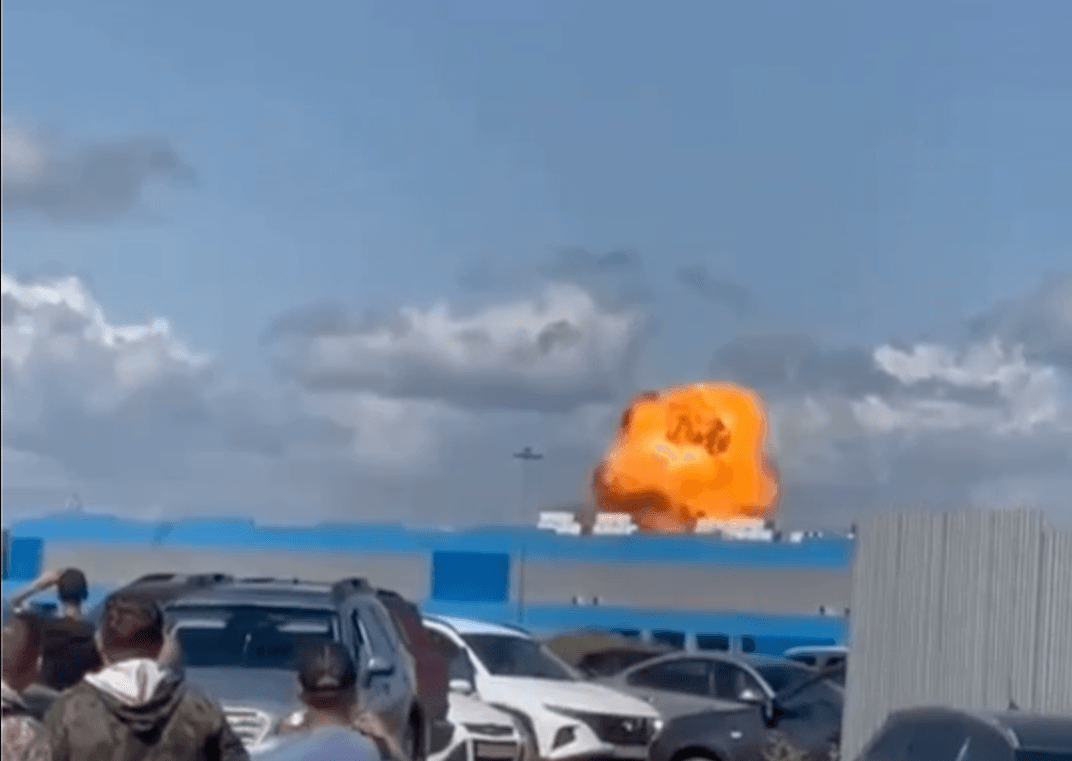
Screenshot from a video reportedly showing a Ukrainian drone striking a warehouse storing Russian drones in Kizil-Yul, Russia.
Ukraine’s military intelligence confirmed destruction of the Yenisei radar station, a component of Russia’s advanced S-500 air defense system, in Russian-occupied Crimea. The 98L6 Yenisei radar serves both S-500 and S-400 systems, making its destruction “a significant blow” to Russian air defense capabilities on the peninsula.
Reports emerged of drone attacks on a Saratov oil refinery, sparking large fires and explosions. One person was reported killed, with others injured. Ukrainian operations in Afipsky, Krasnodar Krai, caused explosions near a checkpoint on the 90th Anti-Aircraft Missile Brigade base.
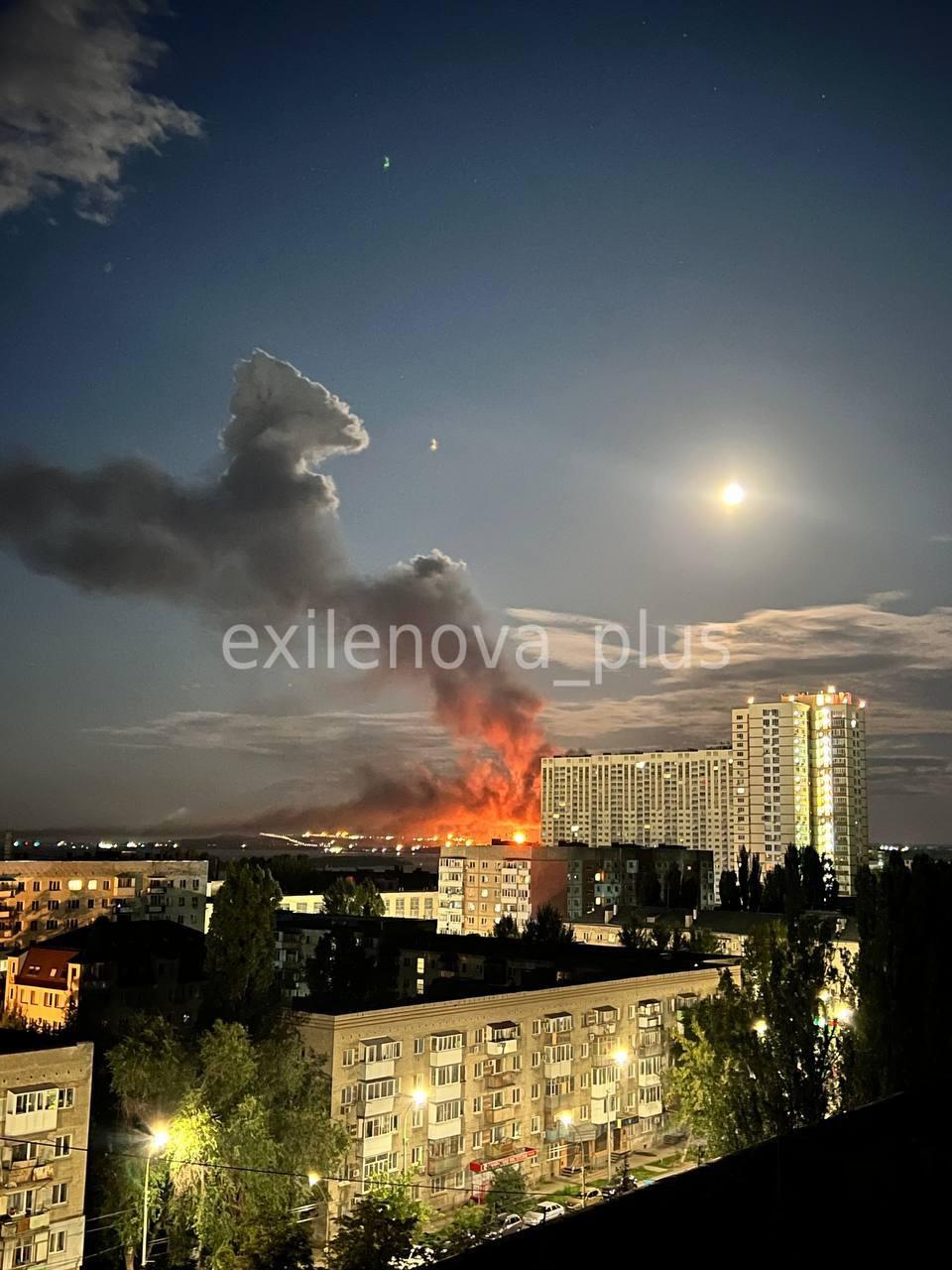
Photo reportedly showing the aftermath of a drone strike on an oil refinery in Saratov, Russia. (Exilenova+ / Telegram)
Military Operations: Ukrainian Advances Near Kupyansk
Ukrainian forces demonstrated continued offensive capability with confirmed advances near Kupyansk. Geolocated footage showed Ukrainian forces retaking positions southwest of Kindrashivka, complicating Russian attempts to envelop the strategic city. Russian forces attacked near Kupyansk itself and surrounding areas, deploying elements of the 352nd Motorized Rifle Regiment and 68th Motorized Rifle Division with fiber optic Groza Leska drones.
Fighting continued across multiple fronts with mixed results. Russian forces claimed advances in Vovchansk and surrounding areas in Kharkiv Oblast, though a Russian milblogger admitted forces were “struggling to maintain positions and advance near Vovchansk.” In the Lyman direction, Russian milbloggers claimed advances within southern Karpivka and northern outskirts of Serednie, though these remained unconfirmed.
The Russian Ministry of Defense claimed seizure of Yablunivka northwest of Toretsk, crediting the 20th Motorized Rifle Division, though milbloggers disputed whether the settlement was fully secured. Ukrainian forces maintained defensive positions across the Chasiv Yar direction, with Lieutenant Colonel Dmytro Zaporozhets confirming Ukrainian control of majority positions within the settlement.
Russian Command Changes: Northern Front Restructuring
Russian milbloggers reported that the Ministry of Defense replaced Northern Grouping of Forces and Leningrad Military District Commander Colonel General Alexander Lapin with Chief of Staff of the Russian Ground Forces Colonel General Yevgeny Nikiforov. Lapin faced criticism for Russia’s failure to establish buffer zones in northern Sumy and Kharkiv oblasts.
Nikiforov has overseen Russia’s response to Ukrainian incursions into Kursk Oblast since August 2024, working alongside Lapin to manage cross-border operations. A Kremlin insider source indicated that Deputy Defense Minister Yunus-Bek Yevkurov, a close ally of Nikiforov, likely influenced the appointment. Neither Russian state media nor the Defense Ministry confirmed the appointment, and Lapin’s next assignment remains unclear.
Kherson Bus Attack: Double Strike Tactics
A Russian FPV drone struck a civilian bus in Kherson suburbs at approximately 8:00 a.m., killing two people and injuring 19 others. Sixteen victims required hospitalization, with two suffering serious injuries. As police officers recovered victims’ bodies, a second Russian FPV drone struck the same vehicle, leaving three officers with concussions.
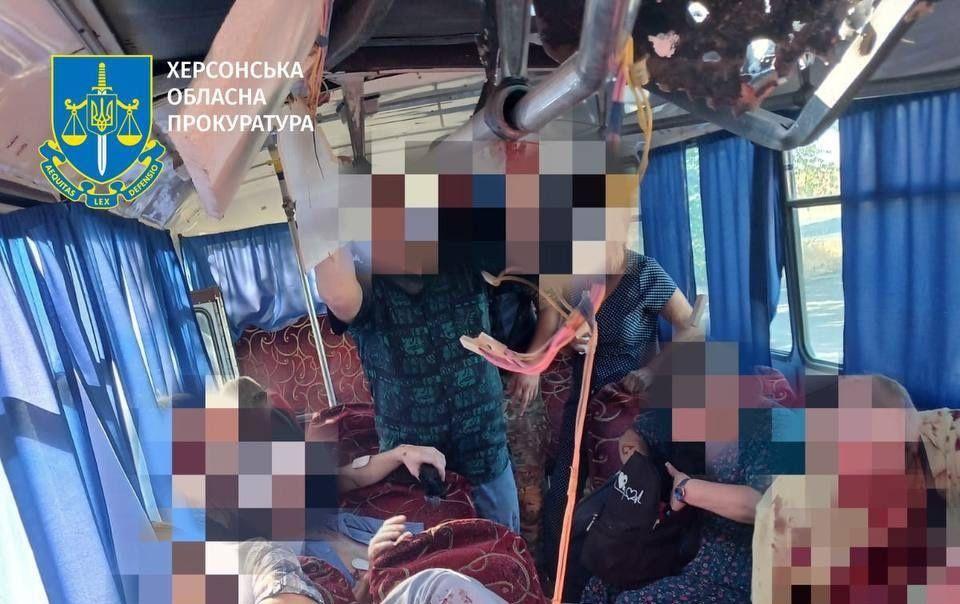
A Russian drone attacked a bus in the city of Kherson, Ukraine. (Kherson Oblast Prosecutor’s Office)
The attack demonstrated Russian “double tap” tactics designed to target first responders and emergency personnel. Victims sustained blast injuries and shrapnel wounds, with ages ranging from 23 to 83 years old. President’s Office Head Andriy Yermak characterized the attack as evidence that “Russians are fooling everyone around them, pretending that they are ready to stop the war, but doing nothing to achieve this goal.”
Comprehensive Casualty Report: Eight Killed, 24 Injured
Russian attacks killed at least eight civilians and injured at least 24 others over August 9, with Russian forces launching 47 Shahed-type drones and two Iskander-K missiles. Ukraine’s air defense intercepted one missile and 16 drones, while 31 drones reached targets in 15 locations.
In Donetsk Oblast, attacks killed two people and injured two others in Siversk, with another person killed and five injured in Kostiantynivka. Three additional people suffered injuries in Yampil, Korovii Yar, and Bilytske. In Zaporizhzhia Oblast, a Russian FPV drone killed two people, with Russian forces launching 585 strikes across 11 localities.
A Russian drone attack on a Kharkiv furniture store injured five people, including a 17-year-old girl. The drone struck the roof, damaging metal roofing and furniture inside. In Dnipropetrovsk Oblast, strikes against Dnipro injured three people, while in Nikopol a 56-year-old woman was killed and 62-year-old man injured. In Sumy Oblast, a Russian drone injured a 50-year-old man.
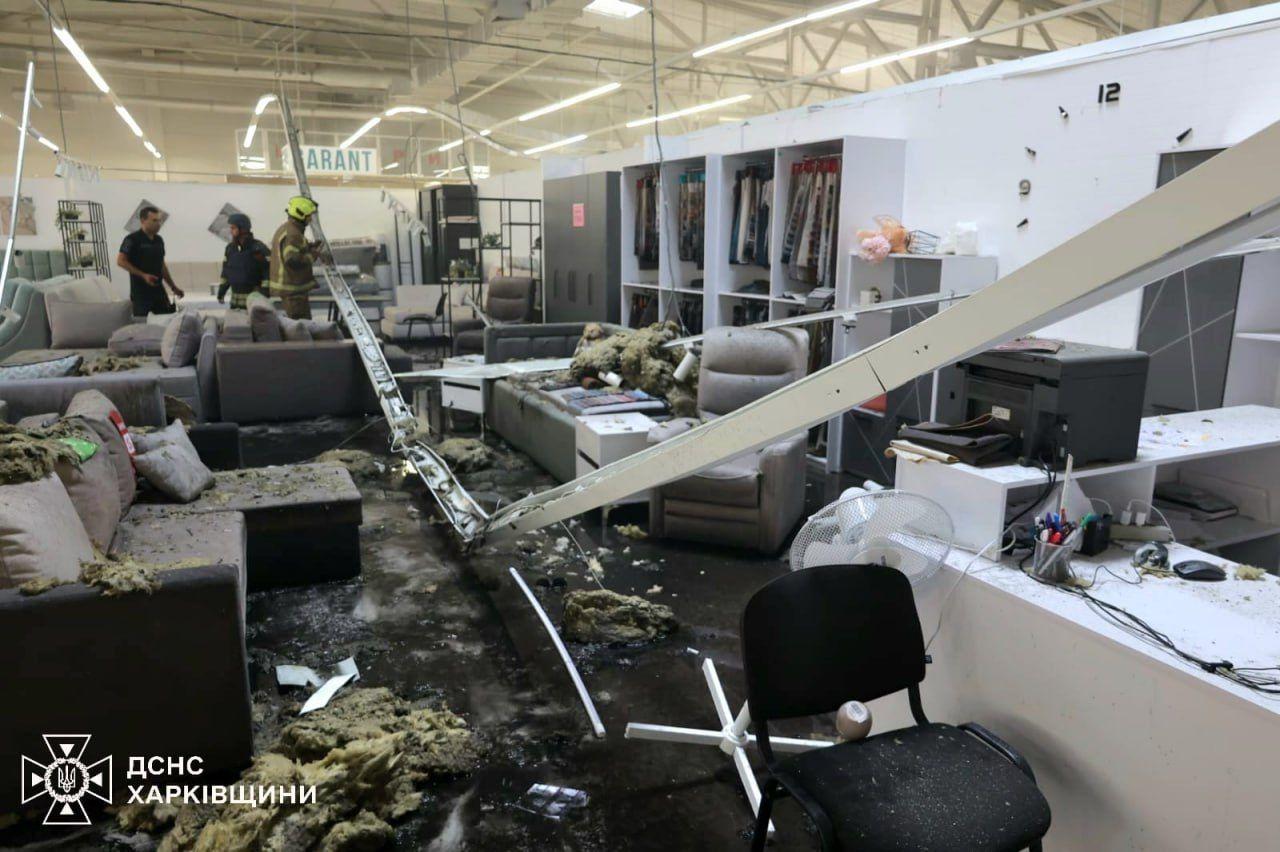
A Russian drone struck a furniture story in the city of Kharkiv, injuring five people. (Ukraine’s State Emergency Service – Kharkiv Oblast/Telegram)
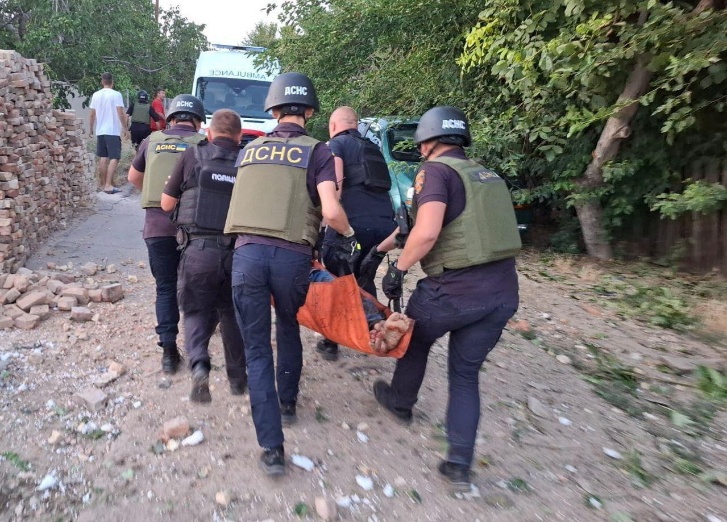
In the city of Nikopol, a 56-year-old woman was killed, and a 62-year-old man was injured in another Russian attack on Dnipropetrovsk Oblast overnight. (Ukraine’s Emergency Service)
White House Considers Zelensky Invitation
NBC News reported that the White House is considering inviting President Zelensky to Alaska on August 15, either for trilateral summit or separate meetings. One White House official expressed optimism that “everyone is very hopeful that would happen,” while another emphasized focus on planning the bilateral meeting Putin requested.
This potential invitation reflects recognition that excluding Ukraine from peace negotiations would undermine legitimacy and effectiveness of any agreement. European officials have consistently emphasized that meaningful peace talks require Ukrainian participation, with uncertainty surrounding Zelensky’s participation illustrating broader confusion about summit format and objectives.
Economic Pressure: Canada Joins Price Cap Reduction
Canada announced its intention to join allies in lowering the Russian oil price cap from $60 to $47.60 per barrel, aligning with EU and UK decisions implementing dynamic pricing beginning September 3. Finance Minister François-Philippe Champagne stated the measure would “ratchet up economic pressure and limit crucial funding source for Russia’s illegal war.”
The coordinated reduction targets roughly one-third of Russian federal budget revenues, though enforcement remains complex given Russia’s “shadow fleet” adaptations and global oil market dynamics.
Migration Crisis: Belarus-Libya-Russia Coordination
European Commission officials reported increased flights between Benghazi, Libya and Minsk, Belarus, suggesting renewed coordination between Putin, Lukashenko, and Libyan warlord Khalifa Haftar to institute new migrant crisis targeting EU borders. Officials tracked suspicious flight patterns that “raise questions about potential coordination or facilitation of irregular migration flows.”
This tactic mirrors the 2021 migrant crisis preceding Russia’s full-scale invasion, when tens of thousands of asylum seekers attempted EU border crossings with Belarusian assistance. The timing suggests Putin may be employing hybrid warfare tactics to distract European attention while pursuing diplomatic initiatives with Trump.
Russian Air Defense Failures: Flight Disruptions Continue
Russian air defense responses to Ukrainian drone operations caused massive flight delays at Sochi Airport, with 57 flights delayed and one canceled. Additional disruptions affected airports in Krasnoyarsk, Tomsk, Novosibirsk, Novokuznetsk, and Norilsk, stranding approximately 1,000 passengers.
Ukraine designs drone flight paths to pass within 100-150 kilometers of major airports, forcing Russian air traffic controllers to activate emergency protocols. The psychological impact demonstrates to Russian civilians that their territory is not immune from war consequences.
Looking Forward: The Alaska Test Approaches
As diplomatic attention focuses on Alaska, fundamental questions remain unresolved about summit objectives and participant roles. The confusion over Putin’s actual negotiating position suggests either deliberate Russian obfuscation or genuine communication failures that complicate productive negotiations.
European rejection of Putin’s territorial demands and presentation of alternative framework creates potential for prolonged diplomatic deadlock. Trump’s willingness to discuss territorial concessions conflicts with European insistence on Ukrainian sovereignty, while Putin’s maximalist demands exceed what Ukraine and Europe consider acceptable starting points.
The August 15 summit will test whether personal diplomacy can bridge vast differences in negotiating positions, or whether fundamental conflicts over Ukrainian sovereignty will prevent meaningful progress. For Ukraine, the stakes remain existential: acceptance of territorial losses versus continuation of costly resistance with uncertain Western support levels.