
As Steve Witkoff concludes three hours of talks with Putin, the White House weighs Russia’s “air truce” proposal while Trump imposes crushing tariffs on India for buying Russian oil
Summary of the Day – August 6, 2025
The eleventh-hour diplomacy between Washington and Moscow reached fever pitch as Trump’s special envoy Steve Witkoff concluded three hours of talks with Vladimir Putin, while the President imposed crushing 25% tariffs on India for buying Russian oil. Russian forces advanced to threaten Kupyansk’s supply lines as Ukraine launched 82 drones in retaliation, striking critical infrastructure deep inside Russia. With Trump’s August 8 deadline looming, the Kremlin offered an “air truce” proposal even as its forces killed seven Ukrainian civilians and targeted energy facilities near the Romanian border.
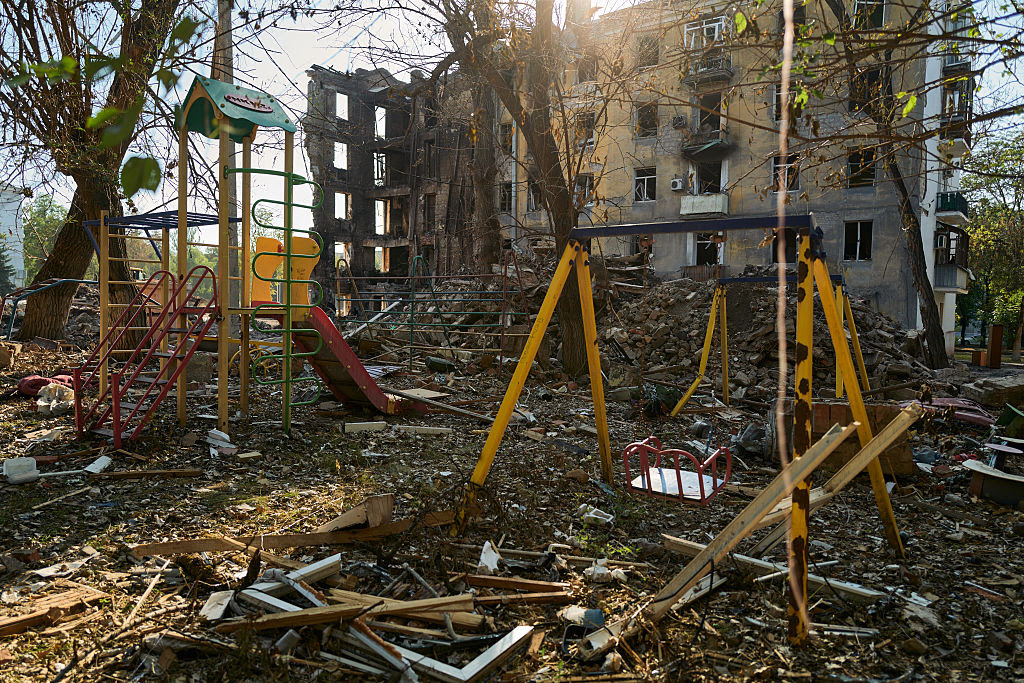
Rescuers from Ukraine’s Emergency Services search through the rubble of a building bombed by Russian forces on July 31, in an effort to recover the remains of victims in Kramatorsk, Ukraine. The attack killed seven people and injured 11 others. (Pierre Crom / Getty Images)
Behind Kremlin Walls: Three Hours That Could Shape the War’s Future
The ornate halls of the Kremlin witnessed what could prove to be a defining moment in the conflict as Steve Witkoff sat across from Vladimir Putin for nearly three hours on August 6. The meeting, reportedly requested by Moscow as a last-ditch effort to avoid punishing new sanctions, concluded with Putin’s aide Yuri Ushakov describing the conversation as “useful and constructive.”
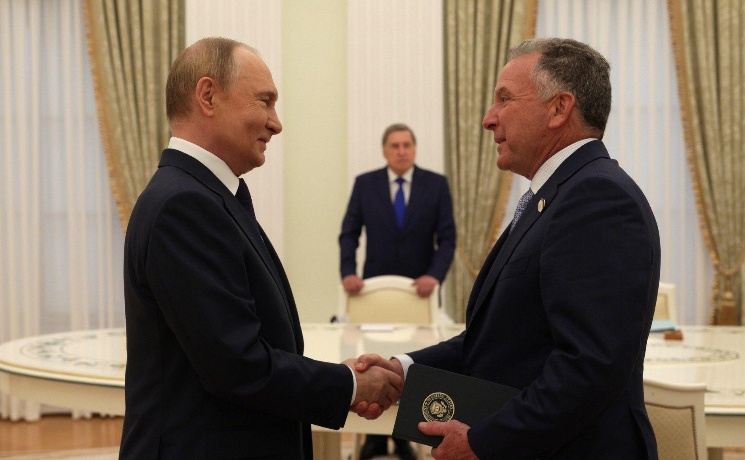
U.S. President Donald Trump’s special envoy, Steve Witkoff, is meeting Russian President Vladimir Putin for high-level talks in Moscow, Russia. (The Kremlin’s official website)
“Regarding the Ukraine issue, some signals have been sent out from our side,” Ushakov told journalists. “Corresponding signals were also received from President Trump.”
Before meeting Putin, Witkoff held talks with Kirill Dmitriev, head of Russia’s sovereign wealth fund and a figure previously tasked with facilitating back-channel dialogue with the Trump administration. “Dialogue will prevail,” Dmitriev commented after the envoy’s Kremlin audience.
Trump later described the meeting as “highly productive,” writing on Truth Social: “Great progress was made! Afterwards, I updated some of our European Allies. Everyone agrees this war must come to a close, and we will work towards that in the days and weeks to come.”
Yet when pressed by reporters, Trump was notably restrained: “I don’t call it a breakthrough.”
The Economic Sledgehammer: America Targets India Over Russian Oil
Trump wielded economic warfare with devastating precision, signing an executive order that imposed a sweeping 25% tariff on all Indian goods—a move that could disrupt over $180 billion in bilateral trade. The order, effective in 21 days, explicitly targets India’s “direct or indirect import of Russian crude,” which the White House characterized as posing an “unusual and extraordinary threat” to U.S. national security.
The tariffs represent a dramatic escalation from the initial 25% duty announced July 31, now formalized into binding law. The move opens the door to similar punitive measures against other Russian oil buyers, with the executive order granting the Secretary of Commerce authority to investigate and recommend tariffs on additional countries.
India’s Foreign Ministry fired back with unusual vehemence, calling the action “extremely unfortunate” and “unfair, unjustified and unreasonable.” New Delhi argued that its oil imports are based on “market factors” aimed at “ensuring energy security for 1.4 billion people.”
The economic pressure appears to be having effect: India’s largest oil refiner, Indian Oil Corp, reportedly paused Russian crude purchases and instead bought 7 million barrels of U.S., Canadian, and Middle Eastern crude for September delivery.
The Air War Deception: Russia’s Limited Truce Gambit
As Witkoff flew to Moscow, intelligence emerged of Russia’s potential fallback position—a limited “air truce” involving a pause in drone and missile strikes if Ukraine agrees to do the same. The proposal, reported by Bloomberg citing undisclosed sources, would allow Russian ground forces to continue their relentless advance while potentially buying Moscow time to avoid Trump’s threatened secondary sanctions.
The cynical nature of the proposal became clear when examined against Russia’s battlefield behavior: while offering to pause airstrikes, Russian forces launched 45 Shahed-type drones against Ukrainian targets overnight, killing civilians and targeting energy infrastructure near the Romanian border.
Kupyansk Under Siege: The Stranglehold Tightens
Russian forces achieved a significant tactical breakthrough on August 6, advancing to the western outskirts of Kupyansk and securing positions that directly threaten Ukrainian ground lines of communication into the strategic town. Geolocated footage confirmed Russian advances south of Sobolivka and the likely seizure of both Sobolivka and Myrne, settlements immediately flanking Kupyansk’s critical supply routes.
A Russian milblogger claimed that Moscow’s forces are now close to interdicting the H-26 Kupyansk-Shevchenkove highway—the main Ukrainian supply route running east-west from Kupyansk and located roughly one kilometer south of the newly captured positions.
The capture of Kupyansk would open three potential courses of action for Russian forces: continuing west toward Shevchenkove, pushing northwest toward Velykyi Burluk to establish a buffer zone near Kharkiv City, or redeploying manpower to higher-priority sectors like Pokrovsk.
Ukrainian Counter-Strike: 82 Drones Target Russian Infrastructure
Ukrainian forces launched one of their largest coordinated drone campaigns of 2025, reportedly striking Russian territory with 82 drones overnight on August 6. The massive aerial assault targeted refineries, military sites, and rail hubs across southern Russia.
Among the targets was the Tatsinskaya railway station in Rostov Oblast, which serves as a critical logistics hub for Russian military operations. Located roughly 100 kilometers from Ukraine’s border, the station was struck for the second consecutive night, with explosions beginning around 1 a.m. local time and resulting in fires near freight tanks.
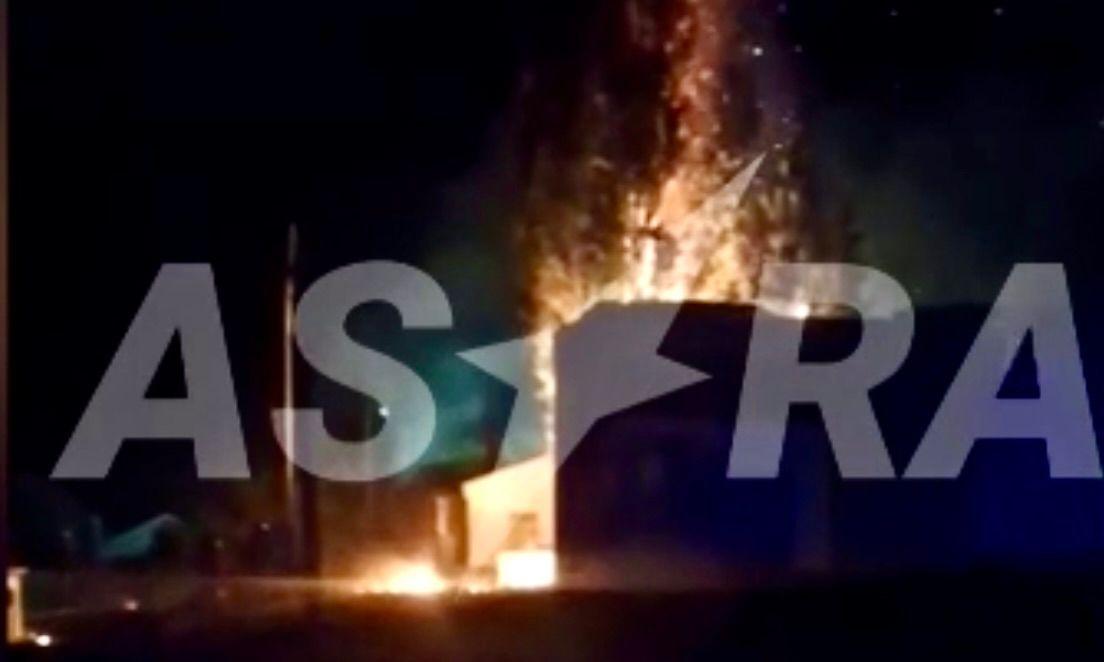
A fire erupted in Russia’s Rostov Oblast following a reported Ukrainian drone attack overnight. (Astra/Telegram)
Ukrainian drones also targeted the Kavkazskaya oil pumping station in Krasnodar Krai, damaging a pipeline connecting storage tanks and igniting a fire that covered approximately 20 square meters. The facility, part of the Caspian Pipeline Consortium system pumping up to 6 million metric tons of oil annually, suspended operations and evacuated 30 personnel.
Russia’s Defense Ministry claimed to have shot down 51 drones across four regions and occupied Crimea, but the successful strikes on critical infrastructure demonstrated Ukraine’s growing ability to disrupt Russian war logistics.
Death from Above: Seven Civilians Pay the Price
Russian attacks across Ukraine killed at least seven civilians and injured at least 37 over the past day, including children, as Moscow targeted both military positions and civilian infrastructure with relentless precision.
Russia attacked a resort in the Zaporizhzhia district, killing two people and injuring 12, including at least four children. Two men aged 59 and 53 were killed when a Russian first-person-view drone hit a house in the Stepnohirsk community.
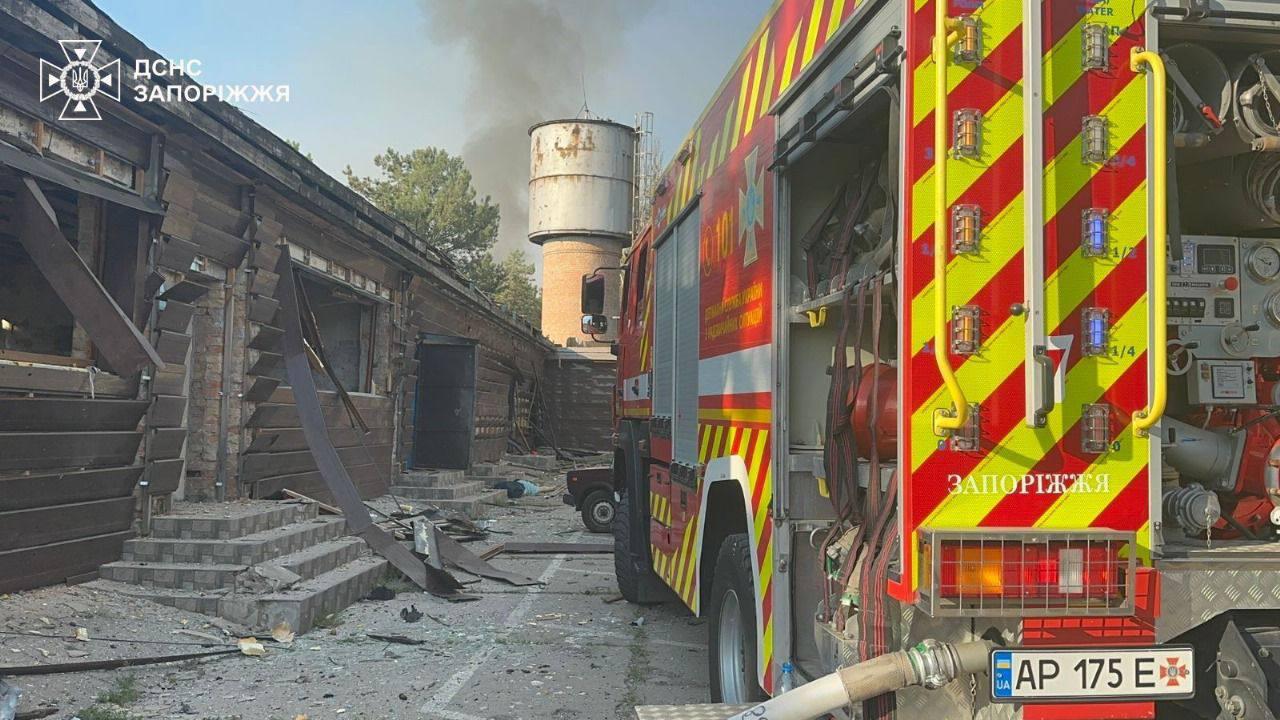
The aftermath of a Russian attack against Zaporizhzhia Oblast, Ukraine. (State Emergency Service/Telegram)
In Donetsk Oblast, one person was killed and seven were injured, including casualties in Pokrovsk, Kostiantynivka, and Zarichne. A 20-year-old woman was injured in Kharkiv after Russia launched drone attacks and air strikes against the city.
The death toll from Russia’s devastating July 31 attack on Kyiv rose to 32 after a man injured in the neck died in hospital, making it the deadliest Russian strike on the Ukrainian capital in 2025.
Energy Infrastructure Under Attack: Romania Scrambles Jets
Russian drones struck a compressor station of Ukraine’s Gas Transmission System Operator near the Ukrainian-Romanian border, damaging equipment that connects Ukrainian facilities with Greek liquified natural gas terminals. The attack prompted Romanian authorities to issue emergency warnings and scramble F-16 fighter jets—a routine precaution during Russian strikes near NATO borders.
The targeted facility is part of a route that has already been used to ship U.S. and Azerbaijani gas. Around 2,500 consumers were left without gas following the strike on infrastructure in Odesa Oblast.
“This was a deliberate blow to our preparations for the heating season—absolutely cynical, like every Russian strike on our energy infrastructure,” President Volodymyr Zelensky said.
Trump’s Nuclear Warning: Submarines Move to “Appropriate Regions”
In a move that underscored the escalating stakes, Trump confirmed he had ordered two nuclear submarines to be moved to “appropriate regions” in response to remarks from former Russian President Dmitry Medvedev about the risk of war between the nuclear-armed adversaries.
The Kremlin’s response was notably measured, with officials stating that everyone should be “very, very careful” about nuclear rhetoric. The submarine deployment appears designed to demonstrate American resolve while providing Trump with additional leverage in negotiations.
The PURL Initiative: NATO’s New Ukraine Lifeline
Ukrainian Defense Minister Denys Shmyhal announced the launch of the Prioritized Ukraine Requirements List (PURL) initiative—a new mechanism allowing NATO members and partners to finance U.S. weapons supplies to Ukraine through voluntary contributions. The Netherlands has already committed 500 million euros to the first assistance package.
The initiative, implemented under agreements between Zelensky, Trump, and NATO Secretary General Mark Rutte, represents a potential solution to funding challenges as European allies seek to maintain military support.
American Military Support: $200 Million in New Aid
The U.S. approved foreign military sales for Ukraine worth over $200 million for artillery support, transportation, and logistics. The first package includes equipment, repairs, and technical support for M777 howitzers, valued at $104 million, with UK defense manufacturer BAE Systems as the principal contractor.
The second package amounts to $99.5 million and covers transport, cargo consolidation, and logistics. The deals represent concrete evidence of continued American military support even as diplomatic efforts intensify.
War Crimes Continue: Execution in Broad Daylight
Ukrainian prosecutors opened their third war crimes investigation of 2025 after a Russian serviceman executed a civilian attempting to evacuate from the village of Udachne in Donetsk Oblast. Video evidence shows the man walking along a roadside with a suitcase of personal belongings when he was gunned down from an ambush position in a ruined building.
The killing occurred as the victim attempted to flee Udachne, a front-line village located 12 kilometers west of besieged Pokrovsk. The execution represents another stark reminder of Russian forces’ systematic targeting of Ukrainian civilians.
Zelensky’s Approval Slides: Anti-Corruption Backlash Takes Toll
President Zelensky’s approval rating dropped from 65% in June to 58% in early August, according to a Kyiv International Institute of Sociology poll. The decline appears directly linked to the controversy surrounding his July 22 decision to subordinate anti-corruption agencies to the prosecutor general—a move that sparked mass protests before being reversed nine days later.
The polling data shows the share of Ukrainians who distrust Zelensky grew from 30% to 35%. The protests represented the first significant public demonstrations since Russia’s full-scale invasion began, breaking a wartime taboo on domestic political opposition.
Poland’s New President: Challenges for Ukrainian Relations
Conservative historian Karol Nawrocki was inaugurated as Poland’s new president on August 6, succeeding Andrzej Duda after a narrow election victory. While Nawrocki supports Ukraine’s sovereignty and condemns Russian aggression, he has expressed opposition to Kyiv’s accession to both the European Union and NATO.
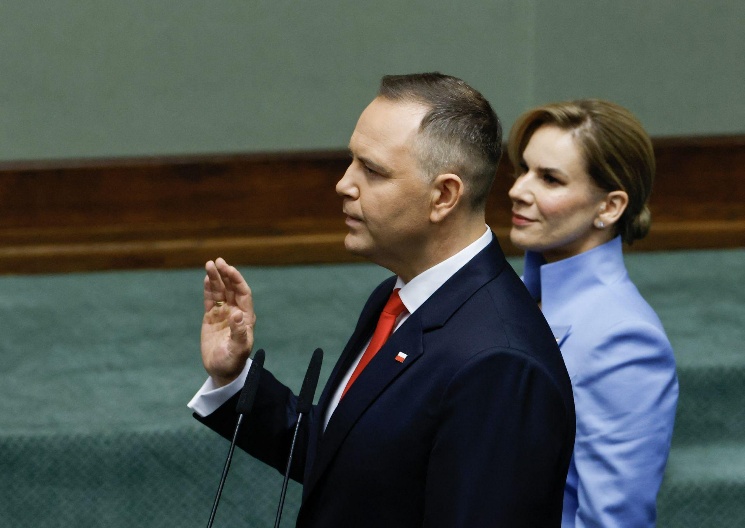
Poland’s President-elect Karol Nawrocki is sworn in as his wife Marta Nawrocka looks on at the National Assembly at Poland’s parliament, the Sejm in Warsaw. (Wojtek Radwanski/AFP via Getty Images)
In his inaugural address, Nawrocki stressed Polish sovereignty within the EU: “Poland is a member of the European Union, but it will not become the European Union—it is Poland and it will remain Poland.”
Nawrocki and Zelensky held their first phone call on July 31, with both sides signaling willingness to maintain dialogue despite unresolved historical issues regarding the Volyn massacres.
Russian Economic Strain: Oil Revenue Collapse Continues
Russian economic indicators continued to reveal the impact of sustained Western pressure and falling oil prices. The Finance Ministry reported a 30% year-on-year drop in oil and gas revenue in July, marking the third consecutive monthly decline.
Consumer spending data showed a 24% fall in passenger car sales from July 2024 to July 2025, suggesting broader economic anxiety among Russian citizens. Despite official projections of GDP growth, the Russian Central Bank acknowledged a “slowdown in the growth rate of household and government consumption.”
EU Tightens the Screws: New Dynamic Oil Price Ceiling
The European Union announced it would implement a new dynamic ceiling on Russian oil prices beginning September 3, replacing the static $60-per-barrel limit with a formula that calculates prices as 15% below the average global market price over the prior three months. The current figure stands at $47.60 per barrel.
The revised price ceiling represents a critical component of the West’s strategy to squeeze Russia’s war economy while avoiding major disruptions in global energy markets.
Belarus Military Buildup: Zapad-2025 Preparations Begin
The first echelon of Russian troops and military equipment arrived in Belarus on August 6 to prepare for the upcoming Zapad-2025 joint military exercises expected in mid-September. While Belarus confirmed “over 13,000 participants,” NATO estimates suggest the drills may involve as many as 150,000 troops.
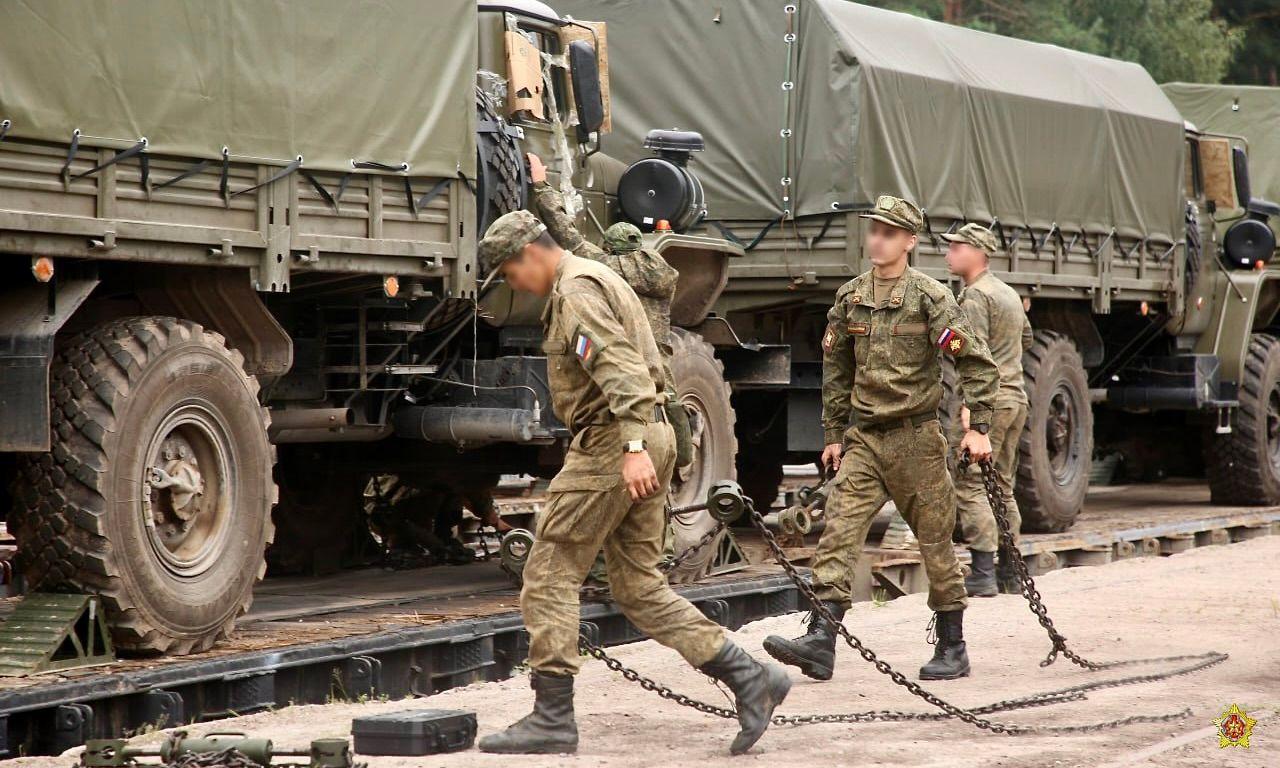
Russian troops arrived in Belarus, to prepare for the upcoming Zapad-2025 joint military exercises. (Belarusian Defense Ministry/Telegram)
The exercises carry particular significance given that the previous Zapad-2021 drills directly preceded Russia’s full-scale invasion of Ukraine. Russian troops who remained in Belarus after those exercises joined the assault from Belarusian territory on February 24, 2022.
Humanitarian Crisis: Hunger Strike at Georgian Border
At least 15 Ukrainian citizens trapped for more than two months in a basement near the Russian-Georgian border declared a hunger strike on August 6, demanding consular access and clarification of their prolonged detention. The group, part of roughly 100 Ukrainians stranded at Georgia’s Dariali border crossing, includes former prisoners deported by Russia and civilians expelled for opposing the war.
The detainees, held in reportedly cramped, windowless conditions since June 5, delivered a written appeal to Georgian border guards and human rights organizations. Ukraine’s Foreign Ministry characterized the situation as Russia “weaponizing the deportation of Ukrainian citizens through Georgia.”
The $300 Million Symbol: Russian Oligarch’s Yacht Goes to Auction
In a symbolic victory for Western sanctions enforcement, the luxury superyacht Amadea—seized from sanctioned Russian billionaire Suleiman Kerimov—will be sold at auction next month. The 106-meter vessel, valued at more than $300 million, represents one of the largest sales of Russian oligarch assets seized under Western sanctions.
The auction, with sealed bids due September 10, requires a $10 million deposit from potential buyers. The sale demonstrates Western determination to convert seized Russian assets into tangible value.
Trump’s Next Peace Initiative: Armenia-Azerbaijan Summit
Beyond the Ukraine crisis, Trump prepared to host Armenian Prime Minister Nikol Pashinyan and Azerbaijani President Ilham Aliyev at the White House on August 8. The meeting represents part of Trump’s broader push to assert American leadership in resolving global conflicts.
According to reports, a peace agreement between the two countries might be announced as a result of the trilateral summit. Armenia and Azerbaijan have remained at odds since gaining independence over 30 years ago, with repeated violence over the disputed Nagorno-Karabakh region.
Historical Reconciliation: Ukraine-Poland Exhumation Plans
Ukraine announced preparations to begin exhumations in September of Ukrainian remains buried in Poland, marking another step in the complex process of historical reconciliation. The move follows a December 2024 exchange of potential exhumation sites between the two countries.
The first exhumations on Ukrainian soil since 2017 began in April, representing what officials called a breakthrough after years of de facto moratorium imposed following vandalism targeting Ukrainian memorials in Poland.
Looking Ahead: The Countdown to August 8
As the diplomatic drama reaches its crescendo, all eyes turn to Trump’s decision on whether to implement the threatened secondary sanctions. Secretary of State Marco Rubio indicated that Trump would decide within 24 to 36 hours, with “a lot” depending on how talks progress.
The stakes could not be higher: failure to reach meaningful progress could trigger punishing economic measures against countries buying Russian oil. Success could open the door to direct Trump-Putin talks and the first realistic path to negotiations since the war began.
For Ukraine, caught between diplomatic pressure and battlefield reality, the coming days will test whether international support can translate into meaningful pressure on Moscow to end its aggression. With Russian forces continuing their advance and civilians dying under continued bombardment, the gap between diplomatic rhetoric and battlefield reality remains vast.