
Russia Unleashes Largest Air Attack in War’s History with 741 Drones and Missiles as Ukraine Pioneers Robot Warfare and European Court Delivers Historic War Crimes Verdict
Summary of the Day – July 9, 2025
The skies above Ukraine erupted into an apocalyptic theater as Russia launched its largest combined drone and missile strike since the full-scale invasion began—741 aerial weapons tearing through the night in a coordinated assault that marked a terrifying new escalation in Moscow’s campaign of terror. The western city of Lutsk bore the brunt of this record-breaking barrage, with residents describing the howling of Shahed drones and the thunderous work of air defenses through seven hours of unrelenting attack. Yet amid this unprecedented scale of destruction, Ukraine demonstrated its own evolution in warfare, as the 3rd Assault Brigade achieved a world-first: capturing Russian soldiers using only drones and robots, without a single Ukrainian infantryman stepping onto the battlefield. The day also brought legal vindication as the European Court of Human Rights delivered a landmark ruling holding Russia accountable for the MH17 downing and systematic human rights violations dating back to 2014.
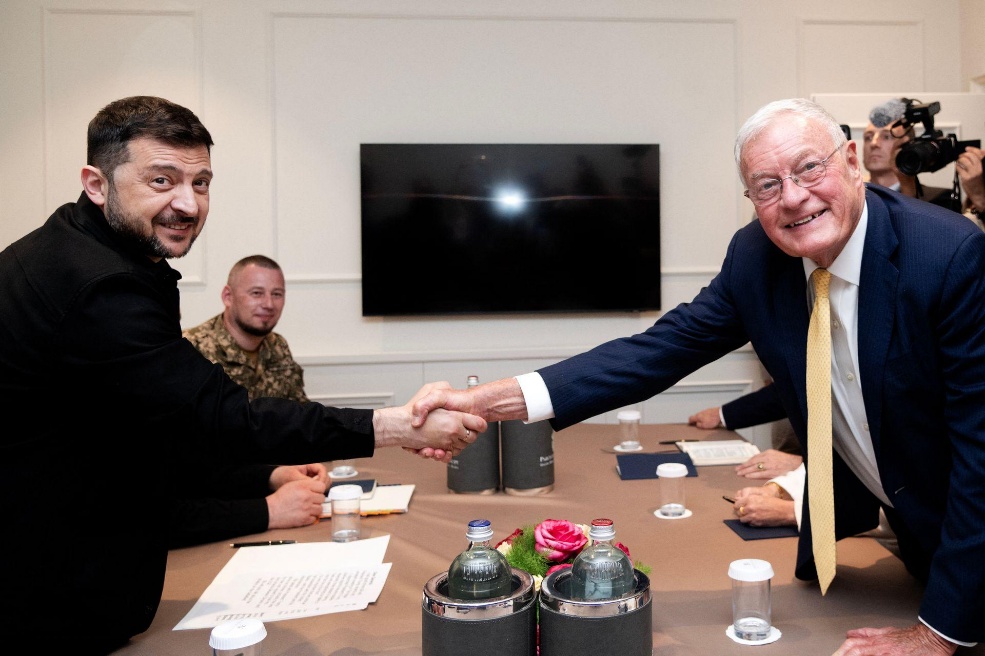
U.S. Special Envoy for Ukraine Keith Kellogg (R) and President Volodymyr Zelensky (L) shake hands before a meeting in Rome. (Tiziana Fabi / AFP via Getty Images)
The Night the Sky Burned: 741 Weapons of War Descend on Ukraine
The darkness of July 8 gave way to a crescendo of terror as Russian forces unleashed 728 Shahed-type drones alongside 13 cruise and ballistic missiles—a 34 percent increase from the previous record of 550 weapons launched just days earlier. The assault began with MiG-31 aircraft taking off from Savasleyka airfield in Nizhny Novgorod, sending the entire country into hours-long missile alerts that would stretch from midnight to dawn.
Ukrainian Air Force spokesperson Colonel Yuriy Ihnat revealed that Russian forces deployed over 400 decoy drones specifically designed to overwhelm Ukrainian air defenses—a tactical evolution that speaks to Moscow’s determination to maximize civilian casualties. These decoys, equipped with warheads and modified for maximum damage spread, transformed the night sky into a deadly maze where defenders struggled to distinguish between genuine threats and diversions.
Ukrainian air defenses rose to meet this challenge with unprecedented effectiveness, shooting down 296 drones and seven cruise missiles while electronic warfare systems suppressed or “lost” another 415 targets. President Volodymyr Zelensky confirmed that Ukrainian interceptor drones played a crucial role, downing “tens” of Russian targets in a demonstration of Kyiv’s rapidly evolving defensive capabilities.
The New York Times reported that military analysts now estimate Russia will routinely launch over 1,000 drones per strike package by Fall 2025, fulfilling Ukrainian Unmanned Systems Forces Commander Major Robert Brovdi’s grim warning that Moscow could escalate to 1,000 Shahed-type drones daily.
Lutsk Under Siege: A City Endures the War’s Most Massive Attack
The western city of Lutsk in Volyn Oblast became the epicenter of Russia’s fury, with Governor Ivan Rudnytskyi reporting that approximately 50 drones and five missiles targeted the region overnight. “Nearly everything was aimed at Lutsk,” he stated, describing an assault that residents would later call the most devastating since the war began.
Thirty-year-old Lutsk resident Yaroslava Savosh-Davydova captured the terror of the night: “It was very loud. The air defense was working, mobile fire teams were working, and the Shahed was howling. I reassured myself that if I heard this sound above my head, it means that the beast has flown on and we are alive.”
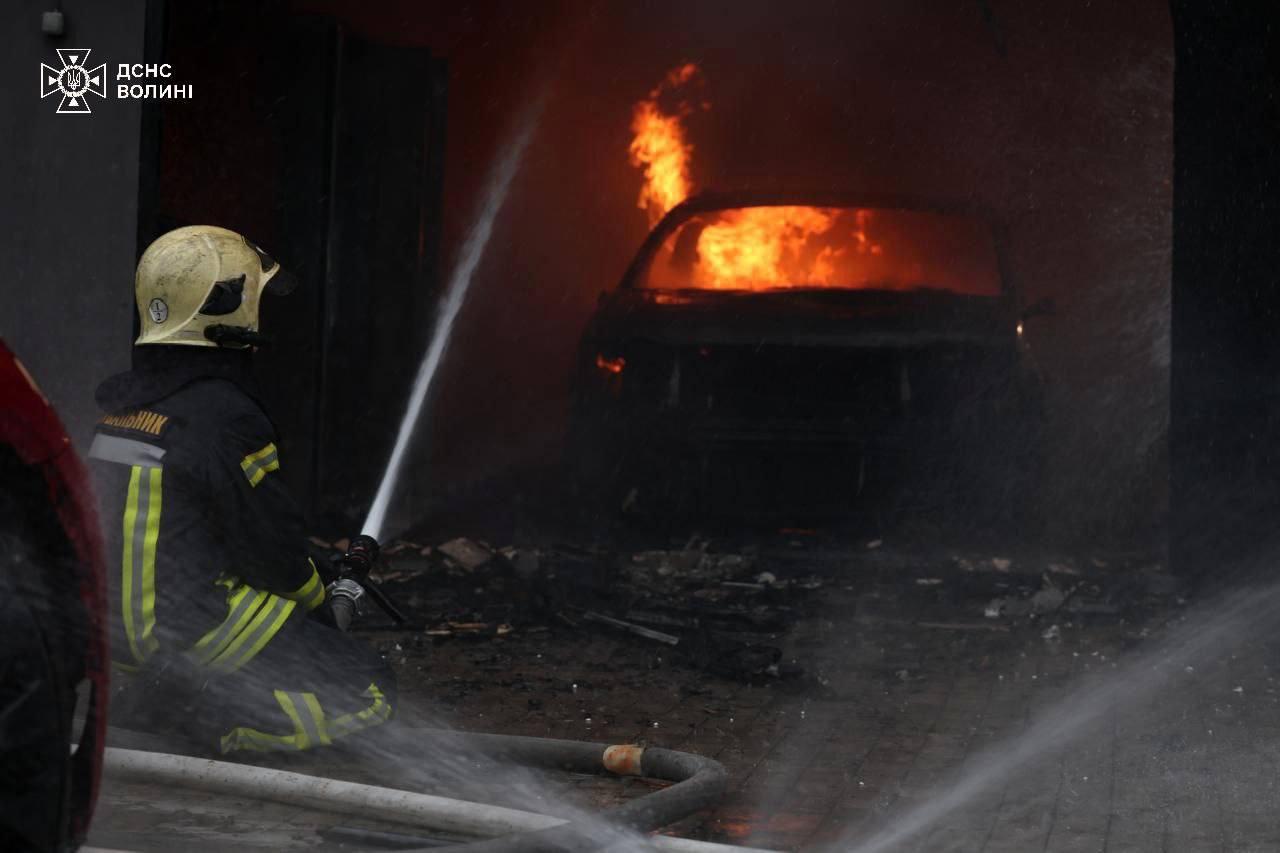
The aftermath of a Russian attack against Lutsk, Volyn Oblast, Ukraine, overnight. (State Emergency Service)
Mayor Ihor Polishchuk confirmed that the unprecedented barrage damaged an industrial site and garage cooperative, while fires erupted across the city. The seven-hour assault forced the Polish Air Force to scramble fighter jets to protect its airspace, underlining how Russia’s escalation now threatens the entire region.
Explosions echoed across multiple oblasts, from Kyiv’s city center where Mayor Vitali Klitschko reported drone attacks, to communities near the front line including Dnipro, Sumy, and Zaporizhzhia. At least one civilian was injured in Brovary, Kyiv Oblast, where a woman sustained chest fractures from the strikes.
The Robot Revolution: Ukraine’s Historic First in Autonomous Warfare
In the midst of Russia’s aerial terror campaign, Ukraine’s 3rd Separate Assault Brigade achieved what military historians may mark as a watershed moment in modern warfare. For the first time in military history, Russian soldiers surrendered to ground drones—captured without a single Ukrainian infantryman setting foot on the battlefield.
The operation unfolded in Kharkiv Oblast, where Ukrainian forces deployed first-person view (FPV) drones and kamikaze ground robotic platforms against Russian fortifications. The brigade systematically destroyed enemy bunkers with unmanned systems before approaching the final holdout position with another robot. Faced with the prospect of certain destruction, the remaining Russian soldiers chose surrender.
“For the first time in history: Russian soldiers surrendered to the 3rd Assault Brigade’s ground drones,” the brigade announced, marking a paradigm shift that could fundamentally alter how ground combat is conducted. The captured troops were then guided out of the combat zone by drones and taken into custody by Ukrainian forces.
The successful operation demonstrated Ukraine’s rapid adaptation to asymmetric warfare, using technology to minimize its own casualties while maintaining tactical effectiveness. The Russian positions had previously resisted capture by neighboring Ukrainian units, but the unmanned assault allowed Ukrainian forces to seize both the fortifications and a nearby forest line.
Justice Delayed but Not Denied: European Court Delivers Historic Verdict
The European Court of Human Rights delivered a landmark ruling that will reverberate through international law for decades, finding Russia responsible for the downing of Malaysian Airlines Flight MH17 and systematic human rights violations spanning from 2014 to 2022.
The Strasbourg-based court ruled that Russia failed to take measures to verify the target of the Buk missile that killed all 298 passengers and crew aboard MH17 on July 17, 2014, showing what the court termed “a cavalier attitude to civilians at risk from its hostile activities.” Among the victims were 196 Dutch citizens, transforming a war crime into an international tragedy.
Beyond the MH17 downing, the court found Russia guilty of “widespread and flagrant abuses of human rights” including torture, summary executions, rape as a weapon of war, and the illegal deportation of Ukrainian children. The ruling represents the first time an international court has held Russia accountable for these systematic violations.
Ukrainian Justice Ministry official Marharyta Sokorenko hailed the decision as “groundbreaking,” noting that “most of Ukraine’s complaints were satisfied.” The court observed that in none of its previous cases had there been “such near universal condemnation of the ‘flagrant’ disregard by the respondent State for the foundations of the international legal order established after the Second World War.”
Kremlin Spokesperson Dmitry Peskov predictably rejected the findings as “null and void,” but the legal verdict provides crucial documentation for future accountability proceedings and reparations claims.
The Chinese Espionage Network: Neptune Secrets and Strategic Betrayal
Ukraine’s Security Service uncovered a Chinese intelligence operation targeting one of Kyiv’s most prized military assets—the Neptune cruise missile system that gained international fame by sinking the Russian flagship Moskva in 2022. Two Chinese nationals, a 24-year-old former university student and his father, were detained in Kyiv on espionage charges.
The younger suspect, expelled from a Kyiv technical university in 2023 for poor academic performance, had remained in Ukraine specifically to gather classified documentation on the RK-360MC Neptune system. His father, residing in China but making periodic visits to Ukraine, personally supervised the espionage activities through encrypted communications.
The SBU caught the former student “red-handed” during the transfer of sensitive documents, revealing a coordinated effort to steal technology that has proven devastatingly effective against Russian naval forces. The operation represents China’s broader support for Russia’s war effort, having emerged as Moscow’s largest supplier of dual-use goods that aid its defense sector.
The case underscores the global dimensions of the conflict, with President Zelensky having already sanctioned five Chinese companies for supplying components found in Russian Shahed-type drones used against Ukraine.

SBU officers detain one of the Chinese nationals in Kyiv on suspicion of espionage related to Ukraine’s Neptune missile technology. Photo published. (SBU/Telegram)
The Kremlin’s Terror Strategy: Overwhelming Defense Through Industrial-Scale Attacks
Russian Prime Minister Mikhail Mishustin’s boast that Moscow had “more than tripled its planned overall drone production volumes for 2025” revealed the calculated nature of the record-breaking assault. The surge has enabled Russia’s increasingly large nightly strikes, with 28,743 total Shahed variant drones launched since the invasion began.
Ukrainian electronic warfare expert Serhiy “Flash” Beskrestnov’s earlier forecast that Russian strike packages would soon incorporate up to 800 Shaheds proved prescient, as the July 8-9 assault approached that threshold. The integration of Chinese cooperation has proven crucial, with documents revealing that a Russian delegation established a joint venture with a Chinese university to create the Aero-HIT drone production facility in Khabarovsk.
Ukrainian Commander-in-Chief General Oleksandr Syrskyi confirmed that Russian forces launched 1.6 times more missiles and drones against Ukraine in June 2025 than in May, illustrating the relentless escalation. Ukrainian Ground Forces Spokesperson Colonel Vitaly Sarantsev noted that recent Russian strikes against military registration offices seek to disrupt force generation efforts by creating fear among potential recruits.
The continued increase in strike package size represents Russia’s effort to degrade Ukrainian morale through constant aggression, using civilian terror as a strategic weapon.
Trump’s Patriot Promise: America Considers Additional Air Defense
U.S. President Donald Trump signaled potential American support for Ukraine’s air defense needs, telling reporters that his administration would “take a look” at supplying another Patriot air defense system. “They would like it. They’ve asked for it,” Trump acknowledged, adding that Ukraine was “getting hit hard, very hard.”
The comments followed Wall Street Journal reporting that the White House was considering sending Ukraine a Patriot battery in what would mark Trump’s first major new weapons transfer since taking office. According to Axios, the administration was pursuing a deal under which Germany would sell a Patriot battery to Ukraine, with the U.S. and European allies sharing costs.
The potential transfer would address critical gaps in Ukraine’s air defense coverage as Russian forces continue targeting cities with drones, missiles, and aerial bombs. Washington has delivered three Patriot batteries to Ukraine, while Germany has provided three more and a European coalition contributed an additional system.
Trump’s consideration of new Patriot systems comes after a controversial pause in weapons shipments that was reportedly implemented without White House knowledge by Defense Secretary Pete Hegseth. The delay affected crucial air defense interceptors just as Russia escalated its aerial campaign.
The Diplomatic Frontline: Zelensky’s Roman Pilgrimage
President Zelensky’s meetings in Rome with Pope Leo XIV and U.S. Special Envoy Keith Kellogg underscored the diplomatic dimensions of Ukraine’s struggle as the country prepared for the Ukraine Recovery Conference. The papal meeting at Castel Gandolfo reinforced Vatican support for Ukraine while addressing the “urgent need for a just and lasting peace.”

Ukraine’s President Volodymyr Zelensky (L) and Pope Leo XIV stand on a balcony as they meet at the papal residence of Castel Gandolfo, southeast of Rome. (Andreas Solaro/AFP via Getty Images)
Zelensky’s subsequent meeting with Kellogg focused on weapons support and sanctions, with both leaders supporting efforts by U.S. senators to pass legislation imposing 500% tariffs on imports from countries purchasing Russian oil. “We understand that tougher restrictions are needed against Russian energy,” Zelensky stated, emphasizing sanctions as a path to forcing Russia toward peace.
The diplomatic engagement occurred against the backdrop of Ukraine’s projected budget deficit of up to $19 billion for 2026, driven by declining U.S. support and the absence of ceasefire prospects. Prime Minister Denys Shmyhal announced that Ukraine would require more than $40 billion in external financial support to sustain its economy and war effort.
The Battlefield Evolution: Ukrainian Advances and Russian Pressure
Ukrainian forces demonstrated tactical prowess beyond their technological innovations, advancing in the Borova direction with geolocated footage showing progress in eastern Kopanky. The advances came amid continued Russian offensive operations across multiple fronts, with Moscow maintaining pressure near Pokrovsk where approximately 100,000 Russian personnel have been concentrated.
Russian forces achieved limited gains, with geolocated footage confirming the seizure of Tovste in the Novopavlivka direction and advances west and southwest of Vilne Pole near Velyka Novosilka. The grinding nature of these operations reflected Russia’s tactical adaptation to smaller infantry groups rather than large mechanized assaults.
Ukrainian forces in the Toretsk direction recaptured positions northwest of and in western Yablunivka, demonstrating continued defensive resilience despite Russian pressure. Major Viktor Trehubov noted that Russian forces had reduced the intensity of their ground attacks in the Toretsk direction while attempting to reach Kostyantynivka from the Pokrovsk direction.
The tactical developments illustrated the war’s evolution toward smaller-unit operations and technological superiority, with both sides adapting to changing battlefield conditions.
Finland and Lithuania’s Strategic Shift: Anti-Personnel Mine Production
Lithuania and Finland’s decision to begin domestic anti-personnel mine manufacturing in 2026 reflected Europe’s transformed security environment, with potential supplies earmarked for Ukraine. The two NATO members planned to complete their withdrawal from the 1997 Ottawa Convention banning such mines, following similar moves by Estonia, Latvia, and Poland.
Lithuanian Deputy Defense Minister Karolis Aleksa announced plans to order tens of thousands of anti-personnel mines, spending “hundreds of millions of euros” on the weapons systems. Once production was established, Lithuania would be positioned to supply others including Ukraine, according to Vincas Jurgutis, head of Lithuania’s defense industry association.
The strategic shift underscored Europe’s recognition that Russia’s military goals extended beyond Ukraine, prompting increased NATO defense spending as demanded by Trump. Finland, sharing NATO’s longest border with Russia at 1,340 kilometers, viewed domestic production as essential for supply security while aiming to increase defense spending to 3% of GDP by 2029.
The German Declaration: Diplomatic Exhaustion and Continued Support
German Chancellor Friedrich Merz’s parliamentary declaration that diplomatic means for resolving the Russia-Ukraine war “have been exhausted” marked a significant hardening of Berlin’s position. Speaking after recent Russian-Ukrainian peace talks in Istanbul failed to achieve progress beyond prisoner exchanges, Merz promised continued assistance to Kyiv despite mounting domestic pressure.
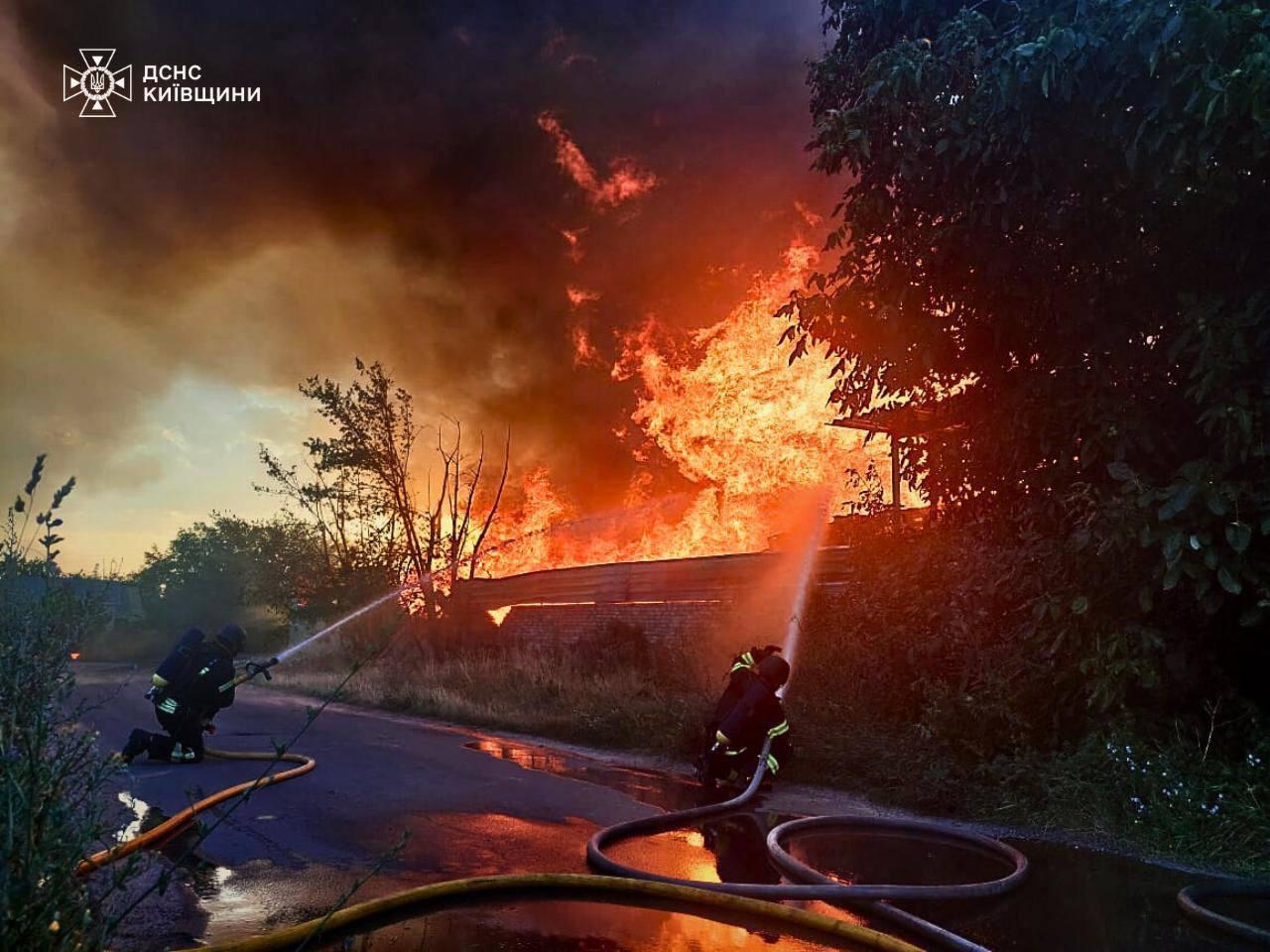
Firefighters putting out fires following a Russian attack against Kyiv Oblast, Ukraine, overnight. (State Emergency Service)
“When a criminal regime openly questions another country’s right to exist with military force and sets out to destroy the political order of freedom on the entire European continent, the federal government I lead will do everything in its power to prevent this,” Merz stated, vowing to maintain support “even against the pressure of the political left and the pro-Russian right.”
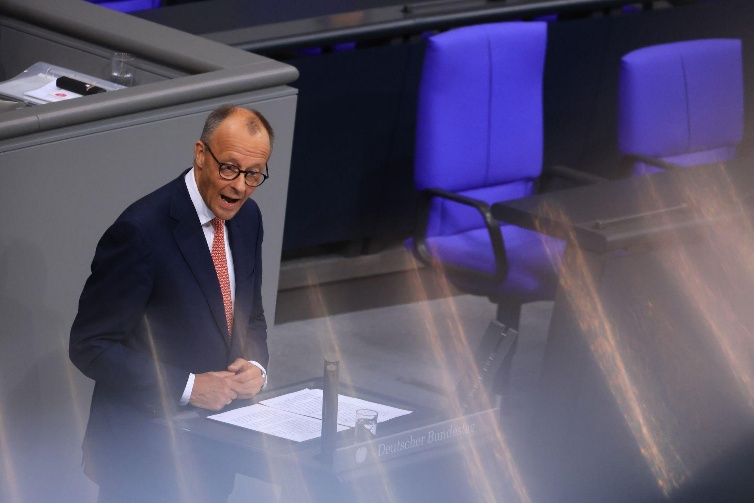
Friedrich Merz, Germany’s chancellor, speaks at the Bundestag in Berlin, Germany. ( Krisztian Bocsi/Bloomberg via Getty Images)
The chancellor’s comments reflected Germany’s evolution from reluctant supporter to leading European advocate for Ukraine, having provided almost 44 billion euros in various aid since 2022. His government faced mounting pressure from the far-right Alternative for Germany and some left-wing politicians calling for diplomatic engagement with Russia.
Merz’s declaration gained importance as U.S. support grew increasingly uncertain under the Trump administration, positioning Germany as a crucial guarantor of continued Western assistance to Ukraine’s defense efforts.
The Business of War: American Companies Navigate Uncertainty
Despite the ongoing conflict, 70% of American Chamber of Commerce companies in Ukraine did not expect a ceasefire or significant de-escalation in 2025, yet 53% planned to continue business as usual. The survey of 122 top executives revealed that 37% expected to expand by investing or launching new products and services.
Security remained the top concern for 83% of enterprises, with employee safety and retaining military-aged workers presenting major challenges. Over half highlighted employee health and mental well-being as critical issues, while 50% cited Russian missile attacks on critical infrastructure as a major concern.
The business community’s persistence despite uncertainty demonstrated the resilience of Ukraine’s economy and the confidence international partners maintained in the country’s long-term prospects. With 64% seeing long-term potential linked to postwar recovery, especially through the newly formed US-Ukraine Reconstruction Investment Fund, businesses continued planning for Ukraine’s future.
Respondents identified key steps they expected from the Ukrainian government, including demining and strengthening national defense (68%), enforcing rule of law and judicial reform (53%), and ensuring stable tax policies (44%). Despite ongoing risks, Ukraine’s cost-to-talent ratio (59%), EU accession process (55%), and agricultural leadership (53%) remained attractive to investors.
The Elite Crackdown: Russia’s Internal Purge Continues
The Kremlin’s tightening grip on the Russian elite became evident through the detention of billionaire Konstantin Strukov and former National Guard Deputy Director Viktor Strigunov on corruption charges. Strukov, caught attempting to flee to Turkey despite a court ban, faced prosecutors seeking to seize his gold mining empire worth $1.9 billion.
The cases reflected broader patterns of state nationalization and elite control, with at least 67 companies seized in 2024 with total assets worth $7 billion. Strukov’s family businesses in Serbia and Montenegro made him vulnerable to accusations of funneling money to “unfriendly countries.”
The crackdown extended to security structures, with Strigunov accused of bribery and abuse of power in connection with failed construction projects. The systematic targeting of business and security elites suggested mounting pressure within Russia’s closed power structures as the war’s economic costs mounted.
Slovak Resistance: EU Sanctions Package Remains Blocked
Slovakia continued blocking the EU’s 18th package of sanctions against Russia despite “good and productive” talks with the European Commission. Unlike Hungary’s consistent opposition to Ukraine support, Slovakia’s resistance represented a new challenge for EU unity, centered on concerns about the financial implications of the RePowerEU initiative.
The sanctions package, targeting Russia’s energy and banking sectors plus Nord Stream pipeline transactions, required unanimous EU approval that Slovakia’s veto prevented. Discussions were scheduled to continue on July 11, with formal adoption expected at the July 15 EU Foreign Affairs Council meeting.
The delay highlighted the ongoing challenges in maintaining Western unity as the war entered its fourth year, with each new sanctions package requiring careful negotiation to address member state concerns while maintaining pressure on Moscow.
The Congressional Mobilization: Bipartisan Sanctions Push Gains Momentum
Republican Congressional leaders signaled readiness to advance legislation imposing 500% tariffs on imports from countries purchasing Russian fossil fuels, with House Speaker Mike Johnson and Senate Majority Leader John Thune expressing support for the bipartisan bill. “Vladimir Putin has shown an unwillingness to be reasonable,” Johnson declared, emphasizing the need to send Moscow a message.
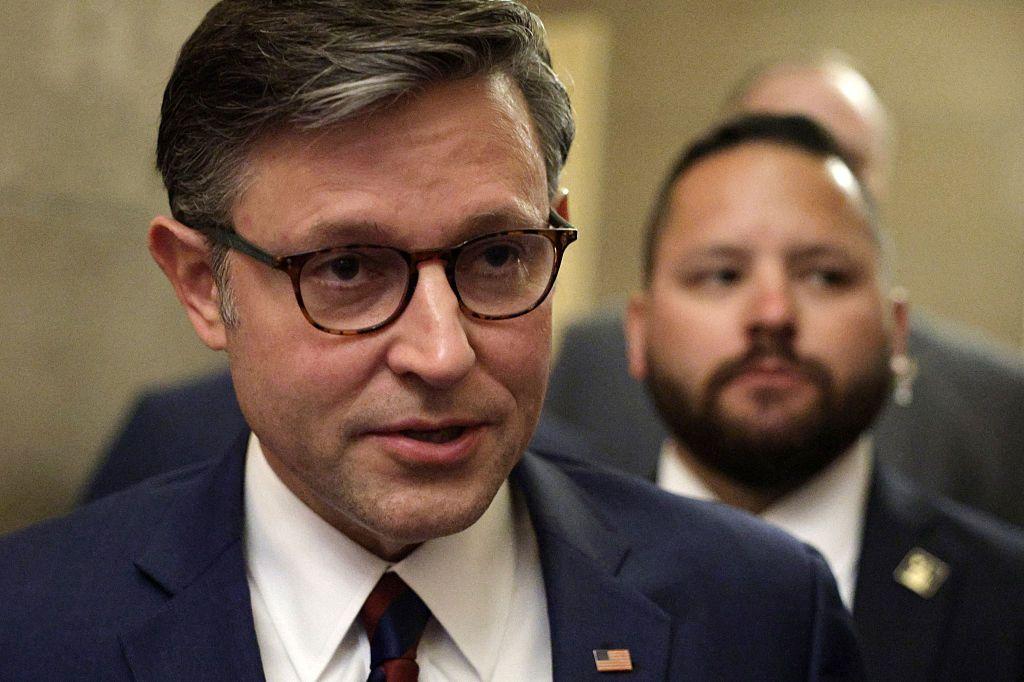
U.S. Speaker of the House Mike Johnson (R-LA) speaks to members of the media at the U.S. Capitol in Washington, D.C. (Alex Wong/Getty Images)
The legislation, introduced by Senators Lindsey Graham and Richard Blumenthal, gained traction after Trump expressed consideration for the “bone-crushing” sanctions. Thune indicated substantial progress in talks with the White House and expected a vote before the August recess.
Despite Trump’s interest, administration officials insisted on preserving presidential authority over foreign policy, demanding waiver provisions that would prevent congressional micromanagement. The tension between legislative action and executive prerogatives reflected broader debates about America’s role in supporting Ukraine.
The Pentagon’s Internal Chaos: Hegseth’s Unauthorized Decision Revealed
The full scope of dysfunction within the Trump administration’s Ukraine policy became clear as CNN revealed that Defense Secretary Pete Hegseth had authorized the weapons pause without informing the White House, State Department, or key allies. Five sources confirmed that Hegseth acted on recommendations from Undersecretary Elbridge Colby, a longtime critic of Ukraine aid, stunning national security officials across government.
Secretary of State Marco Rubio and Special Envoy Keith Kellogg learned of the pause through media reports, highlighting the breakdown in interagency coordination. The decision affected crucial weapons including Patriot interceptors, 155mm artillery rounds, Hellfire missiles, and Stinger missiles—some already in Poland awaiting transfer to Ukraine.
Trump’s contradictory statements about his knowledge of the pause exposed the administration’s internal confusion. After claiming on July 8 that he didn’t know who authorized the pause, Trump told reporters on July 9: “I would know. If a decision was made, I will know. I will be the first to know.” The contradiction undermined his credibility while revealing the administration’s struggle to maintain coherent messaging.
White House Press Secretary Karoline Leavitt attributed the pause to a Pentagon review ensuring foreign aid aligned with American interests, while emphasizing Trump’s “full confidence” in Hegseth. The secretary reportedly lacked a chief of staff or senior advisers who might have encouraged broader consultation before implementing such consequential decisions.
The Military-Industrial Surge: America’s $1.3 Billion Patriot Investment
The U.S. Army’s plan to spend more than $1.3 billion on Patriot missile interceptors in fiscal year 2026 revealed the extent of American stockpile depletion. Internal Pentagon documents showed the Army boosting planned purchases from 3,376 to 13,773 interceptors—a nearly four-fold increase addressing critical shortfalls.
The expansion followed assessments that the U.S. currently holds only 25% of interceptors needed to meet military requirements, with the Pentagon’s munitions tracker showing Patriot levels below acceptable thresholds. Budget documents revealed 2,047 PAC-3 MSE missiles purchased by fiscal year 2024, with the Army requesting $945.9 million for 224 additional interceptors in 2026.
The dramatic increase reflected lessons learned from recent Middle East operations, where the U.S. rerouted Patriot systems from Japan and South Korea to defend against Iranian ballistic missiles. The shortfall had contributed to the controversial pause in Ukraine deliveries, as Pentagon officials worried about maintaining readiness for potential conflicts.
Under the recently signed spending bill, Trump approved an additional $366 million for 96 interceptors, demonstrating bipartisan recognition of the critical shortage. The industrial surge represented America’s attempt to rebuild stockpiles while maintaining support for Ukraine’s air defense needs.
The Moscow Threat Tapes: Trump’s Private Fundraiser Revelations
Audio recordings from Trump’s 2024 fundraising events revealed the former president’s private claims about threatening Putin with bombing Moscow if Russia invaded Ukraine. “With Putin I said, ‘If you go into Ukraine, I’m going to bomb the shit out of Moscow. I’m telling you I have no choice,'” Trump told donors, according to CNN’s obtained recordings.
The revelation, part of a new book by reporters Josh Dawsey, Tyler Pager, and Isaac Arnsdorf, captured Trump’s assertion that Putin responded with disbelief but “believed me 10%.” Trump claimed similar threats deterred Chinese President Xi Jinping from attacking Taiwan, telling donors Xi “thought I was crazy.”
The private boasts contrasted sharply with Trump’s often deferential public statements about Putin during his presidency, when Russia was already occupying Crimea and waging war in Donbas. The recordings provided insight into Trump’s private negotiating style, emphasizing unpredictability and extreme threats as deterrence mechanisms.
The fundraiser audio emerged as Trump publicly expressed growing frustration with Putin’s continued aggression, calling the Russian leader’s assurances “meaningless” and promising potential sanctions. The contrast between private tough talk and public diplomatic caution illustrated the complexity of Trump’s approach to international relations.
Czech Commitment: F-16 Training Program Approved
The Czech government’s approval of training up to eight Ukrainian pilots on F-16 operations demonstrated continued European support for Ukraine’s air force modernization. Defense Minister Jana Cernochova announced that LOM Praha would provide 150 hours of training worth approximately $1.5 million at no charge to Kyiv.
The program utilized simulators and L-39 training aircraft, reflecting the Czech Republic’s contribution to the international aviation coalition created in 2023. While Prague lacked F-16s in its own arsenal, the training represented crucial preparation for Ukrainian pilots transitioning to Western fighter systems.
“If Ukraine is to continue to effectively defend itself against Russian aggression, it needs not only military equipment, but also well-trained armed forces,” Cernochova stated. The announcement followed similar training programs in the U.S. and U.K., with Ukraine having received F-16s from the Netherlands, Denmark, Belgium, and Norway.
The Czech commitment illustrated smaller European nations’ determination to support Ukraine despite their limited resources, contributing specialized capabilities to the broader international effort to modernize Ukrainian air defenses.
The Trust Deficit: Zaluzhnyi Maintains Popular Leadership
A new Rating Sociological Group poll revealed that former Commander-in-Chief Valerii Zaluzhnyi remained Ukraine’s most trusted public figure with 73% support, ahead of President Zelensky’s 67%. The survey, conducted July 4-5, underscored Zaluzhnyi’s enduring popularity despite his February 2024 dismissal and current role as ambassador to the United Kingdom.
Current Commander-in-Chief Oleksandr Syrskyi received only 41% trust, while military intelligence chief Kyrylo Budanov earned 56% support. Prime Minister Denys Shmyhal’s trust rating dropped significantly to just 25%, reflecting public dissatisfaction with government performance amid wartime challenges.
The polling data suggested that Zaluzhnyi’s reputation as the architect of Ukraine’s early resistance to Russian invasion continued resonating with the public. His dismissal had sparked controversy, with many viewing him as a scapegoat for military setbacks beyond his control.
The trust differential between Zaluzhnyi and current leadership highlighted ongoing tensions within Ukraine’s political and military establishment, even as the country maintained unity against Russian aggression.
The Reopening Gambit: Russia Tests Airport Security
Russia’s decision to reopen Gelendzhik Airport in Krasnodar Krai for domestic flights on July 18 represented a calculated test of its defensive capabilities against Ukrainian drone attacks. Located just 130 kilometers from occupied Crimea, the airport had been shuttered since February 2022 along with ten other southern airports.
The reopening followed massive flight disruptions on July 5-7, when nearly 500 flights were grounded due to Ukrainian drone threats. Transport Minister Roman Starovoit’s subsequent dismissal and reported suicide highlighted the pressure on Russian officials struggling to maintain normal operations amid escalating attacks.
The decision to resume operations at Gelendzhik, after only Elista Airport had previously reopened in May, suggested either improved Russian air defenses or desperation to project normalcy. The airport’s proximity to Ukrainian drone ranges made it particularly vulnerable to the attacks that had repeatedly disrupted Russian aviation.
The symbolic importance of reopening an airport in the region most affected by Ukrainian strikes reflected Putin’s need to demonstrate that Russia could adapt to the new reality of aerial warfare extending into its territory.
The Financial Precipice: Ukraine’s $40 Billion Challenge
Prime Minister Denys Shmyhal’s announcement that Ukraine would require more than $40 billion in external financial support in 2026 underscored the mounting economic pressures facing the country. The projection came as Kyiv prepared for the Rome Recovery Conference while scrambling to secure long-term financing commitments.
Shmyhal noted that the government had increased defense spending by nearly $10 billion in late June, bringing total security and defense expenditure to around $50 billion—26% of Ukraine’s GDP. The record defense budget included $16.4 billion earmarked specifically for weapons procurement, reflecting the massive costs of sustaining resistance against Russian aggression.
While Ukraine’s budget revenues were projected at $48.5 billion, the government had already secured $22 billion in foreign financing for 2025. The gap between needs and resources highlighted the critical importance of continued Western support, particularly as U.S. assistance faced growing uncertainty under the Trump administration.
The financial challenge complicated Ukraine’s diplomatic efforts, as European partners revised their funding plans based on the absence of ceasefire prospects and declining American contributions.
The Human Cost: Civilian Casualties Mount Across Ukraine
The record-breaking assault exacted a terrible human toll across multiple regions, with at least six civilians killed and 39 injured over 24 hours. In Kharkiv Oblast, Governor Oleh Syniehubov reported one death and four injuries from attacks using guided bombs, rockets, and FPV drones that struck the city of Kharkiv and eight surrounding settlements, damaging civilian houses, power lines, and farm infrastructure.
Donetsk Oblast witnessed the heaviest casualties, with Governor Vadym Filashkin reporting three civilian deaths, including two in Bilytske and one in Novyi Donbas, alongside eleven wounded across the region. In the front-line city of Kostiantynivka, Russian airstrikes and drone attacks killed three people and injured another, with one man killed specifically by an FPV drone as Governor Filashkin urged remaining residents to evacuate.
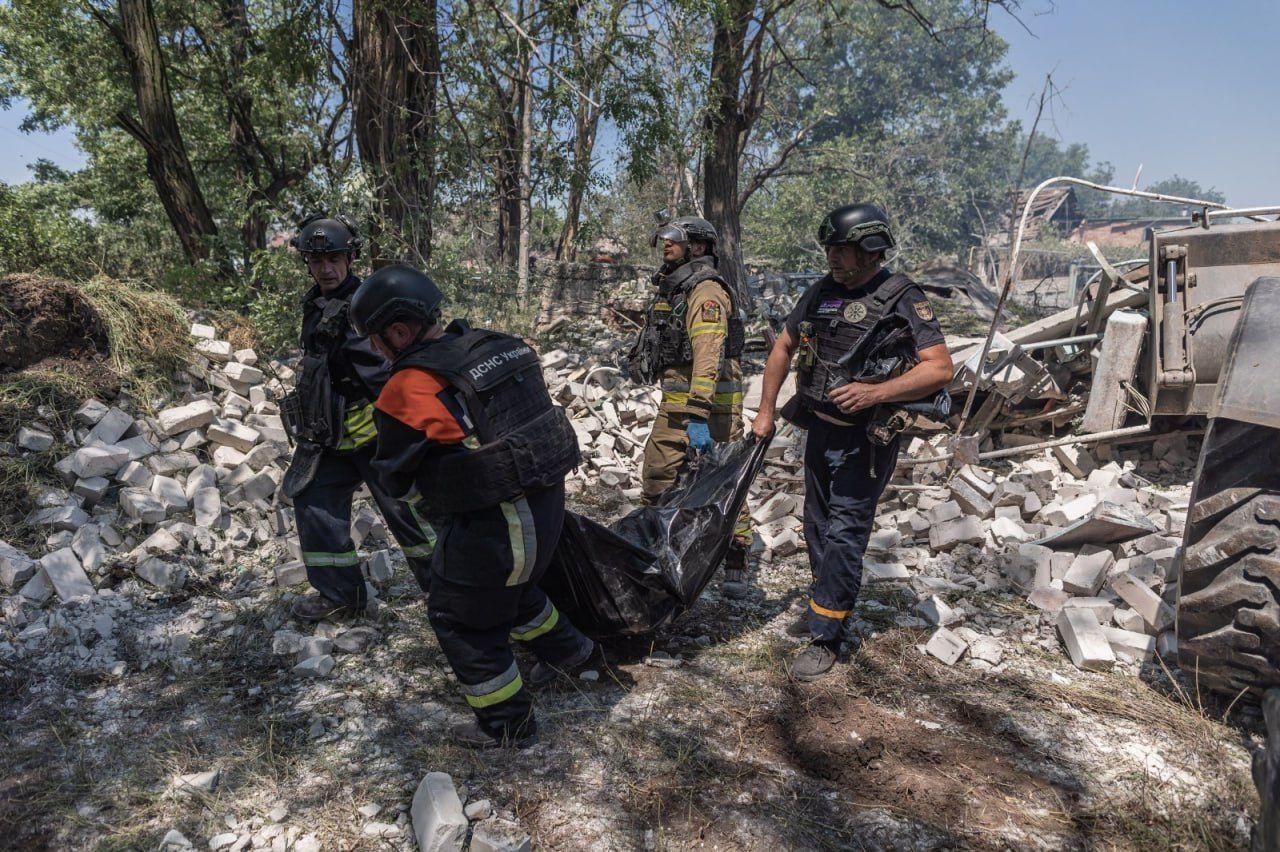
Emergency workers carry the body of a victim from the rubble of building destroyed in a Russian attack in Kostiantynivka, Donetsk Oblast. (Ukraine’s State Emergency Service / Telegram)
Kherson Oblast suffered one death and 17 injuries from drone attacks and artillery shelling that hit dozens of towns and villages. Governor Oleksandr Prokudin reported damage to apartment buildings, houses, farms, and civilian vehicles from the systematic targeting of civilian areas.
Zaporizhzhia Oblast recorded three wounded civilians in the Polohy district, with Russian forces conducting 482 attacks on 14 settlements using drones, artillery, and rockets. A couple was hospitalized with shrapnel injuries after strikes on the Stepnohirsk community.
In Sumy Oblast, one person was wounded in the Shostka district by drone strikes, with regional authorities recording 75 Russian attacks across 39 settlements over 24 hours, damaging residential buildings, schools, and administrative structures. Kyiv Oblast confirmed one hospitalization in the Brovary district from chest injuries following drone strikes, while Khmelnytskyi Oblast reported one civilian killed during the overnight drone assault.
The Attrition Campaign: Russia’s Mounting Losses
Ukrainian General Staff reported that Russian losses had reached 1,029,660 troops since the full-scale invasion began, including 1,050 casualties over the past day alone. The milestone represented a grim testament to the human cost of Putin’s war of aggression, with Ukrainian forces recording 183 separate clashes across the front on July 8.
Russian equipment losses continued mounting, with the General Staff documenting the destruction of five tanks, two armored fighting vehicles, 68 artillery systems, 119 vehicles and fuel tanks, 227 drones, and one anti-aircraft system over the previous day. The cumulative toll included 11,000 tanks, 22,969 armored vehicles, 30,102 artillery systems, and 44,457 drones destroyed since February 2022.
The casualty figures, while unverified by independent sources, reflected the sustained intensity of combat across the 1,000-kilometer front line. Russian forces continued suffering significant losses despite tactical adaptations to smaller unit operations and increased reliance on drone warfare.
The mounting attrition raised questions about Russia’s ability to sustain offensive operations indefinitely, particularly as Moscow struggled with recruitment and equipment replacement amid international sanctions and domestic economic pressures.
The Frontline Mosaic: Tactical Gains and Losses Across Multiple Theaters
Fighting continued across multiple fronts, with Ukrainian forces demonstrating resilience amid sustained Russian pressure. In Kursk Oblast, Russian forces conducted offensive operations while Ukrainian forces attacked toward Tetkino and Novyi Put, maintaining pressure on Russian defensive positions.
Northern Sumy Oblast witnessed continued Russian assaults near Oleksiivka, Kindrativka, and Yunakivka, with Ukrainian counterattacks reported near Andriivka and other settlements. Russian milbloggers claimed limited advances northeast of Mohrytsia, though these remained unconfirmed by Ukrainian sources.
In Kharkiv Oblast, Russian forces maintained pressure near Vovchansk and Lyptsi without achieving confirmed advances, while Ukrainian drone operators continued defending positions in the Vovchansk Aggregate Plant. The 69th Motorized Rifle Division and other Russian units sustained operations despite Ukrainian resistance.
The Kupyansk direction saw extensive Russian attacks near Kalynove, Radkivka, Holubivka, and multiple other settlements, with a Ukrainian drone regiment commander noting Russian attempts to expand bridgeheads west of the Oskil River and bypass Kupyansk from the north.
In the Lyman direction, Russian forces attacked near Serednie, Shandryholove, Ridkodub, and other settlements, employing small platoons of 20-25 personnel divided into multiple squads. Ukrainian forces maintained counterattacks near Ridkodub, Yampolivka, and Torske.
The Siversk direction featured continued Russian assaults near Serebryanka, Hryhorivka, Verkhnokamyanske, and other positions, with Russian milbloggers claiming seizure of large portions of Verkhnokamyanske while acknowledging incomplete control. Prominent milbloggers rejected claims of Russian advances into Siversk itself, noting the five-kilometer gap and Ukrainian fortifications still impeding progress.
Russian forces in the Pokrovsk direction concentrated approximately 100,000 personnel across the area while attacking near the city itself and surrounding settlements including Rodynske, Razine, Myrnohrad, and others. Major Trehubov reported Russian attempts to reach Kostyantynivka from this direction after failures from Chasiv Yar and Toretsk approaches.
Looking Forward: The New Reality of Industrial-Scale Warfare
The events of July 9 marked a watershed moment in the evolution of modern warfare, from Russia’s deployment of 741 weapons in a single night to Ukraine’s achievement of robot-mediated surrenders. The scale of destruction attempted by Moscow and the technological innovation demonstrated by Kyiv illustrated how the conflict continues pushing the boundaries of military possibility.
As military analysts predict Russian strike packages approaching 1,000 weapons by autumn, Ukraine’s development of interceptor drones and robotic systems offers hope for maintaining defensive advantages despite overwhelming numerical disadvantages. The day’s events demonstrated that while Russia can escalate the scale of terror, Ukraine continues adapting with technological innovation and international support.
The European Court’s historic ruling provided legal validation of what Ukrainians have experienced daily—systematic war crimes and crimes against humanity perpetrated by Russian forces. Combined with growing Congressional support for tougher sanctions and Trump’s consideration of additional Patriot systems, the day suggested mounting international recognition that Ukraine’s struggle represents a defining test of the post-World War II international order.
The record-breaking deluge of July 9 may have represented Russia’s attempt to demonstrate overwhelming force, but Ukraine’s response—technological innovation, legal vindication, and sustained international support—illustrated the resilience that has defined the nation’s resistance from the war’s beginning. As the conflict enters its fourth year, the battle lines have been drawn not just on Ukrainian soil, but between competing visions of how the world will be ordered in the 21st century.