
As Trump and Putin Exchange Frustrated Words, Russia Unleashes its Largest Aerial Assault Since February 2022, While Ukrainian Drones Strike Back at Russian Military Infrastructure
Summary of the Day – July 4, 2025
The deadliest irony of Independence Day emerged not in American fireworks, but in the thunderous echo of 550 Russian drones and missiles pounding Ukrainian cities just hours after Donald Trump declared Vladimir Putin unwilling to negotiate peace. The massive overnight assault—the largest combined strike since Russia’s full-scale invasion began—killed one civilian and wounded 26 others in Kyiv alone, transforming the Ukrainian capital into a hellscape of fires and debris. Yet even as rescue workers pulled bodies from the rubble, Ukrainian forces demonstrated their own reach, striking deep into Russian territory to destroy critical military production facilities. The day’s events crystallized a grim reality: as diplomatic efforts stagnate, both sides are escalating their capacity for destruction, with civilians bearing the ultimate cost.
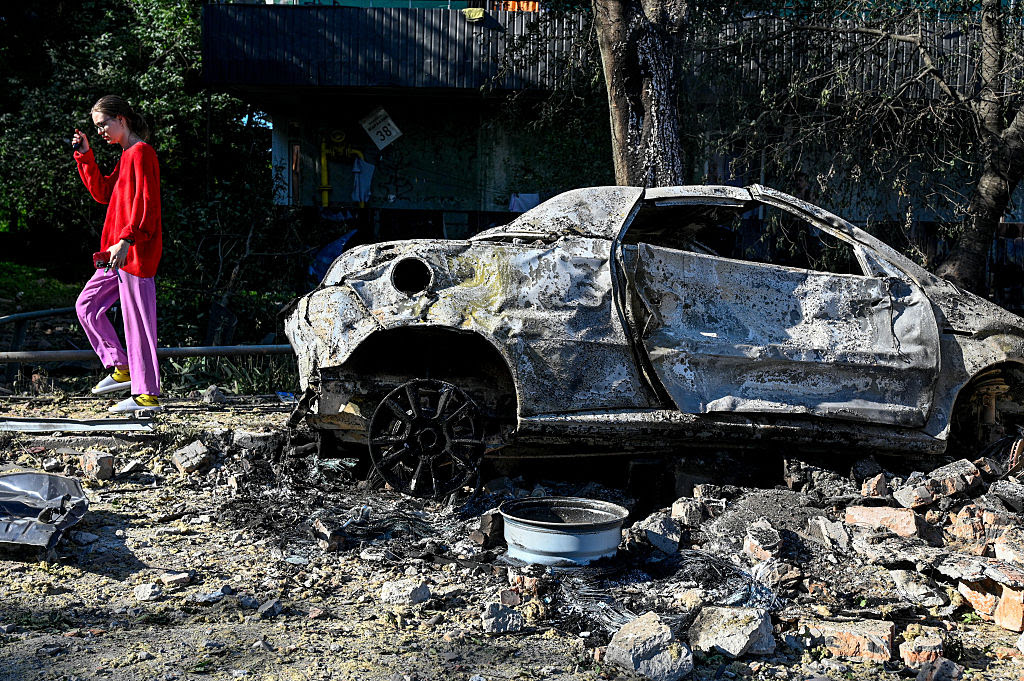
A girl walks past a burned-out car hit in a Russian combined air attack in Kyiv. (Danylo Antoniuk/Ukrinform via Getty Images)
Breaking Point: Trump’s “Very Disappointed” Phone Call Precedes Russia’s Largest Strike
Hours before air raid sirens began wailing across Ukraine, U.S. President Donald Trump emerged from his July 3 phone call with Vladimir Putin visibly frustrated and uncharacteristically blunt. “I didn’t make any progress with him today at all,” Trump told reporters, his usual diplomatic veneer stripped away. “I don’t think he’s there. I don’t think he’s looking to stop this fighting.”
The conversation, Trump’s sixth with Putin since taking office, had yielded nothing but Russian intransigence. Kremlin spokesperson Dmitry Peskov confirmed Putin’s position the following day: Russia would continue military actions because “it is not yet possible to achieve goals through diplomatic means.” The Kremlin aide Yury Ushakov’s characterization of the call as “frank and constructive” stood in stark contrast to Trump’s barely concealed anger.
Within hours of media reports about the Trump-Putin conversation, Russian forces launched what Ukrainian President Volodymyr Zelensky described as “one of the most large-scale air attacks—deliberately massive and cynical.” The timing was no coincidence. “The first air raids in our cities and regions began yesterday, almost simultaneously with the start of media discussions of President Trump’s phone call with Putin,” Zelensky observed.
Record Destruction: 550 Russian Weapons Target Ukrainian Cities
The overnight assault of July 3-4 shattered previous records for Russian aerial aggression. Over seven hours, Russian forces deployed 330 Shahed drones, 209 decoy drones, one Kh-47M2 “Kinzhal” aeroballistic missile, six Iskander-M ballistic missiles, and four Iskander-K cruise missiles. The coordinated barrage launched from six directions—Kursk, Oryol, Bryansk, Millerovo in Rostov Oblast, Shatalovo in Smolensk Oblast, and Primorsko-Akhtarsk in Krasnodar Krai.
Ukrainian air defenses managed to intercept 268 drones and two Iskander-K cruise missiles, while electronic warfare systems suppressed an additional 208 drones. Despite these defensive successes, nine missiles and 63 drones found their targets across eight Ukrainian regions, with Kyiv bearing the brunt of the assault.
The strikes transformed Ukraine’s capital into a disaster zone. Fires erupted in at least five districts, with emergency crews battling blazes throughout the night and into the morning hours. The air quality deteriorated so severely that the Ministry of Environmental Protection issued health warnings for residents. Damage extended across residential buildings, schools, medical facilities, and railway infrastructure.
Diplomatic Aftermath: Trump and Zelensky Forge New Agreements Amid Crisis
The massive Russian attack prompted an immediate response from the White House. On July 4, Trump held a 40-minute phone conversation with Zelensky, discussing strengthened air defense cooperation and joint defense production initiatives. The timing—as rescue workers continued pulling survivors from Kyiv’s rubble—underscored the urgency of Ukraine’s defensive needs.
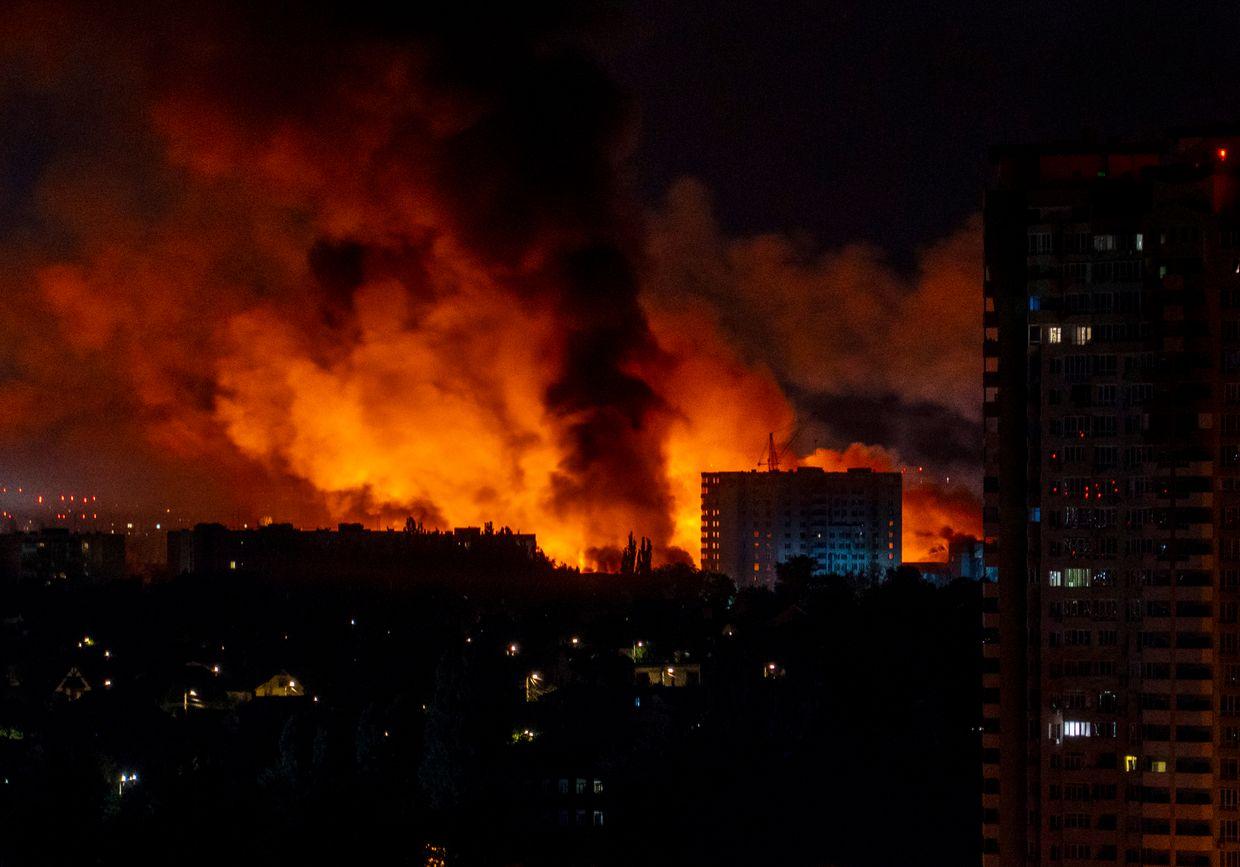
Flames and smoke billow from buildings in Kyiv, Ukraine, during mass Russian drone and missile strikes. (Oleksii Filippov/AFP via Getty Images)
“We discussed air defense options and agreed to work on increasing airspace protection,” Zelensky announced following the call. “We agreed on a meeting between our teams.” The Ukrainian president emphasized possibilities for direct U.S.-Ukraine cooperation, particularly in drone and related technologies.
Trump reportedly assured Zelensky of American willingness to assist with air defense systems, a commitment that takes on greater significance given the Pentagon’s recent pause of weapons shipments to Ukraine. The conversation marked a notable shift from Trump’s previous focus on ceasefire negotiations to immediate defensive support.
Collateral Damage: Foreign Diplomatic Missions Hit in Russian Strikes
The indiscriminate nature of Russia’s assault became evident as foreign diplomatic facilities suffered damage in both Kyiv and Odesa. Polish Foreign Minister Radoslaw Sikorski confirmed that the consular section of Poland’s embassy in Kyiv was damaged during the overnight attack, though all staff remained safe. “I just spoke with Ambassador Piotr Lukasiewicz; everyone is safe and unharmed,” Sikorski stated.
More significantly, Ukrainian Foreign Minister Andriy Sybiha reported that the Chinese Consulate General building in Odesa suffered minor damage during a July 3 Russian strike that killed two civilians and wounded six others. The incident occurred just as Sybiha revealed the discovery of Chinese-manufactured components in Russian-Iranian Shahed drones recovered in Kyiv—components “supplied just recently,” according to the minister.
The diplomatic implications were not lost on observers, as China continues to emerge as Russia’s key wartime partner, providing dual-use goods that fuel Moscow’s military machine while maintaining official neutrality.
Ukrainian Retaliation: Deep Strikes Hit Russian Military Production
Even as Russian missiles rained down on Ukrainian cities, Ukrainian forces demonstrated their own long-range capabilities with precision strikes on Russian military-industrial targets. The most significant attack targeted the Azov Optical and Mechanical Plant in Rostov Oblast, a facility that manufactures critical components for Russian military equipment, including sights, rangefinders, thermal imaging systems, and fire control equipment for tanks, infantry fighting vehicles, ships, and aircraft.
Ukrainian forces also struck the Scientific Research Institute of Applied Chemistry in Sergiyev Posad, Moscow Oblast—a facility involved in producing thermobaric warheads for Shahed-type drones. The Ukrainian General Staff confirmed that munitions hit their targets, with fires and heavy smoke detected at both locations.
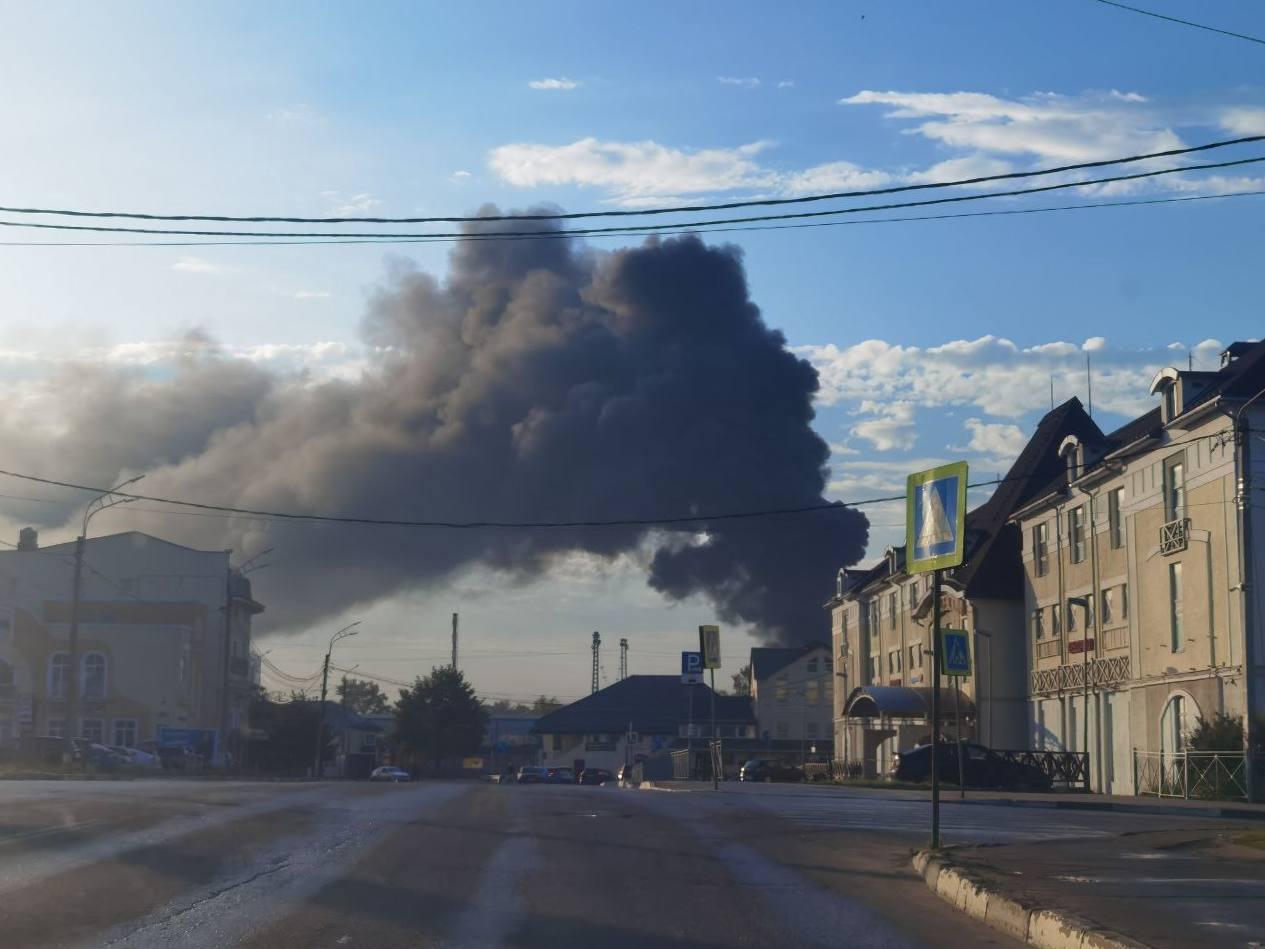
Smoke rises over Moscow Oblast, Russia. (ASTRA/Telegram)
Additional Ukrainian drone strikes targeted the Borisoglebsk airfield in Voronezh Oblast, damaging a warehouse containing guided bombs and potentially destroying training aircraft. The facility hosts Su-34, Su-35S, and Su-30SM jets regularly used in Russian strikes against Ukraine.
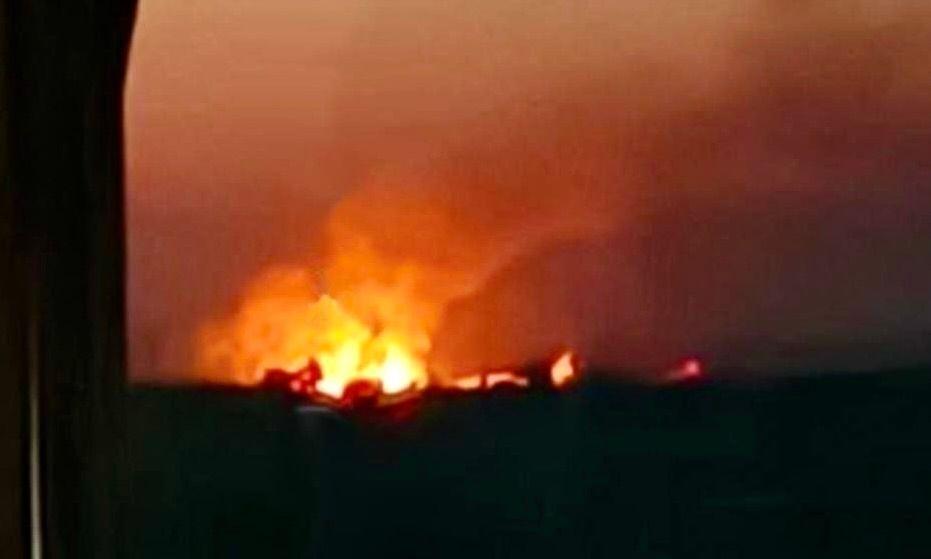
Ukraine’s General Staff reported an attack on Borisoglebsk airfield in southwestern Voronezh Oblast, Russia. (General Staff / Facebook)
Expanding the Battlefield: Multiple Russian Regions Under Attack
The overnight Ukrainian drone campaign extended across at least six Russian regions, with explosions reported from St. Petersburg to the Chuvash Republic. Russian authorities claimed to have intercepted 42 drones over a three-hour period, primarily over border regions with Ukraine.
In Rostov Oblast, drone debris caused the collapse of part of a residential building in Dolotinka village, killing an elderly woman and forcing the evacuation of 20 residents. The city of Azov suffered damage to vehicles and residential buildings, while a local stadium was hit by falling drone debris.
Near St. Petersburg, two drones were downed, prompting temporary flight suspensions at Pulkovo airport. Explosions in Cheboksary, the Chuvash Republic’s capital, sparked fires at industrial sites, while Engels in Saratov Oblast—home to strategic bomber bases—also reported nighttime explosions.
Pentagon Contradictions: Hegseth Halts Aid Despite Military Assessments
The massive Russian assault highlighted controversial timing in U.S. military support. NBC News revealed that Defense Secretary Pete Hegseth had unilaterally halted weapons shipments to Ukraine on July 2, despite internal military assessments showing the aid would not compromise American readiness. The suspended shipment included dozens of Patriot interceptors, 155mm artillery rounds, Hellfire missiles, and other critical defensive systems.
Senior military reviews had concluded that while some munitions stockpiles were low, they had not fallen below critical thresholds. Congressman Adam Smith, the top Democrat on the House Armed Services Committee, called the justification “disingenuous,” noting that U.S. stockpiles were “not at any lower point than we’ve been in the three-and-a-half years of the Ukraine conflict.”
The halt caught the State Department, Congress, Ukraine, and European allies off guard, representing Hegseth’s third such action since February. Two sources reported that some weapons had already been loaded onto trucks in Poland when the halt was ordered, underscoring the abrupt nature of the decision.
Chemical Warfare Escalation: Dutch Intelligence Confirms Chloropicrin Use
Dutch Military Intelligence released alarming new evidence of Russia’s escalating chemical weapons campaign, confirming the use of chloropicrin—a banned substance that can be lethal in high concentrations within enclosed spaces. The findings, developed in cooperation with German intelligence services, represent a significant escalation from previously confirmed tear gas attacks.
“Russia is using this type of weapon more frequently and ‘with ease,'” stated MIVD Director Vice Admiral Peter Reesink. Dutch Defense Minister Ruben Brekelmans declared the situation “absolutely unacceptable,” warning that normalizing chemical weapons use threatens not only Ukraine but “the rest of Europe and the world.”
Since Russia’s full-scale invasion began, Moscow has conducted over 9,000 chemical attacks, resulting in at least three confirmed Ukrainian military deaths from toxic exposure. Dutch intelligence determined that Russian military leadership actively facilitates these attacks, making banned substance use standard practice for Russian forces.
Industrial Cooperation: Ukraine Exports Defense Technology to Denmark
Amid the escalating conflict, Ukraine achieved a significant milestone in defense industry internationalization. Kyiv and Copenhagen signed a landmark agreement allowing Ukrainian defense companies to establish production facilities on Danish soil—the first such arrangement for exporting Ukrainian defense technologies abroad.
“This is a unique case of international cooperation for the Ukrainian defense industry,” announced Strategic Industries Minister Herman Smetanin following the Copenhagen signing ceremony. The agreement represents Denmark’s evolution from funding Ukrainian weapons production to hosting Ukrainian arms manufacturing lines.
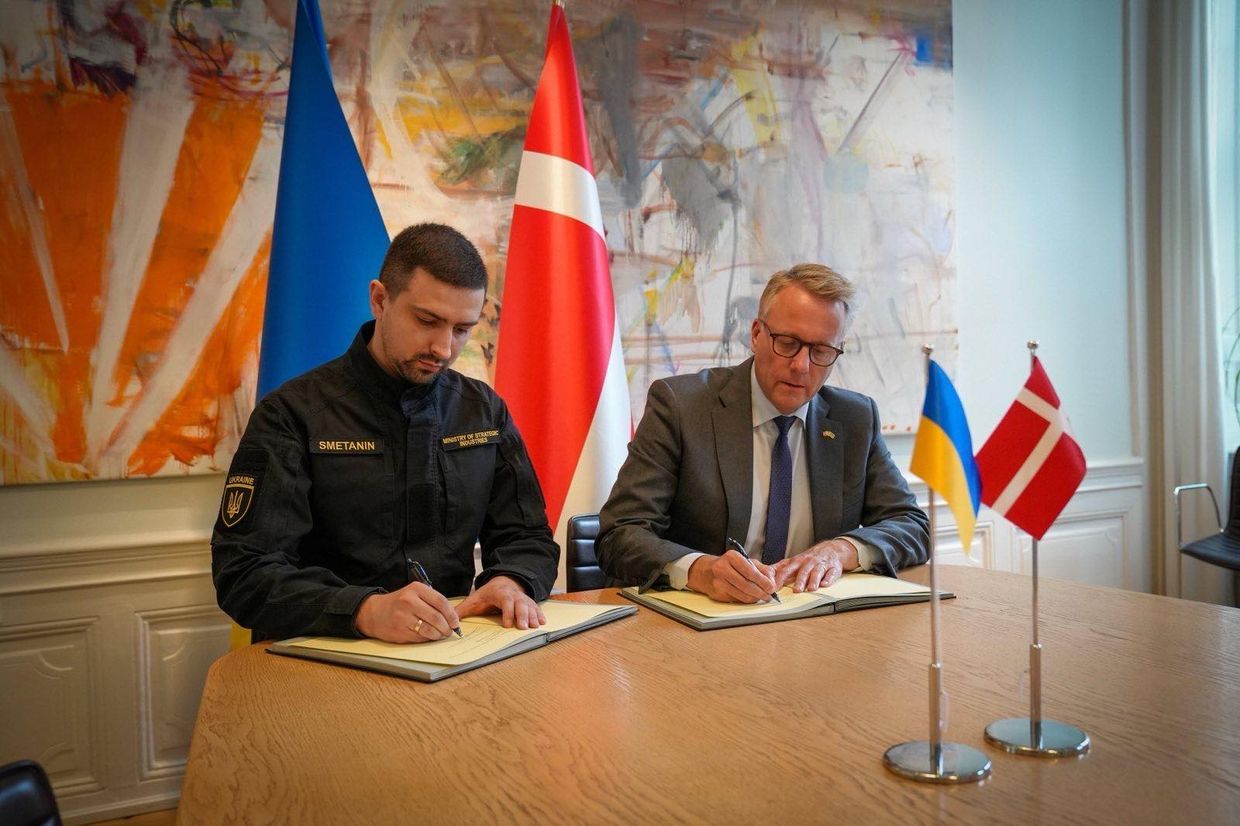
Strategic Industries Minister Herman Smetanin (L) and Danish Minister for Industry Morten Bodskov signed an agreement, allowing Ukrainian defense companies to open production facilities in Denmark. (Herman Smetanin / Facebook)
The deal advances President Zelensky’s broader strategy to internationalize Ukrainian defense production, reducing vulnerability to Russian strikes while expanding manufacturing capacity through international partnerships. This follows a similar agreement with the United Kingdom, where the joint venture Skyeton Prevail Solutions will manufacture Ukrainian-designed Raybird drones on British soil.
Humanitarian Exchange: Another Prisoner Swap Brings Defenders Home
Despite diplomatic stalemate and military escalation, humanitarian cooperation continued with another prisoner exchange bringing Ukrainian defenders home from Russian captivity. Most of the returned prisoners had been held since 2022, including wounded soldiers, those under 25 years old, and civilians illegally detained or sentenced by Russian authorities.

Recently released Ukrainian prisoners of war smile after returning home following a POW exchange with Russia. (Zelensky / Telegram)
The exchange included defenders of Mariupol, veterans of battles across multiple oblasts, and service members from various Ukrainian security forces. The swap followed five previous exchanges in June under the Istanbul agreement reached between Ukraine and Russia on June 2, which provided for regular releases of severely ill and wounded prisoners from both sides.
Ukraine continues advocating for a comprehensive “all-for-all” exchange, a proposal Russia has rejected in favor of smaller, phased swaps that have now become routine monthly occurrences.

Recently released Ukrainian prisoners of war returned home following a POW exchange with Russia. (The Coordination Headquarters for Prisoners of War / Telegram)
The Threat Multiplier: Drone Production Races and Chemical Escalation
Ukrainian Unmanned Systems Forces Commander Robert “Magyar” Brovdi issued a stark warning about Russia’s drone production capacity, predicting attacks could reach 1,000 Shahed drones per day. “Under the pressure of increasing mass use by the enemy of a cheap, but everywhere accessible Shahed… There will be 1,000 units per day and more,” Brovdi stated, describing the assessment as based on intelligence analysis rather than fear-mongering.
The projection prompted Ukrainian consideration of relocating drone production facilities to reduce vulnerability to Russian strikes. Recent agreements with Denmark and the United Kingdom for overseas production represent initial steps toward distributed manufacturing that could withstand Russia’s expanding target list.
NATO Command Change: New Supreme Allied Commander Takes Charge
General Alexus Grynkewich officially assumed the position of Supreme Allied Commander Europe (SACEUR) on July 4, becoming NATO’s most senior U.S. commander in Europe during a critical phase of the Ukrainian conflict. The former F-16 and F-22 fighter pilot, who has expressed confidence that Ukraine can win the war, takes command as NATO grapples with expanded defense responsibilities.
NATO Secretary General Mark Rutte welcomed Grynkewich’s “deep understanding of the threats we face from the skies, and across other domains,” highlighting his aviation expertise as Russia intensifies aerial campaigns. Grynkewich’s Eastern European ancestry—his great-grandfather emigrated from present-day Belarus in 1899—adds personal dimension to his new role overseeing European security.
Congressional Pressure: Bipartisan Opposition to Aid Suspension
The Pentagon’s weapons halt generated immediate bipartisan congressional opposition, with lawmakers demanding explanations and expressing concern about timing amid Russian escalation. Thirty-three leading European parliamentarians signed a letter on July 4 highlighting the need for continued U.S. leadership, warning that weapons delays “would mean more lives of innocent people, including women and children, being killed by the Russian aggressors every day.”
Republican Congressman Joe Wilson declared that “war criminal Putin, who is losing his pathetic war, resorts to scorched earth tactics across Ukrainian cities that predate Moscow’s existence.” Representative Don Bacon directly criticized Trump’s Russia policy, writing: “Mr. President, your policy towards Russia is not working. While we negotiate, Putin bombs Ukrainian cities.”
The lawmakers’ criticism came as Russian forces demonstrated their continued commitment to targeting civilian infrastructure despite ongoing diplomatic efforts.
Mysterious Death: Another Russian Executive Falls from Window
The unexplained death of Transneft Vice President Andrei Badalov on July 4—the latest in a series of Russian officials dying after falling from windows—reinforced patterns of suspicious mortality among Russian elites. Badalov’s death from his Moscow apartment window marked at least the eighth such “fall” since 2022, including oil executives, lawmakers, and business leaders.
Ukrainian military analyst Ivan Stupak suggested Russian security services orchestrate many such deaths as pressure tactics: “They can pressure a person in one way or another. It’s a well-known tactic—either you kill yourself, and your family is left in peace with what they have, or they start arrests, imprisonments, and leave everyone destitute.”
The pattern reflects broader internal pressures within Russia’s elite as the war’s costs mount and economic opportunities shrink under international sanctions.
Trump Envoy’s Controversial Push: Lifting Energy Sanctions on Russia
As Congress criticized the Pentagon’s weapons halt, reports emerged of internal Trump administration divisions over Russia policy. Special Envoy Steve Witkoff is reportedly pushing to lift U.S. energy sanctions on Russia, despite continued Russian aggression. The proposal has sparked debate within the administration, with Interior Secretary Doug Burgum favoring reduced U.S. reliance on Russian imports rather than expanded trade.
According to Politico, Moscow is in early talks with Washington about potentially restarting the Nord Stream pipeline project with U.S. investor backing—a development that has alarmed Brussels. One senior EU official warned that Trump and Putin appear to be aiming to “divide the European energy market and create separate spheres of influence.”
Deadly Toll on Children: UNICEF Reports Threefold Casualty Increase
The war’s impact on Ukrainian children reached alarming new levels, with UNICEF reporting a threefold increase in child casualties over recent months. From March through May, 222 children were killed or injured, compared to 73 in the preceding three months. April alone saw 97 children killed or maimed—the highest figure the U.N. has verified since June 2022.
“There is no respite from the war for children across Ukraine,” stated UNICEF Regional Director Regina De Dominicis. “The situation for children is at a critical juncture, as intense attacks continue to not only destroy lives but disrupt every aspect of childhood.” The escalation coincides with Russia’s increased production of drones and expanded targeting of civilian areas far from front lines.
Kursk Resistance: Ukrainian Forces Eliminate Russian Naval Commander
Fighting continued in Russia’s Kursk Oblast, where Ukrainian forces achieved a significant tactical victory by eliminating Major General Mikhail Gudkov, Deputy Commander-in-Chief of the Russian Navy. The Ukrainian Armed Forces confirmed striking the Russian 155th Naval Infantry Brigade command post in Korenevo on July 3, killing Gudkov during the operation.
The strike represented continued Ukrainian operations in Russian territory, with forces maintaining positions seized during earlier offensives. Russian attempts to dislodge Ukrainian forces from Kursk Oblast have repeatedly failed, with the area becoming a significant drain on Russian military resources.
Battlefield Dynamics: Tactical Gains Across Multiple Fronts
Despite diplomatic stalemate, front-line fighting continued across multiple sectors. Ukrainian forces achieved tactical advances near Kupyansk, with geolocated footage confirming progress east of Kolisnykivka. The advance comes as Russian forces simultaneously push to expand their “buffer zone” near Belgorod Oblast, with fighting reported near multiple settlements along the international border.
Russian forces continued offensive operations in the Chasiv Yar direction, with confirmed advances in the Refractory Plant Building No. 2 in southwestern Chasiv Yar. Additional Russian gains were reported near Velyka Novosilka, where forces seized Vesele and advanced north of Shevchenko. In northern Sumy Oblast, Russian forces recently captured Novomykolaivka, demonstrating continued tactical momentum despite heavy casualties.
Infrastructure Under Siege: Railway Attacks and Border Fighting
Russian strikes targeted critical Ukrainian infrastructure beyond civilian areas, with particular focus on railway systems supporting military logistics. The Russian Ministry of Defense acknowledged attacks on railway power systems in Dnipropetrovsk Oblast, causing fires that required emergency response crews. When Ukrainian railway workers arrived to address the damage, Russian forces launched secondary strikes—a tactic designed to maximize casualties among first responders.
Border fighting intensified along multiple fronts, with Ukrainian forces destroying Russian flags at checkpoints along the Bryansk-Chernihiv border. The symbolic action demonstrated Ukrainian determination to contest Russian territorial claims while maintaining pressure on border fortifications.
Frontline Intelligence: Detailed Military Operations Across Multiple Sectors
Ukrainian air defenses demonstrated remarkable effectiveness against the massive Russian assault, intercepting 268 drones and two Iskander-K cruise missiles while electronic warfare systems suppressed an additional 208 drones. Despite these defensive successes, nine missiles and 63 drones penetrated Ukrainian defenses, striking targets across eight regions.
The strikes targeted railway infrastructure with particular cruelty, with Russian forces hitting power systems in Dnipropetrovsk Oblast and then launching secondary strikes when Ukrainian railway workers arrived to repair the damage. This deliberate targeting of first responders represents a calculated escalation in Russian tactics designed to maximize casualties among civilian infrastructure workers.
Russian forces continue conducting up to 50 guided bomb strikes daily in the Sumy direction alone, indicating the intensity of operations along Ukraine’s northern border. Meanwhile, Ukrainian forces achieved tactical success by destroying Russian flags at border checkpoints along the Bryansk-Chernihiv frontier, demonstrating continued pressure on Russian positions.
The day’s military actions extended beyond immediate combat zones, with Trump denying Pentagon reports of halted weapons shipments, telling reporters “We haven’t. We’re giving weapons,” despite confirmation that some aid had already been loaded onto trucks in Poland when Hegseth’s halt order arrived.
Thirty-three leading European parliamentarians signed an urgent letter on July 4, emphasizing the critical importance of sustained U.S. leadership in supporting Ukraine. The legislators warned that any delay in weapons deliveries “would mean more lives of innocent people, including women and children, being killed by the Russian aggressors every day.”
The letter drew parallels between modern Ukraine and 18th-century America: “Ukrainians are fighting for the same principles and values the Americans were fighting for in the 18th century—independence for the sake of freedom, democracy and prosperity.” The lawmakers argued that Ukraine’s victory would represent a victory for the entire free world, requiring sustained Western unity and support.
European Parliamentary Warning: Letter Highlights Urgency of Continued Support
July 4, 2025, crystallized the war’s central paradox: as diplomatic efforts intensify, so does the violence. Trump’s frank acknowledgment of Putin’s unwillingness to negotiate, followed immediately by Russia’s largest aerial assault, demonstrated the gulf between ceasefire aspirations and battlefield realities.
Ukrainian forces’ successful strikes on Russian military production facilities suggest Kyiv’s growing capacity to bring the war’s consequences to Russian territory, potentially altering Moscow’s cost-benefit calculations. Yet Russia’s escalating use of chemical weapons and record drone deployments indicate Moscow’s commitment to military victory regardless of international pressure.
The day’s events—from burning buildings in Kyiv to diplomatic protests in Washington—reflect a conflict entering a new phase of mutual escalation, where both sides test the limits of their capabilities while civilians pay the ultimate price for political intransigence. With Trump administration officials divided over Russia policy and Congress demanding explanations for suspended aid, the coming days will test whether American support for Ukraine can overcome internal political divisions amid Russia’s most intense offensive campaign since the war began.