
A day when Russian military accountability met Ukrainian precision strikes, while Moscow’s aerial provocations triggered NATO’s most coordinated response in decades
The Story of a Single Day
On the 1,306th day of Russia’s full-scale war against Ukraine, September 21, 2025, the conflict revealed its capacity for both accountability and escalation in equal measure. A disgraced Russian general finally faced consequences for years of battlefield failures, while Ukrainian forces demonstrated their expanding reach with surgical strikes deep into occupied Crimea. Meanwhile, Russian provocations over the Baltic Sea triggered the largest coordinated NATO response since the war began, as alliance fighters scrambled to intercept reconnaissance aircraft probing Western defenses.
This was a day when the war’s evolution became unmistakable—from a regional conflict to a global confrontation where every action carried implications far beyond Ukraine’s borders, and where even failed commanders could no longer hide behind political protection.
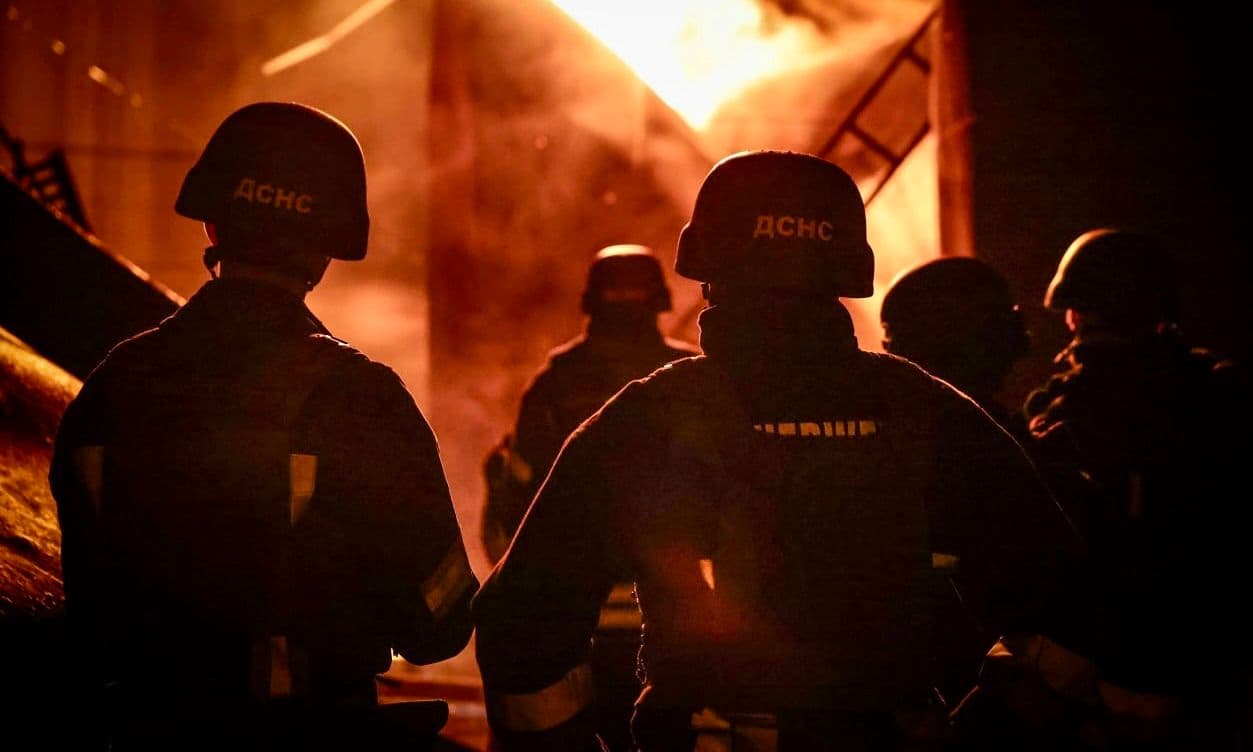
A Russian strike in Chernihiv Oblast, caused a fire and damaged critical infrastructure. (State Emergency Service/Telegram)
The General’s Disgrace: When Putin’s Patience Finally Expires
Russian President Vladimir Putin had built his reputation on loyalty over competence, promoting cronies and overlooking failures as long as commanders remained politically useful. But on September 21, even Putin’s tolerance reached its breaking point with the dismissal of Colonel General Oleksandr Lapin from military service—a rare acknowledgment that some failures were too spectacular to ignore.
Lapin’s military obituary read like a catalog of Russian incompetence spanning three years of war. As commander of the Central Grouping of Forces in 2022, he had presided over the catastrophic collapse during Ukraine’s Kharkiv counteroffensive, when Russian defenses crumbled so completely that entire units fled without firing a shot. The humiliation at Lyman had prompted rare public criticism from Chechen leader Ramzan Kadyrov and Wagner chief Yevgeny Prigozhin—unprecedented dissent in Putin’s tightly controlled system.
Yet instead of dismissal, Lapin had been shuffled through increasingly prestigious positions like a bureaucratic shell game. Chief of Staff of the Russian Ground Forces in 2023, commander of the Leningrad Military District in 2024, then head of the Northern Grouping of Forces. Each promotion seemed to reward failure, reflecting Moscow’s desperate shortage of experienced commanders willing to accept impossible missions.
The final straw came with Ukraine’s audacious Kursk incursion, when Ukrainian forces seized 1,300 square kilometers of Russian territory under Lapin’s watch. The operation exposed not just tactical incompetence but strategic blindness—Lapin had reportedly dismissed an interagency council tasked with border security months before Ukraine’s cross-border assault.
RBC reported that Lapin would transition to civilian service as an assistant to Tatarstan’s head, focusing on recruitment and veteran affairs. It was a fitting end for a general whose greatest talent appeared to be losing soldiers rather than commanding them, and whose failures had finally become too expensive even for Putin’s patience.
Crimean Thunder: Ukraine’s Expanding Reach
Three Russian Mi-8 helicopters and a sophisticated Nebo-U radar system erupted in flames across occupied Crimea as Ukrainian forces demonstrated their evolving capability to strike deep behind enemy lines. The September 21 attacks, confirmed by Ukraine’s Main Military Intelligence Directorate, represented more than tactical victories—they were strategic statements about Russia’s inability to protect even its most heavily defended territories.
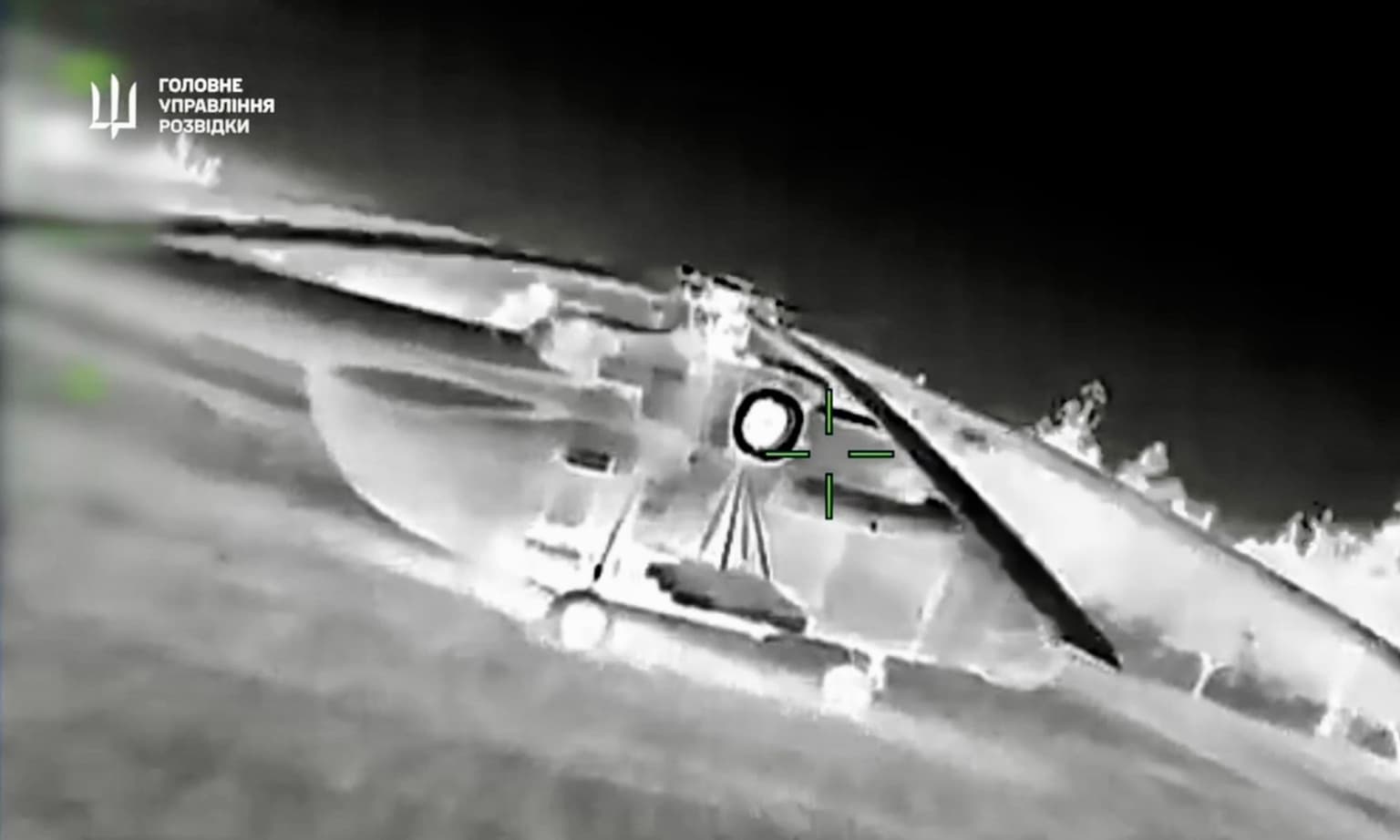
Purported footage of a Ukrainian attack against a Russian helicopter in occupied Crimea. Footage published. (HUR/Telegram)
The destroyed 55Zh6U Nebo-U radar system was particularly significant. This mobile early-warning platform, capable of detecting stealth aircraft and cruise missiles at ranges exceeding 400 kilometers, formed the backbone of Russian air defense networks. Its elimination created a gap in coverage that Ukrainian forces could exploit for future operations, while demonstrating the precision of Ukraine’s expanding drone capabilities.
The Mi-8 helicopters, workhorses of Russian military aviation used for everything from troop transport to close air support, were eliminated in what appeared to be a coordinated operation. HUR released footage showing direct impacts on the aircraft, evidence of the surgical precision that Ukrainian operators had developed through nearly three years of constant innovation.
The strikes illustrated how the conflict had evolved beyond traditional battlefield boundaries. Ukrainian forces could now reach targets hundreds of kilometers from the front lines, forcing Russia to defend an impossibly vast territory while maintaining offensive operations. Each successful deep strike forced Moscow to divert resources from front-line combat to rear-area security, degrading overall military effectiveness.
Fiber Optic Phantoms: Russia’s Technological Counter-Evolution
Russian military bloggers claimed a breakthrough that could fundamentally alter the drone warfare equation: fiber optic first-person view repeater drones capable of quadrupling traditional operational ranges. The September 21 announcements suggested Russian forces had developed airborne relay stations that could extend drone communication signals to 50-60 kilometers, double the range of conventional fiber optic systems.
The technology addressed Ukraine’s greatest advantage in electronic warfare—its ability to jam Russian drone communications. Fiber optic cables were immune to electronic interference, while repeater drones functioned as airborne relay stations, extending signals beyond traditional limitations. Russian sources claimed these innovations had created “kill zones” extending 45 kilometers from front lines in the Vovchansk and Kupyansk directions.
Ukrainian 11th Army Corps Spokesperson Lieutenant Colonel Dmytro Zaporozhets confirmed that Russian forces were now systematically targeting Ukrainian logistics routes, depots, and evacuation routes—a dramatic escalation from the sporadic strikes of 2024. The technological arms race had entered a new phase where both sides raced to overcome the other’s innovations.
The development represented Russia’s adaptation to Ukrainian electronic warfare superiority, but it also revealed Moscow’s recognition that conventional tactics had failed. After losing thousands of drones to Ukrainian jamming, Russian forces were literally rewiring their approach to aerial warfare, seeking technological solutions to tactical problems.
Baltic Provocations: Testing NATO’s Resolve at 30,000 Feet
The German Air Force scramble order came through with military precision: two Eurofighter jets airborne within minutes to intercept an unidentified aircraft flying without a flight plan over the Baltic Sea. The target—a Russian IL-20M reconnaissance aircraft—was conducting exactly the kind of intelligence-gathering mission that NATO had grown increasingly concerned about.
The IL-20M, equipped with sophisticated radar, signals intelligence, and electronic warfare systems, represented Russia’s systematic effort to probe alliance defenses while collecting actionable intelligence. These flights weren’t random provocations but calculated intelligence operations designed to map NATO response times, communication protocols, and defensive capabilities.
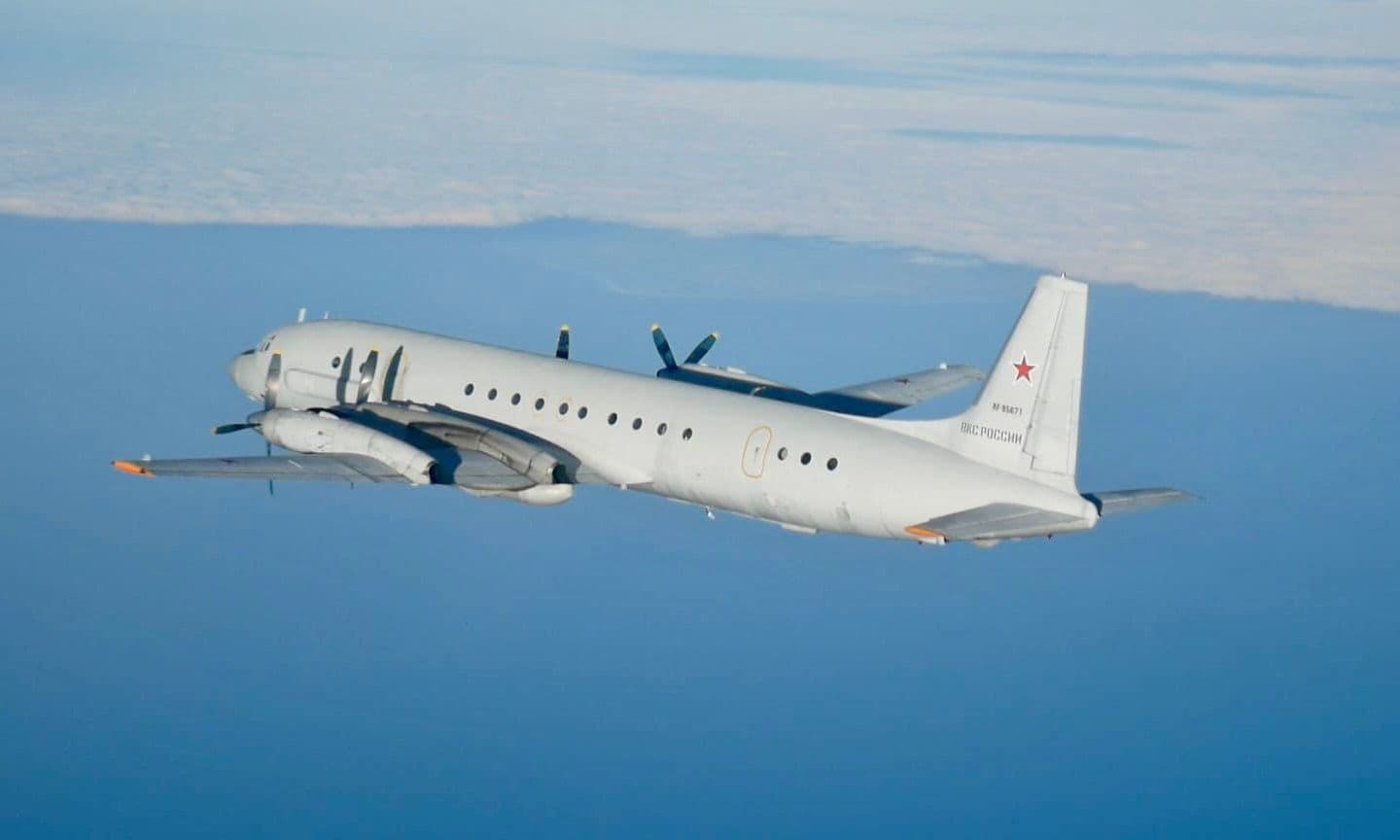
A Russian Il-20 reconnaissance plan over the Baltic Sea. (Germany at NATO / X)
After visual identification, German forces handed escort duties to Swedish NATO partners, demonstrating the alliance coordination that had developed since the war began. The incident represented just the latest in an escalating series of Russian provocations designed to test Western resolve while gathering information for potential future conflicts.
The timing was particularly significant given recent Estonian airspace violations and Polish drone incidents. Russia appeared to be implementing a coordinated campaign of aerial provocations across NATO’s eastern frontier, each incident carefully calibrated to remain below the threshold of direct military response while maximizing intelligence collection and psychological pressure.
The Numbers Game: Russia’s Strategic Reserve Gambit
Intelligence sources revealed that Russia had recruited approximately 292,000 new military personnel between January and September 15, 2025—an average of 7,900 recruits per week. More significantly, Russian authorities were now forming a strategic reserve from these new troops rather than deploying them directly to Ukrainian front lines.
The decision reflected Russian military leadership’s assessment that casualty rates had decreased sufficiently to allow withholding forces from immediate combat. Ukrainian General Staff figures showed Russian losses dropping from 32,000-48,000 per month in early 2025 to approximately 29,000 in August and just 13,000 in the first half of September—the only months where recruitment exceeded casualties.
This shift suggested either improved Russian tactical efficiency or Ukrainian defensive challenges, possibly both. Russian forces had adapted to using smaller infantry groups and infiltration tactics rather than large mechanized assaults, reducing casualty rates per territorial gain. The strategic reserve formation indicated Moscow’s confidence that current operational tempo could be maintained while building capacity for future escalation.
The reserve also served potential dual purposes: maintaining pressure on Ukraine while preparing for possible NATO confrontation. With Russia intensifying youth military programs and recruiting campaigns, the strategic reserve represented long-term planning that assumed the conflict would expand beyond Ukraine’s borders.
Frontline Grinding: The Daily Calculus of Territorial Exchange
Ukrainian military observer Kostyantyn Mashovets reported modest but significant Russian territorial gains on September 21: Kindrashivka north of Kupyansk and Sichneve east of Velykomykhailivka. These advances, measured in hundreds of meters rather than kilometers, reflected the grinding attritional character that had defined the conflict’s current phase.
Geolocated footage confirmed Russian progress west of Novoekonomichne along the strategic T-0504 highway, while operations continued across multiple front sections including Vovchansk, Lyman, Siversk, and Pokrovsk. Most attacks failed to achieve territorial changes, but the cumulative pressure forced Ukrainian defenders to make difficult resource allocation decisions.
Mashovets identified the core challenge facing Ukrainian forces: Russian numerical superiority that reached three-to-four battalion advantages in some sectors, growing to five or six battalions in others. This disparity forced Ukraine to organize defense into separate strongpoints rather than continuous lines, creating gaps that Russian infiltration tactics could exploit.
The tactical evolution reflected both armies’ adaptation to drone-dominated battlefields where large formations couldn’t survive. Russian forces sent small infantry groups to probe weaknesses, consolidate positions, and call for reinforcements—a methodical approach that prioritized sustainability over dramatic breakthroughs.
The Human Cost: Civilians Under Fire
The overnight drone barrage launched 54 Shahed-type attack drones across Ukraine, with air defenses intercepting 33 while 21 found their targets across eight regions. Behind these statistics lay individual tragedies: one civilian killed in Pokrovsk, a 21-year-old man injured in Chernihiv Oblast, and emergency workers targeted in a deliberate “double tap” strike while fighting fires from an initial attack.
The State Emergency Service reported that Russian forces struck firefighters responding to infrastructure damage in Nizhyn, injuring two rescue workers. Such tactics—deliberately targeting first responders—constituted clear violations of international humanitarian law, but they had become routine elements of Russia’s warfare strategy.
Additional casualties accumulated across multiple regions: three injured in Zaporizhzhia Oblast after 523 Russian strikes, a 68-year-old woman hospitalized in Mykolaiv Oblast from an FPV drone attack, and a 62-year-old man wounded during 69 attacks across Sumy Oblast. President Volodymyr Zelensky reported that Russian forces had launched more than 1,500 strike drones, 1,280 guided bombs, and 50 missiles against Ukraine in the preceding week.
The civilian targeting reflected Russia’s strategy of degrading Ukrainian morale through systematic terror, but it also demonstrated Moscow’s inability to achieve military objectives through conventional means. When armies cannot defeat enemies on battlefields, they often turn to attacking non-combatants—a sign of strategic failure rather than strength.
Ukraine’s Economic Pivot: From Aid Recipient to Arms Exporter
President Zelensky’s announcement of preliminary proposals for “controlled export” of Ukrainian weapons represented a remarkable transformation in the country’s international position. Two and a half years after pleading for basic defensive weapons, Ukraine was preparing to become a significant arms exporter, particularly in the revolutionary field of maritime drone technology.
“We also have initial proposals for our partners regarding the export of Ukrainian weapons—modern weapons. This will be a controlled export of our weapons, in particular naval drones,” Zelensky stated during his evening address. The announcement came ahead of the UN General Assembly, where Ukraine planned to discuss these proposals with allies during what Zelensky described as an intensive “week of diplomacy.”
The export initiative reflected Ukraine’s growing confidence in technologies that had proven devastating against Russian targets. Ukrainian naval drones had systematically degraded Russia’s Black Sea Fleet, forcing Moscow to relocate major vessels beyond effective striking range. International recognition of Ukrainian innovation had reached the point where American officials acknowledged Ukrainian technological superiority in certain military domains.
The transformation from weapons recipient to arms dealer illustrated broader changes in Ukraine’s international relationships. The country under invasion had become a laboratory for military innovation, developing affordable, adaptable systems that traditional defense establishments were struggling to match.
Rare Target Eliminated: The IMR-3M’s Destruction
Ukrainian forces achieved a significant tactical victory with the destruction of a Russian IMR-3M engineering and obstacle clearing vehicle, according to the 412th Nemesis Separate Regiment. The achievement was remarkable for its rarity—only the third confirmed destruction of such a vehicle since the full-scale invasion began, with the previous kill occurring over a year earlier.
The IMR-3M represented one of Russia’s most sophisticated engineering platforms: a 50.8-ton behemoth built on a T-90 tank chassis and equipped with heavy armor, mine-clearing equipment, telescopic cranes, and defensive systems. Russia called it a “terminator on tracks,” highlighting its protection against nuclear effects and independent minefield navigation capabilities.
The Ukrainian military reported destroying the vehicle with drone-dropped munitions, demonstrating how relatively inexpensive unmanned systems continued eliminating Russia’s most expensive equipment. The 412th Nemesis Separate Regiment, a flagship unit of Ukraine’s Unmanned Systems Forces, specialized in first-person view drone deployment and had become increasingly effective at targeting high-value assets.
The destruction illustrated the broader transformation of modern warfare, where small, adaptive technologies could neutralize massive engineering platforms that had taken years to design and manufacture. It was asymmetric warfare at its most efficient—using innovation to overcome numerical and material disadvantages.
The Mobilized Dead: Independent Media’s Grim Accounting
Russian independent media outlet Mediazona and the BBC’s Russian service published their most comprehensive analysis yet of mobilization casualties, confirming the identities of 15,000 mobilized Russian soldiers killed in Ukraine. The September 21 report revealed that 42% of these deaths occurred within the first year after Putin announced “partial mobilization,” highlighting the devastating toll on civilian-turned-soldiers.
Regional disparities told their own story: Bashkortostan and Tatarstan recorded the highest confirmed deaths among mobilized soldiers at 884 and 861 respectively, while Chechnya reported just one confirmed death despite its prominent role in recruiting campaigns. The numbers reflected both regional recruitment patterns and varying disclosure practices across Russia’s vast territory.
The human cost extended beyond statistics. At least 1,200 mobilized troops died in the first nine months of 2025 alone, with an average age of 35—men in their prime earning years with families depending on them. Relatives told the BBC that many had been coerced into signing contracts under threats of assignment to high-risk assault units.
Since 2022, Mediazona and the BBC had verified 133,117 Russian military deaths through public sources including obituaries, social media posts, and local media reports. The verification process could only confirm publicly documented cases, meaning actual losses were likely far higher.
Underground Sabotage: Disrupting Russia’s War Machine
Ukrainian partisans demonstrated their expanding operational reach with a successful sabotage mission against railway infrastructure in Smolensk Oblast. The “Atesh” Crimean-based partisan group reported destroying tracks leading to the Smolensk Aviation Plant, which produces Kh-59 missiles, drones, aviation components, and light aircraft for the Russian military.
The strike disabled over ten track control elements, potentially disrupting production schedules and supply chains for critical Russian military equipment. The operation illustrated growing sophistication among Ukrainian partisan networks operating behind enemy lines, while demonstrating Moscow’s inability to secure logistics infrastructure even in regions far from the Ukrainian border.
Railway sabotage represented a particularly effective form of asymmetric warfare. Russia’s vast territory depended on rail transport for moving military supplies, but thousands of kilometers of track created an impossible security challenge. Every soldier assigned to guard infrastructure was one less available for front-line operations.
The psychological impact extended beyond immediate tactical value. Each successful sabotage operation reminded Russian citizens that their government’s war carried consequences reaching into the Russian heartland, challenging official narratives about the conflict’s containment to distant Ukrainian territories.
International Escalation: Estonia Calls Emergency Session
Estonia’s Foreign Ministry announcement that the UN Security Council would convene an emergency session on September 22 to discuss Russian airspace violations represented an unprecedented escalation in diplomatic responses to Moscow’s provocations. The request marked the first time in over 30 years that Estonia had sought such a meeting, underscoring the gravity of recent Russian aerial incursions.
The Estonian Foreign Ministry characterized the September 19 incident—when three Russian MiG-31 fighter jets remained in Estonian airspace for 12 minutes—as a “blatant, reckless, and flagrant violation” representing “yet another dangerous act aimed at escalating regional and global tensions.” The language reflected Estonia’s assessment that Russian provocations had crossed from routine harassment into direct threats requiring international response.
Ukrainian Foreign Minister Andrii Sybiha confirmed that Ukraine had requested to attend the meeting and present perspectives on Russian destabilization efforts. “We support friendly Estonia in calling for a strong and united response to Russia’s continued destabilization of international peace and security,” Sybiha stated, linking the Baltic provocations to broader Russian aggression patterns.
The Security Council session represented a potential turning point in international responses to Russian aerial provocations. Previous incidents had generated diplomatic protests and military responses, but formal UN proceedings elevated the confrontation to a different level of international scrutiny.
Trump’s Conditional Commitment: Baltic Defense Assurances
U.S. President Donald Trump provided explicit but carefully qualified assurance to NATO’s eastern members, telling reporters he would help defend Poland and the Baltic states “if Russia keeps accelerating.” The phrasing suggested American support remained conditional on Russian escalation rather than representing unconditional alliance guarantees.
“Yeah, I would. I would,” Trump replied when asked about backing allies, but his additional comments revealed the administration’s reluctance to appear overly confrontational. “We don’t like it,” Trump said regarding Russian provocations, language that seemed calibrated to express disapproval without promising specific responses.
The statement carried particular significance given Trump’s previous criticism of NATO burden-sharing and his administration’s focus on ending the Ukraine conflict through negotiation. European allies sought clear commitments about American reliability, but Trump’s conditional language preserved flexibility while providing sufficient reassurance to maintain alliance cohesion.
The president’s carefully qualified commitment reflected broader American ambivalence about European security guarantees. While unwilling to abandon NATO allies entirely, the Trump administration appeared determined to avoid automatic escalation commitments that might draw America into direct confrontation with Russia.
Energy Pressure Campaign: Trump’s European Ultimatum
President Trump’s dinner remarks in Mount Vernon revealed the administration’s strategy for pressuring European allies to abandon Russian energy imports entirely. “The Europeans are buying oil from Russia—not supposed to happen, right?” Trump said, addressing U.S. Ambassador to NATO Matt Whitaker directly about increased pressure on European partners.
The president’s comments reflected frustration with European energy policies that continued generating revenue for Russia’s war machine while Americans debated additional sanctions. Trump framed European energy independence as a prerequisite for effective pressure on Moscow, arguing that continued Russian oil purchases undermined broader economic warfare efforts.
The energy pressure campaign faced significant obstacles, particularly Hungarian and Slovak dependence on Russian supplies that made immediate diversification economically catastrophic. Trump’s public criticism suggested the administration was prepared to create diplomatic tensions with allies to achieve broader strategic objectives.
The approach reflected Trump’s transactional view of alliance relationships, where American support remained conditional on allied compliance with U.S. preferences. European leaders faced difficult choices between energy security and alliance solidarity, while America preserved flexibility in its own relationship with Russia.
Looking Forward: The Calculus of Accountability and Escalation
September 21, 2025, illustrated how the war continued evolving across multiple domains simultaneously. Russia’s dismissal of General Lapin signaled rare accountability within Putin’s system, while recruitment figures suggested preparation for prolonged conflict. Ukrainian strikes demonstrated expanding capabilities that forced Russia to defend impossibly vast territories.
The Baltic provocations represented perhaps the most concerning development, as they risked direct NATO-Russia confrontation that could fundamentally alter the conflict’s trajectory. With the UN Security Council convening emergency sessions and American commitments remaining carefully qualified, the international dimensions continued expanding beyond Ukrainian battlefields.
The convergence of military accountability, technological innovation, and diplomatic escalation suggested that traditional frameworks for containing the conflict were reaching their limits. The dismissal of failed commanders might represent recognition of past mistakes, but it also indicated Moscow’s determination to adapt strategies rather than abandon objectives.
The question was no longer whether the war would expand beyond Ukraine’s borders, but how quickly that expansion would occur and whether existing institutions could manage the consequences. September 21 provided troubling evidence that both questions remained unanswered while the stakes continued rising.