
A Single Day Revealed How Putin’s War Machine Reaches from Arctic Borders to Asian Markets—and Why One Village Matters
September 8, 2025, began with explosions in a Russian military parking lot 6,000 kilometers from Ukraine and ended with a grim accounting of summer’s battlefield mathematics. Between these bookends lay a day that crystallized how thoroughly Vladimir Putin’s war has reshaped the world—stretching from threatened Finnish forests to plummeting Chinese trade figures, from Ukrainian villages changing hands to Russian grocery stores under prosecutor investigation.
This was the day Moscow’s intimidation playbook, perfected against Ukraine, turned toward Finland. It was the day Ukrainian soldiers planted their flag in yet another reclaimed village while Russian military planners quietly shelved invasion plans for southern Ukraine. Most tellingly, it was a day that revealed the true cost of Russia’s summer offensive: over 1,500 square kilometers of Ukrainian territory seized at the price of nearly 95,000 Russian lives.
The Morning That Shook Khabarovsk
At precisely 9 AM in the far-eastern Russian city of Khabarovsk, two explosions shattered the routine of soldiers arriving for duty. The blasts in a military parking lot killed and wounded members of the 748th Separate Operational Battalion—a unit that Ukrainian intelligence had marked for a very specific reason.
These weren’t random Russian soldiers. Three years earlier, this same battalion had participated in the siege of Kyiv, leaving behind the horrors of Bucha and Irpin where hundreds of Ukrainian civilians were tortured, raped, and executed. Now, as morning commuters navigated around hastily blocked roads and mysteriously rerouted buses in Khabarovsk, the ghosts of those Ukrainian suburbs had traveled across an entire continent.
The precision of the timing—exactly when soldiers reported for duty—spoke to months of careful planning. Ukrainian military intelligence had reached across 6,000 kilometers of Russian territory to deliver what they saw as justice. In a war where accountability often seems impossible, someone had made it very personal.
Russian authorities immediately cut mobile internet and altered public transport routes, desperate to prevent locals from learning what they euphemistically called an “extraordinary event.” But the message had already traveled much further than Khabarovsk’s city limits.
When Putin’s Playbook Met the Finnish Forest
That same morning, as cleanup crews swept debris in Khabarovsk, Dmitry Medvedev was putting the finishing touches on one of the most ominous opinion pieces to emerge from the Kremlin in months. Russia’s Security Council Chairman had a message for Finland that read like a carbon copy of threats once directed at Ukraine.
Medvedev’s September 8 essay in TASS accused Finland of Nazi collaboration, persecution of ethnic Russians, and genocide against Slavic populations. He warned that confrontation with Russia “could lead to the collapse of Finnish statehood forever”—language that Ukrainian officials recognized with chilling familiarity.
Every accusation followed the same template Moscow had used to justify its 2022 invasion. Finland was allegedly Russophobic. NATO was turning the country into “a springboard for attack.” The “root causes” of tension—Medvedev’s exact phrase—traced back to historical grievances that demanded resolution.
For Finns, this represented their worst fears made manifest. The country had abandoned seven decades of military neutrality specifically because of Russia’s Ukrainian invasion, joining NATO as insurance against exactly this kind of intimidation. Now Putin’s inner circle was essentially telling them: you were right to be afraid.
The timing was no accident. Finland had just allowed NATO to open a regional command center in Mikkeli, uncomfortably close to the Russian border. Both countries were now fortifying their shared frontier—a thousand-kilometer line that had once symbolized peaceful coexistence but now bristled with military preparations.
What made Medvedev’s threats particularly chilling was their casual nature. He wasn’t announcing policy changes or military deployments. He was simply planting seeds—the same informational groundwork that preceded Ukraine’s invasion. For anyone paying attention, the message was clear: Finland’s NATO membership hadn’t ended Russian ambitions; it had merely changed the timeline.
The Village That Wouldn’t Surrender
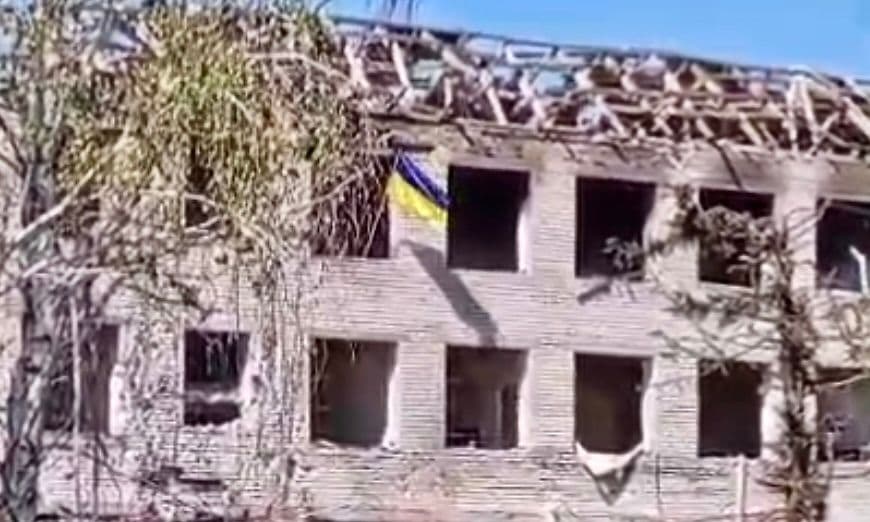
While diplomats parsed the implications of Medvedev’s threats, Ukrainian soldiers of the 425th Skala Assault Regiment were raising their national flag over the village of Zarichne in Donetsk Oblast. To most of the world, the liberation of a single village might seem insignificant. But in the grinding arithmetic of this war, Zarichne represented something precious: proof that Ukraine could still take territory back.
The village sits near key transport routes connecting Sloviansk and Lyman, making its control strategically valuable despite its small size. More importantly, its recapture by the same unit that had earlier cleared Novoekonomichne and Udachne demonstrated that Ukraine’s new Assault Forces weren’t just defensive fighters—they could punch back.
These weren’t isolated victories. Ukrainian intelligence had simultaneously thwarted a much larger Russian operation that would have changed the war’s trajectory. Moscow had been massing forces for a major offensive in the Zaporizhzhia direction, planning to capture the regional capital while coordinating attacks that would encircle Ukrainian forces around Pokrovsk-Myrnohrad.
Commander-in-Chief Oleksandr Syrskyi revealed that Ukrainian countermeasures had forced Russia to abandon the Zaporizhzhia offensive entirely. “The Russians were forced to postpone their offensive in Zaporizhzhia Oblast and redeploy marine units to Donetsk Oblast,” he announced—a rare admission from Moscow that their plans had been completely disrupted.
The failed offensive revealed something crucial about this phase of the war. Russian forces were no longer capable of the sweeping mechanized advances they’d attempted in 2022. Instead, they’d adapted to what military analysts call “infiltration tactics”—small groups of infantry sneaking through Ukrainian lines under cover of vegetation, avoiding direct confrontation while trying to establish footholds deep in enemy territory.
It was working, but at a horrific cost that would become clear only when analysts tallied summer’s casualties.
Summer’s Savage Mathematics
The numbers, when they finally emerged, told a story of strategic success built on human catastrophe. Russian forces had occupied 1,548 square kilometers of Ukrainian territory between June and August 2025—more than double their gains during the same period in 2024. But achieving this required sacrificing an estimated 94,810 Russian personnel over three months.
That translated to 1,030 Russian soldiers killed or wounded every single day of summer. To put this in perspective, the United States lost 2,400 service members during twenty years in Afghanistan. Russia was losing that many every two and a half days.
The casualties reflected Moscow’s new tactical approach. Unable to advance with tanks and armored vehicles in a battlefield dominated by drones, Russian commanders had resorted to what one Ukrainian observer called “disposable” infantry assaults. Small groups of soldiers, often recently recruited contract fighters, were sent forward in waves with minimal equipment and support.
Near Dobropillia, this tactic had achieved brief success when hundreds of Russian soldiers penetrated 15-20 kilometers into Ukrainian rear areas, causing panic and requiring Ukraine’s elite units—including battalions from the 93rd Mechanized Brigade and Azov Corps—to contain the breach. But even this tactical victory came at enormous cost, with most of the infiltrating units eventually eliminated.
“They lose a lot of people in this whole process, but if they were doing it with large mechanized attacks on armored vehicles, then their losses would be higher still,” explained Dmytro Zhluktenko, a Ukrainian drone operator serving near Pokrovsk. The mathematics of attrition had become Russia’s primary military strategy.
The Energy War Returns
As Ukrainian forces celebrated small victories and Russian families received death notifications, both sides prepared for winter’s approach by targeting each other’s power grids. September 8 brought the largest drone attack on Ukrainian energy infrastructure in months—142 Shahed and Gerber-type drones launched from multiple directions.
Ukrainian air defenses managed to down or suppress 112 of the incoming threats, but 26 reached their targets, damaging facilities across seven regions. President Zelensky confirmed what many had feared: “Russians are now concentrating their strikes against our energy sector again.”
The timing was calculated. Russia had spent previous winters trying to break Ukrainian civilian morale through widespread blackouts, betting that frozen, powerless cities would pressure Kyiv toward surrender. Ukraine had survived those campaigns, but each winter brought new tests of endurance.
Simultaneously, Ukrainian forces struck back at Russian energy infrastructure. Commander Robert “Madyar” Brovdi announced that Ukrainian drones had hit the Vtorovo fuel pumping station in Vladimir Oblast, disrupting diesel supplies to Moscow’s ring pipeline. “Fuel in Moscow is acting up a little,” he mocked on Telegram. “Gasoline is becoming a scarce liquid.”
The exchange illustrated how thoroughly both sides had embraced energy warfare. While Ukraine targeted military-relevant fuel supplies, Russia continued attacking civilian power plants—a distinction that mattered greatly to international observers tracking war crimes.
The Factory That Builds Russia’s Future
Behind the daily tactical exchanges lay a more ominous development: Russia’s systematic transformation into a war economy. Ukrainian military intelligence reported that Moscow plans to produce 2,500 high-precision missiles in 2025, including Iskander cruise and ballistic missiles and Kinzhal aeroballistic systems.
More concerning was Russia’s drone production surge. The country now manufactures over 50,000 fiber optic drones monthly—double the 2024 rate—from three regional production centers. These drones resist Ukrainian electronic warfare systems that had previously neutralized simpler models, giving Russian forces new battlefield advantages.
Russian defense enterprises were spreading across the vast country like mushrooms after rain. Most major facilities now sat 750 kilometers or more from Ukraine’s border, with new construction beginning 1,500-2,000 kilometers away. Moscow had diversified production so thoroughly that more than 100 enterprises could contribute to manufacturing a single weapon system.
This represented strategic thinking on a scale that dwarfed immediate battlefield concerns. Ukrainian intelligence deputy chief Vadym Skibitskyi noted that Russian military rearmament plans extended through 2037—fifteen years into the future. Whatever diplomatic initiatives were unfolding, Moscow was preparing for decades of conflict.
The Torture State Formalizes
Perhaps the most chilling development of September 8 occurred in a Moscow government office where Vladimir Putin signed legislation withdrawing Russia from the European Convention for the Prevention of Torture. The move would formally end international access to Russian detention facilities holding Ukrainian prisoners of war and civilians.
Russia had already been blocking international inspectors, but the formal withdrawal represented something more sinister: the institutionalization of torture as state policy. State Duma Chairman Vyacheslav Volodin declared the bill a “matter of priority,” virtually guaranteeing its swift passage.
The decision followed a familiar Russian pattern—first violate international agreements in practice, then formally withdraw to eliminate legal obligations. Similar moves had preceded the Ukraine invasion, when Moscow abandoned arms control treaties before launching aggression.
For the thousands of Ukrainian prisoners in Russian custody, the withdrawal meant abandoning any pretense of international humanitarian protection. Combined with documented evidence of systemic torture and execution of prisoners, it painted a picture of a state deliberately placing itself beyond civilized norms.
When Shopping Becomes Politics
While Russia formalized its rejection of international law, ordinary Russians confronted a more immediate crisis: inflation was making basic groceries unaffordable. Prosecutor General Igor Krasnov announced that his office had investigated over 400 cases of “economically unjustified” price increases in the first half of 2025, issuing warnings to more than 5,000 companies.
The statistics revealed the war’s hidden domestic cost. A June poll found 58% of Russians named rising prices their primary concern—far exceeding worries about the war in Ukraine. Potatoes, eggs, milk, and butter were becoming luxury items for millions of families.
Moscow’s solution revealed how thoroughly the country was abandoning market economics. The government prepared price caps on key staples starting March 2026, signaling what economists called a shift toward full command economy controls.
“Russia is now shifting toward a fully planned, command-style system, with all its usual flaws—constant food shortages, long queues, and everything else that comes with it,” observed Russian economist Igor Lipsits. The transformation represented a return to Soviet-era policies that had historically failed to feed the population adequately.
Poland’s Paper Army
As Russia’s war economy expanded and its threats reached Finnish forests, NATO’s eastern shield revealed concerning cracks. Poland had built impressive military statistics—growing from 100,000 to 216,000 personnel since 2014 while becoming the alliance’s biggest defense spender at 4.7% of GDP.
But September 8 brought troubling revelations about critical gaps in Polish capabilities. Security expert Robert Czulda warned that the country’s focus on “high-profile purchases rather than systemic reforms” had left dangerous weaknesses in areas proven crucial by the Ukraine war.
Most concerning was Poland’s inability to defend its own airspace. A Russian drone had flown 100 kilometers undetected through Polish territory on August 20, while two more entered uncontested on September 3. Poland’s single anti-drone system, the domestically-produced SKYctrl, reportedly malfunctioned regularly and failed to detect incoming threats.
The country had never successfully intercepted any of the multiple Russian drones and missiles that had violated its airspace during the war—a troubling statistic for a nation that would bear the brunt of any Russian assault on NATO. With F-16s currently and F-35s soon to be based at Polish airfields, the air defense failures left some of NATO’s most advanced aircraft vulnerable to simple drone attacks.
Military recruitment had also stalled, dropping from 16,000 new soldiers in 2023 to just 10,000 by mid-2024. Prime Minister Donald Tusk’s promises of nationwide military training were dismissed as “populism” by experts who noted Poland still lacked effective reserve systems.
The Drone Factory Crosses the Channel
While Poland struggled with military modernization, Ukrainian defense innovation was crossing the English Channel. Ukrainian drone manufacturer Ukrspecsystems announced plans for a £200 million production facility in England—the first major Ukrainian defense investment in Britain.
The Mildenhall factory would manufacture eight different military and civilian drones while training operators using tactics developed on Ukraine’s battlefield. Construction would begin next year, perfectly timed to absorb 500 experienced engineers being laid off from the nearby Lotus sports car plant.
The investment represented more than economic diversification. Ukrainian combat innovation—forged in the world’s most drone-intensive conflict—was being transplanted to Western industrial capacity. SHARK reconnaissance drones and PD-2 UAVs that had proven themselves against Russian forces would soon roll off British production lines.
Trump’s Energy Ultimatum
Across the Atlantic, the Trump administration was linking European energy independence to American willingness to escalate sanctions against Russia. Energy Secretary Chris Wright delivered a blunt ultimatum: halt Russian oil and gas imports, or don’t expect Washington to impose meaningful penalties on Moscow.
“If the Europeans drew a line and said: ‘We’re not going to buy more Russian gas, we’re not going to buy Russian oil.’ Would that have a positive influence on the U.S. leaning in more aggressively on sanctions? Absolutely,” Wright told the Financial Times.
The demand reflected growing American frustration with European energy purchases that continued financing Russia’s war machine. Despite strong rhetoric about supporting Ukraine, the EU had imported 52 billion cubic meters of Russian gas and 13 million tons of crude oil in 2024.
European Commission spokesperson Anna-Kaisa Itkonen confirmed Brussels’ goal to phase out Russian energy by 2027, while preparing a 19th sanctions package targeting Russian banks and shadow fleet operations. But the American ultimatum created potential friction within the Western coalition at a crucial moment.
Trump’s own sanctions record complicated his position. Despite repeated threats of “second phase” penalties against Russia, his administration had imposed only limited measures—most notably 50% tariffs on India that New Delhi simply ignored while continuing Russian oil imports.
China Steps Back
The most surprising economic development came from Beijing, where customs data revealed Chinese exports to Russia had plummeted 16.4% in August—the steepest decline since February. Imports from Russia dropped 17.8%, reversing July’s gains despite Putin’s recent visit to China and new gas pipeline agreements.
The trade collapse occurred even as Gazprom and China’s CNPC signed binding agreements to advance the Power of Siberia 2 pipeline and boost deliveries through existing infrastructure from 38 to 44 billion cubic meters annually. Whether the export decline reflected sanctions pressure or natural economic factors remained unclear, but it suggested growing complexity in the Chinese-Russian relationship.
For Russia, China remained crucial for economic survival—the primary buyer of its oil and supplier of dual-use technology despite Beijing’s claims of neutrality. Total bilateral trade still reached 1.03 trillion yuan ($145 billion) over eight months, but the momentum was clearly shifting.
Voices from the Ruins
Among the day’s geopolitical calculations and military statistics, individual voices reminded the world what this war was really about. Maryna Tereshchenko, forced to flee twice from Russian advances, clutched keys to homes that “no longer open anything” in occupied Donbas.
“I am just furious because they want to give away my home again,” the 24-year-old journalist told reporters, rejecting any peace deal involving territorial concessions. Her anger reflected broader sentiment among eastern Ukraine refugees, who remained overwhelmingly opposed to trading land for peace despite war exhaustion among other Ukrainians.
Former Luhansk resident Konstyantin Reutsky, who joined the army after Russia’s full-scale invasion, called territorial concessions complicity with theft: “Those who propose agreeing that stolen territories, property, and human lives now belong to the thief are actually suggesting disregarding law and justice.”
Meanwhile, Mariupol photographer Yevgen Sosnovsky remembered the smell of sea air and steelworks fumes from his destroyed city, carrying photos that documented civilian massacres during the devastating siege. His images showed not just destruction but also a blooming garden—the place where he’d buried his brother-in-law during months when survival was a daily achievement.
These voices provided essential context for diplomatic discussions about “realistic” peace settlements. For millions of Ukrainians, the war wasn’t an abstract geopolitical conflict but a very personal struggle over whether their homes, families, and communities would exist in the future.
The Day’s Dark Arithmetic
As September 8 ended, the day’s events revealed the war’s fundamental mathematics. Russia was paying an enormous price for territorial gains—nearly 95,000 casualties for 1,548 square kilometers meant each square kilometer cost roughly 61 Russian lives. At that rate, capturing all of Ukraine would require sacrificing millions of soldiers.
Yet Moscow showed every sign of accepting this equation. Defense production was scaling up, torture was being institutionalized, and rearmament plans extended into the 2030s. The economic costs—inflation, sanctions, diplomatic isolation—seemed manageable as long as the population remained compliant and international pressure remained limited.
Ukraine faced different math. With perhaps 900,000 soldiers confronting Russia’s 1.5 million, every tactical victory like Zarichne’s liberation required careful resource allocation. Drone operator Zhluktenko described the reality: “We have a very strong unmanned component… but still, there is not enough Ukrainian infantry. The contact line is very sparse.”
The international dimension added another layer of calculation. Finland’s threatened “statehood collapse” and Poland’s air defense gaps suggested the war’s expansion beyond Ukraine’s borders. China’s trade decline and Trump’s sanctions ultimatums hinted at shifting global dynamics that could eventually matter more than battlefield outcomes.
Winter’s Approaching Test
September 8, 2025, thus became a day that crystallized how completely Putin’s war had reshaped global relationships. From Khabarovsk’s morning explosions to Medvedev’s afternoon threats to China’s evening trade statistics, every development traced back to one man’s decision to invade a neighboring country.
The approaching winter would test all these dynamics. Could Ukraine’s power grid survive another systematic assault? Would Russia’s defense production surge overcome equipment losses? Could Western sanctions finally bite deep enough to change Moscow’s calculations? Would Finland’s NATO membership deter Russian aggression or accelerate it?
Most fundamentally, winter would reveal whether Russia’s willingness to absorb massive losses could eventually overcome Ukrainian determination to defend every meter of sovereign territory. The day’s events suggested both sides were preparing for a very long war, with implications that would ultimately reach far beyond Ukraine’s borders.
In Khabarovsk, workers finished cleaning the military parking lot where the morning had begun with explosions. But the reverberations from those blasts—and everything that followed—would continue echoing across continents for months to come.