
As Ukrainian artificial intelligence-powered drones intercept 90% of Russian Shaheds and Moscow escalates to combined missile-drone packages exceeding 200 units, the war enters a new technological phase while diplomatic tensions expose the fault lines of corruption, resistance, and international solidarity
Summary of the Day – July 26, 2025
The war’s technological evolution reached a pivotal moment as Ukrainian AI-powered interceptor drones, developed by former Google CEO Eric Schmidt’s company, achieved a remarkable 90% success rate against Russian Shahed attacks. This breakthrough came as Russia launched its largest combined missile and drone package in months—208 drones and 27 missiles—signaling Moscow’s shift toward overwhelming Ukrainian defenses through sheer volume. Meanwhile, the battlefield witnessed continued Russian territorial gains across multiple fronts, from Dnipropetrovsk Oblast’s mining heartland to Sumy Oblast’s border regions, where Ukrainian forces nonetheless demonstrated resilience by recapturing the village of Kindrativka. The day’s events unfolded against a backdrop of international pressure, as U.S. senators endorsed Ukrainian protesters defending anti-corruption institutions while China and America clashed at the United Nations over Beijing’s enabling role in sustaining Russian aggression.
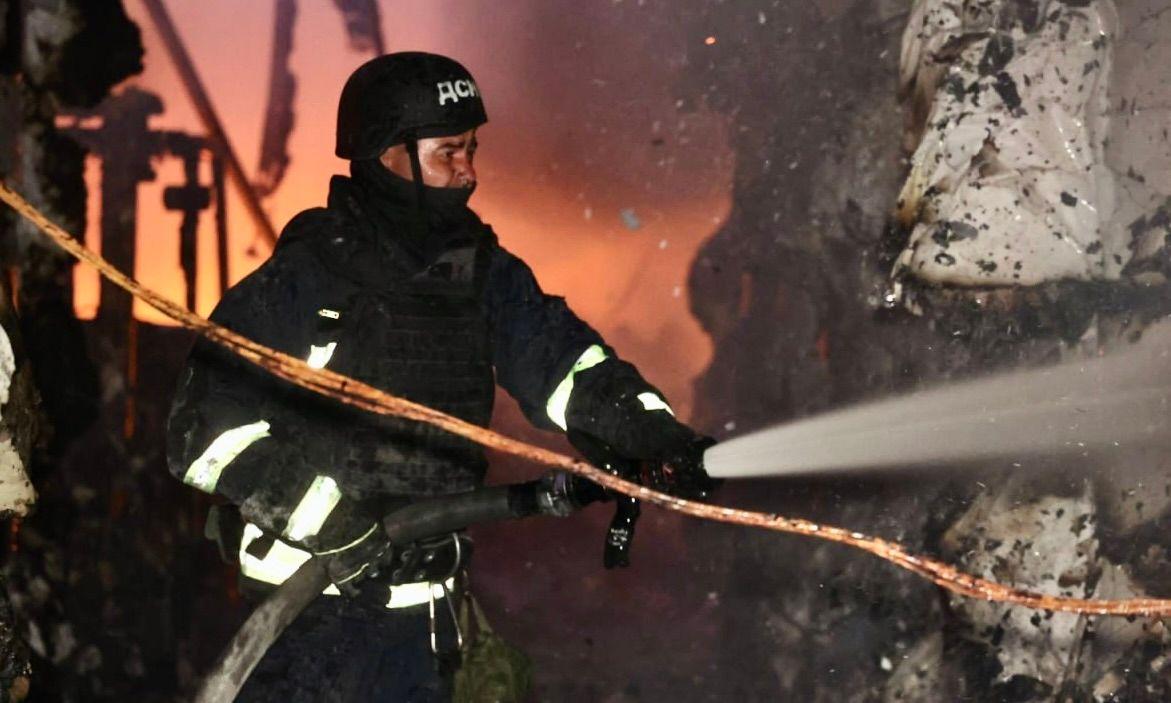
Firefighters extinguish the fire that erupted after a Russian attack against Ukraine’s Dnipropetrovsk Oblast. (Volodymyr Zelensky / Telegram)
The Algorithm’s War: AI Drones Transform Ukraine’s Air Defense
In the predawn darkness over Ukraine, a technological revolution unfolds nightly as artificial intelligence-powered interceptor drones hunt Russian Shaheds with lethal precision. These silicon sentinels, developed by Swift Beat—a company founded by former Google CEO Eric Schmidt—have achieved what human operators struggled to accomplish: downing roughly 90% of Russian drones intercepted by unmanned systems.
The AI-equipped interceptors represent more than incremental improvement; they embody warfare’s fundamental transformation. Ukrainian military sources confirmed these three types of drones utilize advanced targeting algorithms and secure communication systems that have proven resistant to Russian electronic warfare attempts. “These drones are extremely accurate in identifying Russian drones in the night sky,” one anonymous source told Ekonomichna Pravda.
Schmidt’s deepening involvement with Ukraine’s defense apparatus reflects Silicon Valley’s growing role in modern warfare. Earlier in July, he met with President Volodymyr Zelensky and then-Defense Minister Rustem Umerov as Swift Beat signed a long-term strategic partnership with Ukraine. A Ukrainian defense source described Schmidt as someone who “understands well what is happening” on the battlefield and recognizes that AI, drones, and autonomous systems will define future warfare.
Yet this technological salvation comes with controversy. Critics suggest Schmidt is using Ukraine’s war as a testing ground for Swift Beat’s technology, seeking battle-tested credentials for future commercial sales. “He says he’s not making money on this, but we know he wants his drones battle-tested,” one industry insider reportedly observed. Others fear Swift Beat’s growing influence could marginalize local Ukrainian developers, creating technological dependency.
Despite such concerns, Schmidt’s drones have become Ukraine’s most effective tools against Russia’s increasingly drone-heavy assault tactics. With Ukrainian skies now a primary battleground, the role of AI and autonomous systems will only expand as both sides pursue technological superiority.
Moscow’s Escalation Doctrine: The Return of Combined Strike Packages
Russia demonstrated its evolving strike doctrine overnight on July 25-26, launching a massive combined missile and drone assault that marked a significant shift from spring and early summer’s primarily drone-based attacks. The Ukrainian Air Force reported intercepting 183 drones and 17 missiles from a total package of 208 Shahed-type drones and 27 missiles launched from multiple Russian regions and occupied territories.
The attack’s sophistication extended beyond sheer numbers. Russian forces deployed 12 Iskander-M/KN-23 ballistic missiles from Voronezh, Kursk, and Rostov oblasts, plus occupied Crimea; eight Iskander-K cruise missiles from various launch points; and seven Kh-59/69 guided missiles from airspace over Belgorod Oblast and occupied Zaporizhia Oblast. This multi-vector approach forced Ukrainian air defenses to simultaneously counter ballistic threats, cruise missiles, and swarm attacks.
Twenty-five drones and 10 missiles penetrated Ukrainian defenses, striking nine locations across the country. The assault killed at least nine civilians and wounded 61 others, with particularly devastating impacts in Kharkiv, Donetsk, Zaporizhzhia, Dnipropetrovsk, Kherson, and Sumy oblasts. Russia increasingly targeted densely populated cities as part of cognitive warfare designed to weaken Ukrainian resolve and undermine long-term defense capacity.
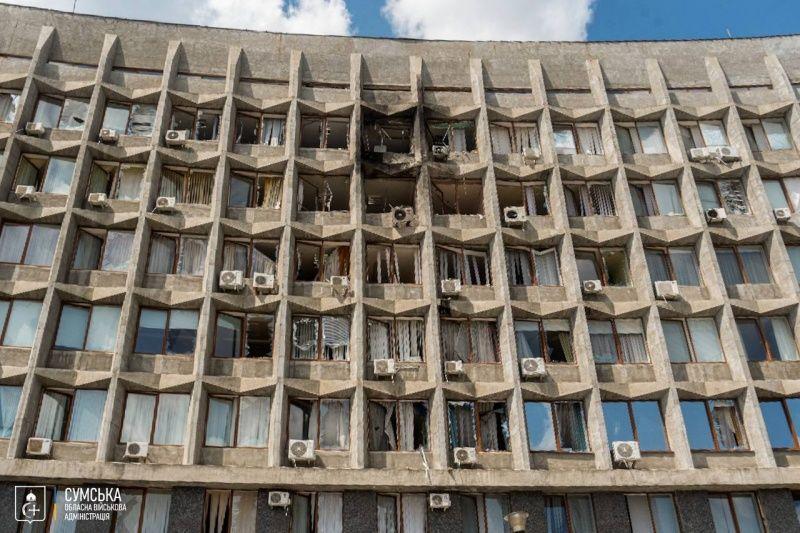
Russian drone aftermath on the Sumy Regional Military Administration building (OVA). (Oleh Hryhorov / Telegram)
The Institute for the Study of War assessed that Russia’s denser missile concentration in recent strikes indicates expanding production capabilities. ISW previously evaluated that Russian forces might strike Ukraine with up to 2,000 drones in a single night by November 2025 should current growth patterns continue—a projection that underscores the critical importance of Western air defense assistance, particularly U.S.-made Patriot systems capable of countering ballistic missile threats.
The Mining Heartland Under Siege: Russia Advances into Dnipropetrovsk Oblast
Russian forces achieved a strategic breakthrough by capturing Maliivka in Dnipropetrovsk Oblast, marking the second village seized in Ukraine’s mining heartland within days. The Russian Ministry of Defense credited the 336th Naval Infantry Brigade (Baltic Fleet) with taking the settlement northwest of Velyka Novosilka, representing Russian territorial expansion beyond the five oblasts Moscow has publicly claimed as its territory.
The advance carries profound economic implications. Dnipropetrovsk Oblast forms part of Ukraine’s industrial backbone, particularly for coal production that powers the electricity grid. Deeper Russian penetration threatens Ukraine’s energy security and economic stability while positioning Moscow’s forces approximately 200 kilometers from Dnipro—one of Ukraine’s largest cities and a crucial logistics hub.
President Zelensky acknowledged the mounting pressure during his nightly address, confirming that Ukrainian forces faced “fierce fighting around the city of Pokrovsk,” the logistics hub near which Russia announces village captures “on an almost daily basis.” Commander-in-Chief Oleksandr Syrskyi described Pokrovsk as the current focal point requiring maximum attention, while identifying five other sectors among the most difficult theaters along the 1,000-kilometer front.
Russian claims of capturing additional villages around Pokrovsk—Zvirove to the west and Novoekonomichne to the east—remained unconfirmed by Ukrainian officials, though the General Staff acknowledged Russian attempts to penetrate defenses in these areas. The pattern suggests sustained Russian pressure designed to collapse Ukrainian defensive lines through cumulative territorial gains rather than dramatic breakthroughs.
Despite territorial losses, Ukrainian resistance demonstrated continued effectiveness. Russian sources complained that forces rarely use armored vehicles in the Kupyansk direction due to effective Ukrainian drone operations and ongoing equipment shortages, indicating successful Ukrainian adaptation to asymmetric warfare conditions.
Northern Defiance: Ukrainian Forces Reclaim Kindrativka
Against the backdrop of Russian territorial gains, Ukrainian forces achieved a symbolic victory by recapturing Kindrativka village in northern Sumy Oblast, marking successful resistance to Moscow’s “buffer zone” strategy along the northeastern border. The village’s liberation, confirmed by Ukrainian military intelligence sources and battlefield tracking group DeepState, demonstrated Kyiv’s ability to reverse Russian advances despite overwhelming numerical disadvantages.
President Zelensky praised Ukrainian forces for “managing to thwart the Russian plan for the Sumy region,” noting that active operations continue with gradual pushback against Russian positions. The successful defense came despite Russia deploying an estimated 50,000-strong force near Sumy Oblast as part of Putin’s declared buffer zone creation efforts.
The recapture of Kindrativka assumes strategic importance beyond its physical control. Russian forces operating in the area—including elements of the 30th Motorized Rifle Regiment, 40th Naval Infantry Brigade, and 155th Naval Infantry Brigade—face continued Ukrainian pressure that prevents consolidation of territorial gains. Ukrainian counterpressure forces Russia to commit additional resources to defend previously captured areas rather than advancing deeper into Ukrainian territory.
However, Russian threats to civilian infrastructure persisted across multiple incidents. A drone strike on Sumy’s regional military administration building damaged the main coordination center for regional governance, reflecting Moscow’s systematic targeting of Ukrainian administrative capabilities. Governor Oleh Hryhorov confirmed the attack hit Independence Square in the city center, marking another deliberate strike against civilian facilities.
In a separate overnight assault on Sumy Oblast’s Kovpakiv district, Russian forces wounded three civilians, including a 43-year-old man, who were promptly hospitalized. The dual strikes on the same region within hours demonstrated Russia’s sustained campaign against civilian targets despite ongoing peace talk discussions.
Orban’s Alternative: Budapest Proposes “Strategic Cooperation” Over EU Membership
Hungarian Prime Minister Viktor Orban delivered a direct challenge to Ukraine’s European integration aspirations, proposing “strategic cooperation” instead of full European Union membership while arguing that Ukrainian accession would “drag the war into the heart of Europe.” The Hungarian leader’s intervention represents the most explicit opposition from an EU member state regarding Ukraine’s membership trajectory.
“EU membership for Ukraine would drag the war into the heart of Europe, a risk our families should not have to face,” Orban declared on social media. “These times call for calm judgement, not theatrical threats.” His alternative framework emphasized “pragmatic, flexible” partnership “rooted in mutual interest—not irreversible integration.”
Orban characterized Ukraine as a “buffer state” bordering Russia while rejecting similar status for Hungary. “Today, Ukraine’s fate is to be a buffer state bordering Russia… We were also a buffer state during the Cold War. We do not want to return to this position,” he explained. The comments reflect Hungary’s broader strategy of maintaining distinct positions within EU foreign policy while leveraging veto power over enlargement decisions.
Hungary claims overwhelming domestic opposition to Ukrainian EU membership, citing a national consultation showing 95% participant rejection of Kyiv’s accession. However, critics dismissed the poll’s credibility due to low turnout and manipulation concerns. Opposition leader Peter Magyar characterized it as a “government propaganda campaign” with only 3-7% of mailed ballots returned—”the lowest-ever turnout for any such consultation.”
As an EU member, Hungary possesses veto power over Ukraine’s membership progress, making Orban’s position potentially decisive for Kyiv’s European aspirations. The prime minister, widely viewed as the EU’s most pro-Russian leader, has consistently blocked military aid to Ukraine, maintained ties with Putin, and echoed Kremlin narratives throughout the conflict.
Naval Modernization and Strategic Posturing: Russia’s Fleet Expansion Plans
Despite devastating losses in the Black Sea, Russia announced ambitious plans to reinforce its maritime capabilities with new vessels and advanced technology. Nikolai Patrushev, head of Russia’s Maritime Collegium and longtime Putin ally, declared that the Black Sea Fleet would receive “new frigates, corvettes, aviation, marine robotic complexes” in coming years, representing Moscow’s commitment to rebuilding naval power despite Ukrainian strikes.
The announcement came as Russia’s Black Sea Fleet remains largely confined to Novorossiysk harbor, having lost approximately half its strength in tonnage and 30-35% of its original 74 warships to Ukrainian attacks. Notable losses include the flagship Moskva, landing ships Caesar Kunikov and Sergei Kotov, plus numerous smaller vessels destroyed by Ukrainian missiles and drone swarms.
Patrushev, 74, often described as the architect of Russia’s war against Ukraine and key advocate for the 2022 invasion, emphasized the fleet’s continued strategic importance for countering NATO and supporting military operations against Ukraine. His remarks align with Putin’s approval of a new naval doctrine aimed at restoring Russia’s global maritime power status, despite evident vulnerabilities exposed by the conflict.
The modernization pledge reflects broader Russian efforts to project strength while adapting to Ukrainian capabilities that forced fleet relocation from the historic Sevastopol base. Ukrainian strikes successfully targeted the submarine base, sank landing assault ships, and demolished fleet headquarters during senior officer meetings, fundamentally altering Black Sea strategic dynamics.
Casualty Counts and Strategic Implications: The Human Cost of Prolonged Conflict
Russia’s mounting personnel losses reached new documented heights as independent media investigations confirmed 119,154 Russian military deaths as of July 17, with 2,436 additional fatalities verified since early July. The figures, compiled by Mediazona and BBC Russian service through public sources including obituaries and memorial events, provide conservative estimates of actual casualty levels.
Ukrainian General Staff reporting placed total Russian losses at approximately 1,048,330 troops since February 24, 2022, including 1,080 casualties suffered on July 26 alone. The broader materiel losses encompass 11,056 tanks, 23,059 armored fighting vehicles, 56,371 vehicles and fuel tanks, 30,812 artillery systems, and 421 aircraft among other equipment categories.
The casualty breakdown reveals strategic implications for Russian force generation efforts. Confirmed deaths include 32,100 volunteers, 17,800 recruited prisoners, 13,000 mobilized soldiers, and nearly 5,400 officers. The officer losses particularly impact Russian command effectiveness, while volunteer and prisoner recruitment patterns indicate strain on traditional conscription systems.
The death of Russian Colonel Lebedev, commander of the 83rd Motorized Rifle Regiment, while leading assault operations in Kharkiv Oblast’s Velykyi Burluk area exemplifies continued degradation of Russian command structure. Senior officer casualties force promotion of less experienced personnel while disrupting unit cohesion and tactical effectiveness across multiple fronts.
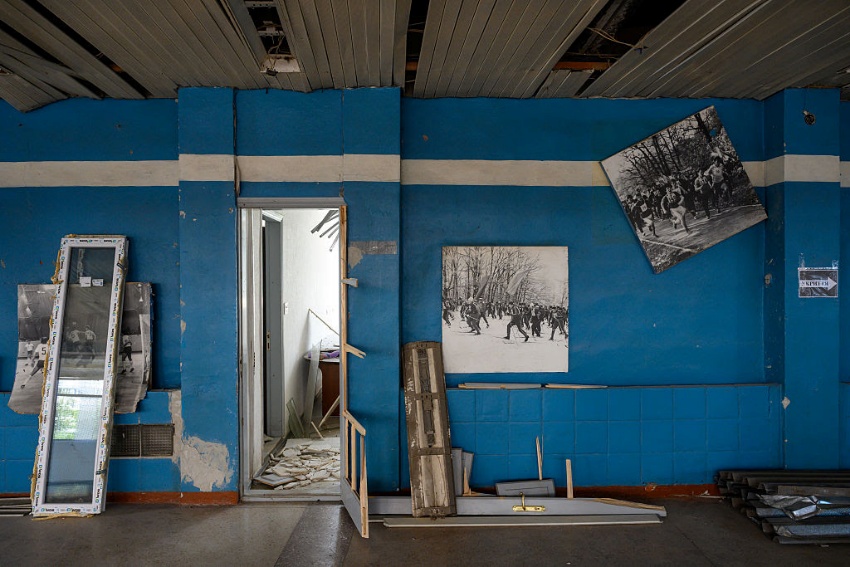
Debris litters a sports complex after an overnight Russian bombardment in Kharkiv, Ukraine. Officials say this five-hour bombardment in the Kyivskyi district included four Russian glide bombs, two ballistic missiles, and 15 Shahed drones. (Scott Peterson/Getty Images)
A dramatic incident at Russia’s Armavir airfield revealed growing internal resistance to the Kremlin regime, as a Russian Su-27UB fighter jet caught fire in what Ukrainian military intelligence (HUR) characterized as an act of Russian sabotage. Video footage released by HUR suggested that a Molotov cocktail or similar incendiary device ignited the aircraft, which serves both training and combat roles at the Krasnodar Aviation School.
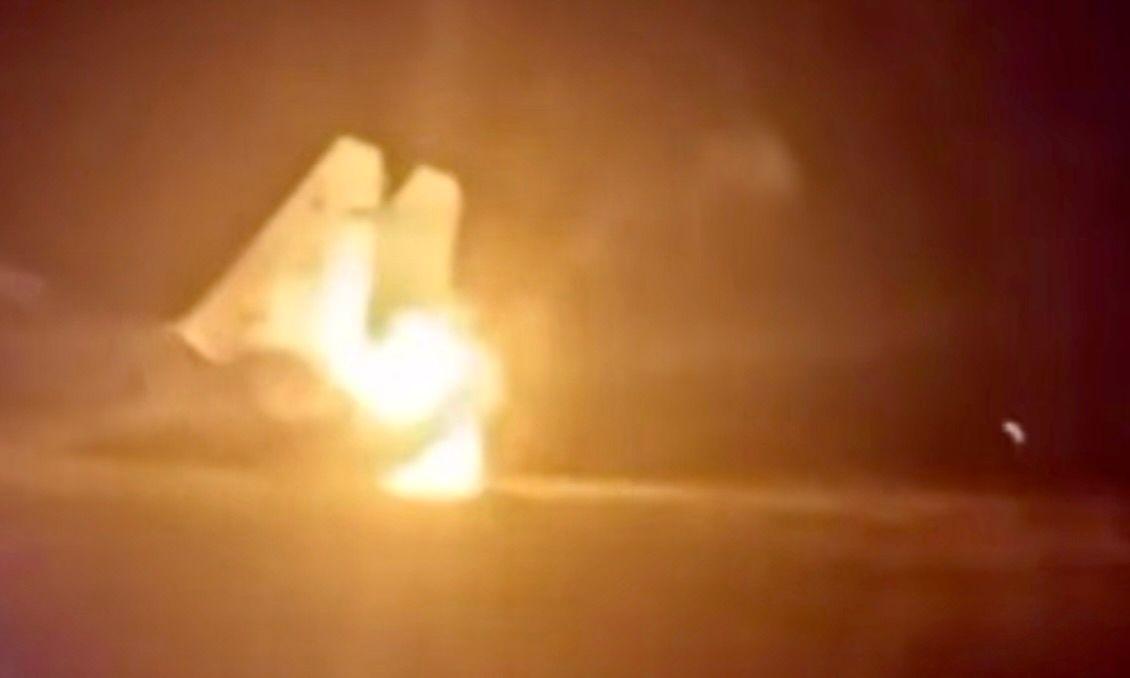
A Russian Su-27UB fighter jet caught fire at the Armavir airfield in Russia’s Krasnodar Krai. (HUR / Telegram)
“Resistance to the Kremlin regime inside Russia is growing,” HUR declared, positioning the incident within broader patterns of internal Russian opposition to the war. The targeted airfield hosts aircraft crucial for training cadets and supporting Russian air operations over the Black Sea region, making its disruption particularly significant for Moscow’s aviation capabilities.
The incident coincided with Ukrainian drone strikes against Russian military-industrial facilities deep within Russian territory. Ukrainian forces struck the Signal radio plant in Stavropol Krai, a facility producing electronic warfare systems for Su-34, Su-35S, and Tu-160 aircraft. The plant, located 500 kilometers from Ukrainian-controlled territory, manufactures active jamming systems, weapon control modules, and sophisticated radio-electronic equipment under Rostec’s KRET cluster.
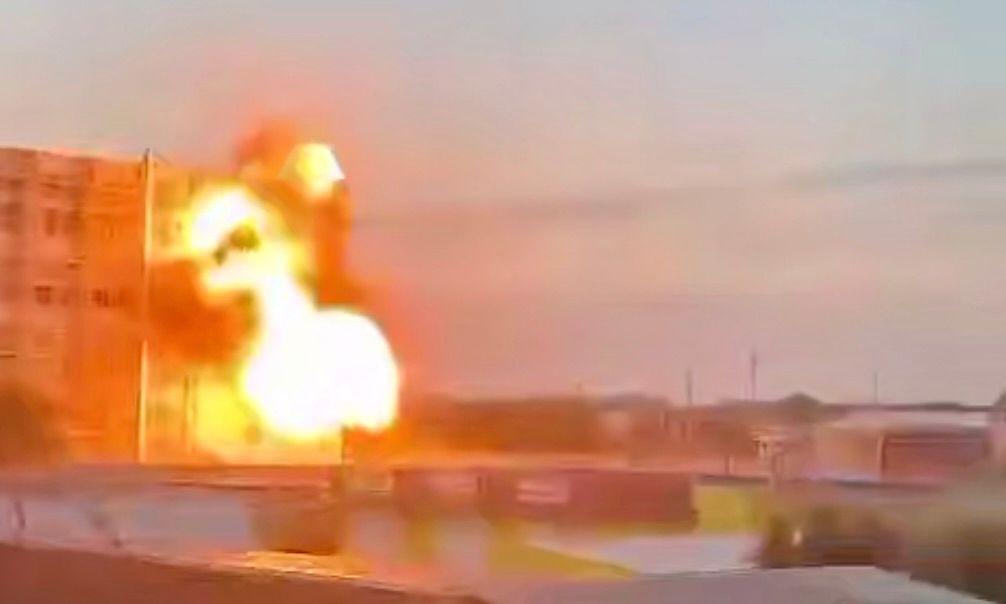
Drones attacked Signal radio plant in Russia’s Stavropol Krai overnight. (Astra / Telegram)
Ukrainian Security Service sources confirmed targeting buildings housing expensive imported equipment, including computer numerical control machines, plus electronic device workshops. The systematic strikes represent Ukraine’s continued effort to degrade Russian military production capabilities while demonstrating reach deep into Russian territory despite Moscow’s air defense systems.
International Pressure Points: America and China Clash Over Enabling War
Diplomatic tensions erupted at the United Nations Security Council as the United States directly challenged China to cease enabling Russian aggression, prompting sharp rebuke from Beijing over alleged blame-shifting and confrontation creation. Acting U.S. Ambassador Dorothy Shea demanded that China stop fueling Russia’s war machine through dual-use goods exports, directly naming Beijing among countries that must halt such transfers.
“Beijing’s claim to have implemented strong export controls on dual-use goods falls apart in the face of daily recovery of Chinese-produced components in the drones, weapons, and vehicles that Russia uses against Ukraine,” Shea declared. The confrontation followed recent reports of Chinese drone engines being covertly shipped to Russian manufacturers, circumventing Western sanctions through false labeling as “industrial refrigeration units.”
China’s deputy U.N. Ambassador Geng Shuang rejected the accusations while maintaining Beijing’s neutrality claims. “We urge the U.S. to stop shifting blame on the Ukraine issue or creating confrontation, and instead play a more constructive role in promoting a ceasefire and peace talks,” Geng responded. The exchange highlighted fundamental disagreements over responsibility for prolonging the conflict.
The diplomatic clash occurred against revelations that Chinese Foreign Minister Wang Yi reportedly told EU officials that Beijing “cannot afford” for Russia to lose the war in Ukraine. Despite Western pressure, China remains Russia’s top crude oil importer and major supplier of dual-use components used in Moscow’s defense sector, making Beijing’s cooperation essential for any meaningful sanctions regime.
Democratic Solidarity: American Senators Endorse Ukrainian Protesters
U.S. Democratic Senator Richard Blumenthal voiced strong support for Ukrainians protesting the law that stripped anti-corruption institutions of independence, characterizing the demonstrations as “democracy in action” and linking continued American support to Ukrainian transparency commitments. “I hope President Zelensky will continue to show transparency and anti-corruption commitment. His credibility and support depend on it,” Blumenthal declared.
The senator’s endorsement provided international validation for Ukrainian civil society’s resistance to authoritarian drift during wartime. Blumenthal, co-author of bipartisan legislation imposing 500% tariffs on countries buying Russian energy products, represents influential voices within the U.S. Senate that condition continued support on Ukrainian democratic progress.
EU Ambassador to Ukraine Katarina Mathernova reinforced the message, emphasizing that democratic dialogue remains crucial during wartime. “My mission in Ukraine is not only about political meetings and diplomatic dialogue—it is about people, about their feelings, about their emotions,” she observed. Mathernova noted that Ukrainians continue fighting “not just with weapons but also with their voices, for freedom, for justice, for a country free of corruption.”
The international support network extended beyond diplomatic statements. Lithuania announced plans to contribute up to 30 million euros ($32.5 million) toward joint purchase of U.S.-made Patriot air defense systems for Ukraine, with Defense Minister Dovile Sakaliene confirming the commitment during Baltic defense ministers’ visits to Washington. The pledge followed meetings with U.S. Defense Secretary Pete Hegseth focusing on deepened security cooperation.
Vatican Diplomacy and Orthodox Divisions: Religious Dimensions of Conflict
Pope Leo conducted a significant audience with Metropolitan Anthony, a senior Russian Orthodox Church cleric, discussing the ongoing war in Ukraine as part of efforts to address strained Catholic-Orthodox relations impacted by Russia’s invasion. The meeting included five other high-profile clerics and addressed “numerous issues concerning Orthodox-Catholic dialogue, as well as ongoing conflicts in the world, including in Ukraine and the Middle East.”
The Vatican’s engagement with Russian Orthodox leadership occurs against complex religious dynamics. Patriarch Kirill, head of Russia’s Orthodox Church, remains an enthusiastic supporter of the invasion, while the Kremlin has urged Vatican support for the Moscow-linked Ukrainian Orthodox Church, which Kyiv has banned due to continued Russian ties during the full-scale war.
Since assuming the papacy in May, Pope Leo has consistently appealed for peace in global conflicts and conveyed to President Zelensky the Vatican’s willingness to host Russia-Ukraine peace talks. However, Russian officials previously indicated they do not consider the Vatican suitable for negotiations, citing its location within NATO member Italy, which openly supports Ukraine.
The religious dimension reflects broader challenges in maintaining international institutions’ neutrality during the conflict. The Russian Orthodox Church’s political alignment with Moscow’s war aims complicates traditional Vatican diplomacy, while Ukraine’s restrictions on Moscow-linked religious organizations demonstrate how the conflict permeates all aspects of society.
Military Intelligence and Strategic Warnings: Preparing for Extended Confrontation
Polish Prime Minister Donald Tusk delivered stark warnings about Russian military preparations, confirming American expert assessments that Moscow will be ready for potential confrontation with Europe by 2027. Speaking after talks with NATO Supreme Allied Commander General Alexus G. Grynkewich, Tusk emphasized the need for vigilance without panic. “Russia will be ready for confrontation with Europe—and therefore with us—as early as 2027,” he stated.
The timeline aligns with Ukrainian intelligence assessments that Russia could restore combat capabilities within two to four years after the war’s end, potentially faster with lifted sanctions. President Zelensky has repeatedly warned that unchecked Russian aggression in Ukraine could spill into NATO territory, with Poland—bordering Belarus and Russia’s Kaliningrad exclave—likely on any future conflict’s front line.
Meanwhile, Belarus resumed using illegal migration as a hybrid warfare tool against the European Union, with President Alexander Lukashenko facilitating transit primarily toward Poland of migrants from Africa, the Middle East, and Afghanistan. Ukraine’s Foreign Intelligence Service confirmed coordination between Minsk and Moscow in the renewed migration flows, mirroring 2021 tactics designed to pressure EU sanctions relief.
The migration weapon represents one element of broader hybrid warfare campaigns targeting European solidarity. Poland reported stopping 26,000 illegal crossing attempts in 2024 alone, with one soldier killed and 63 injured in related border clashes. The renewed pressure comes as Lukashenko maintains autonomy in tactical matters despite his satellite relationship with Putin.
The Mobile Defense Revolution: F-16 Dispersal Systems Transform Ukrainian Aviation
Ukraine unveiled revolutionary mobile F-16 support systems designed to enable fighter operations from dispersed locations rather than vulnerable permanent airbases, addressing critical survivabilities concerns facing the limited F-16 fleet. The Come Back Alive foundation, working with Ukraine’s Defense Ministry, developed ten specialized vehicles costing 51.4 million hryvnias ($1.2 million) to provide comprehensive maintenance and operational support.
The system includes two technical support team hubs capable of aircraft and aviation weapons maintenance, plus a mission planning complex housed in a German-made MAN truck with residential trailer. Each maintenance team operates four vehicles: workshop trucks for repairs and weapons testing, crane-equipped trucks for munitions handling, and personnel transport pickups.
Peter Layton, former Royal Australian Air Force officer and RUSI Associate Fellow, emphasized the system’s strategic importance. “The key to F-16 survival when on the ground is not being found,” he explained. The mobile capability opens “less likely airfields, such as short and civilian air strips, or remote parts of large military airbases” for operations, creating a “shell game” where dispersed aircraft cannot all be destroyed if one location is discovered.
The mobile revolution reflects Ukrainian adaptation to asymmetric warfare requirements. As Taras Chmut, Come Back Alive foundation head, noted: “The aircraft received by Ukraine appeared and existed in a closed ecosystem. They were not used the way we use them. Ours operate under the conditions of a full-scale war—with constant sorties and continuous Russian hunting.”
Battlefield Dynamics: Russian Advances Meet Ukrainian Resilience
Russian forces achieved multiple tactical gains across eastern Ukraine while facing continued Ukrainian resistance that complicated territorial consolidation. In the Siversk direction, geolocated footage showed elements of the 1234th Motorized Rifle Regiment and 169th Motorized Rifle Brigade raising Russian flags in the Serebryanske forest area, indicating territorial advances despite Ukrainian counterpressure.
Ukraine’s Khortytsia Group reported repelling a Russian motorized assault comprising up to 80 armored and motorized vehicles near Siversk, Hryhorivka, Serebryanka, and Vyimka. A Ukrainian drone unit separately reported destroying two tanks, an armored vehicle, and a civilian vehicle during a Russian assault near Bilohorivka, demonstrating continued Ukrainian defensive effectiveness despite territorial losses.
In the Toretsk direction, Russian forces advanced southeast of Rusyn Yar while maintaining pressure across multiple axes. The Novopavlivka sector witnessed Russian capture of Zelenyi Hai village, with elements of the 36th Motorized Rifle Brigade credited with the seizure. Meanwhile, the Velyka Novosilka direction saw Russian forces seize Maliivka in Dnipropetrovsk Oblast, marking significant territorial expansion beyond previously claimed regions.
Ukrainian forces demonstrated continued operational capability through limited advances in the Lyman direction, with geolocated footage showing progress south of Dibrova in the Serebryanske forest area. Additionally, Ukrainian forces advanced northeast of Khatnie in the Velykyi Burluk direction, indicating successful local counteroffensives despite broader Russian pressure.
Across multiple front sectors, Russian forces conducted operations without achieving territorial gains. In northern Kharkiv Oblast, Russian attacks near Hlyboke, Starytsia, Vovchansk, and toward Lyptsi failed to advance, while Ukrainian forces used small-group tactics and drone reconnaissance to maintain defensive effectiveness. The Kupyansk direction witnessed extensive Russian attacks across multiple settlements but produced no confirmed territorial changes despite continued pressure.
Similarly, the Chasiv Yar direction saw Russian attacks near the settlement itself and southward positions without achieving advances, while elements of the 299th Airborne Regiment and 98th VDV Division continued operations. The Borova direction faced Russian attacks northeast, east, and southeast of the settlement without territorial changes, and limited Russian attacks in unspecified Kherson direction areas similarly failed to produce gains.
In western Zaporizhia Oblast, Russian forces attacked southeast and west of Orikhiv near multiple settlements but achieved no confirmed advances despite unconfirmed claims of progress toward Stepnohirsk and Plavni. A Ukrainian brigade reported repelling a reinforced platoon-size Russian mechanized assault consisting of tanks, infantry fighting vehicles, and buggies near Novopokrovka, demonstrating continued defensive capabilities across the broad front.
Technological Warfare and Strategic Implications: Death of a Russian Colonel
Ukraine’s Khortytsia group reported the death of Russian Colonel Lebedev, commander of the 83rd Motorized Rifle Regiment, killed while leading assault operations in Kharkiv Oblast’s Velykyi Burluk area. The elimination of senior Russian officers continues undermining Moscow’s command structure, with independent investigations confirming 119,154 Russian military personnel deaths as of July 17—including nearly 5,400 officers.
Russian tactical adaptations reflected mounting personnel and equipment losses. Ukrainian sources confirmed Russian forces increasingly use unmanned ground vehicles in the Pokrovsk direction while adapting infiltration tactics during Starlink outages. Russian milbloggers claimed sabotage and reconnaissance groups managed to penetrate Pokrovsk during recent communication disruptions, highlighting technological vulnerabilities in Ukrainian defensive systems.
The evolving battlefield dynamics demonstrated both sides’ adaptation to prolonged conflict conditions. Russian forces shifted toward smaller unit tactics using motorcycles and moving in groups of two to four personnel along windbreaks, reflecting both Ukrainian defensive effectiveness and Russian efforts to minimize equipment losses while maintaining offensive pressure.
Economic Warfare and Strategic Messaging: Restricting Energy Flows
The broader economic dimensions of conflict continued evolving as Russia faced mounting pressure on multiple fronts. The technological warfare exemplified by AI-powered drone interception systems represents one facet of Ukraine’s multi-domain resistance strategy, combining indigenous innovation with international partnership to counter Russian numerical advantages.
Strategic messaging campaigns revealed sophisticated understanding of information warfare requirements. Ukrainian emphasis on technological achievements—from AI drone interception to mobile F-16 support systems—reinforces narratives of Ukrainian adaptability and Western partnership effectiveness, potentially influencing continued international support decisions.
Looking Forward: The Convergence of Technology and Diplomacy
As July’s final week progressed, the convergence of technological innovation, battlefield adaptation, and diplomatic pressure created new strategic possibilities while highlighting persistent challenges. Schmidt’s AI-powered interceptor drones achieving 90% success rates against Russian Shaheds demonstrates how Silicon Valley innovation could fundamentally alter aerial warfare dynamics, potentially providing Ukraine decisive advantages in drone-versus-drone combat.
The international pressure campaigns targeting Chinese dual-use goods exports and supporting Ukrainian civil society resistance to authoritarian drift reflect growing coordination among democratic allies to address multiple war dimensions simultaneously. Senator Blumenthal’s linkage of continued U.S. support to Ukrainian anti-corruption commitments signals that democratic accountability remains central to Western assistance strategies.
However, Russian territorial advances in Dnipropetrovsk Oblast and continued massive missile-drone packages exceeding 200 units demonstrate Moscow’s commitment to achieving maximalist objectives through sustained pressure rather than negotiated compromise. The war’s technological evolution—from AI interceptors to mobile F-16 systems—occurs within broader strategic deadlock where neither side appears capable of decisive breakthrough.
The day’s events underscore warfare’s transformation into a multidimensional contest spanning battlefield tactics, technological innovation, economic pressure, diplomatic maneuvering, and civil society resistance. Ukraine’s success increasingly depends on maintaining advantages across all domains while international support remains conditioned on democratic progress and anti-corruption commitments that face internal pressure during existential conflict.
The silicon sentinels patrolling Ukrainian skies represent more than technological achievement; they embody democracy’s capacity for innovation under pressure, Silicon Valley’s engagement with geopolitical competition, and artificial intelligence’s emergence as a decisive factor in modern warfare. Whether such innovations prove sufficient to offset Russian numerical advantages and territorial pressure will likely determine not only Ukraine’s fate but the future character of international conflict in an age of algorithmic warfare.