
As Moscow confirms a bilateral meeting “in the coming days,” Ukrainian forces face the loss of another strategic town while Trump’s territorial “land swap” proposal emerges from high-level talks
Summary of the Day – August 7, 2025
The diplomatic chess match between Washington and Moscow accelerated dramatically as Russian officials confirmed that Vladimir Putin and Donald Trump will meet “in the coming days,” with the venue already agreed upon and the United Arab Emirates emerging as a likely location. The breakthrough came as Trump revealed to European leaders and Zelensky that Putin appeared open to negotiations involving “land swaps”—a proposal that could fundamentally reshape the territorial dimensions of any peace deal. On the battlefield, Russian forces achieved a significant tactical victory by likely completing the seizure of Toretsk, while Ukrainian drone strikes targeted critical infrastructure deep inside Russia, including the Afipsky Oil Refinery in Krasnodar Krai. As Trump’s August 8 deadline loomed, both sides appeared to be positioning for what could become the most consequential diplomatic engagement since the war began, even as the human cost continued to mount with six civilians killed and 35 injured in the latest Russian attacks across Ukraine.
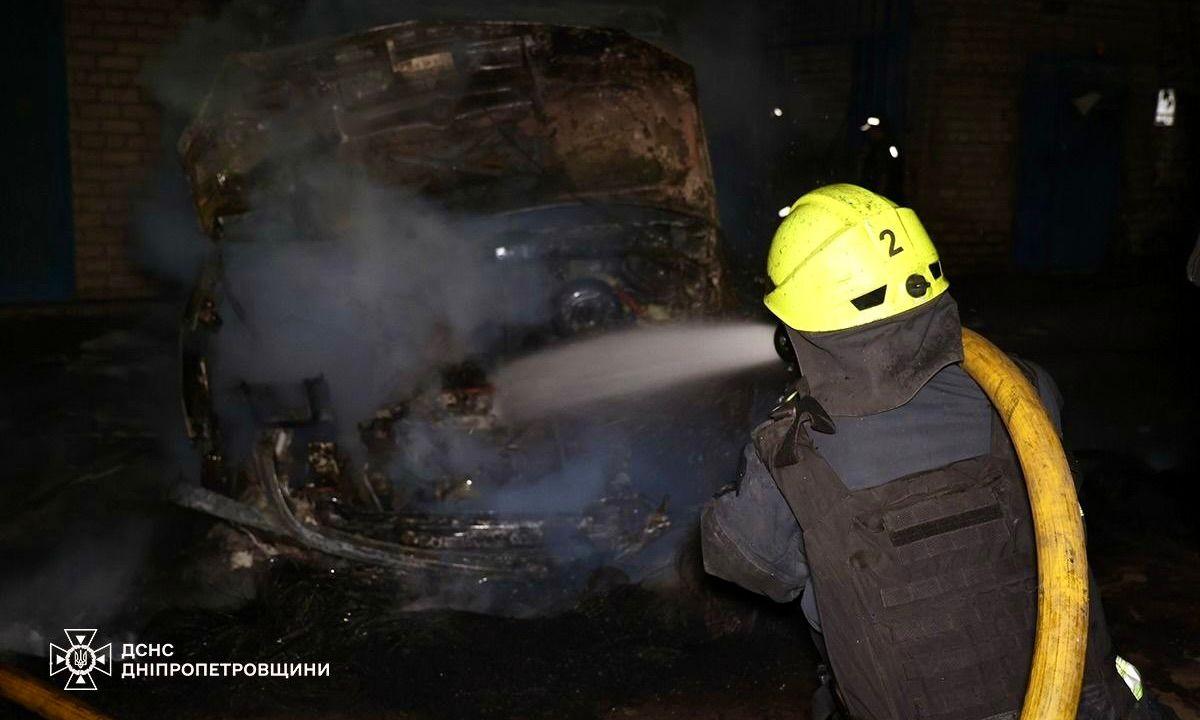
Firefighters extinguish the fire that erupted after a Russian attack against Ukraine’s Dnipropetrovsk Oblast. (State Emergency Service / Telegram)
The Kremlin Confirms: Putin-Trump Summit in Days, Not Weeks
The diplomatic landscape shifted decisively when Russian Presidential Aide Yuri Ushakov announced that preparations for a Putin-Trump meeting were underway, with the venue already agreed upon and a target date set for next week. “At the suggestion of the American side, an agreement was reached in principle to hold a bilateral summit meeting in the coming days,” Ushakov told journalists, marking the first meeting between the presidents since Trump took office on January 20.
Putin himself later confirmed the development while standing alongside UAE President Sheikh Mohamed bin Zayed Al Nahyan during an official visit to Moscow. “We have many friends who are ready to help us organize an event of this kind. One of those friends is the president of the United Arab Emirates,” Putin declared, effectively revealing the likely summit location.
The confirmation represented a dramatic acceleration from earlier cautious statements, with Secretary of State Marco Rubio having suggested meetings were potentially “weeks” away. The UAE, which has maintained diplomatic ties with both Washington and Moscow throughout the conflict, emerged as the logical choice for neutral ground.
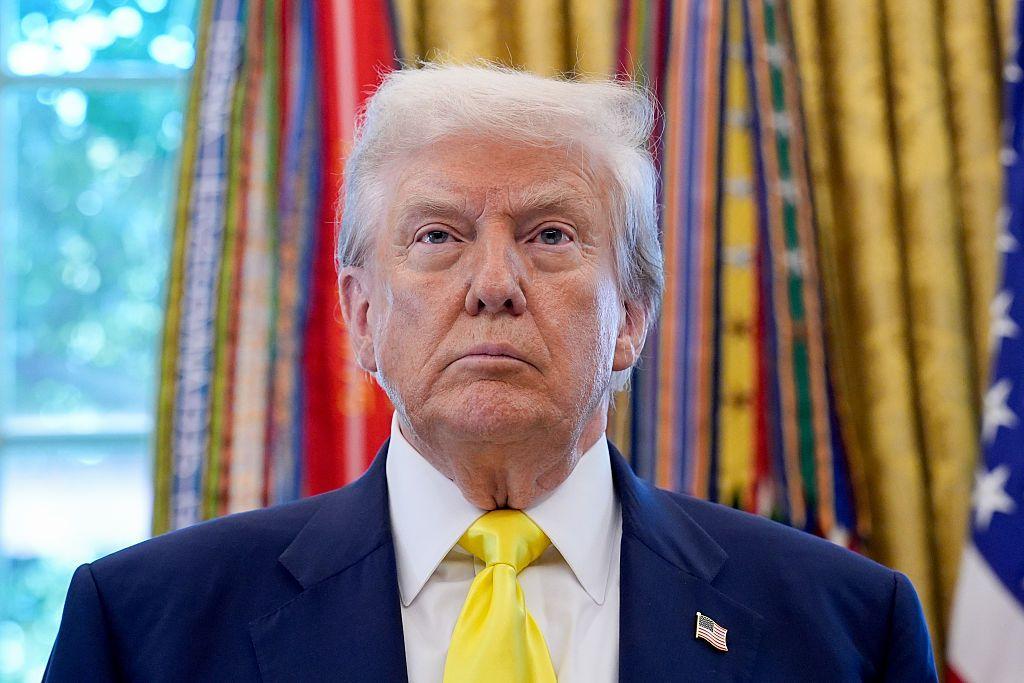
US President Donald Trump in the Oval Office of the White House in Washington, DC, US. (Yuri Gripas/Abaca/Bloomberg via Getty Images)
The Land Swap Revelation: Trump’s Territorial Gambit Emerges
During a high-level phone call on August 6 involving Zelensky, European leaders, and top U.S. officials, Trump revealed crucial details about Putin’s negotiating stance that could reshape the entire peace process. According to Bloomberg’s sources, Trump told the participants that Putin appeared open to negotiations if “land swaps” were included in the discussions.
The call, which included UK Prime Minister Keir Starmer, Finnish President Alexander Stubb, German Chancellor Friedrich Merz, NATO Secretary General Mark Rutte, U.S. Vice President JD Vance, and Secretary of State Marco Rubio, marked a significant moment in the diplomatic process. Trump expressed optimism about the chances for a ceasefire, suggesting Putin would be willing to engage in peace talks that include discussing territory Russia claims to control.
While the specifics of what constitutes “land swaps” remained undefined, the concept likely refers to Crimea—illegally annexed in 2014—and parts of Donetsk, Luhansk, Zaporizhzhia, and Kherson oblasts that Russia declared annexed in 2022 following sham referenda. The proposal represents a potential departure from Ukraine’s consistent rejection of any territorial concessions as preconditions for peace.
Toretsk Falls: Russian Forces Complete Strategic Town Seizure
In a significant battlefield development, geolocated footage published on August 7 confirmed that Russian forces had advanced to central Katerynivka and central Shcherbynivka, indicating the likely completion of Toretsk’s seizure. The mechanized assault, conducted by a reinforced company-sized force, represents Russia’s first major urban capture in months and demonstrates the continued effectiveness of their grinding offensive strategy.
Elsewhere on the battlefield, Ukrainian forces achieved a rare tactical gain by advancing southwest of Chasiv Yar, while Russian forces made incremental advances in multiple directions including the Lyman, Siversk, and Pokrovsk sectors. Ukrainian counterattacks were reported near several locations, including Mayak and Udachne in the Pokrovsk direction, and near Stepnohirsk in western Zaporizhia Oblast.
Russian forces demonstrated increasing tactical sophistication, with reports of troops wearing civilian clothing or clothes with Ukrainian patterns to evade detection—a practice that constitutes perfidy under international law. The systematic use of fiber-optic drones continued to disrupt Ukrainian logistics and movement, while Russian sabotage and reconnaissance groups operated near Kupyansk, raising questions about whether Russian forces maintain enduring positions in previously claimed areas like Sobolivka.
The loss of Toretsk, a town that had been under assault for months, marks another step in Russia’s methodical advance through eastern Ukraine. Ukrainian military observers noted that the fall came after Russian forces systematically isolated the settlement and cut off Ukrainian supply lines—a tactic that has become increasingly effective as Russian drone capabilities improve.
Ukraine Strikes Deep: Afipsky Refinery Ablaze After Drone Attack
Ukrainian forces demonstrated their expanding long-range strike capabilities by successfully attacking the Afipsky Oil Refinery in Krasnodar Krai overnight on August 6-7. The Ukrainian General Staff confirmed that drones struck the facility, which refines 6.25 million tons of oil annually—representing 2.1 percent of Russia’s total oil refining capacity.
Geolocated footage showed a dramatic drone strike and subsequent fire at a gas and gas condensate processing unit of the refinery, while Russian authorities reported that falling drone debris caused a fire that burned down the gas processing unit entirely. The strike demonstrated Ukraine’s continued commitment to targeting Russia’s energy infrastructure despite ongoing diplomatic efforts.
The attack was part of a broader Ukrainian campaign against Russian military and industrial targets. Additional strikes hit Russian military unit number 61661 in Slavyansk-on-Kuban, causing a fire at a fuel and lubricant warehouse reportedly belonging to the Russian 76th Separate Repair and Restoration Battalion. Ukrainian forces also struck a railway station in Surovikino, Volgograd Oblast, maintaining pressure on Russia’s critical logistics networks.
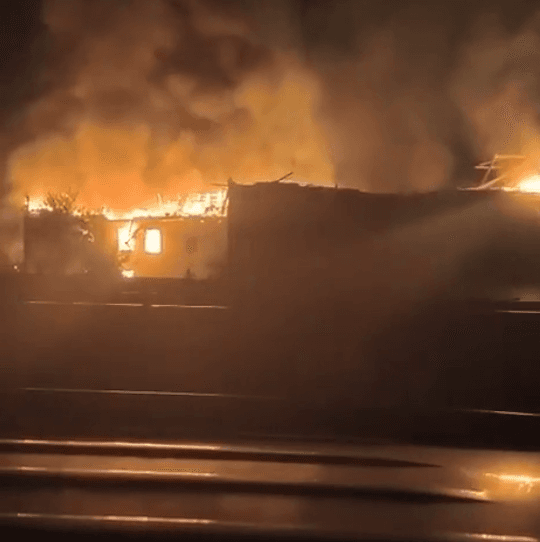
A screenshot of a purported video of a fire at Surovikino railway station in Volgograd Oblast amid a Ukrainian drone attack on the region. (Exilenova+/Telegram)
Crimean Targets Eliminated: Ukraine Destroys Russian Radar Network
Ukraine’s military intelligence agency achieved a significant tactical success by striking multiple high-value Russian military targets in occupied Crimea, including a fast assault landing craft and three critical radar stations. The HUR reported destroying a Project 02510 BK-16 vessel—a high-speed landing craft used for coastal operations and troop transport—with drone strikes causing significant fire damage.
The operation systematically dismantled key components of Russia’s air defense network on the peninsula. Ukrainian forces destroyed or damaged the Nebo-SVU long-range radar capable of detecting aircraft and ballistic missiles, the Podlet-K1 system for identifying low-flying targets, and the 96L6E mobile air surveillance radar. The strikes also targeted a dome structure at Ai-Petri peak, reportedly housing equipment belonging to the 3rd Radio Technical Regiment of Russia’s air defense forces.
“After serious losses of air defense facilities on the peninsula, Russian occupiers in Crimea have begun hiding their expensive military facilities in dome structures,” the HUR noted, indicating the psychological and operational impact of sustained Ukrainian strikes on Russian defensive capabilities.
The Trilateral Summit Prospect: Three Leaders, One Table
Ushakov revealed that U.S. Special Envoy Steve Witkoff had proposed a trilateral meeting between Trump, Zelensky, and Putin during his August 6 visit to Moscow, though Russia had not yet formally commented on the proposal. The prospect of bringing all three leaders together represents the most ambitious diplomatic initiative since the war began.
Putin maintained his conditional stance regarding meetings with Zelensky, stating: “I’ve said many times already, I don’t have anything against it in general—it’s possible. But certain conditions must be created for that. And unfortunately, we’re still far from creating those conditions.”
Zelensky, however, expressed readiness for such high-level engagement, emphasizing that “finding real solutions can be truly effective at the level of leaders.” The Ukrainian president stressed that determining the timing and range of issues to be addressed would be crucial for any successful summit format.
Trump’s Deadline Dilemma: August 8 Decision Point Approaches
With his self-imposed August 8 deadline looming, Trump indicated that the fate of his threatened secondary sanctions now rested with Putin. “We’re going to see what he has to say. It’s going to be up to him. Very disappointed,” Trump told reporters when asked whether the deadline remained in effect.
The statement marked a subtle but significant shift from Trump’s earlier confident assertions about his ability to quickly end the war. State Department Spokesperson Tommy Pigott emphasized that the focus should be on actions rather than trust: “This is not a question of trust, it’s a question of actions. He said we need to see actions, not just words.”
The approaching deadline created additional pressure for meaningful progress, with secondary sanctions potentially targeting major Russian oil buyers including China if no ceasefire materialized.
Ukrainian Public Opinion: Strong Opposition to Russian Terms Persists
New polling data from the Kyiv International Institute of Sociology revealed the stark challenge facing any peace negotiation involving territorial concessions. Around 76% of Ukrainians strongly opposed the Russian peace plan, while only 17% expressed willingness to accept its terms—a modest increase from 10% in May.
The Russian proposal includes Ukraine permanently abandoning NATO membership, granting Russia full control over four partially occupied regions, and officially recognizing them as Russian territory. Even the U.S.-backed plan, involving Russia keeping occupied territories with Crimea recognized as Russian and all sanctions lifted, gained support from only 39% of respondents.
The only proposal with majority Ukrainian support remained the joint Europe-Ukraine plan, supported by 54% of respondents. This plan offers Ukraine security guarantees and EU membership while Russia retains occupied territories without official recognition, with U.S. sanctions gradually eased after peace is established.
Civilian Casualties: Six Dead as Russian Attacks Continue
Despite diplomatic progress, the human cost of the war continued to mount with at least six civilians killed and 35 others injured in Russian attacks across Ukraine over the past 24 hours. Russian forces launched 112 Shahed-type attack drones and decoy drones overnight, with Ukrainian air defenses intercepting 89 of them while 23 struck 11 locations.
Zaporizhzhia Oblast bore the heaviest casualties, with four civilians killed and 13 injured across 723 strikes that hit 12 localities. In Donetsk Oblast, two civilians died in Kostiantynivka and Bilokuzmynivka, while six others were injured. Additional casualties were reported across Kherson, Dnipropetrovsk, Kharkiv, and Sumy oblasts as Russia maintained its campaign against civilian infrastructure.
The attacks underscored the urgency of diplomatic efforts while demonstrating that Russia continued its military pressure even as negotiations appeared to be gaining momentum.
Russian Information Warfare: Conditioning Society for Prolonged Conflict
Russian officials continued their delicate balancing act between feigning interest in negotiations with Trump and preparing domestic audiences for prolonged warfare. State Duma Deputy Viktor Sobolev claimed that “under no circumstances” should one expect talks between Putin and Trump to end Russia’s war against Ukraine.
Sobolev reiterated Russia’s original war goals to “demilitarize” and “denazify” Ukraine while demanding control over four oblasts and the creation of “buffer zones” in six additional regions—including areas where Russian forces are not currently operating. The statements appeared designed to provide Putin with domestic cover for negotiations while maintaining maximal territorial demands.
Russian ultranationalist outlet Tsargrad published an op-ed claiming the war in Ukraine was an “internal affair” for Russia, stating that Russia wanted “peace without Ukraine” because “there should be no Ukraine.” Such rhetoric demonstrated the Kremlin’s continued commitment to its most extreme war aims despite diplomatic overtures.
Humanitarian Crisis: Russian Child Trafficking Database Exposed
Ukrainian NGO Save Ukraine revealed a disturbing development in Russia’s systematic child abduction campaign: an online “catalog” where Ukrainian children are offered for adoption, sorted by physical traits including eye and hair color. The database, maintained by Russian occupation authorities in Luhansk Oblast, contained information on 294 children.
“Most children in this catalog were born in Luhansk Oblast before the Russian occupation and had Ukrainian citizenship,” explained Mykola Kuleba, CEO of Save Ukraine. “Parents of some of them were killed by occupation authorities, others were simply issued Russian identification documents to legitimize their abduction.”
The platform exposed children to significant dangers including sexual exploitation, human trafficking, illegal adoption, and organ harvesting. The discovery represented a new low in Russia’s campaign against Ukrainian children, which has already resulted in over 19,500 documented abductions since the full-scale invasion began.
The Grain Theft Enterprise: 15 Million Tons Stolen Since 2022
Ukraine estimated that Russia has stolen 15 million tons of grain from occupied territories since the start of the full-scale war, with Ukrainian intelligence reporting that stolen wheat is being mixed with Russian grain at Black Sea ports before export. The systematic theft represents not just economic warfare but an attempt to erase Ukrainian agricultural identity.
Deputy Economy Minister Taras Vysotsky confirmed that grain from occupied Donetsk, Kherson, Luhansk, Zaporizhzhia regions, and Crimea was being laundered through Russian export channels. The scale of the theft—worth billions of dollars at current market prices—demonstrated the industrial nature of Russia’s resource extraction from occupied territories.
Ukrainian investigations revealed that Russian companies tied to well-known international firms were helping export grain from occupied Ukrainian ports, while Russian occupation authorities claimed increased crop yields and planned expanded cultivation in stolen territories.
Military Innovation: Body Cameras for Draft Officers
In a move to increase transparency and protect rights during mobilization, Ukraine announced that all enlistment office employees would be required to wear body cameras and record video while checking documents and delivering draft notices starting September 1. Defense Minister Denys Shmyhal said the measure would “ensure transparency and legality in the work of enlistment offices’ teams.”
The requirement addressed ongoing concerns about forced conscription and ill-treatment of conscripts, issues that Russian propaganda frequently exploited to fuel social tensions within Ukraine. Currently, around 85% of enlistment office staff were equipped with body cameras, with efforts ongoing to procure additional devices.
The measure came as Russian forces had recently launched several strikes on Ukrainian enlistment offices, viewing mobilization infrastructure as a legitimate military target while attempting to disrupt Ukraine’s ability to maintain its defensive capabilities.
Occupied Territories: Military-Patriotic Indoctrination Intensifies
Russian occupation authorities expanded their use of military-patriotic programs to indoctrinate Ukrainian youth, with the Search Movement of Russia hosting students from occupied Donetsk Oblast in Tver Oblast for military-patriotic training and battlefield excavations. The program, which has branches across occupied Ukraine, combined historical memory manipulation with active militarization of Ukrainian children.
The Search Movement events served multiple purposes: legitimizing Russia’s invasion, militarizing Ukrainian youth, and conditioning them to view themselves as future Russian citizens. Ukrainian resistance monitoring noted that such programs represented systematic attempts to erase Ukrainian identity while preparing the next generation for potential military service in Russian forces.
Russian regional officials continued their involvement in systematic child deportation and indoctrination programs, with officials from Ingushetia visiting summer camps hosting Ukrainian children from occupied Zaporizhzhia Oblast. The camps explicitly aimed to instill “civic position” based on Russian patriotic values, representing clear violations of international law regarding the treatment of children in occupied territories.
Economic Indicators: Ukrainian Bonds Rally on Peace Prospects
Ukrainian government bonds continued their rally from late July, receiving a fresh boost after the Kremlin confirmed the Putin-Trump meeting. Ukraine’s debt securities, sensitive to war-ending prospects, hit their highest levels in four months as markets responded positively to diplomatic developments.
Ukraine’s dollar bond due February 2029 climbed to 65 cents, gaining more than 3 cents on August 7 alone. The sharp spike reflected investor optimism about potential peace negotiations, though bonds still traded well below levels seen in February when markets initially hoped for a swift war resolution under Trump.
The bond movement demonstrated how financial markets viewed the diplomatic initiatives as genuinely significant, with investors apparently convinced that the Putin-Trump meeting represented more than mere political theater.
Combat Zone Evacuations: Over 21,000 Civilians Remain in Active Fighting
Donetsk Oblast officials reported that at least 21,700 civilians, including 115 children, remained in active combat zones across 18 communities classified as active fighting areas. The figure included communities around recently captured Toretsk and besieged Pokrovsk, where Russian advances had accelerated.
Most of the children were located in the Lyman urban territorial community, where Russian forces had been conducting sustained offensive operations. In the past week alone, more than 7,800 people including 380 children had been evacuated from the region as mandatory evacuation orders remained in effect.
The evacuation statistics underscored the humanitarian urgency driving diplomatic efforts, with tens of thousands of Ukrainian civilians trapped between advancing Russian forces and their unwillingness or inability to leave ancestral homes.
Russian Economic Pressure: Moscow Projects Strength Amid Sanctions
Despite growing economic pressures, Russian officials continued projecting confidence about their ability to sustain the war effort indefinitely. Russian State Duma deputies downplayed the impact of falling oil revenues while claiming that Russia had structured sufficient reserves to withstand additional price decreases.
However, economic indicators suggested the projection of strength masked genuine vulnerabilities. Russian consumer spending showed continued decline, while military manufacturers faced increasing dependency on Chinese components for drone and weapons production. The contradiction between official optimism and economic reality created additional pressure for Putin to achieve diplomatic success.
Looking Ahead: The Summit That Could Change Everything
As diplomatic preparations accelerated toward the confirmed Putin-Trump meeting, all sides appeared to recognize the potential significance of the moment. For Trump, the summit represented an opportunity to deliver on campaign promises while demonstrating American leadership. For Putin, it offered a chance to achieve through diplomacy what had proven costly on the battlefield. For Zelensky and Ukraine, it represented both opportunity and profound risk.
The emergence of “land swap” discussions suggested that territorial concessions—long rejected by Ukraine—might be central to any eventual agreement. Whether such proposals could overcome Ukrainian public opposition and European concerns remained unclear, but the mere fact of their discussion marked a potential shift in negotiating parameters.
With Russian forces having just completed the seizure of Toretsk and Ukrainian strikes continuing deep inside Russia, both sides entered potential negotiations from positions of mixed strength and vulnerability. The next few days would determine whether three years of devastating warfare might finally give way to the most serious peace process since the conflict began—or whether the diplomatic moment would pass as others had before, leaving the war to grind on toward an uncertain conclusion.