
The day the Pentagon said yes but Trump held the trigger, Ukraine exposed Putin’s wonder weapon as a lie told months too late, and justice crossed its first international border with a Russian torturer in handcuffs.
The Day’s Reckoning
Three secrets went public on October 31. Each one changed what the world thought it knew about this war.
In a Pentagon briefing room, analysts delivered their verdict: America could give Ukraine Tomahawk cruise missiles without compromising U.S. military readiness. The technical objection had collapsed. But the bureaucratic green light only illuminated a larger reality—Donald Trump held the actual decision, and Tomahawks weren’t just weapons. They were 1,600-kilometer missiles capable of striking Moscow itself, crossing thresholds that had constrained Western aid for 1,346 days. The arsenal door stood open. Trump alone held the key.
In Vilnius, a Russian military policeman descended airplane stairs in handcuffs. Lithuanian prosecutors waited. He’d tortured civilians in occupied Melitopol—metal safes barely large enough for human bodies, electric shocks calibrated for maximum pain, cold water in freezing weather. Ukraine had captured him near Robotyne. Now Lithuania would prosecute him under its own laws, for crimes committed against a Lithuanian citizen on Ukrainian soil. The first war criminal ever extradited across international borders. The precedent shattered assumptions about sanctuary and borders and what justice could reach.
In Kyiv, President Zelensky revealed what Ukrainian intelligence had protected for months: they’d destroyed one of Russia’s Oreshnik missiles at Kapustin Yar testing facility, deep inside Russia, during summer 2024. Months before Putin triumphantly unveiled the “unstoppable” weapon to the world in November. The Emperor’s wonder weapon—exposed as ordinary before Putin even announced its existence. Russia could produce six per year. Ukraine had already killed one in its cradle.
These revelations framed twenty-four hours of combat that followed familiar patterns but carried new weight. In Pokrovsk, Russian infiltrators moved through ruined buildings in groups of five while Ukrainian drones hunted them. Neptune missiles—once designed to sink ships—flew hundreds of kilometers to explode inside Russian power plants, plunging cities into darkness. Balloons drifted across Lithuanian airspace. Indian refineries quietly rerouted Russian oil to avoid sanctions. Viktor Orban asked Trump for exemptions.
Winter approached. Every player faced decisions. October 31 provided some answers—and raised entirely new questions about what happens when secrets stop being secret.
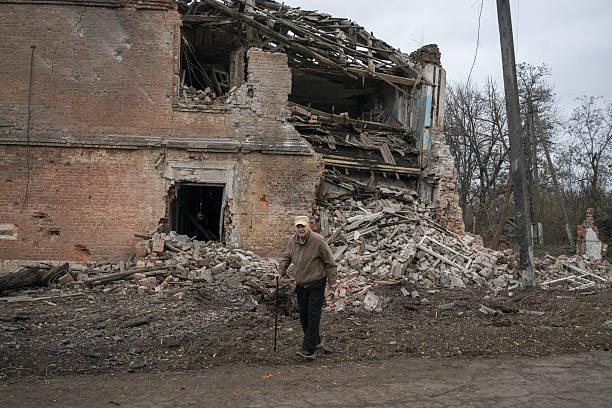
Aftermath in Sloviansk: A residential neighborhood transformed into rubble and broken glass by Russian airstrikes. Families lived here yesterday. (Jose Colon/Anadolu via Getty Images)
The Key Trump Holds: Pentagon Approves, President Decides
The call came quietly. Three officials—American, European—confirmed what Pentagon analysts had spent months calculating: the United States could hand Ukraine Tomahawk cruise missiles without leaving its own arsenal dangerously thin. The technical objection had collapsed under scrutiny.
The door stood open. But doors don’t make decisions. People do.
Donald Trump sat behind that door, weighing calculations that had nothing to do with inventory spreadsheets. Tomahawks weren’t just missiles—they were 1,600-kilometer weapons capable of striking Moscow itself. Every previous escalation had triggered Russian nuclear threats. Empty threats, yes. But threats that created political pressure no president could simply ignore.
Picture what Tomahawks would mean. A Ukrainian officer in Kyiv could select targets a thousand kilometers inside Russia—the Shahed drone factory in Yelabuga, churning out the drones that struck Ukrainian cities every night. The Engels-2 Air Base in Saratov Oblast, where strategic bombers took off to launch cruise missiles at power plants and hospitals. Ammunition depots. Logistics hubs. Command centers. All of them operating with complete impunity, safely distant from Ukrainian retaliation.
Until now.
Russia had been firing cruise missiles, ballistic missiles, hypersonic missiles at Ukraine for 1,346 days without any constraints whatsoever. Hundreds of kilometers behind Ukrainian lines—power plants destroyed, rail yards obliterated, apartment buildings reduced to rubble. Ukraine couldn’t hit back at the sources. The asymmetry wasn’t strategy. It was simple: Russia could reach everywhere. Ukraine couldn’t.
Tomahawks would change that equation. Strategic parity. If Russia could strike anywhere in Ukraine, Ukraine could strike anywhere Russia sustained the war.
The Pentagon had finished its analysis, run its numbers, and delivered its verdict. The bureaucrats had done their job.
Now Trump had to do his.
Russia’s Banned Missiles: The Treaty Moscow Broke in Secret
Ukrainian Foreign Minister Andriy Sybiha chose his moment carefully. What he revealed had been sitting in Ukrainian intelligence files for months, protected, waiting.
Russia hadn’t just been firing conventional weapons at Ukraine. Russian forces had been systematically launching nuclear-capable 9M729 Novator ground-launched cruise missiles—weapons whose range exceeded 1,200 kilometers, flagrantly violating the Intermediate-Range Nuclear Forces Treaty that Moscow claimed to respect until formally withdrawing in August 2025.
A military source gave Reuters the specifics. October 5: Russian forces launched a 9M729 from over 1,200 kilometers away. But that wasn’t experimental. A senior Ukrainian official revealed the full scope: twice in 2022, testing the waters. Then twenty-three launches since August 2025 alone.
The systematic deployment demolished any pretense of accidents. This was strategy—employ banned weapons while maintaining elaborate fictions about respecting international law.
“Russia’s use of the INF-banned 9M729 against Ukraine demonstrates Putin’s disrespect to the United States and President Trump’s diplomatic efforts,” Sybiha stated. The timing stung. While Trump explored summit meetings with Putin, Moscow fired weapons that violated the arms control architecture Reagan and Gorbachev created in 1987.
The revelation vindicated Trump’s controversial 2019 withdrawal from the INF Treaty. Critics accused him of destroying arms control frameworks. But if Russia had been developing and deploying treaty-violating missiles for years—using them twenty-five times while maintaining diplomatic facades—Trump’s withdrawal looked less like reckless unilateralism and more like recognizing reality others preferred to ignore.
The pattern suggested something darker. Russia had been using Ukraine as a testing ground for banned weapons, refining operations while the world debated whether Putin might use tactical nuclear weapons.
Sign the treaty. Get your adversary to comply. Then secretly violate the terms whenever convenient.
That was Russia’s actual doctrine.
Five at a Time: How Pokrovsk Became a Ghost War
Geolocated footage captured throughout the day showed something new at scale: war without front lines. Ukrainian soldiers struck Russian positions in northern Pokrovsk immediately after Russian infiltration missions. Russian forces returned fire from within Pokrovsk itself. Official maps showed clean territorial control. The maps had become fiction.
A Ukrainian intelligence source characterized it bluntly: Russian forces were infiltrating Pokrovsk in groups of five to ten. Not platoons conducting coordinated assaults. Small teams moving under darkness, occupying buildings, creating situations where Ukrainian forces faced terrible choices—destroy the building and risk killing civilians, or attempt close combat that favored defenders.
Neither side could claim control of entire neighborhoods. Russian infiltrators might hold an apartment block’s eastern edge while Ukrainian soldiers defended the western side. Next block over, the situation reversed. Or both sides occupied the same building complex—different floors, different sections. Traditional military maps with clean lines had become meaningless.
Yet Ukrainian forces retained capability for limited counterattacks. Geolocated footage showed Ukrainian advances in eastern Rodynske—not major gains, but evidence that infiltration hadn’t paralyzed Ukrainian initiative.
The fundamental problem was drones. Both sides had saturated Pokrovsk with unmanned systems—quadcopters providing surveillance, FPV kamikaze drones destroying vehicles, bomber drones flattening positions. Any large-unit movement in daylight drew immediate fire. Aerial surveillance forced both sides toward infiltration tactics prioritizing stealth over mass.
A Ukrainian NCO reported Russian adaptation: specialized units now employed thermal-shielding cloaks and tents designed to defeat drones with thermal imaging. Not perfect, but enough to complicate surveillance and enable infiltrations impossible months earlier.
Pokrovsk had become something unprecedented. Not captured. Not held. Contested and occupied simultaneously, with no path toward resolution short of wholesale destruction that would eliminate any value in holding the territory.
The First Border Justice Crossed
The Russian serviceman descended airplane stairs in Vilnius. Handcuffs. Lithuanian prosecutors waiting. In 1,346 days of war, no Russian soldier had ever been extradited to face war crimes charges in a foreign court.
Until now.
Ukrainian forces captured him near Robotyne. He’d been senior military police. Lithuanian authorities charged him with torture in occupied Melitopol—metal safes barely large enough for human bodies, suffocation until unconsciousness, hanging victims for days, cold water in freezing weather, electric shocks calibrated for maximum pain without immediate death.
One victim’s citizenship gave Lithuania jurisdiction: a Lithuanian citizen in Melitopol on private business when Russian forces seized the city. A Vilnius court ruled three months custody. Life imprisonment on the table.
The significance extended beyond one torturer. The ICC had issued arrest warrants for Putin—symbolic gestures Russia ignored. Ukrainian courts prosecuted cases, but critics questioned impartial trials during active war.
Lithuania offered something different. A NATO member with robust legal institutions and no military involvement could prosecute Russian servicemembers for crimes against its citizens on Ukrainian soil. Independent courts. Established procedures. Due process that would withstand scrutiny.
Prosecutor General Ruslan Kravchenko: “A clear signal to every war criminal: you will not be able to hide from justice in any country of the free world.”
Thousands of Russian soldiers faced new recognition: their actions carried consequences beyond the battlefield. Every officer who authorized torture, every soldier who participated, now understood that capture anywhere meant potential extradition everywhere.
No rear area safe from justice. No distance far enough. No flag providing immunity.

Ukraine delivers a Russian POW accused of torturing civilians in Melitopol to Lithuanian prosecutors. The first war criminal ever extradited across borders—a precedent that terrifies every Russian officer still fighting. (Ukraine’s National Police)
The Wonder Weapon That Wasn’t
President Zelensky revealed what Ukrainian intelligence had kept hidden: Ukrainian forces destroyed a Russian Oreshnik ballistic missile at Kapustin Yar testing facility during summer 2024—months before Putin triumphantly announced the weapon’s existence in November.
The Emperor’s new missile. Exposed before he even unveiled it.
SBU Chief Vasyl Maliuk provided details. Kapustin Yar—one of Moscow’s premier strategic weapons testing facilities, 1,200 kilometers inside Russia. The strike required coordination between Security Service, Defense Intelligence, and other branches, penetrating deep to hit a facility protected by multiple air defense layers.
The revelation demolished Putin’s narrative. In November, Putin announced Oreshnik as revolutionary technology that Western defenses couldn’t intercept. Russian state media celebrated it as proof sanctions hadn’t prevented Moscow from developing cutting-edge weapons. But Ukrainian forces had already destroyed one at Russia’s most secure facility months earlier.
Zelensky added context that deflated the weapon further: Russia could produce approximately six Oreshnik missiles per year. That meant Oreshnik would remain more propaganda than operational capability.
The warning carried implications: “Range up to 5,000 kilometers and a 700-kilometer dead zone.” An Oreshnik deployed in Belarus—as Lukashenko announced for December—could theoretically strike London, Paris, or Berlin.
Defense analysts had questioned Putin’s claims immediately. Oreshnik appeared to be an upgraded RS-26 Rubezh missile from 2011, repackaged with minor modifications.
One expert captured it: “I’d be shocked if this has more than 10% new parts. Basically, they took apart the RS-26 and put together this new missile with upgrades and a new paint job.”
The summer destruction validated the skepticism. If Ukraine could strike testing facilities protected by Russia’s most sophisticated defenses, future deployments would remain vulnerable wherever positioned.
Putin’s wonder weapon lay exposed. Ukraine had called the bluff before Putin even made it.

Zelensky reveals what Ukraine kept secret for months: Ukrainian forces destroyed Russia’s “unstoppable” Oreshnik missile at a testing facility deep inside Russia—before Putin ever announced the weapon existed.
Fire in the Night: When Power Plants Became Targets
The orange glow over Oryol Oblast was visible from space. Ukrainian Neptune cruise missiles struck the Oryol Thermal Power Plant after flying hundreds of kilometers through Russian airspace. The Ukrainian Navy confirmed strikes on both the Oryol TPP and Novobryansk electrical substation—critical infrastructure supplying military-industrial plants.
Remarkable evolution. Neptune was originally designed as an anti-ship weapon—the missile that sent the cruiser Moskva to the Black Sea bottom in April 2022. Successive upgrades enabled precision ground strikes deep inside Russia.
Local residents contradicted Russian governor Andrey Klychkov’s claims about “intercepted drone debris.” The explosions “did not sound like drones.” Footage showed two distinct impacts, cascading failures, sections of the city plunged into darkness. The 330-megawatt plant supplied defense-related manufacturing.
The Novobryansk substation strike complemented the power plant attack. Destroying generation capacity was one thing; disrupting electrical distribution networks multiplied damage. The Ukrainian Navy: “No enemy rear is safe.”
Neptune strikes weren’t isolated. Multiple explosions overnight in Vladimir and Yaroslavl oblasts—coordinated attacks spanning hundreds of kilometers. In Vladimir, strikes targeted an electrical substation with 4,010 MVA capacity. Flames rose despite governor assurances that “all systems are operating normally.” Residents reported widespread blackouts.
In Yaroslavl, explosions near the Novo-Yaroslavsky oil refinery—Russia’s fifth-largest petroleum facility. Refined products fueled Russian military vehicles, aircraft, naval vessels.
The pattern revealed Ukrainian strategic thinking. Not politically sensitive targets like population centers. Dual-use infrastructure supporting military operations—power plants supplying defense industries, refineries producing military fuel, substations enabling factory operations. Legitimate military targets under international law, even hundreds of kilometers from combat.
As fires burned and substations sparked, the picture crystallized. Ukraine had developed indigenous long-range strike capabilities enabling systematic degradation of Russia’s military-industrial infrastructure. Neptune’s evolution from anti-ship weapon to strategic strike platform—Ukrainian technological adaptability in real time.

Fire in the night: Ukrainian Neptune missiles strike the Oryol power plant 330 kilometers inside Russia, cutting electricity to defense factories supplying Putin’s war machine. The orange glow was visible from space—no Russian rear is safe. (Screenshot / Astra)
Madyar’s Recruitment: Doubling the Drone Army
Major Robert “Madyar” Brovdi announced the war’s most ambitious recruitment campaign. The Unmanned Systems Forces would expand from 15,000 to 30,000 personnel—doubling the war’s most lethal combat arm.
“You are needed here, and right now. It’s time to quit running away from the army, it’s time for you go fly and drone strike the occupier!” No patriotic appeals. Just blunt acknowledgment that Ukraine needed people and the USF offered better conditions.
The pitch was unprecedented. Complete training, not crash courses. Guaranteed unit slots, not arbitrary assignments. Fifty percent of vacancies required civilian job skills—no military background needed.
Brovdi emphasized the psychological difference. Ukraine fought defensively, but drone forces operated offensively—taking war directly to Russia. “Drones have become the main means for prosecuting war. We are cutting down worms in industrial quantities. Their oil refineries burn regularly.”
Statistics backed him up. “We are two percent of the AFU. But every third verified Russian combat loss was destroyed by the USF. Every third had his funeral song sung by a drone. It’s going to be every second soldier.”
Daily figures: 938 confirmed hits in 24 hours. Strikes killed 146, wounded 127. Two tanks, four armored personnel carriers, nineteen artillery pieces destroyed in a single day.
Brovdi’s background made him unlikely for revolution. An ethnic Hungarian businessman with no military education, he volunteered as private infantry in February 2022. Personal savings started a drone team. Three years later: thousands of aircraft operating daily.
Russia opened war crimes investigations against him. Dmitry Rogozin: “Madyar is talented but an absolute traitor and maniac.”
Brovdi’s response: “Today we’ve ‘done in’ 212 of their soldiers, and we’re not finished. We still have the whole night ahead.”
The goal: every second Russian casualty dies from Ukrainian drones. A kill ratio Russian numbers couldn’t overcome.
Blood for Meters: The Eastern Front Grinds On
Russian forces attacked across the eastern front without breakthroughs. In Kharkiv Oblast near Vovchansk, Ukrainian strikes against Belgorod Reservoir Dam raised river water levels, transforming crossings into dangerous obstacles. Small tactical advantage that might buy days or weeks.
Near Kupyansk, geolocated footage showed Ukrainian forces held positions in eastern Kurylivka—areas Russian sources claimed as Russian-controlled. Information war complexity requiring independent verification.
Lyman direction: Russian offensive operations without confirmed advances despite persistent attacks near Derylove, Korovii Yar, Shandryholove, Karpivka, Torske, Yampil. Siversk direction: same pattern near Dronivka, Serebryanka, Vyimka, Pereizne, Zvanivka. Attacks without verified gains.
Ukrainian military observer Kostyantyn Mashovets reported Ukrainian forces recaptured Dorozhnie southeast of Dobropillya—small reversal demonstrating Russian gains remained reversible.
Pokrovsk direction remained most contested. Russian forces attacked the city and virtually all approaches. Intensity suggested commanders viewed capturing Pokrovsk as priority worth substantial casualties. Yet attacks failed to produce confirmed advances beyond infiltration.
Near Novopavlivka, footage showed Ukrainian forces held positions southwest of Horikhove in claimed Russian areas. Southwest of Velykomykhailivka, Russian 36th Motorized Rifle Brigade raised flags at multiple locations in Novooleksandrivka—infiltration that didn’t change terrain control.
Zaporizhia Oblast: Russian operations without confirmed advances.
The civilian toll mounted. Russian FPV drones struck Malokaterynivka, killing one civilian, injuring another. In Kherson City, explosives dropped on civilians, injuring one. Attacks far from front lines—terrorizing populations offering no military threat.
145 Drones in the Dark
Russian forces launched one Iskander-M ballistic missile from Rostov Oblast and 145 Shahed-type and Gerbera-type drones during the night—one of the largest single-night aerial assaults in recent months. The Ukrainian Air Force shot down or suppressed the ballistic missile and 107 drones through fighter aircraft, ground-based air defenses, and electronic warfare disrupting drone navigation.
But 36 drones evaded defenses and struck 20 separate locations.
The Ukrainian State Emergency Service reported drones struck a residential apartment building in Sumy City, injuring 11 civilians including four children. Russia’s drone campaign targeted civilian morale as much as military infrastructure. Strikes hit civilian areas, railway infrastructure, and energy facilities across Sumy, Odesa, and Kharkiv oblasts—attacks spanning hundreds of kilometers.
The scale—145 drones in a single night—illustrated Russia’s remarkable industrial capacity despite comprehensive Western sanctions designed to prevent exactly this mass employment. Iranian-designed Shahed drones and Russian-manufactured variants had become Moscow’s weapon of choice for sustained pressure precisely because their low cost enabled mass employment that expensive air defense missiles struggled to counter economically.
The targeting pattern reflected evolved strategy. Railway strikes complicated Ukrainian force movements and logistics. Energy system attacks continued systematic degradation of power generation and distribution. Residential area strikes served psychological warfare—making normal civilian life impossible, creating pressure to accept negotiations on Russian terms.
For Ukrainian air defense forces, the 145-drone assault represented the challenge they’d prepared for—mass attacks designed to overwhelm defenses through numbers rather than technology. Shooting down 107 demonstrated impressive capability.
But 36 reached their targets. No defense system provides perfect protection when attackers accept 74% attrition rates to achieve even limited strike effects.
Balloons Over Vilnius: Testing NATO’s Nerves
Lithuanian President Gitanas Nauseda announced authorities had closed Vilnius Airport after observing balloons flying toward the facility from Belarusian airspace—the latest October incident involving aerial incursions escalating from curiosity to security threat. Lithuania responded by extending closure of land border crossings with Belarus.
The aerial incursions represented textbook Phase Zero operations—low-level provocations designed to test adversary responses, gather intelligence about defensive capabilities, and establish precedents for future escalation. Each balloon crossing Lithuanian airspace without interception provided Russian and Belarusian intelligence data about NATO reaction times, air defense coverage gaps, decision-making processes. Each successful infiltration identified vulnerabilities exploitable in actual conflict.
The balloon incidents might seem absurd—children’s party decorations transformed into hybrid warfare instruments—but their strategic purpose was deadly serious. By conducting low-cost, low-risk operations, Moscow gathered actionable intelligence while maintaining plausible deniability. If NATO overreacted, Russia portrayed them as hysterical. If they underreacted, Russia confirmed NATO’s hesitance to respond forcefully.
Lithuania’s decision to close the airport and extend border closures indicated recognition that these couldn’t be dismissed as harmless anomalies. Whether balloons carried surveillance equipment, served as decoys testing air defense responses, or represented psychological operations creating anxiety, they warranted serious responses.
The aerial space above NATO territory was sovereign territory. Violations of that sovereignty—even by balloons—required decisive action establishing that boundaries would be enforced.
The Oil That Flows Despite Sanctions
Indian Oil Corporation purchased five batches of Russian oil for December delivery—approximately 3.5 million barrels of premium ESPO crude at prices close to Dubai benchmarks. Delivery to eastern Indian ports. All transactions carefully arranged with companies not subject to American sanctions.
The purchases illustrated the challenge facing Western sanctions policy. New restrictions weeks earlier had targeted Rosneft and Lukoil, theoretically cutting off major Russian producers from international markets. In practice, Indian refiners simply identified alternative suppliers—Russian companies not yet sanctioned, trading intermediaries, creative arrangements that technically complied while achieving the same economic outcome.
IOC had canceled seven or eight shipments from sanctioned suppliers. But cancellations proved temporary inconveniences. Within days, procurement teams identified alternative sources for Russian crude. Refinery operations continued with minimal interruption. New procedures checked documentation and verified purchases didn’t directly involve Rosneft or Lukoil—but these checks primarily created legal defensibility rather than reducing Russian oil revenues.
The global statistics told the broader story. December 2022 through September 2025: China purchased 47% of Russia’s crude exports, India bought 38%. Together providing Putin revenue streams that sustained the war effort despite Western attempts at curtailment. Not small-scale smuggling or marginal trades. Two of the world’s largest economies systematically purchasing Russian petroleum—nearly 85% of Russian crude exports.
The Russian-controlled Indian refinery Nayara Energy provided another example of limitations. Following EU restrictions, processing rates initially dropped to 85% capacity. But by October 31, Nayara had increased processing at its Vadinar plant back to 90-93% capacity. With Rosneft owning 49.13% of shares, the refinery’s near-normal operations showed the difficulty of truly isolating Russian energy assets given deep integration into global supply chains.
Orban’s Ask: The Exemption Request
President Trump’s acknowledgment aboard Air Force One revealed what diplomats usually keep private. Hungarian Prime Minister Viktor Orban had asked Washington for an exemption from sanctions targeting Russia’s oil sector. Trump confirmed the request without committing. “The President—he has asked for an exemption. We haven’t granted one, but he has asked. He’s a friend of mine.”
Orban confirmed the request in Hungarian state radio, framing it as pragmatism: “We have to make the Americans understand this strange situation if we want exceptions to the American sanctions hitting Russia.” The “strange situation”—Hungary’s continued dependence on Russian energy despite being an EU and NATO member supposedly aligned against Russian aggression.
The request exposed contradictions. While most EU states had largely phased out Russian fossil-fuel imports since February 2022, Hungary and Slovakia continued receiving substantial pipeline deliveries. Budapest hadn’t merely maintained existing arrangements—Hungary had actually increased Russian oil’s share in its energy mix, moving opposite from every other EU member. Orban’s government argued replacing Russian oil would trigger economic crisis. Critics rejected this as political choice disguised as economic necessity.
Orban’s relationship with Trump—and through Trump, with Putin—illustrated complex personal networks that sometimes mattered more than formal alliance structures. Widely seen as Putin’s closest EU partner, Orban had maintained Moscow ties throughout the war, repeatedly portrayed Ukraine as threat to Hungary, and blocked or weakened multiple EU initiatives supporting Ukraine.
Trump’s response—acknowledging without granting or denying—preserved maximum flexibility. Granting would undermine sanctions while demonstrating political connections secured favorable treatment. Denying would strain relations ahead of Orban’s scheduled Washington visit. Leaving it unresolved avoided committing while keeping Orban hoping.
Russia’s New Deputy Defense Minister: An Industrial Manager
Russian Defense Minister Andrei Belousov appointed Vasily Osmakov as Deputy Minister of Defense, signaling continued prioritization of industrial mobilization over military expertise. Belousov announced the decision at the Commonwealth of Independent States Council of Defense Ministers meeting in Kazakhstan—selecting a career official from the Ministry of Industry and Trade rather than a military professional.
Osmakov had served in the Ministry of Industry and Trade since 2004, rising to first deputy minister in 2021. His expertise: industrial policy, supply chain management, coordinating civilian manufacturing with government requirements. Exactly what Russian leadership believed necessary as war demands strained military production capacity.
Sources told Russian state outlet RBK that Osmakov’s appointment would replace Deputy Defense Minister Alexander Fomin, supposedly due to retirement. No official statements about Fomin’s departure appeared. The “retirement” might be less voluntary than implied. The personnel move reflected Belousov’s continued Defense Ministry reorganization since Putin appointed him to replace Sergei Shoigu in May 2024.
The appointment underscored Russia’s evolving understanding of what war required. Belousov himself was an economist, not military professional—initially surprising observers. But Putin’s logic became clearer. As ammunition and equipment consumption exceeded peacetime production capacity, and sanctions complicated access to components, Moscow needed officials who understood supply chains and industrial processes as much as military operations.
Osmakov’s background in coordinating defense production made him ideal for this stage of conflict. His portfolio would likely emphasize ensuring factories met military needs, identifying production bottlenecks, finding workarounds for sanctioned components. Industrial management challenges that military professionals might lack expertise to address.
What October 31 Revealed
Pentagon analysts finished their work. Trump held the decision. The technical objection to Tomahawks had evaporated, revealing what had always been true: this was never about inventory spreadsheets. It was about whether America would give Ukraine weapons capable of striking Moscow itself, crossing psychological thresholds that had constrained Western aid for 1,346 days.
The question wasn’t if Trump would decide. It was when, and what calculation would matter most—strategic parity or political pressure from nuclear threats that had proven empty but never quite disappeared.
Lithuania’s extradition precedent changed international law in theory. Whether it changed Russian behavior in practice remained unknown. One torturer sat in a Vilnius cell. Thousands of his comrades still operated in occupied territories. The message was clear: no sanctuary, no borders protecting war criminals. But messages only matter if they’re heard, believed, and feared.
Russia’s Oreshnik wonder weapon lay exposed as ordinary—six missiles per year, one already destroyed before Putin announced its existence. Yet Lukashenko would still deploy them to Belarus in December. The Emperor’s new missile had no clothes, but he’d parade it anyway. Deterrence through propaganda, even after the propaganda collapsed.
Across eastern Ukraine, the grinding continued. Russian infiltrators in groups of five. Ukrainian drones hunting them. Cities becoming gray zones without front lines. Neptune missiles flying hundreds of kilometers to strike power plants. Fires visible from space. And 145 drones in a single night, overwhelming defenses through numbers.
Winter approached. Every player faced decisions that would shape trajectories for months. October 31 provided some answers.
The questions it raised were harder.