
Ukrainian assault teams used winter fog and tactical infiltration to break Russian defensive lines in southern Ukraine, liberating more than 400 square kilometers and forcing Moscow to redeploy elite units intended for its planned spring offensive. As Kyiv revealed Russian documents estimating 1.315 million casualties since the invasion began, the Kremlin’s narrative of steady advances increasingly diverged from battlefield reality. At the same time, disputes over sanctions, European politics, and diplomatic maneuvering showed how the struggle over Ukraine’s future is unfolding far beyond the front lines.
The Day’s Reckoning
Picture a Ukrainian assault team moving through winter fog in Dnipropetrovsk Oblast. Not retreating. Advancing.
By March 10, Ukrainian units had pushed up to twelve kilometers into Russian positions, using snow and low visibility to slip past defenses, suppress drone operators, and isolate Russian troops. Since late January, Ukraine has liberated more than 400 square kilometers, leaving only a few settlements contested and marking the first month since October 2023 in which Ukrainian forces regained more ground than Russia captured.
The gap between battlefield reality and Kremlin messaging widened. While Vladimir Putin told Donald Trump that Russian forces were advancing and Ukraine was collapsing, Ukrainian troops were breaking Russian positions in the south. Even Russian commentators spoke of public fatigue, while the Institute for the Study of War assessed that Russia lacks the capacity to overrun Ukrainian defenses.
The counterattacks created wider effects. Russian airborne and naval infantry units intended for spring offensives near Pokrovsk and Lyman were pulled south to contain the damage. Ukrainian intelligence also obtained Russian documents estimating Moscow’s own casualties at 1.315 million killed and seriously wounded since the invasion began.
The war widened beyond the frontline. Ukrainian strikes hit a defense plant in Bryansk and military targets in occupied Donetsk. Ukrainian specialists traveled to Gulf states to share expertise against Shahed drones, while Germany prepared thirty-five Patriot interceptors for Ukraine.
At the same time, diplomacy drifted away from battlefield reality. Hungary blocked Ukraine’s EU path and tied seized Ukrainian assets to pipeline disputes. Washington considered easing sanctions on Russian oil. Overnight drone attacks injured thirty-three civilians across Ukraine.
Winter fog cleared in the south, revealing a war still grinding forward as military momentum collided with political maneuvering far from the front.
Four Hundred Square Kilometers of Shock: Ukraine’s Southern Counteroffensive Breaks the Map
The numbers emerging from southern Ukraine were not the ones Russian planners had written into their spring campaign.
Ukrainian forces pushed ten to twelve kilometers deep through two breakthrough drives across Dnipropetrovsk Oblast. Major General Oleksandr Komarenko confirmed that more than 400 square kilometers had been liberated since late January 2026. Nearly the entire oblast had been cleared of Russian occupation, with only three settlements still requiring assault and two more awaiting final clearing operations.
Captain Dmytro Filatov, commanding Ukraine’s 1st Separate Assault Regiment in the Hulyaipole direction, described how his forces surged twelve kilometers between Nove Zaporizhzhia and Dobropillya—both north of Hulyaipole and south of Oleksandrivka. In the Oleksandrivka direction, an airborne assault battalion advanced ten to eleven kilometers, carving a second breach in Russian lines.
The geography mattered. Russian forces had not advanced in the Hulyaipole sector since mid-December 2025. Ukrainian Southern Defense Forces spokesman Colonel Vladyslav Voloshyn said Ukrainian troops had regained the initiative along the Zaporizhzhia–Dnipropetrovsk border. Russian commanders reacted by shifting attention away from Hulyaipole toward Zalizynychne, Myrne, and Charivne as Ukrainian pressure forced defensive adjustments.
Footage confirmed Ukrainian armored vehicles moving through Novohryhorivka, evidence that Ukrainian forces had liberated Novohryhorivka, Kalynivske, and Stepove southeast of Oleksandrivka. Another regiment confirmed the capture of Ternove. Only five settlements—Novomykolaivka, Zaporizke, Novoheorhiivka, Sichneve, and Maliivka—remained contested.
For the first time since October 2023, Ukraine liberated more territory in a month than Russia seized. The operation was not designed as a sweeping breakthrough but as something equally damaging to Moscow’s plans: a tactical stabilization that pushed Russian forces from Dnipropetrovsk Oblast and disrupted preparations for the Kremlin’s spring offensive.
Russia’s Digital Blindness: How the Starlink Cut Opened the Frontline
When Russia lost its illicit access to Starlink on February 1, 2026, the change did not appear dramatic at first. But along the Ukrainian front, the consequences spread quickly—and soldiers on both sides began to feel them.
Russian commanders suddenly struggled to see the battlefield.
Ukrainian Airborne Assault Forces reported that the loss of Starlink degraded Russian situational awareness just as Ukrainian counterattacks began in the Oleksandrivka direction. Units that once relied on fast satellite communication were forced to improvise. Large antennas appeared across the front to maintain connectivity. Drones flew higher and farther to relay signals. Every solution made Russian positions easier to find.
Ukrainian drone teams quickly learned the pattern. Find the antennas. Destroy the transmitters. Hunt the drone operators.
A Ukrainian unmanned systems battalion near Lyman reported that Russian forces now depended on bulky communication arrays that exposed their locations. When Ukrainian strikes destroyed those antennas, Russian information networks collapsed with them. Drone reconnaissance weakened. Assault groups lost coordination. Ukrainian drone operators suddenly had far greater freedom to operate.
The same vulnerability appeared elsewhere. In the Pokrovsk sector, Russian forces placed antennas and communications repeaters on high-rise buildings in central Myrnohrad, hoping elevation would restore their signal range. Instead, it turned the rooftops into visible targets across the skyline.
Across the front, the technological balance shifted.
The systems that once helped Russia advance during 2025 were now becoming liabilities. Ukrainian forces refined tactics first developed in other sectors—locate the signal source, strike the infrastructure, and dismantle the command network behind it.
The war’s digital battlefield had tilted. And Russian units were suddenly fighting half-blind.
The War Putin Describes vs. the War Actually Happening
When Vladimir Putin spoke with Donald Trump on March 9, the Kremlin painted a familiar picture. Russian forces, Putin said, were advancing. Ukrainian defenses were weakening. Negotiations, he suggested, should finally begin.
But the battlefield told a very different story.
Russian officials claimed major gains in Donetsk Oblast. Denis Pushilin, head of the self-proclaimed Donetsk People’s Republic, said Ukraine once controlled twenty-five percent of the region but now held only seventeen percent. Putin pushed the narrative further, hinting Russia had seized ten percent in six months.
Independent assessments showed a narrower shift. Ukrainian forces controlled roughly nineteen percent of Donetsk Oblast—down from about 23.4 percent in September 2025. Moscow’s claims exaggerated Russian gains by roughly double.
Even Putin’s tactical descriptions strained credibility. He spoke of Russian forces bypassing the small town of Hryshyne “from all sides.” Yet there was no evidence of Russian advances north or west of the settlement. The focus on tiny villages created an illusion of momentum for audiences far removed from the map.
Meanwhile, Ukrainian forces liberated more than 275 square kilometers in southern Ukraine during the same period, erasing much of Russia’s recent progress.
Signs inside Russia hinted the leadership understood the reality. An insider source reported Putin had not visited frontline command posts in 2026, a sharp contrast to his frequent appearances in 2025. The absence suggested the Kremlin knew its battlefield narrative was becoming harder to sustain.
The Institute for the Study of War reached a blunt conclusion: Russia does not possess the capacity to overrun Ukrainian defenses as the Kremlin repeatedly claims. Ukrainian counterattacks are already generating tactical, operational, and strategic effects across the front.
Bryansk in Flames: Ukraine’s Deep Strikes Reach Russia’s War Factories
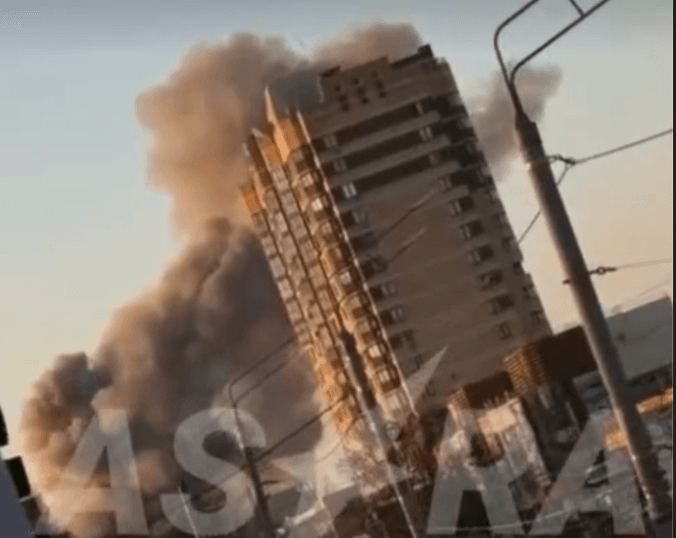
Just after midnight, the sky over Bryansk flashed orange.
Ukrainian strikes hit the Kremniy El defense plant during the night of March 9–10, igniting fires and explosions inside one of Russia’s key microelectronics factories. Witnesses reported smoke rising over the Sovetskiy district while regional authorities confirmed the strike on Bryansk City.
The target was critical to Russia’s war machine. Kremniy El produces more than a thousand types of microelectronic components used in Russian military systems. The plant supplies Almaz-Antey, builder of air defense systems, and Tactical Missiles Corporation, manufacturer of cruise missiles including the Kh-59, Kh-69, Kh-101, and Kh-55—many used against Ukrainian cities.
It was the sixth time Ukrainian forces have struck the facility since 2022.
Russian military bloggers said Franco-British Storm Shadow missiles were used. Whether missiles or drones delivered the blow, the strategy has been consistent: strike critical defense infrastructure repeatedly until repairs become impossible to sustain.
The Bryansk strike was part of a wider campaign unfolding behind Russian lines.
In occupied Donetsk oblast, Ukrainian Special Operations Forces released footage showing precision strikes against Russian logistics. In Makiivka, drones hit a fuel and lubricants storage base about forty-five kilometers behind the frontline. In nearby Donetsk City, another drone destroyed a Volna-3 electronic warfare station used to disrupt Ukrainian unmanned aircraft.
Local resistance fighters helped guide the attacks, part of a growing shadow war across occupied territory.
Russian sources also reported a Ukrainian drone strike on an unmanned ground vehicle assembly site linked to the 1st Slovyansk Motorized Rifle Brigade, triggering ammunition explosions that killed and wounded Russian personnel. Another strike hit a Shahed drone depot near Donetsk Airport.
Across multiple fronts, Ukraine continued pressing the same strategy: dismantle the supply lines feeding Russia’s war.
The Sky Turns Deadly: Ukraine Expands the Drone Kill Zone
Russian soldiers driving supply trucks behind the front once believed they were safe. Not anymore.
Across the front, Ukrainian drone units are pushing danger deeper into Russian-held territory. Russian military bloggers warn that Ukraine is expanding the drone “kill zone,” the area where any moving vehicle can suddenly be struck from above.
Ukrainian forces are increasing their use of FPV drones, including high-frequency, fiber-optic, and “mothership” systems that are harder for Russian electronic warfare to stop. Russian sources say Ukrainian operators are also shifting to new frequencies that bypass jamming and widen the danger zone to twenty to twenty-five kilometers, with infiltration extending roughly ten kilometers farther.
In the Kostyantynivka direction, Russian bloggers said Ukrainian drone teams were striking vehicles on highways northeast of occupied Donetsk, as far as fifty-five kilometers behind the front. Geolocated footage confirmed strikes on Russian trucks along those routes.
Similar attacks were reported in southern Ukraine, and Russian officials claimed Ukrainian drones also hit a freight train in occupied Crimea.
Ukraine’s growing drone campaign is disrupting Russian logistics and weakening an advantage Moscow held during parts of 2025. Commander-in-Chief Oleksandr Syrskyi said Russian FPV drone use fell eighteen percent in February, possibly because Ukrainian strikes hit Russian drone storage sites.
For Russian forces, the message is plain: the sky is growing deadlier, and the rear is no longer safe.
Pressure in the East: Russia Probes Near Kostyantynivka and Pokrovsk
While Ukrainian forces advanced in the south, Russian troops continued probing attacks across the eastern front.
Geolocated footage suggested Russian units recently edged forward in the Kostyantynivka–Druzhkivka sector. Ukrainian strikes hit Russian positions northwest of Stupochky east of Kostyantynivka and east of Berestok to the south, indicating Russian troops had pushed into contested ground.
The gains appeared limited. A Ukrainian officer said Russian offensive activity in the Kostyantynivka direction had slowed, with units instead moving in small infiltration groups while commanders gathered reserves. Russian forces had not yet assembled the armor, manpower, or equipment needed for a larger offensive.
Further south, Russian troops also advanced in the Pokrovsk direction. Footage indicated movement east of Hryshyne and within parts of the settlement itself. Fighting continued around Pokrovsk toward Rodynske, Bilytske, Myrnohrad, Chervonyi Lyman, and Shevchenko.
Elsewhere along the front, Russian forces launched attacks in the Sumy, Kharkiv, Kupyansk, Borova, Slovyansk, Dobropillya, Novopavlivka, Hulyaipole, and Zaporizhzhia directions but made no confirmed gains.
Ukrainian Joint Forces Task Force Commander Major General Mykhailo Drapatyi described Russian actions near Sumy and Kharkiv as diversionary attempts to create a border “buffer zone” without committing heavy equipment or large assault forces.
Germany Sends a Lifeline: Patriot Missiles for Ukraine’s Air Defense
Night after night across Ukraine, sirens rise as missiles race toward cities. The weapons that stop them are running short.
Germany is preparing to deliver thirty-five PAC-3 interceptor missiles for Ukraine’s Patriot air defense systems, Der Spiegel reported. The shipment comes as Ukraine faces a growing shortage of interceptors while Russian ballistic and cruise missile attacks continue.
Patriot systems—especially the PAC-3 interceptors—are among the few defenses capable of destroying high-speed ballistic missiles before they strike their targets.
German Defense Minister Boris Pistorius secured support among European partners to assemble the delivery. His plan called for thirty interceptors from allied stockpiles, with Germany contributing five more from its own reserves. Several countries, including the Netherlands, agreed to search their arsenals for additional missiles.
Germany’s Defense Ministry confirmed preparations for the transfer but did not publicly specify the final number included.
The urgency reflects growing global demand. President Volodymyr Zelensky recently noted that more than 800 Patriot missiles were fired in the Middle East during just three days of fighting—more than Ukraine has used since the start of Russia’s full-scale invasion.
Berlin also pledged continued deliveries of air defense systems and components to strengthen Ukraine’s protection against incoming strikes.
Ukraine’s Drone War Lessons Reach the Middle East
What Ukraine learned under nightly Shahed attacks is now becoming an export born of survival.
President Volodymyr Zelensky said Kyiv has sent three teams of military specialists to the Middle East, with deployments to Qatar, the United Arab Emirates, and Saudi Arabia. The move comes as Iranian drone and missile attacks spread across the region after the late-February U.S. and Israeli strikes on Iran.
Ukraine is offering what few nations possess: real experience defeating mass Shahed attacks. For years, Ukrainian crews have tracked, intercepted, and adapted against the same low-cost drones now threatening other countries.
Kyiv also hopes the mission will help secure more PAC-2 and PAC-3 interceptor missiles, which remain in short supply. Zelensky said countries that obtained drone interceptors are discovering that hardware alone is not enough without Ukrainian tactics and operational knowledge.
He added that the remaining obstacle to building Ukraine’s own anti-ballistic missile defense is licensing from the United States.
Oil, War, and a Choice: Trump Weighs Sanctions as Ukraine Bleeds
As war in the Middle East rattled energy markets, Washington began weighing a decision that could echo across the battlefield in Ukraine.
U.S. President Donald Trump said the United States was preparing to waive certain oil sanctions to stabilize global prices after fighting involving Iran sent markets surging. He did not name a specific country, but reports suggested the administration was considering easing restrictions on Russian oil.
The remarks came only hours after Trump spoke by phone with Vladimir Putin about both the Ukraine war and the widening conflict around Iran.
Global oil and gas prices jumped after U.S. and Israeli strikes on Iran on February 28. Tehran responded by closing the Strait of Hormuz, a narrow maritime passage carrying roughly twenty percent of the world’s oil supply.
Supporters of sanctions relief argue that additional supply could calm markets. Critics warn that easing pressure on Moscow risks financing the very war those sanctions were meant to restrain.
President Volodymyr Zelensky called the idea a “serious blow” to Ukraine and a reputational test for the international community.
“How can sanctions be lifted from Russia if it is an aggressor?” Zelensky asked, arguing that sanctions exist to limit Moscow’s ability to fund its invasion.
Alexander Kirk of the German NGO Urgewald issued an even sharper warning. Easing sanctions now, he said, would throw the Kremlin “a rope at the very moment the walls are closing in.”
Peace Talks or Political Theater? Trump and Putin Trade Words
Diplomacy moved again between Washington and Moscow, but clarity did not follow.
After the March 9 call between Donald Trump and Vladimir Putin, Kremlin officials offered conflicting descriptions of what had actually been discussed. Presidential aide Yuriy Ushakov claimed Trump supported a rapid ceasefire that could lead to long-term peace. Hours later, Kremlin spokesman Dmitry Peskov said Trump had placed no conditions on negotiations.
Moscow’s position, however, has remained unchanged: Russia rejects any ceasefire proposal that does not meet its demands for Ukraine.
Washington is now preparing another round of U.S.-brokered talks, expected next week after earlier plans in the United Arab Emirates were postponed. Possible venues include Switzerland or Turkey. Diplomats say discussions could focus on prisoner exchanges and laying groundwork for a future meeting between national leaders. Kyiv continues insisting that European countries be involved in any negotiations.
Putin used the conversation to shift attention elsewhere. According to the Kremlin, he urged the United States to halt military operations in the Middle East even while Russia continues its own war in Ukraine.
Trump responded that Putin had expressed interest in helping stabilize the Middle East but suggested the Russian leader could be “more helpful” by ending the war he started in Ukraine.
Another dispute surfaced during the call. Moscow denied accusations that it had shared intelligence with Iran about U.S. military assets during the recent regional escalation.
U.S. envoy Steve Witkoff said Russian officials rejected the claim outright.
“They said they have not been sharing,” Witkoff noted.
Cash, Gold, and Leverage: Hungary Accused of Holding Ukraine’s Money Hostage
What should have been a routine financial transfer turned into a diplomatic confrontation.
Hungarian authorities seized more than $80 million in Ukrainian assets—cash, euros, and gold—while the funds were being transported from Austria to Kyiv. On March 5, officials stopped two vehicles belonging to Ukraine’s state bank, Oschadbank, carrying $40 million, 35 million euros, and nine kilograms of gold. Seven Ukrainian bank employees were detained before being expelled the next day.
Hungarian Construction and Transport Minister Janos Lazar later linked the seizure directly to the suspension of oil shipments through Ukraine.
“If we are being blackmailed, we cannot be so stupid as to let it happen,” Lazar said. He added that Hungary would keep the money until the oil pipeline reopened and future transfers moved through the country.
Kyiv reacted sharply. Ukrainian Foreign Minister Andrii Sybiha accused Budapest of openly admitting to blackmail.
“The mask has slipped,” Sybiha said. “Hungary’s officials do not hide their blackmail anymore.”
Prime Minister Viktor Orban ordered the funds held for up to sixty days while Hungarian authorities investigate suspected money laundering.
Oschadbank rejected the accusation, saying the shipment was a routine transfer from Austria’s Raiffeisen Bank to Kyiv. Since Russia’s full-scale invasion closed Ukrainian airspace, such land transfers have become common for moving financial reserves.
What began as a bank transfer has become another flashpoint in the tense political standoff between Kyiv and Budapest.
Budapest Slams the Door: Hungary Moves to Block Ukraine’s Path to Europe
Inside Hungary’s parliament, the vote was decisive. Ukraine’s path toward Europe had just hit another wall.
On March 10, Hungarian lawmakers passed a resolution opposing Ukraine’s membership in the European Union and warning against further European assistance to Kyiv. The measure passed with 142 votes in favor, 28 against, and four abstentions, reflecting the growing political clash between Budapest and Kyiv.
The resolution urged the Hungarian government to avoid sending money or weapons to Ukraine and instead promote what lawmakers called “international peace efforts.”
Government spokesperson Zoltan Kovacs argued that admitting Ukraine during wartime could draw the European Union directly into the conflict.
Hungarian Prime Minister Viktor Orban has long opposed Ukraine’s EU membership. Although Ukraine received EU candidate status in 2022 after Russia’s full-scale invasion, Budapest has already blocked the opening of the first accession negotiations.
The dispute now reaches beyond membership talks.
Hungary is currently blocking the European Union’s twentieth sanctions package against Moscow and delaying a proposed 90-billion-euro loan for Ukraine. The confrontation intensified after the Druzhba oil pipeline stopped delivering Russian crude through Ukraine in late January following a Russian strike on infrastructure in western Ukraine.
Budapest and Slovakia have accused Kyiv of deliberately disrupting the transit route. Ukrainian officials say the disruption was caused by the attack itself.
The result is a widening political rift inside Europe as Ukraine continues fighting on the battlefield while some allies debate how far their support should go.
Art or Amnesia? Russia’s Return to the Venice Biennale Sparks Outrage
In the galleries of Venice, a decision meant to celebrate culture has ignited a political storm.
Organizers of the Venice Biennale announced that Russia will be allowed to participate in the exhibition for the first time since the full-scale invasion of Ukraine. The event, one of the world’s most influential art showcases, will run from May through November.
Biennale officials said the decision reflects opposition to “any form of exclusion or censorship of culture and art.” But across Europe and Ukraine, the move has been condemned as an attempt to normalize a country still waging war.
The European Commission warned it may withdraw financial support if the Russian pavilion returns. Technology Commissioner Henna Virkkunen and Culture Commissioner Glenn Micallef said allowing Russia back would be incompatible with Europe’s collective response to Moscow’s aggression.
Outside government circles, criticism spread quickly through the cultural world. More than 6,000 artists, curators, academics, journalists, and public figures signed an open letter urging the Biennale leadership to reconsider.
Ukrainian officials argued the decision risks turning one of the world’s most respected art platforms into a stage for propaganda.
“The Venice Biennale must not become a place for whitewashing Russia’s war crimes,” Ukrainian Foreign Minister Andriy Sybiha and Culture Minister Tetyana Berezhna said in a joint statement.
In Moscow, the reaction was triumphant. Kremlin cultural envoy Mikhail Shvydkoi described the decision as proof that Russian culture could not be isolated despite years of Western pressure.
The announcement comes even as Russian missiles continue striking Ukrainian cities, underscoring the uneasy collision between culture and war.
Passports of Control: Moscow Moves to Permanently Absorb Occupied Ukraine
In the occupied cities of eastern and southern Ukraine, a small document is becoming a tool of power.
On March 4, Vladimir Putin signed a decree removing the deadline for residents of occupied Ukrainian territories to obtain Russian citizenship through a simplified process. What had once been labeled a temporary “transitional period” is now effectively permanent, signaling Moscow’s intention to solidify its hold over occupied regions.
The policy is part of what analysts call mass passportization—Russia’s strategy of distributing passports to residents in occupied territories in order to bind those regions politically and legally to Moscow.
Nataliia Yurlova, a lawyer with the human rights organization Donbas SOS, said the aim is simple: pressure as many Ukrainians as possible into accepting Russian citizenship.
Life without a Russian passport is becoming increasingly difficult. Residents who refuse may struggle to receive pensions, access medical care, or retain property, which occupation authorities can confiscate. For many, survival becomes tied to accepting the document.
Yet resistance continues. Some residents refuse the passports despite the pressure, fearing that accepting Russian citizenship could expose them—especially young men—to conscription into the Russian army.
The new decree also introduces a controversial requirement: applicants must sign a declaration stating they are unwilling to hold Ukrainian citizenship.
In reality, the statement does not legally cancel Ukrainian citizenship. But under occupation authorities, it creates the appearance of voluntary loyalty to Russia.
According to Yurlova, the system is designed to manufacture consent.
People are pushed to sign documents they may not fully understand, documents that Moscow will later present as proof that occupied Ukrainians willingly chose Russia.
A Law for the Next War: Moscow Writes a Legal Path to Future Interventions
In Moscow, the groundwork for future military action may now be taking shape in legal language.
A bill submitted to Russia’s State Duma on March 10 would grant the Russian president authority to deploy military forces abroad to “protect Russian citizens.” The measure would apply if Russian nationals face arrest, prosecution, or other legal action in foreign courts.
According to the proposal’s explanatory note, the law aims to defend Russian citizens in cases where Moscow is not involved in the legal proceedings or where international courts operate outside treaties recognized by Russia.
If adopted, the legislation could provide a formal justification for future Russian military operations beyond its borders.
The Kremlin has already accused several countries—including Baltic states—of persecuting Russian speakers and ethnic Russians. Combined with Russia’s ongoing passportization of occupied Ukrainian territories, the bill would expand the legal framework Moscow could use to claim it is defending its citizens abroad.
Critics warn that such laws can transform political narratives into military justification.
Belarusian Complicity: Minsk Components in Missiles Hitting Kharkiv
Investigators examining the Russian missile that struck a Kharkiv apartment building on March 7—killing at least eleven civilians—found something that widened the war’s circle of responsibility.
Ukrainian officials confirmed the Izdeliye-30 missile used in the strike contained electronic components produced in Belarus. According to Presidential Commissioner for Sanctions Policy Vladyslav Vlasyuk, the parts came from the Integral plant in Minsk, a facility that supplies electronic component bases for multiple Russian weapons systems.
The discovery highlights how Belarus’s defense industry is increasingly tied into Russia’s war machine. Ukrainian outlet Militarnyi noted that Russian forces only began using the Izdeliye-30 missile against Ukraine in late 2025, suggesting Belarusian industrial support has now reached even newer weapons systems.
Military cooperation between Moscow and Minsk continues to deepen. The two countries are preparing for the Barrier-2026 exercise scheduled for October in Belarus. Officials from the Russian and Belarusian defense ministries met on March 10 with the Collective Security Treaty Organization’s Joint Staff to coordinate planning. Discussions reportedly focused on military medicine, biological defense, and chemical and radiological protection.
For Ukraine, the Kharkiv strike underscored the growing integration of Belarus into Russia’s war effort. Belarus already hosts Russian troops and provides territory used for attacks against northern Ukraine. Now its industrial base is also appearing inside the missiles hitting Ukrainian cities.
Russia’s Child Abduction: UN Confirms Crimes Against Humanity
A United Nations investigation released March 10 concluded that Russia’s mass deportation of Ukrainian children during the war amounts to crimes against humanity.
Since the start of the full-scale invasion in February 2022, Ukraine’s national “Children of War” database has documented roughly 20,000 Ukrainian children abducted from occupied territories and transferred to Russia or Russian-controlled areas. Ukrainian officials believe the real number could be far higher. Ombudsman Dmytro Lubinets has estimated as many as 150,000 children may have been taken, while Presidential Commissioner for Children’s Rights Daria Herasymchuk suggested the figure could reach 200,000 to 300,000.
The Independent International Commission of Inquiry on Ukraine examined 1,205 documented cases and conducted more than 200 interviews. Its report concluded that Russian authorities committed both war crimes and crimes against humanity targeting children.
Investigators determined the deportations followed a “well-established pattern of conduct,” describing them as widespread and systematic. The commission also stated that the operations involved coordination from the highest levels of the Russian state.
“The Russian authorities at the highest levels – including Mr. Putin and entities directly answerable to him – have coordinated practical modalities to carry out these deportations and transfers,” the report said.
Ukraine has managed to return some abducted children, but the numbers remain small. Fewer than 2,000 have been reunited with their families so far.
In March 2023 the International Criminal Court issued arrest warrants for Vladimir Putin and Russia’s Commissioner for Children’s Rights Maria Lvova-Belova over the deportations. Moscow has rejected the accusations.
Midnight Strikes: Thirty-Three Injured in Russian Drone Swarm
Russian forces launched 137 drones overnight—including Shahed, Gerbera, and Italmas types—from multiple sites in Russia and occupied Crimea. About eighty of the drones were Shaheds.
Ukraine’s air defenses intercepted 122 drones. Twelve reached their targets while debris from intercepted drones fell in ten locations. Across the country, at least thirty-three civilians were injured.
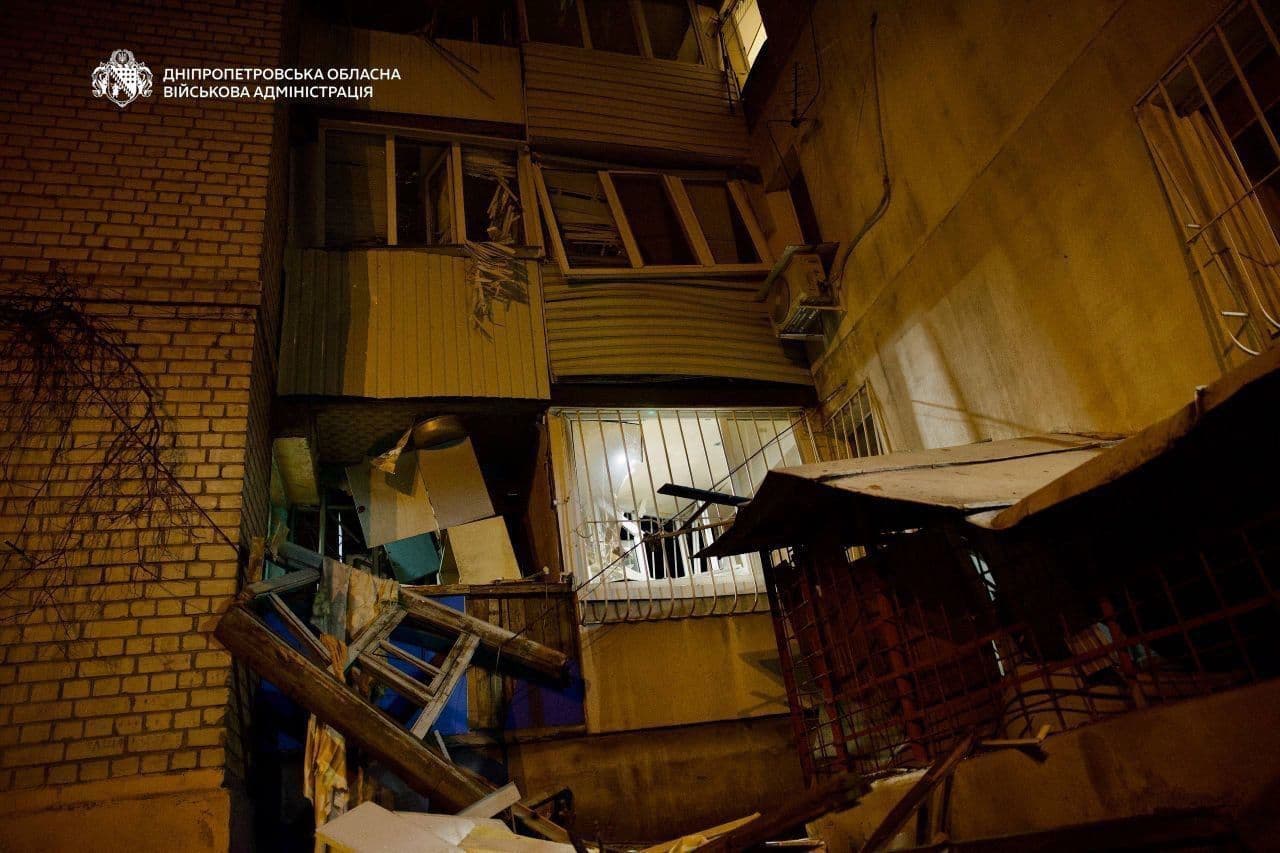
The aftermath of a Russian attack on a residential building in Dnipro. (State Emergency Service of Dnipropetrovsk Oblast)
Kharkiv Oblast suffered some of the heaviest damage. Russian strikes injured thirteen people, including two children, while attacks hit Kharkiv city and twenty-two surrounding settlements. Civilian infrastructure was the primary target.
In Dnipropetrovsk Oblast, ten people were wounded during attacks on three districts. In the city of Dnipro, a twelve-year-old boy was among the injured. Mayor Borys Filatov reported that at least eight apartment buildings were damaged and several hundred windows shattered by blast waves.
Russian shelling also struck Kherson Oblast, injuring nine people. In Sumy Oblast, a seventy-one-year-old man was wounded when a Russian strike hit a civilian vehicle. Authorities reported nearly twenty hours of air alerts and eighty Russian strikes across the region. Twenty-eight residents were evacuated from frontline communities.
Zaporizhzhia Oblast endured one of the most intense bombardments. Russian forces carried out 651 strikes on thirty-six settlements. Officials received seventy-five reports of damage to homes, vehicles, and civilian infrastructure, though most residents had already evacuated.
In Chernihiv Oblast, Russia attacked an energy facility with an FPV drone and carried out forty-seven additional strikes without casualties.
The attacks came days after a Russian ballistic missile struck a residential building in Kharkiv, killing eleven civilians, including two children.
The Day’s Meaning: Contradictions on the Battlefield and Beyond
March 10 revealed a war increasingly defined by contradiction.
Ukrainian forces advanced on the battlefield, exploiting winter conditions and Russian vulnerabilities to reclaim ground and disrupt offensive preparations. Elite Russian units were pulled away from attack sectors to defend threatened areas. Ukrainian drone operations expanded deeper behind Russian lines, complicating Russian logistics and weakening Moscow’s drone campaign. Kyiv’s battlefield innovations even reached beyond the war: Ukrainian specialists deployed to the Middle East to help counter Iranian Shahed drones.
Yet these successes unfolded alongside growing political and diplomatic pressure.
Washington signaled it might ease oil sanctions on Russia to stabilize global energy markets. Hungary openly acknowledged seizing Ukrainian cash and gold as leverage over oil pipeline disputes while its parliament moved to oppose Ukraine’s EU accession. Cultural normalization also crept forward as the Venice Biennale prepared to welcome Russia back to the international stage.
At the same time, Russia’s internal numbers revealed the brutal cost of its strategy. Ukrainian officials cited captured Russian documents estimating 1.315 million Russian soldiers killed or seriously wounded since the invasion began. Independent reporting inside Russia also suggested growing fatigue among the population and uncertainty among pro-war commentators about the war’s trajectory.
Despite these pressures, Moscow continued entrenching its long-term occupation strategy. The Kremlin expanded mass passportization in occupied territories and advanced legislation that could justify future military operations abroad under the pretext of protecting Russian citizens.
Meanwhile, the human toll continued to grow. Russian drones and missiles struck Ukrainian cities again overnight, injuring dozens of civilians.
The battlefield shifted. Diplomacy fractured. The casualties mounted. And the war moved forward without resolution.
Prayer For Ukraine
- Protection from the Nightly Attacks
Lord of mercy, we lift before You the civilians wounded in the latest drone strikes across Ukraine—families in Kharkiv, Dnipro, Kherson, Sumy, and other communities who once again endured explosions in the night. We ask for Your protection over cities and villages under constant threat. Shield children, parents, and the elderly from missiles and drones. Strengthen the hands and wisdom of those defending the skies and grant safety to those living beneath them.
- Comfort for the Stolen Children
Father of the fatherless, we grieve for the thousands of Ukrainian children abducted and taken from their homes. As the world now recognizes this crime, we pray for every child separated from family and nation. Guard their hearts, protect them from harm, and open paths for their return. Comfort the parents who wait and search and let justice prevail over those who commit these acts.
- Wisdom for Leaders and Nations
God of truth and justice, guide the decisions of leaders across Europe and the world. As debates unfold about sanctions, diplomacy, and Ukraine’s future in Europe, grant courage to stand for what is right. Prevent political pressure, energy markets, or fatigue from weakening the defense of justice. Raise leaders who value human life more than convenience or profit.
- Justice Against Oppression and Manipulation
Righteous Lord, expose deception and oppression wherever they appear. Where money is seized, where lies are told, where aggression is disguised as diplomacy, bring truth into the light. Restrain those who seek to exploit this war for power or leverage and strengthen those who defend freedom and dignity.
- Strength for Ukraine’s People
Faithful God, sustain the people of Ukraine in this long struggle. Give courage to soldiers defending their homeland, endurance to families living through air raids and loss, and hope to communities rebuilding amid destruction. Renew their strength day by day and let their perseverance stand as a testimony that tyranny will not have the final word.
Lord, watch over Ukraine, restore what has been broken, bring justice where there has been violence, and hasten the day when this war ends and peace returns. Amen.