
October 28, 2025
In Kyiv, Zelensky announced Ukraine’s Flamingo and Ruta missiles struck Russian targets for the first time. In Pokrovsk, Russian forces infiltrated the semi-encircled city, trapping 1,200 civilians under fire control. In Brussels, Hungary’s Viktor Orbán moved to resurrect an anti-Ukraine bloc with Slovakia and Czechia. The war’s industrial future and tactical present collided—one nation building weapons while losing cities.
The Day’s Reckoning
The closed briefing room in Kyiv held an unusual electricity that autumn morning. President Volodymyr Zelensky, choosing his words with the precision of a man revealing secrets he’d rather keep, confirmed what intelligence analysts had whispered for weeks: Ukraine’s own missiles—domestically forged, Ukrainian-engineered, born from necessity’s crucible—had struck Russian targets.
Flamingo and Ruta. Names almost whimsical for instruments of strategic violence.
“We are doing everything we can to ensure that this year we try not just one, two, or three, but to make a serious attempt to do more.” The understatement was characteristic. The implication profound.
A nation that had spent nearly three years with outstretched hands—pleading for Storm Shadows, rationing HIMARS strikes, counting each Javelin as precious—had crossed an invisible threshold. Ukraine was no longer merely a battlefield where Western and Russian military technologies clashed by proxy. It had become a weapons producer. And soon, Zelensky would announce, a weapons exporter.
But even as Ukraine’s industrial capacity flowered in ways unimaginable in February 2022, the war’s oldest truths reasserted themselves with brutal clarity.
In Pokrovsk, 600 kilometers to the east, Russian forces outnumbered Ukrainian defenders eight-to-one, infiltrating a city they’d nearly encircled, trapping 1,200 civilians under fire control that killed anyone attempting escape. German journalists documenting Ukrainian air defense crews watched the soldier they’d just interviewed die in a Russian Lancet strike. Corruption investigators pursued both drone manufacturers and former energy chiefs, suggesting the rot that had weakened Ukraine before the invasion hadn’t been wholly purged by existential crisis. In Brussels, Viktor Orbán maneuvered to resurrect an anti-Ukraine coalition from the fragments of the old Visegrad alliance. And across European skies—over Estonian military bases, Spanish airports—unidentified drones appeared and disappeared like digital ghosts, harbingers of a hybrid war that respected no borders.
October 28 offered no singular narrative, no clear trajectory toward victory or defeat.
Instead, these 24 hours presented a mosaic of modern warfare’s complexity: industrial innovation shadowed by institutional decay, tactical desperation offset by strategic adaptation, alliance solidarity fractured by political opportunism, all playing out simultaneously across geography and domain. The question wasn’t whether Ukraine could produce missiles—it demonstrably could. The question was whether it could produce them honestly, deploy them effectively, maintain the political coalitions sustaining the war effort, protect those defending the nation, hold territory against overwhelming force, and counter hybrid threats that respected no distinction between war and peace, front and rear, military and civilian.
The machinery of war, it turned out, extended far beyond munitions factories.
Ukraine’s Arsenal, Ukraine’s Shadow
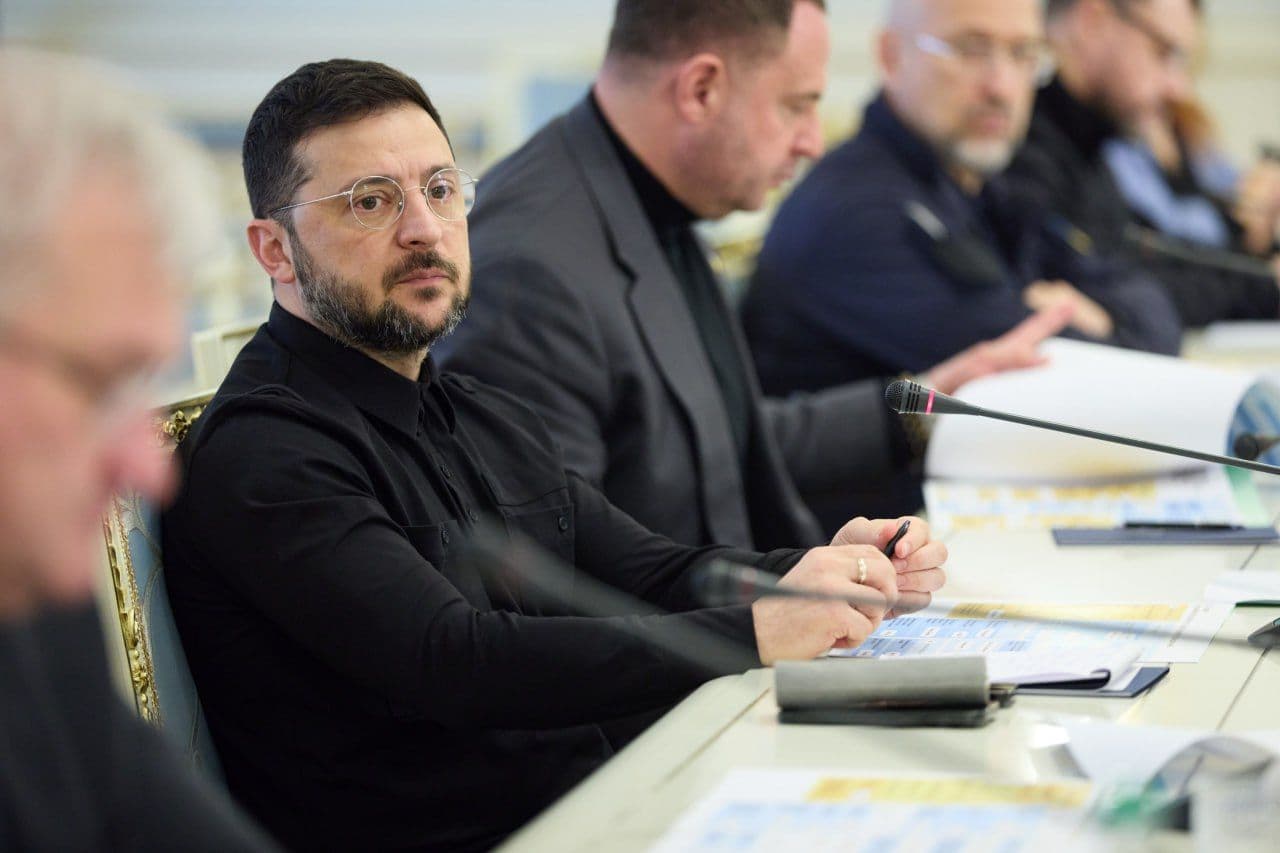
Zelensky announces Ukraine’s first domestically-produced missiles have struck Russian targets—a nation that once begged for weapons now builds its own. (Presidential Office)
The briefing room in Kyiv. Zelensky choosing each word with surgical precision. Ukraine’s own missiles—Flamingo and Ruta, names almost whimsical for instruments of war—had struck Russian targets.
Where? He wouldn’t say. When? Classified. What damage? Operational secret.
The silence was strategic. Russian air defense planners couldn’t adapt to patterns they couldn’t identify. Moscow’s defensive perimeter suddenly became uncertain—which rear targets were now vulnerable to Ukrainian weapons unconstrained by Western political sensitivities?
What Zelensky did reveal spoke through omission. Ukraine retained “normal quantities” of British Storm Shadow missiles but only “a smaller number” of French SCALP systems. Translation: three years into full-scale war, Ukraine’s long-range capability remained tethered to foreign diplomatic calculations. Every Storm Shadow represented a British political decision. Every SCALP reflected French strategic considerations. The missiles arrived in quantities calibrated to enable defense without enabling offense that might provoke Russian nuclear threats.
Flamingo and Ruta changed that equation. Production limited only by industrial capacity, raw materials, and—critically—institutional integrity.
Which brought the shadow.
The National Anti-Corruption Bureau was investigating Fire Point, the company producing Flamingo missiles. Allegations of inflated component values manipulated delivery numbers. Not just company executives but “current and former government officials and industry representatives” potentially involved. Networks of complicity, not isolated corruption.
Fire Point acknowledged the investigation. Dismissed its significance.
Weapon production had been “kept a wartime secret,” making verification impossible. Maybe the company was innocent. Maybe it calculated that wartime opacity provided cover, that Ukraine’s tolerance for corruption prosecutions diminished when prosecutions might slow weapons production.
The circle closed on itself. Ukraine needed rapid production to survive. Rapid production under secrecy enabled corruption. Corruption eroded the capacity Ukraine needed to survive.
No clean exit existed.
From Beggar to Arms Dealer
Zelensky’s instruction to his Defense Ministry: launch controlled weapons exports in November.
The nation that had absorbed $175 billion in Western military aid since February 2022 was about to start selling weapons.
The economics were straightforward, almost absurd. Ukraine’s drone production had outpaced its financing. The country was producing military equipment it couldn’t afford to buy for itself. Exporting surplus would generate revenue for other critical systems—interceptor drones, specifically. Proposals had already arrived from several African nations. Kyiv had selected its first partner.
But economics told half the story.
The psychological shift was seismic. From supplicant to vendor. From protected to protector. From dependent client to autonomous actor in the global defense market. For a nation whose pre-2022 military industry had been characterized by corruption and stagnation, the transformation carried revolutionary implications.
Yet the announcement exposed uncomfortable dependencies.
Ukraine still needed Swedish Gripen fighters—150 of them, deliveries expected early 2026. Zelensky announced that Ukraine and Sweden had agreed to localize Gripen production inside Ukraine. Training took six months. Maintenance teams were small. He was also negotiating with France for Rafale fighters.
Translation: Ukraine was simultaneously arms importer and exporter. A transitional status reflecting partial but incomplete strategic autonomy.
The timing suggested urgency beyond economics. Ukraine was preparing for scenarios where Western support might diminish—whether through political changes in Washington, donor fatigue in European capitals, or the gradual normalization of frozen conflict.
Building an indigenous defense industrial base capable of both self-supply and foreign sales was insurance against abandonment.
However, that abandonment might materialize.
Eight-to-One
While Zelensky briefed journalists in Kyiv, the war’s brutal arithmetic asserted itself 600 kilometers east.
Pokrovsk. Russian forces outnumbered Ukrainian defenders eight-to-one. “Imagine how many Russian forces are there,” Zelensky said. “But they have not achieved the planned result.”
The qualifier mattered less than the admission. Russia had concentrated overwhelming combat power and still hadn’t achieved rapid success. Putin had reportedly demanded Pokrovsk by mid-November—another arbitrary deadline, like his September 2022 target for seizing all Donbas.
Yet the tactical situation deteriorated. Geolocated footage showed Russian advances into southeastern Myrnohrad and Pokrovsk. Ukrainian forces pushed Russians back from Pokrovsk’s boundaries in some areas, but for trapped residents, the distinction between “presence” and “control” was academic. The Ukrainian military acknowledged approximately 200 Russian servicemen operating inside, infiltrating in small groups.
Russian fire control over all evacuation routes had entrapped 1,200 civilians. The Pokrovsk Military Administration reported Russian forces killing civilians attempting to flee—on foot, in vehicles. Violating international humanitarian law but serving operational objectives.
Russian forces also wore civilian clothes—perfidy under Geneva Convention protocols. The deception intensified danger in an environment already saturated with drones.
The drone disparity compounded everything. Russians maintained ten-to-one advantage, according to Ukrainian Eastern Group Spokesperson Captain Hryhorii Shapoval. All bridges destroyed. Senior Lieutenant Natalia Stoiko told a Kyiv conference that evacuating wounded had become “nearly impossible.” The military lacked “everything”—engineering equipment, engineers, evacuation routes.
Pasi Paroinen of Finland’s Black Bird Group estimated Russia might occupy most of Pokrovsk within weeks. Weather had aided the advance—persistent fog providing drone cover, enabling aggressive mechanized assaults.
Yet Pokrovsk’s eventual fall wouldn’t dramatically alter broader campaign dynamics. Ukraine had stopped using the city as logistics hub in late 2024. The brutal mathematics—overwhelming force concentrated against limited objectives, achieving expensive gains of marginal value—epitomized the war’s attritional character.
Death by a Thousand Cuts
While infantry grappled for meters in Pokrovsk, Ukraine’s drones flew deep.
Overnight strikes hit two oil refineries and a gas processing facility inside Russia. Novospasskoye in Ulyanovsk Oblast. Tabashino in Mari El Republic. Budyonnovsk in Stavropol Krai.
Individually, the targets seemed modest. Novospasskoye processed 600,000 tons of oil annually—0.2 percent of Russia’s total refining capacity. Tabashino handled 1.3 million tons yearly—0.5 percent of output. Budyonnovsk’s gas plant had capacity for 2.2 billion cubic meters annually.
Each strike inflicted marginal damage.
Collectively, the campaign was devastating. Zelensky stated that Ukrainian strikes had depleted over twenty percent of Russia’s oil refining potential and between 22 and 27 percent of domestic gasoline supplies. The attrition was cumulative and accelerating. Each refinery knocked offline forced Russia to redistribute processing loads, stressing remaining facilities while lengthening supply chains.
Translation: Ukraine was strangling Russia’s war machine one refinery at a time.
Ukraine used domestically produced weapons in 90 to 95 percent of its long-range strikes into Russia. The Flamingo and Ruta missiles weren’t just symbols—they were operational freedom.
Closer to the front, Ukraine’s military intelligence announced its “Ghost” special forces unit had destroyed two 48Ya6-K1 Podlet low-altitude radars and a 9A82 launcher from Russia’s S-300V air defense complex during two weeks of systematic targeting in the Donbas. The strikes created gaps in Russian air defense coverage, though they couldn’t offset Russia’s overwhelming numerical advantages on the ground.
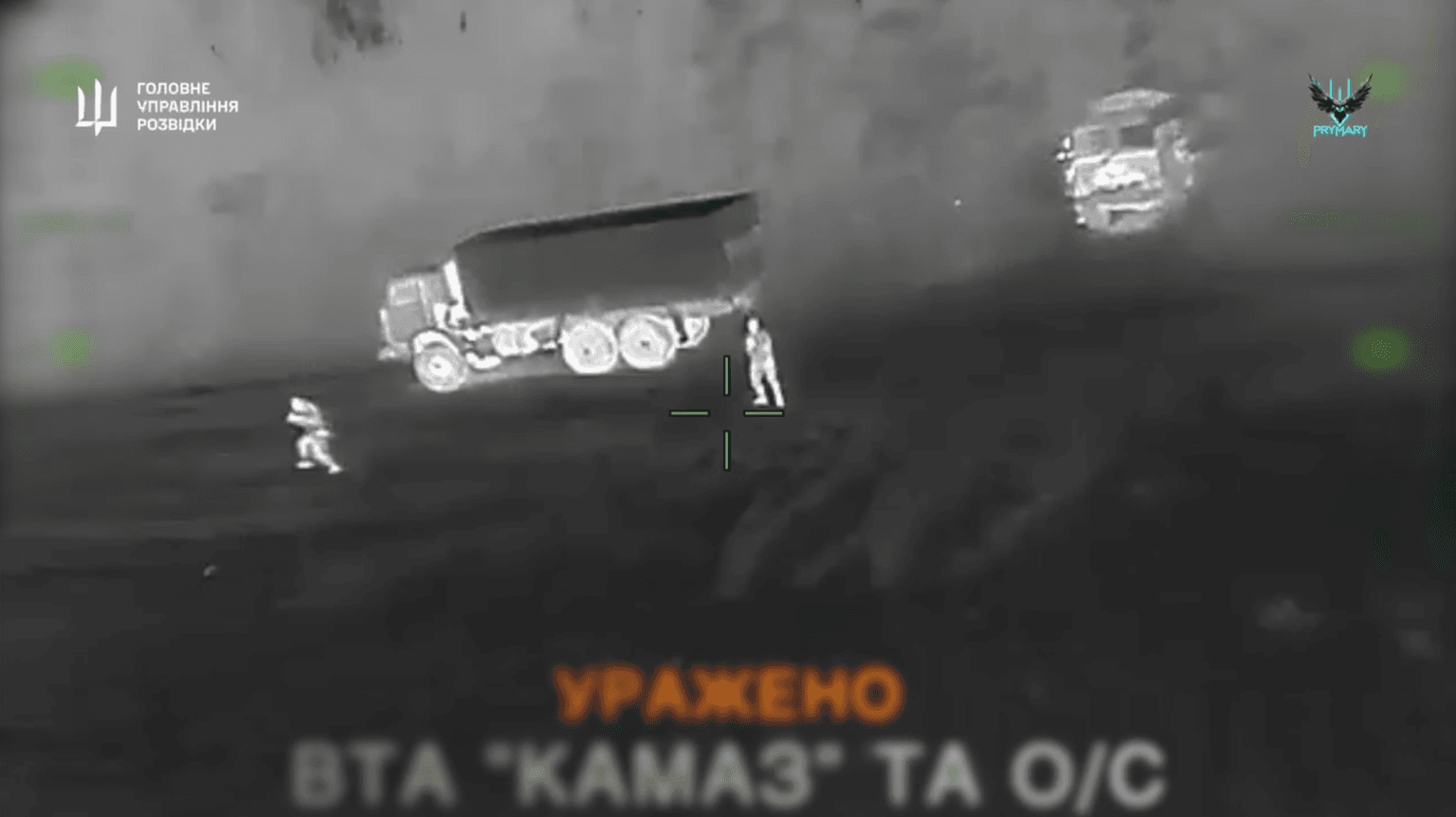
Ukrainian drones destroyed two Russian early-warning radars in systematic strikes—creating gaps in air defenses that once seemed impenetrable. (HUR/Telegram)
Ukraine had adapted to resource constraints. Unable to match Russian force density, it targeted the systems enabling that density—logistics networks, fuel supplies, air defense systems. The approach demanded patience, accepting incremental gains that compounded over months rather than dramatic breakthroughs.
But it was sustainable in ways that matching Russian force-on-force strength wasn’t.
Twenty-Five Kilometers Wasn’t Far Enough
The interview had just finished. German newspaper Die Welt correspondent Ibrahim Naber and his crew had been documenting Ukrainian air defense soldier Konstantin, 25-30 kilometers from the front. Safe distance. Or so they thought.
The Lancet drone struck. Konstantin died. Another Ukrainian soldier, Ihor, lost his leg. Two crew members were injured.
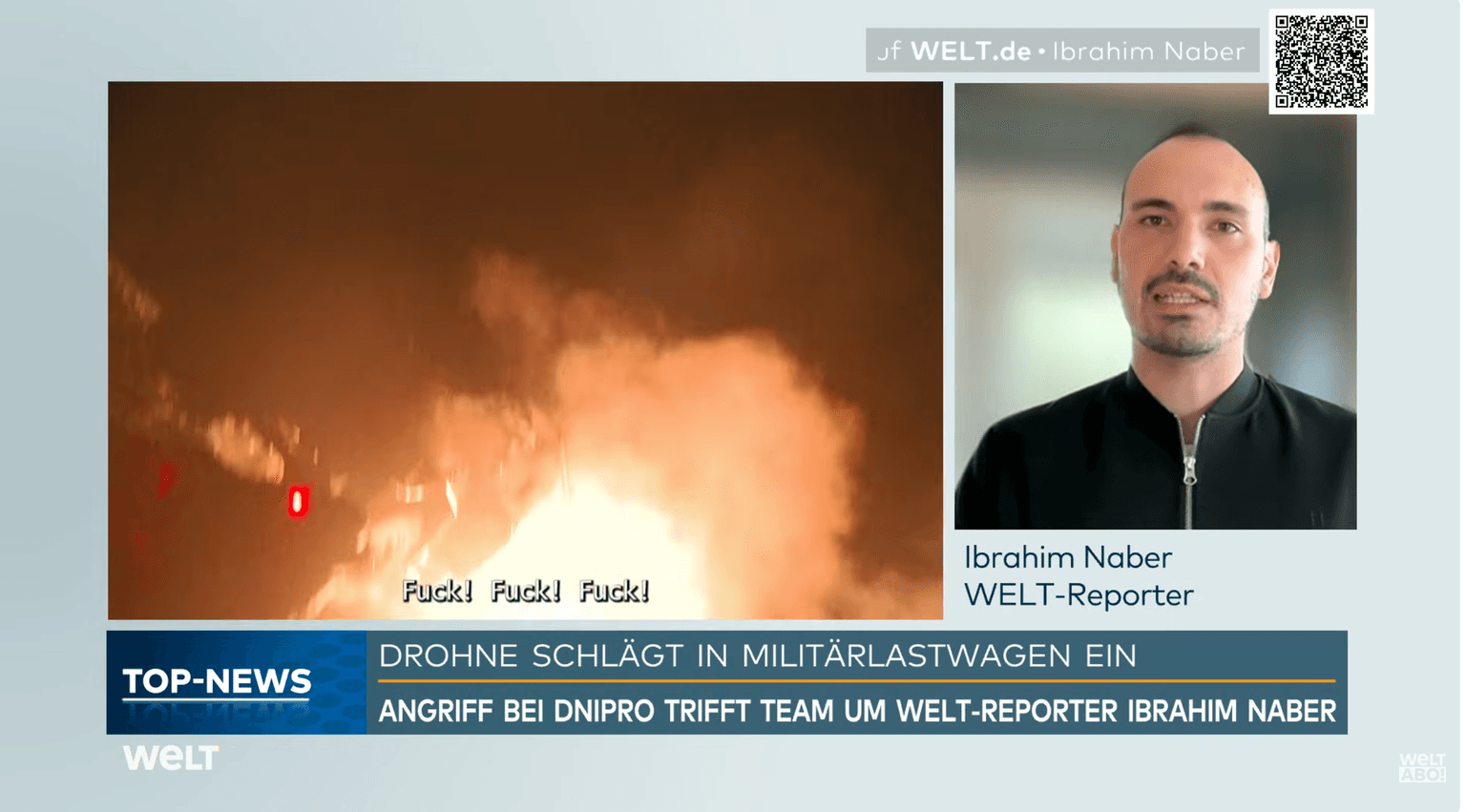
German journalist Ibrahim Naber recounts the Lancet strike that killed Ukrainian soldier Konstantin and wounded his crew—25 kilometers from the front wasn’t far enough. (Die Welt/YouTube)
“We were a few meters away from the three-man crew when the drone hit,” Naber wrote in his Instagram post. “The soldiers had been out on duty, as on countless nights before, shooting down long-range drones that Russia uses to attack Ukrainian cities. They saved many lives—before the attack hit them.”
The incident occurred October 13. Naber reported it October 28.
The reporting team had been clearly marked as journalists. Twenty-five to thirty kilometers from the front—a distance that once meant safety. Russian Lancet drones, with extended range and loitering capabilities, had transformed that distance into kill zone. Anyone visible to aerial surveillance became a potential target. Combatant status didn’t matter. Protective markings didn’t matter.
Ukrainian producer Ivan Zakharenko received the worst injuries—shrapnel fragments lodged in his leg. Camera operator Viktor Lysenko captured the attack on film. The approaching drone’s sound, urgent warnings, then violent detonation.
The attack followed a pattern. October 23: Ukrainian journalists Olena Hramova and Yevhen Karmazin killed in Kramatorsk by Lancet strike. Early October: French photojournalist Antoni Lallican killed near Druzhkivka despite wearing a vest marked “PRESS”—the first recorded drone killing of a journalist in Ukraine.
At least 135 media workers killed since February 2022, with the death toll accelerating.
The tactical rationale was clear: eliminating journalists prevented documentation of war crimes and reduced Western attention to Ukrainian suffering.
Naber launched a fundraiser for Ihor, the Ukrainian soldier who lost his leg.
All were targets now.
Orbán’s New Visegrad
While Ukraine fought for survival, Viktor Orbán was building a coalition against it.
The Hungarian prime minister sought to align with Czechia’s Andrej Babiš—whose right-wing populist party had recently won elections—and Slovakia’s Robert Fico. A resurrection of the old Visegrad alliance, minus Poland.
“I think it will come—and be more and more visible,” Balázs Orbán, the prime minister’s political director, told Politico. He compared the effort to Visegrad 4’s unified opposition to EU migration policies. “It worked very well during the migration crisis.”
The original Visegrad alliance had fractured after Russia’s February 2022 invasion. Poland went hawkish. Hungary pursued Kremlin ties. Poland’s Donald Tusk remained pro-Ukraine and ruled out cooperation with Orbán.
But three votes coordinating opposition could complicate EU decision-making, potentially blocking support requiring unanimity.
Both Fico and Babiš echoed Hungary’s calls for “dialogue” with Moscow instead of military escalation. Translation: they portrayed Ukrainian resistance as European belligerence rather than self-defense. Czech Foreign Minister Jan Lipavský warned that Babiš could act as “Orbán’s puppet.”
The timing was calculated. Orbán faced tough reelection prospects, with opposition leader Péter Magyar’s Tisza party leading Fidesz. Positioning himself as defender of Hungarian sovereignty against Brussels’ “war plans” provided nationalist appeal.
Orbán announced plans to launch a nationwide petition aimed at halting the EU’s “war plans” for Ukraine. “Brussels’ war plan: Europe pays, the Ukrainians fight, and Russia will be exhausted,” Orbán wrote on Facebook. “We don’t want any of this.”
The Czech-Slovak-Hungarian axis wouldn’t block all EU support—much aid flowed through bilateral channels. But it would slow decision-making, reduce package sizes, and signal to Moscow that European unity was fragile.
For Ukraine: even as it developed indigenous military capabilities, it remained politically dependent on European consensus that opportunistic politicians could exploit.
Two Days, Ten Years
A Russian government committee proposed lowering the threshold for criminal prosecution in AWOL cases from ten days to two.
Translation: miss two days, face up to ten years in prison.
The proposed amendment would also exclude AWOL days from soldiers’ length of service calculations—affecting salary, pension payments, official service duration. The explanatory note claimed current rules “discouraged troops from maintaining discipline and complicated oversight.”
The changes addressed a hemorrhaging problem. At least 49,000 Russian soldiers had deserted or been declared AWOL as of May 2025, according to leaked Defense Ministry documents. Radio Liberty investigations suggested actual numbers were substantially higher.
AWOL troops cited varied motivations. Yuri Musaelyan went AWOL for over a month to care for his sick father—received five and a half years imprisonment. Maxim Pecherichkin left for medical treatment for war-related injuries—received six and a half years in a penal colony. Some accused commanders of poor leadership, citing unpaid wages or suicidal tactical orders.
The pattern suggested deteriorating military cohesion masquerading as discipline problems. Russian authorities’ response: criminalize shorter absences rather than address underlying issues. The two-day threshold effectively criminalized any unauthorized absence, transforming administrative matters into potential decade-long prison sentences.
The timing coincided with significant Russian casualties and tactical failures, particularly around Pokrovsk where overwhelming numerical superiority was producing marginal gains at extraordinary cost. Tightening AWOL rules suggested Russian military leadership recognized that many soldiers, given any opportunity to absent themselves, would take it.
Coercive measures provided the only available tool for maintaining force integrity.
The State Duma also approved a bill allowing recruitment of members from Russia’s “human mobilization reserve” to protect critical facilities. Deputy Chief of the General Staff Vice Admiral Vladimir Tsimlyansky clarified they wouldn’t participate in operations outside Russia.
But Russian officials insisted occupied Ukraine was Russian territory. The ambiguity was intentional.
The Crime of Singing

Diana Loginova, eighteen, faces prosecution for singing—Russia’s regime so terrified of dissent it criminalizes teenagers performing songs with ambiguous lyrics. (Olga Maltseva/AFP)
Diana Loginova, eighteen years old, street singer, stage name Naoko: fined 30,000 rubles after thirteen days in detention for “discrediting” Russia’s military.
Her crime? Performing exiled Russian singer Monetochka’s song “You’re a Soldier.”
The lyrics contained no explicit references to Ukraine or Russia’s war. “You’re a soldier, I can see from your eyes that you’ve been there / You smell of blood, you’re nothing but a scar.” But Monetochka had been designated a “foreign agent.”
Loginova was detained October 15 in St. Petersburg after videos of her band Stoptime performing anti-Kremlin songs went viral. After receiving her fine, she wasn’t released. A new case was opened—holding an “unauthorized” public event.
In court she refused to admit guilt. Video footage showed her escorted from the courtroom by police to supporters’ applause—a small gesture of solidarity in a system designed to isolate dissent.
Three musicians from cover band Restart were detained for staging a public performance supporting Stoptime. The crackdown illustrated the contagion effect Russian authorities feared: public dissent, even symbolic and nonviolent, might inspire others.
The severity of response—criminal prosecution for singing songs with ambiguous political content—reflected a system terrified of its own population. If an eighteen-year-old street performer posed sufficient threat to warrant lengthy detention and criminal prosecution, it suggested deep insecurity about public support for the war.
The repression was simultaneously ruthless and desperate.
Monetochka and Noize MC—whose songs Stoptime performed—had both been labeled “foreign agents.” Performing their songs constituted criminal “discrediting.” Russia’s legal system had evolved into a tool for enforcing ideological conformity. The crime was contextual and interpretative, dependent on prosecutors’ determinations about intent rather than concrete actions.
For Russians watching, the message was unambiguous: even oblique dissent, even artistic expression without explicit political content, even performances by teenagers on St. Petersburg streets could result in criminal prosecution.
The Grid Chief’s Arrest
Volodymyr Kudrytskyi, former chief of state-owned grid operator Ukrenergo, was detained in Lviv Oblast. The State Bureau of Investigation confirmed the arrest following an October 21 raid on his home.
Law enforcement sources said Kudrytskyi would face charges of large-scale fraud and money laundering linked to 2018 events. The allegation: he and Roman Hrynkevych diverted funds from Ukrenergo during infrastructure reconstruction tenders, signing contracts worth over ₴68 million, paying ₴13.7 million in advance, which was allegedly embezzled.
Kudrytskyi’s forced resignation in September 2024 had sparked controversy. Ukrenergo’s supervisory board called his dismissal “politically motivated” with “no valid grounds,” noting it came over accusations that Ukrenergo failed to protect infrastructure from Russian missile strikes.
Kudrytskyi claimed the raid’s real purpose was accessing his phone. He’d been outspoken about corrupt individuals attempting to take over Ukrenergo. Ukrainian media reported that current officials might be blaming former leaders for failing to protect energy infrastructure—deflecting responsibility onto predecessors.
The timing was fraught. As Ukraine battled to keep its power grid operational under constant Russian bombardment, the arrest suggested either genuine corruption or political scapegoating. Both possibilities were damaging: genuine corruption meant critical infrastructure had been compromised during wartime; political scapegoating meant officials were weaponizing corruption prosecutions.
The case paralleled Fire Point drone production investigations, suggesting a pattern where wartime secrecy complicated accountability while creating opportunities for abuse. Ukraine needed rapid infrastructure rebuilding to survive. Rapid activity under secrecy enabled corruption. Corruption eroded capacity Ukraine needed to survive.
The circle closed on itself.
The difficulty of determining which interpretation was accurate—or whether both contained truth—epitomized Ukraine’s institutional challenges. The country needed to fight corruption, maintain rule of law, preserve accountability, and avoid weaponizing prosecutions. Achieving all simultaneously under wartime conditions might be impossible.
Ghosts Over NATO Territory
Camp Reedo, southern Estonia. October 17. Two unidentified drones approached the military base hosting American forces. Allied personnel shot down one. The other vanished.
Estonian General Staff Spokesperson Liis Vaksmann confirmed the incident eleven days later. Recovery teams searched for wreckage. Found nothing. “The armed forces do not comment in detail on security-related incidents”—careful language neither confirming nor denying what everyone suspected.
Similar incidents rippled across Europe.
Miguel Hernández Airport in Alicante closed October 27. Unidentified drones. Palma de Mallorca Airport suspended operations October 19. Same reason. Spanish authorities investigated. Found no drones, no operators, no answers.
The origins mattered less than effects. Runways closed. Bases on alert. Resources diverted. Public anxiety amplified. Whether Russia directed operations or inspired copycat actions was irrelevant—the result served Russian interests.
In Latvia, the State Security Service moved to prosecute four individuals for arson attacks in 2023 and 2024. One targeted a defense contractor. Another targeted a Ukrainian-registered truck at critical infrastructure. Investigators traced communications to Russian special services.
Phase Zero, Russian planners called it. Setting psychological conditions before war.
The rhetoric escalated in parallel. Russia’s SVR claimed France was preparing 2,000 Foreign Legion troops for Ukraine. Foreign Minister Lavrov declared NATO an existential threat expanding into the Indo-Pacific. Security Council Secretary Shoigu warned of Western spies infiltrating Russian infrastructure, suggesting reservist callups.
The pattern: hybrid operations below Article 5 thresholds—drones that disappeared, fires that couldn’t be attributed, infrastructure probes leaving no evidence—combined with inflammatory rhetoric normalizing broader war threats.
Russia was testing NATO responses while preparing its population for conflict expansion. Each mysterious drone, each unsolved incident normalized a threat environment where direct attacks on NATO territory might eventually be dismissed as just another “mysterious incident” by “unknown actors.”
The war’s geography was expanding. The boundaries between war and peace dissolving.
Six Days to Die
The woman’s name wasn’t released. Just another casualty from the October 22 attack—one among 44 injured when Russian missiles struck Kyiv.
She spent six days in hospital. October 22 to October 28. Medical staff working against injuries too severe for survival. Family maintaining vigil. Hope diminishing.
On October 28, she died.
Mayor Vitali Klitschko’s update was brief. Kyiv’s death toll from October 22 rose to three. Twenty-nine wounded. Four more dead in Brovarskyi district. The original strike—part of a large-scale Russian assault on energy infrastructure—had killed six, injured 44 across Ukraine.
Ukrainian air defenses intercepted 26 of 38 Shahed drones launched October 27-28. Twelve got through. Four locations struck. Zelensky noted Russian Shahed drones were “becoming more dangerous than ballistic missiles in some instances”—Ukraine needed multiple systems to intercept significant numbers.
The economics were brutal. Russia saturated defenses with cheap Shaheds costing less than interceptor missiles. Ukraine responded by developing cheaper interceptor drones for mass production—aiming for 500 to 800 daily by November, training operators.
The question: could Ukrainian production scale faster than Russian saturation?
The woman who died October 28 had spent six days dying. Not instant violence but prolonged suffering. One of thousands experiencing similar trajectories. Every Russian missile strike left survivors requiring prolonged treatment, trauma extending beyond physical wounds.
Her death received minimal attention. A brief update. A paragraph in daily briefings. It competed against missile debuts, weapons exports, corruption investigations, alliance fractures, hybrid threats.
Yet that death was the war’s truest expression. Not industrial metrics or geopolitical maneuvering but individual human beings destroyed by violence. Deaths sometimes instant, sometimes prolonged, always final.
Everything else mattered only insofar as it affected whether more people like that unnamed woman would die in hospitals six days after missiles destroyed their homes.
What October 28 Revealed
Two wars proceeded in parallel. One industrial, measured in missile production and weapons exports, suggesting Ukraine’s path toward strategic autonomy. One tactical, measured in eight-to-one force ratios and trapped civilians, revealing autonomy’s limits when Russian numbers overwhelm Ukrainian innovation.
The gap between these realities defined Ukraine’s challenge. Fire Point investigations and Kudrytskyi’s detention raised questions about whether rapid wartime production could coexist with institutional integrity, or whether Ukraine faced a choice: produce weapons quickly or produce them honestly, but perhaps not both under combat conditions.
Orbán’s maneuvering exposed deeper fragility. European support wasn’t assured by moral clarity or strategic necessity—it required constant political maintenance against opportunists exploiting domestic anxieties. Each anti-Ukraine coalition fragment signaled to Moscow that Western resolve had price tags and expiration dates.
Russia’s response combined maximum repression internally—criminalizing two-day absences, prosecuting teenage singers—with maximum ambiguity externally. Mysterious drones over NATO bases, unsolved arsons at defense facilities, inflammatory rhetoric about French troops. Each incident remained below Article 5 thresholds while collectively normalizing permanent crisis that might eventually encompass direct NATO attacks masked as “unknown provocations.”
The pattern suggested Russia was preparing multiple audiences: domestic populations for expanded sacrifice, NATO members for accepting hybrid harassment as new normal, Ukrainian society for exhaustion through accumulated strain.
Whether Ukraine could counter all vectors simultaneously remained unresolved. Industrial capacity was expanding. Institutional integrity was questionable. Territory was being lost slowly. Alliance support remained conditional. Hybrid threats were accumulating. Each required different responses, different resources, different political strategies.
October 28 provided no indication which challenge would prove decisive—or whether all would compound until one sector’s failure cascaded across others. The machinery of survival extended beyond weapons production into domains where military success couldn’t compensate for political fractures or institutional decay.
The war ground forward. The outcome remained uncertain.